Takeaways from February ISM: Labor Improvement, Inflation Ahead
About this episode
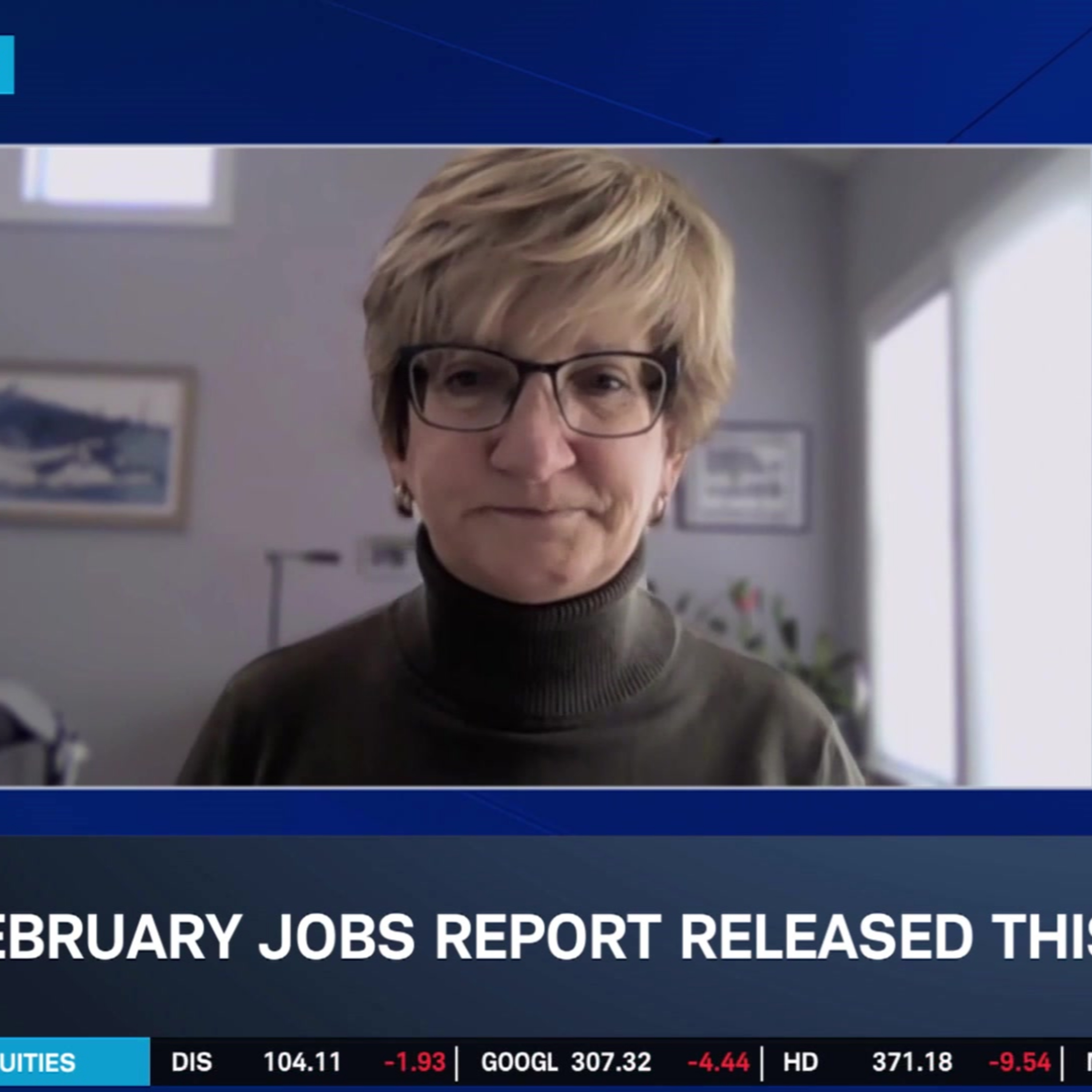
Susan Spence breaks down the latest ISM data, which decreased slightly from January’s report but has bright spots. Susan walks through the impact of tariff uncertainty, which is keeping businesses from ordering more than a few months ahead. She looks through the categories of the ISM report and highlights the biggest takeaways. Employment is still in contraction but looking better than last month, and she hopes it will expand if order flow picks up.
======== Schwab Network ========
Empowering every investor and trader, every market day.
Options involve risks and are not suitable for all investors. Before trading, read the Options Disclosure Document. http://bit.ly/2v9tH6D
Subscribe to the Market Minute newsletter - https://schwabnetwork.com/subscribe
Download the iOS app - https://apps.apple.com/us/app/schwab-network/id1460719185
Download the Amazon Fire Tv App - https://www.amazon.com/TD-Ameritrade-Network/dp/B07KRD76C7
Watch on Sling - https://watch.sling.com/1/asset/191928615bd8d47686f94682aefaa007/watch
Watch on Vizio - https://www.vizio.com/en/watchfreeplus-explore
Watch on DistroTV - https://www.distro.tv/live/schwab-network/
Follow us on X – https://twitter.com/schwabnetwork
Follow us on Facebook – https://www.facebook.com/schwabnetwork
Follow us on LinkedIn - https://www.linkedin.com/company/schwab-network/
About Schwab Network - https://schwabnetwork.com/about
Get every episode summarized
Each time Schwab Network publishes, we email you a written briefing from the transcript — the topics, who appeared, and any specific claims, with the ad reads skipped.
Email me new episodesFree for 3 shows. No card needed.
Transcript ready
85 searchable segments. Every word is indexed and playable.
Full transcript
Schwab Network — Takeaways from February ISM: Labor Improvement, Inflation Ahead. Machine-transcribed; use the interactive transcript above to jump the player to any line.
Susan Spence with us, Chair of ISM Manufacturing PMI, the Institute for Supply Management. Nice to see you again. Thanks for being here. So, some of your latest thoughts on these manufacturing numbers that came out. So, we were pretty excited to see we have held in expansion for a second month in a row. Structurally, we still have the tariff uncertainty, and we feel that new order flow aren't going to continue in earnest on an upward trend until customers of our panelists feel more comfortable ordering for a longer term than just a few months at a time. So, the demand indicators held in expansion lost some, but still above 50, that's great. I think the big surprise to a lot of people was the price index taken in an 11 and a half point jump. So, our indexes are diffusion. It is not equating to PPI or CPI, but the uncertainty of tariff demands, suppliers indicating that they are going to charge more.
Our panelists are saying overall a far greater share number of them are seeing higher prices in February. So, the good news remains that four out of the six big industries making up 72 percent of manufacturing GDP are an expansion. Ironically, petroleum and coal products are not one of them, but fully expect that to change, given what's going on over the weekend. Sentiment, we were happy to see demand sentiment is still strong as it was last month for every two people seeing strong demand. There's only one that doesn't see it that way. The overall hiring versus managing or firing sentiment is much improved. Since last summer, we haven't seen these numbers for every person hiring 1.4 or not. We'd rather see that reversed, of course, but it's not one to four, as it was in the late summer early fall. So, what we need to see, of course, is the tariff uncertainty
while it's ruled on IEP via the Supreme Court ruling. Certainly, our panelists are expecting these tariffs to come back in either section 232, as it has for aluminum and steel, cars, lumber, and then perhaps some in the 150-day tariff category of section 122. So, we don't yet see customers breathing a sigh of relief that everything is set regarding the tariffs. A big piece of it has been decided now. If the orders flow, I think we're comfortable that we can stay in expansion. And finally, the employment index still in contraction, but a little bit in the last month. We need that to continue to creep toward expansion, and we think that it will if the order flow is coming enough. You know, I mean, it sounds like at least we've got some glimpses of good news. So many times we spoke, there was a lot of underlying, sometimes a headline might appear better, but in this case, the labor picture seems to improve from the last summer. You know, there is demand,
but we should brace ourselves for inflation, right? The demand and manufacturing numbers, in a year from now, do you think this means good things for manufacturing and our economy? How do you interpret it for a longer term? Well, I want to remind folks, overall, we still have expansion, anything above a 47.9. I believe is our brick figure. It can stay that way, but we need, again, certainly these customers need to see more certainty around what is the administration going to do via an economic policy? Will they continue to look for ways in their minds and their words to punish the U.S. for decisions that are being taken that may be more of a negotiating leverage, but the ability to resource to a different country, it does not happen overnight, as we know. And so we're hoping that the customers will stay flexible and not make
rash decisions based on what has been going on just in the last eight months. So we're looking for demand to come back. Our panelists were pretty optimistic in December when we did a semi-forecast. They do expect a revenue pop of an average of 4% across the sectors. We hope we see that, but it's got to come in order flow. And we talked about the different industries. I mean, you were mentioning commodities like steel and aluminum and all that, but you had here some of the areas of growth, textiles and metals and chemical, right? Tell us a little bit about that. Yeah, so, you know, we focus on all 18, but really the big six, and in my mind, especially when you see chemicals in expansion, that's really good news. Chemical products are in virtually everything. So, and it is the biggest, I believe it, 26% or so of manufacturing GDP, it is one of the biggest movers. So we will see if that holds. I'm less interested in a one month or two months
bike and more interested in a solid upward trajectory. And again, when I see folks starting more to hire than to not backfill, then I feel that there's a lot more certainty than we've had. Yeah, and, you know, I think about, you know, what's going to happen with ensuring, reassuring, right? We're supposed to be doing a lot more manufacturing here in the states, based on the administration's plan. Does that seem like that could be helpful going forward, you know, with the one big beautiful bill. Does that help these companies? Also, you have just sort of the timeline right now and the concerns in the geopolitical concerns abroad in the Middle East, in particular, in the Strait of Formos. And does that factor in, at all, in your opinion? I think, you know, we have seen the conflicts in the Middle East before. We've seen, hopefully, a short-term conflict. I think less of a factor for long-term strategic decisions versus the trade policy, which, if the EU and India, Japan, whomever, really, really put a lot of effort
in resourcing away from the US, it's going to hurt. And that's going to hurt for longer than just a few months. So, for the domestic purchasing managers of our companies, a number of them have told us that even with the tariffs, it's still not, you know, economical to do business in the US in certain industries. But we, you know, we want to see, you know, strengthening of manufacturing in the US. I don't know that we're going to see it even with these tariffs, because there's such labor arbitrage in some of the areas as well. And it doesn't happen overnight. So, what's worrisome and continues to be as customers that don't make a decision, because they aren't sure what the administration is going to do next. And even if there's a decision, it seems to be undone. Maybe in the next news cycle, that's what their experience has been. So, it's about as easy for the international customers to resource to a different country, as it is for us, meaning it's not easy. And it has to be the right decision. And in the network
of changing policy, that it's hard to pin down with the right decision is. Just quickly for non-farm payrolls, because they're due out, right, this week on Friday. And so, you talked about the labor, you know, story. I mean, you did say hiring versus firing has improved over time, which was good news. But at the same time, even though we've had production index and expansion for the fourth month in a row, the employment index still in contraction, though we saw improvement. What do you think we might see from the non-farm payrolls this week, or big picture on labor? Yeah, I mean, the manufacturing labor, I believe, is around 10 percent of all in the U.S. I'm not sure certain there's going to be a big change. I also look at the jobless claims, both initial and ongoing. There's nothing that's really, you know, a big swing, you know, the way that I've seen in the last few months. I do believe that these companies can be very cautious and careful about backfilling those roles in hiring until they see that they're going to have a little bit of a longer, you know, order book. You know,
backlog is great and it jumped five points, but that's completely dependent on what's coming in for new orders. All right, Susan Spence, great to see you, Institute for Supply Management. Thank you so much. Really appreciate it.
More episodes
More from Schwab Network

Stock Market Today: ORCL & ADBE Earnings, AEO Plunges Near 52-Week Low
Schwab Network

Thursday's Final Takeaways: Crude Taps $103 & PPI Hotter than Expected
Schwab Network

Balancing High-Conviction AI With High-Dividend Diversification
Schwab Network

EARNINGS PANEL: ORCL, ADBE
Schwab Network