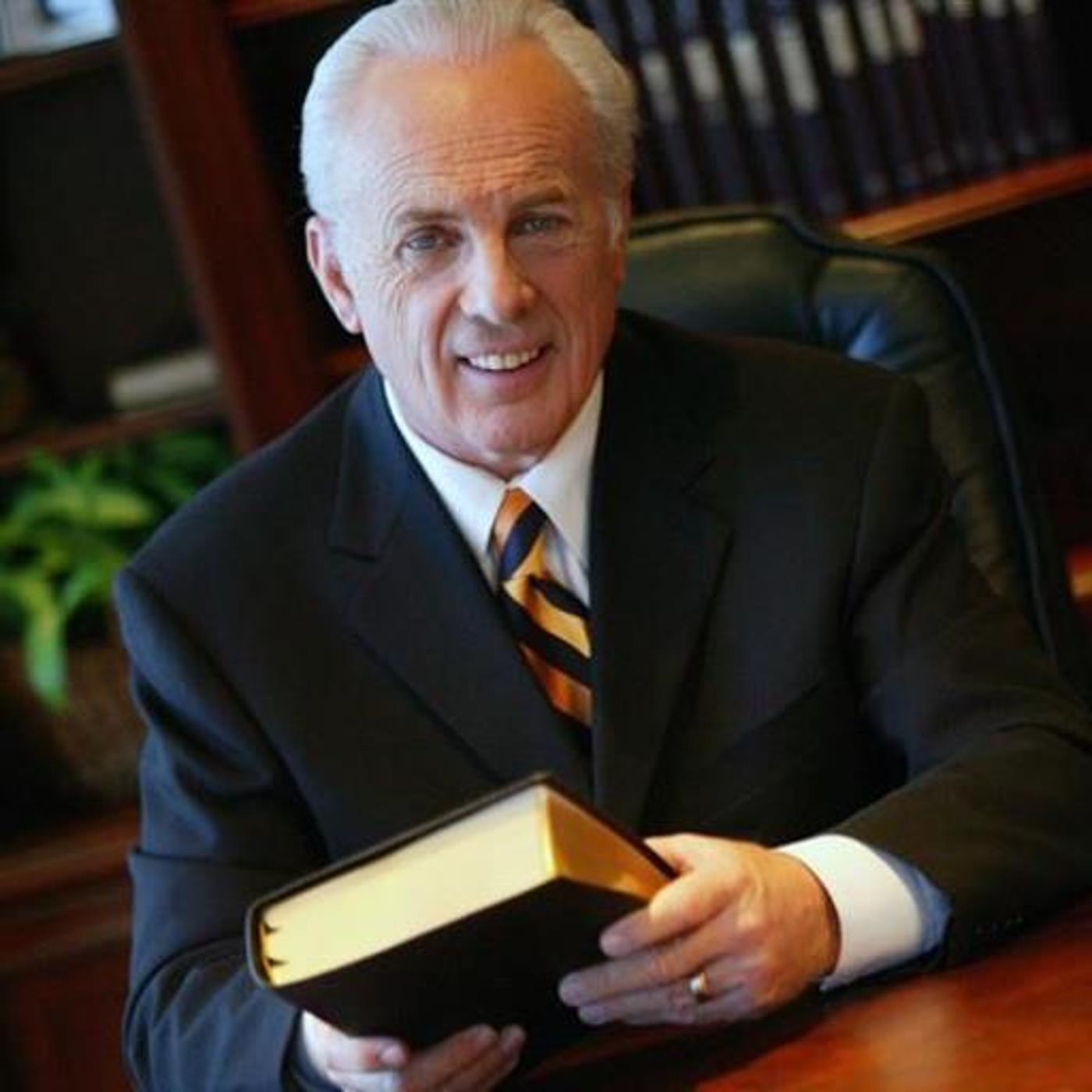
About this episode
Get every episode summarized
Each time Grace to You on Oneplace.com publishes, we email you a written briefing from the transcript — the topics, who appeared, and any specific claims, with the ad reads skipped.
Email me new episodesFree for 3 shows. No card needed.
Hosts & guests
Transcript ready
470 searchable segments. Every word is indexed and playable.
Full transcript
Grace to You on Oneplace.com — Standing Firm in Unstable Times (B). Machine-transcribed; use the interactive transcript above to jump the player to any line.
There's no way to restore a relationship unless somebody comes and asks for forgiveness, but I'm not going to be bound by bitterness and vengeance. Anytime I talk about forgiveness, I'm just talking about the fact that I'm not holding a bitterness, I'm not holding a grudge. I can't absolve anybody's iniquities, that's for God to do. And he's not going to do that for a person who doesn't come to him through Christ. Welcome to Grace To You with the Bible Teaching of John MacArthur. I'm your host, Phil Johnson. 25 years ago today, something happened that changed the world forever. And I'm talking, of course, about the terrorist attacks in New York and at the Pentagon and in Pennsylvania. If you're old enough, you remember the chaos of September 11, 2001. You may have lost someone close to you in the attacks or in the global war on terror that followed.
Those terrible events of 9-11 caused men and women everywhere to ask questions like, why did God allow such horror? How can he be good and loving and yet let something happen that's so evil, so ugly, so painful? You'll hear answers to those questions today and an interview that I had with John not long after 9-11. We'll discuss how God's Word can comfort you even in the face of immense tragedy. Today's program is titled Standing Firm in Unstable Times. And now here's John to lead off the discussion. No matter where you were or what you happen to be doing on September 11, 2001, there's no question that things haven't been the same since. The terrorist attacks brought sudden sweeping changes to our nation, in fact, to our entire world. It seems people everywhere are doing what just a day before this event was politically incorrect. And that's talking about God and faith and the future and life and death.
It's those kind of questions that I have in mind as we bring this special grace to you interview with you, we're calling it again Standing Firm in Unstable Times. And in the interview, I'm going to try to expand on some of the questions that I'm hearing most often these days. Questions about evil and God's power or lack of power to stop it? Also going to address bluntly some of the serious theological errors that sadly are getting a lot of air time. And I'm hoping that will help you stand firm for God's truth. Larry King's first question and the title of that broadcast was, where was God? And I wonder what your thoughts on that, Arjun? Well, I have to tell you Phil, it was very frustrating because I had all kinds of thoughts and ways that I wanted to answer that. I never got the opportunity to give a complete answer so I just tried to proclaim the truth. But in answer to the question, where was God? I immediately went to Isaiah in my mind. I mean, I'm so biblically arranged mentally that that's where I went.
And I went right to the fifth chapter of Isaiah. And there I was in the fifth chapter of Isaiah. And Isaiah receives this revelation from God that it pronounces a series of curses on Israel, on Judah actually, and Jerusalem. And the prophet receives these messages that God has found Israel to be a fruitless vine that in all his provisions and all his goodness and grace and mercy to them and blessing should have produced good grapes. But instead, there are any grapes. There's just sour berries, which is symbolic of the fact that they're in idolatry and iniquity and sin. And God says, I'm going to come down and I'm going to rip up my vineyard, Israel. I'm going to take away its protection. I'm going to trample it down. I'm not going to rain on it. And this is a huge curse pronounced by God on Israel. And it's a frightening passage.
I mean, it would be worse than knowing your twin towers are going to be attacked by some Arab terrorists. I mean, it was total wiping out of Jerusalem and the whole of the of the Southern Kingdom. And Isaiah immediately is seen going to the temple and he goes to the temple and he wants to check in with God because he wants to find out where is God. Where is God? This is this can't be. This is the covenant people. This is God's own chosen people. This is the seat of Abraham. And he goes to the temple and I think the most startling thing occurs in the opening of the chapter. He says this. And in the year King Isaiah died when all trauma from God was falling on Israel. He said, I saw the Lord and he was high and lifted up. And it's just shocking. He wasn't in the rubble as the LA Times guy said. Right on the same throne he had been on all the time. He hadn't abdicated. He hadn't lost his sovereign purpose.
He hadn't diminished in his glory. High and lifted up in his train fills the temple. You know, holy, holy, holy. And you see God in all his full sovereign, majestic glory and everything that is happening is happening within the framework of his perfect purpose. And I will say this. I don't know what the purpose of God was, quote, for America. But I do know what the purpose of God is when something like that happens, it is for judgment on some because they perish. And God has every right to bring that judgment on the ungodly who have rejected him. It is for those who believe the blessing of all blessings, the Christians who died in those events. And then it was an entrance into glory. God was in control of all of that. God is in control of judgment. God is in control of blessing for his people. And that fits within the righteous pattern of God as he expresses his purpose and as well.
Larry King was curious about whether we should forgive the terrorists. And in fact, he went around and asked me, made it a point to ask each panelist this question. That's really a hard question to answer in a sound bite. And I'm eager to hear a more in depth reply from you. As far as as humanly possible, yes, I would forgive them. Whether they asked for it or not. Yeah, whatever that would mean in the sense that I would not be bound in my own heart by some unrelenting bitterness toward them. I don't mean that there can be any kind of reconciliation in the first place there's no relationship to start with. But I don't believe vengeance is mine. I think it's God's even had I lost a son or a brother or a spouse or a friend in disasters. I don't think I would have had a heart full of bitterness or vengeance or hostility toward those people. It would be in me to forgive them.
And the way I would manifest that forgiveness is not by anything on their behalf. I mean, they're dead, but it would simply be manifest in grief over the terrible disaster of their eternal soul. Nobody talks about that. It's terrible that people died in that destruction. It's more terrible that some people went to hell and those men who committed those horrible acts went there too. That is a great grief. The deception of Islam is a great grief. And there are more coming after them who are going to be literally cast into eternal judgment under the illusion that they're serving Allah. God. So I would have nothing but compassion toward that. I think an illustration of that that may help is one of my nephews, just a really outstanding young man. He was about 21, 22. His name was Tim, my wife's sister's son.
Fine young man, love the Lord. He was in his college days. He was a volleyball player at California State University, and just a great, great kid. I was working in a market and a guy came in to hold a market up and killed him. I think he was like 21 or 22. Shot him dead. And the guy was on drugs and Tim tried to intervene when this guy was getting money from a cashier. He tried to protect this lady and he was killed. And his dad, my brother-in-law, Dwayne, I watched his response to somebody who had just murdered his son at the prime of his young years. And Dwayne went to the prison with one purpose. He said, I want to see that man. And he went there with the purpose of sharing the gospel with him and telling him that he forgave him for what he did to his son. And that more important than the death of his son was this guy's death because his son was with Christ. Now, that's what I'm talking about when I talk about forgiveness.
I mean, there's no way to restore a relationship unless somebody comes and asks for forgiveness. But I'm not going to be bound by bitterness and vengeance. I even look at the war that way. I don't see the war as some kind of retaliatory vengeance. I think a just war begins when the peace is interrupted and it ends when the peace is restored. And I think a just war is a war that takes away the terrible, terrible interruption into the peace of this nation. In other words, it's a war of protection and justice. But I don't think we need to get caught up in personal vengeance. But on the other hand, as well, only God can forgive sinners and the sad reality is those men will never be forgiven because they died without ever believing the gospel of Jesus Christ. So just to be absolutely clear, when you speak of forgiveness, the forgiveness you grant,
you're talking about letting go of any bitterness or hostility or anything towards them, but not absolution for their sin. I couldn't give that anyway. I mean, I can't give that to anybody. So anytime I talk about forgiveness, I'm just talking about the fact that I'm not holding a bitterness, I'm not holding a grudge. I can't absolve anybody's iniquities anyway. That's for God to do. And he's not going to do that for a person who doesn't come to him through Christ. I mentioned the war. Let me follow up on that. Just to put that together with what you're saying about forgiveness, I notice a lot of Christians are confused about this. And they're asking questions like, can we as Christians support our government's retaliation against terrorism? And occasionally you hear a Christian site, Matthew 5, verses 38 and 39 where Jesus said, you've heard that it was said, an eye for an eye and a tooth for a tooth, but I tell you not to resist an evil person, but whoever slaps you on your right cheek, turn the other
to him also. Now what did Jesus mean? And does that have any application in a situation like this? Well, first of all, it has no application in a situation like war, which is not a personal offense, which is a national issue dealing with an entity that has been ordained by God for the punishment of evil doers. I'm not an entity ordained by God for the punishment of evil doers, right? That's not my personal issue. And Jesus here is talking about personal issues. Yeah. And I think to understand what that text actually means, if anyone slaps you, turn the other cheek, you have to understand a little bit of background. It's pretty fascinating. We'll take a minute and explain it to you. When Christians in the New Testament era, who were Jews, obviously, because Jesus was preaching and they were following him and believing in him and identifying his followers of Christ and all of this, when they were in their synagogues, you remember Jesus said to them at the upper room discourse, he said, the day's going to come when they're going to throw you out
of the synagogue and they're going to whip you and all of this. Some historians indicate that there was interestingly enough when a person was excommunicated, a symbolic slap across the face by the ruler of the synagogue, whack, before the synagogue, and that this symbolized that rejection, a slap across the face was viewed as a very shameful thing, a very demeaning and humbling thing to be smacked across the face. There's still that, even in our culture, right? I mean, it's one thing to knock a guy's lights out. It's one kind of demonstration of how you feel about somebody, but just a smack across the face is a how dare you. It's a demeaning kind of thing and that's the way it was. There's some historians who say they literally would smack somebody across the face who was excommunicated. It gives new meaning to the right hand of fellowship.
That was the right hand of disfellowship. But Jesus is saying is this, look, if you have so identified with me, if you have by that identification created such an offense that they have literally slapped you across the face, continue in the same path so that you are continually vulnerable to the same thing over again. And you have an illustration of the fact that it's not literal in the case of Jesus when he was slapped. Remember, they slapped him across the face and he didn't say, here, hit the other cheek. He said, essentially, why are you doing that? And he called them to account. I think what that's talking about is if they hit you once, get ready, they'll probably hit you again. And you have to maintain a certain vulnerability. And he's talking there about a Christian living in a persecuting environment. If you get slapped in the face, don't compromise.
Don't lose your courage. Don't go underground. Don't deny the Lord. Don't retaliate. Don't get full of vengeance. Don't become bitter. Just live that same godly quiet life with all of its vulnerability because you may get hit again. That's a whole different issue. When God giving the right to a national government, which is exactly what Romans 13 says, the powers of beer are damed of God and they bear the sword and they don't bear it for nothing. They bear it to use against the evil doer for the protection of the one who does good. Would you say then that Romans 13 puts a responsibility on our government to retaliate? I definitely do. It would be wrong for them not to reach out. Absolutely. Well, I mean, it's pretty obvious. If we don't do anything, what's going to happen? What's going to keep it up and keep it up and where does it end? I mean, all you have to do is be successful at what you do once. And if you gain the desired effect, America goes into a shell, doesn't do anything, doesn't
go back to try to root out this evil and to deal with it and to bring a just punishment. Now you've just energized them. Now they're going to be flooded with other people who want to go and accomplish these great purposes and these great ends because there's no consequences. Like, you know, on the simple level, it's like asking whether you should punish your child when he does something that's wrong. Is that the compassionate thing to do yet? Is in the end, unless you want to turn your child into a criminal. I mean, if you don't punish this kind of thing, what's going to happen now and what's already happening? And I'm not, you know, I'm not here to answer questions about politics and the military. What's going to happen now as the world retaliates against this is the forces, the Taliban or whoever they are, are going to disintegrate under the fear and the pressure of this tremendous act of justice that's coming against them. And that's the desired effect you want. You want to disintegrate that entire base of power. And that brings about a protection of people. I think we're not only doing what's right in the protection of our own nation, but we're
doing what's right in the, in the corollary protection of Israel, not because Israel is by any means a righteous people. But because I do think that Israel is a nation that understands right and wrong on a human level and understands justice on a human level and doesn't do to its neighbors what its neighbors continue to do to it. So John, what have you gotten some good responses to your appearance on Larry King? What's the most interesting response you've gotten? Well, you know what the universal response is? 99.9% of the responses. Thank you for giving the true gospel. It was almost like people had hoped somebody would just give the straightforward gospel and hold the line. And that's what people keep saying. You know, we watched and we hoped that you would give the gospel and that you wouldn't compromise the gospel. And they were just very encouraged. I think it's strengthened Christians to be, maybe to be bold.
And of course, I'm not thinking I need to suck it up and say the truth here no matter what I just said it because that's what I believe the truth is. But I think it was encouraging. And you know, most all of the mail is basically saying we need to stand up for the gospel in a day when so many people compromise and water it down and want to make it blend in with everything else and not offend anybody. And I think that's what struck me is how, you know, because we hear so much about let's open everything and let's embrace everybody and let's accept whoever it and let's be open to other religions and let's, and you think this is a big widespread movement. And then what happens is I get on there and I'm really firm about the singularity and exclusiveness of the gospel. And there's this flood of affirmation and you begin to realize there are people out there who aren't buying into this. Thank you for doing that, John. Well, I don't, I don't understand why it's a difficult thing to do. We just say what's true. And as you know me well enough to know, I'm not concerned about where it gets me.
You know, I'm not concerned about what I might achieve on a worldly level. I'm just concerned about the truth. And so there's the truth and what happens happens. And so I don't know what will happen. My initial reaction was I'll probably get one shot at this deal and they'll say we'll never have back back back. But we got a different response from the people at the program. So that's good. They said that they were looking forward to having me back again. So we'll see if that happens. Lots of people are asking questions today and I think a lot of our listeners probably are finding they have greater opportunities than ever to share the gospel with their friends, their neighbors and so on. What advice would you give them as they're looking for ways to share their faith? Yeah, don't shuffle your feet and beat around the bush. It would be the first thing. If the door was ever opened, it's open now. And I think that, you know, I would say to them what I said in the tape I did on terrorism, take them to Luke 13 and where Jesus did and ask this question, what would have happened
to you if you had been in the building? What would have happened to you if you'd been on the flight? Where would you be now today? Isn't that the question? Would you be in heaven? And that they say, well, I hope so. Well, on the basis of what? On the basis of why would you be in heaven? Well, I'm a pretty good person boy. There's the door right there. Salvation is not by works. So I think the question is just capture the moment. I mean, the moment is vivid. All you have to do is say to somebody, if you were on the 105th floor or the 95th floor, when the plane hit, where would you be? Or if you were in the plane, where would you be? And I'll bet there's not a person in America who hasn't asked himself that question. Where would I be? Yeah. And then you go from there. I mean, look, if you're looking for an opening, an entree, a starting point for evangelism, here's a universal one. So well, thank you, John. Well, thank you, Phil.
It's been a delight to talk about these things. And I hope it's helpful to people. It is strange for a preacher to be thrown into a sort of sort of short answer sound bite environment because I'm used to explaining things. But you know, preachers are also proclaimers. We're not just explainers. And there's something wonderfully powerful about just the proclamation because the power is in the truth. And you never know what the Lord is going to do in planting the seed as the Apostle Paul said, some plant, some water, God gives the increase, right? So you just say what's true and then you leave it to the Lord. Whatever that environment allows you to say, that's what you say. But I'm very thankful to the Lord for the opening that was there to proclaim the Gospel. And grateful that I had enough time to at least articulate the truth and to try to get across that Jesus Christ is the only way of salvation.
And I know the message got through and I'll close by saying this. I know the message got through because it did get three letters that were furious with me, just furious. And it was really good feedback because they said how dare you say Jesus is the only way. So I know that message got through not only to Christians. You know, sometimes you think, well, the Christians got it, you know, because it's inside talk. It's Christian jargon and lingo. These are three non-Christians. And you know, in a sense, that was really important feedback because if it's clear enough for somebody to get that mad who's outside the Gospel, then it was clear enough for the people that the Lord may be drawing to himself. So even that feedback was important. Another lady wrote and said that I was interrupting the peace of the world by making Jesus the only way of salvation. Well, I was glad she got it. She didn't like it, but she got it. And I remember Jesus, you know, when he preached the Gospel in his own synagogue in Azure, they tried to throw him off a cliff and kill him.
They got it. They got the message. They didn't like it, but they got it. And you're going to run into that. I mean, there are going to be people who resent that truth, but that doesn't make it the less true. And I think that's why I wonder why anybody who represents Christ, equivocates on that. What do you gain? You certainly don't gain anything with the sinner because if you don't tell the sinner the truth, he can't get saved. You certainly don't gain anything with the saints because if you don't tell the truth, the saints don't have any respect for you. And you certainly don't gain anything with the Lord because if you're ashamed of the gospel, you're in some serious trouble there. So I mean, what's the upside of not just saying the truth? There is none. Yeah, that's what I think. One thing I need to say, it's sort of enraping all this up. This is a time for great compassion. While it is a great opportunity, we don't want to go. We're roaring in there with guns blazing. This is an important time for sensitivity and compassion. People have been seriously tenderized. This kind of fear is not superficial.
It is deep and profound. And there's an important necessity to come with the meekness and gentleness of Christ, to demonstrate the kind of weeping compassion that Jesus did. A tenderness. We come, we come tenderhearted. We come kindly. We come compassionately. We come from the very very very realizing that there's a lot of real fear and real anxiety and real suffering in people's hearts. And particularly those people in New York who lost people and others around the country, who lost people. This is a very, very tender time. And I think we want to be truthful. We want to speak the gospel. We want to make sure we stay compassionate and tenderhearted and loving and gracious in the presentation of the gospel. So I would just encourage you to take every opportunity you have to demonstrate the truth and to do it in love. You're listening to Grace To You, the Bible Teaching Ministry of John MacArthur.
Today's special interview titled Standing Firm and Unstable Times was recorded not long after the tragic events of 9-11, 25 years ago today. Now something that John often said is that suffering, whether from a terrorist attack or spiritual persecution or a life-threatening disease, suffering has a purifying effect. We ask John to explain what he meant by that. And here's what he said. Yeah, suffering always has a purifying effect. Because even in a non-believing world, even with people who don't believe in God or the gospel or the Lord Jesus Christ, threats, suffering, terror, illness, it's a yank back from the good times, thoughts of well-being, to the reality of death. Death. I mean, we're all living on the edge all the time. And I think it forces people to think deeply.
I remember when a number of years ago, we had one of the great earthquakes in Southern California and people were killed, crushed in that earthquake under the rubble of certain buildings. The next Sunday, the congregation in our church just expanded. People rushing to the church to figure out what do I do is this world coming to an end. I mean, that's one way to view it. But any level of suffering could be that somebody tells you you have cancer or your wife decides to leave because she's having an affair with another person. All of that causes people to look at their own lives and wonder if they're not missing reality and if they have an answer for death. That's right, friends. Suffering brings us face to face with the harsh realities of life in a fallen world like nothing else. It's common in our society to want to avoid suffering at all cost, but that doesn't change the fact that trials will come.
To help equip you to handle hardship in a God-honoring way, let me encourage you to pick up a copy of John's book called The Power of Suffering. It lays out a path to finding spiritual strength and peace, even in the most difficult circumstances. And here's the good news. If it's your first time getting in touch with us, we'll send you the book Free of Charge. So contact us today and ask for your free copy of The Power of Suffering. Call 855 Grace or visit our website gty.org. The power of suffering is free if you're contacting us for the very first time. If you're already part of the Grace to You family or if you'd like additional copies to share with loved ones, you can order the power of suffering for a reasonable price and as always shipping is free. To order call 855 Grace or visit gty.org. And while you're at gty.org, check out the Grace to You app.
It's available free of charge for your mobile device and for your smart TV and it gives you access to all of John's sermons in both audio and transcript format. You can watch Grace to You television ideal for your smart TV. To learn more about the Grace to You app, visit gty.org slash apps. Now for the entire Grace to You staff, I'm Phil Johnson. Keep in mind Grace to You television airs this Sunday on Direct TV Channel 378 or you can watch anytime on gty.org. And then be here Monday as we jump back into John MacArthur's practical study titled Wisdom for the Workplace. It's another 30 minutes of unleashing God's truth one verse at a time on Grace to You.
More episodes
More from Grace to You on Oneplace.com

Standing Firm in Unstable Times (A)
Grace to You on Oneplace.com
Work: A Noble Christian Duty, Part 1 (A)
Grace to You on Oneplace.com
Spirit-Filled Labor Relations (B)
Grace to You on Oneplace.com
Spirit-Filled Labor Relations (A)
Grace to You on Oneplace.com