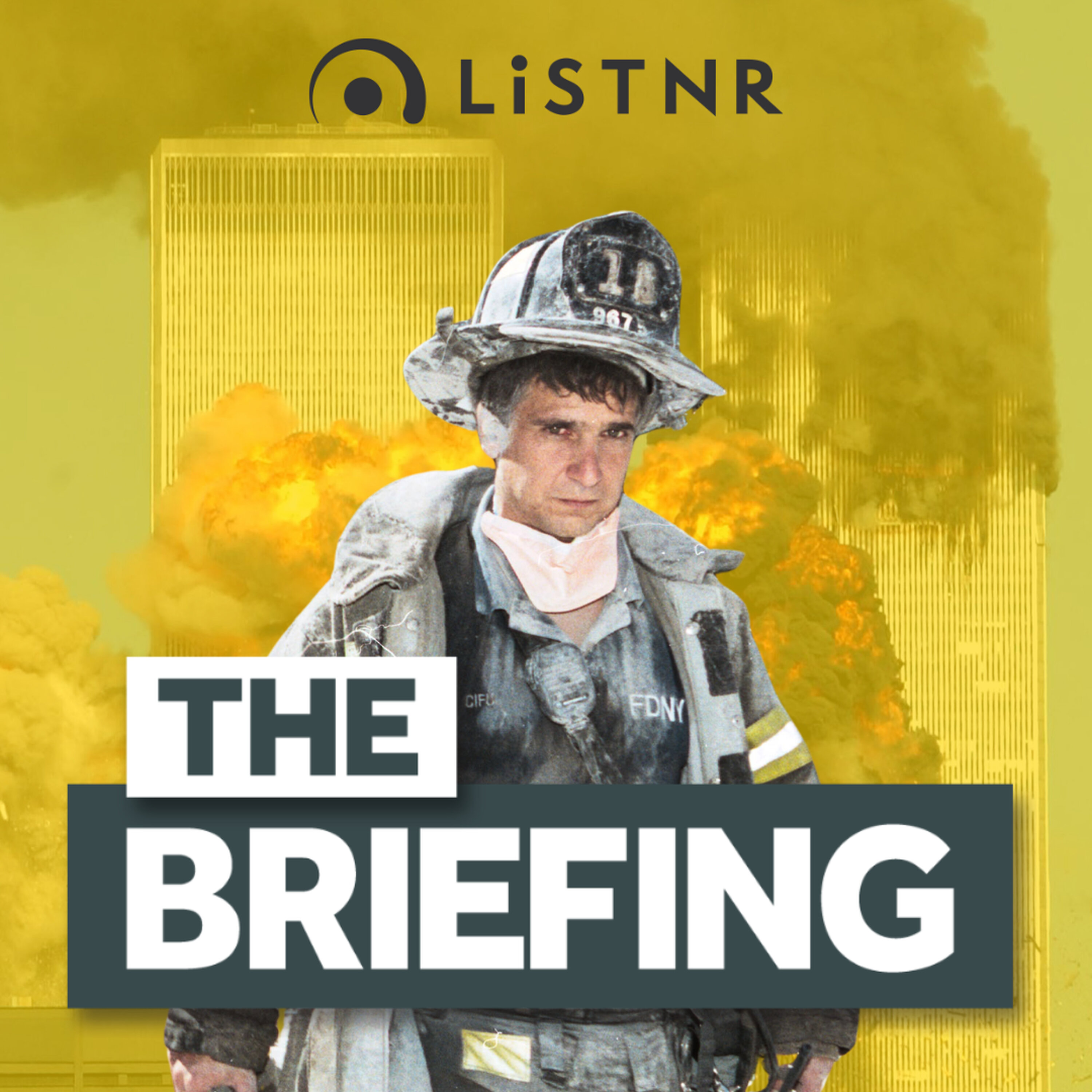
About this episode
Twenty-five years ago, the September 11 terrorist attacks killed nearly 3,000 people and changed the course of history. The images of hijacked planes striking the World Trade Center, the collapse of the Twin Towers and the devastation left behind became defining images of this century.
But the consequences of 9/11 reached far beyond the United States. The attacks triggered America’s longest war - a 20-year conflict in Afghanistan that began with the fall of the Taliban. This year also marks five years since the war came full circle: the Taliban returned to power as the US withdrew its troops.
BBC Chief International Correspondent Lyse Doucet witnessed that extraordinary arc. Drawing on almost four decades of reporting from Afghanistan, she takes LiSTNR Senior Journalist Claudianna Blanco from the aftermath of 9/11 and the hope that followed the Taliban’s fall, to the chaotic final days at Kabul Airport and the Afghanistan of today.
This special episode of The Briefing looks back at the long shadow of 9/11, 25 years on.
Follow The Briefing:
TikTok: @thebriefingpod
Instagram: @thebriefingpodcast
YouTube: @TheBriefingPodcast
See omnystudio.com/listener for privacy information.
Get every episode summarized
Each time The Briefing publishes, we email you a written briefing from the transcript — the topics, who appeared, and any specific claims, with the ad reads skipped.
Email me new episodesFree for 3 shows. No card needed.
Hosts & guests
Transcript ready
373 searchable segments. Every word is indexed and playable.
Full transcript
The Briefing — SPECIAL: The long shadow of 9/11 twenty-five years on. Machine-transcribed; use the interactive transcript above to jump the player to any line.
A List-Nap Production Today marks 25 years since the September 11 terrorist attacks. And when we talk about 9-11, we often talk about the terrible events of the day, the hijacking of the planes, the collapse of the Twin Towers, those who were killed, those who survived, and the first responders. But we talk less about the war that followed. Now the ripples of 9-11 reached far beyond America's borders and so 25 years on, we're looking back at the long shadow of it through the eyes of one journalist, a journalist who witnessed the invasion of Afghanistan from start to end. That journalist is BBC Chief International correspondent Leastu Set and she spent decades reporting from Afghanistan and the region and she sat down with one of our senior journalists not too long ago. This is Claudia Nablanco with this special report and look a warning before we do start this
episode contains some of the sounds of the day which may distress some listeners. On September 11, 2001, Al Qaeda carried out the deadliest terror attack in modern history. Two planes were flown into the World Trade Center in New York, another into the Pentagon in Washington, DC, while a fourth crashed in field in Pennsylvania after passengers fought
back. Nearly 3,000 people were killed. It was a day that left an indelible mark and changed the course of history. Today, we've had a national tragedy. Two airplanes have crashed into the World Trade Center in an apparent terrorist attack. I just saw a second plane. It was South Tower. It's got to be a terrorist attack. I can't tell you anything but that I saw the plane hit the building. Freedom itself was attacked this morning by a faceless coward and freedom will be defended. The BBC's Leastu Set was on her commute when the attacks happened. She had recently returned to the UK after years living and reporting across the Middle East and Afghanistan. Do you remember when you first saw the planes plunging into the towers? I was in London. I was on my way to go to work and I stopped somewhere then to look at the television screens.
I think we all stopped in our tracks. First of all, people thought, well, first one must have been an accident and the second one. I mean, everyone realized very quickly this was something on an order that we hadn't seen before. The South Tower collapsed first, only 56 minutes after impact. You can see large pieces of the building falling. You can see the smoke rising. This is just a horrific scene and a horrific moment. The North Tower stood for nearly two hours before it too came down. Good Lord, there are no words. I guess that image of these mighty buildings, the height of engineering collapsing into these huge columns of smoke towering in the sky, the dust and people running and crying and people stopping and looking and it was one of those defining moments. We knew that this is something which really mattered, something that we hadn't seen before and then couldn't anticipate what would come next.
What came next would become America's longest war. The US was reeling with then President George W. Bush swiftly promising revenge. Magnum mistake, the United States will hunt down and punish those responsible for these cowardly acts. Within weeks of the 9-11 attacks, the United States and its allies invaded Afghanistan. It was a country that had endured two decades of conflict and had by then been under Taliban rule for five years. The Taliban first emerged from the chaos of Afghanistan's civil war in the mid-1990s, promising to restore order, but their vision of order was brutal. This was a country which was back in the last century. There were no telephones. There were no television stations. Almost no airlines were operating in Afghanistan. Once the Taliban came, then they went around yanking music cassettes from the Bazaar.
You'd saw the tape from the music. Those were back in the days of the cassettes hanging like shiny ribbons from the trees. Women accused of adultery whether or not there was evidence or not were stoned in public. Then women then were told not just to cover their heads. They were told to cover themselves from head to toe. They forced the burqa that the Taliban would be out in the streets whipping women if they were showing their ankles. Of course, that was the first time the Taliban said girls could not be educated, women could not go to university, women had to stay at home and people were living day by day, often hand to mouth. So it was the kind of thing where rumors and reports went word to mouth in the market. So for most ordinary Afghans, the idea of 9-11 was almost otherworldly. They never heard of New York. Why would they hear about New York suddenly that this place far away and that planes had smashed into these tall skyscrapers more than 100 sores high and there was no building
of that size in Afghanistan. There was only very few televisions because as I said, the Taliban banned them. But there were some officially sanctioned ones down in the foreign ministry. So some of them who were working down there could see on the television screen the building on fire, people running for their lives. This was something that people there did know about but what they did know about was war. And Afghans understood instinctively what it happens to have a building collapse all around you to be searching in the rubble for your loved ones, your life being caught between life and death. They understood but they also understood that once Osama bin Laden's name was mentioned and once the Americans made clear that they believed that Osama bin Laden had been given sanctuary in Afghanistan that soon it would be American war planes in the skies and this would be an American war. On my orders, the United States military has begun strikes against al-Qaeda terrorist
training camps and military installations of the Taliban regime in Afghanistan. Explosions over Kabul, over Kandahar, over Jalalabad. Unleashing its wrath the America with the help from Britain, there's struck at Taliban targets and terrorist training camps across Afghanistan. It was really a war that mattered the world over. The world was caught up in watching what would happen with the Taliban be toppled, with the Taliban give up Osama bin Laden. They said no, he's our guest. The Taliban didn't give up Osama bin Laden because culturally hospitality is a deeply ingrained value. The Americans have this call called Pustunwali, who the guest has to be protected. But the guest also has responsibilities but in this case even some Taliban leaders recognize that it's one thing to give your guest a guest house but when the guest house is now going to blow up because you're there, I'd better to tell the guests it's time to leave. Most Afghans had no idea they were harboring this dangerous guest.
However, some of Lisa's sources, staff members of the Kabul Intercontinental Hotel, the place where she always stayed whenever she was in town and where she had even lived, hold her. They had encountered Osama bin Laden. One of the Afghan staff who I'd known for many, many years, he said one of the first stories he said to me said, you know, there was this guy named Osama. He only knew him as Osama and he was an Arab and he used to come in the back door, not the front door and he used to go up the back stairs and he had these two rooms at the far end of the corridor down on the second floor and he had his own his own food was prepared for him, his own cleaners cleaned the room and so we knew we had this mysterious guest but we weren't serving him so we didn't pay that much attention to him. We knew though something was different and the Arabs who were with him, they'd sometimes would be on the roof of the hotel and they'd have these gadgets, these computers and these telescopes, they were always looking around to see whether there could be any threads,
could be any, but they just thought, okay, they just went about their day. Then September the 11th happened and they listened on their crackly radios because of course there was no television then there were phone lines weren't working the only way was listening on the world service of the BBC, voice of America and suddenly the here put this attack in a place called New York far away and this guy named Osama Bin Laden is being accused of carrying out the September of Laxie, heads in organization called Al Qaeda and then the staff went, oh Osama that's the guy who was staying at the hotel. Sooner rather than later the bombs started falling and Osama Bin Laden fled I mean that's all part of history to the caves of Torah Borah on the Pakistan border and the Taliban braced themselves and the war began and before long it was that the Taliban were on the run and it's painful to think about that now because then two decades later they were back.
Kabul fell within weeks of the invasion by early December 2001 the Taliban regime had collapsed. Once Kabul fell a lot of journalists got together and we chartered a plane and we were able to get in and sadly some of the journalists who went there were a lot of journalists waiting at the border crossing and some of them went in really really quickly and on the first days that the remnants of the Taliban were still on the roads and sadly a few journalists that did get killed and that gave pause for some of the journalists but of course there was such a rush everyone wanted to get to Kabul. For me I was going back to a country that I had spent so much time in I was worried about friends who were still living in Kabul and of course I wanted to go back to the hotel and arriving there at what had been the finest hotel in Kabul the first luxury hotel and to see how it had been ravaged during the Taliban time in the late 90s that a whole face
of the hotel had been destroyed with missiles being fired in such that room after room was completely ravaged but I won't forget this this moment so we were going around the hotel because this was the first place that we arrived and we were talking with people and I went into the kitchen and it was of course no electricity there were like these old stoves which no longer work some of them were just big pots on on top of bricks and wood and in the corner I saw this but this man said hello Lee's and it was Salam who used to work at the front desk of the hotel and I'd known him as you know always turned out in his suit and his tie and he was there with a long beard and I said Salam what are you doing here in the kitchen he goes well the Taliban wanted their own people at the front desk and so I've been working in the kitchen peeling potatoes and we just you know we both cried that this was going to be a new day and he looked at me you know he looked really grubby and his tune is all tunic and trousers and his long beard and he goes
Lee's I'm going to shave off most of my beard and I'm going to wear a tie again and it was such a bittersweet moment but for me it was it was a reminder of what Afghans had gone through and how they were trying to keep their dignity even in this most troubled of times the Taliban regime had deprived and oppressed everyday Afghans to such an extent that many in Afghanistan celebrated their fall unsurprisingly in the early days of the US invasion many welcomed the changes that the foreign powers brought about with them there was renewed hope right there was like some optimism and the color had returned to the streets of Kabul yes it was one of those really magical moments in this a journalist this is the privilege of journalism where you're not there at the sidelines of history you're marching through it right smack in the middle with that feeling but and it's not often that you get to feel moments of ecstasy and euphoria and hope that you can taste
what was happening in the streets of the barber shops were opening again that men were shaving off their beards women were throwing off their burgers you could hear music again in the streets women were putting on red lipstick again suddenly they were tasting freedom and they dared to hope that this would be the best chance in their lifetimes to finally bring peace to Afghanistan and I remember at that time Tony Blair and George W Bush standing with the new leader Hamid Karzai and there was that expression at the time we're standing shoulder to shoulder and we are with you for the long run our commitment to unstable and free and peaceful Afghanistan is a long term and I remember thinking then how long is the long run how long is it this time that the world will stand with Afghanistan but it wasn't long before that hope that shining star began that that night began to be dimmed and there were missteps and it was a very complex environment
it takes a long time to emerge out of war and to build peace and there were missteps and mistakes on both sides on the side of Afghan leaders on the side of the western countries who really were coming into a society in a culture which wasn't their own and trying to in some ways to remake it in the image of their own societies and while Afghans wanted to advance they still were Afghanistan and they wanted to remain Afghans and in Afghanistan so slowly the building blocks for a new Afghan society were put in place but as it turned out the western powers were not ready to really stand shoulder to shoulder with Afghanistan western powers were in a hurry they wanted to remake Afghanistan in a matter of years where I think we know now that it takes decades will take generations I remember the one of the UNN boys used to say well you know Afghanistan is not Switzerland
you know it is a country where more and more with every year the violence is returning there wasn't full security where there were allegations of growing corruption so the UNN boys were saying well we shouldn't have expected it to be Switzerland you know after such a short time and Afghans said we're not Switzerland and we don't want to be Swiss why did would you ever say that we're Afghans and I remember about that about the 10-year mark I was at a dinner in Kabul and I was privileged to be invited around this table there were ambassadors there were the heads of agencies they were people from NGOs and they had gathered to sort of at this at this 10-year mark to say well what has gone right and what has gone wrong why is it already starting to unravel what were our mistakes and I was listening to this and all of the interventions that at a certain point in the evening they came to their conclusion which was we should have listened to Afghans and I remember sitting there thinking what
that's your conclusion and it's so simple the listening to Afghans but it's very complex which Afghans are you going to listen to which Afghans are you going to engage with because Afghans have their own kind of feuds and rivalry sometimes they exploited the foreigners who knew so little to get rid of their rivals they exploited them to get access to to resources but I think it was a fundamental message which wasn't learned in Afghanistan or was learned too late wasn't learned in Iraq is still not being learned in the wars of our time is that even people who have troops and money and let's assume goodwill intervene in societies which are not their own have to go in with humility I would like to fast forward to the takeover of the Taliban in 2021 so the US
insisted for years that it was training the local Afghan security forces so that they could take care of their security situation for themselves eventually and there were so many years of discussions of when you know the US would withdraw or not their forces for years we heard from President Bush and Obama you know that this was underway that they were training people that Afghans would eventually be able to take care of themselves and then Obama finally announces that they've taken out Osama bin Laden and that was such a big moment tonight I can report to the American people and to the world that the United States has conducted an operation that killed Osama bin Laden the leader of al-Qaeda and a terrorist who's responsible for the murder of thousands of innocent men women and children but it feels that by the time that Osama bin Laden has taken out by the US
little by little Afghanistan starts to fall away from the headlines and despite the increasing pressure to withdraw the troops for so many years the world went from daily news on the war on terror to hearing about Syria the Arab Spring and the rice of ISIS and that took our attention meanwhile you haven't Afghanistan chugging along in the background until we suddenly hear there's negotiations in Doha between the US and the Taliban and the withdrawal is finally going to happen under the Biden administration and then we see the Taliban take over what was that like for me I'm telling you this history as an outsider as someone who is watching the news every night what was that like from the inside one American president after another had said they wanted to end what was becoming one of the
longest wars for America and it was becoming even longer than the Vietnam war it was president Trump in his first term who said I want to bring home the last every last uh American soldier men and women we have to end this longest war so he decided that the Americans should talk to the Taliban and previous administrations had not been willing to accept the condition of the Taliban the Taliban said we will not talk to the Afghan government we see them as puppets and therefore the only power we want to talk to is the Americans president Trump in his envoy said okay we've got to bring our troops home yes we would prefer the Taliban talk to the Afghan government because there are the leaders in Afghanistan but we need to start talking to them we're going to start this process when president Biden then came into the White House he decided to continue this policy because he never light the US intervention in Afghanistan so he was never enthusiastic about it
so he kept up the president Trump's policy but then it had been agreed that there would be as the Americans were talking to the Taliban that the Taliban would talk to representatives of Afghanistan and I went back and forth to Doha the capital of the Gulf of Cedar Caltar in that time and so on the ground the Taliban were making military advances but they weren't quite there they certainly weren't in Kabul and the United States was saying you have to keep you have to keep talking there has to be a negotiated end to this war and the Taliban was saying yes yes we want to try to find a peaceful way to end this war and on top of it they were telling us as journalist and they were telling even more importantly Afghan women who are at the negotiating table they said oh we learned we have learned that we made mistakes the first time in the 1990s we will not rule that in that way again we understand now that Islam gives rights to girls to be educated women to be educated women to hold down jobs there was great skepticism about what the Taliban really
wanted but this was the man tribe coming from the Taliban political leaders who were in Doha but the error that the Americans made was and president Biden for whatever reason even said that we are going to take out the last American soldiers by the 20th anniversary of the September 11th attacks this was a gift to the Taliban they knew all they had to do was buy their time so as the negotiations were continuing on the ground the Americans were pulling out their forces the trainers from other NATO armories were pulling back from the field the private contractors who were working with the Afghans training them how to keep the helicopters running how to keep the bases working they were really really key in the whole way of the military operating because even though the Americans said this is Afghan led and Afghan owned in fact a lot of it was American military hardware Americans making the decision and the Afghans yes they were in great responsibility
but the Afghans would say to us including the military commanders we know that the Americans and the British and others are going to leave one day we know that we want them to but we wanted to be a phased process we want to make sure we are ready we have the equipment that we need to take on the Taliban to take down the Taliban because even though the Taliban government collapsed quickly after 9-11 the Taliban movement clearly had not as the September 11th deadline approached the Taliban were taking one district one province after another and in some cases they weren't even having to fire one bullet the Taliban they besieged areas and because the Afghans on the ground they were running out of bullets they were even running out of bread they were basically at the you know at the last wits and they ended up having to surrender to the Taliban so province after province city after city they were tumbling like dominoes but Kabul still had that ring of steel the
best of the Afghan security forces they were still some of the NATO forces in their basis in Kabul they weren't protecting the outlying the perimeter but they were there they were the backstop if you like so Afghans in the city were saying well yes they're taking one after another the provincial capitals but not Kabul Kabul is a fortress look at the embassies are here the embassies are still operating but slowly by slowly the edifice was crumbling in almost 20 years after the US invasion in august 2021 the edifice finally crumbled august the 15th dawn girls went to school civil servants went to work afghan soldiers were at their post and then all of a sudden the reports came the Taliban are at the gates of Kabul by lunchtime came the report that the Afghan president had fled with some of his aides and that thousands well first hundreds and thousands of people were rushing
to the airport in a panic the Taliban leadership said to their commanders don't come into Kabul just stay on the outskirts but when they heard the police were leaving their posts that soldiers were laying down their guns and then the president had fled then that they said well you have to come into maintain security in the city by about six o'clock in the evening out the Algiers-era television network had images of the Taliban in the presidential palace at that same desk that Ashraf Ghani the president had started the day at and everyone realized Kabul had fallen afghanistan was back in the hands of the Taliban wow the next day desperate afghans flooded Kabul airport as military planes took off some ran alongside them trying to cling to the fuselage i got in a few days later on a Qatar military transporter and i remember our military transporter landed and the mouth in the back
opened up and you could see the tarmac this expense of gray concrete in front of us and also lines of military transporters these hulking military machines and all of the rotorbades worrying and lines of afghans all approaching into the mouths of those military transporters and the din of the helicopters and the heat of the day and it just felt like something dystopian if you assume as you put your foot on the tarmac of this airfield the intensity and the urgency of this moment there are said to be more than 10,000 opposed to 14,000 people waiting to board a flight to take up anywhere out of this country it was just horrendous to see the chaos at Kabul airport the people piling up the death threats the bombs the the shots ringing out there was real panic
as people just didn't know they remembered the last time of Taliban rule it was the sort of thing that afghans took whatever document they had the joke was that some people the only document they had was their electricity bill so they arrive at the airport trying to prove they have a right to get on one one of those planes and all they had was their afghan electricity bill and some people got all the way to the United States with just electricity bill some people thought well this is my only chance to leave afghanistan and there were those who felt directly targeted and they were calling up people the world over and it was really this mass mobilization in capitals the world over where people got money together got planes together chartered aircraft but there were so many afghans who didn't want to leave and for me it was this moment where I truly began to understand what it's like to be forced to leave your country it was overwhelming and then in one of the cues I saw an old afghan friend who used to work for the BBC who had always vowed never to leave afghanistan and we embraced each other and he said at least you know I feel like I'm leaving you know my
loved one that I I have no choice but I have to leave Kabul now and it was the saddest of saddest of moments they were leaving their their memories their communities all that they had built up all of the dreams they still had they were leaving themselves behind and they were going into and literally into the the the mall of an aircraft into a dark hole they didn't know what lay ahead and they knew there was the risk that they were losing not just everything about themselves that they held dear that they were possibly going to lose their country and never be allowed to come back again the Taliban take over meant the war that begun after 9-11 had come full circle the Taliban had ruled Afghanistan for five years before 9-11 20 years after the attacks they were back who would have thought in 2001 when the world came to Afghanistan's door the mightiest
armies the richest countries all of the goodwill whatever the misperceptions and mistakes were that this was really the best chance ever for for afghans and then to see it after two decades for it all to unravel and for the Taliban to return again it's just if you wrote a book like that people would say oh that's not that's just not just not possible afghans very much felt betrayed even though mistakes were made on on both sides it wasn't just the the fault of those who came in and and I have to say too because people listening will say well Australian forces were there what was it what was it all for and even though none of us would have wanted many Afghans did certainly didn't want that this Afghanistan to go in reverse that it wasn't for nothing that there had been these two decades of international engagement it was during this time that helped to create the most connected the most educated generation in afghan history that afghan boys and girls were able to dream bigger than ever before that girls could dream about being the president of afghans and
judges lawyers doctors whatever they wanted to be boys as well could dream afghans and was starting to change and when you see now again none of i mean the situation now how can we accept any of us that in 2026 as a country in the world which doesn't allow girls to go to school past grade six doesn't allow women to go to university doesn't allow women to hold down many many of of the jobs and it's not surprising the level of suicide is rising day after day more restrictions are announced by the Taliban women are now kept denied a lot of the public spaces but what you're seeing is that this generation of girls understands about their rights not under a western style system under Islam that they have rights to be educated and there's been a procession of Islamic leaders from the world over going to Kabul going to kandahar which is really the seat of power in the south telling Taliban leaders this is against Islam Islam allows women these rights and girls now Malala uses the education activist says that for afghan girls picking up a book now is an active
resistance there are organizations the world over who are trying to provide access to the internet trying to provide learning remote learning trying to help them with secret schools but it's not it's not an alternative for girls and boys because there's concerns too about the boys education and the real concern is is that if this goes on for a generation there won't be any teachers to help to have that knowledge to educate the next society and that a generation of girls will go up thinking it's normal for their mothers and aunties to stay in the house it's normal for them as girls to stay inside and as importantly that boys will grow up thinking that it's normal that girls stay largely at home that their mothers don't work and you're talking about essentially the reshaping of afghan society and there is great concern about what the boys are being taught in school and accusations and some it's jihadi a kind of a warrior mentality which of course creates risks for Afghanistan and for the region but I have to say that among the Taliban there are real rifts about
that there are quite senior Taliban leaders who don't agree with this one of the founding members of the Taliban said to me that 95% of the Taliban don't agree with the harshest of edicts and so much of the engagement with the Taliban is now conditioned on them opening schools for girls opening universities to women giving women more freedoms the rights under Islam and so the the discussion goes on about whether to engage with the Taliban or not to engage with the Taliban but sadly the top Taliban leaders really haven't budged an inch and in that context of remembering a time in which women had rights speaks of the power of memory and how remembering that that was actually a thing in remembering the hopes and the dreams are in a way resistance this is part of resistance because I often say that in places like Afghanistan is certainly not the only place where so much
of your physical environment your your photographs your even your homes with every wave of war or disaster this is ripped away it's lost your your home becomes rubble but what they can't take away is your memories what's kept intact inside inside yourself and you carry them with you that is what grounds you remembering the past remembering the memories remembering what it used to be and of course sometimes this can be a curse because you think it'll never be that that way again but it's also that the knowledge that Afghanistan is a different society from the one of the Taliban so again that memory that knowledge that this was the kind of society that was an afghan society keeps people hoping and believing that one day Afghanistan can be a country for all Afghans yes them very very traditional ones but also the other ones who want to choose to live their life in a different way but still regard themselves as Afghans in Afghanistan
25 years after 9-11 it's long shadow remains in Afghanistan the consequences of what began that day are still being lived thank you lease what a privilege my family's great to speak good we just speak with you thank you very much for all of your questions that was the BBC's chief international correspondent leasedous set speaking to listener senior reporter Claudia and a blanco there now leases debut book the finest hotel in Kabul recently won the 2026 women's prize for nonfiction it's a sweeping deeply moving nonfiction history that reads like a novel and charts four decades of Afghanistan through the eyes of the staff who kept the hotel running through coups invasions and wars a link to that will be in the show notes and such has also spoken to lease on the weekend briefing before we will put a link to that as well in the show notes that is it for this episode of the briefing thank you so much for listening i'm krispoo catch you next time
More episodes
More from The Briefing

BONUS: How to make friends with a magpie this swooping season
The Briefing

Our Take: HBO's Harry Potter, a kidney donation & Chris loses to English (again)
The Briefing

Is Trump buying votes? + Insta warns killing the algo will 'overwhelm' you
The Briefing

'Wanker': Hanson slams Hastie + What can save Australia's ski industry
The Briefing