About this episode
Historian Clare Wright takes a deep dive into Australia's past through six intriguing photographs. In this episode Clare tries to uncover the story behind a baffling photo, and finds herself transported back to the not-so-swinging 1960s.
Get every episode summarized
Each time ABC Rewind publishes, we email you a written briefing from the transcript — the topics, who appeared, and any specific claims, with the ad reads skipped.
Email me new episodesFree for 3 shows. No card needed.
Hosts & guests
Transcript ready
334 searchable segments. Every word is indexed and playable.
Full transcript
ABC Rewind — 01 | Shooting the Past | The Ruins of Science. Machine-transcribed; use the interactive transcript above to jump the player to any line.
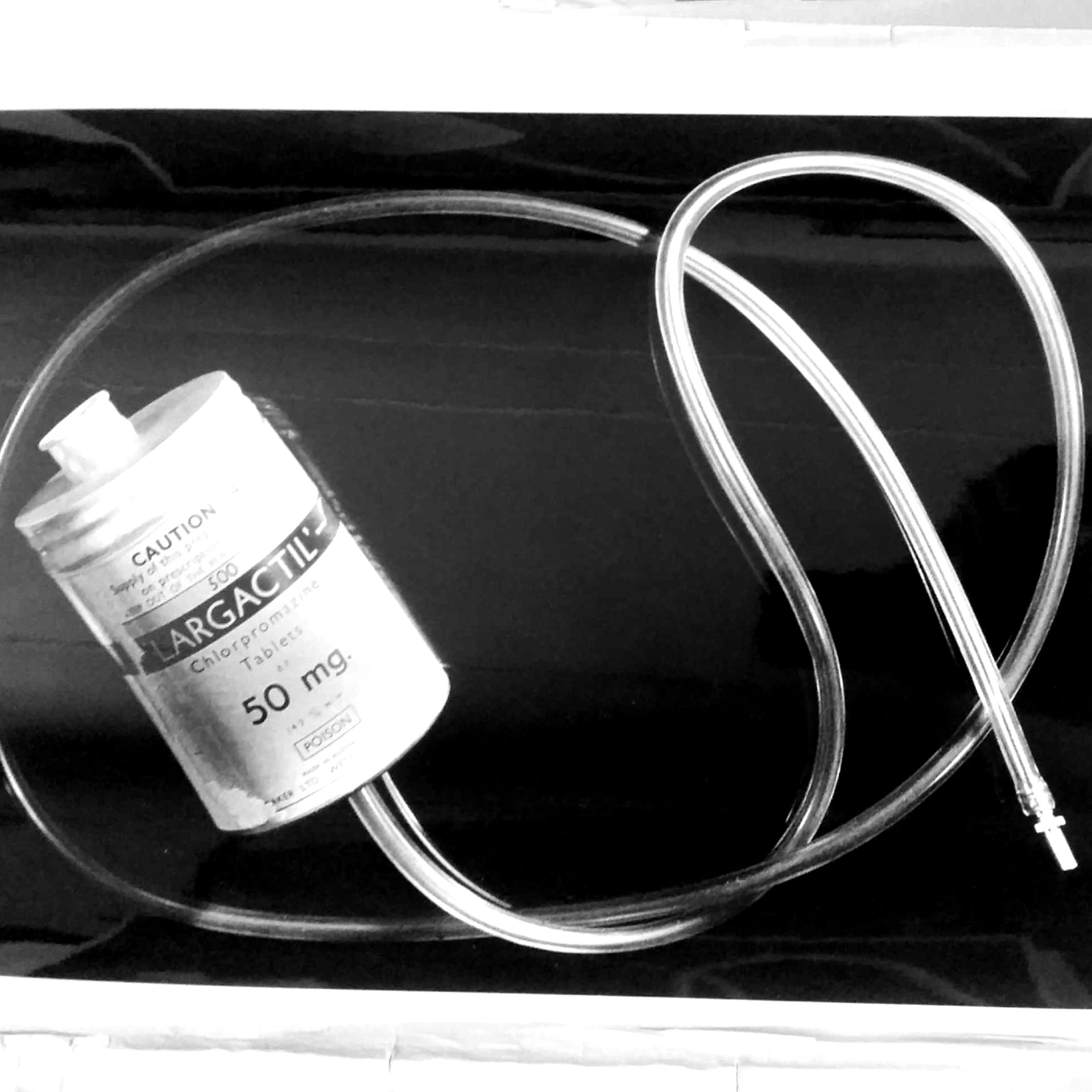
ABC Listen, podcasts, radio, news, music and more. A pig gets shot and this nearly starts a war. A pastry shop gets trashed. War. A football match turns ugly. Also war? Hey there. I'm Mark Vanell. On the No-Onsure-It-Coming-Bodcast, we are taking on history's most absurd conflicts. Four episodes, four wars and we called it this stupid war. Search No-Onsure-It-Coming-Bodcast on ABC Listen, or wherever you get your podcasts. I'm Claire Wright and this is Shooting the Past, where each week a different photograph helps us dive deep into Australian history. Okay, so the thing is, I'm staring at this photograph and I have absolutely no idea what I'm looking at. Damien, what do you reckon this is a photograph of? Some kind of medical device.
Looks like some kind of medicine and a tube, hospital equipment. Something is stick down, something I have absolutely no idea. What do you think this is a photograph of? I have no idea. It's tablets. I don't know what is that. I think that this is a photograph of a big, dim drum of oil. It's got a hose coming out of it, although it says it's 50 megs, so it must be smaller than that. It's got me stuck. So, Gemma, when you look at this photograph, what do you see? It looks like it's something that you don't know can kill you until it does. Clearly, the people in the ABC office aren't going to be any help identifying the object in the photo. So, I'm going to describe it to you that chances are you'll be just as clueless. The object is made up of what appears to be a plastic medicine bottle. On the bottle, it says, La Gactole, 50mg poison. And cascading from the bottom is a long, clear tube.
The tube is so long it's coiled around itself like a pretzel. And at the end of the tube is a tiny metal valve. And that's it. That's why I can't stop staring at this photo. The more I look at it, the more curious it becomes. Is the object a device for smoking drugs or tobacco? A backyard bong maybe or a homemade hooker? Or is this a police exhibit? Perhaps the long tube was used to strangle a victim or administer a deadly narcotic. I could reel off possibilities till the cows come home. But I suspect I will never guess. I'm going to need to call in the expert. The woman who showed me the photograph in the first place, historian Kate Davison. What it is is a penile plethysmograph. A penile plethysmograph is a machine that could be used to measure volume changes in the penis.
And this is a diagnostic tool. It's basically designed to test responses to erotic stimuli. What you see in the photo, so we can see the bottle, we can see the rubber fitting on the top. And we can see the long plastic tube. The metal fitting on the other end of that tube would go into a machine which is called a transducer. And a transducer is an electronic machine that measures volume change. And that transducer would be connected to people might be familiar with the image of a polygraph. So you have a sort of a pencil attached to a lever that records changes on a piece of paper. And the piece of paper moves through the machine. So what you get at the end is a nice line which indicates when volume has increased and when it has decreased. This particular plethysmograph in this photo was made by Australian psychiatrist Neil McConaughey. And this particular photo comes from his personal archive. So the object in the photo is a penile plethysmograph, something I've never heard of before, let alone seen.
Kate Davidson has the photo because she's researching the work of Dr. Neil McConaughey as part of her PhD into the history of a version therapy in Australia. A version therapy Kate explains to me was a form of treatment for homosexuality. Remember that in the 1960s when McConaughey was practicing homosexuality was not only classified as a mental disorder but was in fact illegal. Oh, who comes it up? Hey, Bobzie. I'm sorry. To find out more of the story behind this bizarre diagnostic device, I've come to the Sydney home of retired archivist Fabian Loskiavo. In 1971 Fabian was a patient of Dr. McConaughey. Fabian is warm and inviting but I have to admit his home is one of the most curious places I've ever been. There's a massive wooden church altar next to the bathroom and every inch of wall and surface space is covered in images of Jesus, various popes and random saints.
In classical, other satirical. Fabian's house is like a gallery of religious iconography. So how did his life intersect with Dr. McConaughey and the object in this photo? And just a heads up. This story has some strong themes and language. There's two Fabians. There's the one that loved that intimacy. And then the other one that hated it. And wanted to get rid of my sexuality and I had been told there was this doctor who would do that. And Professor McConaughey said to me, what we're going to do for you is we're going to be able to inhibit your sexuality. And that will mean you won't be compelled to go and do the things that are upsetting you. And it was exciting because I thought I'd be able to get rid of my sexuality altogether and maybe go back to the seminary and lead a life without these troubling desires. It looks innocent enough doesn't it? Lots of young people hitchhike but sometimes a homosexual who pray on those least able to defend themselves.
And it's a good looking but that is enduring lunch. Ralph showed him some pornographic. One never knows when the homosexual is about. He may appear normal and maybe too late when you discover he is mentally ill. So it's a very strong message that you're receiving from your family, from society, from the medical establishment that you have a problem and you can overcome this problem through treatment. Yes, yes, but there were contrary voices. My best and longest friend from third class, he was in a relationship in Melbourne. He begged me to come and visit him and he said, don't go ahead with this people at another church. At Christchurch and Lawrence said, it's not necessary to do this. There were contrary voices but I chose not to hear them. Anyway, they weren't as strong as the ones that were saying to me, I could start a whole new life now without this thought in my side.
And that's the thing that exposes me to sadness and heartache and sickness disease being bashed up and everything. Tell me what you see when you look at this photo. Well, I see a container that's got a rubber stretched over it but it's exactly the thing that I had for put my penis into when I was having a version therapy. When I look at it, it brings back a certain embarrassment because I had to undo my trousers and pull them down to put that thing on. And I felt very uncomfortable and embarrassed. But most of the time there was only myself and another person who was operating this thing in the room. But on one occasion, a group of medical students came in and I really felt very distressed and embarrassed.
So when I look at this photo, I know that that's the thing that they used. And can you describe that treatment too? Yeah, they put the wires on your fingers and then put your penis in that thing that is in the photograph. Then you sat down and you waited and sometimes a slide would come up and you'd get a shock. And sometimes you wouldn't get a shock. Also, there were strange, very strange, what we call today videos, I guess, of trains coming in and out of stations and red spots and green spots on the screen. Also, even then, to me, Antiki looking firm of a naked, baby, tiling and a naked man tiling. And the train would come in again and people would be getting on the train and off the looks like red for a station. Old, the old rattlers, as we call them now.
And then you'd wait and then a slide which you'd selected. So before the treatment, I had to look at hundreds and hundreds of slides and make a note of the ones I thought were exciting to look at. Is that the word they used exciting? I think so. I don't think they said erotic. I was very coy and still am about all the language. But certainly there were three or four at the most out of hundreds that I thought were really lovely and were nice to look at and nice to fantasize. Oh, I could be with that boy. And so those were the ones that came up. But sometimes you got a shock, sometimes not. And you had to tell the assistant or professor what level of pain it was from north to 10. And the whole time this is happening, you're sitting there with your pants down, hooked up to that thing with the metal end attached to the machine.
Yes, I only understood that at the end and only vaguely when the assistant showed me the graph. And it showed that the he said, this is the pinile response. You see, see how it's going down like that. Now you're doing okay. And so I look, I like looking at the slides, but then I didn't because I sweated terribly when I thought when we're going to get the shock. Because you didn't get a shock every time they put the slide up. And this happened three times a day just for the week as I remember it. And you were an inpatient during the start? Yes, yeah, at the psychiatric ward. And how were you treated in the times at the hospital where you weren't undergoing the treatment itself? I was left alone, but one day a nurse came in and when she said, what are you doing in here? What's the problem with you? And I told her what was happening and she got very angry with me and said I was taking up a bed for someone who was genuinely sick.
And I was stupid and silly for doing such a thing. So after that week of treatment, did you just go home? I went home. I was due to come back for a booster six months later. So when I did turn it up again for the booster, I just burst into tears. And Professor McConicky then said, well, we won't do another booster at this stage. I want you to go and see this person, an erotor referral to the Smith family in Crown Street. And I went and asked this councillor, psychologist, was very nice. And he taught me some relaxation. And then he started encouraging me to go out and socialise in bars and meet people. So I didn't go back. I felt at the end of that week, I've done, I've paid the price. I've done everything that I can to do what the church or God wants me to do.
And now there's nothing more to be done. After that, that was it. And as the months wore on, I found that at uni, I had the gay society, gay socket, as it was called. I started meeting people, my own age, going out and finding partners. I found it all very challenging and interesting from then on. Fabian's treatment under Dr McConicky didn't change his sexual orientation. As a uni student, he learned to accept and embrace his homosexuality. Professor McConicky, do you regard homosexuality as a sickness? As a mental disturbance? No. Probably homosexuals identified as such, slightly more likely to seek psychiatric help. Is this because of the homosexuality or is it because of the social problems that come because they are homosexual? Precisely. I have a thing myself that saves a problem. Dr. Neal McConicky, speaking in a debate about homosexuality on ABC radio in 1976.
So who was Neal McConicky, the man who made the contraption in this photo? What were his motivations? I meet a story in Kate Davidson in the Brownless Medical Museum at the University of Melbourne, surrounded by the little glass bottles and surgical instruments of a bike on ERA. McConicky did his medical degree at the University of Queensland. Following that, he came to the University of Melbourne where we are sitting today and he did his psychological medicine qualification to become a psychiatrist. And his main interest at that time was schizophrenia. So he was very, very interested in schizophrenia research. He came up with a few new concepts in that field. After he did his qualification at the University of Melbourne, he went as many people from Australia did at that time. He went abroad and did some time at the Mordseli Institute in London. And this was the world-famous psychiatric institute at the Mordseli Hospital.
And he spent some time there. And the Mordseli Institute at that time was the, really, towards the late 50s, it was becoming really the global hub of behaviour therapy. McConicky spent some time there in London and then he came back to Melbourne where he worked here in one of the hospitals for a time. And then in 1964, he was given a position at the University of New South Wales, specifically to undertake research into behaviour therapy. And so he started his position there at the University of New South Wales and he was working at the Prince Henry Hospital as well. So it was an academic and a clinician. Correct. The other important thing to say about McConicky is that he was politically very clearly identified with the left. He considered himself a communist sympathiser. He would proclaim himself to be a Marxist. And I mention this because we often don't think of the way that politics affects medicine.
But for McConicky, I think that this was really significant because it certainly shaped his particular brand of humanism was very, very much shaped by his ideological views on the world. And he also, I'd like to point out, he was also a Thessian. So he was very interested in theatre plays. He actually wrote several articles analysing books and plays. He was a huge Henry Gibson fan. And he would often quote these people in his scientific papers, which is something quite unique and unusual. He was definitely someone who was interested in the arts and had quite a holistic approach to life and people's experience of the world. And I think that that really drove him. I would say that he was humanist. He had a humanistic outlook. And he was interested in really helping people come to terms with the world. People with great difficulties in a variety of different ways. Did McConicky have the idea that he was going to discover a cure to homosexuality
in the way that medical researchers today might be hoping to find a cure to cancer? He was extremely agnostic actually about the idea of a cure. He wasn't interested in curing or changing people's orientation as such. He was interested, this is his words, so we can take it with a grain of salt, perhaps. But he felt that what he was doing was assisting patients come to terms with the current social constraints. In whatever way that happened, he thought that he was able to help patients overcome something that they couldn't deal with themselves. I would say he was scientific to a fault. I have spoken to one of his former colleagues. In fact, who told me that he himself, he is gay today, and he himself had the homosexual desires at the time that he met McConicky and he asked McConicky, oh, this is actually someone who wanted to work with him as a postgraduate student in the lab. And he said, oh, I would be interested in trying this on myself. And McConicky said to him, what on earth would you want to do that for?
You seem perfectly well-adjusted. So he was not interested in trying to change people who were happy with themselves. He really was trying to help people come to terms with current social constraints in whatever way they felt they could manage. I am personally critical. I have a very, very critical lens on this as a historian today. I don't think that it was particularly justified, but we can only take the man at his word. Social attitudes were one thing, but legal oppression was another. Given that homosexuality was a criminal offense, in some states up until the 1980s, how many of Professor McConicky's patients came under his care as a way to avoid going to jail? Out of the 40 patients that he saw in his first study, only two of them were at that time facing prosecution. There were two of them going through court proceedings and the rest, the other 38, were all there, you know, voluntarily.
They had come seeking him. Persecution, discrimination, having the shit beaten out of you, being abused, being spat on, being disowned by your parents. Bound to make you feel a little off. That's Dr Sue Willes. Sue was an academic at McQuire University, whose doctorate investigated the politics of the women's liberation movement in Australia. She was also a founding member of CAMP. CAMP stands for the Campoing its moral persecution, and it was started in 1970 as an organisation that would be openly, homosexual, to fight for changes in the law and psychiatry and the churches and everything, up until that time. Most organisations, well, there was only one, and they were very closeted. Nobody came out and said, we are homosexual, we are fighting for ourselves. In 1973, Sue recorded a long interview with Neil McConaughey for CAMP's magazine. I wanted him to explain what he did.
I had prepared myself. I read all of the articles that he had published about treating male homosexuals, and even in the articles, he seemed to be unaware that he was dealing with humans rather than subjects. And that came through. I used some of the quotes from the interview with him and from his articles, what he was saying about treating homosexuals. So I asked him what it was, how he treated it, why he did it. I asked him whether he felt that he was making it worse for change. And he said he didn't think so. I mean, he thought he was doing two things, I think. One, he was helping people who wanted to change their sexual orientation for whatever reason. He classified them all as willing, which is a bit hard to come to terms with if you refer to the bullet courts.
But also, he was very, very curious about the way the brain worked in terms of sexuality. So it sounds like he was very generous in all of this time, but with his ideas. Yes. And did you were you persuaded by his arguments? Absolutely not. I went in with a pretty close mind. And in a sense, I guess I was trying to convince him of a new approach. I mean, to get him to understand that the biggest problem that homosexuals faced was not because of their homosexuality, but because of the reaction of people to it. In other words, it was the beginning of us talking about homophobia. And it came from developments in psychology and sociology about deviance theory. The creative society creates deviance. People aren't born deviant. So the idea was that you needed to educate society to... I mean, in general, yes, we needed to educate society, which is why at every opportunity we spoke to groups, school kids, church groups.
We were cheap after dinner entertainment for lions and rotaries, and we did it. But I had thought naively, obviously, that we could get Mokon to stop offering a version of therapy. It didn't work like that. I think he had too much invested in it and career wise. He was a socioprofacer in psychiatry. But what did happen was that we convinced homosexuals to stop going to get treatment from him and others. So he stopped doing it because he couldn't get any more patients. So did Mokoniki stop practicing a version of therapy because gay men like Fabian stopped going to see him? Or did Mokoniki himself have a change of heart? Realising the folly of the pletheismograph and the science that it was based upon? He disputed, in the end, the idea that a version of therapy acted by a mechanism of conditioning was actually not really getting to the heart of what Pavlov's ideas were.
So this was one of the reasons why he abandoned it. Another reason was simply that he was affected by the Gay Liberation Movement. He really took that very seriously. It's interesting. At first he was very, very shocked. He was shocked that people might have problems with what he was doing. He went to the American Psychiatric Association conference in 1970 and presented a paper there. And that was the first time that he was confronted by activists. The prize. And he came back to Australia. And that's when he began trying to engage Gay Liberation and Women's Liberation activists. And there are some very good stories about activists confronting him. He was pelted with eggs at the conference on liberation movements that he tried to organise. Gay Liberation had street theatre at University of New South Wales on the Library of Lawn, where they would imitate their version of a version therapy,
which was obviously very exaggerated and not very accurate at all. But the early 1970s was really when Mekona Hee came into... I don't want to overstate it and say that he came into conflict with the Gay Liberation activists, because actually there was quite a lot of dialogue between them. And he ended up actually becoming quite a vocal advocate for change in the Australian New Zealand College of Psychiatrists. He supported their own decision to remove homosexuality from the list of mental illnesses in conjunction with the changes to the diagnostic and statistical manual. He was a great supporter of that change. So Kate, we're sitting here today at the University of Melbourne in the Medical Faculty among the ruins of science. How is mechanically remembered among medical circles today? I think people have very, very mixed reactions to his story. He's such an interesting figure because he doesn't fit into any of the neat characterisations. The slogan of the gay movement when it arose in the 1970s was psychiatry as the enemy.
But he was not interested in zapping the gay away as such. He was really... And it's difficult for us to kind of conceive of this today. He was really interested in trying to give people the tools that they needed to adapt to whatever society up there regards as normal. Fabian, if Dr. McConicky walked through the door right now, what would you like to say to him? I'd like to ask him where the slides are, because I'd love to see just those three or four images again, because I think they were aesthetically beautiful as well as exciting. But then I'd say to him, you did promise me that it would inhibit my sexuality. So I got the idea that you were going to kill me completely and it didn't. Maybe you should have been clearer or maybe you shouldn't have taken me on. But I would say to him, why were you doing it?
But I don't think I'd want to throttle him. I think I'd understand that he, for his own reasons, was caught up with this kind of understanding of psychiatry. And I don't want to be a victim, except by an... ...due to... If you want to see the photograph for yourself, head to ABC Listen. My thanks to guests Fabian Lachavio, Kate Davison and Dr. Sue Wells. This episode of Shooting the Past was produced by Michelle Reiner, with production assistance by Sophie Kouchman and Sound Engineering by Angie Grant. And you can catch up on the full series of Shooting the Past on the ABC Listen app or wherever you get your podcasts. The evidence is pretty strong now that we can't alter their sexual orientation as its biological entertainment. What we can do is give them a jar of them, treatment as no way is work, an increased control over their homosexual behaviour, or help them to make heterosexual behaviour if they want them.
If someone said to me, today I want to change, I'd say, well, you'll still be human, you'll still love and hate, and you'll still be happy and sad. Hundreds of sessions of electric shock won't stop the desire. Well, it should be exposed for being what it is. No Fabian, I've just got to say thank you. You've been incredibly generous to us today. I hope that you telling your story also encourages others to share their stories. I hope so too. That'll be great for them to be able to talk about it because it's really good to be able to say, well, glad that's over. And Valet Fabian, who died in 2023. Shooting the past is an ABC Radio National production recorded on unceded Warundjeri land.
You've been listening to an ABC podcast, discover more great ABC podcasts, live radio and exclusives on the ABC Listen app.
More episodes


