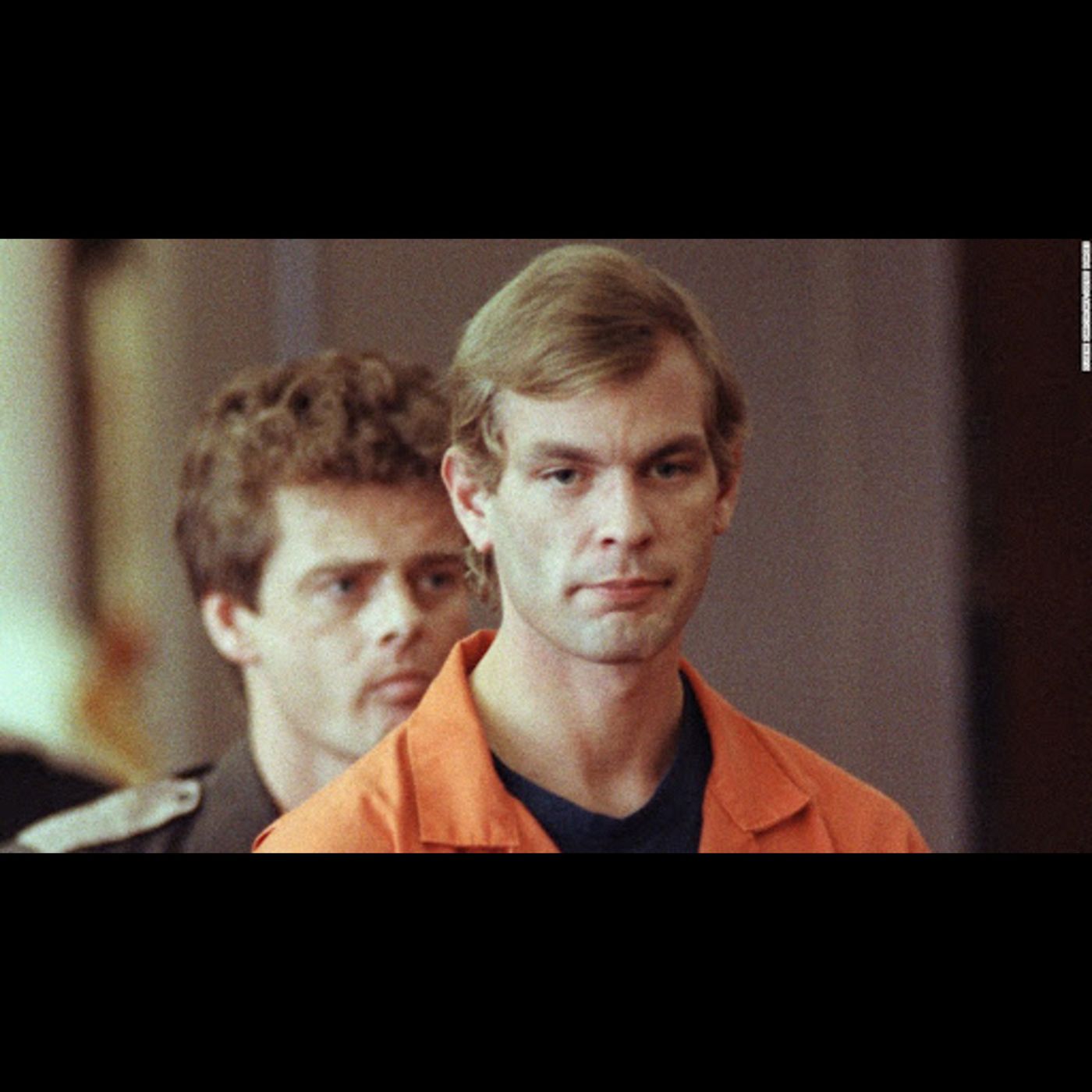
Serial Killer Documentary - Steve Wright: The Prostitute Serial Killer
About this episode
Get every episode summarized
Each time Serial Killer Documentary Show publishes, we email you a written briefing from the transcript — the topics, who appeared, and any specific claims, with the ad reads skipped.
Email me new episodesFree for 3 shows. No card needed.
Hosts & guests
Transcript ready
550 searchable segments. Every word is indexed and playable.
Full transcript
Serial Killer Documentary Show — Serial Killer Documentary - Steve Wright: The Prostitute Serial Killer. Machine-transcribed; use the interactive transcript above to jump the player to any line.
You're going to book me. I might get a mug here. It's that gorgeous of money. And I believe I can run to see from America. Download V-Line now. During the winter of 2006, Ipswich in Suffolk was paralyzed with fear. The bodies of five missing prostitutes had been found by police, sparking the biggest ever manhunts in the east of England. He's targeting these women because they are vulnerable, because they are easy for him to access and easy for him to control. As the horror began to unravel, it became a race against time to catch the killer. The police questioned over 2,000 motorists with no success. He had to be caught, because he wouldn't stop until he was. Steve Wright, through this whole period, was sitting at home watching this whole drama played out
on 24-hour news channels, thinking to himself, I'm doing this. I'm controlling this. I'm going to try and get away with this. Steve Wright, the man dubbed the Suffolk Strangler, had earned his place as one of the world's most evil killers. The Suffolk Strangler Steve Wright is one of Britain's most prolific serial killers. In the space of just six weeks during the winter of 2006, he murdered five young women who were working as prostitutes on the streets of Ipswich. As the girls disappeared one by one, the world's media descended upon Suffolk.
There was an inevitability with each breaking news report that another body would be found. Two bodies have been found near Ipswich. This is breaking news and we're giving it to you as we get it. But Steve Wright's story begins over 40 years before. Right was born in the Norfolk village of Erpingham in 1958, one of four children. He grew up in a military family living on RAF bases around the world with his father, Conrad, a retired corporal. He's a normal child. I mean, I have no aggression. He's a typical boy that just won an apply. But family life was far from happy and Wright's mother left when he was just eight years old. Wright and his siblings stayed with their father who went on to remarry.
Whilst he was living with me, there was never a problem. Never, you know, never see one even. He was happy. He had little barnies, I suppose, with his stepmother at times when he weren't a bit mischievous, if you like. But there's nothing that you would sort of think about an hour later. Steve was not a particularly bright young man, but Chirri and Arfin his own way, left school at 16 without any qualifications to speak of, and got a job working as a chef on the fairies which sailed from Felix Stowe to the continent. By the early 1980s, Wright had become a steward on the cruise ship, the QE2. And it was during this time he reportedly spent money on sex workers during trips to Thailand, which some experts believe may have altered his perception towards the opposite sex.
I think he's got an expectation of women. Women are there to perform a service for him to play a particular role. They serve a function for him, and that's something that we continually see throughout the rest of his life. He would often return home from sea panellus. He was a bit alone, I like, in a way. He didn't mix that much, but he did come over me at the weekends when he lived here especially, because he looked after the dogs when I too then, got the beers down the end of the road. Normal. So Steve Wright was a performer. He was performing a role as a guy who was interested in playing golf and going to the pub and going on holiday. He appeared to be somebody who was normal, somebody who fitted in, but behind that there was something all together different going on. Wright mounted twice, but both ended in divorce, with rumours of domestic violence. He struggled to hold down a job
and ran up large gambling debts. I knew he'd put money on horses, because when he got his weight from the bingo haul, I used to take his wages off him, believe it or not, and I said, I'll give you enough to see you through the week, because I wanted him to build up a kidney. They taught himself, eh? Wright continued to gamble and was eventually declared bankrupt, unable to see a way out of his debts. He tried unsuccessfully to take his own life. For him to want to gas himself in the car, it must have been something I were a little aware of, for him to get pushed to that limit. You know, whether he was trying to be friend young females, I think the girls that he was getting, that were younger than him, and whether they, in the end, they turned him down, and he couldn't face it or something, and he felt rejected or whatever. I don't know. When he was here, there wasn't a problem.
Where did he get done? Did he get so much in the debt that I pressurised him so much that he just broke? I think Steve Wright's alleged suicide attempts are quite significant. So what does suicide represent? It represents somebody trying to get control back. Somebody whose life has kind of gone beyond their grip and they're desperately trying to reel that power back in. And I think for Steve Wright, if we look at some of his earlier experiences, this is somebody who came to crave control. He wasn't in control of his, his life as the child, the family was moving around. It was quite transient, it was quite chaotic. And as an adult, I think he felt an intense need to be in control. And that was what he was essentially doing here. He was internalising, so he was being violent towards himself. In 2002, while working as a barman, Wright, now age 44, was arrested for stealing £80 from the pub till
to pay off his escalating debt. This petty theft would later contribute to his downfall. He'd been to court because he'd take money from the till. But he'd kept that from me anyway. So again, if he can keep one thing from you, can he keep others? By October 2006, 48-year-old Wright was living with a new girlfriend on London Road in the heart of Ipswich's Red Light District. In the same month, 19-year-old Tania Nichol went missing from her home. She came round to my arm of my 80-clock at night. It was something like that. And she wanted to live home. So I gave her a lift. I didn't want to tanner off of anything, you know, but we knew, far as old since then, she was taken cannabis or whatever. And I didn't know that she was in the drug so heavily, you see.
You don't know. We just talked like, like, like, friends. When we got there, she just got out of the car. One of the things I noticed was she just walked straight into the house. Whereas, you know, you might turn around and give a little wave. But she just walked straight in. So I suppose there's sort of like, there's drugs stuff that, it dulls your senses. So a lot of things. So Rob, you're of your life, really. And that was the last summer's song. The family was unaware that Tania was living a double life as a prostitute to fund her addiction to heroin. I didn't know that until afterwards. Obviously, she was doing that to fit to feed her habit, isn't it? That's what I've been told, you know. Before 2006, Ipsuits like many market towns of this size in the UK experienced problems with drugs. We had a quite vivid and lively prostitution scene.
There was around, in summer of 2006, we've done some research and identified around 70 odd women that were working on the streets of Ipsuits as prostitutes. The main issue, obviously, why they're out on the streets in the first instance. All these women were out there to feed the drug habit. They were all class A addicts. Another young woman working on the streets of Ipswich in 2006 was Jade Reynolds. Every morning I wake up, you know, I have a heroin addiction to fund, you know. So unless you've probably saved money from working on the streets the night before, you've got to lay there, not very well for the morning and for the day. And then I'd get up at the night time, put on makeup and clothes and pretty much go and sell myself down on the street, you know. It was cold, dark, you know. Very dangerous, but you don't think about the danger. You really just go out there and do what you've got to do. But it wasn't a good lifestyle. It wasn't an easy lifestyle, really.
There was a lot of emotion that would go with it and you would have to learn to switch off or let it overrun you, you know. And heroin is an easy way to switch up all your emotions. After Tanya Nichols family hadn't heard from her for 48 hours, they reported her as missing. Police began to investigate, but it appeared she just vanished off the face of the earth. We possibly thought she went with a load of people down the London somewhere and just stayed in a haze or something like that. The prostitutes go missing all the time, change cities. That's not unusual. Very seldom do they have many relatives who will identify their disappearance. Sometimes they do, sometimes they don't. As time passed, Jim became increasingly concerned about his daughter. You're worried beyond, you just go out your head, you know. You just can't think straight, you know, you're so worried. It really hits you with sex. And I think after about two or three weeks, it was sheer hell, not where she was.
And by then, you know that something's up. While Jim waited desperately for any news about his daughter, Tanya, on November the 15th, another young woman was reported missing. 25-year-old Gemma Adams. For a gemma to go missing, that's when you worry. Because Gemma would never go missing. You know, she's not like that. You know, she's always certain times, certain plays, this, that, that, you know. So, yeah, so that was when Gemma went, that's when you knew something was wrong. The police stopped nearly 2,000 people and over 500 cars traveling through Ipswiches Red Light District to see if anyone recognized photos of Tanya and Gemma. But they drew a blank. And it was a similar story when they spoke to the local sex workers. You don't report every attack, but there's loads of times where we get people trying to see our handbags or like, try and do a costus, you know, because we say no to them, you know.
You are worried and you are scared thinking, anyone, Gemma's gone now. I didn't know Tanya, but she's gone. Where are they? And you think, yeah, it could be me, I could be next, but I've got to go and get my money for my drugs, you know, and you have to go out there. You have to learn to put emotions to the back of your mind while you're out on the street. I can then go home and be really scared. But if I was going to be scared that the girls are going missing, I'm not going to be able to earn the money for my drug addiction. Then on December 2nd, 2006, the police got the call they'd been dreading. A body had been found in a brook on the outskirts of town. Right on the bend, right on the corner, with a head this end, facing upstream, her legs downstream, arms beside her body. Saw the hair flowing in the golden earring, and the head was on its side, and my immediate thought was one of the missing girls. Tanya's father, Jim Jewel, feared the worst.
By this time, I concluded that she'd gone. Quite honestly, I concluded that she was dead. That's what I concluded. Because by this time, she would have found her mother. Because she always found her mother if she's going to be back late or anything. She was good at it. But it wasn't Tanya. Police identified the body as that of 25-year-old Gemma Adams. There was no sign of a sexual assault, but her naked body had been dumped in flowing water. So finding any DNA evidence was going to be difficult. When someone dies, then there will be all sorts of evidence on the body, in the body, that tells you all sorts of information. If you leave a body in running water, then the water will quite literally wash away evidence. Equally, the water will bring other things onto the body that can contaminate it.
So you've got a double problem, really, of things being lost, and things being brought to the body, which makes interpretation more difficult. Unsurprisingly, the media were starting to take notice, including Paul Halleson of Sky News. My boss said to me that I should go to Ipswich. At the weekend, one body had been discovered. To him, something didn't seem quite right. He wanted me to get under the surface of what was happening in the red light district, because we knew that two prostitutes had gone missing. So what was this all about? Was this going to be something bigger? For a week, forensic teams scoured nearby woodlands for clues, and divers explored the brook. Then, just when they were about to call off the search, divers found another body. This time, it was Tanya Nichol. I think when I got the actual news, I can't remember my reaction.
Because it was something like, well, that's, you know, I'd or in me hard, I knew already. Just like Gemma Adams, there was no sign of sexual assault, and the rushing water had stripped Tanya's body of any DNA evidence. Suffered police called on Commander David Johnson from Scotland Yard, a homicide expert. So I joined the investigation around the time the second victim body had been discovered, and that initially meant I went to Suffolk to speak to the chief officer team to assess the situation. I'm not sure I would say they were overwhelmed, I think they recognised the need to bring additional resources in to avoid that situation, and that's what they did. And Suffolk I know had probably 100 to 200 people initially engaged in this inquiry. But that number quickly grew and Suffolk suddenly found themselves, of course, at the centre of a huge incident with significant media interest globally.
So by the time they discovered the body of Tanya Nichol, we had already begun to spend a bit of time in the red light district, late in the evening, early in the morning, just to see how prevalent prostitution was in Ipswich. And it wasn't difficult to find girls on the streets very late at night. We spoke to a number of them, they were aware that two girls had gone missing. We were almost delivering them the news that a second body had been found. We were almost telling many of these girls for the very first time that the body of a second woman, almost certainly a prostitute, and almost certainly Tanya Nichol, had been discovered in cop-dock. Their reaction, they weren't phased by it, it seemed. It's scary every night going out on the streets, it's scary every night, you could get attacked every night, you know. To be honest, doesn't matter how scary anything is, really, you've still got to go out
and do it. That tears at your heart and you think, oh God, you know, what's happening? Who's next? You know, but even though you're discussing what if it could be me, you're still out there on the streets and you're still selling yourself because you still have a drug addiction, a feed. You've got to put all in worries to be back in your mind. Police were at a dead end, they had no clues and nothing to link the two murders. They watched hours of CCTV footage from Ipswich's red light district and finally found something of significance. Tanya had been caught getting into a dark car on the night of her disappearance. Could the driver of the car be the killer? Hanford Road, Burlington Road. That was a place you would stand there, which went out at night on that corner and they they found footage of a... just a brief glimpse. The CCTV was captured outside of a supermarket on London Road. The same street where Steve
Wright was living. Unfortunately, the footage wasn't clear enough to reveal the number plate or identify the driver. From my point of view, it's professionally very frustrating. The whole emphasis of our role is to protect the public and we take that very seriously. And so each day when we're carrying out the investigation and trying to identify this offender, it's very concerning to us when we still don't have an identification made. It had been eight days since Gemma Adams had been found murdered. As the police continued with their investigation, they received some more shocking news. On December 10th, just two days after the discovery of Tanya Nichol, the body of a third woman was found in a woodland in nearby NACTIM. The 10th was a huge day, really. I had literally driven out of it, which for about 10 miles
when I got a phone call from the news desk. And the blood really felt like a drained from my face, from my body. Because shivers down the spine, we were now into serial killer territory. I think it would be fair to say yes. There was an extreme concern being expressed in it, which not just amongst sex workers or women involved in that line of work, but across the whole of the community. This was a significant event, completely unparalleled, as far as I know, in the history of hip switch in that area, which is normally very quiet, rural town. We were now dealing with a serial killer almost certainly. And also, whilst the national media, the UK media, we're all over it. By now, this is when you began to see the beginnings of the international interest in it as well. Distinctive tattoos on the third body led the police to identify her as Analy Olderton, who've not been reported missing. She'd also been working as
a prostitute in hip switch. She was a 24-year-old mother of one. She was a mad, kind of happy, like a crazy chick. I lived in my first squat with Analy, really nice girl. I would say she's like a free spirit. She's like, great, I'm Annie, this is me. She's kind of cool, I'd like to hang around with. The media's focus on hip switch intensified even further. I'd raised back to the scene in Nackton, where the body of Analy Olderton was discovered. We knew very little at that stage about in what position it lay, but what we did know was that it was on dry land. And this was a twist in the story, because the two previous victims had been deposited in water. So the police, for them, it was very exciting that in terms of DNA, this could be something that they could work with.
The autopsy showed that Analy had been strangled and tragically revealed she'd been three months pregnant. So the evidence that you'd see in a strangulation, you'd see bruising on and in the neck, you'd often see fine pinpoint hemorrhages in the eyes. These things really point you very directly towards that cause of death. She'd been left in the crucifix position with her arms outstretched. There is a tendency to want to attach a lot of meaning to that. Many people were looking at this as it unfolded, saying, well, there's some religious motivation here, but I don't think it was about that at all. It was about essentially getting attention. Even serial killers get bored. They want to mix things up a bit. They want to try something new. The police still had no DNA, no clues, and no leads. The pressure to catch the killer was mounting. There's always pressure because you have the media
who are consistently requiring information because there's 24 hour media, and they want to know what's happening. There's anxiety being expressed in the community, and of course the police themselves want to catch this man as quickly as possible. I'm losing my friends. What I don't want to keep losing my friends on, I don't want to lose my own life. You do think about stuff like that. It's not something that you don't think about. The world's media descended on Ipswich and the cameras were all pointed at the police. I think this case was one that attracted so much attention because it was unfolding in front of our eyes. This was the era of reality television when that started to become very popular. We were seeing it as it unfolded on 24 hour rolling news, and you never knew what was going to happen from one day to the next. Detectives told prostitutes to stay off the streets, but their warnings were largely ignored. A local news crew interviewed one of the girls anonymously. Why have you decided to come out tonight? Because I need the money. I need the money, you know.
Despite the dangers. Well, that has made me a bit wary of getting into cars, you know. But, because you will do that tonight. Well, probably. The woman interviewed was Paula Clanel. Paula Clanel. She had children and she was always trying quite hard to change her life. You know, she was happy when Zora, you know, nice girl, but yeah, she tried quite hard, you know, to get out of it, you know, because it's a very hard thing to get out of the addiction if you still live, generally in the same town. But yeah, she was trying, you know, to get away from it and change your life, bless her. Just six days after that news report, aired, Paula Clanel was missing. In December 2006, the police in Ipswich were under mounting pressure to catch a prolific serial killer. The bodies of three dead prostitutes
had been found in just 10 days. They had no clues or potential suspects and the killing wasn't about to stop. Two more young women had gone missing. 24-year-old Paula Clanel, who'd been interviewed on the news just days before, and now police receive reports of a fifth missing woman. 29-year-old and let Nichols, the best friend of fellow prostitute, Jade Reynolds. And that was a girl for me that I was so humbled to know, you know, she always took time for me, she'd want to know if I was all right, there's anything she could do, she'd do anything for anybody else, she was always well kept, she'd greet you with a smile and a happiness, you know, you felt all right when you were with her, and I did, I could think, oh yeah, wicked, there she is, you know, I can't, it was a relief because I know that I could talk to her, she'd understand my problems, just so when she went missing, that's kind of like tearing up piece of my heart.
As the police searched for Paula and Annette, there was a macabre inevitability in the air amongst the massive international journalists who'd gathered in Ipswich. There was almost certainly going to be another discovery, where was it going to be, who was it going to be, it was nail-biting, and whilst it wasn't, it can't be described as fear, it was really palpable, you sense that from the people in the town, you sensed it from your colleagues, but also from other colleagues, from other media or organisations, and the police as well. On December the 12th, another body was found in Levington, just a mile away from Naktin, in the same woods where Analy Olderton had been discovered days before. While somebody was out walking their dog, they stumbled upon the body of a fourth victim, just a few metres away from the main road in Levington.
In the undergrowth, also this time, not in water, again the DNA was important in this case, but what seemed quite strange about this one is that it almost had an appearance of a rushed approach that this body was deposited by the side of the road, albeit a few metres off the main road, it had the appearance or it seemed as if it had been done quickly. The police sent a helicopter up to survey the woodland for evidence. As it circled the area, they made a further gruesome discovery. Another body was lying in the woods only a hundred yards away. The naked bodies were those of the missing women, 24-year-old Paula Clannell and 29-year-old Annette Nichols. I don't think I'll ever get back what I had with Annette with another girl, you know, this is the most beautiful woman that I'd ever known that had become quite important to me,
that I could trust, you know, and now it's not there. I didn't go out after that, it was quite sensible, because I like, I couldn't, I emotionally couldn't go out and work on the streets after I Annette was found. Five women had been murdered in Epswich in just six weeks. The press had named the killer the Suffolk Strangler. Older to the Clannell, they were both asphyxiated. That was the cause of their death. In the other cases, the changes after death really prevented pathology, giving a definitive answer, although I think it's reasonable to assume that someone who's killing five people in a short space of time probably used similar methods. Interestingly, none of the five victims showed any sign of sexual assault. So it isn't a rape murder. It's not, oh, I've satisfied myself, now I'm going to kill you, murder. It is a targeted murder without a sexual element.
He is very much feeding off the media frenzy that's been created around his crimes, and he's increasingly feeling even more in control of what's going on. So he's changing the way that he's doing things, and he's looking at the reaction from the media when he does that, and he's absolutely loving it. He believes he's fulfilling something. Maybe he's convinced himself that he's clearing the world of prostitutes. They're all dumped, very really quite close to each other. Demonstrates that he thinks he's doing something in his own fantasy world that is cleansing the world of evil or cleansing the world of dirt or cleansing the world of inappropriate sexual appetite. We'll never know. I don't think right probably knows now. All I do know is that he had to be caught because he wouldn't stop until he was. On December the 15th, Tanya Nichols' dad, Jim Jule, made an emotional plea for the killer to
turn himself in. Tanya has been taken by someone. Who needs to be found? We ask for anyone who knows this person, or persons, to come forward and contact the police. With increasing pressure to make an arrest, police decided to question a local 37-year-old man. He was identified because he had spent considerable time in a radio car talking to a radio journalist and other TV journalists. I spent a bit of time with him to try and get to know his relationship with the girls. There was a kind of an understanding between them that used to scratch my back and I'll scratch yours. He was loosely associated as a friend of one or more of the girls who were murdered. And at that stage he became of significant interest in inquiry. There was a very strong feeling from some of the media people present
that this man was the right man and should be looked at more seriously. With a suspect in custody, detectives received a lead from the Forensics Lab. The three bodies that were found on dry land did have DNA evidence on them. In a one in a billion chance, the DNA found on all three women was the same, but whose was it? The DNA was run through the national database and police got a match. But to their surprise, it wasn't the man they had in custody. At that time, as it still stands, the other person has arrested or convicted of an indatable offense or serious offense, they can have their DNA taken and held on the database. The DNA matched that of a local man who'd been convicted of stealing £80 from a pub till in 2002. 48-year-old Steve Wright. And it was that match which led to significant additional work, including then the CCTV evidence which showed vehicle being used by right moving
between some other locations around the relevant times. So he became a major suspect in the inquiry. Over just six weeks, five prostitutes had been murdered in Ypswich. The police finally believed they'd found the killer. 48-year-old Steve Wright, whose DNA had been found on three of the bodies. Wright had not been a suspect at any point during the police investigation, even though he had been stopped during routine checks of the red light district. Whilst the world's media was focusing on a local man who police currently had in custody, Wright was put under surveillance. Once the police had discovered the DNA, it matched Steve Wright immediately, although from a distance, they can quite a brave move actually, not by arresting him straight away but watching him, seeing his movements. What was you doing? Where was he going?
Just for a 24-hour period, and ultimately, as we were all elsewhere looking at somebody else, another suspect van, they had made the rest. They arrested Steve Wright. It was a huge shock to Wright's father, Conrad. I didn't believe it, it's similar to that. Two people come to my door to say your son has been arrested and I didn't believe it. I think the only emotion that Steve Wright would have felt upon getting arrested was annoyance. This has stopped the media circus that I've been out the centre of, and I think also south-pity. Oh, terrible. I'm now going to be in prison or I'm going to be in a police station. I'm not going to be able to do the things I want. He would never have had any kind of expressed empathy for his victims or their families because they just didn't matter to him. At the time, I split up my partner, moved into my mum's house and I woke up one morning with
the world's media on my doorstep to put it bluntly. They said, did you know Steve Wright was like a client to your door? I didn't even know. My mum didn't even know. But then it all came out that it turned out that he was actually my first partner, which was shocking. I thought, oh my god, I was right there right there. You know, and yeah, I was kind of shocked. Really shocked, to be honest, to think I was that close to him. My name feels sick. During eight hours of interrogation, Wright made no comment. The no comment at police interviews is indicative of that power and that control. So I have all of this knowledge and all of this information. I know everything about these crimes and you want that knowledge. So I'm going to use this to my advantage. He knows everything that the police wants to know and is he going to tell them? Is he not going to tell them? That gives him a massive sense of control. Although Wright didn't confess to the killings on the 21st of December 2006,
the police charged him with all five murders based on the forensic evidence they'd so far found. The other suspect was released from custody without charge. Prosecutors now began the arduous task of building a solid case against Wright for the upcoming trial. Michael Krimp was part of the legal team. Of the five bodies that were recovered, two of them had been immersed for some time in water. And if there had been any DNA on their bodies, it had long since gone. And so in terms of DNA evidence, there was nothing to link Steve Wright with them. Detectives impounded Wright's car. In it, they found fibers from a fake fur jacket owned by a net nickels and more significantly traces of Paul the Clenel's blood. Wright really didn't do very much to conceal his movements. He drove his own car. He dumped the bodies from his own car. He wasn't very forensically aware of so many determined killers are these days.
He didn't know about DNA and fiber analysis and trace and all the other things we all become so familiar with as a result of television series and the rest. Wright pretty much did as he pleased and thought he could get away with it. And he thought he could get away with it because he thought that no one was going to reciprocate you. Horensic experts also examined Wright's home. They found the blood of Paul the Clenel and the net nickels on a hive his jacket. More conclusive proof that his encounter with the women had taken a sinister term. But there was no link between Wright and the deaths of Tanya Nickel and Gemma Adams, the two women whose bodies had been found immersed in running water. Investigators rewatched the CCTV from the night Tanya Nickel went missing and they were now certain the car that she got into was Wright's Blue Ford Monday. Forensic teams painstakingly
analyzed microscopic debris found in the women's air. Remarkably they found fibers from Wright's tracksuit bottoms, sofa and carpet fiber from his Monday. Both fibers in their hair and fibers in on gloves and other items that belonged to Steve Wright clearly linked him to those two as well. The game was up. This was a case that involved a lot of experts and a lot of expertise. And what it came down to was that they were able to place fibers from the bodies at Wright's property. They were able to trace place blood on articles of clothing and in his car we call it Low Cards Exchange Principle. You go and interact with somebody, you leave something of yourself there and you take something away from it and as clever as you may try and be you're always going to leave evidence of that interaction. Steve Wright was now
linked to all five women. His trial began at Ipswich Ground Court on the 16th of January 2008. Wright pleaded not guilty. To me he looked pretty cool about it all. He didn't seem particularly emotive about the evidence as it was being put to him. Well he had to explain the scientific evidence in this case which linked him very closely with all five of the victims. And so his explanation was that he'd been in close association with all five of them and obviously not long before they disappeared off the street. Wright argued he picked up the women for sex and that was why there was evidence of them in his car. The defence were arguing that it might have been a coincidence but no more. But his case began to fall apart under intense questioning. It was an odd picture that he portrayed because there was just too much coincidence in this case that the evidence provided
more than just coincidences that it provided the evidence that that damned him. We put to him various bits of evidence and said well was that just a coincidence. And to each each question like that all that Steve Wright said was something like well so it would seem or it appears so and he just couldn't deal with the questions that he was being asked about how all these apparent coincidences existed. On February the 21st 2008 after only six hours of deliberation the jury found Wright guilty of all five murders and he was sentenced to a whole life term. He was immediately sent to Belmarsh prison. He will never be released. I think the thing that's striking about this case is the speed with which Wright moved from being a relatively unknown minor offender involved in a minor theft to killing five women in a very short period of time and I am strongly of the belief that had he not been arrested he would have continued to kill. This was a man who was desperate to
be known desperate to be someone and by killing those five women the notoriety that he achieved effectively made him into someone. We talked about the Suffolk Strangler this man who nobody really knew suddenly everyone knew him he was world famous for being the Suffolk Strangler. I find it very difficult to call Wright a truly evil man deeply wicked deeply with no sense of remorse. To this day he has maintained his innocence he says he did not kill those five women. He goes even further to write to his father who in his father's eyes he did what he did and it hurts Steve Wright actually that his father doesn't believe him when Steve Wright says I didn't do it. His father looked in his eyes turned and walked out of prison when he said looking to my eyes do you think I did
it? It wouldn't make me feel any different whether I forgive him or not I mean the deed is done and I'm in a way responsible for him being out there you know I brought him into the world. Life will never be the same for the friends and families of those who were killed. You know I got to to a rest in place and saying then have a little conversation like you would you know and say I've come up to see your dear you know and have a little bit of emotion going there you know but there you are it's love isn't it it's always in our memory of course he is. Even now ten years later I can still I'm sitting here and I'm trying to be clean and I'm trying not to let my emotions get the better of me but there's so many things that I see and I think oh yeah net would love that I still I'll find it hard now and I'll find it hard like 20 years time you know that she's not here anymore it tore a piece of me out that I won't get back.
Some positive has happened in it which we have such a tragic turn of events and that that is for me is that there's no longer any street prostitution occurring in it's which. If I wanted a legacy for the five women that would be it that no other women would put themselves in such perilous and stark and dangerous situations. I think it's which we'll never forget those terrible times those few weeks in December 2006 where the world's eyes were on them for all the wrong reasons and they will take the vital lessons learned during that period forward they won't forget the women they won't forget the girls who were killed but they will move forward and try to not allow that period to effectively dictate their future. We may never know why right carried out these frenzied attacks or if there are other victims that have perished at his hands. He remains one of the UK's most prolific serial killers. For six weeks the whole world
watched in shock as the body count in Ipswich continued to grow. But eventually the forensic evidence brought justice for the families of all five victims and put pay to the killing spree of Steve Wright the Suffolk Stranger.
More episodes
More from Serial Killer Documentary Show

Serial Killer Documentary - - Larry Dewayne Hall Documentary
Serial Killer Documentary Show
Serial Killer Documentary - Adrian Prout: Narcissist Who Thought He’d Never Get...
Serial Killer Documentary Show
Serial Killer Documentary - Heriberto Seda: New York’s Zodiac Killer
Serial Killer Documentary Show
Serial Killer Documentary - A House of Horrors: Stewart Weldon
Serial Killer Documentary Show