
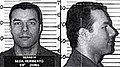
Serial Killer Documentary - Heriberto Seda: New York’s Zodiac Killer
About this episode
Get every episode summarized
Each time Serial Killer Podcast Documentary publishes, we email you a written briefing from the transcript — the topics, who appeared, and any specific claims, with the ad reads skipped.
Email me new episodesFree for 3 shows. No card needed.
Hosts & guests
Transcript ready
398 searchable segments. Every word is indexed and playable.
Full transcript
Serial Killer Podcast Documentary — Serial Killer Documentary - Heriberto Seda: New York’s Zodiac Killer. Machine-transcribed; use the interactive transcript above to jump the player to any line.
In the early hours of the 10th of August 1992, in Brooklyn, New York City, a 39-year-old woman suffering with long-term mental health issues found herself in an unfamiliar area near Highland Park. Patricia Fatte, who was, at times, homeless, a very vulnerable woman. Patricia was lured to the park by a stranger. The man then shot her twice and stabbed her more than 100 times. The vicious murder was carried out by Eddie Berto, Eddie Seder, who believed he was following in the footsteps of the notorious Zodiac Killer. He took the legacy of another serial killer and tried to make it his own. He prayed on the vulnerable. He killed at random, and he was utterly harmless. Within four years, Seder attacked more than nine innocent victims,
killing three. Being the Carbicazzordiac was in his DNA, it was in his soul, and he liked the attention, he liked the media, he liked the results. He sought out and stalked victims on the fringes of society to feed his lust for power and status, confirming Eddie Berto, Eddie Seder, the New York Zodiac as one of the world's most evil killers. In the early 1990s, Tero gripped the city of New York, USA. Eddie Berto, Eddie Seder, roamed the streets late at night, masquerading as the San Francisco
Zodiac Killer. It caused a lot of fear within the citizens of New York City, in particular Brooklyn and Queens, that there was now a serial killer claiming to be the Zodiac, and everybody recalled that the Zodiac and the San Francisco Bay Area in the 60s, and he was never apprehended, and this guy was claiming to be one and the same. In a city already overwhelmed with crime, Seder was shooting strangers in the street, but his attacks went unnoticed until he left a series of enigmatic notes, purporting to be from the Zodiac Killer. It caused the media frenzy, so we had to deal with this publicity and reporters, it put a lot of pressure on the NYPD. Sergeant Joseph Herbert was one of the investigators who spent years pursuing the New York Zodiac.
What the Zodiac was doing, he was doing males, females, black, white, Spanish. He had no specific target. I think it was just the best opportunity that he had, you know, he could get away with it. He prided himself on the idea that he got better and better at it, that he had trained himself to use stealth and surprise more and more and more, and that he became more accomplished as a murder. The chilling story of Heliberto Eddie Seder, the New York Zodiac, begins in New York City. Born in 1967, he was the eldest of two children. It was a tiny apartment in Brooklyn, but Eddie's mother was very proud. She wanted to do the very best for her two children. It was quite a dangerous part of the city to be in, and I think their mother really struggled in terms of keeping her children out of that kind of lifestyle.
Seder's father was absent during his impoverished childhood. They barely had enough money to eat at times, so Seder stepped into that role as the patriarch of the family. He was quite controlling, especially when it came to his younger half-sister, in terms of the kind of things that she did, the kind of people that she hung out with. He was somebody who voluntarily excluded himself from drugs and from gang crime. Eddie grew up being rather religious, but also strangely reclusive. Nevertheless, Eddie Seder was, by all accounts, a good student, very anti-drugs, anti-alcohol addiction. Seder really hated the drug dealers in the neighborhood, and he really didn't like the fact that his younger half-sister had some friends who were involved in drug dealing. He was casting judgment on other people for their choices, for their behaviors,
for their decisions. In 1983 at the age of 16, Eddie Seder was suspended from high school for carrying a weapon. He would never return. No longer in education, he now lacked a focus. This part of his life that is quite routine, that is quite predictable and stable, has now gone, and I think he feels an awful lot of resentment about that. He seems to create, at this point, his own very elaborate fantasy world. Within his bedroom, he doesn't go out much. He doesn't have a lot of friends. One neighbor describes him as the chronically unemployed recluse. The enraged teenager would never return to school. Instead, he tried to enlist in the US military. He'd fail to be entrance exam just by a few points, and this was something that he didn't take very well at all. I think this is something that he
saw as pivotal to his sense of identity in his future, and he became incredibly angry about this. He looks at the things that he tries to do, and when he fails to do them, it's someone else's fault. The world is pitted against him. And I think during the course of this rumination, he starts plotting. What is he going to do with his life? Feeling rejected by school, and now the army, Seder searched for a new way to define himself. Seder had a real interest in and admiration for violence, so he read a lot about guns, and serial killers. He actually had a set of serial killer playing cards. These were the people that he admired. He's watched his documentary on the San Francisco zodiac killer who killed five people, and was never caught. The story around the zodiac killer is one of power, and it's one of status.
Somebody who was able to hold an entire city to ransom. Somewhere in that developing psyche, he thinks, perhaps, I could become the zodiac killer. I can become someone who's remembered. I can be the same person. By 1989, 22-year-old Eddie Saeders perverse interests had grown, and they were becoming increasingly practical. He wanted to be a soldier, so he purchased fatigues. He had lots of hunting knives. He never worked, as I could tell, a day in his life. He really had very little income, and as a result of that, he was never going to be able to buy a gun. Steadily, he began to teach himself how to create build guns, zip guns. A zip gun is a homemade gun that it's basically a length of pipe, and you put something at the end
of that pipe that acts as a firing pin. Something very crude. It doesn't have rapid fire, multiple fire capability. It's one shot at a time. They're not very accurate. It's absolutely essential you have to be close up to your target. Unemployed, unwanted, and isolated, Saeder was preparing to act on his darkest instincts. On the 17th of November, 1989, a cryptic letter arrived at an office of the New York police department. The letter had an astrological wheel, and it had some threats, and it had the indication that it had been someone murdered. The author of the letter claimed to be the infamous San Francisco Zodiac Killer, resuming his attack nearly 3,000 miles away, and 20 years since his last known victim.
He'd drawn a circle divided into 12 sections. One section was marked out alongside the words, the first sign is dead. There was kind of a cursory investigation to see if there was anything matching any of the information that was contained in the letter, and there wasn't. And so essentially the letter was vouchered, and in most senses I think just forgotten about. The 75th precinct was notorious for having the highest murder rate in the city, so they were not really going to be able to put a lot of resources into investigating this oddball letter that they received. It was regarded as a simply crank letter. Talking about the San Francisco Zodiac, it kind of gone away for 20 years and changed coasts from the west of the east. It defies relief. Less than four months later, 22-year-old Harry Bertot, Eddie Seder would breathe life into that letter's murderous prophecy. On Thursday 8 March 1990, 49-year-old Mario Orozco was making his way
home from work at 145 AM. Mr Orozco took the train home from Manhattan back to the East New York area of Ruggon where he lived. He required a cane and he had a severe limp when he walked. He walked approximately four blocks when he's approached from the rear by an individual who doesn't say anything. Shoot him once in a back and runs away. Badly injured, Mario Orozco struggled to his home across the street and called 911. The bullet is lodged in his spine and doctors thought it was simply too dangerous to remove it and so it remained there. Thankfully Orozco survived, but without the bullet, investigators were left with no meaningful evidence from the crime scene. The New York Zodiac, 22-year-old Harry Bertot, Eddie Seder had tasted blood for the first time.
Up until this point in time, he'd just been thinking and he'd been planning it, it'd all been in his head, but now he's doing and this is actually real. Three weeks later, in the early hours of Thursday 29 March, the Zodiac would strike again. He shot an intoxicating 34-year-old man once in the back and again took flight. He suffered serious injuries, was fortunate that he survived. We wound up with fragments of a bullet that were really not useful for ballistic evidence purposes. He never saw his assailant. We had very little evidence, so an investigation was really very hard to mount. So this is now two victims, both of whom have survived. Nevertheless, there are two random shootings in the middle of the night, both in the early hours of Thursday morning. Despite some similarities, there was no apparent link between the two crimes,
so the cell-style Zodiac killer remained invisible to police as he moved on to a third target on Thursday 31 May 1990. Mr. Joseph Proci lived right around the corner from the subway station where the first two victims exited the night that they were shot. Joseph Proci was an elderly 78-year-old man. He had become a bit senile. Joseph was approaching his own apartment, say to engage with his elderly man and ask for glass of water. Joseph said go to your own apartment and get a glass of water and turn his back. And at that point, Saida shot him in the back. Neighbors heard the gunshot and called the police, but Saida had once again fled the scene. Joseph Proci was rushed into surgery in critical condition.
He was unable to provide police with a good description of his attacker. Saida's selection of victims bespoke a level of cowardice. Somebody that was weak, vulnerable, disoriented. He was always looking for someone that he was certain, would not fight back and they can't do anything to stop him. Nearly a month later, Joseph Proci died as a result of the attack. With his third attempt, the New York Sodiak had claimed his first kill. He took the opportunity to taunt the police. The detectives observed a letter that was on Mr. Proci's front stoop and it was being weighted down by three stones and the letter had a pie, circle, and within the slices of the pie, he had documented three astrological signs and he stated that three signs had died.
He indicated that he was responsible for the three shootings and the twenties of the cops that they would not catch him just as he hadn't been caught in San Francisco. That was when the police recognized they had a serial perpetrator on their hands. That became the tipping point in the media coverage as well because now the Zodiac could become a murderer. We could have the Joseph Proci we shot a writer for the New York Post. He had received a letter from someone claiming to be the Zodiac. We were pretty certain that the person who left the note beside Joseph Proci was the same person who wrote this note. So the first sign is dead, second sign is dead. Even though some victims survived, he still called them kills. He intended to kill every single person that he attacked.
This really does tell us about that narcissistic strand in his personality. He doesn't want to be caught but he wants it to be known that there is a serial killer on the loose. He posted that the bullets that he was using in his weapons had no grooves. A regular gun, the barrel is drilled out in a certain way to leave identifiers that are unique and they're called lands and grooves. He believed he would be leaving no evidence by using his zip guns. Upon examination in the Alyssa's laboratory, he was accurate. There were no traditional lands and grooves on the bullets that were recovered from the victims. The New York Post turned up the heat on the investigation, publishing the letter on its front page. The headlines were screaming, Zodiac, Zodiac killer, both signs. The enormous crime rates that were already besieging the city that this became even more scary
than it was this unknown person running around, not randomly but seeking people by birth sign. A lot of calls came in mostly scraps of I Met a Guy who asked for my birthday, what's your sign kind of stuff. There was very little actionable intelligence. This really is say to at the height of his arrogance. He's quite enjoying it. I think he feels like he struck the right balance at this point in time. Between actually being recognized for what he's done yet not being apprehended. In pursuit of the serial killer, the NYPD had formed a Zodiac task force operating out of Brooklyn, Navy Yard. They noticed that the crimes were happening on Thursdays. The shootings were within multiples of 21 days. So 21 days at the Mr. Procho we shot. The NYPD flooded the East New York and Woodhaven area of Brooklyn and Queens
in anticipation of a possible shooting. Operation Watchdog was launched on the night of Thursday, the 21st of June 1990. Mike Cerevolo was one of the officers who took to the streets. I think I had like 50 detectives with all kinds of unmarked vehicles. Fans that looked like ice cream trucks and things that wouldn't readily stand out as being a police vehicle. We were basically going to take notice of whoever was walking the street between midnight and sunrise. And we pretty much did that all night long. The sun came up. Nothing happened. There was no shootings in the Brooklyn and Queens area. So the detectives were getting ready to wrap it up and they received a notification
that there was in fact a shooting. But this time he struck a Manhattan in Central Park. A homeless man who had psychological problems, had substance abuse problems, was to sleep on a park bench. He was shot on the park bench. He only wounded the person and the bullet lodged in the bench and it actually matched the bullet from the pro-cheese scene. So we knew we had the same gun and likely the same perpetrator. And more valuable than that was the note that was left at the scene. The note had basically more indications of the three priors as well as birth sign. The following day, Friday the 22nd of June 1990, a second letter arrived at the New York Post newspaper. Again, the author claimed to be the San Francisco zodiac. That letter had a thumbprint and it matched the thumbprint that was on the letter left at the
Central Park crime scene. The hope was then that we would be able to find a suspect and match them up to some of the information we looked and checked to see if there was anyone in the system that matched those prints. And we found no one. He's talking about constellations. He's talking about Faust. He's talking about some really weird stuff that as New York City cops, we're just not familiar with. He was claiming to be one zodiac, one in the same. He's coming across as very angry and very frustrated because it's been speculated that this is a copycat. This is an imitation. This is somebody who is less than the original zodiac. We sent those letters to the San Francisco Police Department and they were able to say with 100% degree of certainty that the guy who's writing all letters was not the guy they were dealing with
in the late 60s and early 70s. He wanted to make himself bigger than he really was. Eddie Berto, Eddie Seder had struck four times but had killed only once. The New York police had scoured the zodiac's communications. Knowing that before he was finished, he'd promised that another eight lives would be ruthlessly taken. He had attacked in Manhattan, in Queens, and he attacked in Brooklyn. Three of the five burrows in the New York City. It instilled a lot of fear in the city as a whole. We didn't have a clear description from any of the victims. We weren't sure if we were looking for a black man, a Latino man, a Caucasian man. We just didn't have any concrete witnesses to tell us which made it tough.
By the end of 1990, the New York zodiac had ceased communication. The NYPD at the time, that not only had he stopped communicating with us, but that he had stopped perpetrating his attacks. Nothing happened the next Thursday or the Thursday after. The task force dissolved over a period of time. Everybody went back to their assignments and everybody forgot about them. Seder takes a step back. And I think this is something that he's learned through reading about lots of different cases of serial killers and trying to learn from the mistakes that they've made. This is to allow him to collect his thoughts and start planning the next phase of attacks. Eddie Seder had gone silent as the New York zodiac, but maintained contact with police in other ways. He becomes, to some extent, a police informant informing the police about local drug lords
in his bit of Brooklyn. At one point, Seder can be a killer, and at the other point, he can be offended by drug use and drug dependency. Another of the conflicts in the extraordinary character, a very Seder. Despite this unlikely collaboration, the New York police department was no closer to connecting Seder to the New York zodiac attacks. I had always said that this case is going to be solved by way of a fluke, something bizarre happening. Maybe he'll jump over a turnstile to evade the fair on the subway, a couple grab him, and they'll fingerprint him, and then they'll say, Bing, we have a match. Four years after his first attack on the 10th of March 1994, Officer spotted Eddie Seder outside his apartment, carrying one of his homemade zip guns. They arrested him for unlicensed possession
of a potentially lethal weapon. The police examined the zip gun, which is made up of the most extraordinary materials, including shoelaces and a rubber band. When this contraption is sent to ballistics, the ballistics guys didn't know it worked, and they couldn't figure it out. So it was listed as an operable. The discotony dismissed the case, his fingerprint card was sealed. Incredibly, Seder had escaped from right under the noses of the NYPD, and his fingerprint record was inaccessible to police. Seder's conviction that he was somehow immortal and beyond reproach is confirmed. On the 3rd of August 1994, three days after Eddie Seder's 27th birthday, a third Zodiac letter arrived at the offices of the New York Post. It had been four years since
the last Zodiac communicate, and the last of his four known attacks. From handwriting analysis, they recognized that it's our friend, Zodiac, back from 1990 again. He's been busy. Monty, the upper right hand part of the letter are five documented victims, similar to the earlier letters, where he's giving a brief description of the date, the time, and a brief description of the victim. He had stopped communicating with the media and the police, but he continued doing his crimes. He had dropped the warnings in advance, so he reported the news afterwards, which gave him a tremendous advantage. The upper left hand portion of the letter is a series of maritime flags that he put into a code. When they broke down the code of the letter, it said, this is the Zodiac speaking.
I am in control. He who masters, they will be more yours truly. On the bottom half of the letter, he's pointing the police. He puts the Zodiac 9 and YPD 0. So he's bragging that he's outsmart in the YPD. He had shot 9. He's threatening to shoot only three more. One for every side of the Zodiac. So they started a second test for us, and I was assigned to that test for us. What I immediately started doing was tracking down the five victims that he's claiming in this letter. They were in Highland Park. The NYPD in looking at it recognized that the first four, they had open investigations into each of those. The fifth victim, we looked high and low. We could not come up with that victim. So we were only able to come up with four of the five in this new letter.
Two of the four victims had not survived their injuries. Looking back on these cases, investigators discovered that on Monday the 10th of August 1992, 25-year-old Eddie Saider had encountered a 39-year-old with mental health issues named Patricia Fonte. The attack on Patricia Fonte was quite different from the other attacks. All the other Zodiac crimes were approaches from behind, one gunshot fired, and he flees. And this was up close and personal. He went up to her. They started engaging in conversation. She asked him for a cigarette. He enticed her with a cigarette that he had, and he lured her into Highland Park. He proceeds to shoot her twice.
He then goes into overkill, and he stabs her more than a hundred times. Now, to stab someone one hundred times takes a very, very great deal of determination, enormous amount of effort, because it is literally terrifying. I think he recognized that if somehow or another she had alluded his capture at that point, that she might have been able to identify from the amount of time that he had spent with her. Patricia Fonte, of course, died of her injuries. There was almost no way she could have survived. Patricia Fonte was the second murder at the hands of the New York Zodiac. More than a year later, on the 21st of July 1993, he'd killed again. Joseph Diacone, a 46-year-old long-term mental health patient, had been shot in the neck
whilst wandering through Highland Park. He bled out and died instantly. With these new attacks, Eddie Seder had shed the constraints of his prior methodology. These killings were not carried out on a Thursday. There were no links to the signs of the Zodiac that there had been with the previous four shootings. And he's very deliberately adapted his routine hair because he doesn't want to be caught. Despite this caution, one of his surviving victims had finally managed to get a good look at their attacker. She sees a male, Hispanic, with a mustache, and wearing some kind of a hat, point the gun at her, and fires one shot striking her in a neck. The woman was partially paralyzed, but her description was used in a police sketch. Until then, investigators had only received patchy and inconsistent information
about the appearance of the New York Zodiac. He took quite a lot of care, varying his appearance. So he would occasionally wear hats, he would grow a mustache, and then he would shave it off after he'd carried out an attack. So he lived for his attacks. They were essentially his occupation. This was his day job. We've been able to lead that we could chase him, finger prints, chase him, ballistics, but out the nine months the department decided to break up the second test for us, like they did the first test for us. I was assigned to become a hostage negotiator. The pursuit of the New York Zodiac had hit another dead end. Then, two years later, on the 18th of June 1996, the NYPD received a call. The phone rang about 12 noon, and they had a hostage job where an individual had shot a sister,
and he was holding her boyfriend hostage in a backbed of a multi-plotment. I raised there, got there as fast as I could. When I arrived, the entire area was caught and dove. I was informed that not only had he shot his sister and had the boyfriend still hostage in the backbed room, but when responding police arrived, he shouted out what about 15 cops. He had positioned guns at each window in the department, and he would run from window to window shooting at the cops below, and they would shoot him back. So finally, the emergency service survived. They were able to court it off the area. The gunfire ceased. He's still a hostage-shaker with a hostage. Sergeant Herbert tried to establish communication with the man who identified himself as Eddie. He's not talking to me from the window. Finally, we were able to evacuate the entire building,
and we were able to climb up the steps to Eddie's front door, and I started to try to get him to engage me in conversation then. So we were in the hallway for about three hours, and I was speaking to him trying to get him to surrender. I was telling him, Eddie, and the blood has been shed. You know, we don't need any more violence in surrender. You won't be hurt. Your sister's going to be okay. Let's end this now. So finally, he says, am I going to go to jail? I said, Eddie, I can't lie to you. You're going to go to jail. You know, you shot your sister, you shot her cops. You know, it's a very serious thing. So then he tells us that he's very surrender, and he says that he's got a lot of weapons inside the department and a lot of ballistics, a lot of bullets. It took three pocket logs to get all his zip guns and bullets out of the department. We had already started, like we lacked a little bit out in the hallway because we know all the weapons out, but then he said, I gave you all my guns.
What should I do with my bombs? So I said, Eddie, you got bombs in here? The bomb squad was urgently dispatched, and they recovered two crude pipe bombs from the small department. Eddie was arrested and charged with attempted murder of his half-sister and that of several police officers in the ensuing shootout. During an interrogation, the 29-year-old told police what had happened. That is, half-sister brought a man back to the flat. He's a drug dealer. He's not someone that say to her feels that his half-sister should be consulting with. Say does relationship with his younger sister is a very significant one because it's a relationship in which he felt like he was in control that as she got older she began to challenge that authority. He also hated his sister having any relationships with men, so he
became incredibly angry about this. He gets into a beef with his sister and his shoots are in the butt and that will certainly bring you to the attention of the police. And then when he's at the station house and he's writing his confession, he just couldn't help himself. Detective said we want you to see this. It's a confession that Eddie had for shooting a sister and the handwriting jumped at me as the handwriting that I've been studying for the list four years, five years. At the bottom of the second page, he has an upside-down crush similar to the earlier letters. I said a show as I'm standing at is the Zodiac. Everything starts fitting together. There's a gun. The location. The case had been cracked wide open. Now investigators knew
where to look. The evidence proving that Seder and the Zodiac were one and the same was mounting. In his notes, the Zodiac boasted that his homemade weapons would leave no traceable marks on the bullets found in his victims. He was wrong. When a bullet travels to a pipe, it still leaves distinctive marks on the bullet. So they were able to identify three of the bullets from victims of the Zodiac that we recovered from the victims with some of the pipes and zip guns that we took out of his apartment. When they match his fingerprints, Bingo, had a burk though, Seder was arrested, charged as the Zodiac killer. Forensic experts had also confirmed a handwriting in DNA match with the Zodiac letters. All he wanted to talk about initially was the Bible and religion. Eventually, he realized, you know, we were telling him about the evidence that we had. He
noted where we were talking. We know what we were talking about. We know that case. We lived that case for years. He finally confessed. He believed that he was ridding society of drug addicted people. It was the first time that he, in a sense, thrown off the cloak and said, here I am, I'm the New York Zodiac. Seder revealed much about the Zodiac crimes, but not the most peculiar detail. There was nothing up his sleeve anymore except he would not reveal how it was. He knew the birth signs of his first four victims. And I always took that to be his guilty pleasure of still taunting the police that he had something that they couldn't figure out and he would never reveal it. He described these people as almost two-dimensional. They were targets. They were stick figures.
They were not flesh and blood. They were not real people. They didn't hurt. They didn't suffer. They didn't have lives. They were just inanimate objects to him. The arrogant killer had narrowly escaped justice once before. Two years earlier, Eddie Seder had been arrested for carrying a zip gun. Police at the time considered it to be unusable, so he was released. They preserved and kept that inoperable gun. Let's retest this thing now that we've got these other guns that we all recovered from us home. And sure enough, yet it is operable, and we were able to show that ultimately matched the bullet that had been removed from one of the victims. The police had had Eddie Seder in their hands, but because the case against Seder was closed, his fingerprints weren't available to the police who were searching
for the zodiac killer. On the 14th of May 1998, 30-year-old Harry Berto Eddie Seder began a six-week trial at Queen's Supreme Court, charged with three murders and one attempted murder in the Queen's District of New York. He shouts at the judge. It's as if I'm not here. I'm being ignored. I think he felt threatened, and I think he felt at the same point that I'm not being treated nearly as significantly as I should be as a result of all I accomplished. There's a real vanity that attaches in this almost puffed up sense of, of, do you know who I am? And I think it's a confusion between fame and infamy. After a trial of six weeks, the jury take barely five hours to convict him. On the 22nd of July 1998, Harry Berto Eddie Seder was sentenced to 83
out of third years in prison. The following year on the 8th of July 1999, after a second trial of his crimes in the District of Brooklyn, Seder was once again found guilty. He was convicted of three zodiac crimes, as well as the shooting of his half-sister and four attempts on the lives of police officers during the ensuing siege. He sentenced to further 150 to and a half years in prison, making his total sentence up 235 years. Harry Berto Eddie Seder had eluded capture for over six years, and authorities believe he was far from finished when his luck finally ran out. He was upset that a number of people survived the shootings. Like if I'd made my weapon a little better, there would have been more people dead. That it was very insulted by the fact that some of these people lived. I believe that if he did, in fact hit number 12, that he would continue killing
people. Although he might have just graduated to the bombs. He did say that his ultimate ambition was to take pipe bombs to the big iMacs movie theater in Manhattan and lay it in the middle of the theater under a seat and see it get detonated. It is kind of scary to see somebody who had such a small life, as Mr. Seder would never really went anywhere outside of that square mile killing field that he invented, who never really had any connections with anyone. On a budget as small as his, he could kill three people, nearly kill others, and cause the amount of misery that he did. He was basically the lowest rent serial killer that you were ever going to find. Well he's a coward. He shoots people that are helpless, homeless, sleeping, walking with a cane and a
limb, elderly, and for someone to shoot his own sister. He was a monster, very evil, very evil guy. Over six years, Eddie Seder, the copycat Zodiac Killer, stalked the streets of New York City in search of easy targets. His cowardly attacks culminated with the ferocious murder of a woman who'd only asked him for a cigarette. He'd convinced himself that he served a higher purpose, but merely indulged his lust for notoriety and violence, marking Harry Berto Eddie Seder as one of the world's most evil killers.
More episodes
More from Serial Killer Podcast Documentary

Serial Killer Documentary - A House of Horrors: Stewart Weldon
Serial Killer Podcast Documentary
Serial Killer Documentary - Adrian Prout: Narcissist Who Thought He’d Never Get...
Serial Killer Podcast Documentary

Serial Killer Documentary - A Predator Hidden in Plain Sight - Robert Howard
Serial Killer Podcast Documentary
True Crime Documentary - The Family That Was Murdered for £5 Million
Serial Killer Podcast Documentary