About this episode
Get every episode summarized
Each time Bright Side publishes, we email you a written briefing from the transcript — the topics, who appeared, and any specific claims, with the ad reads skipped.
Email me new episodesFree for 3 shows. No card needed.
Hosts & guests
Transcript ready
110 searchable segments. Every word is indexed and playable.
Full transcript
Bright Side — Scientists May Have Found The Tip Of A Sunken Continent. Machine-transcribed; use the interactive transcript above to jump the player to any line.
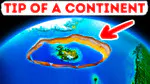
This episode is brought to you by Peloton. Break through the busiest time of year with the brand new Peloton Cross-Training Tread Plus, powered by Peloton IQ. With real-time guidance and endless ways to move, you can personalize your workouts and train with confidence, helping you reach your goals in less time. Let yourself run, lift, sculpt, push, and go. Explore the new Peloton Cross-Training Tread Plus at 1Peloton.com. If you've got a thirst for knowledge that never quits, bright side podcasts are just what you need. Whether you're into recent discoveries, space exploration, true stories, or useful tips for self-improvement, psychology gadgets, or just your day-to-day routine, there's something for everyone. Scientists claim that Icelandia was a region between Greenland and Scandinavia that was more than 230,000 square miles, but is now under water. The Earth was once a large pizza pie with all the continents connected to each other millions of years ago,
otherwise known as Pangaea. The North Atlantic region we know today was dry land from about 335 million to 175 million years ago. For many years, scientists and geologists assumed that the North Atlantic Ocean was birthed as Pangaea began to split apart, roughly 200 million years ago. With volcanoes in the region where Iceland is, the country came to be just 60 million years ago, as it broke off and sailed away from all the other lands. And since the Earth was like a large pizza pie, it divided like one. Many of the lands split up into many large and small pieces, creating the continents we know today. But this new theory suggests that the result of Pangaea's splitting left out some land that stretched for around 200 miles, and just about 10 million years ago, that piece of land submerged in the waters on the eastern and western side,
leaving the tip of the land which is now Iceland. When plate tectonics moved, they grind on each other, which gave shape to our current landscape, all thanks to the mantle. This new radical theory goes against everything written in history books and what scientists have been studying. They began shaking heads, drawing lots of skepticism and criticism. But by analyzing the ocean floor under Iceland and the Earth's crust, we can assume that this idea isn't far-fetched. The crust beneath Iceland happens to be a lot thicker than the typical ones. Oceanic crust is made up of unique melted rocks compared to the land crusts where we walk and live on. And is a lot more denser. The thinnest layer on earth is the crust, where life takes place. It's essential for water, growing food, gathering natural resources and minerals and breathing in oxygen. It sinks below to the bottom, but right above the Earth's mantle.
It also refreshes itself. Introducing Shark Facial Pro Glow, a first of its kind at home facial. Pro-level extraction removes impurities and dual temperature technology boosts radiance and deep puffs with both insta-heat and insta-chill technology. Treat yourself to a hydro-fueled glow in minutes. And because Shark Facial Pro Glow fits in the palm of your hand, you can get that luminous post-baw glow anywhere. Visit sharkbeauty.com to learn more. Since it constantly gets recycled into the mantle and back up. This is why the rocks in the oceanic crust are around 25 miles thick compared to just 5 miles anywhere else. This is also reasonable given that it's in a hot spot for volcanoes. Magnetic surveys of the ocean floor show layers of molten crust in stripe patterns. Also given the fact that the Earth's magnetic field changed its polarity over millions of years, it played a role in shaping the foundation of our landscape.
But there isn't any concrete evidence to prove this new theory just yet. One of the first steps is to start digging the ocean floor near Iceland. Zircon is a very sturdy mineral that can last for billions of years despite erosion in the Earth's crust. By taking samples and studying them, researchers can estimate the geological age of the continents. This will make sure the crust is oceanic, which is thicker or continental, which is the regular crust we walk on. This isn't an overnight project and would come with a hefty cost. Another way is to do seismic surveys that can measure echoes conducted on research ships. Drilling holes, miles deep in the crust can also help with the research. But this would cost more than studying the Zircon minerals. Some fossilized plants unique to both Scandinavia and Greenland might prove that Icelandia was once on the surface and possibly scattered with trees.
It wasn't a cold land as it is today, so it may have had forests. But scientists still haven't found fossil evidence of animals common in both lands to suggest anything. But maybe time will tell. The theory goes deeper, which suggests that there was a greater Icelandia. With Iceland, Ireland, Britain, Scandinavia, and Greenland, all in one microcontinent, it could be a destination of winter enthusiasts and great for skiing. It could be possible to connect Canada to greater Icelandia by train over the ocean, which would open up the economy even more. Iceland is around 40,000 square miles, which is already quite big. And if the greater Icelandia was present today, then Europe would be a completely different continent. Many theories are circulating about other possible hidden microcontinents around the world. Scientists aren't certain of the possibility of Icelandia's existence.
But if all the studies conducted were done correctly, then the theory could change everything we know about Iceland and the North Atlantic Ocean. And this could pave the way for other sunken microcontinents around the world. Another theory out there is that New Zealand was the tip of a lost subcontinent, even bigger than Icelandia, called Zealandia. Studies show that it's separated from the supercontinent Gondwana between 79 to 83 million years ago. Scientists claim that it's the thinnest and youngest continent discovered underwater. Britain is a core rock that acts as the main foundation for most continents. It's at least a billion years old, but the continental crust that makes up Zealandia is just half of that, which makes it quite young. That means some craten is missing, even though it holds some leftovers of older rocks and parts of the mantle. They're estimated to be as old as 2.7 billion years old.
Scientists did some studies on the zircon crystals from New Zealand and found out that there is old as 1.3 billion years old. Protein is now at Starbucks, and it's never tasted so good. You can add protein, cold foam to your favorite drink or try one of our new protein lattes or matcha. Try it today at Starbucks. The rest of the continents are more than 3 billion years old. Scientists studied the composition of the rocks in the bottom of the ocean around New Zealand. They're made up of silica and granite, which are found in continental crusts. The ocean floors mainly have magnesium and iron-rich rocks. They're also thicker and higher than regular ocean crusts around it. They conducted some studies and collected magnetic and topographic data to see the link between the tazmin and coral seas in the Cato trough region. This is the narrow strip between Zelandia and Australia.
Satellite data tracked tiny faults in the Earth's gravity to map out the crust of the ocean floors surrounding the area. They saw the mass that makes up Zelandia quite visible and almost the size of Australia. Even though the signs are there, this doesn't prove anything. It's possible that there are a bunch of microcontents, which all split apart when Australia broke free of gondwana. Back then, the supercontinent was made up of South America, Antarctica, Australia, Zelandia, Arabia, and the Indian subcontinent. New Zealand is already not the biggest country out there, but if the theories are correct, then Zelandia will be six times its original size. Mauritius is a young island that's only a few million years old. Just 1200 miles off the coast of Africa, it's believed that the tiny island came to life around 9 million years ago. The underwater volcanoes in the region scoot out so much lava that it formed the land today.
But scientists found Zircon rocks that are more than 3 billion years old. It may also be part of a continent submerged underwater called Mauritius, which is just a quarter of the size of Madagascar. The Zircons they found were embedded in solid rocks and not just in the sand, which may rule out that they just washed up on shore from another continent. Some scientists are still not convinced. They suggest that discovering rocks that stand out from the other typical ones, brought by an eruption, could skew the scientific community to this theory. But just like how Icelandia could be part of greater Icelandia, Mauritius was once called Rodinia, which consisted of India and Madagascar. Theories suggest that Mauritius was covered in water when India broke away from Madagascar, something like 85 million years ago. This episode is brought to you by Athletic Brewing Company, no matter how you do game day.
On the couch, in the crowd, or manning the snack table, Athletic Brewing fits right in. With a full lineup of non-alcoholic beer styles, you can enjoy bold flavors all game-long. No hangovers, no buzz, no subbing out for water in the second half. Stuck the fridge for tip-off with a variety of non-alcoholic craft styles available at your local grocery store or online at AthleticBrewing.com. Near beer, fit for all times.
More episodes
More from Bright Side

Archaeologists Stumbled Upon Breathtaking Find Near King Tut
Bright Side
Megalodon Once Ruled the Oceans, But Not Antarctica
Bright Side
Divers Discovered a 2000-Year-Old Tech Secret by Accident
Bright Side
This Ocean Disaster Could Shut Down the Entire World
Bright Side