Get every episode summarized
Each time The Double Win publishes, we email you a written briefing from the transcript — the topics, who appeared, and any specific claims, with the ad reads skipped.
Email me new episodesFree for 3 shows. No card needed.
About this episode
“I think more than anything else what the world is looking for is what's true. And we're swimming in the sea of artificial everything and we're seeking truth. Today's guest, I'm very excited about Ryan LeVic is the creator of the Ask Method, a seven time Inc.”From the transcript
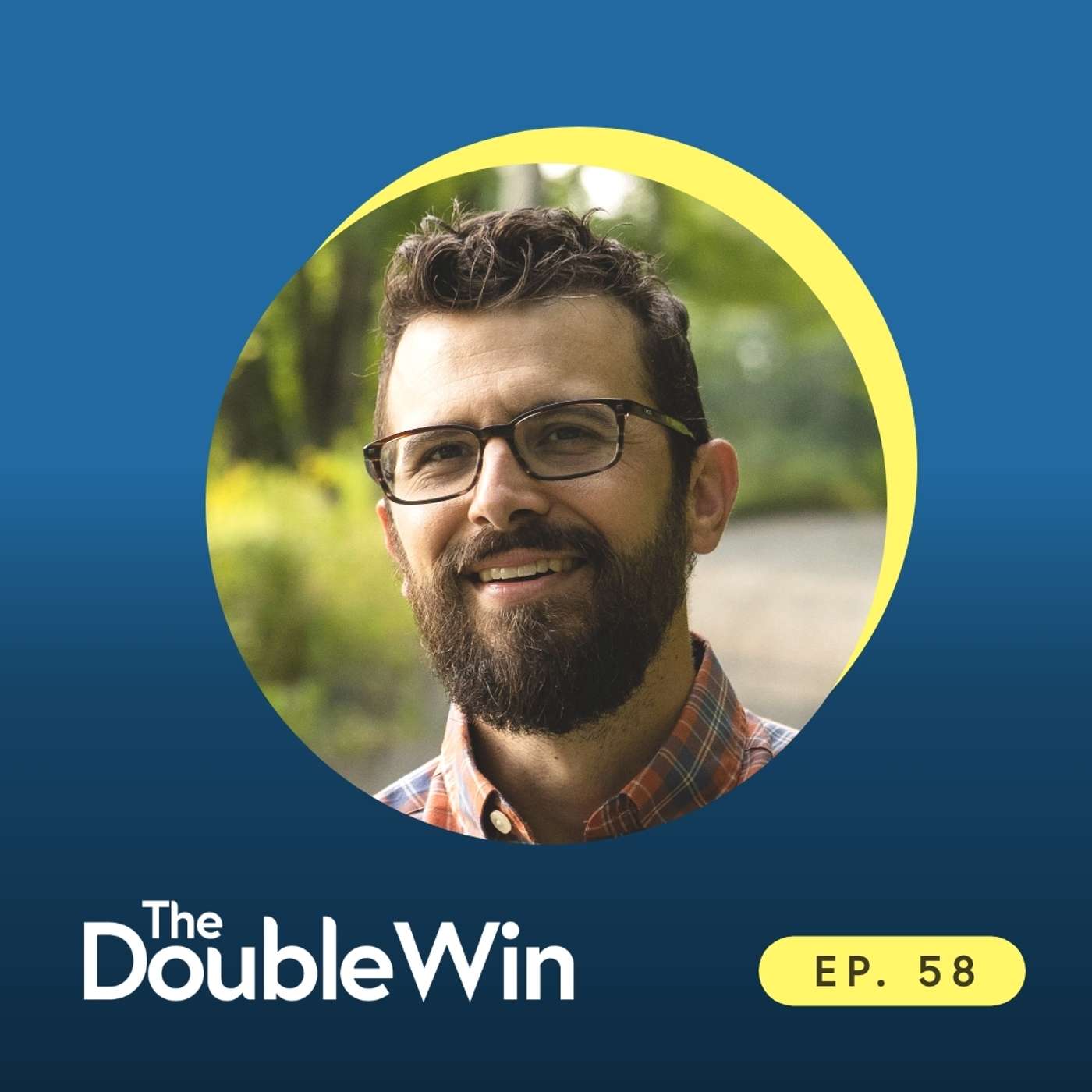
Chaos always prompts us to search for something solid. Confronted by the upheaval of economic reckoning, ecological exhaustion, and existential uncertainty, our souls are reaching for anything tangible and true. We want what’s real. That’s the core message of Ryan Levesque, a seven-time Inc. 5000 CEO who walked away from his former life to move with his family to a farm in Vermont. He joins Michael and Megan to talk about his book Return to Real and how we can respond wisely to the hunger felt in our souls and in the marketplace within an artificial, digital age. He unpacks how we can craft moments—at work and at home—that reward what makes us uniquely human. Because that’s what we’re all longing and looking for.
Memorable Quotes
- “The double craving—what your body, your heart, what your spirit is starving for right now—is also what much of the market is starving for. And when you can find the intersection… there’s economic opportunity. What’s good for your biology can also be good for your bottom line.”
- “The last decade, in many ways, in business was a story about dopamine… ‘Create an app that’s addictive so people keep coming back to it.’ But if we look at most of the maladies of modern life—loneliness, disconnection—they are symptoms of a lack of the neurotransmitter oxytocin. Oxytocin is a neurotransmitter of trust, of love.”
- “We’re swimming in this sea of artificial everything, and we’re seeking truth. We live in an era of a default state of distrust… We no longer trust our eyes and ears, our sensory experience, when we are experiencing the world through a screen.”
- “The truth is in the tension. It’s not ‘Throw AI in a bin.’ It’s not ‘Go 100% analog.’ It’s about picking the right moments and the right places to insert it.”
- “People will pay for work that’s been attached to a real human life… When people see the work and the effort that’s gone into something, they value it. That’s the provenance premium.”
- “Just because the technology is capable of doing something doesn’t necessarily mean that that’s how we should be using that technology.”
- “I tell my kids all the time: ‘Choose your hard, otherwise your hard will choose you.’ What we’ve done and what we’re doing is not easy… but all things in life worth doing are hard.”
- “If you are not analog by design, you will become digital by default… There are trillion-dollar technology companies that will not stop until every moment of human attention has been consumed and monetized… So if you're not fighting against those forces actively… then you will be consumed by the digital vortex.”
Key Takeaways
- Your Craving and Your Market’s Are the Same. What your body and spirit want right now also reflect what much of your market wants. That double longing reveals economic opportunity.
- Optimize for Oxytocin. Dopamine has long been stealing the headlines, but the neurotransmitter of the next decade is oxytocin, which signals trust and love. How can you make your business more human?
- Don’t Advertise Your AI. Deploy AI away from customer-facing environments. The technology we use helps power what’s possible, but the work people value is attached to human effort and human lives.
- Defying Digital Requires Intention. In a world built on and by technology where trillions are spent on directing our attention, we must seek out ways to reintegrate what’s real—to choose analog by design.
- A Rhythm You Can Try Today. Slowing for a few moments can shift an entire day. Ryan Levesque suggests a simple resolution from Ali Jafarian: Touch earth before touching a screen.
Resources
- Return to Real: The Last Human Advantage in an Age of Artificial Everything by Ryan Levesque
- The Digital Contrarian (Ryan’s Weekly Newsletter)
- The Full Focus Insider (Megan Hyatt Miller’s Newsletter)
- Braiding Sweetgrass by Robin Wall Kimmerer
This episode was produced by Sarah Vorhees Wendel of VW Sound
Get every episode summarized
Each time The Double Win publishes, we email you a written briefing from the transcript — the topics, who appeared, and any specific claims, with the ad reads skipped.
Email me new episodesFree for 3 shows. No card needed.
Hosts & guests
Transcript ready
1,393 searchable segments. Every word is indexed and playable.
Full transcript
The Double Win — RYAN LEVESQUE: Real Life in an Artificial Age. Machine-transcribed; use the interactive transcript above to jump the player to any line.
I think more than anything else what the world is looking for is what's true. It's true. And we're swimming in the sea of artificial everything and we're seeking truth. Hi, I'm Michael Hyant. And I'm Megan Hyant Miller. And you're listening to the Double Wind Show where we believe you can win at work and flourish in life. Today's guest, I'm very excited about Ryan LeVic is the creator of the Ask Method, a seven time Inc. 5,000 CEO and the number one national best selling author of Ask and Choose. And I vote known right now, I guess for over a decade, so if you're Megan, but he built a $100 billion business teaching entrepreneurs to listen to their markets. And then after a $70 million deal to sell his company collapsed overnight, he had to finally face what he'd been avoiding for years. Instead of doubling down, he moved his family to a 200 year old farm in the hills of Vermont and learned to raise and grow 80% of his own food, which I can't imagine. Amazing. And 100% of their protein, fat and sweetener.
He taps over a thousand maple trees, which is. I have seen this in action and it is so cool. I'll bet it is cool. Somehow in the middle of managing the farm, he found time to write a new book and it's called Return to Real. And I love the subtitle, The Last Human Advantage in an Age of Artificial Everything. And it makes a counterintuitive claim. The very things your body and solar craving right now, what's tangible, what's human, what can't be faked are exactly where economic value is headed. Ryan's setting neuroscience and Chinese at Brown. I always forget that. Begin his career in finance on Wall Street and in Asia before building his companies from Austin, Texas. And today Ryan lives with his wife, Tyleen, and their two sons on their farm in Vermont. Ryan writes the digital contrarian, which I highly recommend. I read every issue of that. But it's a weekly newsletter. He personally writes for over 100,000 subscribers. The big idea of this episode is that there is this craving that we all have in an age
when everything is increasingly digital, synthetic, AI, whatever, for something real, something tangible that we can put our hands on, someone real that we can connect with in person, that the things that are truest about us as humans are the things that are the most scarce and the most difficult to come by, yet the things we most need to thrive. And he makes a business argument that ultimately whoever we're serving and our jobs or through our businesses or our organizations, that's what they want to. And that there's a tremendous advantage in kind of feeding our souls with what they need, but also being a conduit for doing that with the people that we serve. And I think you'll find this conversation inspiring and meaningful. And I share at the beginning of the episode, the story that I have of Return to Real with Ryan, hearing him talk about this long before it became a book and how moving it was to me and stirred something deep within me that has influenced our business and what you all
experienced from us on a weekly and monthly basis as a result. And I think it's going to do the same for you. So open your heart, open your mind and enjoy this conversation with Ryan. Ryan, welcome to the show. Megan, it's great to be here. We're so excited to finally get to talk to you about Return to Real. I think we heard in Charleston, maybe when you were first deliveries at this, maybe it's the second delivery of this content. Almost two years ago. Yeah, it was early in the process when I was still prototyping and workshopping and just seeing what landed and what felt true. And you both in different ways shaped this work based on the conversations that we've had and how you challenged some of what I shared. So I'm very, very grateful. I knew that you were onto something when I looked across the room. We were in a mastermind. So there weren't that many people there. But I saw Megan crying and I thought, ooh, something just hit a nerve. Yeah. It really did. I was so surprised. You know, when you're at a business meeting, you don't expect to cry.
So nobody was more surprised than I was. But when you share this message that I feel like was really a call back to our humanity and permission to be human. And then, of course, you go on to make a case for that from a business perspective. It was like something inside of me just said, yes, I had felt an internal conflict, particularly with, at that point, we can go back in our memory. Two years ago with AI, I didn't really know what was going to happen. A lot of it was unknown. It just felt like increasingly more output and more synthetic. And all of that was the order of the day. And that did not feel congruent with who I wanted to be. And it was like you put words to something that, something that you call the double craving in the book that I had been feeling that didn't have the words for yet. And it really set us, I think, on a whole trajectory at full focus. You know this because we've talked about it at length. But I think reconnecting with our commitment to analog, you know, with a full focus planner
and really understanding again how important that is. But even more than that, I left that mastermind and came home and I started a garden. And that has been the great joy of my life. I've started beekeeping, which I absolutely love. That's new. You have to see a picture for her beekeeping outfit. Yeah. I love it. It's the highlight of my social media music is what I see you in the beekeeping outfit in the garden. I'm actually living this. I'm doing it. And, you know, I think before that, I would have said, gosh, I'm not spending that much time outside. I'm like exercising outside, but I'm not doing that much outside. It's kind of an afterthought. And now, Joel and I spend every morning in the garden drinking our coffee, facing ease, getting our morning sun. You know, we're just, we're different. And I can trace that all the way back to that December in Charleston when you shared this message of return to real. You know, it's a good reminder to me that we just don't know the impact. Our work is going to have when we share something that's true. Another point you make in the book, we just don't know. So thank you, first of all, for writing this.
Wow. I thank you for that reflection. That means a lot. And it's, it's really cool seeing you basically living. Yeah. The message that I'm trying to convey in the book. Yeah. I wonder if we can start with some context. Sure. You are such an astute observer of the moment that we're in. And when I read your analysis in your newsletter, I'm just like, who? That is right. And nobody else is saying that. So could you just kind of give us an overview of this moment and why it's unique and sort of what are the dangers and the opportunities? I think the narrative of the day is that there's one force that's radically transforming the world right now. And that is AI. And AI is touching every corner of business. It's touching every corner of our lives. But the reality is it isn't just one force that is transforming the world that we live in. There's three forces that I believe are colliding all at once to create a singular moment in history. AI is one of them. The first is what I describe as an economic reckoning. And so if you study the work of Ray Dalio, and he's not the inventor of this idea, he's
the retailer of this idea, the world historically has operated in economic cycles. That empire's rise, empire's fall. And this has been true for thousands of years. And if you trace the British empire, the Dutch empire, the Portuguese empire, the Chinese empire, that this is a predictable cycle that runs about 75 to 100 years. And of course, the dominant superpower of our generation is the United States. And for most of us, we've only lived through this period of this dominant US superpower. All the signs are there that we are on the decline phase of that. And there's an economic reckoning that takes place anytime that there is a replacement of that dominant superpower. And of course, China is proposed to replace the United States. And so we might not necessarily have the words to describe what's happening, especially in the West, especially true in North America, and most true in the United States, that what we're living through is a change. This is not the world that our parents and our grandparents lived in. It's a new world. So we have an economic reckoning that's taking place.
The second force is an ecological breaking point. And for this, we can study the work of Nate Hagen's, my site in the book, Nate Hagen's has a concept that he describes as the carbon pulse. The fact that in the last 100 or so years, we've found a way to take 4.2 billion years of sunlight sequestered in the form of fossil fuel. And we've extracted it from the earth. And we've used it to create everything from air travel to AI and everything in between. The challenge is that that is a limited resource. And when you start studying the science, that there's a lot of data that suggests we're past the point of peak oil. And we're dangerously close to the point in time where, for every unit of energy, we put into extracting energy. We're getting less than a unit of energy out. So it's like you put a dollar into something, you get less than a dollar out, eventually, you go bankrupt. So what that means is that the trajectory that we are on as a species, this idea of unlimited growth in a finite system, or infinite growth in a finite system, is fundamentally flawed. And most people don't have the words to describe that, but they have this feeling that this
path that we're on of just infinite consumption, infinite growth is not sustainable forever. And then you marry on top of that, the existential crisis associated with AI. And you've all know Harari does a great job, I think, exploring this. This idea that when AI replaces us as human beings, as the dominant, smartest organism in the room, and most of the things that we think make us unique are unique capabilities, creativity, the intellectual capabilities that we have, when computers can start doing things that we previously thought were the realm of humans only, it starts to create this questioning of what's our purpose? Who are we? And what do we do when our jobs, when our livelihoods, when our careers can be replaced? So you have this confluence of forces, this economic reckoning, this ecological breaking point, and this existential crisis associated with AI that's colliding all at once, and it's creating this sense, this feeling in the world right now where people are craving, the tangible, the true, away from the digital landscape that we spend so much of our time,
and back to an analog physical way of life. And I believe that that presents a tremendous opportunity for those of us who are entrepreneurs, for those of us who are creators, but the moment in time we're living in right now. There's this movement, this singularity movement. Peter Diamantis would be a great proponent of this with a very popular podcast. And he basically says that the economic reckoning that Ray Dalio talks about is going to be superseded by what AI is going to be able to do in terms of growth and GDP, all the environmental problems will be solved, et cetera, et cetera. I mean, to me, personally, that feels very utopian and almost religious, but I just wonder what your thoughts are about that. Yeah, when I think about most people's perspective, when it comes to AI, is I see that there are three broad camps. There's what I've described as foolishly optimistic. That's the utopia robots are going to farm for us. Nobody's going to be poor and everything's going to be great. There is the crippling fear, which is AI is coming for our jobs and the whole world's
going to fall apart. And then there is the painfully ignorant, which is don't buy into the hype. What's the big deal? It's just a faster computer that we've always had. I believe the truth is in the tension. And then there is a fourth camp. The fourth camp is what I would describe as optimism without naivety. I believe that the truth exists somewhere in the middle. That AI will disrupt. It will create opportunities, but it will not be a utopia. There isn't going to be a sudden UBI, universal basic income that gets shared with the world, where we're all just able to live these lives of prosper without having to live to finger. There will be challenges. The form of technology since the beginning of time has introduced new problems, new challenges that we have to solve for. And we can predict what some of those might be. There's the environmental reckoning that takes place with the AI data centers. When you just look at the raw materials that require to be mined, the rare earth metals, for example, required to produce enough electricity to power the data centers, required to power
the level of compute needed to do what Elon and Pure Diamandas and others are suggesting. There's not enough rare earth material on planet earth. So yes, we might come up with some scientific breakthroughs that are going to require maybe new material, but there's going to be pain in us getting there. I think taking a step back, though, is taking a look at the attitude that exists toward AI. And if you look at the general feeling in the world, in the West, not necessarily in the East, not necessarily in Asia, but certainly in the West, that there is a certain disdain and contempt toward anything AI. There's an AI witch hunt that's taking place. And it transcends generations, young people who think AI is coming for their jobs, old people who think AI is coming for their way of life. So it transcends demographics, it transcends generations that there's this feeling that I don't want this, that there is a capability that AI has that the trillion dollar technology companies are pushing onto us, but we don't necessarily want AI. AI get off my lawn.
You know what's fascinating about that? It seems to be particularly a United States problem. I just read a study today that said the adoption in China over the US for AI is like 4x. And the Netherlands are higher than it is in the US, but there's something happening in the US. I think partly because it does feel like there's no resistance. You know, resistance is futile. This is going to take over your life. You just have to live with it. Yeah, I think when we layer the economic reality of the next generation is likely to have living standards that may not be as good as the living standards of a previous generation. We saw this, for example, in the United States with life expectancy. So life expectancy in all of the developed world with the exception of the United States for both genders is over the age of eight. In the United States, we lag behind. There was a 10 year decade, a decade where the life expectancy in the United States was actually stagnant. The rest of the world kept going up. So I think that some of what we're describing is a phenomenon that is taking place in the
United States. But whether you are American or you're from some other place in the world, we have to recognize that right now, the United States is the single biggest consumer market in the entire world. If you're selling in the English-speaking world, you cannot ignore what's taking place right now in the United States. So what is returned to real? And how is that an answer to all those problems? It's a lot of problems. It's a lot of problems. Yeah. What I am seeing in the world from the interviews that I've conducted, the research that I've conducted, the life that I've lived, conversations that we've had here in this room and others is that there is a craving for something else, for an alternative path. That the prevailing path that we are on is not inevitable. And there is a sizable segment of the world looking for something else, looking for an alternative. And you're right. In the book, I describe it as the double craving. That what your body, your heart, what your spirit is craving is starving for right now is also what much of the market is starving for.
And when you can find the intersection between both of those things, what that means is that there's economic opportunity. That what's good for your biology can also be good for your bottom line. Meaning you can build a business that allows you to live a life that's authentic in alignment with the double-win concepts and be financially successful at the same time. Do you think that that's going to mean a return to sort of artisan-created things, artifacts? Where we've been so used to, at least in my lifetime, everything's mass-produced. Even the things that start out as artisan artifacts end up being mass-produced. Do you think that the value of human-produced things is going to go up? There are three big advantages that I think represent opportunities in alignment with return to real. You're talking about one of them, which is what I described as the analog image. What the world is craving is a return to the physical world. We spend an increasing amount of time living through abstraction, through proxy, living life that's experienced through a screen. We have our phones, we have our computers, we have our tablets, we live life through a
screen. There's a movement taking place where people want to put that down. It's showing up in young people and old people. You have on social media, you have analog bags that people will bring with the ribbons key and you'll see that show up. Coloring books. Coloring books. All kinds of things. It's showing up in all corners. It's showing up with parents. It's parents. If you've got young kids or grandkids, you think, all right, I might be spending the bulk of my days interfacing with a screen, but I certainly don't want that life for my kids for grandkids. Yeah. You've received jobs. Yeah. And I read about that in the book that many of the technical founders and Steve Jobs is a perfect example, who are the purveyors of this technology? Do not even use the technology themselves. So Pavledorov, who's the creator of Telegram, which is a messaging app like Signal, famously does not use a smartphone. Like I think that is crazy. Mark Zuckerberg, if you've ever seen him post photos of his family and this may change as his kids get older, he will obscure the faces of his kids when he posts on Facebook.
Literally the creator of the book of faces will not even put his kids faces on Facebook. You know, so for me, that feels like it's the madmen and ablers of the cigarette companies in the 1950s and 1960s knowing that they're peddling poison to people not using the product themselves. So for me, I look at that and I say, okay, what do they know? That we don't know. And I think the world is catching on to that. The world is recognizing that. I'll give you a stat that may be interesting and relevant. So speaking of Metta, speaking of Facebook, so Metta, the parent company of Facebook. Earlier this year, experienced the first quarter where they had fewer active daily users than the previous quarter in the company's history. Wow. If my behavior is in the indication, I don't spend time like I used to there. We're moving away and I could go on and on and on. But there's evidence at every level that their signal showing up in the world that people want this. So analog advantage is the first, but it's not the only. The second advantage is what I call the oxytocin advantage. This is sort of a little bit of a micro deep dive into some of the neurochemistry of what's
going on. So I think most people are familiar with dopamine. Has a neurotransmitter. It's the neurotransmitter of desire, anticipation. We all know about dopamine loops and things that keep us coming back to technology and our phones and we stay addicted to this. The last decade in many ways in business was a story about dopamine. Dopamine was the neurotransmitter getting all the headlines, create an app that's addictive so people keep coming back to it. But if we look at most of the maladies of modern life, loneliness, disconnection, they are symptoms of a lack of a neurotransmitter, which is the neurotransmitter oxytocin. Now oxytocin is a neurotransmitter of trust of love. When a mother gives birth to a child, there's a flood of oxytocin which creates a lifelong bond between that mother and that child. And unlike dopamine, which can be elicited with the right shade of red on the alert on your iPhone, oxytocin requires physical presence. It requires touch. It requires what we're doing right now, getting together like this.
And while most of the world doesn't have the language to describe this, most of what the world is craving right now is what they're lacking, this oxytocin. So I believe that the advantage in the next decade goes to businesses that will maximize oxytocin. I love that. Optimizing for oxytocin over dopamine. Do you think the pandemic exacerbated that whole thing or accelerated it? I think so. Absolutely. In the same way that AI has accelerated our desire for the authentic. I mean, literally artificial intelligence. I mean, from the food we eat to the content we consume, we're bombarded with artificial everything. So Adam Misari, who's the head of Instagram, has this great line and I'm going to paraphrase it. He says that we spent the last decade trying to figure out what makes something perfect. We'll spend the next decade trying to figure out what makes something real. Even the people that are producing now, AI tools to produce video have realized that that's
sort of the last frontier. If it's going to be accepted as authentic, they've got to build imperfection into it. There's even AI technology now. It's crazy. So I wrote this piece called Fake Real versus Real Real. So there is AI technology that will take, like if you get output from chat GPT or Gemini or Claude and it's too perfect, there's now AI technology that will take that perfect output and will add spelling mistakes to it. We'll make it sound more human. So like I feel like we're losing the plot. We're going on this. That's not the goal. Yeah, that's absolutely not the goal. And it's a good segue to the third advantage which I describe as the contrarian advantage. And I think more than anything else what the world is looking for is what's true. It's truth. And we're swimming in the sea of artificial everything and we're seeking truth. We live in an era of default state of distrust. Element Trust Barometer has published the state of trust since year 2000 and it's no surprise that default state of distrust in the world.
But what shifted in the last two or so years since chat GPT became sort of mainstream in commonplace is that we no longer trust our eyes and ears, our sensory experience when we are experiencing the world through screen. 100% true. Everything you read you say, did AI just write this? Everything you see. Is this just AI? And I can tell you my kids who at the time of this conversation are 12 and 14. If we see something online and they immediately get a hint that it's AI and this is not dad trying to impart his worldview on them. This is just them organically coming up with it. They'll just roll their eyes and say, dad, that's just AI. Yeah. But here's what I worry about. I think that's true. Absolutely. You can just tell it at the level you can't express that something is not authentic. But I was asking Megan and Joel, Joel's Megan's husband. They were talking about the Odyssey this morning and I got really inspired because I haven't seen it yet. But I was saying most of that movie was dependent upon CGI and maybe even AI.
If you knew that or the fact that you know that going in is that diminishing your experience of the movie. I think it is something that we tolerate. I don't know that it's something like if you said, hey, we're going to do a totally live action movie. There's no CGI. That is a selling point. If we say, hey, we're using CGI to do this and it's all done in green screen. That's not selling any additional tickets. That is a compromise that we're willing to accept. We know we can't get that outcome without it. Exactly. But we're not using it to promote the film or the product, whatever it may be. And I think when we translate that to how to approach AI as small business owners, I think the lesson in that is that we should not be using AI as a selling point in what it is that we sell. We should not be using it in our positioning unless that is you're selling AI services and AI tools to other business owners who are looking to AI their business. That's probably the one exception. There's an AI witch hunt. Go on in the world right now. 100% a road battle last week.
And so I think take all the moralistic arguments, the spiritual arguments, the humanistic argument out of it and just look at it purely pragmatically. If you want to make more money and get more customers as a business, you should not be advertising that you are using AI. I would go as far as say that if you're going to use AI in your business and I'm not anti AI, we use a lot of AI in our business in a lot of different places that you should start with the parts of your business that are as far away from what interfaces with your customer back office back office stuff. So pulling the products off the shelf, so to speak, in the warehouse or that equivalent in your business that nobody cares about. Right. But I think a lot of businesses are making the mistake of well, I'm going to make my sales copy written with AI. I'm going to produce social media content and I'm going to use AI. I'm going to put an AI agent in place of my enrollment officer so that way they can interface with the person. My customer service desk is now just going to be all AI agents. So frustrating. And that is the last thing that our markets want.
So again, the truth is in the tension. It's not throw AI in a bin. It's not go 100% analog. It's about picking the right moments and the right places to insert it. So I want to talk more about that because this is like where the rubber meets the road. My dad and I are always debating about this point. But with regard to writing in particular, how do you think about that? Because I think people who are unsteady to an AI, maybe they're not using it very much. They think of it like AI is just all one thing. Right. Either use AI or I don't use AI and probably in your business, I use AI for all kinds of stuff. For example, financial analysis is unbelievable. You can do with AI now that used to require a finance team that no small business has. But when you think about writing, how do you think about what's sort of in bounds and what's out of bounds and why? Because I think this is where it gets tricky because there's so many different ways to use AI, even in writing in one application. Look, I think that this conversation is a conversation that needs to continue.
This is a snapshot in time at this moment in time. In the same way that there are purists 200, 300 years ago who said that if you are not writing with a quill pen on parchment, it's not real writing. And then we went from a word processor to a computer and then computer to dictation. So this argument will continue to take place and there will be an older generation that's used to doing things a certain way. And that will be replaced with a new generation. For example, our kids, kids, kids might be having some neural link implant that they're just thinking what they want to say. They're not even going to express it out loud. They're just plugged into the neural network in your brain and it's actually outputting what it is that you need to write. Writing may go away. Writing is not, we use writing as a tool as a technology, but as human beings, we started with the oral tradition. Right. We started with words and then we needed to convey information in our ways. We started writing it down. So this is all subject to change. At this moment in time, the way I like to think about it is to scale the distribution, not the source. So you can use AI to disseminate your message.
You can use AI to put it out there in the world to automate the posting process. You can use AI for certain types of writing, which I think is totally fine. Like for example, SOPs, standard operating procedures, step by step, like how to follow a recipe. That's fine. I believe the safe move is disclosure. Anytime you're using AI, hey, I used AI to do this. Immediately, that inoculates any concerns. It garners respect. People appreciate. They want to know with transparency where you're using AI. What I draw the line is when you're expressing a point of view, a belief, something that you're expressing that this is what I believed. This is based on my earned lived experience, based on my research. This is what I believe to be true. If you are abdicating that type of writing to AI, then you are dangerously close to abdicating your thinking to AI. Do you really believe this? Or is this what AI is saying that you believe? Well, I agree with you 100% of that. But I do think it's nuanced. It is. And this is my problem with the tool like Panagram, which is what I wrote about last week
in the AI Business Lab Insider, is that it's a blunt force instrument. And so if you run it on a website and say, is this AI produced? It'll say 100% AI. Maybe. For example, I probably use AI different than you do. But whenever I'm writing an article, it is definitely my frameworks, my arguments, most of my expression, but I'm not opposed to AI fine tuning that or saying to me, well, maybe this metaphor would work better than the one you're using. Sure. Great. Yeah. I'm one voice. I'm not the moral arbiter of this is okay. This is not okay. I'm just expressing from my perspective, I look at it purely from a pragmatic lens. What will get people to read? If my goal, my end goal, if what I'm optimizing for with my writing is I want my writing to be consumed, I want it to be shared, and I want it to have an impact on people's behavior. What I'm optimizing for are those things. If that's the case, what I've seen, even empirically in my own work, that when I use absolutely no AI, purely disconnected from the internet, just typing on the computer with no connection
to anything in the world at all, that writing consistently outperforms. Even the writing that, when I do what you're describing, which is, help me come up with a better way to say this. Can you help refine this? I think the sentence is a little bit long. Can you help me figure out how to break this down? It's just something that almost gets lost in that process. But again, it's not universal because there are million exceptions to this. English isn't your first language, and you need to express yourself. Okay, great. AI is probably going to help you express yourself in English, if it's not your first language, better than you would natively. You might have a time constraint. For me, I'm not the world's fastest writer. I take time. It takes me almost a full day every single week to write, research, and edit the weekly email editorial essay that I write, the digital contrarian. It takes me a full day to do that. There are some weeks where I do not have a full day. So we may compromise. There are a million reasons why you might use AI in that writing. The fallback, in my opinion, is disclosure.
I agree. In last week, I put on my website, the aibusinesslab.ai website, a disclosure, and at the bottom of all my emails. And oddly, you might find this amazing. I went to Claude and I said, Hey, nobody knows better how I use ai than you. So just describe it and let's disclose it. So that's what I have on my site. Amazing. It's funny, because so that's how he does it. I do it like you do it, which is to say, I don't use ai at all for the writing. I use it in research occasionally for proofreading or something like that. But I find that my thoughts come out better. I'll be it messier. I'll be it not as clean. But for me, it feels more authentic to do it that way. And it's a different kind of writing too. It's more about self-expression, I think, probably than what you're trying to do. And so I think there's just different applications. But I found that. And one of the things to your point lately, man, I have seen so much stuff on social media and elsewhere that you just know for sure was written by A. Yes.
And some of it is so transgressive that you just want to put your head through a window. Others, it's more sophisticated. But it starts to all sound the same. And that's the problem from a competitive advantage standpoint, I think. There's definitely a bagification of the internet where we're drowning in this sort of bland problem that all sort of tastes the same. It smells the same. It looks the same. And so you're not going to stand out in the sea of sameness. I think that's a problem. But I think the other problem is it signals laziness. I don't know what the mathematical ratio is. But there's a certain amount of time that it should take to create something which should be an order of magnitude or more greater than the amount of time to consume it. If I take 30 seconds to one shot an essay in Claude and a copy and paste and I give it to you and it takes you 10 minutes to read what took me 30 seconds. Which happens a lot. Yeah. There's something. It feels bad about that social contract.
If I spend 10 hours on something, refining, agonizing, working through the nuances of it and it takes you 10 minutes to read, that equation is more in alignment with what the expectation is of the reader. And so I think there's something about the perceived laziness that is there. It's almost like a sign of disrespect to the reader. Yeah, it took me a minute to do this, but you go ahead and read it. One of the terms that I think that's showing up in the world is a term workslop. So workslop is, like for example, you're doing a bunch of work in AI and you say, hey, again, I've done some research. Here's a 20 page report that Claude, I want you to go ahead and read it. And Megan say, I don't know, time to read this. But this is showing up over and over and over and over again. And I think it's akin to what we're describing where it's like, if you're going to ask your reader to take the time to consume something that you've written or that you've created, that you should have taken the time to actually think through and put it out, put it out what you're putting on the work. That's a good guardrail. You know another weird thing that's happening too is because so much of the writing that we're reading now and consuming is AI generated.
It's trading us. I think one of the reasons, the one of the ways I learned to write was I read a ton. And so I started to mimic in little ways the reading I was doing. But that's happening in a bad way now, I think. So I fear for the next generation that they're going to sound just like AI. The things that we know as AI tells or evidence of AI is going to be sort of organic for people that that's all they've read. You know, a lot of it, I think, stems from an unnatural difference of degree versus difference of kind. It's like the M-dash isn't the villain, but the frequency of M-dash's use in AI is the problem. The X-Y antithesis structure, it's not this, it's that. That in and of itself is not a problem. It's an overuse of that. And I think that's where the technology is at this moment where it's not quite good enough to get, it's sort of like someone who's a little bit socially awkward. They stand a little too close to you in conversation. Just a little bit too much where it's like, you've never maybe taken a ruler out and said, okay, the distance I like to have between another person when I'm speaking with them in
person is three feet or it's 33 inches. We've never done that, but we just have this in two cents. You just kind of know AI is like the person who just comes in just a little too close. Close talkers. Close talker. It's just a little off. It's not, it doesn't have the level of self-awareness. And I know this is like, well, is itself where is it not self-aware, singularity? Are we getting there as AGI, all these things? It's not, doesn't have the level of self-awareness. And I think if you are not a self-aware communicator, if you're unaware of these things, then you will put a signal out into the world that will be detrimental to your brand. Yeah. It's a good reason to continue to read real books written by real humans, even if they're old. Yeah. Because it helps to feed your mind with what we actually should be talking about, how do humans talk? And doing what we're doing right now? Like, none of us have an A.I. implant putting words in our ears that we're parading out into this conversation. This is a real conversation with real human beings. And for anybody listening to this or watching this right now, the compelling reason for tuning in is because, I mean, there's some planning that's gone into this, but this is
spontaneous. This is unscripted. Yes. This is real. And I always like to pay attention to my own behavior as a consumer. Why am I consuming the thing I'm consuming right now? Whether it be food or content or anything in between. And I try to be self-aware enough to ask myself, why is this attractive to me? Why am I craving this right now? And I think for anyone listening to this or watching this conversation, pay attention to your own consumer behavior. What is it that's compelling about this conversation right now that's causing you to tune in? You can create that same effect with your audience, with your listeners, with your readers. Yeah. If you look at what's happened in the podcast world, for example, you know, Google has a product now where you can create a podcast. And it's just two fake people talking about a topic that you feed it. And it sounds great, except that I don't care to listen to that kind of stuff. And you look at what are the biggest podcasts on the planet right now? Joe Rogan, Diary to CEO, others, there are real conversations with real people. Yeah.
I mean, look, it's been, what, 25 years since Deep Blue, that Gary Kasperov playing chess, something like that. Maybe it's longer than that. We have no interest in watching two computers. Duke it out. Zero. In chess. Yeah. We do have interest in humans, even though computers have surpassed human capability. There is not a single human being on planet earth that can be the most sophisticated computers when it comes to playing chess. But that has not taken up. We still have chess between two human beings competing and we still are compelled to watch. Yeah. There's a certain kind of novelty in that environment where you can't predict what's going to happen in the best way. There's a concept that I think is related to this. I talk about in the book called the Providence Premium. Yes, I'm so glad you brought that up. I think this is great. And it's this idea. So it's a Providence is a term that's borrowed from the art world. And I think the best way to explain what the Providence Premium is with is with an example. So in 2005, there was a painting that was discovered in a state sale and a consortium of art dealers purchased it for $10,000.
And after years of research and restoration, it was determined that it was actually produced by Leonardo da Vinci. It went to auction later that year and sold for $450 million. It's called Salvador Mundi. And that's an example of the Providence Premium in action that people will pay for work that's been attached to a real human life. So what does that mean? How can we use it? How can we learn from that? Well, anybody can go to AI, punch in a prompt, put something out there. But what people can't do is live your life. They can't document the process that you've been following all along. They can't build in public. They can't think in public. So you want to think about not just the what it is that you're selling, but the how in the who. How did you make this? What was the process that you went through? So for example, with my book Return to Real, I made the decision to hand illustrate every illustration in the book. Now that took me three months to add to the list. All by itself. All by itself.
I have a project in and of itself, but I have time lapse video of me hand illustrating every diagram, every illustration in the book to prove that it came from a human life. And the market cares about that. They care about how the food that they're eating, how it was raised, how it was grown, the farmer behind it. What's the reason why the farmer is doing what they're doing? What's the story behind it? And people will pay a premium for that. So I think in all of our work, we've got to think about, okay, today may be the before photo, like it may be the before of wherever it is that you're trying to convey. But take the time to document the before. Take the time to document the process because you'll look back a year from now, two years from now, five years from now, and wish that you had documented the ramen noodle and baloney sandwich days of your business to prove to people. You really will. That's true. You will. You will say this didn't happen overnight. This was what really happened along the way. And when people see the work and the effort that's gone into something, they value it. That's the provenance premium. They'll pay a premium for products that are attached to the who and the how, not just
the what. You know, when you're talking about that, one of the things I think for our listeners who are not business owners, certainly for the business owners, but for the non business owners, I think there's a certain security that we're missing in being a human. I think people are so focused on how do I adapt to AI so quickly in my role, you know, how to fear of becoming obsolete, but they undervalue the parts of themselves that AI really can't compete with. Totally. When I think as a business owner, as a boss about entrusting something to someone, I'm not going to entrust that, even if it's overseeing AI, I want a human overseeing that. You know, I want a human over the most important parts of my business. I want someone who has the experience and the expertise to know if something's off. Now, if it's totally quantitative, maybe not, maybe AI will be better at that, but the qualitative stuff, humans are better at, at least at this point. And I think there's a kind of security in that that I haven't thought about till now
that I think we miss in our fear of becoming obsolete. AI, like any computer, cannot be held accountable for a decision. Right. And that accountability is what will ultimately be paid for. I'll give you an example where I think, you know, value is shifting. So there's a story I share in the book of a client who is a maternity. And he had a business successful seven figure business, AI completely disrupted the business. So he went back to looking for roles as a general counsel inside counsel at a different firms. And he'd been out of law school for over a decade. And the salaries that he was getting for these firms were the same salaries that he was making straight out of law school ten years later. So that wasn't an option. So we have to go back to his business and figure things out. And what shifted in the legal profession now that you can go to a chat GPT and say, write me a contract or whatever it is, like give me this legal document is that lawyers are now spending less time in front of a document and more time in front of a client.
So the ten billable hours that you might have spent working on a client's case, maybe in the past nine of those hours were spent in a document and one of those hours was spent on the phone with the client. Now you can flip that upside down. Which feels like greater value to the client. 100% because those nine hours spent in the back office putting together the financial plan or whatever are invisible. I'm not seeing that. Right. All I'm saying is the hour you spent with me, this is to me the great promise of AI, the positive promise is that it frees us up from the factory work. Right. To do the work that we're now that is uniquely human and actually adds value to other humans. Yes. So the thing is to abdicate the human to human connection to AI. That's the mistake. Hey, talk to me. I created this AI avatar that you can punch in any question. They'll answer any question that you want to answer. It's in my voice. It's my video. It looks like me. It sounds like me. It's not me, but it's almost the same thing. And I think there's a novelty that gets exciting when a technology like that comes out.
And so we kind of rush to it, especially as marketers, as entrepreneurs, we say, oh, this is so cool. And then once that excitement wanes, we start realizing, hey, time out a second. What are we doing here? Like what's the, there's a, there's a recent one that came out where Sam Altman was quoting, hey, here's a cool use case with Chad Gbt. You know, I'm talking about it. We got to have her know this. Yeah. Yeah. It was, instead of talking to your, in paraphrasing, instead of talking to your kid on the ride to school that are right to practice, have Chad Gbt go blah, blah, blah, blah. And it was like time out of second. What are we even doing here? Right. Like replacing the most precious moments of life. Right. And interacting with your kids in the window of time that you have when they're at this age for a heartbeat, use AI to do that. Like we got the whole thing upside down. And I think that's the obsession with capability. Like just because the technology is capable of doing something doesn't necessarily mean that that's how we should be using that technology. Okay.
Okay. I want, we talked a lot about what we shouldn't be doing. Let's talk about what we should be doing. Okay. So one of my favorite parts of your story that people may not know is that you're basically a city guy, tech bro, who grew out of beard and moved to Vermont and started this homestead. I've actually been there, Joel and I have been to visit you guys out there. It was amazing. Almost what I'm ish. Yeah. I'm not sure mom ish. Everything but that, you know, seriously though, you made a dramatic life shift. Yeah. You had a big business that you intended to sell, the sale fell through. It's kind of everything didn't go the way you wanted it. And then you moved the family out to Vermont. This beautiful farm. And now you grow everything out there. You do all this stuff and you're still an entrepreneur. Return to real is not advocating for people becoming homesteaders. Although I could get on that train pretty quick. That Joel would let me. He said, I can basically do anything I want on our third of an acre. You know, I can have as much as I can possibly fit on that third of an acre.
So that's my constraint. But what is the application of what you've learned for the regular people who aren't going to move to Vermont, but are living in a neighborhood, they've got a job. Like how do they return to real? What does that look like? I want to hear the story first. Okay. Yes. Yeah. I'll tell you the story. It begins with the Texas winter storm of 2020. So we were living in the suburbs of Austin, Texas. And if you call Texas had a major winter storm where the entire grid across the entire state of Texas, which has an isolated grid from the rest of the contiguous United States, went down. So across the state, we lost power. And in some parts of the state for a very long time. And there was a 48 hour period where we weren't even getting fuel delivered into the state. So the backup generators, powering cell towers, went down. So we had no electricity, no internet, no cell service. It was literally like wherever you could shout at is who you could communicate with.
I don't want to spoil the way the book opens, but there's a story that impacted me in a deep way. And coming out of that, that was the first time and over a decade that I had disconnected, and I'd ever had a chance to just unplug. And it gave me a moment to reflect. And that's what made me decide that through a series of events that we wanted to sell this company. And I'd built a company seven time being 5,000 fast-scoring company, $100 million in collective revenue, took it to sale, received an offer, declined that offer, took it to sale again, received another offer, $70 million to buy the majority of our company. I accepted the offer and we were days away from signing the paperwork when Russian invaded the Ukraine. Capital markets crashed. And the deal disappeared. The M&A market, the mergers and acquisitions market, that year just completely went away. And I had been on this decade long sprint. You know what it's like when you're growing and scaling a company. I mean, burning them in night oil, working seven days a week. And I could see my kids in the window of time I had been just disappear. And I asked myself, do I want to spend the next 10 years of my life rebuilding the company
and setting it up on the trajectory to sell? And you thought you were about to get out. And I thought I was about to get out. So you're, you know, as much as you are told and as much as you can say, oh, well, you don't cash the check until it's actually deposited in the bank, in your mind, you're still like, all right, that's what I'm doing. And it fell apart. And so I asked myself this question, if we had sold the company, what would we have done with the money? Like I don't have huge, you know, I don't want to buy a yacht. I don't want to private jet. Like I don't have huge, you know, lifestyle aspirations. And it was very clear. I said, I want to move to nature and start a farm with my family. I asked myself this question, what's stopping me from doing that now? Hands were something. And so one summer when the kids were at sleep away summer camp, I had this opportunity to earn my permaculture design certification. And I traveled to a farm in Vermont, living in a tent, bathing in a pond, learning how to raise and grow food with my own hands. And it was when I was on that farm that I just had this awakening. I had this deep connection with this hands and the dirt experience that I had.
And while I was in that tent with one bar of service, I texted my wife, I'm in Vermont, she's in Texas, my wife, Tylean. And I said, let's do it. We had been talking about possibly selling our house and going on this adventure. And I said, let's do it. Like let's just see what happens. And we lined up a real estate agent before this trip and so on. And she said, okay, let me contact Lisa, the real estate agent. Later that night, I get a text message back. She said, well, the first couple to see the house made an offer. The same day. Same day. Same day. Oh my God. So very hot real estate market. But first, it's for the same day. All cash, full ask, 14 day clothes. Oh my gosh. So I have to pack up my tent, pack up my stuff, get my butt back to Texas. We put everything we own into storage. We sell one of our cars. And as a family, two kids a dog and a suitcase each in the back of a truck. We road trip from Texas to Vermont. We have no plan. No where to go. We'd lined up an Airbnb for like the first three nights that were there. And we had nothing but a vision and a dream. And we spent the next year touring, visiting, exploring different forms.
And at one point, we were living in the shopkeepers apartment above a general store in a tiny little town in Vermont. It was like a hallmark movie. And eventually, we found our place, our dream place. And it's over 100 acres. It's tucked away in the green mountains of Vermont. Megan and Joel have been there. And the crazy goal that we had was to raise and grow 80% of the food that we eat as a family. It's amazing. We raise cattle, pigs, meat chickens, turkeys, egg layers. So for eggs, we raise trout. We tap over 1,000 taps for maple syrup. We raise bees for honey. So we produce 100% of our protein, 100% of our sweetener. We've planted 500 fruit trees, nut trees, berry bushes. We have a massive production garden, everything from potatoes and squash to herbs and greens and everything in between. And we had no experience. We had no experience going into this process. Okay. It was such a transformative life experience that disconnecting from technology and reconnecting to what's real opened my mind to what I was missing, what I wasn't seeing in business
and economics. And that's ultimately what inspired this book. What did you do as a company? I resigned to the fact that we were never going to sell the company. That was the story I told myself. I said, okay, we tried to sell this thing once. We tried to sell this thing twice. It just not going to happen. So I said, okay, say, Lovie. And one day when I was on the farm, I was in a meadow and I was actually following some bees. I was trying to follow the path of bees. And I came across these two flowers that took my breath away. Yellow, golden, rotten purple, aster. And the reason why they took my breath away is because I had read about these flowers in a book called Braiding Sweetgrass by Robin Walgumer. And she writes about how these two species of flowers have co-evolved because the yellow, purple color combination activates photo receptors in honeybee's eyes and they attract more pollinators by co-habitating than they could alone.
So cool. And I had this insight in this moment that what if you transform a competitor into a collaborator? In that moment, I thought, what if I were to reach out to my single biggest competitor in business? What would happen? And so I reached out to a mutual friend. I reached out to a competitor. His name is Stephen Prisley. And he was running a company and still runs a company that was a direct competitor to what it is that we were doing. And I literally left him a voice message. I said, hey, this is Ryan Lovek. I know you know me. I know you. We've been in the similar markets for the last decade. I have a crazy idea. Are you open to chat? I just laid my cards on the table. I said what was going on. We had a conversation. And then three months later, I was on an airplane to London finalizing the sale of our company. And we had been direct competitors for the better part of a decade. And just like the yellow golden rod and the purple aster, we decided to collaborate instead of compete. And so we ultimately did sell a company. But it wasn't in the way that I expected. It didn't come from an insight, like in a war room or a board room.
It literally came from walking in the pastures, having this sort of moment of inspiration, this epiphany of what if instead of competing, we were to collaborate. So what's the day of the life of your family? It looks like now. I just was not trying to get my head around this. By the way, just we bought a firm back in the year 1999 before why 2K. Oh wow. Yeah. And so we thought we would be homesteading. Yeah. Mostly against our will. Yeah. But I turned out to be a terrible farmer. I was just had no aptitude for it whatsoever. But apparently you did. It was aligned in the book. And it's something I tell my kids all the time. Choose your hard. Otherwise your hard will choose you. Choose your hard or your hard will choose you. What we've done and what we're doing is not easy. Like I'm not going to sugarcub. Like there's a whole sort of like farm chic movement taking place on social media where it's like, oh, farm, it's just slow. It's easy. This is work. I tell stories in the book. I have defense post driver on my head, which is like a device that used to be in fence
pros. It hit me on my skull. I'm out in the fields all by myself. I rub my head and it's blood gushing from my head. And I had to get myself back home and I get had to be rushed to the ER. Try not to die. Try not to die. Try not to lose enough blood that I would just pass out in the field like all by myself. That's happened to me. I tell a story about a bear in the woods that destroyed 24 of our honey bees after a year of beekeeping. You can imagine a heartbreaking disease. It's just totally destroyed and I can share the photo. I mean, I have so many setbacks feeding round bails to cows in the middle of Vermont winter when it's negative 20 degrees outside and the tractor won't start. It's real. It's as real as it gets. And so absolutely, there are moments where I ask myself like, am I a crazy person? All of a sudden sounds like a pretty great place. Yeah. Exactly. But I think, and this is an argument that I make in the book, is that we have optimized for an existence that is predicated on convenience and distraction. Yeah. Most of modern life is about convenience and distracting ourselves.
And that's why we spend so much time on the phone on social media. It's why we're talking about the movies that we're going to see. And I'm not trying to put myself above that. I'm just as much subjected to everyone. And trust me, there are days on the farm where we just order pizza. There are days where we just order pizza. We're like, we're done. So it's hard, but all things in life worth doing are hard. What difference do you see in your children as a result of this? What's been the, I'm assuming, the transformation? Yeah. Look, they're teenage and pre-teenage boys. So they gripe about farm chores, just like you'd expect any kid to do. But the growth that I've seen in them, like I'll give you an example. There is one weekend that we were away at a wedding in Washington, DC. And there was an ice storm. And my older parents, I'll just say that, were the de facto adults that were sitting in the farm, but my boys were in charge while we were gone. And in the middle of the winter, the ice storm hit us hard and we had a tree that fell
on the cow fence. And that's the type of thing that the cows just get out. And once they're gone. It's a whole problem. That's a huge problem. And my boys, without any prompting, sprung into action and they repaired the fence. I'd never taught them how to repair the fence. How cool. They had just watched Dad enough times to know what needed to be done. That's an example of what I think can happen from this. I could not have planned for that. I could not have expected that. But just to see that, that was one of these moments where it's like, you can get it as parents, right? It's like more is caught than what's taught. Yeah. And that was an example of what they caught from this. Well, and as a parent, what you want is for your kids to be resilient. Totally. And when you have any level of affluence, that's really hard. It's so hard. It's really hard to engineer that into life. And so how cool that they, I mean, that's exactly what they did. So there's a little bit of that. So I'd say it's like put my dad hat on for a minute.
There's a bit of that. There's also a bit of balancing, too. So my older son is really into math. And he's just a really gifted at math. And so we balancing's out. Like he's, you know, he's takes advanced math. He has taken courses in AI. He knows how to code in Java that he self taught himself. So it's not like we're Luddites, right, in eliminating technology. Yeah. But there's a line that I share in the book, which is if you are not analog by design, you will become digital by default. And I think we have to find ways to inject analog, the real back into our lives. The reality is that there are trillion dollar technology companies that will not stop until every moment of human attention has been consumed and monetized. Every single one of us, that is literally the business model. Consume and monetize every second of human attention. So if you're not fighting against those forces actively, if you're not making a point to do that in your own life, in your children's lives, in your family's lives, then you will be consumed by the digital vortex. Yeah, you're just a product.
You are just a product. It's an inevitability. You don't need to move to a farm. You don't need to grow your own food. But I'd advocate for like a few simple moves. So I'll give you a very simple one. There's a micro movement that I adopted from a friend and colleague of mine, Ollie Jafarian. It's the simplest thing in the world. Touch Earth before touching a screen. So when you wake up first thing in the morning, before you reach for your phone, before you check your messages, before whatever it is that you do, take a moment to step outside, take your shoes off, take your socks off. And for just 30 seconds, step on bare ground. Take a breath. Look up at the heavens. Remind yourself that you are a biophysical being in a biophysical world and you are deeply connected to the natural world. Take a moment to do that. I did that for the first time in my entire day shifted. Takes 30 seconds. And that's something that we can all do. And I've done it at times when I've been traveling on business literally at a hotel in the
middle of the city, stepping outside, avoiding the dog poop like in the grass, the two inches of grass outside the front door of the hotel and just finding a time to do that. It'll shift your entire way of thinking. I totally agree with that. You know, Joel and I, as I said earlier, we go out in the morning and have our coffee in our garden in a Samadarondak chairs. And it's our favorite part of the day. Every morning, I don't want to do it just to say it every morning. And every morning, once I change my clothes and I get something on that I don't care if the neighbors see me in, I'm so thankful for that time. And I plan my day and we talk and then inevitably Naomi or youngest daughter will come out and crawl in our lap and then she gets her scooter and she's riding around the driveway or whatever. And it's just so much better than sitting inside on your phone and just kind of falling into the day. And that's what actually makes life worth living and where you feel like you have a life. You know, it's interesting. I've asked clients a bunch of times recently, you know, what would be a win for you?
Like, what if you could get your life back? What would you want? And almost everybody says slow mornings. Slow mornings. It's like that is the definition of luxury. If I had more time, I would have a slow morning. And I think the only way to make that better is get outside and do it. I'm coming out five weeks of sabbatical. And one of the things I was researched and always find a project to research is circadian mileage and how important morning sun is and actually just aligning everything with the sun. And so my wife and I started getting up early, even when we were on, quote, vacation, to make sure that we got up a few moments before daybreak. Like I didn't know there was actually a distinction between daybreak and sunrise. It actually is. You know, it's like about a 30 minute period. It's just phenomenal. So we would get up and just, and when we were at our lake house sitting on the dock and sitting there quietly through the whole daybreak and then the sunrise and then for 30 minutes. I've come to cherish that. I just think that's the most grounding, settling part of my day for sure.
What's interesting about circadian rhythm and farm life and I didn't appreciate this until we got on the farm is that we tend to think that the answer is wake up at the same time each day, go to bed at the same time each night and build a routine. The reality is that unless you're living on the equator, that's not the reality. When you live in the northern hemisphere, like most of us live, you have winter days that are shorter, some are days that are longer. And it's evidence by the fact that when we put the chickens back in their coop every night, they go back in the coop themselves at dusk. So you can't, no matter what time it is. No matter what time it is. So you can't time it and say, all right, let's do the chickens. It's six o'clock. You see the days shift every single day by a few minutes so that before you know it a few weeks later, it's like, why are we just putting the chickens to bed at like seven, not that long ago? And now it's like eight o'clock. So you see and feel the shifts and we are not that unrelated to the chicken. Our biology is not that different from theirs, but we somehow put ourselves in this different
box in this different category. No screens, no clocks. There's my manifesto. There we go. Sounds great. I don't think we're going to get there. Unless you're a listener of this show. In which case, tune in at this time and make sure you've got your device. Yeah. And that's the dilemma, right? That's the modern dilemma is that, you know, we have this love, hate relationship, this tension with all of the things, with technology, with social media. And, you know, it's the smartphone theory of everything that all of our problems in modern life are attached to the smartphone. But it's not as simple as that. Like, I think we have to understand that the truth truly is in the tension of it all. And I think that's the, to your point is, where do you pick your moments? You're not going to completely make your business analog. But where's a moment that you can inject analog into your business? Is it a handwritten note? Is it an oxytocin moment where you actually bring people together in person, the contrarian advantage and seeking and speaking truth? You might not be able to write or speak every word of copy that comes from your brand, from your business. But what do you hold sacred?
What is only coming from you always and forever? So I think that is the question. And it's such an individual decision. That's why when I described it in the book, the path to real is a personal one. And the language that I use is the path to real between death and danger is the path. And it may be the death of a past version of yourself, a past version of your business. And the danger part is this is fraught with danger. You can screw it up. You can step off the cliff. You can hurt yourself. And I think that's the reality. And we're living in this uncharted, sort of unknown world, this future that we don't know what it's going to look like. And we're just doing the best that we can. And probably the worst thing we can do is just go with the drift. Yes. Not think about this. Let these technological forces, social forces just shape us. I'm thinkingly. And then up at a destination, we would have never chosen if we knew that's what we were going. Exactly. Socrates said the unexamined life is the life worth, not worth living.
And I think we need to examine the choices that we're making. And that's really what this book is advocating for, is to examine what these choices are. It's not for me or any of us to say move to farm or grow your own food or write your news letter yourself by hand, but it's to examine these choices that we're making, not on autopilot, but with intention. Yeah. Well, thank you for being here. This has been a joy. I wish we could just keep going on and on because there's so much to talk about. But that's what the book is for. And I just want to encourage our listeners to get a copy of the book. You have a bunch of very practical practices at the end of the book that are not exclusive to people living on farms. They work for everybody. So there's some great application in there. Thank you for that. Thanks for being here. Thank you so much. Thanks, guys. Megan, that's deeply resonated with me. And I heard the same speech you did a couple of years ago. And it resonated with me. Then I think it resonated more with you.
But this time, it really resonated because now I've got two and a half years of AI experience. Right. And at the time, I had maybe that was six months into my AI journey. And I think it's really worth re-evaluating some of the things. And asking ourselves a question, where do we as humans fit in the equation? And what is ours to give and to do? And I thought his three human advantages were really powerful. Yeah. One of the things that I am enjoying about this moment and I enjoyed about his commentary socially today is that I think the shine is off AI a little bit. On the one hand, we know the things. It's not a mystery anymore. It's like we know the things that it's fantastic at. And my gosh, there are some things that are just mind blowing that it can do. I was talking a little bit about that in that episode. Ways that I'm using it. But there are also things that are just hugely disappointing and that don't sit well with us that are unnerving or unsettling or are just disappointing in various ways.
And I think that it's time for a nuanced perspective. Like he was talking about, you know, there are kind of these different schools of thought with regard to AI and that there's another option that is appropriately optimistic about the benefits, but also recognizes that don't deal out humanity yet. Yeah. We still have some really amazing things to contribute that AI can't replicate like the oxytocin advantage for one that Ryan talked about. And that gets me excited because I think it gives us a path forward to move from a place of fear. You know, if that's something that has ever, you know, come up for you, you can move from a place of fear to a place of confidence that you as a human are still a person that has something to contribute in ways that AI is not so good at replicating. And for me, and I feel like the conversation with Ryan reinforced this, but to me, sort of the measuring stick for how effective AI is in my own life is does it give me more freedom and give me the opportunity to be even more human in ways that I couldn't do
right. Prior to that. If it doesn't do that. If it's just in the process of transforming me into a more efficient machine, right? And I do think that's how we looked at human labor and human thinking in the past is it's just transforming us into machines with that kind of efficiency and that kind of effectiveness. I don't want that. You know, I want more of the unpredictable. I want more of the things that AI can't detect. Yeah. You know, with this pattern recognition engine, I want to live in a world of wonder and awe. And when I take a walk in a meadow or I look at a sunset on the lake, I can still just be moved in a way that AI will never touch. Yep. And I think my top moment, if I think what was the coolest moment that I had all year, you're going to laugh at this. It was when I caught a swarm of bees. And I saw it happened. So I had a trap set, you know, and I got to see this warm come across the field next to our house and through my front yard into my trap.
And I mean, I don't know that I've ever had more wonder than that moment. It was the coolest thing that I would have paid any amount of money to see. And I paid, you know, I think I paid $50 to rent the box to catch the bees in. And it was probably my top most memorable moment in the last year. And it was totally nature. This is why you've got to subscribe to Megan's newsletter. Because she includes all these stories in there. You didn't have a photo of the swarm, as I recall. But just all the things of her and her beekeeping outfit and gardening and all the things that she does with her family is really worth it. By the way, we're going to people subscribe to that. At Substec. Yes. Just search my name and you'll find it. I think the reason that stuff matters and the reason I write about it is because of this whole idea that Ryan has in his book, Return to Real. And what we believe is is that winning at work and flourishing in life is predicated on the idea that you're engaged in the real world and the physical, multi-sensory human connection
based world that you cannot flourish without that. There's no scenario where you can. So I've been Ryan's a big part of helping to inspire that in my life and in yours, I think. This is fun. So we want to just encourage you guys get a copy of this book, Return to Real. If you find that your heart was stirred, your mind was curious about what we were talking about, if you're wondering, well, how can I do this in my life? I live in neighborhood or I have a regular job or whatever. I'm not a homesteader, but I feel all those things during within me. This is a really practical book and particularly the end where Ryan details, I think, 30 different practices that you can kind of pick and choose from that will be possible fits for your life or how to make this practical are so accessible. So just want to encourage you. Grab this book, listen to it, put it on your bedside stand and start your own journey on Return to Real. I just have to say this. He's my favorite kind of writer and for this reason. He's an excellent storyteller. He is. But he really gets into the science and the data and makes it accessible in a way that
is also very compelling. So that combination is rare and I really appreciate it when I stumble across the writer like Ryan. Me too. And this episode of The Double Win, I want to encourage you to share it with somebody. You can rate it, you can review it, but I would just encourage you to share it with somebody you feel like needs to hear about the Return to Real. And definitely pick up a copy of Ryan's book on Amazon or wherever you buy books. You'll love it.
More episodes
More from The Double Win

CARL HONORE: Living at the Right Speed
The Double Win

SUMMER REPLAY: RICH LITVIN: Finding What You Want
The Double Win

SUMMER REPLAY: KEN COLEMAN: Find the Work You're Wired To Do
The Double Win

SUMMER REPLAY: DONALD MILLER: Edit Your Life for Success
The Double Win