About this episode
Fresh Air is made possible by:
Subscribe to our free weekly newsletter
Follow us on Instagram
Subscribe to our YouTube channel
Check out the Fresh Air Archives
See pcm.adswizz.com for information about our collection and use of personal data for sponsorship and to manage your podcast sponsorship preferences.
NPR Privacy Policy
Get every episode summarized
Each time Fresh Air publishes, we email you a written briefing from the transcript — the topics, who appeared, and any specific claims, with the ad reads skipped.
Email me new episodesFree for 3 shows. No card needed.
Hosts & guests


Transcript ready
549 searchable segments. Every word is indexed and playable.
Full transcript
Fresh Air — Riz Ahmed takes on his inner critic. Machine-transcribed; use the interactive transcript above to jump the player to any line.
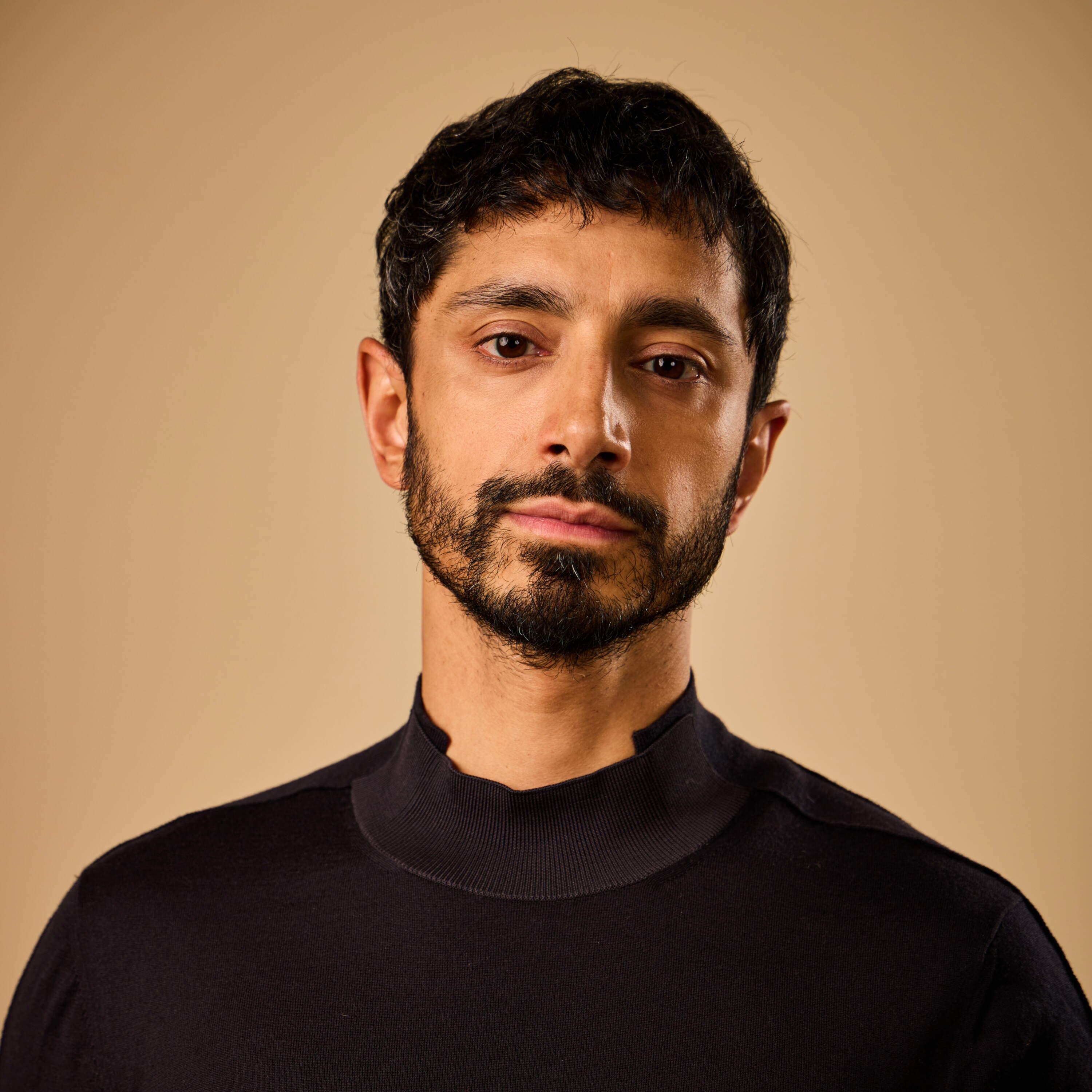
This message comes from Data IQ. Most enterprises can't count their AI agents, let alone manage them. Data IQ agent management lets you do both from a single view. Visit dataicu.com to learn more. This is Fresh Air, I'm Tanya Mosley. A struggling British Pakistani actor lands the audition of a lifetime as James Bond, word gets out, and the internet goes wild. And suddenly, his life starts to resemble the very character he's auditioning to play. He's in a chase sequence, except for he's not chasing a villain, he's chasing acceptance. That's the setup for bait. The prime video series that is part spy thriller, part family comedy, and part psychological unraveling. My guest today, Riz Ahmed, created, wrote, and produced the series. He also stars as the lead character, Shalateeth. Now he's been nominated for an Emmy for outstanding lead actor in a limited or anthology series or movie for the role.
I spoke with him earlier this year when the series was released. Bate opens with Shalate in a tuxedo, doing a James Bond screen test. He's debonair, commanding, in control, James Bond personified. And then he forgets his lines. Tell me, when it's just you, all alone, how do you live with yourself? Do you even know who you are? Lion? Sorry. Sorry. Sorry, Helm. It's all good. It's all good. It's just around a bit of a schedule. Yeah, that's why I was thinking, quick reset back to what's on there at this time. How are you blowing this audition? I know the speech. I know it. Yeah, you f***ing know every time at the exact same moment.
What is this a prank show? We're going to hit him in camera. It's funny. No, I, um, I just have a very particular process. I've got my head around it now. I'm ready. Sorry, guys, we have to say. Yeah, well, just a minute, sorry. How was your weekend? It was good, thanks, I was yours. Great. Yeah, what did you do? Just that thing. Yeah, thanks. Thanks, Jim. You're welcome. You're welcome. My sudden, but I just, stop it. Sorry. You know what? They didn't want to see you. I had to convince them. So this is on me. I've got a confession to make. I'm lightheaded from fasting. It's the holy, muslim month. It's called Ramadan. It involves no eating and drinking. In the day, I'm lightheaded from the fire. I have a bit of a culture understanding. Well, I've just seen you drink apple juice. Six takes in a row. I tried. It's just a shame you didn't. The moment is the beginning of a wild ride as we watch the character unravel. Ahmed has said the show is about family, ambition, and the hunger to belong.
And what it costs someone when they finally get close to the thing they've been chasing their whole life. Riz Ahmed is already an Emmy Award winner for his work in the night of, an HBO crime drama in which he plays a college student whose life shatters after being accused of murder in New York City. In sound of metal, he played a punk drummer grappling with sudden hearing loss. And he was nominated for an Oscar for that film. And for the long goodbye, which is about a British Pakistani family whose ordinary Sunday is shattered by a far right militia, he won the Oscar for Best Short Film. Riz Ahmed, welcome back to Fresh Air. Thank you so much for having me back. Well, after that failed screen test that we just heard in that clip, your character Shah goes to the dressing room and then he goes over the monologue he forgot during the audition. And then he starts berating himself in the mirror for feeling that test. I actually want to play that and then I want to ask you something on the other side of it.
Let's listen. Do you know it? Do you? Who's wrong with you? Do you know who you are? I'll tell you who you are. You're a failure. It should be ashamed of yourself. You are ashamed of yourself. Because you're ashamed of him. Nobody, nothing. I'm sorry. Come in. I forgot to grab your mic. That is so agonizing. A crew member comes and they probably heard the whole thing. You know, I mean, I love that scene, Riz, because that internal chaos. You know, it can become a whole thing. It's never just an audition when you're a brown actor, is it?
Yeah, I mean, so much of the show is taken from my own experience. I'm that guy who you were mentioning the night of. I remember waking up in the middle of the night two years off, I wrapped it on the night of and going to the mirror and redoing scenes. The whole world had already seen. I'd already been handed awards for this performance. I'm like, no, I got it. I got it. I got to get it right. And the inner critic is such a kind of big part of this show. And you know, honestly, like, yes, the show is drawn from those experiences, but it's not about being an actor. It's about, as you said, being caught up in a chase sequence, where you're chasing acceptance and running away from your own inner critic. And so we felt early on in the show, you needed to see just how mean Shaz inner voice can be about him. And I just wanted to be kind of like vulnerable and open about that. I mean, I've definitely, you know, I've done exactly that. Like I said, going to the mirror, redoing the scene, saying, you're useless, you're crap, you know what you're doing. And I feel like that's something that is very, very relatable,
outside of auditioning or being an actor or anything like that. It's, we're often our own worst critics. Yes, you know, I know a lot of people will be watching this series and thinking is Riz playing himself, playing a character. And so much of this, you will all of it. You wrote. So it comes from real experience as well as your imagination. But what did Bond, in particular, represent to you as a British Pakistani kid growing up in London? Yeah. Well, I want to deal with the first part, what you said first, which is, is Riz playing character, playing himself. And if you don't mind, I want to say something that you said to me, just before we start recording the interview, I said, look, how did you like the show? And you said, I feel like I'm sure. You said that, Tanya, you said, I feel like, damn, I'm that person. If you don't mind me saying so many people have been saying that. And yes, there's a lot of me and Shab. I think actually there's a lot of shine, all of us, more than we like to admit. And really, the show is about this feeling that life
sometimes feels like one big audition. You know, we all feel like we have to perform this version of ourselves that knows the script that, as you said, is commanding and decisive and desirable. The best public version of ourselves, we're performing that. But actually, the gap between that public self and the massive vulnerability of our private selves is often huge. And that's true, whether you're talking about how your life is actually going versus the Instagram post you just got to put up or that you saw of someone else or like how professional and put together, you're seeing on a Zoom call when actually you're not wearing any pants, just out of the frame. And so, just on to your question, I feel like I'm playing, I'm trying to draw on a feeling that it's personal to me, but I think it's personal to a lot of people. And then that extra component, though, of playing the man, James Bond, he is considered the ultimate in every way. Absolutely. Yeah, yeah. I mean, you know, the show isn't really about James Bond,
but James Bond is a very important symbol because he is the ultimate symbol of success. Yes, sure, as an actor, he is, you know, the pinnacle of cinematic achievement. And yet, it's also just, you know, for any of us, he's this archetype of like, like I said, decisiveness, desirability, being in control, being unflappable, or being invulnerable. And so, I wanted the character of James Bond to serve as this symbol of aspiration, this unattainable kind of self that Shah is hunting down almost. And in chasing this symbol, is he abandoning himself? Is he abandoning where he's from? Is he abandoning his family? Has he forgotten actually who he really is? And so the show is trying to deal with that. And I think that that's something that, you know, we all kind of go through where we're often pulled between the people we were and the people we want to be. And actually, the healthy equilibrium is probably somewhere in the middle, you know, probably that thing you want to be is like an attempt to escape
yourself. And that thing you were is maybe, you know, a version of yourself you need to evolve out of, but we often feel pulled between those two polaris. How long did it take for you to work on this concept, this idea and come to what is a genre-bending series? Oh, man, I started kind of scrimmling down ideas for this show in 2014. And I started doing that because they said that gap between my public and private self started becoming so big and so stressful. They actually started feeling kind of hilarious. Like giving an example. Oh, really? Yeah. Yeah. Like the week that it got revealed that, you know, okay, I mean, the new Star Wars and they released it, released a cast photograph of our salon set. That same week I got banned from my local supermarket for suspected shoplifting. Because my washing machine had broken. Only clean clothes I had were flip flops, bright pink swim shorts and bright green puffer jacket and a tank top. I'm dragging a massive bag of dirty clothes
around to the laundromat. I remember it's my brother's birthday. I haven't got him a cake. I go to Tesco's. I'm trying to get him a cake. They go on the cake. I buy a frozen pizza with birthday candles. I'm a checkout. It seems like an insane thing I'm buying anyway. It's like, yeah, birthday candles and pizza. I'm dressed insanely. I've got this massive laundry bag. And I forgot to beep it properly on the checkout and another pizza and it goes off and secure you like, yeah, this, you look, this person looked kind of shady. And we get into a back and forth and I'm so frustrated at one point. I go, dude, I'm not shoplifting. I'm Star Wars, man. And they go, okay, this person is definitely crazy. And you're banned. You're never coming back here. This is an example about like the messy chaos of who we really are versus the image of success that's somewhere out there publicly. And again, that's not just true for an actor. That's true of everyone who's posting their best selfie on Instagram, you know? So I started jotting down these little stories to try and just process them and make sense. I knew there was something in these contradictions and juxtapositions that was about me making sense of my own experience.
But also that just felt kind of universal if I could just get a handle on it. And so I spent many years jotting down these, um, these ideas. Um, and then it was when I met my co-show runner, Ben Carlyan, we put the writers room together and all this kind of stuff we realized actually the perfect symbol, um, for this show is James Bond. And that was partly also because my name had been mentioned in relation to James Bond casting and some articles and, and stuff over the years. So in the meta kind of spirit of this show, or trying to be as meta as possible and, um, and have fun with that. Actually, that's a perfect symbol, you know? It's a perfect symbol of, for a character who wants to be anything other than himself, who would he want to be? He'd want to be James Bond. There's so many good one liners in this show, um, that have to come from real life. And so hearing that story about you inside of the convenience store and saying, I'm Star Wars, there's actually a scene with your ex-girlfriend who, uh, she's a writer, she's a columnist, she puts the scathing
piece out about Shah. And in one scene, she says like point blank, someone is talking to the two of you and she says something like, he wants to play a white character to which Shah your character pushes back with, he's not white if he's me, to which she responds, he wouldn't be white, you would be. And, oh, you know, what, what are, what were you doing in that exchange with that exchange? Yeah, well, you know, we don't really want to come up with any answers. I have none, you know, uh, I really want to kind of like explore the different sides of the representation conversation in that moment. Really, you know, um, I think it's an important conversation. I also think it has his limits. I also think it's been weaponized and turned into an economy in some ways and a competitive race, you know, representation, merchantry and, and I think it also can sometimes be a distraction from real systemic change, you know, the tokenism of window dressing can hide like bigger, bigger issues,
um, the libanese sometimes. So I think there's an interesting kind of back and forth that they have there. Um, there's really kind of getting into some of that nitty gritty, but again, without answers, just trying to kind of put it all out there. But I think what's really interesting actually is what's underneath that conversation is a personal relationship about, um, you know, that they, they, uh, this is a conversation with me, my character, Shah and his ex, Yasmine, played by the amazing Ritu Arya from umbrella academy and polite society. Really what's going on over there underneath the kind of social political think piece, jousting is two ex lovers who are trying to jab at each other and push and pull and look for validation and get one up on each other because they're hot because they both feel like the other has left them behind in some way. And what was really important to me more than anything is that this show didn't exist in a conceptual space.
It's about characters, it's about relationships, you know, everyone has the one that got away. And I was like, well, what if Shah and the one that got away have their whole entire episode together? Yeah, it sort of flips the series for one episode to be kind of a romantic comedy. Yeah, we try and flip the series the whole time and, you know, there's a spy thriller episode, there's romantic comedy, there's a kind of surreal episode, there's one that's almost like the Bond Gala, you know, like James Bond turns up at the kind of, you know, black tie event and hijinks ensues, you know, we've got that. We've got all these different flavors and we've got an ead episode as well, you know, I felt like we've got Christmas episodes, Thanksgiving episodes. I want to have an ead episode. And so we very deliberately trying to layer in and thread multiple different genres because honestly, I feel like my life takes place in different genres. I feel like right now I'm here, you know, lucky me, you know, pretending to be all clever talking talking to you guys on fresh air and I'm going to walk outside and slip on a banana peel and
like full flat on my face and suddenly I'm in a slapstick, you know, and it's like we wanted to have that multiplicity, that tonal bitplash because honestly, that's just what I enjoy and I felt like if I can make something, it's a full meal, there is a romance and a spy thriller and a family drama and overall a comedy, then I could also just solve a very personal problem, which is me and my wife squabbling over what we're going to watch. You know, let's get in there and try and do it all. I'm Marvel at the the multi-nature of this series as I'm watching it, I'm just thinking, how did he pitch this, you know, how does one pitch something like this and get it greenlit because it's so well done, but it also can't really be explained in one line, you know. Oh, thank you, that that that means the world to me, you know, it's it's interesting, you say, it can't be explained in one line because throughout the whole process, we struggled with that, right? And then when we got to the very end of the process, we actually found a way of summing up
the whole show in one word and and that word is bait and I was surprised. Yes, and what does that mean? I want to unpack it for a minute, right? So bait is a British slang word, which means being blatant and in your face and attention seeking. There we go. That's what my character is doing for much of the series. Bait is an online term about trolling or provoking people online. That's a big part of our show as well, that element. Bait in Urdu means your loyalty or your allegiance. And that is something that Shia is contending with home versus ambition, East versus West. Bait in Arabic and Hebrew means home. And so much of this show is a love letter to home and it's about family and how far do you travel from home in order to please home or help home, you know. And then of course, there's a big spy thriller element to our show and bait is something that's used as part of a trap. And so it's that. So it's a weird thing where only in retrospect, we realized like, oh my god,
we accidentally stumbled on the perfect title for this that actually communicates the entire layer cake of this show. It is all those flavors. And the word bait means all those things. That's remarkable that you stumbled upon like knowing those meanings outside of the traditional meaning of bait. That wasn't when you all said, oh yeah, let's come up with bait. Did you have all of those before you? No, no, you know what? I often have to explain what the word bait means to American collaborate is because I say it all the time. Often I come up with an idea, you know, it's spitballing the writers room and I go, what about this? I actually ask to bait. That's a bit bait. I don't want to be as bait as that. And they go, what do you mean? And I was like, oh, a bait means like to blatant. It's not subtle enough. And of course, that's British slang because the most important thing you have to be is British, understated and subtle and you know, reserved. And so bait is a kind of derogatory kind of slang term. Sir Patrick Stewart, best known as Captain Picard in Star Trek, he appears in bait in a role that
I will not spoil, except to say that it's not what you'd expect. And I wonder what does his presence do in the story that no one else could? First of all, it elevates the story just by the fact that it's Patrick Stewart in the story. I mean, he's such a hero. You know, I don't want to say too much about the role he plays because it is very particular. And I don't want to give anything away. I guess I'll just say that working with him showed me that your art can kind of only be as big as your heart is, you know, if that doesn't sound too corny, like you kind of have to have a capacity for such receptivity, humility, generosity, and empathy in order to kind of be an artist of that stature and at that level. You know, just the hum... Yeah, just the kindness, the openness, 84 to step into this
story. I remember having to explain, you know, various kinds of British slang and or do swear words to him, you know, it's nothing but just always engaged, always interested, always shall we do it again? Yeah, he was just such a pro and such a gentleman and I'll really cherish that experience. Our guest today is award-winning actor, Riz Ahmed. We'll be back after a short break. I'm Tonya Musley and this is Fresh Air. This message comes from BetterHelp. Imagine carrying a backpack every day. Inside it, every conversation, every mistake, every expectation. It is easy not to notice how heavy it is until someone asks if you want to put it down. Sometimes feeling better starts exactly like that. Better isn't one size fits all. Better is personal. It's therapy tailored to the individual to help lighten what you carry. Match with a therapist who truly understands. Visit BetterHelp.com slash NPR.
This message comes from NPR sponsor Charles Schwab. Financial decisions can be tricky. Your biases can lead you astray. Financial decoder and original podcasts from Charles Schwab can help. Download the latest episode and subscribe at Schwab.com slash financial decoder. This message comes from Rinse. Your dog believes you are magnificent. Capable of anything. Your dog has washed you spend hours a week moving fabric between machines and has never once lost faith. The question was never whether you could become the person your dog thinks you are. It's what's in the way. Turns out, just a laundry. Not anymore. Rinse picks up your laundry, cleans it expertly and delivers it back while you get on with being magnificent. Sign up today at rinse.com. Rinse, it's time to be great. This is Fresh Air. I'm Tony Mosley and my guest today is award-winning actor, writer, producer and rapper, Riz Ahmed. He received an Emmy nomination for
Outstanding Lead Actor, an unlimited or anthology series or movie for his starring role as Shalateeth and the Prime Video satirical drama series Bate. Riz Ahmed has built a distinctive career in film and television. From a rebellious intelligence officer in Rogue One, a Star Wars story, a young Pakistani American on trial for murder and HBO's The Night of, a performance that made him the first Muslim and South Asian man to win the Emmy for Outstanding Lead Actor. In 2019, Ahmed starred as Rubin, a punk metal drummer losing his hearing and sound of metal, which earned him an Oscar nomination for Best Actor. And earlier this year, he starred in a film adaptation of Shakespeare's Hamlet. He got his start on pirate radio as a teenager in London, competing in rap battles and recording politically charged music that got banned on British airwaves. In 2020, he released The Long Goodbye,
a concept album, which uses an abusive romantic relationship as a metaphor for the relationship between the UK and its immigrants. The short film, based on the album, earned the Academy Award for Best Live Action Short. I spoke with him in March of this year. Riz, let's talk a little bit about Shakespeare because it wasn't really your thing as a kid until a teacher I hear introduce you to Hamlet. What do you remember about that first encounter with the play and what did it kind of unlock for you? Yeah, it's really interesting. I, um, I'm not many people felt like Shakespeare is their pit of me of everything I'm on the outside of. It doesn't belong to me, it's stuffy, it's a leotist. And I've got a government assisted place to a private school where I felt like an outsider for many different reasons. And I was lucky enough to have an English teacher called Mr. Rose Blade who was a white Jewish middle-aged man from a different place in the UK,
thought we had nothing in common but he spoke fluent Punjabi and he brought me Hamlet and said, you know, this thing, this story, this character, it's at the heart of the establishment that you feel so alienated from in many ways. But have a read of it, you might recognize yourself in this character and I did like millions of people have, right? Hamlet being a character who feels out of place, Hamlet himself feels like an outsider, he feels like he doesn't belong, like no one understands and it really spoke to me as a teenager but more than that what I realized was, how long am I going to minute, this Hamlet story set in, you know, medieval Denmark actually is exactly like growing up in Wembley. This is about who you can and can't marry. This is about everyone squabbling over the family business. This is about the reality and lived experience of spirituality, ghosts and spirit possession which is part of the course, it's part of our lived experience
culturally. And this is also actually kind of pivots on a story point of marrying one's sister in law if your brother dies which is a cultural tradition. I think it's actually a Jewish tradition and an ancient Hindu and South Asian tradition. I've actually grown up with people who've had to do that. If their brothers died tragically, they themselves are unmarried with the consent obviously of their sister in law of a cultural conversation that they have, they go, shall we get married? It's a way of protecting the orphans and protecting the widow. So this didn't feel like this antiquated kind of slightly out of touch piece to me. I was like, if you put it in my community, in my experience, this is right now. This is completely vivid and completely urgent and it was then at the age of 17 that I very procociously had the idea that man, I want to, I want to make a movie of this one day and I want to sit it in that place and in doing so, I hope to kind of render this story more vividly and a more urgent, more than way than maybe I've seen it and make it just make
it feel real because all those things are so real in that environment. What did you have to kind of work through to get to this adaptation because you could have just played Hamlet and put on a movie adaptation of Hamlet as it is? You know, I really believe that the amount of time it took was kind of quite divinely guided in a way. That's because I feel that this is the moment for this story. You know, it's a story, Hamlet is a story and it's a character who is grieving the illusion that the world was ever a fair place and I think that's how we're all feeling now. We're all grieving and reeling from this realization that okay, I knew the world was unfair but now the shameless, brazen, unfairness of it is just kind of laid bare and it's about grieving that illusion and it's also about feeling powerless in the face of how unfair it is and it's actually feeling kind of complicit in it and guess it about it and that's what the play is about. I think that this is when
it was meant to be told but for us creatively, the part that we were struggling to unlock is how do you not make this feel just like a Shakespeare performance and a poetry recital? How do you not make this feel like a kind of self-congratulatory like actor wants to take on the classic and actually that was the opposite of how we wanted it to feel and it really took us meeting a Neil Carrier, the director. It was after I collaborated with him on the short film The Long Goodbye for which he won an Oscar that I was like oh I think we know how to do this. We need a we need a director who's worked a lot in rap music videos. We need a director who has actually can render poetry in a very raw way and give us raw action in a very poetic way and that's what he did in that short film and that's what he does in his films and we connected and we had a long conversation about how this has to feel like music you know. There's the classic line from Hamlet to be or not to be that
is the question and in your version, Hamlet delivers this famous solidically basically speeding through the rain at 100 miles an hour and I want to play a little bit of it. Let's listen. Well not to be. That is the question. Whether it's nobler in the mind to suffer, the slings and arrows of outrageous fortune ought to take arms against the sea of troubles. But by opposing and the dying to sleep. No more. Or by a sleep to say we are not take a thousand natural shocks that flesh is there to the consummation that vowed to be wished to die to sleep. The sleep which holds the dream.
Oh, there's the rub. That is my guest, Riz Ahmed and his latest film adaptation of Hamlet and Riz you've talked about this before but for most of us we're kind of taught that this speech is about suicide. Basically Hamlet is weighing whether life is worth living and you came to believe something entirely different is happening in those lines. What do you think Hamlet is actually asking? Yeah, I don't think it's about suicide at all. It's about fighting back against oppression even if you know that you will lose everything, possibly even your life. It's actually very clear in black and white in the tech, the active verb here is about taking up its back to take up arms. You know what he's saying is there's two choices. You can carry on being and it's very interesting. He says be not living just be you can exist
and you can exist and just suffer all the oppression and all the unfairness and all the injustice of the world and all the insults that life throws at you or you can fight back. But fighting back might mean you will no longer be. So it's really about whether we are willing to pay the price of true resistance. And it's actually a very radical speech. It's very confronting. It's tackling a taboo subject really to the idea of taking up arms and resisting oppression and the powers that be it's dangerous idea actually. You can get you arrested, you discuss that openly to this day. You and your director, Anil Kariya, you all became new fathers while making this film or were new fathers while making this film is that right? That's correct. Yeah, yeah. And that ended up being a big part of the process actually. Yeah, how so? How did it becoming a
father kind of change what you thought this play was actually about or the process itself? Well, I guess it struck me that this is a play in part about fatherhood and about the absent father. And I didn't fully understand that until I myself, until I myself became a father. I became actually an absent father in the sense that I was away for much of the day. You know, awake before my kid was awake home after my kid gone to sleep. And I started to understand that emotionally, but actually it was more of the effect they had on me physically. Because I'm waiting to want to play this role. I mean so much to me this story, like 15 years of developing script. I want to get ready for this silly little quiz. And what would happen is me and Anil would turn up on set on like two hours sleep, one hours sleep, like 45 minutes sleep.
Because your baby was a newborn, yeah. And the baby was a newborn exactly in his child with sleep regressing. And what I realized after the first I was just like, well, this is all just going to be a total failure now. And then I realized that I'm going to minute. He's exactly how how it feels. The word that is repeated most frequently in to be or not to be is the word sleep. This guy is not sleeping. He needs to sleep. He hasn't slept. He's unraveling from that as well. And it actually infused a kind of very raw, kind of quite vulnerable, quite frazzled kind of texture, I think, to my performance that I could never have planned or controlled. You know, I think you can kind of feel a lot of that exhausted, kind of disarray in the performance. And honestly, that's the version of how many I'm interested in is not the version
who is the smartest guy in the room spouting, commanding poetry. The version of how many I'm interested in is the most stressed, vulnerable and under pressure guy in the room, who continues to speak because the words are failing him. He can't find the right words. I mean Shakespeare was a wordsmith. He's working in verse and rhythm. And I'm thinking about your background in rap and you're politically charged album. And I'm wondering, did that hip-hop instinct shape at all how you heard and deliver these lines? Yeah, very, very much so, very much so. Here's my take on it. A lot of people find a block with Shakespeare because they find it difficult to understand what the words mean. I totally get it. I often feel the same way. Here's the thing, people in Shakespeare's day themselves did not speak like that. They didn't say that. Shakespeare made up like between three and five thousand new words. I think there's some estimates. The word eyeball is a word that he made up. You imagine hearing that
for the first time, a what ball? And I what? He made that up. And one thing that he played with all the time was rhythm. Rhythm, rhythm, rhythm, rhythm. And so in the same way that when I listened to some of my favorite rappers, new songs, I don't know what they say the first time around. But I am totally wrapped. I'm totally leaning in. I'm engaged. I feel it emotionally. It's the same way your first experience of this thing is supposed to be like music. You didn't catch all of the words, but that word there felt weird enough to make you sit up. And what you're supposed to do is receive an electric charge of rhythm and melody and musicality, just like rap music. But that's not the actual experience of these plays. So I wish more people spoke about Shakespeare in that way. Because to me, it is much more like music than it is like in English class. Did you come to this understanding as at 17-year-old whose teacher introduced you? Did you see that connection? Because you were kind
of deep in rap at that moment at that time. Yeah, it's such an interesting connection to me. You know, I think it's an inevitable one to make really. If you're interested in poetry, if you're interested in lyricism, if you're interested in rhythm, like Shakespeare's doing that, he's playing in all those arenas. And so it was clear to me very early on, but something isn't also lost on me is at the same time I was studying under Rob Claire and doing a Master's in Classical Acting, which is essentially just a Master's in just in Shakespeare performance. That's when I started on the rap battle circuit in London and things like Jump Off and Battlescares and Bombay Bronx and competing in all these championships. And so it did somehow in my mind feel like it's one thing. If you're just joining us, my guest is actor, writer, musician, and producer, Riz Ahmed. More after a break, this is Fresh Air. This message comes from in PR Charle Schwab. Financial decisions can be tricky. Your biases can lead you astray.
Financial decoder and original podcasts from Charles Schwab can help. Download the latest episode and subscribe at Schwab.com slash financial decoder. This message comes from Rince. A well-designed life doesn't run on default settings. You chose the walkable neighborhood. Your coffee order became oddly specific. You spent three weeks choosing your mattress. But your laundry routine, that one somehow escaped the redesign. Should that really be the one update you skipped? Consider this the patch. Rince picks up your laundry and dry cleaning, cleans it expertly, and delivers it back. Sign up today at rinse.com. Rince, it's time to be great. This message comes from Arctic Wolf. Arctic Wolf combines AI-led security operations with human expertise, helping teams detect, investigate, and respond at machine speed without building it themselves. More at ArcticWolf.com slash in PR. This is Fresh Air and today we're listening back to my interview with Emme and Oscar
winner Riz Ahmed. He stars in the Prime Video Series Bate. For the role, he received an Emmy nomination for Best Lead Actor in a Limited or Anthology Series or Movie. His most recent film was a modern adaptation of Shakespeare's Hamlet, which was released earlier this year. As you've mentioned, Riz, you grew up in Wimbley and Northwest London. The son of Pakistani parents who immigrated in the 1970s. Take me back to when you were a teenage Riz and you were DJing and wrapping. You started on pirate radio. How did you discover pirate radio? I grew up in the 1990s. In the UK, I grew up in Wimbley. Wimbley is both the site of England's greatest triumph in 1966 World Cup and also in the shadow of that stadium, I'd go every Sunday to Wimbley Market, which is by the Chinese Spring Roll and the immigrant kind of
food stalls and the fake design and clothes that we'd buy and sell over there, amongst that kind of working class and immigrant community. Pirate radio station culture was just that was just everywhere. Yes, you'd have the BBC radio stations and the other London stations, but in between all those airwaves, the one that's all the FM frequencies that were not spoken for, you'd hear faint crackle and then the voice of MCs or microphones that were broadcasting from the roofs of the housing projects locally. That's pirate radio culture. It was there that I was exposed more and more to drum and bass and garage, particularly when I was too young to actually go to the raves themselves. As soon as I was old enough to try and hack off whatever faint facial here, I had and trying to grow it back. I was at the raves themselves and I just love the music. I love the specificity of London's musical subculture and the UK does that so well because of the
clash and the mix of different cultures and different sounds and influences. I was exposed to it and then I started doing it myself, both at raves and on pirate radio. I remember when I went to Oxford and I got in there, I felt like I'd lost something. I'd lost this thing that I loved. I was eager to keep it going and that's when I started promoting my own club nights and it became a really invaluable place where every week without fail, I could hon my craft. I could try out new lyrics. I could gain confidence as a performer and I think it helped me not just as an MC, but as an actor. How old were you when you recorded the song post 9-11 blues? I post 9-11 blues in my first rap track. It's kind of deliberately silly balls. It's a satire really. It's a provocative kind of satire and it takes the shape of an almost like a nursery rhyme or school kids jingle. I wrote that when I was 23 I think, 22. I just felt like I was
surrounded by this circus of fear mongering and of paranoia and mistrust and the war on terror and being a young Muslim post 9-11. I was like, this is crazy. How do I make sense of this? Comedy is really my first love. I decided to write this satirical rap song. It got banned from the British airwaves. It did kind of like unofficially, there was a sense amongst radio DJs that they cannot play it because it's too politically sensitive. What was your response to that? Did it kind of feel a little powerful? That meant your words hit power. It's the best thing you can do to an artist who's trying to start out and get some attention with their work is ban their work. This is in the era of my space that the song very quickly went very viral and it gave me a little confidence and an excitement about how maybe I can, if I say the thing that I feel but the no one else is
maybe saying that that is, that can really travel, you know. My guest is actor, writer and producer Riz Ahmed. More of our conversation after a break. This is Fresh Air. You're searching for a new job or you're trying to figure out how to set boundaries with your family. Whatever's on your mind, life kit has you covered with three episodes every week on Health, Money, Mental Health and so much more. Listen to the Life Kit podcast in the NPR app or wherever you get your podcasts. This week on Wait-wait-wait don't tell me we talk with our panel Mo Rocca Shane Torres in any rowrda about the latest trend in dating smelling bad on purpose.
This Firmone Maxing is just not bathing. Yes, yeah. So this is like when Uber came out and they're like it's not taxi, it's a ride chair. Don't miss our full conversation and the rest of our games. Listen to the Wait-wait-wait don't tell me podcast and the NPR app or wherever you get your podcasts. This is Fresh Air and today we're listening back to my interview with Emmy and Oscar winner Riz Ahmed. He's been nominated for an Emmy for his work on the limited series Bate. Let's talk a little bit about the Long It By. It was your first studio album released in 2020. There's a song called The Breakup which is the first track on the album which uses an abusive romantic relationship as a kind of extended metaphor for the relationship between the UK and immigrants. And let's listen to a little bit of it. Britain's broken up with me. We had our ups but now it's broken down. Let me break down the whole
I was a moron. At the bling and the girls grit underpulls. My cash was a quarter of the stash in the world. And this stray pale chick came to trade. A labor that came to pay. She straight slithered and then stayed. I couldn't kick her out. She saw I was a woo with myself and I'm a fool. When you're a woo with yourself you're easy to divide and rule. She had me locked down. Meet me red and blue till I knew that right was white and not brown. I'm gonna make you hate yourself you hand over your crown. She moved in. I was a guest I wanted in my own house. She stole my **** broke my **** off me scarred and got paid off the same back she whipped. Left me hungry. Took my industry and independence from me. Took my daughter and let me money said that it was all to help me. And she had beef with some German next man. I went to rule for her twice. Almost lost my left hand.
That was the breakup from my guest today. Riz Ahmed and there's also a short film for the Long Goodbye which kind of serves as a music video at one and Oscar for best short live action film. Tell me about the decision to use language of love to talk about belonging and exile and loss. I feel that the poetic metaphor of love and relationship and longing is something that I grew up around in the tradition of Urdu poetry and then reading it and studying it a little bit more as an adult. You know a lot of Sufi poetry if you look at Rumi or if you look at Rhalib or if you look at you know Razal writing from South Asia the Middle East from Iran. It's often love poetry and love is used as a metaphor and the relationship and the beloved is a metaphor for God. But it can also be used as a metaphor for
for other things. So I kind of feel like it's something that I wanted to borrow from that poetic tradition and in fact the breakup it has an alternative title in brackets which is Shikwa and Shikwa means complaint and that's because a very famous poem by Muhammad Dikbal he has a famous poem called Shikwa and then Javabi Shikwa which is complaint and response to complaint and in that he's actually complaining to God saying God you forsaken us as Muslims like you know we've been colonized and destroyed and wrecked and like you know where are you you know you said we should you take care of us being not there and so I wanted to kind of like really touch on that because what I want to do as a rapper is I don't want to just be someone who's kind of like taken from this incredible African American tradition. I want to also contribute something of my own tradition of my own heritage and so I want to take the poetic forms, the poetic references, the musical backing of my own South Asian identity and my London identity and the sound system culture there and infuse the two
and it felt to me like a much more personal and much more emotional way to talk about political realities is you know through this metaphor of love. Well Riz this has been such a pleasure to talk with you thank you so much. Thank you for having me and thank you for the wonderful conversation. Riz Ahmed has received an Emmy nomination for Outstanding Lead Actor in a Limited or Anthology Series or Movie for his starring role in the Prime Video Satericole Drama Series Bate. I spoke with him in March. If you'd like to catch up on interviews you've missed like our conversation with actor Lisa Kudrow or with National Security Correspondent Joby Warwick about his profile on a notorious terrorist known as the Jackal. Check out our podcast you'll find lots of fresh air interviews. You can also watch some of our interviews on our YouTube page this is Fresh Air. To keep up with what's on the show and get highlights of our interviews follow us on Instagram at NPR Fresh Air.
Fresh Air's Executive Producer is Sam Brigger. Our Technical Director is Audrey Bentham. Our engineer today is Adam Stanishevsky. Our interviews and reviews are produced and edited by Phyllis Myers Roberta Shorak, Ann Marie Baldenado, Lauren Crenzel, Monique Nazareth, Faye Chaliner, Susan Yacundi, Anna Bauman and Nico Gonzalez Whistler. Our Digital Media Producer is Molly CB Nesper, Theresa Madden directed today's show with Terry Gross. I'm Tony Mosley. This message comes from Capella University. That spark you feel? That's your drive for more. Capella University's Flex Path Learning format lets you earn your degree at your pace without putting life on pause. Learn more at Capella.edu. This message comes from NPR sponsor Charles Schwab. When is the right time to sell a stock? How do you protect against inflation?
Financial decisions can be tricky and often your own cognitive and emotional biases can lead you astray. Financial decoder and original podcast from Charles Schwab can help. Join host Mark Repey as he offers practical solutions to help overcome the cognitive and emotional biases that may affect your investing decisions. Download the latest episode and subscribe at Schwab.com slash financial decoder. Big news stories don't always break on your schedule. But with the NPR app, news, culture and podcasts are ready when you want them in your pocket. Download the NPR app today.
More episodes
More from Fresh Air

How Sept. 11 changed American life
Fresh Air

Casey Gerald says ruining his reputation saved his life
Fresh Air

Rosanne Cash on the gift her father, Johnny Cash, gave her
Fresh Air

Best Of: ‘Wonder Man’ actor Yahya Abdul-Mateen II / John Coltrane centennial
Fresh Air