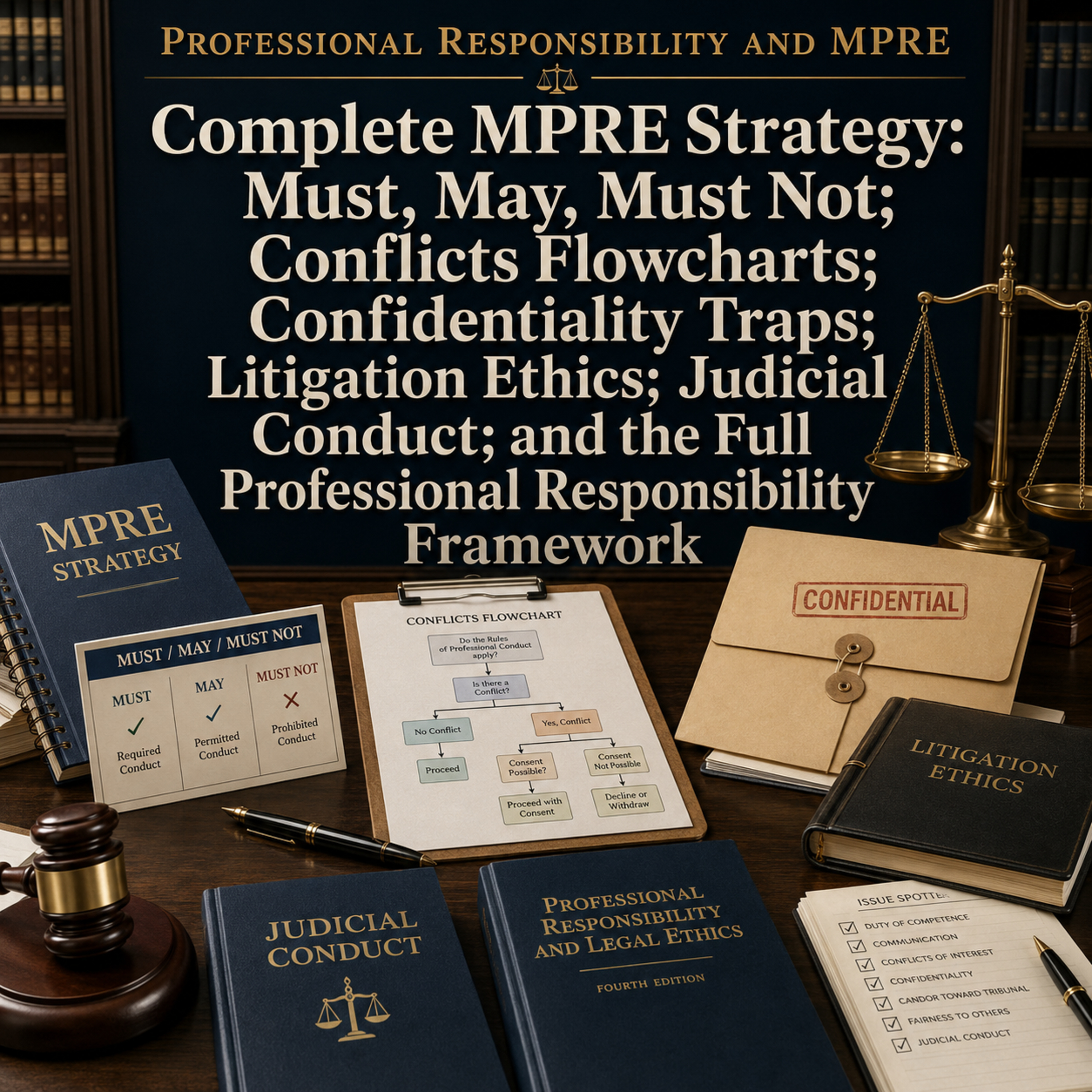
Professional Responsibility: Complete MPRE Strategy- Must, May, Must Not; Conflicts Flowcharts; Confidentiality Traps; Litigation Ethics; Judicial Conduct; & Full Professional Responsibility Framework
About this episode
▬▬▬▬▬▬▬▬▬▬
EPISODE SUMMARY
MPRE success comes from rule sequence. Begin by identifying the lawyer’s role, the relationship, the duty category, and whether the lawyer must act, may act, or must not act. Then ask whether consent, writing, withdrawal, disclosure, screening, reporting, or court permission changes the result.
Mandatory duties include competence, diligence, communication, safekeeping property, avoiding frivolous claims, correcting false statements to tribunals, disclosing controlling adverse authority, reporting certain serious misconduct when confidentiality does not bar reporting, withdrawing when required, and protecting client interests upon termination.
Permissive rules include certain confidentiality disclosures, limited-scope representation with informed consent, withdrawal for specified good cause, and consentable conflicts with proper consent.
Prohibitions include unauthorized disclosure, nonconsentable conflicts, assistance in crime or fraud, false statements, false evidence, obstruction, improper contact with represented persons, commingling or conversion, misleading advertising, improper solicitation, and unauthorized practice.
High-yield MPRE traps include confusing confidentiality with privilege, forgetting client control over settlement and core criminal decisions, treating all conflicts as waivable, assuming third-party payers are clients, mishandling trust funds, ignoring tribunal candor, forgetting prosecutor duties, contacting represented persons, and overusing extreme answer choices.
The full Professional Responsibility framework is practical. Identify the actor, relationship, duty, and command. Then choose the answer that protects client autonomy, confidentiality, loyalty, tribunal integrity, public trust, and professional independence in the precise way the rules require.
The central lesson is disciplined professional judgment. A lawyer’s duties are not private instincts or personal preferences. They are enforceable professional obligations, and the MPRE tests whether students can apply them with accuracy.
Get every episode summarized
Each time Law School publishes, we email you a written briefing from the transcript — the topics, who appeared, and any specific claims, with the ad reads skipped.
Email me new episodesFree for 3 shows. No card needed.
Hosts & guests
No transcript yet
This episode has not been transcribed. Request it and it moves to the front of the queue.
More episodes
More from Law School

Constitutional Structure: Federal Judicial Power — Judicial Review, Article III,...
Law School

Property Fall Build: Mortgages, Foreclosure, Priority, Fixtures, Water Rights, S...
Law School

Property Fall Build: Covenants, Equitable Servitudes, Common-Interest Communitie...
Law School

Property Fall Build: Adverse Possession and Easements — Hostile Possession, Tack...
Law School