Previewing Next Week’s Fed Meeting & the Potential for 2026 Rate Cuts
About this episode
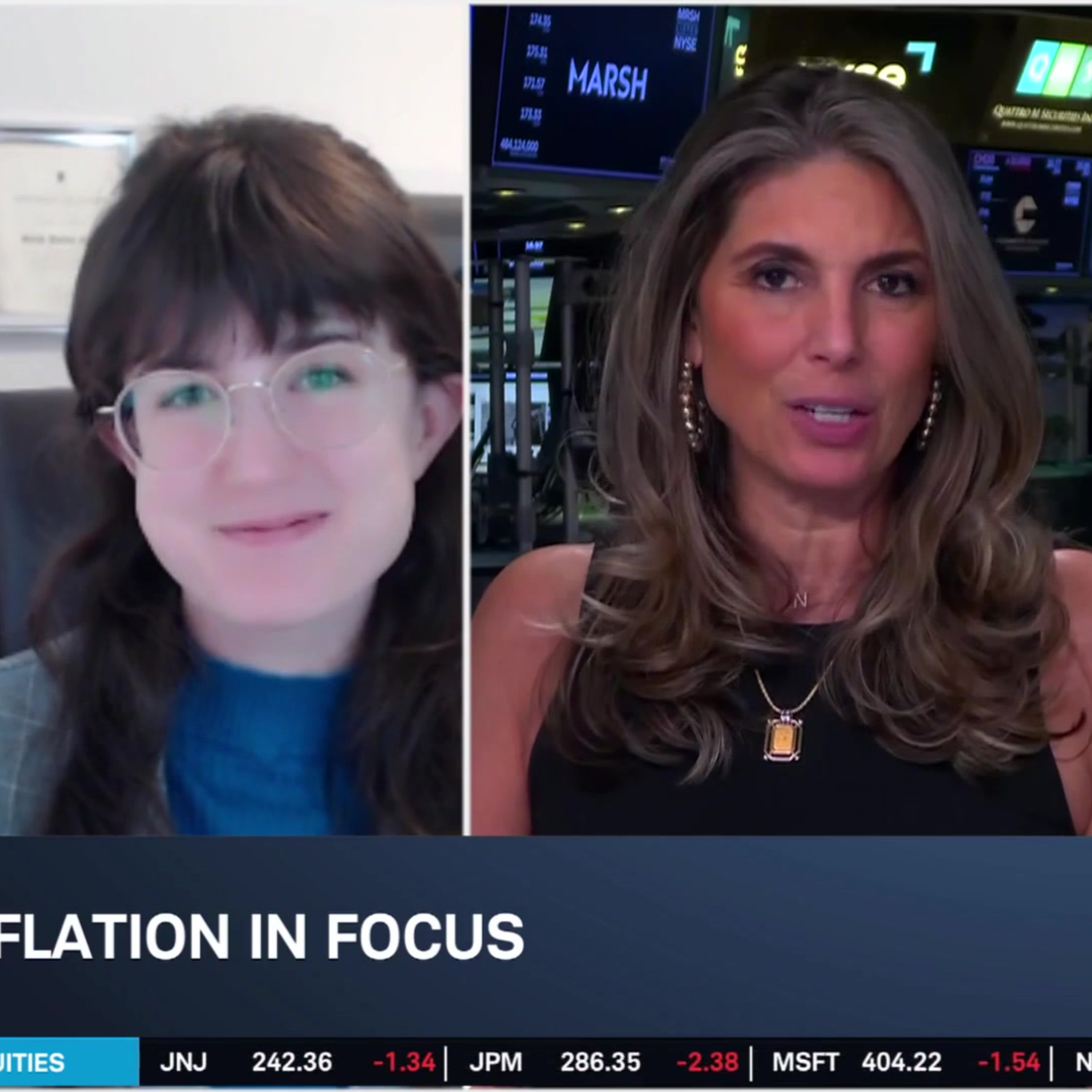
Brian Jacobsen and Sarah Foster preview next week’s Fed meeting. Sarah isn’t sure whether the latest CPI report is good or bad news because of the conflict with Iran. She notes that before the war, we were already in a difficult place for inflation. Brian points out how many industries rely on the Strait of Hormuz, including fertilizer, but sees the conflict as a “temporary detour” for inflation levels. The Fed prefers to look at the PCE report to measure inflation, and they discuss how that changes the outlook and whether they might cut rates this year.
======== Schwab Network ========
Empowering every investor and trader, every market day.
Options involve risks and are not suitable for all investors. Before trading, read the Options Disclosure Document. http://bit.ly/2v9tH6D
Subscribe to the Market Minute newsletter - https://schwabnetwork.com/subscribe
Download the iOS app - https://apps.apple.com/us/app/schwab-network/id1460719185
Download the Amazon Fire Tv App - https://www.amazon.com/TD-Ameritrade-Network/dp/B07KRD76C7
Watch on Sling - https://watch.sling.com/1/asset/191928615bd8d47686f94682aefaa007/watch
Watch on Vizio - https://www.vizio.com/en/watchfreeplus-explore
Watch on DistroTV - https://www.distro.tv/live/schwab-network/
Follow us on X – https://twitter.com/schwabnetwork
Follow us on Facebook – https://www.facebook.com/schwabnetwork
Follow us on LinkedIn - https://www.linkedin.com/company/schwab-network/
About Schwab Network - https://schwabnetwork.com/about
Get every episode summarized
Each time Schwab Network publishes, we email you a written briefing from the transcript — the topics, who appeared, and any specific claims, with the ad reads skipped.
Email me new episodesFree for 3 shows. No card needed.
Transcript ready
77 searchable segments. Every word is indexed and playable.
Full transcript
Schwab Network — Previewing Next Week’s Fed Meeting & the Potential for 2026 Rate Cuts. Machine-transcribed; use the interactive transcript above to jump the player to any line.
Brian Jacobson, Chief Economist, Chief Economic Strategist, Annex Wealth Management and Sarah Foster, Economic Analyst at Bankrate. So glad you're both with us. Look, this pretty much came in line. I mean, I think people were still combing through auto insurance and food and shelter and all these different things that sort of come in this print. Sarah, would you make of it? Yeah, I'm coming back to this question of whether this is good news or bad news. I think the main story is that, as you said, this is more of a rearview mirror than a windshield. It kind of shows us where we've been, but not necessarily where we're going. And I feel like anybody who's who's ever written a story and immediately have to trash it after they finished because the news has changed kind of empathizes with this report a little bit. You know, the thing that I keep looking at is that regardless of what happened with energy costs and where we're heading here with these gasoline prices is that super core services measure, which we know the Fed is looking at that actually ticked up to 4.8% on
a three month annualized rate, which kind of shows that even before tariffs and even before, you know, the conflict in Iran, we were still in a pretty challenging position with the inflationary picture. And what did you make of it, Brian? Yeah, I think that it, I agree with Sarah in terms of it seems like old news because so much has changed since February. And we do know that going forward, we're going to see the effects of the higher gasoline and energy prices. But there's also those longer term effects as far as, you know, think about one third of the world's fertilizer, basically supply goes through the straight of her moves as well. And so what sort of effects could this have longer term with food prices? But I actually think that this is more like a detour, a temporary detour and not a complete derailment of that inflation story because a lot of the things that we're living through right now in real time with the conflict in the Middle East should hopefully within the next few weeks be mostly in the rearview mirror, though there could be some lingering effects. And so I actually
found it somewhat encouraging that it was basically a repeat performance of the January report in terms of the headline and the core. And we should reengage with that path towards 2% is just that it might take a couple more months to get there. And when we think about energy going higher, I mean, it could be inflationary. We did see gasoline with an up arrow anyway. And that could be inflationary on folks at the same time. The Fed doesn't necessarily want to make moves based on that's why we get X food and energy because it's such a wild card, right? Sarah, I mean, what is the Fed going to do not this meeting? We know they're probably doing nothing this meeting. But the next three meetings. You're right. It's hard to say, you know, on the core inflation measure, the Fed does prefer to kind of squeeze out those volatile food and energy categories. And as you mentioned at the top of the show here, you know, PCE is that preferred gauge that the Fed looks at. But I think everybody's a little bit burned here still, you know, during the pandemic, it was certainly a
case study and what happens when gasoline prices increase, which are kind of the glue that connects all of these different corners of inflation. You know, as Brian mentioned, higher gasoline, higher energy costs that can lead to higher food prices, it can lead to higher energy bills. It, you know, could force some businesses, depending how long this goes on to raise their prices. If they're encountering higher monthly utility bills, it just sort of seeps through the rest of the economy. The ultimate question is how long though this goes on? And I think, you know, it's very fair to say that the Fed could be on hold through at least the end of Fed Chair's term and maybe even a little bit longer than that. A parallel shelter, new vehicles, higher use cars came down. I think auto insurance came down too. But, you know, transportation services were higher, as well as medical care services. Brian, do we have an inflation problem? Well, it depends on where you look and some of the categories, of course. And I think you look at airline fares. I think that's a little
disconcerting, especially given that we're approaching spring break. And now we also have the issues going on with TSA, as far as people probably, not getting their paychecks and showing up, calling it sick. So I think that there's all sorts of problems that we have to think about on the transportation side of things. But in terms of some perspective here, I think the Fed is going to want to talk tough, but not do anything. Mostly because if you think about 2011, the European Central Bank with Jean-Claude Trichet, right, in the face of higher commodity prices, he decided that he needed to hike rates despite the week and weekening economy. And that proved to be a colossal mess. And I think that Fed is going to want to avoid that. So they're probably going to want to talk tough without actually doing anything about it, to help reshape expectations. Because consumers' expectations of inflation can drive realized inflation. And so you shape their expectations through your open-mouth operations and not necessarily through some of the classic, you know, interest rates setting. Yeah, and look, on the last jobs report,
sort of got lost because we were talking about the Iran war so much and the Surgeon of Oil. But you saw fewer jobs. You saw the unemployment rate on the rise. You saw the prior month revise lower. So labor is still very much a topic too. That we'll talk about Sarah and Brian in our next conversation. Good to see you both. Brian Jacobson, Sarah Foster. Thank you.
More episodes
More from Schwab Network

Stock Market Today: ORCL & ADBE Earnings, AEO Plunges Near 52-Week Low
Schwab Network

Thursday's Final Takeaways: Crude Taps $103 & PPI Hotter than Expected
Schwab Network

Balancing High-Conviction AI With High-Dividend Diversification
Schwab Network

EARNINGS PANEL: ORCL, ADBE
Schwab Network