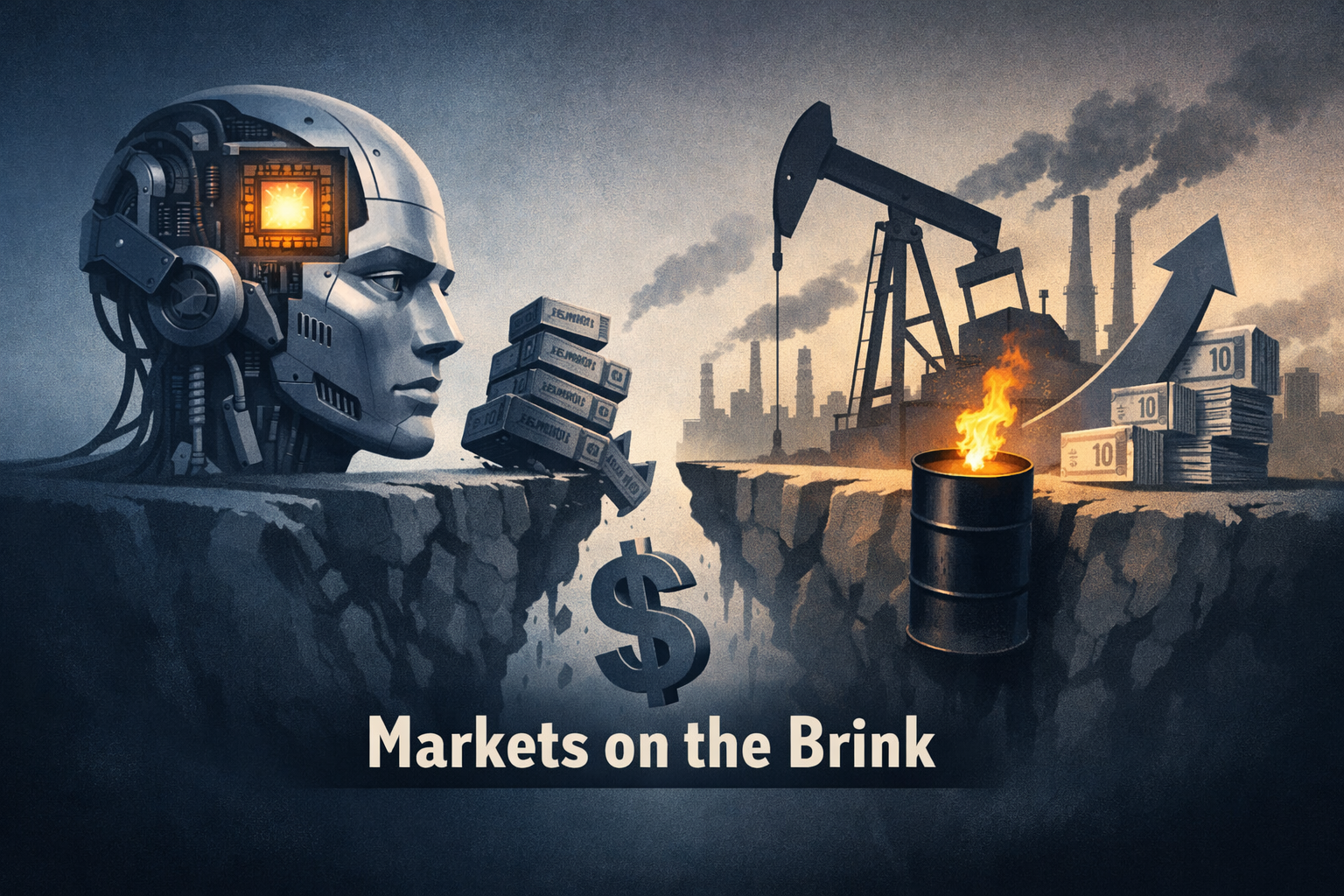
Post-Labor Day Jitters: AI Hardware Rotation Collides With Rate Risks and Geopolitical Oil Shocks
About this episode
Get every episode summarized
Each time Alpha Casts - AI Market Intelligence publishes, we email you a written briefing from the transcript — the topics, who appeared, and any specific claims, with the ad reads skipped.
Email me new episodesFree for 3 shows. No card needed.
Hosts & guests
Transcript ready
220 searchable segments. Every word is indexed and playable.
Full transcript
Alpha Casts - AI Market Intelligence — Post-Labor Day Jitters: AI Hardware Rotation Collides With Rate Risks and Geopolitical Oil Shocks. Machine-transcribed; use the interactive transcript above to jump the player to any line.
Welcome back to Alpha Recap. We're breaking down the post-labor day session and what really moved markets today. As always, if you have questions, you can reach us at stockalpha.ai. Good to be here. Markets closed to a noticeably mixed tape today. A real collision of AI hardware rotation with rate angst and some geopolitical oil shocks. So what really stands out here is the two big cross currents. Flows chasing AI infrastructure and simultaneous pressure from rising rates and oil supply fears. Right, big winners were concentrated. Data center suppliers and AI hardware names while you had clear losers in biotech and some consumer areas. The headline grabber was vertive. Analysts flagged about a 1,043% gain over five years. That kind of run attracts momentum players. Hewlett-Packard Enterprise jumped about 9%, roughly $3.50. As investors shifted into AI infrastructure after quarter-end rotation narratives.
And Salesforce continued its re-rating story. About a 40% surge last month after a quarter that reset expectations for some investors. On the downside, novartus plunged about 9%, after disappointing clinical readouts and program setbacks. That was a painful reminder of binary risk in big cap pharma. Wow. Oil was another headline. WTI rose about 1.3% to roughly $97.52 of barrel. And Brent was near $97.93. After reports of strikes in Saudi Arabia tightened near-term supply concerns. Yeah, and that spike in oil fed straight into inflation talk and sector dispersion. Energy and defense names had some strength while others faded. Treasury yields ticked higher as traders priced a higher chance of a fed move. Coverage suggested roughly a 60% probability of a rate increase, putting the first fed hikes since 2023 back on the table.
That shift matters. Growth stocks with lots of future earnings are more vulnerable when discount rates tick up. Exactly. Duration, which is a measure of how sensitive a stock is to interest rates, makes longer duration growth names much more rate sensitive. Small yield moves can hit them disproportionately. Right. Let's unpack the themes the market coverage kept circling back to. First, a rotation into AI hardware and infrastructure. Analyst pointed to ETF flows and specific moves like Hewlett-Packard Enterprise and Vertive as evidence. Santoli and some fund letters suggested money was moving from concept-driven AI plays, think models and software, into the capital intensive suppliers that actually build compute capacity. And to add to that, some tech and AI-related ETFs showed big gains. Examples in the coverage cited about 29% and about 18% jumps in certain funds, signaling concentrated allocation flows.
Momentum indicates people are chasing supply side beneficiaries now, which can be self-reinforcing in the short run. Second theme, macro rate risk. Coverage warned that the easy gains of 2026 could be pausing as markets price in a potential fed hike. That front end repricing is changing leadership dynamics. Yeah, growth names often saw the brunt of it. But banks and cyclicals sometimes repriced faster and can benefit, depending on where yield settled. Third, geopolitical energy shocks. Oil near the high 90s pulled in traders and drove heavy options activity in the energy complex. Bloom Energy, for example, had notable options interest and a disclosure around about $3 million. Options flows can amplify moves independent of fundamentals. Traders need to be careful. That stuff creates short-term volatility. Fourth, binary risk in biotech and pharma. Novartis's sell-off was the textbook example.
Late-stage trial setbacks can cause rapid, double-digit moves in either direction. And fifth, a nuance around data centers. Demand for AI compute is surging. But local permitting and municipal pushback could constrain new builds. That could be a tailwind for existing operators and some reats. So you've got a supply constraint story that could support pricing for incumbents, but also a political and regulatory risk that could slow the secular expansion. Right, it's a two-sided read. Reduced new supply can mean pricing power. But if permitting stalls too much, the entire growth thesis could slow. Hold on, say that again. Reduced supply can increase margins for operators who are already online. But prolonged permitting issues could deter future investment, which would slow capacity growth overall. Got it, thanks. There were also several active market debates we should mention. One big split? Hardware bullishness versus rate sensitivity. Some argue this rotation broadens market leadership.
Others say it's just a narrow reallocation into a new set of winners. Another was defense upside versus macro fragility. UBS upgraded Lockheed Martin with a price target of $674, implying about 9% upside. Arguing missile growth is underappreciated. But higher rates in broader market weakness could temper the defense re-rating. So it's not a slam dunk. And momentum-driven option flows versus fundamentals. When you get heavy options volumes in names like Bloom Energy, moves can become decoupled from near-term fundamentals. Short reactions. Big move. Not what anyone expected. Yeah, yeah, that tracks. Honestly, I was a bit surprised by how concentrated the winners were. Vertives multi-year re-rating and Hewlett-Packard Enterprises jump show momentum. But concentrated leadership can be fragile. Which connects to risk management. Traders might see opportunity, but allocators need to ask whether earning strength and cash flow
conversion support these new multiples if rates keep rising. Let's walk through deeper context on the big moves. Vertives run about 1,043% over five years. Suggest secular tailwinds tied to data center expansion. But also creates valuation questions around cap-ex dependency from hyperscalers. Sales forces 40% month shows how a single quarter can re-rate expectations. But the key question is sustainability. Is that execution durable or a temporary upswing? Novartus's drop after trial setbacks shows how clinical readouts are binary. They can wipe out value quickly and force active re-evaluation of pipelines. And oil near the high 90s has second order effects. Higher input costs for consumer staples and transportation. And it can push inflation expectations higher if sustained. For investors, the implications varied by style. Momentum traders saw opportunity in heavy options activity and concentrated names.
But also higher reversal risk. Long-term growth allocators need to weigh earnings durability and cash flow conversion more heavily. Because rising rates make future cash less valuable today. Income investors could find some support in existing data center reads if new builds slow. And energy strength might help dividend streams, though geopolitical volatility complicates reliability. Fixed income sensitive folks need to watch yields closely. Higher treasuries can raise the opportunity cost of equities and increase portfolio volatility. Sector holders have to stay active. Farma needs pipeline monitoring. Defense investors will watch order books and analyst revisions. And energy players must follow headlines and options flow. So what are the practical things to watch? First, fed pricing and short-dated treasuries. How markets price a September or October hike will matter a lot. Second, incoming economic data. Inflation prints, payrolls, manufacturing data, could reinforce or temper the market's rate expectations.
Third, oil and geopolitical headlines. Those can flip energy sentiment quickly and feed into inflation dynamics. Fourth, tech ETF flows and breadth indicators. If flows broaden into hardware and capacity names, that suggests a healthier rotation. If gains stay narrow, leadership remains concentrated. Fifth, corporate catalysts. Quarterly guidance, earnings, and clinical readouts can be immediate, high-conviction drivers of stock moves. And finally, options in disclosure activity. Unusual volumes in big filings often proceed volatile short-term moves and can distort implied volatility. Quick reactions. Got it. Clear things to monitor. Before we wrap up, important reminder. This is market analysis for informational purposes only. This does not constitute a recommendation to buy, sell, or hold any security. Nor personalized investment advice. Analysts note market conditions can change rapidly.
Key takeaways. One, rotation into AI hardware is real, but concentrated. Two, rising rates are back on the table and they change valuation dynamics. Three, geopolitical oil shocks can quickly widen sector dispersion. Four, binary clinical risk remains a headline risk for pharma names. If you take one thing away, we're in a period of cross-currence. Secular technology reallocation, colliding with macro uncertainty and geopolitical shocks. And the next few weeks of data and company news will matter a lot. All right, thanks for listening. If you have questions about anything we covered today, head to stockalpha.ai, where you can ask us directly and we'll answer live. For more market analysis and insights, visit stockalpha.ai. See you next time.
More episodes
More from Alpha Casts - AI Market Intelligence

Tech Sector: AI Debate Dominates Sep 13
Alpha Casts - AI Market Intelligence

$ORCL — AI Triumph Meets Policy Risk: Oracle’s Blowout Quarter Collides with a F...
Alpha Casts - AI Market Intelligence

AI IPO Sparks Sector Watch as Jumbo Volume Trades and Penny-Stock Turmoil Domina...
Alpha Casts - AI Market Intelligence

$ORCL — Fed Jitters and an AI-First Market: CPI in Line, Hot PPI, Oracle’s Beat...
Alpha Casts - AI Market Intelligence