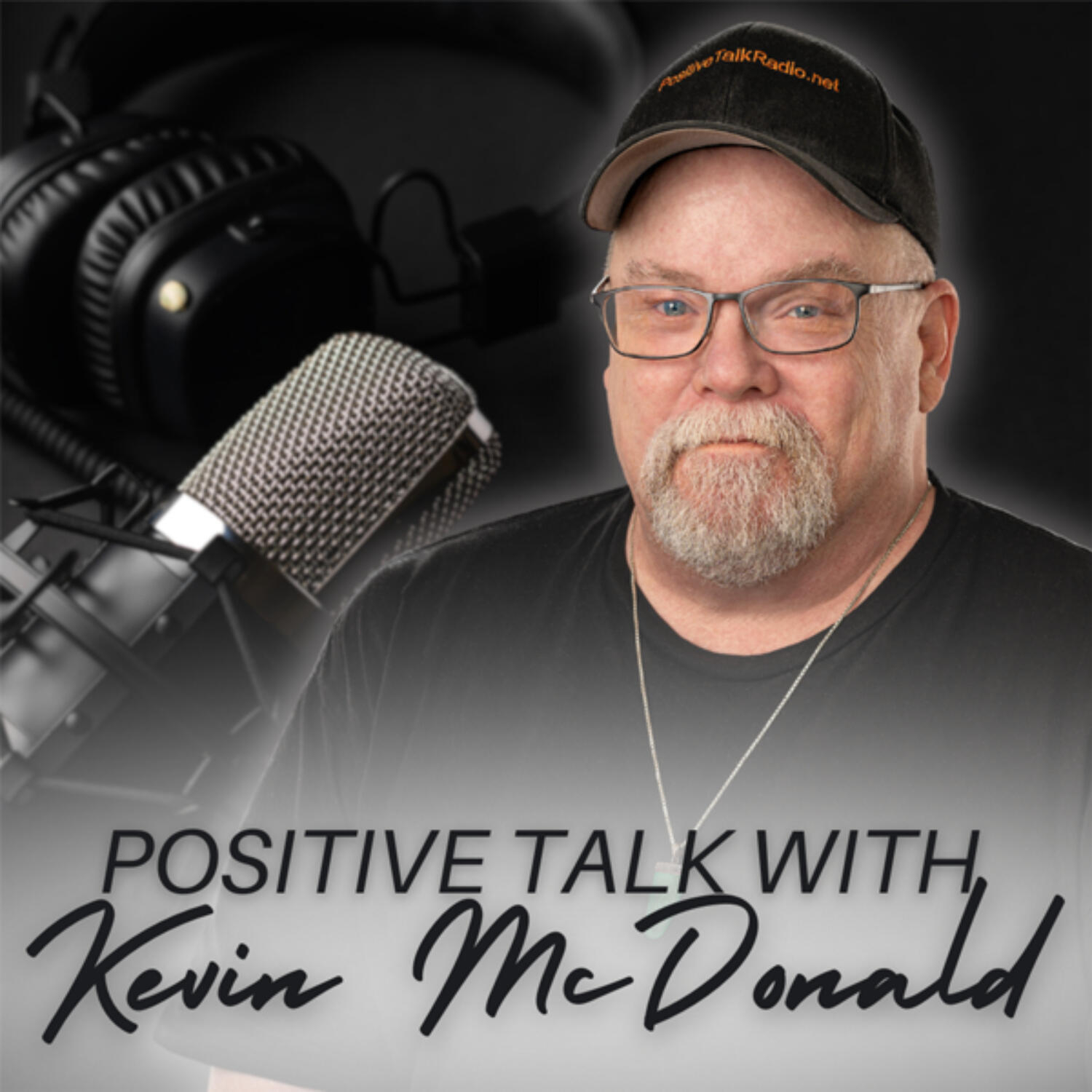
About this episode
Positive Talk with Kevin McDonald and Shari Ross
Get every episode summarized
Each time Brushwood Media Network publishes, we email you a written briefing from the transcript — the topics, who appeared, and any specific claims, with the ad reads skipped.
Email me new episodesFree for 3 shows. No card needed.
Transcript ready
590 searchable segments. Every word is indexed and playable.
Full transcript
Brushwood Media Network — Positive Talk with Kevin McDonald and Shari Ross. Machine-transcribed; use the interactive transcript above to jump the player to any line.
There is a moment in every life when you decide to rise, to stand taller than your fear, to speak louder than your doubt, to chase the vision that sets your soul on fire. This is that moment and here. We walk it together with stories that awaken voices that inspire and truce that set you free. This is positive talk with Kevin MacDonald where hope has a voice, and that voice is yours. And welcome to the show, everybody. My name is Kevin MacDonald, Michelle is right there and we've got a great guest today. We got it. And this is a really important episode because we're going to talk about real life and what happens near the end of life and how young people and older people figure it all out kind it together. Her name is Sherry. Oh, whether you introduce her, Michelle. Okay, I'd love to. We have Sherry Ross here with us today.
She has a website called seniorlivingmadesimple.com. So thank you for being here. Sherry to have this conversation with us. How are you? I'm good. Thanks, Michelle and Kevin. I'm so happy to be here. And she's also got a book and a workbook because that's going to be necessary. I think for everybody that is going through this seniorliving made simple and ain't so simple, Sherry. It's not. It's not simple at all. It's a very, very tough subject and tough thing to go through when you are helping a loved one or you are the senior yourself. Aging is inevitable, but it is not easy. And there's a lot of tips and tricks along the way that hopefully I can, you know, tell to your audience today and maybe they'll find more information in the book and workbook. Well, it is a vital piece because I found out yesterday on my favorite Facebook channel that gentleman that I knew he was on KKNW 1150AM for 25 years. And I found out he suddenly
used 75 and he suddenly passed away. And so when you get to be a little older and my high school sweetheart has passed away, my best friend from my school has passed away, a lot of my brothers passed away. Have you noticed Sherry that a lot of people go through that where it's almost like a contest to see who's going to make it through and all these people end up just kind of old deer going away and stuff. Is that a thing? It's a thing. I think that, you know, and it's a really hard thing, especially as we age and as we get to into our 70s and 80s especially where we start seeing kind of our friends and all these people that we knew our whole life sort of dropping like flies. Unfortunately, I mean, that's just, it's the cycle of life. We all will die. And so my whole
thought process is that, you know, during this, this kind of very fragile time of life in between like, say, after retirement until, you know, end of life, let's try to make that our fourth quarter. Like, and let's try to make it the best it can be just because you're older. Does it mean that life ends and that you have to just sit there and wait to die? We have a whole bunch of time left and whether you're, you know, physically, you know, disabled or either even if you have some dementia, you know, there's ways to create a quality life. So we all just need to learn how to do that. And then the other big thing is learning how to prepare for all of this ahead of us so that we're not just figuring it all out in the moment because there's no time for that. We have to, we have to prepare and prep ourselves and prep our loved ones and that creates a lot less chaos and confusion in the long term. So, you know, there's definitely techniques and things to know
of how to how to do that. Well, and the other side of the coin is you've got someone like Michelle. Hey, Michelle, how you doing? Good. You're a younger person and you've got parents and you've got grandparents, you've even got a great grandpa that's still with us. So that's the other side of it, isn't it, Sherry? Because she is got all these people that she needs to look at and that that are nearing the end of their days here. And it's got to be tough for them too. Absolutely. I think at every stage, it's, it's tough, you know, because you've got, you've got all these loved ones that you're kind of looking out for. But then once you get into the sandwich generation, which is more like my age, I'm not saying my age, but, you know, somewhere and there where you've got, you know, either teens or adult children, career, plus then you also have your aging parents. That's a tough spot to be in because you're
getting getting pulled from all these different directions. And, you know, you can't do everything. So, you know, you can't be 100% for your aging parents, you can't, you know, and also focus on all of these other areas in your life. So, that's kind of the, I think, thought, the sweet spot, of where it gets really, really difficult. Not that it's not at all times, but I think that's where you're getting pulled the most. Yeah. And, Michelle, your mom is the one that she's next in line to be the sandwich generation, if you know what I mean. Yeah. I, well, she's, she's pretty much there. Yes. And that's why it's difficult. And even for me, sure, like, I'm an only child. So, on both sides of my mom and dad and down the line, anybody who goes before me, I am in charge of them and their stuff. And, like, even my great grandpa, if it, it trinkles all the way down now to him from my mom and to me. And it's, I've noticed too that there's, when you get to a certain age, you don't really
care about having all this stuff, a lot of times the older people in my life are like, oh my gosh, I just have too much stuff. And they want more interaction. They want more person. They want, they want their time to be meaningful. But it's hard for them to figure out how to do that. And they're less willing to communicate. Like, my great grandpa has a friend. He's known since, I think middle school, because he's lived in the same little town. And she lives just a few houses away. And we're like, go hang out with her. Go talk to her. You know, she cares about you. She's a genuine woman. It's like, oh, no, I don't want to bother her. And even people my age say that. So all the way down the line, we hear that about, oh, well, I don't want to bother them. Or you hear the flip side of it, which is like, well, they don't spend enough time with me. And they've got too much going on in their own lives. So, um, find her that harmony is hard. The balance. Yeah. Well, so I, for about 15 years, I worked in senior living as a sales specialist. And so I met with families day after day after day, hundreds and hundreds of families.
We'll process of trying to figure out what to do with their aging loved ones. Do they, you know, have them move into a community setting? Or do they keep them at home? Or, you know, and have a caregiver come in or have a family member help them? Or do they go to a CCRC, which is like a big kind of campus where it has assisted living and dependent living, memory care all in one. There's all these different options, right? So it's very confusing. And it's very, you have to release it down and figure out like, what are we, what are we doing? Where, which direction are we going? And what I found is, you know, of course, we all want to stay home. We want to live in our home. We want it. We think it's going to be wonderful to just to like age and place and stay there the rest of our lives. But it's just not practical for a lot of us. Sometimes our homes are not conducive to the aging well, whether it's, you know, because they're not ADA compliance and they're not safe. Or maybe you don't have any, you know, family around
or, you know, the people around you, the community. And like you said, I mean, life is all about that connection. It's not about things. It's not about stuff. It's, it's really even not about your house. It's about connection. It's about people and having, having those people around you, having friendships, having, knowing that you're supported, you know. So I highly advocate personally, I have seen, you know, time and time and time again, how positive being in a community can be for seniors to be around people, but yet have your privacy in your own apartment, you know, but knowing that 24-7, there's someone there in case something happens. And you can make that choice of like going and hanging out with people, you know, playing cards or, you know, having a meal with with a bunch of your peers. When you're living at home alone, you tend to isolate. And then it becomes this vicious cycle of like sort of declining where
you're physically declining because you're not really getting out and moving and doing things. You're cognitively declining because you're not actively using your brain and, and, you know, having conversations with people and interacting in the world. So there's a lot of decline that happens oftentimes when you isolate like that. So we really, I, you know, fully encourage seniors to have that, have an idea in their head of like, what would best serve them and how to do, then go, how about and, and get there, you know, and that takes a lot of planning and a lot of effort. Yeah. Sherry, I got to tell you, I live in a 55-plus community. It's a mobile home community. And you know what I found? What? There are a bunch of old people that live here. I love it when a 90-year-old woman or man will come into the community and be like, well, I can't live here. I'm looking at all these old people. They're so old. And I'm always like, I'm just going to hold this mirror up to your face so you can see why what you're saying is so
silly. But we don't think of ourselves as old, right? We don't want to ever think of ourselves that way. But, and we are, we are getting there, you know, and at some point we all will be. I want to say that I believe there's 11,000 new 65-year-olds every single day. So we're, we're getting up there. And there's going to be a lot, a lot, a lot of baby boomers coming around. So this is going to be a huge, huge issue. If it's not already, over the next, you know, 5, 10, 15 years, where we're all, you know, that whole generation is going to be needing care of some sort or to be in an environment where we're around our peers so that we are not isolated. And I hate to say it, but you are in a growth industry. Yes, I mean, I hate to say it too, but you know, it's, that's what life is. I have to ask, you found that there's a sweet spot.
When, when are you supposed to have these conversations and planning things? Because I will tell you when somebody gets to 90 years old and then you're going over it, it becomes a lot more difficult. Well, as we get older, I feel like the more older we get, the less inclined we are to change. So it does become harder and harder to make decisions that will, you know, change our life, our lifestyles. But unfortunately, a lot of times what I see is that the decisions are made for us or for our loved ones when inevitably something happens, like a fall, where then they end up in the hospital and then they end up in a skilled nursing and then they can't live alone at home. It's not safe. So something like that will just create, you know, an instant decision. But then you have to figure out, well, what's next? Like where am I going to go and what's the best place and all of those things kind of on the fly, which is never a good, a good thing. So my suggestion, quite honestly, is once your loved ones retire and they're 65 plus, I feel like that's the time.
I sat, I took basically a full Saturday afternoon. I sat down with my mother who is, she's, well, she's now 78, but I would say a few years ago. I sat down with her and we literally went through her whole wishes, her whole end of life kind of guidebook. So she put a book together and it has, you know, who are the power of attorney for health and finances? What are her end of life wishes? What is, what are her directives? And all of the details of what she wants, so that there's no confusion. And I think that for an senior to do that with their younger loved ones, the people that are the caregivers, is such a wonderful, generous thing to do because it helps everyone get prepped and prepared for what's ahead. So anyway, I say, you sit down, you just ask question, you know, don't push, don't prod, don't force, don't, you know, control the situation,
but ask, what do you see yourself doing when you're not able to maybe live in the home anymore? Or how do you see the last quarter of your life going? And so, so ask these kind of little questions and it takes time. It's not a one conversation thing, you know, you have to kind of plant the seed in their heads and, you know, start talking about options and, you know, what they think they might want to do. Once you start figuring that out, then you can make the next move of, let's say, maybe going and touring some senior living communities, you know, getting an idea of what's out there and what prices look like and how you're going to pay for it and, you know, getting all that information and your ducks in a row will make you feel so much better down the road when, when inevitably it happens and you have to make that decision. And by the way, we're talking with Sherry Ross, she's got a book, senior living made simple and a pie or a website of the same name,
we need to take a quick break. And when we come back, I have a story to tell you, it's kind of a sad story, but it is something that, unfortunately, as we get older and Rob Spears as a gentleman, he was with KK&W for many, many years and he's passed away. So Brenda, we love you. Thank you. I'm sorry that Rob has passed, but he happens. Anyway, we'll be right back with Sherry Ross, Michelle is here and I'm going to be here until I'm not here anymore. So we'll be right back. They gave her crowns, but never freedom. They gave her titles, but never peace. The girl of many crowns is the story of Judith of Francia, a woman born into power yet bound by duty in an age ruled by kings and scarred by war. She found her strength not in her throne, but in her heart. This is a story of courage, love, and the fight to be free when the world told her she couldn't be,
step into her journey, feel her fire, and see how one woman's choices change the course of history. The girl of many crowns available now on Amazon Books, Kindle, Amazon Audio Books, Barnes & Noble, Cobo, and Book Baby Book Shop. Order your copy today. And welcome back to Positive Talk. My name is Kevin MacDonald, Michelle is right there, and I got to tell you this is an extremely important episode for everybody because I don't know either unless you are lucky enough to wake up one day or not wake up one day and have that be the end, but many of us, that just doesn't happen this way. And so I want to, I have a friend, so I have a friend, Sherry, and I would love your advice on this. He is 80 or 778. She is 73. She's had a bunch of surgery, so going up and down stairs doesn't work.
They live in a split level, so she can't really go down the stairs very well, and he has been diagnosed with early stage Alzheimer's. And so the question that I have in trying to help them come up, they don't know how long he's going to be cognizantly available. I don't even know if that's a word, but I, and she is partially disabled. They live in their house, they can't afford to move to an apartment because their mortgage, and I think this is a major big deal, their mortgage is less than it would cost to get into a two bedroom apartment. And he loves the putter, putter in the yard, and stuff like that. So he's a putterer. And, but at what point in time, are they going to have to make that decision that he is going to need more care than she can provide
because she really can't provide much care for him. How does that play out? Yeah, that's a test situation. So, and do either of them drive still? Yes, they both drive. No, no, and they drive during the day. All their family members around at home, right now, who is helping them? Wow. No, they've got, they've got two kids. One is virtually homeless because he lives in a van. And the, and the other one is she, she and her husband both work. They have a couple of kids. Their life, I don't know if you know this, but their life is full and and packed full of stuff. And so they don't have time to sit back and take care of them or their needs. And the other issue is they don't necessarily want the help because they've been independent for 70, some odd years. And so now they don't want to face that, of what's going to happen. And so
all I can get out of them is, well, we'll see what happens. Like, this ain't going to end well, kids. Micrograpital is the same thing. Yeah, we'll just see what happens, right? That's never a good option. That's, that's option Z. So don't take that option. So first of all, I would say that, first of all, it's very normal and natural for them to feel that way. But unfortunately, I have seen way too many times that anybody that has mild cognitive impairment, which is what, it sounds like he's got, that develops into full blown dementia at some point. And we cannot predict how quickly that happens. But as time goes by, especially if he's not, you know, active outside the home and he's not, you know, really getting the stimulation that is required to kind of slow down the cognitive decline, then that will just, that's going to ramp up eventually. And again, I mean, it could be like next week, we don't know, it could be in two, two years where he gets to
the point where he can't really manage things in the household. So, and then for her, yeah, what she can't, she can't take care of him. I would say, you know, it doesn't sound like either of the children are super involved here. I would, first of all, encourage them to reach out to a geriatric care manager in their area or the local area on aging because both of those can give really good resources, whether that means that they sit down and talk about their finances and see, okay, what would it look like if you sold the house to sell the house, not necessarily move into a two-bedroom apartment, like you said, but maybe it's time to go into a community where they have a specific program for my old cognitive impairment and when I'm going into dementia. There are a lot of communities out there that do have these kind of like levels of care where going, you know,
as a couple where both of the spouses can get the care that they need individually. So for her, it's more of a physical care. And so there are caregivers and people who could physically, you know, remove her around as needed, help her with all of those tasks that mainly like an grasper, you know, they're supporting her to the connectivity of the meals. But then for him, he could get maybe this simulation with his classes with different communities that they provide for those, you could find many lost, many lost in general. And yes, it can be expensive, but there are ways to find, you know, ways to pay for it. I don't know their background, if they're veterans at all, or if you're active in your time, but no, okay. So that's one thing that they could do is apply for veterans' food and assistance benefit, which they will earn, and both the person, the veteran and the spouse can also apply for those. And it provides a
couple thousand dollars a month for that can go towards assisted living and for whether it's in a side or outside the head. Another option which I always find really the best is selling the home, you know, that's where that's where random butter is right there. If we're able to do that, that will go ahead and that will pay for at least several years of living in the assisted living for them right there. Yeah, and he loves to putter in the yard, and they've been there for a long time. And so, and so he doesn't feel like, you know, it's, it's, and that's, Sherry, that's what makes it so hard is that they're not planning ahead for the inevitable thing that's going to happen, whether they want it to or not, it doesn't matter. It's going to happen. And they don't want to end up in a nursing home, like a crappy nursing home, you know, because that's what will happen. They're not going to be able to be able to make
that decision for themselves of where to go. And so they're going to end up, you know, in a, in a environment that's going to be way worse in the long run than what they can decide on right now. And in regarding him, puttering around in the yard, just because he's got that yard that he's puttering around in doesn't mean that he can't find a different environment to putter around in. It will be a change. It will be a change for him. And that's what he's got to wrap his head around and her, her head around because you can still manage to do a lot of the same things in the same habits and the same daily tasks and the same, um, puttering around kind of thing, um, in an environment that's maybe not your specific house, right? So a lot of these communities have outdoor space and have little mini golf, actually, if you literally wants to putt, putt, putt, putt, putt, um, they have gardens, they have, they have outdoor space and walking, you know, uh, paths and so it's
not like you're just going to lose everything and you're going to be shut into like a little room. And then that's the problem is that people don't know what is out there. So they're just assuming that it's going to be way worse than where they are now. When in reality, where they go if they choose right can create so much more independence and they keep doing what they're doing. They don't use that. But now they've got all this stuff at their fingertips that they don't have to now struggle to go get in the car, go and, you know, maybe there's a movie theater inside the building so they don't have to go to the movies. Maybe they, you know, enjoy eating out. Now they have this restaurant or maybe two restaurants, um, where a little bistro that they can eat in. Um, but, you know, now they got peace of mind that there's also care there. Um, somebody who can watch them make sure they're good. And but yet not, not all the time just when they need it, you know, and there's so many levels of that. So they've got to explore this now, not wait. Exactly. And I agree with that whole
heartedly. But I, you know, I can't, uh, broke that subject with them because they don't take it well. But I would say, Hey, let's go, let's go have lunch. Hey, go and you go explore, go find maybe one or two places that you think would be appropriate for them and just go have lunch there. You can ask the, you know, the building like, or the whoever the manager is and say, Hey, I just want to bring my friends, we don't go have lunch. Just so they can see it. No pressure, no tour, necessarily. Just go have lunch. Get them in. Oh, oh, you don't know. You have no idea. That would be so by the way, we're talking with Sherry Ross, but Sherry, we want to introduce you to get to a couple of gentlemen if we can. Uh, they are, they are actually in Kenya, Bershell. Samuel says greetings, brother Kevin McDonald, my younger sister, Bershell and guess Sherry Ross. Happy new week, my good people. We are watching you live from Kyberia, restoring hope center based in Kyberia slums in Nairobi, Kenya. This is our favorite program show. I would like to
thank you for highlighting our feeding program to the world and the impact of this feeding program has brought in Kyberia slums in Nairobi, Kenya. God bless you all. Hi, Samuel. We love you. And his other, the rest of his team says hello, Kevin Bershell and Sherry Ross. Greetings. Thanks for hosting this favorite inspirational program and different inspirational guests. We are tuned in from Kyberia slums in Nairobi, Kenya. And it is true. No matter where you are in the world, you also age. Yeah. Yeah. The different cultures handle it differently. That's for sure. Yeah. For sure. Well, and the problem with our culture is we have some friends in the Philippines. And they are a multi generational society to where grandma and grandpa get taken care of by mom and dad and kids and everybody works together. And it's not that way here in the United States. It's like the kids are like, hey, I'm with my own life. I've got enough problems. I don't need
your problems as well. Yeah. Peace out. So yeah. No, I know. I wish it was different. But unfortunately, you know, our culture is very career oriented. We're all busy. We're all running around. It's, you know, capitalistic society. So, you know, we all have to be doing our things. And we don't necessarily, you know, decide to have our parents live with us at the end of their lives. It's very stressful. And I can tell you that I ain't going to do that at all. I'll be in my car homeless before I go to live with any of my children because they got issues. I don't know who their parents were, but boy, they had issues. That's not good. Yes. No, I agree. I'm not about to do that either. So that's why we have to figure out a different option. And, you know, it's just it's so perilous because one, we don't know what's going to happen
with the healthcare and this in this country. Oh, my goodness, gracious. It is getting crazy around here. And by the way, we're talking again with Sherry Ross. And we need to take our halftime break. And when we come back, I, but before we go, I want to ask you because you worked in assisted living for a long time, what's it like when people move in, but they never move out and the room that you now have available. Margaret had last month and then Margaret passed away and you cleaned that. That must be the hardest job in the world. It's not easy. You become very attached to the residents there. And you form these relationships with them. And so when they do pass, because inevitably they do, you know, give it, whether it's two years, five years, ten years, they do. And then you have to unfortunately kind of move on and kind of have somebody else move
into their room. But it does leave a little bit of a hole, you know, when you do grow close to these residents, I always had my favorites, you know, and you just, you miss them and just like as if they're your, your own family in some ways. But it is also a business, unfortunately. So you have to move on and you have to rebook the room. And that's kind of life. It is the way it is. Sure, Ross is with us. And go to our website, which is for shall it is. Visit her website also. Same as the book, Senior Living Made Simple. Buy that for yourself or maybe somebody in need and go through it in my help. And get the workbook because you're going to need the workbook because you've got to read the book and then get the workbook because there's going to be stuff that you're going to have to figure out. When we come back, when we come back, Sherry, I want to talk about the financial end and how you as the child of an aging parent can
get them to open up their books and I got a story around that when we come back. We'll be right back everybody. You were listening to Brushwood Media Network, the best and syndicated talk, news and entertainment shows. Are you looking for your daily dose of inspiration? They connected to all your favorite shows, music and news with a brushwood media network app from positive talk radio to greatest vibes unplugged and so many more uplifting voices around the world. Everything you need is right in one place. It's easy to use too. Always available and designed to keep you inspired 24 hours a day. Go to brushwoodmedianetwork.com and download the app and you will always have Brushwood Media available on your smartphone. Download it now and make inspiration and music and conversation part of your every day. And welcome back to Positive Talk. My name is Kevin
McDonald. Michelle is right there. Michelle, what do you think of this whole conversation about old people? I don't like it. The fact of the matter is you never really know when someone's going to die. I myself did my will a few years ago, like I needed to do that or something. But even for us younger people to be thinking about those things and learning about it for ourselves while we're helping, but also to set the example, you know, to figure out what are we willing to do? Who are we willing to help? How sometimes older people, they can make their decisions for themselves and they don't like when you even ask them questions about their decisions, but sometimes just being able to let them be heard and kind of talk about their life and their preferences. And like you said, Sherry, it's not a one conversation. You've got to kind of plant the seed and let it grow. And eventually it'll start to blossom. And a lot of times I think it's frustration because once you get to that age and you haven't thought about these things before, you have no idea. So providing a safe space to open up to them. And Kevin, if you ever need me, like we'll go do tours,
we'll go have lunches. Well, I'll find you the best place around the world. But also just being able to be there as younger people, we think, you know, oh, well, we're always so busy. We have too much, but there's so much more to life than our busy. So just reaching out and telling them you love them once a week or whatever you can can make that big of a difference. So Kevin, I'll let you tell you a little story because I'm curious. And Sherry, tell me if you've ever had this heard of this happening or had it happen. It's probably in your book. My mother was going to live to be 112. She was convinced she was going to live to be 112. Well, I get a call on a Saturday morning. I know it was like a Tuesday or something. And my sister said, mom died. And I said, what? And she had, it was on Friday. Or Saturday. She played bridge on which, by the way, bridge is a game that old people play, but nobody else knows what it is anymore. But she played bridge on Wednesday. She went out to
dinner on Thursday. She was supposed to go to a party on Saturday. She didn't get to the party and they found her in bed. And my sister had been trying for long time, long time, many times. To get her mom, you need to let us know where everything is and how all this, all your finances are done so that we can find it easily and we can help you out with it. She never would do it. Never would do it. So after she passed away and we were cleaning up her house. So it was a pile of stuff that included something Mark CD case. And so I opened up the CD case and there was one CD on the very top. And I pulled it and I took the shelf off of the top and underneath that was an envelope that envelope contained her birth certificate. It contained her marriage certificate. It contained other important papers and not to mention $35,000 in savings bond. That was in the
pile to throw away. That never happens, does it? Never, never. Oh my gosh, I can't tell you how many families come to me and they're like, okay, we've got mom here. She's got to move in. I don't know where any of her financial documents. I don't know anything. I don't know who the power of attorney is. I don't have any of it. I don't know if she's got a long term, long term care policy for insurance for long term care hidden somewhere in a box in her basement. Like she hasn't told me any of this. So so basically then they have to go in the scavenger hunt through the house to find everything. And sometimes it's successful. Sometimes it's not. But that's why it is so vital for, you know, seniors to make sure you've got everything put it in one spot and make sure somebody knows and put somebody in charge of it because inevitably you're going to pass away and somebody has to deal with all of the, you know, the stuff that comes after. And you know, in some ways it's kind of
nice, not nice at your mom died, but nice that she died without you having to deal with all of the, you know, having to place her in a community or a senior living or that she didn't go through dementia or any of that. So that's actually kind of nice. A lot of us are living so much longer now that inevitably we need one of those options. And that's where, you know, a lot of fun things. But in terms of the documents, make sure that's part of actually my book, the senior living made simple, simple as an accurate pattern. Each letter stands for a word. And one of those words, the key in simple is preparation. Preparation means gather documents, gather all the legal documents, the financial documents, get it all in one place, make sure somebody knows what's like. You know, it's really weird. You know, I had no idea, but because I don't think we don't talk
about it in this culture. But when somebody passes away in like their bed or I was talking to the people who came and they said that, and I didn't know this was the thing. Did you know that people pass away on the toilet while they're passing, you know what I mean? And, and, and stuff. And so, hey, so, but there are services. And Michelle, you could do this if you wanted to because you're young and strong. They go into the house where somebody's passed away and then they pick them up and do whatever they need to do and they take them to the mortuary. I could not imagine that job. I'd be way too emotional. I'd be crying and trying to hug the person. I don't even know who they are. I'd probably see them somewhere in the house and hear them talking to me. Wouldn't be able to say anything about it. But to think too that there's even for younger people, like, are there documents that like maybe just one or two of them that we don't think about
that matter so much when that time comes that we doesn't cross our mind? Well, I think first of all, you're so smart and like, oddly just prepared to have already done your will at your age. So kudos to you for that. I mean, I don't think it had been once in a while just in case. That's amazing. I mean, most people don't, I just did mine, you know, and I'll say it, I just turned 50. So like, that's kind of old to have done it. But I would say like, once you have like a job and you're, you know, maybe have kids and a house, you don't want, you know, your house and your things that you want to go into probate. So I would definitely suggest doing a well, having just everything on paper there. And then also just make sure that all of your financial documents are kind of like, like, organized. So like if you have a 401k or an IRA or, you know,
any of those more stocks or whatever it is, savings accounts, just make sure that they're, you know, kind of in order in terms of the account numbers and any passwords, you know, seal it up. Maybe just tell somebody that you're close to that you trust where this stuff is and how to access it all so that at least you got somebody. I mean, that's my biggest fear. It's like when I pass away, it's not really the passing away part for me. It's making sure that the people that, you know, I love and that are somewhat dependent on me in any way are able to carry on and access all of the things that I'm, you know, I have for them. So I think that's my biggest concern in life, you know, it's just making sure that's all available to them. Yeah, you know, and then life has its way of throwing little wrenches and do everything all at the same time because I have,
I wrote my will 10 years ago and my mom was in it and my brother was in it and they're both passed away and my oldest son was executor but he and my youngest son do not talk. So so now I and my sister is too old to do that and and so so now it's like, okay, if I were to go tomorrow, can I be assured that my oldest would follow the will and the dictates of the will to the youngest and all of that kind of state, you know, that because the things change, so you really should update it on a regular basis, shouldn't you? Definitely, you should and and you also have a relationship with an attorney that, you know, can maybe help to move any issues out. Waffle feathers and stuff. Yeah, yeah, because believe me, you're not you're not alone in having
either kids that don't talk or, you know, a sibling that you don't talk, you know, I mean, unfortunately, you know, families aren't always so cohesive and and beautiful and la la la and so so there are issues that arise when their people don't get along. Also in the way of, you know, when you're trying to place a loved one in a senior living community, for example, and one sibling or one child lives nearby and the other child lives, you know, across the the country perhaps and isn't seeing what's going on and doesn't know and isn't involved and maybe you don't get along, that creates a lot of conflict in terms of what happens next with mom or dad. I always say like, assign one child, one duty and one child, the other duty so that they both have their, their, you know, their place in everything. So one person maybe just does the, the health care stuff and one person does the finances and they do their thing and that's it. They don't need to get along in order to do that necessarily. Oh, that's why being a only child is going to work
great for you. Yeah. Yeah. I mean, anyway, it's a little heavy because it all like everybody's stuff at one point might become mine, which is like, ooh, my people have some full stuff and the same thing happened with my grandma, Sherry, like it was difficult because she had written her will, but it wasn't specific. It was not really well thought through and we worked with what we could, but losing her and then having collision in the family is so avoidable by just being very specific about who does what and why. And I know we need to take a quick break, but I'm really curious if somebody doesn't have someone like me, they could be like, yeah, I just give you all my information I trust you and they don't have a one person. Is there other organizations or businesses or things that offer those kinds of situations where there can be one specific person other than the attorney that knows all the stuff and how that kind of works? So Kevin,
I'll let you take us to break. That's an excellent question. I don't know the answer to that, but I will hope there are, you know, and sure I got to ask you, and before we go to break, that would be a budding industry all by itself, a professional executor that doesn't have any skin in the game that isn't going to do any of the stuff because when money's involved, I don't know if you know this, but when money's involved, people get stupid. Yes, they do. There's so much emotion involved attached to money that the emotion kind of outweighs your intellect and you start making all these stupid mistakes. So yeah, I love the way you say that. And by the way, if anybody who's listening, we also do a music show on the Brushwood Media Network, can't find 9 a.m. Eastern, Monday through Friday is called Greatest Vibes. Listen to this. Not every song changes you, but the right ones do. At Greatest Vibes Unplugged, we share music that hits deeper, no filters,
no noise, just pure sound with soul. This is your reminder that light still exists, and sometimes it sings. And remember, you can look up in the sky and see the stars, but still not see the light. And welcome back to Positive Talk with Michelle. That's her right there. My name is Kevin McDonald, and and we have Sherry Ross with us. Go to our website, which again is senior living made simple and simple is an acronym. I gotta ask, but the acronym stand for it is a framework. It's just a framework to help simplify the whole process of figuring out senior living and what to do. So as is for support, which because we cannot do this alone, or we shouldn't do it alone, there's so much involved, and you can't you can't do it without the help of friends, family, professionals, social workers, gerage, care managers, managers, etc. So please have support,
have somebody around you. Eyes for information, just gathering information ahead of time, making sure that you know what's out there, what are the options, and and how to navigate them. M is for matching, which is making sure that when you choose a community for a loved one, or they choose a community, that you're matching to not only their what their care needs are, but what their aesthetic desires are, and and making sure that both of those things melt. So you don't want to choose a community with 200 people for a mom that is a very anti-social, doesn't want to be around a lot of people, but let's let's maybe look at a six-bed, a boarding care home, which is just six individual rooms. Maybe that's a better option for her. So choose match according to care level and needs, not just, you know, how the place looks if they have a gorgeous chandelier in the lobby. Let's not choose that, just because it's beautiful. Let's like look at all the different options. P, as I mentioned before, is preparation, making sure you have all
your ducks in a row legally, financially, having everything in one place, so you know where to find it, and what to do with it. And then L is letting go, letting go of guilt, letting go of, you know, thinking that you're not doing things the right way, and just knowing that you're doing your best, and that's all you could do, you're not superwoman, just do your best, and let go of that guilt. In addition, letting go also means letting go of stuff, not holding on to all the objects, you know, the 50-year-old antique dining table, because you can't necessarily bring that with you to where you go. So you gotta let go of stuff, because really in all, you know, really in the end, the quality of life and the connections, all of that is really what's going to matter the most. And then finally, E is for engagement. So even after a loved one moves to a community, perhaps, or if they're still in the home, make sure that we're engaging with them in a way that now,
you know, instead of being a caregiver per se, you're engaging as a daughter or son or spouse, and doing things with them that enlighten them and give them some real things to do each day, and you're not naturally, you know, you're not the camp counselor, you're not the teacher, you're not the manager, you're not the caregiver, but you're there as a support to just make sure that they're getting enrichment in their lives and getting the feel that they are still wanted in this world. Well, there is that, because a lot of people, and Michelle, you know, I told this story a lot about my dad that was an executive for Dorst from for 30 years, and when he retired, he became just Jack, and Jack didn't know who he was, and didn't have anything to do. If I'm not getting paid, I ain't doing it. And, uh, and stuff, and so he ended up just,
he fell, which happens. By the way, do you have statistics on that? Because I am a statistic, do you have any idea how many people fall? A lot. I could, I have to look it up, uh, in my, I think I have it actually in my book, but I don't remember at the moment, but it's a very high number, and many, many, many of the falls as a senior end up in, um, and we went up in the hospital, and then they're, unfortunately, does, um, sort of make things in addition, um, to potentially the, the injury from the fall, when you're in the hospital, it just kind of goes and, um, you start getting different conditions from the hospital stay, or from the skilled nursing, and it just sort of rolls into other things. And so the biggest thing we can do is either one, protect ourselves from falling by kind of keeping ourselves healthy, and that means moving as much as we can,
throughout our lives, maintain flexibility, and, um, trying to just keep our bodies strong, our muscles intact, our bones intact, but, you know, inevitably, if you fall, um, if we, you are in a place, um, around other people, you can help you out and, you know, pick up off the floor and, um, die, go to the hospital if you do. I have to tell you, Michelle, it's so funny, because I have, I generally speaking, if she calls me, or if anybody calls me, I answered all the time. And if I don't answer, there's suddenly red flags going everywhere about, is he dead? You think we don't know what happened, and, and, and, and stuff, and, and I have fallen, and have had rotator cuff surgery and, uh, tricep surgery, and I broke my wrist and, and stuff. So I guess maybe, um, look, and that's why they're looking at me. She looks at me like, you're an accident waiting to happen, dude. Oh my god. Here, wait, I have a, I have a statistic. Okay,
so one in four adults, 65 plus falls each year, and that leads to over three million ER visits annually. Um, so yeah, it's a lot of, a lot of falls that we do it. Yeah. And, and now, fortunately, I live, like I said, in a 55 plus community, which I think they need a, the fire department needs a substation here, because they're here so much. I assisted living, too. The bullying, yeah, they come every day. They're there all the time. They get to know us on a very personal basis. And same thing in the, yeah, anytime you're over 50, I think that they should just be like right there. Yeah. Yes. So for Shell, we're making this sound like a lot of fun to get older aren't we? Yeah, you know, um, I didn't think I was even going to live to the age I am now. So I don't know what's going on now. I'm just going to roll it and keep doing those. But even I've learned, Sherry, correct me if I'm wrong, but there's things that you can do, um, things you can buy,
like even on Amazon, like put the railing in the house or, you know, put some sort of string that will ring a number or, um, yeah, there's a lot of technology, too, these days, where you can, like, say you, you can have like a medication, um, electronic medication kind of, um, little device, where, you know, it reminds you to take the medication. If you take too many pills out, it's, you know, alerts you and you can attach it to something where your loved one, maybe in another state, has access to, um, also get alerts, too, to help out. There's, you know, camera devices, there's fall devices where, like, if you, uh, fall down or hit the floor or whatever, it automatically calls for the, uh, calls I know and went for you. There's, you know, there's the alert buttons that you can wear the little pendants where you can press if you fall on the ground. Yeah, we have all of them and I can't get up. Kevin, would you give you like an Alexa or a Google and you could be like, hey, Google,
call 911, you know, just in case. And then of course, yeah, you can redo your bathroom, your bathtub. I would recommend not having a bathtub as an older person have a walk-in shower, um, with maybe a bench, you can have bars put in, um, railings at all of those things, but in the end, you know, at some point, you're probably going to need in-home care, um, when you're, you know, really, truly disabled. Um, and that's a whole other issue because you're got, you're having a schedule people to come into your house. You're, you know, it's not always easy. A lot of people call out sick and then you've got a, you know, reschedule and it's, it's like, you know, and if somebody's managing it for you, it's like a part-time job for them. So that's another thing to consider, plus expensive, um, to have people come in, especially if you need them 24 a set in. Um, so something to, to think about too, it can be a way more expensive than an assisted living. Yeah. How expensive is it for like, uh, Alzheimer's care or a care unit, um, that,
that takes care of? I've heard that it's like, and I'm scared to say this, like eight or nine or ten thousand dollars a month. Up, up, up, up. So that's, that's like base. That's like for an assisted living, um, where maybe a little bit of is included in terms of like laundry and housekeeping and maybe possibly some medication management, um, some, you know, activity, some transportation, and of course, your meals. So that's all included in there. But then if you need specialized care, like, for example, memory care, um, where the staff is higher, highly trained, and it's a smaller environment, um, then you're looking at upwards of 15 to 20 thousand dollars. It depends where you live, what state you're in, um, and, you know, the type of environment, you know, the type of place because some are nicer than others, obviously. But, um, yeah, I would say the, the cheapest, I've ever seen for like a base, base, just apartment, kind of three meals a day, housekeeping
situation would be like five thousand six thousand dollars. Um, but it goes up from there, and then when you add in care, you're, you're, you're looking at, you know, anywhere from 10 to 20 thousand dollars. So insurance doesn't play the part it's supposed to once you get to that age, like we think it does. No, Medicare pays for none of this. Medicare pays for no assisted living. It's all private pay. The only thing it would pay for is if you go into like a skilled nursing, let's say you go in the hospital for a fall, and obviously, yes, Medicare pays for that. Um, and then you go to skilled nursing and pays for a certain, you know, amount of time there, um, and or medic, Medicaid also can take part, or you can use Medicaid as well, um, depending on the place, depending on the state. Um, but once you enter an assisted living or a memory care, that goes out the window. There's no more Medicare, Medicaid, nothing. Um, it's private pay. There are some places I know, like in near me in California, there's a few assisted
living that have opened, or that were opened, that were private pay that have now started taking, what we call vouchers, Medicaid vouchers. So that you can utilize Medicaid, but you have to pay down everything. You really can't have any other assets. You can't have, you know, Inca, I mean, there's a lot of different rules, um, that really, um, lowers the bar of what, of what will be accepted in one world. Um, so unfortunately, yeah, we all think, oh, yeah, Medicare, I don't take care of, you know, my old, my old age, but it's not, no, no. So what happens? Because, and, and I know you know this, it's going to happen more and more because a lot of us have not prepared for our retirement years, the way that we need to. And so what happens when you run out of money? What do they do to they, to they just say, uh, you know, over there, there's something called the Aurora Bridge here, which is a real high bridge. And they say, you should go over there,
and then, and jump off, uh, because no, what, what, what how, what's going to happen to older folks that don't have the means, they don't have the family, the kids don't have any money. And how, what happens? Yeah, it's, it's actually a big question mark, um, in a lot of ways. Um, theoretically, Medicaid will pay, will cover the cost of a nursing home. Now a nursing home and an assisted living community are two totally different things. Nursing home is not necessarily where you plan to be. Um, it's much more hospital like it's not very, it's not the nicest environment, right? But, but in the end, if you need a bed, you need care that will be paid for by Medicaid. As of now, who knows what, what happens starting in January with all the, or whenever the Medicaid cuts um, I have, I have this, I have this feeling in my brain that I would end up in a, in a nursing home environment with a roommate or two and an old TV and my roommate suffers from flatulence
in a lot that can clear a room at any given moment. And so that, so then that's where you live. And then you get into your wheelchair and you, and you, and you go to the hallway and you sit there and then you go have lunch and then you go back to the hallway and then you, that is, that is like, for my, my sons and I have an agreement that there, that if I end up in a wheelchair, they're going to take me to the Aurora Bridge and they're just going to, um, um, well, I'm sorry, that's not going to happen. Everything you just said, I'll fight them if I need to. That's not going to happen. I did that with, with my grandma and to know that us as family could not financially do more and just her, I mean, she was there for a lot longer than we planned and that happened. Sometimes people live a lot longer than you have planned and there are exactly, I mean, that isn't, unfortunately, the truth, but there are different ways
to pay for senior care that I think a lot of people don't know that are hidden. Obviously, the biggest, biggest one is a house, but not everybody's lucky enough to have bought a house early on and so there's nothing to sell. But if you do have a house, that's going to be number one. Number two would be your 401k if you have one or any sort of retirement income or retirement savings. Make sure that as we're, you know, if, if young, young people are listening to this, start early, really try and unfortunately a lot of us haven't, you know, saved our whole lives. But that is definitely number two. Three, I mentioned before, is veterans benefits if that applies. Also, you know, Medicaid can come into play, but there's also like, if you have a life insurance policy, sometimes those can be cashed out. Even a term policy can be cashed out or sometimes you can do a reverse mortgage if you do have a house. There's, there's other options hidden, but what I would absolutely recommend is talking to a fiduciary, a elder law attorney,
or a financial, you know, attorney that can really kind of guide you through your options, because there are some things that that you can use, but well, a lot of us don't know about them. Well, Sherry Sadler, we've run out of time. You're going to have to come back and talk me down from the ledge I currently am on. And, and by the way, go to our website again, which is seniorlivingmadesimple.com and get the book and the workbook because you're going to need it. If you, if you're not lucky enough to just drop dead, you're going to need it. And which that sounds like a hell of an option. I get a choice. I can either drop dead or be in a nursing home for six months, smelling some of my next-door nail. Oh, boy. I don't have to be that bad. Now, we'll pick out a better way for you, Kevin. So you share anything else before you'd like to add before we go.
Well, I just think, you know, the biggest key here is we are all going to age. It's inevitable. We are all living older, longer lives. So the biggest thing is to try to have a quality life. And, and if that, if we can prepare as we age, that's, that's the biggest thing. Just prepare both physically, financially, and legally, and hopefully we can be in a little bit of a better place when we finally do reach that, that time in our lives, so if we need that help. Or have a young friend like Prashell, who's swear as if he's going to take care of me, am I? In my declining yells. Yeah, no kidding. Anything else, Prashell, before we go? No, thank you so much, Sherry, and for the knowledge that you share with our audience and for the time, and just good luck. We're excited for you and the voice that you have to share with people that they can choose that even in change, you can make it a fourth quarter. So, I'll bring
that to my grandpa and Kevin, thank you, Prashell. Thank you for being part of Positive Tonk with Kevin McDonald, where stories inspire and voices remind us of what truly matters. May today's conversation give you hope, courage, and a reason to keep moving forward and just remember, till next time, be kind to one another because each other's all we've got.
More episodes
More from Brushwood Media Network

Awaken Hope PM Edition with Ben Lemans talking about his book Between the Tines
Brushwood Media Network

Awaken Hope with Patrick Sangimino on Patrick Sangimino
Brushwood Media Network

Never Hand Over the Blank Page | Your Biz Needs a Book with Chris Fenning #2
Brushwood Media Network

Stacy Lee - Storyteller of Resilience and Strength of Family
Brushwood Media Network