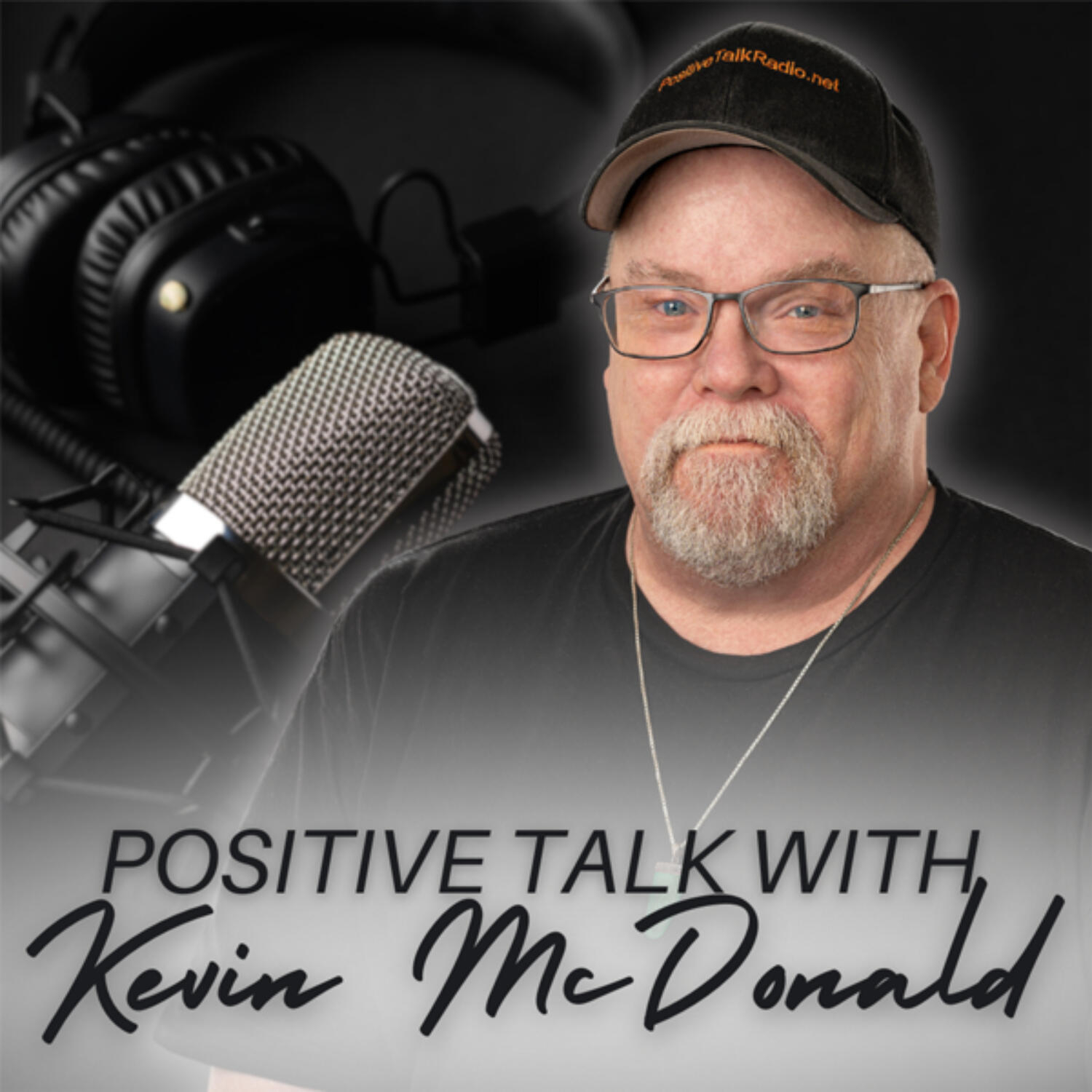
Positive Talk with Kevin McDonald and Gavin Routledge
About this episode
Positive Talk with Kevin McDonald and Gavin Routledge
Get every episode summarized
Each time Brushwood Media Network publishes, we email you a written briefing from the transcript — the topics, who appeared, and any specific claims, with the ad reads skipped.
Email me new episodesFree for 3 shows. No card needed.
Transcript ready
462 searchable segments. Every word is indexed and playable.
Full transcript
Brushwood Media Network — Positive Talk with Kevin McDonald and Gavin Routledge. Machine-transcribed; use the interactive transcript above to jump the player to any line.
There is a moment in every life when you decide to rise, to stand taller than your fear. To speak louder than your doubt, to chase the vision that sets your soul on fire. This is that moment, and here we walk it together with stories that awaken voices that inspire and truce that set you free. This is positive talk with Kevin MacDonald where hope has a voice, and that voice is yours. And welcome to the show, everybody. My name is Kevin MacDonald, Michelle's not here. She's off for a little bit today, and we've got a great guest for you today, and I got to tell you, first of all, that I have been and have utilized chypractic and osteopathic essence for a long, long time, and so on the work that they do is just incredible, and we've got a great guest today. His name is Gavin Routledge, and he is in Edinburgh, Scotland,
and Gavin, how are you today, young man? I'm excellent, Kevin. I'm delighted to be here, so thanks for having me. Oh, I got to tell you, one of my favorite people of all time came from Scotland. He was my little league baseball coach, and they called him Scotty Reed because I wasn't his first name. I never did know his first name, but because he was from Scotland, and he had an accent like yours. He was Scotty, and he was awesome. But it's great to have you on the show today. Thank you for being here. Until thanks for having me. Now, you have got a practice in Edinburgh, but you do things a little bit differently than a lot of folks do. Explain what you do, and how you do it. Thanks, Kevin. So I've been an osteopath for 34 years, and have specialized in lower back pain, and so I had to go through most of that time. I've written three books on lower back pain, and off the back of that, if we can use that plan, I now coach people online
around the world who have persistent lower back pain, so I don't just work in the clinic, but I also coach people online. Oh, that is awesome because, and I know you know this, but maybe somebody doesn't. Most, not most, but a lot of back pain comes from your lower back from L4, L5, S1, and in that area, I know personally because that wasn't the area of my concern, and just, and I told the story before, but it bears repeating. Years ago, I had a low back problem, and I had a severe pain in my low back. Went to the emergency room, and was laying on the table in the doctor literally walked around me three times, never touching me, walked around three times, and said, well, it appears you got a back problem. And so I'm going to give you muscle relaxers, and, and some, some pain killer, but eventually you're just going to have to have surgery. That's all there is to it. So my wife helped me out of that facility, and on our way home, we passed a
chiropractic office, it was colon chiropractic, and I walked in and I kind of walked in. It was like, you're hunched over, and you can't really do anything. And they took X-rays, and he said, yeah, I can help you. And he adjusted me, and I walked out, and I went to work that day. So, from that day forward, I know that chiropractic works, and osteopath, because can you say that for me? You're an osteopath, what is it? Opioopath, what is it? So it's osteopathy as a profession, and I'm an osteopath, and if you don't mind Kevin, and I explain the difference, and where the, where the whole thing originated? Yes, please do. It'll be sensational. Yeah, because both the professions originated in the states, but they're quite different now, as I understand it, and I'm not an American, but I studied history of osteopathy and chiropractic as part of my degree. So I think I know a reasonable
on that about what happened in the US, because both the professions originated in the US, osteopathy originally, in Cripsville, Missouri. I was a lay preacher there by the name of Andrew Taylor who thought he had a great idea, and it was all about the skeleton being the origin of misalignments, and skeleton leading to pain and disease, and so on. So he formed the first osteopathic school, and one of the early graduates, and if there are chiropraters out there who would like to debate the story more than happy to be corrected, but as I understand that one of the early graduates was a man by the name of Palmer, and he thought he had a better idea, and so he split off and formed the School of Chiropractic. And so we are very much sister professions, but in the US in the 1950s, osteopaths were looking for more and more recognition, and so many osteopathic schools merged with medical schools, and at that point, many osteopaths, their osteopathic skills were
diluted, so many osteopaths in the US, but all of them are MDs as well, so they're medically qualified, as well as osteopathically, but as a consequence, many of them don't practice much hands-on techniques in the way that chiropractors very much still do. Whereas in the UK, we kept our origins when osteopathy came over here in the early 1900s, so osteopaths in the UK are not MDs, we are very much hands-on practitioners in a similar vein to chiropractic research. Thank you for clarifying that, because Palmer, he developed the first, as far from what I understand, and it still stands today, the first chiropractic college in the United States, and it is, and I want to make sure everybody's clear on this, because I think it's important. You have as much schooling as any MD yours is more specific towards skeletal alignment and subluxation and those
sorts of things more so, but the added advantage that you have is that you can, at least in the United States, you can prescribe medication. Is that also true in the UK? It's not true in the UK. Most of us voted against having prescribing rights about 20 years ago, so we don't prescribe, but we work very closely with doctors, so if that's necessary, we can organize that certainly. Well, most of the time, in my experience, and tell me if this is your experience, what ends up happening is because of the adjustments you do, and you free up the nerves that are in the back, which, by the way, everything originates from that, and so you get rid of some of the problems with, I'm trying to come up with the, well, we'll continue on. It'll come to me, I promise, and it is,
but when your back sees is up, like that, when it freezes and stuff, it's because the back's trying to protect you from the nerves that are being compromised. Am I even close? Is that kind of right? You probably are from a chiropractic model perspective, but that's where we differ. So my master's degree, Kevin, is in pain management, and I would argue that many both physicians and physical therapists don't really understand how pain works. So I had a tutor when I was an osteopathic student who said to me, you can't remember, many of your patients will get better despite what you do to them. And so the question I've always asked myself in practice, you heard that right, many will get better despite what you do to them. So we like to think that when we treat someone
if they get better, it's because of what we did to them, but maybe that person was going to get better anyway, or maybe they got better because they sling differently that night. Now, I absolutely accept physical therapy does a lot of good in a lot of cases, but I see a lot of people who have been around all the houses. They've tried every chiropractor in the city, or physio, or osteopath, but they're still in pain. Do I specialize in the difficult cases? And from a pain perspective, there are lots of reasons why pain persists, even though you may have a straight spine. And equally, there's lots of people who have a squint spine who have no pain at all. We know that from MRIs and x-rays, what we call the incidence, the frequency of misalignment in people who have no pain, it's almost normal. So while there is a model there that says subluxations and so on,
cause pain, and if you use all the subluxations, you'll be out of pain. There's lots of people who don't fit that model, and that's the AI specializing essentially people with persistent spinal pain. So as an example, in my case, I could literally crawl into my chiropractor's office and walk out, because of the adjustment that he gave me, because my low back was misaligned, and my nerves were pinched, which caused my back to seize up and stuff like that. And they used other techniques as well, like heat and vibration and different things to help out. But for me, it was the adjustment itself, but I get it. There are people that go to a chiropractor or have gone to a chiropractor for a long time, and they just don't get better. How does your program differ to help those severe cases of pain? So the gold standard model for persistent pain is something called a
biopsychosocial model. And that's saying it's a little bit out there, but we know that people who have persistent pain, the things that predict whether you're going to get better or not, the strongest predictors are psychological and social factors rather than mechanical ones. So this has been around since the 1970s, 1977, George Engel wrote a paper about the biopsychosocial model of pain. And it's what I learned about my masters in pain management, is that this is the most important thing, is that persistent pain is not due to a single cause, is due to the multitude of reasons that that person hasn't got better. And so you need to address the problem on multiple layers, and to think that, because let's face it, as you mentioned, there are people who've gone to chiropraters for, you know, 10 years and they still have persistent back problems. Well, you know, if that was going to fix it, it would have fixed it by next, so I think you're probably barking up the wrong tree, and you need to take a different approach,
and that's the approach I take, is a much more holistic approach without being a refeerian basic, I mean, not a very specific way, we look at things through multiple lenses. Well, you know, it's interesting, and what science is now finding out, and proving, it's something that you've known for a long time, that pain is not just a physical thing, it's also can be a mental thing, it's also an energy thing, and your energy body is seizing up and is not moving the energy like it, and then involves the chakras, and there's a whole bunch of different things. Is that kind of, you look at a much more holistic approach to all the ideas that you're causing the pain? Well, when I say the holistic, I mean from a very science-based perspective, I don't believe from a distant philosophy, chakras, and so on, and it's not that I don't believe that there is value in that, and I think the National
Institute of Health in the US has done some tremendous valuable research to demonstrate, for instance, how acupuncture works. You know, the Chinese will tell you, well, of course it works, you know, it will be using it for thousands of years, but they talk about meridians, lines of energy, you know, they take pulses, all of that, and that, that kind of science perspective, that stuff doesn't really make sense. For the NIH and I have demonstrated, for instance, that when you stick needles in certain parts of the body, it changes what we call the epigenetic expression, so it actually changes the genes that are switched on in the muscle or the tendon or wherever the pain is originating from, and it stimulates healing. So the Chinese will tell you it's all to do with energy, but the NIH will tell you it's to do with biochemical changes in the tissues, which the needling has brought about. So it's a really exciting time to be in healthcare because we're starting to understand the mechanisms much more accurately.
Well, and I would just suggest that the United States is behind in some of these things, because we're still stuck on pharmaceuticals and stuff like that, and most medical doctors are not interested, because it's harder work to get somebody out of pain the right way that can be there forever rather than giving somebody like the emergency room guy that I talk to. He wanted to give me muscle relaxers and pain medication, and in this day and age, they don't even prescribe pain medication the way they once did because of the addictive qualities of it. Yeah, so it's really interesting. You know, Gavin, we need to take our first break, and by the way, we're talking with Gavin Roulage. Roulage. Roulage. Roulage. I'm sorry, I have troubles with names,
but if you go to his website, which is active-x.co.uk. Am I correct in that? I see. Yeah. Yeah. And go there, and not only if you're in Edinburgh, I suggest you go there, but if you're not in Edinburgh, you can still work with Gavin around the world, and when we come back from this really quick break, I want to talk about that, because you can help people, and I want to know how you can help people, like over the phone or zoom call or something like that. Would that be all right to do? Yeah, look forward to that. We'll be right back. Love. Warren Freedom collide in the girl of many crowns. Judith of France's story will take you from the heart of royal courts to the chaos of Viking invasions. It's a tale of resilience encouraged. That proves history is not just written by kings,
but by women who dare to choose their own path. The girl of many crowns is available now. On Amazon Books, Kendall, Amazon, audio books, Barnes and Noble, Kobo, Pam, book, baby, book, shot. Don't just read history. Experience it. Order your copy today. And welcome back to Positive Talk. My name is Kevin McDonald. We've got a great guest for you today. He's an osteopath from Edinburgh, Scotland. And that's I was telling you before the show that you're on my bucket list. I want to go there, especially when it go hang out and I've heard your pubs are just remarkable. Well, you are, you know, so so so Gavin, if somebody from the United States as an example, listen to this and they've had back pain and they've tried a bunch of different things and none of us really worked. And they decide to reach out to you. Do they go
to your website to reach out to you? Yeah, a good good place to start. You gave the web address a moment ago. Thanks, Kevin. But there's there's another really informative place to start. And that is go dot painfree and confident.com forward slash clinic. So that's go dot painfree and confident.com forward slash clinic. The pain free and confident thing is something we we've just come up with earlier this year. But it's based on years and years of experience that very often people get to be painfree Kevin, but they're still anxious. They're still fearful that the problem may come back. And so confidence is something that we like to give them back. And the only way you can achieve confidence is when you fully embrace the reality that relief is only the first stage of the journey. So I've talked about the cliff of pain for the best part of 30 years. So the cliff of pain people come to us that receive suffering. They want to regain the cliff top. But if as far as you get is the top
of the cliff, all it takes is another puff of wind and you fall back into the sea and people can spend years viewing in and out of that sea of suffering. Been there. Been there. Been there. Done that. And so the second stage is getting as far back from the edge as possible. And that's the prevention phase. And the things that will get you relief are completely different to the things that will prevent recurrence. And it's only by doing that second stage, can you get to the point where you're truly confident in your back that you're going to be fine. And that's the journey I went on many years ago. I had seven years of lower back pain. So I had to get in my 20s. I'm in the mid 50s now and I would say that my back is stronger than it's ever been. That's the journey that I like to take and the good news is I can do that from Edinburgh, wherever you are in the world. Oh, that's outstanding because I tell you, there is a mental aspect to back pain because when you're out of pain, you're hoping that you're not going to get into pain. And when you are in pain,
you'll do anything to get out of pain because it affects everything that you do. It's harder to walk. It's harder to to sleep. It's just it's just crazy. So when you talk to somebody like for from the United States or you talk to them on the phone, what's the process like? So usually we, I have that conversation one to one. So they've usually the URI shared with your Kevin is a quiz that it's our pain free and confident school card. So they've answered about 18 questions. They've got a direct feedback as to why they're struggling to achieve pain free and confident status. So you get some instant value from doing that, but it also gives me some data so that when we do meet on Zoom, I understand the things that are holding them back already. We usually then also get into fill in another form online, which is called the back school, which is what we call a validated tool to 24 item questionnaire. You're just to answer true or false to the question of
statements and it tells me exactly how much disability your back is causing you. As questions like or statements like, I use an Unreal to get up the stairs because of my back pain or I struggle to bend over to put my socks on because of my back pain. So we get people to do all that data and put in advance so that when we meet, I've got good understanding of what they're struggling with. And then we just go through their history as you would in a sort of classic consultation. They tell me their story. I listen, I take notes, then I give them a bit of feedback and help them to understand on the cliff of pain metaphor that I described you earlier. What in my regard are their likely triggers, the things that not come off the cliff, their aggravators, the thing that keep them stuck in the sea of suffering, and then relievers things they can do to regain the cliff top. And then really importantly, what were the risk factors that pushed them close to the edge of the first place? And what were the mentors that we can do to get back from the edge?
We unpack all of that in the call and then I explain beyond that how I can help them if they choose to work with me and that can either be Kevin on a one-to-one basis Owen groups. I work a lot with groups. At the moment, I've got one group and we've got one guy, Idaho, one in California, another one in said Carolina, as the same time as one man in France and an English woman. So we've got people around the world in all of our groups. Well, congratulations on that and thank you for doing that. I wanted to ask you because I don't know if you've noticed, but at least in the United States, there's a lot of stress going on right now. How does stress play into the health of your back and back pain? Can I answer that by telling you a story, Kevin? What do you do? I often tell this story, so I'll tell you this one. So this is a well, and this article was written up in the British Medical Journal about 30 years ago. So there's a guy working
on a building site and he jumped there and offered a scaffolding and landed on a plank and through the plank was not a nail wrong way on top. So he jumped straight on top of the nail, the nail went straight up through his boot and appeared on the top surface of his boot by a bear, an inch, sort of gone right through his foot to a bare man. Yeah, big, big burly builder. He was in screaming agony by the time the paramedics got to him and they had a sedate him, put him in the ambulance, taken to the A&E room as we call it. What do you guys call it? The emergency room? Emergency room, exactly. Took him to emergency room, they had to use a big man, they had to sedate in the game to calm him down enough that they could get him on the operating table, back through his boot and at this point the mystery was revealed because there had been a puzzling absence of blood all the way through this. So when they got through they discovered
that the nail had passed between his toes and had not even grazed the skin. And yet the first man was in agony. How embarrassing to have them say, by the way, I had never touched it before. Exactly, there must have been big embarrassment. But there's an entry of this which does the reins. You can see the steel toe count boot and just behind the steel you can see the nail going straight up through what looks like through his foot but it turns out if you look from the opposite from the top you'd see the pass between the bones so it didn't even graze his foot. So coming back to answer your question about what role does stress play, it plays a massive role. So if you are misurdered about your back you're far more likely to have severe pain than if you're you know can you know I strain my back you know she'll be fine tomorrow the next day and don't worry about it to stress not just your concern about your back but general stress as well. Many people will tell
you particularly persistent lower back pain sufferers that their pain is worse when they're under pressure. You know if they've had an argument with their partner or whatever it may be often they have a flare up with pain so stress is a I call it a volume control on your pain stress. I agree with that 100% because when I was going through the my back pain I was in the restaurant business and so I was working 50 or 60 hours a week and I was up and walking around all the time and when your back is out in it and it's seizing up and and and all these things and there's a lot of stress involved in that in that as well. So stress management becomes I imagine it becomes a really big part of what you do for folks. Would I be correct in that? It is Kevin yes part part of what we deliver is a deep understanding of all the different
contributing factors that contribute to people's pain and then help coaching on helping them to address those factors. Kevin can I unpack pain a little bit for you because I have something called a pain equation which helps people to understand exactly why they have the amount of pain they have at any given moment in time. So and I know where there's no real maths but hopefully this helps people understand so pain is equal to you. I'll come back to this technical bit so pain is equal to no secession. I'll explain what no secession is in a moment plus negative mind state plus attention plus pain memory minus say confident movement plus a positive mind state. So another way of saying that is with things that make your pain worse are no secession now no secession is what happens in your back. So if you if you have inflammation inflammation makes the no secession no secession is a little tiny nerve endings that send messages into your spinal cord and they
respond to what we call no secession to them but so inflammation very high temperature very low temperature trauma all of these things cause your no secession to fire. So when the guy had a nail well if they had gone through his foot it would have been no seceptors that sent messages up to the spinal cord but no secession is one of those variables. So no secession will make your pain worse and negative mind state makes your pain worse and as we said before that can be stress it can be just anything negative in the world. So the more attention you pay to a pain the worse it will tend to be. So at night very often people's pain is worse and that's because nothing's happening. It's dark there's no sound you're not thinking about other things and so the brain focuses in on the pain. So attention will make your pain worse and then what we call pain memory so the more pain you've had in your life the more pain you're likely to have unfortunately and
that's because the nervous system is what we call plastic it learns things and it can learn pain just as well as it can learn spanish. Oh geez. So the positive things the things that you can do to dial your pain down or save confident movement. So if you're in pain let's take lower back pain. The more movement that you can do that doesn't hurt the better and then the last thing is a positive mind state. So if you can watch a funny movie or be laughing with friends doing something that you enjoy then that will also dial your pain there. That's Kevin is the pain equation. That was amazing and so many of us don't even think in terms of what the mind is a remarkable piece of equipment that we have in our body and it can change it can change everything about what we what we think and positive. I'm so happy to hear you say a positive mindset can
they can can help relieve pain. Massive. Massive. Yeah and you take two people if there's someone and we know for instance that people who have anxiety or depression independently they just have an anxious nature or a depressive nature. There are more risk of persistent pain than people who don't have anxiety or depression and of course people who have persistent pain will tell you well of course I'm depressed I'm in pain but the two can operate independently so yes if you're in persistent pain you're more likely to have a depressed mood but if you have depression anyway you tend to have worse pain so having a positive mindset is the flip and can serve you very well. Well that's that's so that's pretty cool because we try and have a positive mindset here. I know I know I listen to your stuff. Oh thank you and so Gavin our route ledge am I right yeah yeah oh cool and that second website that you mentioned which I don't have up
yeah so it's go dot teenfree and confident dot com forward slash clinic and as I say if you go there you can do this assessment give you immediate feedback gives you a score and tells you the areas you can work on to improve your loss. Oh that is that is just awesome we need to take our halftime break and we're going to come back with Gavin in just a second because he's got you know one of the one of the things that that keeps us from being free is pain and back pain is is a really big deal because it's like every it's like anything that you do but when we come back from this break I want to talk about that and some of the other ways that you are able to help people get through it and to understand the part of it is about understanding I think um yeah and we'll and we'll be right back right after this is just a minute and 10 seconds day right where we are buddy you were listening to brushwood median network the best and syndicated talk news
and entertainment shows are you looking for your daily dose of inspiration they connected to all your favorite shows music and news with the brushwood median network app from positive talk radio to greatest vibes unplugged and so many more uplifting voices around the world everything you need is right in one place it's easy to use to always available and designed to keep you inspired 24 hours a day go to brushwoodmedia network dot com and download the app and you will always have brushwood media available on your smartphone download it now and make inspiration and music and conversation part of your every day and welcome back to positive talk with Kevin McDowell and everybody if you've got back pain if you know somebody who's got back pain if you
know somebody who's got serious long term pain in any form uh you need to be listening to this because I think that Gavin and the work that he does it can help you in a myriad of ways I do I do want to ask you know the you an osteopath traditionally works with with with back pain but you I get the impression work with pain of all types and kinds including things like fiber my algebra and that kind of thing with that and am I am I close that's true Kevin I do but I'm very much specializing a little back pain of that oh very good because that is a yes I have had it my whole life um because I was an athlete when I was a kid and then I was lifting weights and I hurt my low back and then it it well it didn't it took a long time for it to heal even though I would see a chiropractor but of course I'm a guy so I wasn't religious about you know going to
the chiropractor on a regular basis and until until we were in pain and then then then of course I was I was dying to get there but you know so in any event but so so what are some of the positive things that you recommend that people do uh to to change their mindset and to maybe stay and get out of and get off that cliff that you were talking about yeah well I think the first thing Kevin is to recognize that relief and prevention are two different processes so while it's completely understandable that people are in desperate for a relief when they're in pain that the problem of that is that by focusing on relief you forget the second stage so I always say to be when you're in pain just try and bottle that motivation so that when you're out of pain you can take a little sniff of it every morning to remind you what you don't want to happen again that keeps you going on that journey right back on the edge and how do you do the journey well what will help you to get
right back from the edge so I've got what I call six essential practices and they're all covered in that scorecard that I've diverted your listeners to and the six essential practices on the measure is really important to measure where you're at both in terms of the impact your back pains having on you but also tracking over time so tracking the things that you need to do to get better the measures of the first essential practice then we've got reduce so there's some things you'll need to reduce in order to make progress then we've got relax and that's because as we covered earlier with a pain equation the the mind has a big role to play in persistent pain and then we've got optimise so the things that you're going to have to work on and that might be some certain exercises it may be for some people weight loss it would be ways of reducing inflammation so I had a client let me finish the six essential practice first to go measure reduce relax optimise relate
the really important one so relate means make sure everything you're doing relates to your end goal and also it prefers to the story that you tell yourself to if you tell yourself I'm someone with a weak back or I'm someone with a back problem it's very hard to get out of that because that's your mindset they have to change that story and start to tell yourself even if it's just something like my back is getting better you don't have to we don't have to lie to yourself you don't have to say I've got the strongest back in the world no just every day I'm taking steps to build a stronger back and then finally we've got enjoy because again this leans into the whole mindset thing that if you're not enjoying what you're doing you're not enjoying positive relationships with people it's very difficult to shake off persistent pain does gratitude and the feeling of gratitude play into any of this at all yeah absolutely I think that could fit in under optimizing mindset
and the story that you tell yourself so how you relate to yourself absolutely gratitude is a really valuable practice you know I tell you we have we tell ourselves the most remarkably silly stories about things that we tend to believe because somebody has told us this or this was something that came from our past and and we tend to believe it but the reality is that you can change the story and you can change your life have you found that to be true absolutely in a big part of the program we take our persistent back pains so first through we use something called functional imagery training it's a psychological intervention but much like coaching and and very like the positive visualization that many sports people will use so we get people to imagine themselves sometime in the future being able to do the thing that really matters to them without pain in
their back and without fear of pain as well so absolutely having a positive mindset positive vision of their future is a big part of the program that we apply is is having fear of pain sometimes a self fulfilling prophecy it is there is a model called fear avoidance model it's first published in 1983 by a bunch of researchers left them at et al you can see I'm a total back pain geek and I live this stuff so the fear avoidance model basically you start with pain and so you learn that certain things make your pain worse so you avoid doing them and so you get weak and deconditioned and that then causes more pain and more avoidance and so you get stuck in this loop and so the the counter to that is explosion is actually to do the thing that you're scared of doing
but to do it in a very low dose such that it doesn't trigger your pain and then you very slowly build it up over time so I or Kevin so much to talk about so I've got three rules of rehabilitation so my first rule is use it or lose it but don't abuse it so don't do things that make your pain worse but otherwise the more activity you do the better the second rule is start low and build slow because what happens is people feel better like they wake up one day I think oh I feel so much better and then they clean the floor they hang up the washing and they play around the golf and then their back pain flares up again because they did too much so second rule is start low and build slow and finally the third rule is keep the end in mind so what is it that you want to be able to achieve because that's what you should be optimizing for whereas I've been a clinician for 34 years and I would say in the early stages of my career clinicians were very patriarchal we were talked to tell
people what to do and what not to do but very often it bore no relevance to what the person wanted to do to that makes sense so I'll show you if you want to be able to work in a kitchen for 15 hours a day we need to be optimizing for working in a kitchen 15 hours a day you don't need to get good at some bizarre program of exercises that there are no relevance to working in a kitchen for 15 hours so keep the end in mind is super important and to go slow and because when you when you do start doing movement and because from what I read and what I understand movement without pain is actually very good for you because it it helps you and your body heal and and feel better in that and the more you do that and and avoid the pain so see if you're doing it you do too
much and it begins to cause pain then back off a little bit would you say that's true absolutely so my pain equation one of the variables used to be movement without pain that was exactly what I called it so the more you can move without pain the better the circulation the blood flow and that's really important for a healing so you're going to heal faster but it also reassures your central nervous system your brain and spinal cord everything's okay you know because movement is nice especially if it's a movement you're used to doing then that reassures the nervous system and it will calm down the worst thing you can do is nothing because that's a that's a really fearful state to be in so if you go into a kind of protective pain ball and just get really scared of moving then your whole nervous system is on alert so when you do finally move it goes back and gives you a muscles puzzle because it's in a high state of
alert so it's very important to move with pain that was the term I wanted I couldn't come up with early in the show is muscle spasm because when you are when your back is seizing up and you are having a muscle spasm it's impossible to to get it's at least for me it was very difficult to get out of that until they took the then tell that I was able to take the pressure off the nerves and we did that through chai practice but from what I'm hearing you can do that kind of over the phone with people all over the world to give them the tools to do so I think you know my two stages relief and then prevention so there are certain exercises that are good for relief and they need to be tailored to the individual's particular challenges and then there are very different exercises for prevention but for relief if your back pain for instance is worse than triggered for bending folds which many many people are so I'm sitting in a low car seat
bending folds if your back pain is worse for that that's what I call your flexions of flexion as bending folds if your flexion intolerant your back doesn't like bending folds then we give you exercises that avoid bending folds typically it's more back bending exercises that will make your pain feel good to relieve your pain universally if you're someone who's worse for standing for long periods or arching your back backwards you'll what we call extension intolerant so we give you different relieving exercises typically bending folds like the exercises so there's always things that we can coach people to do to feel better faster you also in this country anyway I don't know how it is in in England haven't been there I intend to go but if you guys were driving on the right side of the street that would be good but in but in any event a lot of the the problems that a lot of people have is they don't know how to bend over and to use their legs and rather than
to use the small of their back do you do you help people with that as well to teach them a proper way to pick things up and that kind of stuff yeah we do Kevin especially if their back is bad for bending folds then it's really important that we teach them a safe way to bend four so they can a do that and because you know they're gonna have to pick something up at some point or put their pants on that involves bending fours so to teach them how to do that with least impact on the lower back so they can do it safely and not hurt their back but we also then coach them through a process to be able to bend however they want because one of these days you know you might drop something and you lunch forward to grab it and if you're not used to that movement that becomes an alarm state for the brain so we don't want people to always have to what we call hinge at the hips for the rest of their lives and never bend their back forward again but we want to
de-threaten that movement so that they can't bend in all sorts of different ways oh that's it that that is incredible but so ladies and gentlemen if you're having back pain especially a low back pain Gavin can help you with that go to his website which is go pain free and confident dot com back slash clinic and take the test and then a contact Gavin and he can walk you through it and he can tell you probably more about yourself and your back then you've ever been told by anybody else because he has been doing this when you held or you when you started like ten oh it was just a kid here no no I graduated when I was 22 so yeah boy I got to tell you it's it's an amazing the human body is an amazing contraption isn't it's fine but it's and we're still learning we're so much still to learn so but yeah it's remarkable so what else would you suggest people do other than to call you to to or or perhaps
in the process of giving you a call and so that you can coach them through it what what would you like them to prepare if anything for that call and to talk to you yeah I mean the best place is is to do the quiz I mean I think there's there's enormous insights that that will offer you so take the school card and I just correct it slightly Kevin so it's go dot pain free and confident dot com oh it's slash I forgot I forgot the dot you missed our Scottish dot so um but yeah other than that Kevin as we discussed it's really important to have rules principles when you're trying to overcome persistent pain so I have those three rules of rehabilitation and and it very often I've been working with people for weeks and I'll say Gavin I've done should I do this should I do that and I say listen apply the three rules you know people will ask should I do should I be doing these exercises and I'll say look does it hurt more when you do
the exercises or does it hurt more afterwards no then those exercises are fine you know any movement it doesn't hurt is a good thing so keep going back to those rules of rehab just to recap we've got use it or lose it but don't abuse it stop low and build slow and keep the end in mind and you won't go forward because if you stop using it altogether because you're scared that it's going to get hurt and there's that fear thing again if you're scared that it's going to hurt you and you stop moving then it's you're just going to enter into the cycle of injury and recovery and injury and recovery and it's never getting any better yeah the plots in the very long term um you're just going to get weaker and weaker and be less and less able to do things and thus a very sad prevail I got it I had to say you're right and and by the way again we've been talking with Gavin route to the edge um and go to his website which is go pain free and confident dot com
backslash clinic um Gavin I know that you probably gonna line up of people waiting to talk to you because uh back pain is probably one of the most prevalent things in our society um in all forms I got got to ask you do you think that that the United States that we've got bigger back problems than in other parts of the country because of how we uh talk to ourselves and and the medical practices and all that kind of stuff Kevin Mike wasn't is American um I am a huge fan of the good old USA I think it's a wonderful country but you guys have made a real mess of back pain like it's well known in the medical research the the USA is not where you want to be if you have persistent low back problems there's a very high incidence of surgery like the research shows that the incidence of surgery is closely correlated in the US to the concentration of surgeons that makes
sense so the more surgery you have the more surgery you get hey isn't that amazing yeah isn't that amazing and of course there was the whole and still is a big OPA crisis uh and this is definitely sad and so many people terribly affected by opioid dependency and now many of them left essentially high and dry um because it's been pulled away from them and uh you know it yeah it's very very sad and and then what happens is because they can't get there the opiates from their prescription then they go on to the street and then you don't know what you're going to get and the the tiniest amount of fentanyl can kill you um and and stuff so so go um research it talk to Gavin go to his website which is go dot pain free and confident dot com backslash clinic and I
want to thank you for being here young man it's been it's been very enlightening thank you Kevin thank you for referring to me as a young man as well I suspect we're of a similar vintage uh i'll take it well and you've been doing this and you've been helping people for a very long time and thank you for the work you're doing oh you're very welcome and uh it's a pleasure to serve you're gonna have to come back and we'll we need to talk more about this on another occasion but I know you got people lined up waiting for you so so um I with that uh again go to go to his website which is go dot pain free and confident dot com backslash clinic uh Gavin thank you so much for being here and it's been my pleasure to have you thank you for being part of positive talk with Kevin McDonald where stories inspire and voices remind us of what truly matters may today's conversation give you hope courage and a reason to keep moving forward and just remember
till next time be kind to one another because each other's all we've got
More episodes
More from Brushwood Media Network

Awaken Hope PM Edition with Ben Lemans talking about his book Between the Tines
Brushwood Media Network

Awaken Hope with Patrick Sangimino on Patrick Sangimino
Brushwood Media Network

Never Hand Over the Blank Page | Your Biz Needs a Book with Chris Fenning #2
Brushwood Media Network

Stacy Lee - Storyteller of Resilience and Strength of Family
Brushwood Media Network