About this episode
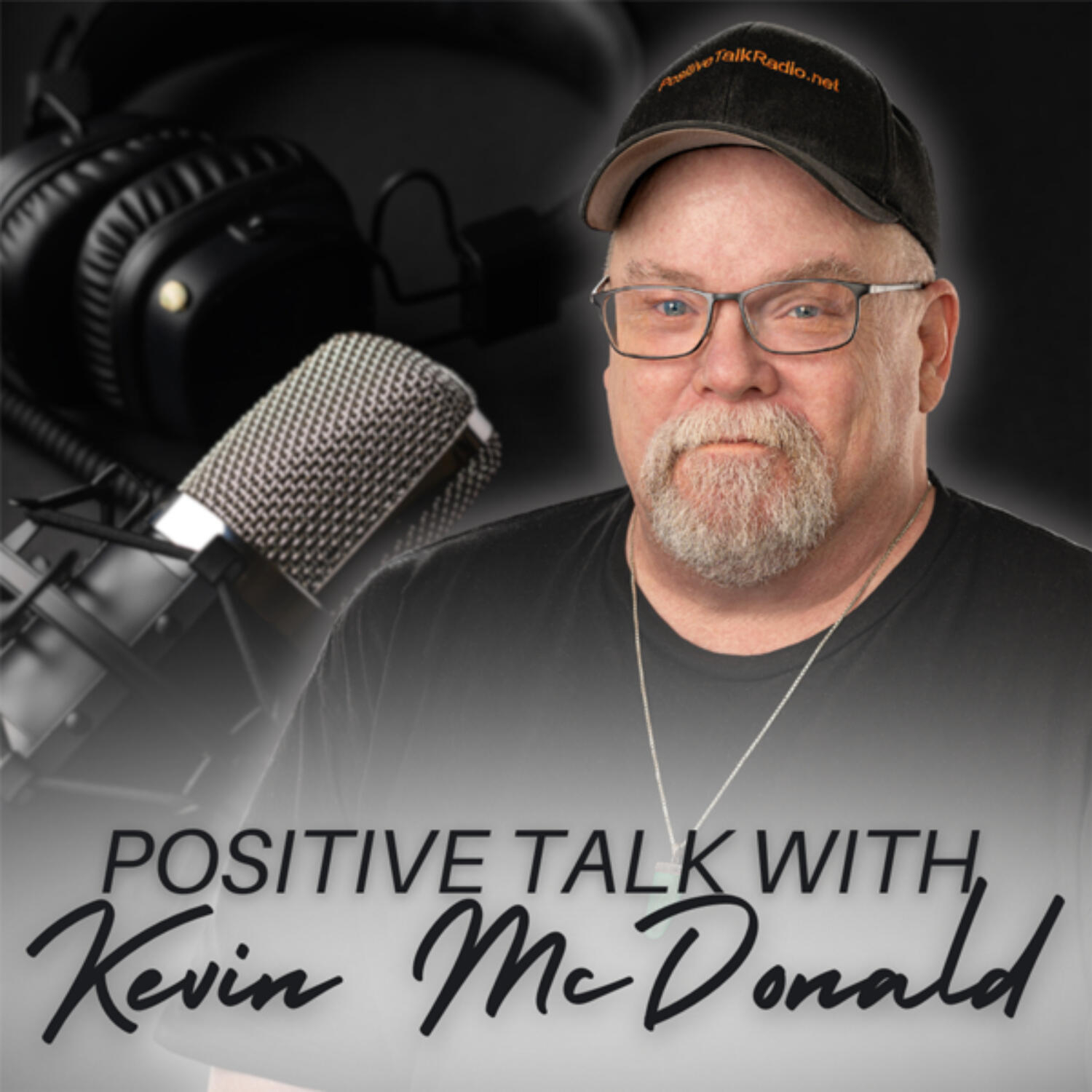
Positive Talk with Kevin McDonald and Adam Brownlie
Get every episode summarized
Each time Brushwood Media Network publishes, we email you a written briefing from the transcript — the topics, who appeared, and any specific claims, with the ad reads skipped.
Email me new episodesFree for 3 shows. No card needed.
Transcript ready
485 searchable segments. Every word is indexed and playable.
Full transcript
Brushwood Media Network — Positive Talk with Kevin McDonald and Adam Brownlie. Machine-transcribed; use the interactive transcript above to jump the player to any line.
There is a moment in every life when you decide to rise, to stand taller than your fear, to speak louder than your doubt, to chase the vision that sets your soul on fire. This is that moment and here. We walk it together with stories that awaken voices that inspire and truce that set you free. This is positive talk with Kevin MacDonald where hope has a voice, and that voice is yours. And welcome to the show, everybody. Sadly, Michelle is sick today. And we've got a great show for you today. And I'm really looking forward to getting in deeply into the work that this gentleman is doing. His name is Adam, Adam Brownlee. And he is, as a matter of fact, I have to ask Adam to begin with. By the way, did I have a good evening tonight? Because in your world, it's tomorrow already because you're in Australia.
Yeah, yeah, you're lucky that you still got an extra day to live before you get there. I am right now. Yes, indeed. So welcome to the show. It's great to have you here. You have actually you've got a couple of books out. But one is going to be published in the next couple of weeks. And that is called Happy Pedia. And it's a guy to happiness, both spiritually and and psychologically and all those things. So welcome to the show. How are you? Yeah, yeah, really good. Kevin, looking forward to sharing a bit about what of thing writing that for the last three years. It's taken three years to put this book together because you had to read something like 500 different articles and papers and stuff to come up to understand the philosophy that you've come up with a little bit better. Haven't you? Yeah, yeah. Well, I went into the book to share this philosophy as a way of making happiness
easier. But to write a book about happiness, I have to study, you know, what is happiness? How do we find happiness? And yeah, before I was writing it, I was like, why does it take people three years to do a PhD? Like, it doesn't seem like it should take that long to write 50,000 words. But yeah, I definitely found out it takes a long time to write and then write it again to make sure it's accurate and then write it again to make sure it's palatable to the reader so they can understand it and pick up what you're... It really is a process and a healthy editing process all by itself takes a long time just to make sure that it's understandable and everything works the way it's supposed to and is intended the way you intended it to be. Yeah, exactly. That's a massive challenge for the editor to keep the spirit that I wanted to have in it while also yeah, ticking all the other boxes that we've got to tick make it readable, yeah.
So, tell me a little bit about Happypedia. How did the idea originate? Where did it come from? And what was your motivation? Yeah, it goes back a long way. So, well, if we go right back to when I was a child and I would see the fighting on the news, like, fighting in Middle East, you know, fighting was it have been fought for nearly 2000 years and I was like, why, why are they? And I think maybe because I was raised a Christian, I thought, well, I think the solution's forgiveness. So, for a long time, I've thought, you know, forgiveness is important and could potentially stop these. Then if we go forward a long time and like, after I finished university, a friend and I were walking along the Brisbane River and he grabbed a stone and threw it and he's like, you know, our life is just like this stone. Like, it's going to land in a particular place because I applied a particular force to it and so too with our life, like, we're going to end
up in a certain place because of all these natural factors playing out on our life and like, I really bought into that, like, it's like, yeah, that makes perfect sense. And then it wasn't till, like, many years later, like, probably 20 years later, I was like, you know, what, I think this philosophy could really help a lot of people find more peace in their life. Like, this is a great reason to forgive, not only to give others, but to forgive yourself for mistakes you've made. And now, you know, what this perspective could stop wars, if we can forgive others for, you know, something they've done and that can take a load of our shoulders so we can talk reasonably to them and come up with something that we both are happy with. But it can also save a lot of lives just by reducing stress. Like, a lot of people die in wars, but like, so many more people die, stress, the main cause of so many diseases. If we can reduce stress, we can reduce the disease by a massive amount and death. So by writing this book about, I think it could really save a lot of
lives if people can adopt these perspectives and beliefs. Now, are you inherently, have you always been inherently a happy guy? Yeah, I think so. I've had a pretty lucky life and that kind of makes it stress. Stress is a terrible thing. It makes you more prone to stress. As in, like, if you're, have a stressful childhood, it changes the structure of your brain so that you're more likely to see things to worry about. And the more things you see to worry about, obviously the more things you have to worry about. And this can be an emotional burden, which then continues this cycle of reinforcing that structure in your brain to see things to worry about. So if you've had a really low stress childhood, it really sets you up for the rest of your life. Yes, I've had a pretty lucky start. And then I've also had this philosophy for a long time, writing, writing the book about it's definitely reinforced that gives me even more acceptance now than I had when I set out to
start writing the book three years ago. Now, this philosophy is just a long time in coming. Has this been something that you've, I read somewhere that you've been thinking about this kind of like for 20 years? And so it's been, has it been that long in developing it? And to deciding that writing this down and writing the book, happy pete would be a good thing to do for humanity? Yeah, like I said, it was about 20 years ago when I was first introduced to this idea by Jack when we were walking along that river that day. I sort of just adopted it myself. I never thought of something that really highlighted to me the need for reducing stress was when I moved to Brisbane, like I used to live in the country and when I moved to Brisbane, I was like, wow, everybody's got so much they're worried about here. How come I'm not worried about this stuff? Yes, so that height probably highlighted a need. Well, that was not because I know you grew up on a farm and you worked with your dad and you did all of those things that and you were able to be
successful and you had enough of financial abilities and and stuff to do things, you know, so the stress in your world was less because you had even though there was a period of time when you didn't make a lot of money, but you had a place to live and you had the things that you needed and you were content with that. Is that is that kind of true? Yeah, definitely. Yeah, well, we always want more and it's really healthy who want more. I think the challenge is balancing out how much you want. So, yeah, an example, I guess, of finding the acceptance of enough. Well, when I when I was at university, I was on a government pension, everyone in Australia gets paid by the government to study generally and that money given to me was enough to pay for my accommodation, my food and attainment and I think it was like $10,000 a year or something like that
and I was like, you know what, I'm pretty comfortable on this. All I've got to do is raise $100,000 and and invest that at 10% and I can retire and so I was going to be happy with that sort of lifestyle but by the time I'd raised $100,000 I was then earning, I don't know, $30,000 a year and so I was like, well, it's a lot more comfortable here now on $30,000 a year. It won't take me long to raise another $200,000 so then I kept on working and then by the time I'd raised $300,000 and then I was probably earning 50 and then I wanted, then I set my goals higher and this just kept on going and going so eventually I got to a point where I was like, right, I think that's enough and I stopped, I left the farm and yeah, I was just like, this is enough to live on so it is, I don't know, it's good to be able to say, look, this is enough but we always need to want something else, there needs to be something we want so yeah, it's a balancing act between the two.
Well, and when we talk about stress, sometimes that the act of wanting more and needing more can be very stressful if you don't have a clear precise plan on how you're going to get more and so then you start fretting about not having enough and that does lead to stress, doesn't it? Yeah, 100% you've nailed it. If we don't know how we're going to get what we want, then it's hard to have hope. The amount of hope and optimism we have based on like a future outcome is largely to do with how much we want it and how likely we think we're going to get it. So these are two very important perspectives that we can to reduce our stress and so if we're stressed about a future outcome because we don't think we're going to get it, well we can work out how we can get it and reduce our stress or we can reduce how much we want it like, find a new perspective that says it, you know, it's not that important to have this
single outcome that we, yeah, because sometimes, you know, we, when we are growing up in a lot of cases, the stress is brought on by society and by family and friends and you've got to do this in school and you got to get that done and then you've got to go to college and then what do you, by the way, it would be nice if the, you know, I live in the United States and it would be nice if we paid for college for kids, I think that would be very helpful for them, but we don't, but so they have student loans and sometimes the student loans that they have in this country can be significant, like $100 or $200,000 and that can cause stress all by itself because the job that you may have chosen may not reward you enough to be able to pay those things back. So there's lots of stress in and are you doing enough or are you getting married on time and you're doing, if you're following society's quote unquote rules, it can be a very stressful
existence, especially if that's not something that you find appealing to you, you know what I mean? Yeah, yeah, so what's the solution to this Kevin? I don't know, that's why we're talking to you, because by the way, we're talking with Adam Brownlee and we need to take a quick break and when we come back, we're going to talk about the philosophy that he developed to put into the book happy pedia and how it all works because it's got a spiritual component to it, it's got a scientific component to it and we're going to delve into that because there are some things that you're going to hear today as an audience that that may be a little foreign to you or maybe new and it is something that you really can think about. Does that make sense, Adam? Yeah, yeah, yeah. So we will be right back in just about, oh, let's see, just about a minute and two seconds, so stay right where you are. Here's another point to ponder from positive talk radio. What is the easiest
thing to justify? It is a small transgression. The one no one will ever see, no one will ever know the tiny exaggeration on the expense report. The extra minute you took on your lunch break, the packaging you tossed in the wrong recycle bin because it was closer. In those moments, the question isn't, will I get caught? The question is, will I know? It isn't about avoiding punishment, it's a sign of the agreement you make with yourself when you choose to do the right to return the wallet, to fix the mistake, to respect the empty space you aren't impressing the world, your earning, your own respect. That small choice made entirely in private is how you build a life you never have to look away from. The only audience that matters is you. And welcome back to positive talk. My name is Kevin McDonald. Adam Brownlee is our guest and he is an
author. He's got a couple of books out, but we're focusing on the one that's coming out in a couple of weeks because it is happy, Pedia. And I love the name. How did you come up with the name, well, I've given it to a lot of people to read, so be to read as people I know. And the feedback I got was it reads like an encyclopedia. It's not really what I was going for, but I've decided to own that and that inspired the name. I was like, well, let's be upfront with what people are getting themselves in for if they buy this book. So yeah, happy Pedia. It's an encyclopedia about happiness or a guy's happiness. And we're also going to talk a little bit later because on your website, there is a happiness quiz that you can take to determine where you are in a happiness spectrum, if you will. And but we'll get into that in a little bit. I wanted to talk to you first about the philosophy that the book is about. Could you kind of give us a thumbnail sketch or what
that's all about? Yeah, so we start off by looking at the what is happiness. We need to define it first. And then we talk about the six pillars of happiness, eating well, sleeping well, socializing exercising well, finding novelty and hope. Now hope is probably the challenging one and probably the most important one. And so then I go into how so and hope is all about perspective, right? If we judge something as bad, if we think it's bad that we've got this upcoming event or it's going to feel bad. Well, a big way, a big influence on our perspective is our foundational beliefs. So this is how we explain the unexplained. And so this is how we explain why we are here and what causes things to happen as they do. These are things that we you know, we don't necessarily have answers to, but the answers we can be a great force of acceptance
when we've got bad outcomes, when we're stressed, when something could go wrong or something has gone wrong. If we can lean on these foundational beliefs, it can be a great source of peace. And so I talk about traditional foundational beliefs, those ones drawn from religion. And then I put forward a you could say a new one. That's more secular. There's more science-based for those people who aren't currently part of some. And so the the the foundational cause that I put forward or I recommend is that everything is caused by the laws of nature. And so if everything is caused by the laws of nature, and everything is unavoidable. And so when you make a delay, Kevin? Yep, yep. And are you cut out there for a second? Are you back? Yeah, it's just flicking on and off. But yeah, if we can see that everything is unavoidable, then when we've made a mistake, we're like, well, that's not my fault. That was always going to happen. Or if someone else does
something that hurts us, we can be like, well, you know, that's not their fault. Something made them do that. So we can't really blame them for it. And and when we have that perspective, we can remove that resentment from that. And we can remove regret from our mistakes. So that's a philosophical shift, which I would like to to help people find more acceptance, more forgiveness of themselves and others. Isn't isn't now perspective is a big deal. Because if you have a perspective that everybody's out to get you, then guess what? Everybody's out to get you. But if you have the perspective of that, those things, the things that happen are they just happen. And that there's no that that your perspective is that you can recover from it and you can move forward with it and that you're going to forgive the people who may have been to blame for what are the perception that you're blaming them. Because there's no point blaming anybody for what
happened in the past. Because by the way, it's in the past. There's not a thing you could do about it. But you can do something about how you're presenting yourself going forward. Is that is that kind of close to what we're talking about here? Yeah, yeah, definitely. If we can lift that emotional burden because so many times so often we can't move forward because we're so tied to the past. We're still carrying all this emotional burden because of our judgments of what's happened. Whereas if we can release that emotional burden, then we're more likely to think, okay, what can I do now to get what I want? What can I do now to stop that from happening again? But first, we need to forgive. We need to let go of what happened. Learn from it, but not be emotionally burdened by it. Yeah, and I also do want to ask you because a lot of times because
we listen to the stories of our life that other people have told us about who we are, or we're not tall enough. We're not smart enough. We're not good looking enough. We don't have enough hair. By the way, a lot of great hair there and stuff. But if we don't believe those stories anymore and we believe that we can do and be and have anything that we want over time, does that change your perspective and give you hope so that then you can be a little happier life? Yeah, if you believed you could have whatever you want, you'd have mountains of hope. The truth is, though, we can't just believe whatever we want to believe. We're going to believe what our past experiences are dictating to us to believe. If we believe we're hopeless and we can't get this thing that we want because we're just not built for it, we're not going to have that belief that we can get it.
In that instance, we need to be like, well, what would give me that belief? What experiences would give me that belief that I can get this thing that I want? If we can have those experiences that change our beliefs, then that will change our judgments. Isn't that what we're all looking for really? We talked about in the very beginning, we talked about people heading each other and wars and stuff. It's basically foundational. It's because we believe that there's another, that there is somebody who is out to get us or believe something different than we do. If we can eliminate that, when we live a happier, more meaningful life that we can then include other people in that philosophy, is that kind of where you're going with this? I'm not sure. So, might maybe hit me with that again, sorry. That was a long time ago. I can't remember anything. Anyway, but your philosophy is foundational
because there are some people that would say we have free will. That can change everything, but it really can't. Well, I don't know. How did free will? I'll ask you. You're the expert. You wrote the book. How does free will come into it? Or does it not come into it? Because at the end of the day, there really isn't free will because things happen. Yeah, free will is a very popular belief. It's also a spiritual, like a supernatural belief. It's interesting for people to hear it when they hit first hear that, because it's so widely. We have, I say, two classes of supernatural beliefs. We have the local ones, you know, how, you know, in certain countries, they believe in certain religions. And then in another country, they have different religions. They have some believe in luck, some believe in karma, some believe in other forms of fortune. And so, since they're so localized, when we look at someone else's beliefs, we're like, well,
that's obviously a supernatural belief because obviously made up. But then when we talk about free will, it's so widely adopted right across the world that everybody's like, well, everybody believes in this. It must be true. So then what is a supernatural belief? So the supernatural belief is something when we believe it's the first tours of something, as in nothing else has more power than it. For example, so if we go to God, like, if God decides it's going to rain today, or if God decides you're going to meet a particular woman and marry her, nothing's making him do that. He can make it rain tomorrow. He can make it rain in the morning or in the afternoon. If he's causing an event, he's free to cause whatever event he wants because he's the first cause. Now, the same thing with luck or karma. Let's go with karma. Say you did something wrong. Say you cheated on an exam. And now karma has the ability to get back at you.
It can cause some bad outcome. It can cause whatever bad outcome it wants. It could just cause you to trip if it wants, or it could cause you to miss the bus. It's up to karma to cause whatever bad outcome it wants. So it's free. It's the first cause of these future. A supernatural belief is something that we believe is the first cause of things. It's the most powerful thing. Now, randomness is also a first cause. So randomness, if we're talking about the particles, micro, very small particles, they apparently move randomly. They don't move according to any laws or anything. So this randomness is theoretically the first cause of these summitomic particles path through life. And then we've got free will. So free will again, theoretically, the first as in nothing controls it, we're free to walk to the right or walk to the left. We're free to buy a soft drink or a juice. So again, this is a supernatural force. Nothing
has more power than it. It's more powerful than, say, God or the laws of nature or karma. It's free. So it definitely fits into this class of supernatural. Yeah. So then so now look, if you let's look at karma real quick, because there's you can have you can have karma based upon a negative experience or a negative action that you took. You can also have karma that's based on a positive action. And good karma is out there as well, perhaps. Now, in the in the book that you've written, you do talk about spirituality. Is there a certain mystical aspect to that or is it more grounded based upon your work in the writing that you're doing? So I talk about the value that our foundational beliefs have in giving us peace and acceptance in our
life. There's so many different interpretations to Christianity. But let's just say that we believe that God is the most powerful force and nothing happens without his doing. Everything happens according to his plan, right? Now, if we believe that then we make a mistake. We're not going to regret that. We're not going to dwell on that. We're going to be like, you know what? Terrible that I made that mistake. I'm going to definitely try not to make that mistake again, but there's no way I could have avoided it. It's God's plan. Like God's wanted me to do that. He needed me to do that. He made me do that. There's nothing I could have done about it. You know, can you say how you can find some acceptance if you've got that? Oh, absolutely. And from from my perspective, if you have that belief, my mother had that belief that she believed that God was in charge of everything. So therefore, it alleviated her from the responsibility of living her life to the best that she could because
well, as God's plan and as you used to say that all the time, but the reality is is that as an example, when you were talking about raining and nature, God set it up, but I don't think he controls that it's going to rain today or tonight or tomorrow. It's all about nature and how how it all evolves and all works together. Do you agree with that? Well, everybody's got their own foundational beliefs. So that's your foundational belief. And everyone's got some mixture of this. Like, generally people are like, you know what, my free will controls these things. God controls these things. Nature controls these things. From a rational perspective, that doesn't make sense. They can't like all control different things. Like one thing needs to be in control. Or like it's so hard to say, where's the boundary? Where does God stop controlling things and nature start? And where does my free will stop? Those are major questions to ponder. And when I need to take a break here,
I've already blown past it. But we're talking with Adam Brownlee and he's written a really interesting book. I'm having a great conversation with him and it's going to continue right after this because the brushwood media network needs me to do this real quick. So we'll be right back today with us. You were listening to Brushwood Media Network. The best and syndicated talk, news and entertainment shows. Are you looking for your daily dose of inspiration? They connected to all your favorite shows, music and news with a brushwood media network app from positive talk radio to greatest vibes unplugged and so many more uplifting voices around the world. Everything you need is right in one place. It's easy to use too. Always available and designed to keep you inspired 24 hours a day. Go to brushwoodmedianetwork.com and download the app and you will always
have brushwood media available on your smartphone. Download it now and make inspiration and music and conversation part of your every day. And we'll welcome back to positive talk. My name is Kevin McDonald and you know, Adam Prischell is actually here in spirit. She's not feeling well but she does have something. So Adam Brownlee is our guest today and we are talking about the book Happy Pedia, the guy to happiness and with a modern philosophy and and and go that that book is do out. It's going to be out in the next week. Hopefully, hopefully, uh, cutting in the next couple of weeks. Would that be correct, sir? Yeah, yeah. Before Christmas, that's the go. Yeah. Oh, perfect. Perfect. Dan Prischell would like to know. Hello, Adam and hello, Kevin and Adam. Sick fine, the scenes, but love listening to this conversation. I have to ask Adam, how does
our energy and frequency tie into our present and future outcomes? If that makes sense to you. Wow. That sounds like a very spiritual based question. Our energies and frequencies. I'm a very science based person like almost extremes. Uh, so if I was going to say our energies and frequencies, well, our energy moves stuff, right? If I want a drink of water, uh, my energy that my body creates is going to lift that cup to my mouth and and quench my thirst. Uh, frequencies, you know, frequencies aren't frequencies. What frequencies come from a body? You know, we're meeting where yeah, I don't know. That's a tough, that's a tough question. Uh, I don't know if I've really done that question any justice, but she's known for tough questions. She's, she's, she's a very inquisitive sort and and I think what she's trying to get at is that, um, our energy, um, because,
you know, your scientific base, it's scientifically based and they've proven haven't they or am I in error in this? That all of us have energy, all of us have frequency and we kind of emit those things and and, uh, is that possible? Is that true? Well, I'm sure we emit energy and frequencies like, uh, and thank you. I'm sure we, I'm sure we do emit these things, but generally these things don't have a great influence on our environment. So we're not probably without, uh, ability to see in here and we're probably not going to recognize the impact these things are having. So something we might notice is the effect we have on those people around us. Yeah. As in like our senses, what we see is very, I don't know, sensitive to the emotions of people around us. Uh, so we could say that's their energy, like if they move in a certain way and show a certain, uh, behavior,
our body just picks that up and interprets that and it can make us feel a certain way because if we feel like they feel a certain way, uh, if they treat us with respect and kindness and, uh, it'll make us feel happy. So when we feel like someone respects us, we feel like it just releases hormones in us and it releases oxytocin and makes us feel, uh, really good. So I don't think it's, uh, some invisible thing. It's something we don't really, uh, do consciously. Like we don't consciously make judgments. Well, we do consciously make judgments sometimes, but often these effects will happen without us making a conscious judgment. Like we'll just see someone doing something or treating us a particular way and we just feel or warm and fuzzy inside, uh, just because our brain has made a, uh, a decision that they respect us or they are similar to us and it's released this dopamine and now we feel, uh, blowing. Yeah. I liked dopamine. It's a, it's a, it's a, it's one of my favorite drugs, um, that the body produces naturally and, and stuff. So, um, but, but I get to,
I get what Michelle's point was, um, but, uh, from the scientific basis, there, there's so many things and I, you know, you're a scientific guy and I've always wanted to ask, you know, science has not been able to prove a lot of things that are of a spiritual nature, uh, as an example, the existence of the soul, the existence of the afterlife, uh, any of those things, um, that it then involved, um, or reincarnation or any of the, uh, spiritual scientific, or spiritual non-scientific things. So, but a lot of people rely on those things to achieve, for, for to achieve hope and stuff, um, for, for their continuation of who they are and that kind of thing. Um, but you so, is what you're saying is that that's, that is not necessarily, uh, something that we should, um, hang our hat on as it were and we should be more scientifically based. Well,
I'm saying that we can choose our foundational beliefs and why not choose ones that give us an acceptance. Uh, it's really hard to change your beliefs. So, if you're raised your whole life believing in one particular religion, uh, it's hard to change. Uh, so I, I decided when I was probably, I don't know, 12 or something that, you know, I don't think that Jesus is real, it doesn't make sense. It doesn't align with what I'm taught in the science classroom. Yet, I would still pray to God for years and years after that. Whenever I wanted something, I'd be like, God, can you help me? Can you help me? Uh, so like these beliefs were so ingrained into me that they're not something you can change overnight. We can, like, since they're not proven by science, uh, there's no saying that this religion's true and this one's not like, they've all got just as much merit as each other. They're not provable. The beauty I see in, uh, free will is that it's not
something, it is something we can disprove. As in, it's not something, uh, it's not something that, well, it's just something we can disprove. Like, we can disprove that it exists. And so we can use that to help us give up that belief in that, uh, supernatural belief. And the way we can go ahead, or we can, uh, disprove that is by spending a little bit of time each day noticing that our decisions just appear unpredictably. As in, we don't know what our next decision is going to be. And so it can't be, we don't choose it. It just appears. And then as soon as that one appears, quite often another one will appear or another thought will appear. And they just continue to, uh, unfold, uh, unavoidably. As in, how can we avoid something that we didn't even know was coming? So right now, I don't, I don't know what my next, uh, decision is going to be. And it'll just appear. And then, and then that's it. Can you change your mind once you make an up,
once you make a decision, then can you change your mind based upon new facts that you have, um, that have come to into your understanding? Yeah, yeah. This is, uh, this is a great question, great follow up question. Uh, so it's so easy. If I'm just walking along and then I have this decision, hey, I've got to ring my mate. Uh, that's so obvious that that was unpredictable. Like, I had no plans to have that decision until it just appeared. What about when I'm like in the grocery store and choosing between whether I should buy an apple or an orange? It really feels free. It feels like, you know, I could choose either one. Uh, I definitely have this ability to choose, but what it, the way we can overcome this illusion is by noticing each decision appearing without our warning. As in, like, I might walk into the shop and I initially see the apples and I'm like, ah, I'm going to buy, so that appeared out of the blue without warning. But then the next decision
or the next thought appears, oh, maybe I should buy. Now, at that point, I've considered buying an orange. I have no idea decisions going to be. It could be to buy an orange. It could be to buy an apple. It could be to ring my mate Andy. I don't know. And say the next decision appears, right? Yeah, I'm going to buy an orange because I bought an apple yesterday. Uh, now I still don't know what my next decision is going to be. It could be like, you know what? I had one yesterday, but I'm going to have another apple again today. So now I've changed my mind back to the apple. Uh, but once I've chosen that orange, I just don't know whether it's going to be the apple or to walk to the counter and take this orange. Uh, I really don't know. Uh, so that's how we can experience changing our mind as being an unavoidable process or, or the apples, you go into expecting to buy an apple and maybe an orange, but mostly an apple. But then you look at the apples and they just don't look right to you. And so then that, that makes a decision for you then done it. Yeah, yeah.
Yeah, because now it's going to be the orange because the apples don't look very good. Or whatever, whatever the new information that you've acquired. Yeah, quite often in hindsight, we can kind of see why we might have made them in a decision. Like in hindsight, once we've just decided to get that orange because the apple looked to kind of a little bit old and stale, we can be like, well, that's why I made that decision. But in reality, we really don't know why we made that decision. So scientists do all these tests on how they can influence people's behaviour. And sometimes just by giving someone a cup to hold, the scientists can influence the next decision that that person. So what was influencing our decision to buy the orange, the state of the apple, how taste it looked? But it could have also been like the temperature at the time, like because it was slightly warmer or it could have been the the the sign we saw walking to the shop may have influenced our decision once we reached that fruit stand. All these things would have been playing
a part in what decision we ended up making. We know on a scientific basis, and speaking of grocery stores, on a scientific basis, I know that you know this, that there is a complete philosophy of how a grocer sets up the grocery store based upon perceived human behaviours that they have proven scientifically as an example. They put the product that they want you to buy at eye level because that's what you're going to see first and that scientifically proven. So they can eliminate some of the chance by by how they set that up stuff up based upon their research of human behaviour. Because that's a human behaviour plays a big part in this, don't they? Yeah, we're all very similar in so many ways. Like our brains all work very similarly. Yeah, and so I've got in the habit now of going to the supermarket and looking down the bottom
of the shelf because I know that's where the cheaper product is, that's the one I like to buy, and that's where they've hidden it. Yep, and the grocery store people are now upset with us because we're... that is kind of a secret that they've been saving for themselves. That's the same thing like when you go to the checkout counter and there is a rack of stuff, and it's not stuff that's good for you or vitamins and stuff, it can be and it's chips and it's your impulse buy, and that's what they're counting on to get you to while you're standing there in the checkout line, they get to the buy, you know, M&Ms or something like that. Yeah, yeah. Now this is an important point to remember next time we want someone to behave in a certain way. Like we all are human and we all have general, general rules, our body and our brain follows, and so if someone is doing something
that you really don't appreciate, you can forgive them first because you know that, you know, it's not their fault, their life just calls them to be this person that they are, but then you can be like, hey, what would cause them to be this person that I want them to be? How could I cause them to be kind or more generous or more compassion? What would change their behavior? And if you're smart enough or creative enough, you could potentially come up with this plan to bring about this positive outcome that you want. There is part of that having to do with your behavior, so as an example, what I mean by that is if somebody does something that is bad to you, and your behavior dictates that you're not mad back and that you're willing to forgive them because of their short-sighted ability to make the right decision. And then will that influence
them to perhaps in the future make a better decision because they recognize that you were forgiving them. Does that mean? I just have to have a lot of work. You know, I've said, I just said how we're also similar, but we're also complex, hey, it's hard to know what's going to affect one person. That strategy that you just said that might work for one person, like quite often people just want to bite, and if you're just forgiving them and you're not biting back, they're like, well, this isn't much fun. I'll point one out to who does bite back. In that case, your strategy is probably working because that's what's driving their behavior. But another instance, they might, their negative behavior might be driven by something else. Maybe it's jealousy or something. So you've got to identify what is driving their behavior. What's causing them to be this person that they are? And then if you can identify what's causing that, then you can often identify what you can do to cause the behavior that you want. Or it's a very complex thing because as an example, I never could get my ex-wife to exhibit
the behavior that I was looking for, and I tried all kinds of stuff. But we didn't communicate at the right level that we could come to an agreement about things like that. Communication was a problem for us as well. And that's part of it as well, too, isn't it? Because we're pretty complex. Let me ask you, this is true. We are each a product of our experiences from the past, which leads us to what we are thinking. We're going to experience in the future. Is that true? 100%. Everything is caused by the past. We're born with a certain genetic makeup. And from the moment where it conceived, all the environmental factors are influencing how our body grows and shapes and forms. Everything that we see here and taste is affecting our beliefs
and our brain structure. And then whatever that very precise makeup we have, that brain structure, chemical makeup and beliefs that we have in that instance, when that environment is having a certain influence on us, determines what our next judgment is, what our next thought is. So everything is led up to what our next judgment is. And if that judgment is good, we're going to trigger dopamine. If it's bad, it's going to trigger. So, yeah, we're a hundred a victim of our past, you could say. But we can still have hope. We can have hope of causing a better judgment in the future. So we can because each of us has stories that we tell ourselves based upon the experiences that we had growing up or with a significant other or whatever. And these are stories that we've told ourselves that we thoroughly believe because there are stories. But can you change those stories to come to a different outcome and to develop more hope
within those by by changing the story of what you believed that you now are giving up that belief. Yeah, so it's really hard. I think we talked about this briefly before. It's really hard to change our beliefs. But if we want to change them, we need experiences. We need experiences that support our new belief. So could you give me an example of like a belief that someone might want to change? Well, if you have as an example, well, I'll give you one. When I was six years old, I went to a friend's house and there was another friend there. And my friend had to leave. And I was going to stay and play with this other kid. And we were both six years old. And then I said, what do you want to do? And he said, you get lost. And I said, what do you mean? And he said, get lost. I don't want to play with you. And so for a long time, I created a story around that that I wasn't good enough to play with until I had enough experiences with other people that thought I was fun to be around that I could then change that story and call him what he was, which was
being a jerk. Yeah. Yeah. That's a perfect example. So you would have maintained those beliefs that you're not good to play with until you had experiences that changed your perspective. 20 years. Yeah. How many years? 20 years. I had that feeling. And so if you wanted to change that earlier, like this is some pretty big, something pretty big to ask in a six-year-old, but if you wanted to make that change earlier, you've got to be like, what experiences are going to give me the belief that I am good to play with? And obviously, that's finding people who enjoy playing with you, right? Right. And so about finding people who are like you, because people who are like you generally like appreciate you. And so if you can put yourself in an environment where people are similar to you, they're going to like you and they're going to respect you and treat you well. And then you're going to experience that respect. And then you're going to be like, hey, you know what, these people, they like me, they respect me. And your confidence would blossom,
you could say. So if we want to change our beliefs, we've got to identify what experiences are going to cause us to have the belief that we want. And then go have those experiences. Challenges. It's not easy. Like coming up with that. All right. It's not easy. No, life is not easy. It is. It's a challenge. Just to get up and go to the bathroom could be a challenge when you get older anyway. So, but Adam, we've run out of time, unfortunately, but I would like to give you a couple of moments because the book is coming out hopefully before Christmas. Are they going to be able to get it at Amazon and and all kinds of places and your website is do and give us your website real quick. Adam Brownlee.com.au. So brown L.I.E. Yeah, it's going to be on Amazon. That's pretty much the only place it's going to be. So yeah, it should be the hard cover, soft cover, Kindle version will be all there and hopefully in another month or two months we'll have the
audible audible copy as well. Are you having that done for you? Probably going to get the AI to do it. I think I got an actor to read my last version and that took months to do maybe getting AI might do just as good a job I think and potentially have it in in weeks or days. AI is incredible with with some of that. It's just it's just something. So and again, Adam Brownlee has been our guest. Go to his website Adam Brownlee.com slash AU, right? .com.au for Australia. Yes.com.au. And and I want to thank you so much for being here. This is you're going to have to come back because I haven't got my head wrapped around this entirely yet, but I'm working on it. Yeah, right. Well, I'll try and be more concise next time. It's a tricky tricky. It's it's it's
complete flip to what most people believe. So yeah, it's not it's not easy to understand. It leads to a lot of questions like, you know, can I still have a sense of control if if I'm not free? How can I still have hope? You know, I'm going to end up in the same place. Like I'm destined to finish my life and it like, how can I have hope of it? It raises a lot of questions. So yeah, happy to talk more about these challenges with adopting this new foundational belief. Exactly. Again, the name of the book is happy pinia. I love the name, by the way. And that that book is going to I sense Adam that this book is going to be talked about by people who read it and it's going to create conversation, which is always a really good thing when you're putting out there on something for some sort of people to think about. Yeah, thanks for coming. I hope it saved some lives too. Yeah, that would be good. And and happiness is a human right.
I think. And I wish everybody was happy and could forgive each other and recognize that there is no other. There's just us. Yeah. So again, Adam, thank you. And any any last words before we go, sir? No, that's that's it. I hope everyone can spend a little bit of time today just recognizing their decisions appearing unpredictably. And that might give them a little bit more acceptance of their mistakes that they're not to blame for it because they didn't choose to have the decisions that they they had. And yeah, hopefully a little bit more compassion to other people because you know, something made that person do what they did. And if you know that something caused them, then you could be more inclined to look at what caused that and have a little bit of compassion to, you know, what's causing this person to do what they're doing. Yeah. And and recognize it. I don't know if you know this, but as far as I know, there's only been one perfect person that walked the face of the earth and we all make mistakes. And and tell that that go. So Adam,
thank you so much for being here. Adam Brownlee and you are an awesome dude, man, to the congratulations on the book. And I can't wait for it to come out. Thank you for being part of Positive Tonk with Kevin McDonald, where stories inspire and voices remind us of what truly matters. May today's conversation give you hope, courage and a reason to keep moving forward and just remember. Till next time, be kind to one another because each other's all we've got.
More episodes
More from Brushwood Media Network

Awaken Hope PM Edition with Ben Lemans talking about his book Between the Tines
Brushwood Media Network

Awaken Hope with Patrick Sangimino on Patrick Sangimino
Brushwood Media Network

Never Hand Over the Blank Page | Your Biz Needs a Book with Chris Fenning #2
Brushwood Media Network

Stacy Lee - Storyteller of Resilience and Strength of Family
Brushwood Media Network