Pete Rose Becomes All-Time Hit Leader: A Baseball Milestone
About this episode
Buy me a coffee: buymeacoffee.com/dailysportz
Newsletter: https://substack.com/@dailysportshistory?r=3en496&utm_medium=ios&utm_source=stories&shareImageVariant=light
DailySportsHistory.com
Email: [email protected]
YouTube: YouTube.com/@dailysportshistory
Twitter: twitter.com/dailysportshis
Facebook: facebook.com/profile.php?id=61551687917253&mibextid=ZbWKwL
Get every episode summarized
Each time Daily Sports History publishes, we email you a written briefing from the transcript — the topics, who appeared, and any specific claims, with the ad reads skipped.
Email me new episodesFree for 3 shows. No card needed.
Hosts & guests
Transcript ready
81 searchable segments. Every word is indexed and playable.
Full transcript
Daily Sports History — Pete Rose Becomes All-Time Hit Leader: A Baseball Milestone. Machine-transcribed; use the interactive transcript above to jump the player to any line.
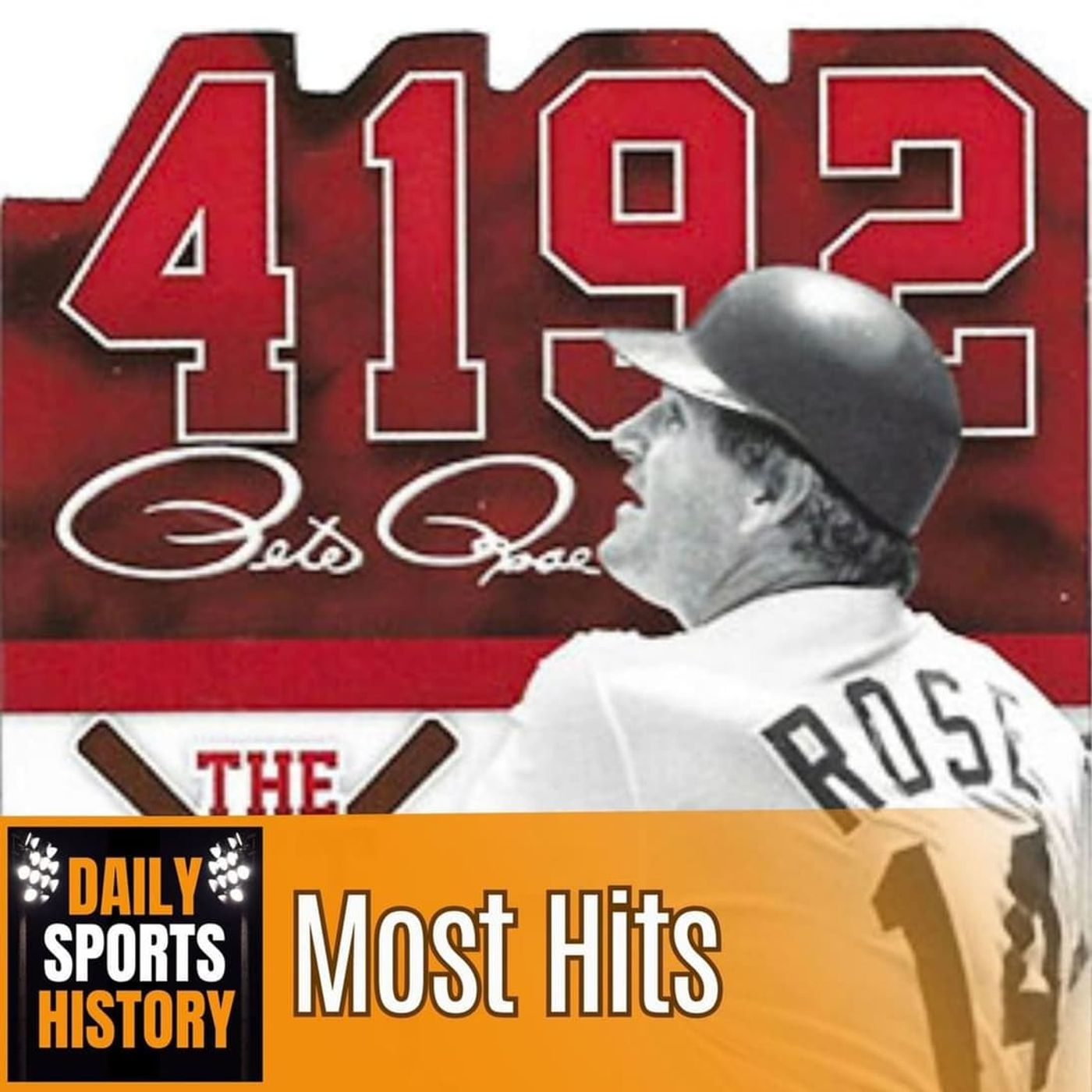
On September 11th, 1985, Pete Rose officially becomes the all-time hit leader in Major League Baseball, passing Ty Cobb the same day as Ty Cobb's last hit in Major League Baseball. Despite all the controversy that came after his playing days, Pete Rose, better known as Charlie Hustle, will always be known as one of the best baseball players to play the game. We're going to dive into the brief history of how he became the hit king on today's episode of Daily Sports History. Welcome to Daily Sports History, I'm Ethan Reese, your guide as you learn all about sports history to increase your sports knowledge. And today's trivia question is, why did Pete Rose not play baseball his senior year of high school? Now Pete Rose was born Harry Francis Rose, but went by
Pete and his parents encouraged him and his three siblings to all participate in sports, and Rose actually played baseball and football in high school. And was a running back on the football team until a sophomore year as he wasn't good enough to make diversity, so he focused on baseball and turned out to be a very good decision. But it was also helped by the fact that his father saw he had a lot talent in baseball. And he struggled in school and his teachers said he didn't need to attend summer school, but that would mean a year off of baseball. So instead of doing that, he had Pete repeat a year of high school that way he wouldn't miss any time for baseball. By his senior year, he had used up all of his eligibility to play in high school. So he joined a double A baseball team called the big boys because they were sponsored by Frischer's big boys out of Dayton in the Dayton amateur league where he was a catcher, second baseman, and shortstop and compiled an amazing batting average of six, twenty six. And it got him noticed by a scout
from the Cincinnati Reds. And after he graduated high school, signed him to contract. And during spring training his rookie year in 1963 is where he got his nickname, Charlie Hustle. As in a game versus the New York Yankees, he got walked and he sprinted to first. And everyone's like, well, Charlie's hustling in that name stuck throughout his career. And he wore it like a badge of honor as he was always running sliding head first. It would never take a break. He loved the game of baseball. He made his majorly debut on April 8, 1963 with the Cincinnati Reds against the Pittsburgh Pirates, but started his career. Oh, for 11. And it wouldn't be till April 13. He would hit a triple for his first majorly hit. Now that first year he would hit two, 56 and would go on to win the National League rookie of the year. But after that season, he would actually join the US Arms Reserve and be assigned to Fort Knox and have six months of activity
the following six years. So he wouldn't be able to play regularly. And we covered this a little bit before in our Nolan Ryan episode who did the same thing. And it was very hard to get a consistent schedule to both serve your country and play baseball. And after his second season, he was actually slumping. He averaged 269 and wanted to improve. So that winner, he actually participated in the Venezuela winner league. And he came back that next season in 1965 to lead the league and hits with 209 and finished sixth in the NL MVP voting. And it would be his first of his 10, 200 plus hit season. And it would be the beginning of him going nine consecutive seasons, hitting over 300. And then in 1968, he would go on to have his first hit streak going 22 games. Then in 1969, he would have his best batting average hitting 348 totaling 218 hits. Then in 1973,
Rose would lead the league and hits with 230 with a batting average of 338. And win his only MVP, leading the big red machine, which featured him and fellow Hall of Famers Johnny Bench, Joe Morgan, and Tony Perez, one of the best teams of all time. And they would win the World Series in 1975 and 76 on May 5th, 1978. Rose would become the 13th player to ever hit 3,000 hits in the game versus the expose where he just hit a single on a hustle play like he always did. And that same year, he would go on to have his longest hit streak and the longest hit streak since Joe, which no one has ever matched his mark since then where he hit in 44 straight games. And after that season, he would actually go on to sign with the Philadelphia Phillies, sign a four year, $3.2 million contract, making him the highest paid player at the time. But he would help them win a World Series in 1980, making his third World Series title.
But he was getting up there in age. And in 1983 at the age of 42, he had one of his worst seasons where he had only 2.45 and hit a total of 121 hits. That following season, he was released by the Philadelphia Phillies. And a month later, he signed with the Montreal expose where he would get his 4,000th career hit joining Ty Cobb as the only other player to hit 4,000 hits on April 13th, 1984. Meaning he was just 192 hits away from becoming the all-time record. And following that season of hitting 72 hits, he would go on to rejoin with the Cincinnati Reds and be named a player coach. But despite the fact that the Reds were struggling at the time, he was still getting hits here and there with a batting average of 286. And his second season back with the Reds on September 11th, 1985, Rose would hit a left field single of the San Diego Padres becoming the all-time hit
leader, breaking Ty Cobb record with a total of 4,192 hits. Rose would go on to finish the season with the Reds and play one more year with them before just focusing on being a manager. And finish with a career of 4,256 hits with 3,215 of those being singles, which is also a major league record. Cincinnati would go on to retire his number 14 jersey and he would be inducted into the Cincinnati baseball Hall of Fame. But a few years after his playing days, it was discovered that he had gambled on baseball as a manager, which would mean he would be excluded from the baseball Hall of Fame for the rest of his life. And a debate that has gone on for years, whether he should be inducted into the Hall of Fame as he'd still the hit king, but he did gamble on baseball, which was a black eye for the sport. Now, P-Rose has not been passed by a major league baseball hitter. Although each year of Suzuki, if you include his time in Japan, did amass a total of professional hits
of 4,367, making the world wide hit leader, but he only had 3,089 hits in the major leagues. So P-Rose still holds that record and likely will hold it for years as he played over 20 years, where we don't see players do very much anymore and they don't play as much as he played. As he hustled a lot, but he wasn't injured a whole lot during his career either, which helped him get as many hits as he did. And he will always be remembered as a Charlie Hustle. If you want more of P-Rose, HBO has a new documentary that came out on Max streaming service, it's a four-part series where it breaks down all about his career in the gambling allegations. It's a great watch if you want more of Charlie Hustle. If you enjoyed this story, please go tell a friend, hit that little share button, text them in the group chat, say, hey, come listen to daily sports history, and we can all be sports historians, just like me, and come back tomorrow for more daily sports history. And the answer to today's trivia question, why did P-Rose not play baseball his senior
year of high school? It's because he was held back by his father and he had used up his four years of eligibility by his senior year of high school.
More episodes
More from Daily Sports History

Alan Moore: The Oldest College Football Player in History
Daily Sports History

Arthur Ashe's Historic 1968 US Open Victory: Breaking Barriers
Daily Sports History

Becoming the Hit Machine: Ichiro Suzuki’s Historic 2004
Daily Sports History
Cal Ripken Jr.: Baseball's Ironman and His Legendary Career
Daily Sports History