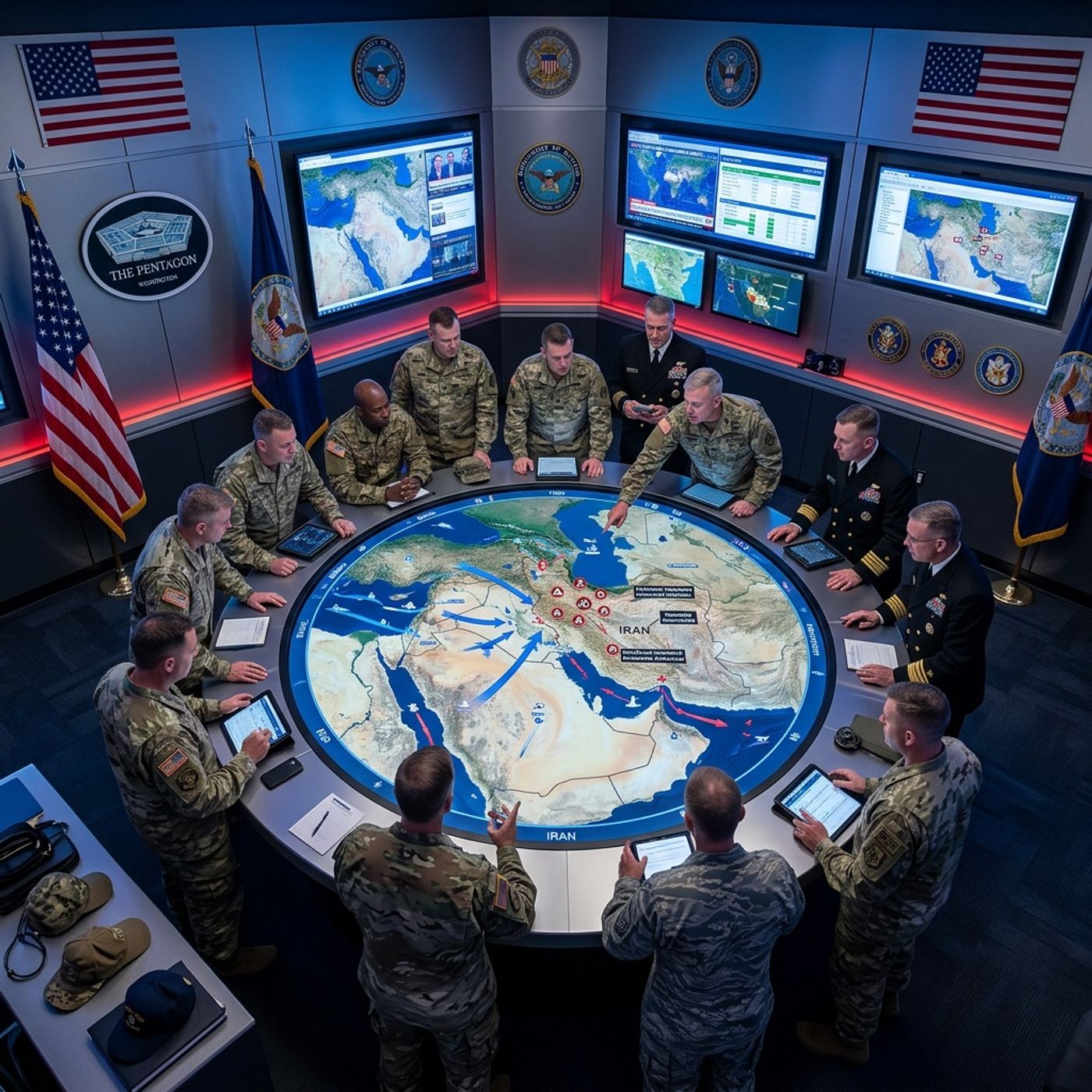
Pentagon Ground Invasion Planning_ The Stakes in Iran
About this episode
Become a supporter of this podcast: https://www.spreaker.com/podcast/conspiracy-theories-exploring-the-unseen--5194379/support.
Get every episode summarized
Each time Conspiracy Theories Exploring The Unseen publishes, we email you a written briefing from the transcript — the topics, who appeared, and any specific claims, with the ad reads skipped.
Email me new episodesFree for 3 shows. No card needed.
Hosts & guests
Transcript ready
62 searchable segments. Every word is indexed and playable.
Full transcript
Conspiracy Theories Exploring The Unseen — Pentagon Ground Invasion Planning_ The Stakes in Iran. Machine-transcribed; use the interactive transcript above to jump the player to any line.
As the geopolitical landscape grows increasingly tense, the Pentagon's planning for a potential ground invasion in Iran raises a barrage of crucial questions. Recent developments indicate that the US military is gearing up for what officials are describing as a final blow, a phrase that certainly carries a weight of foreboding. This strategic move comes in light of stall diplomatic negotiations, not to mention the ongoing closure of the critical state of Hormuz, a vital waterway for oil shipments. One of the main focuses for the military planning is the potential deployment of upwards of 10,000 additional US combat troops to the Middle East, a significant increase that could escalate the already heightened tensions in the region. The prospect of sending these additional troops highlights the stark reality of military readiness intertwined with political strategy. With these plans on the table, the urgency behind securing Iran's nuclear sites
is palpable. Securing these highly enriched uranium facilities isn't merely a tactical decision. It underscores the strategic importance of these sites amid concerns of nuclear proliferation. However, it's important to note that discussions regarding these operations are still hypothetical, and no official decision has been made yet by the administration. Naturally, the US government sees military action as a strong bargaining chip, a means to gain leverage in what are already troubled peace talks, or perhaps even a way to declare victory if and when negotiations hit a wall. In stark contrast, Iran continues to view this military posturing with deep skepticism, perceiving the escalation as a threat to its sovereignty and a destabilizing force in the region. There's a palpable tension between these perspectives, making it a pivotal moment in US-Iran relations. Digging deeper, it's essential to recognize the role of senior defense officials
who are knee deep in conversations about these deployments. This isn't just a casual chat in the halls of the Pentagon. These discussions could yield significant changes in military strategy, impacting not only present circumstances but future US involvement in the Middle East. White House Press Secretary Caroline Levitt has been vocal about emphasizing that planning for military options is a routine part of Pentagon operations. However, with such heavy implications, one can't help but question whether such routine planning aligns with the current volatility of international relations. Reflecting on historical contexts, the Pentagon has often been criticized for not learning from past military conflicts, particularly the 2003 invasion of Iraq, where post-war planning was noticeably lacking. A 2005 study suggested that inadequate post-war strategies contributed to lasting instability in the region, raising red flags about current planning efforts for Iran.
Are we, again, poised to repeat history?
More episodes
More from Conspiracy Theories Exploring The Unseen

The Digital Mirage_ AI and the Death of Authentic Romance
Conspiracy Theories Exploring The Unseen

The Trust Trap_ AI and the Future of Romance
Conspiracy Theories Exploring The Unseen

The Ghost in the Machine_ Navigating AI Romance
Conspiracy Theories Exploring The Unseen

The Love Recession_ Why Digital Romance is Offline for Good
Conspiracy Theories Exploring The Unseen