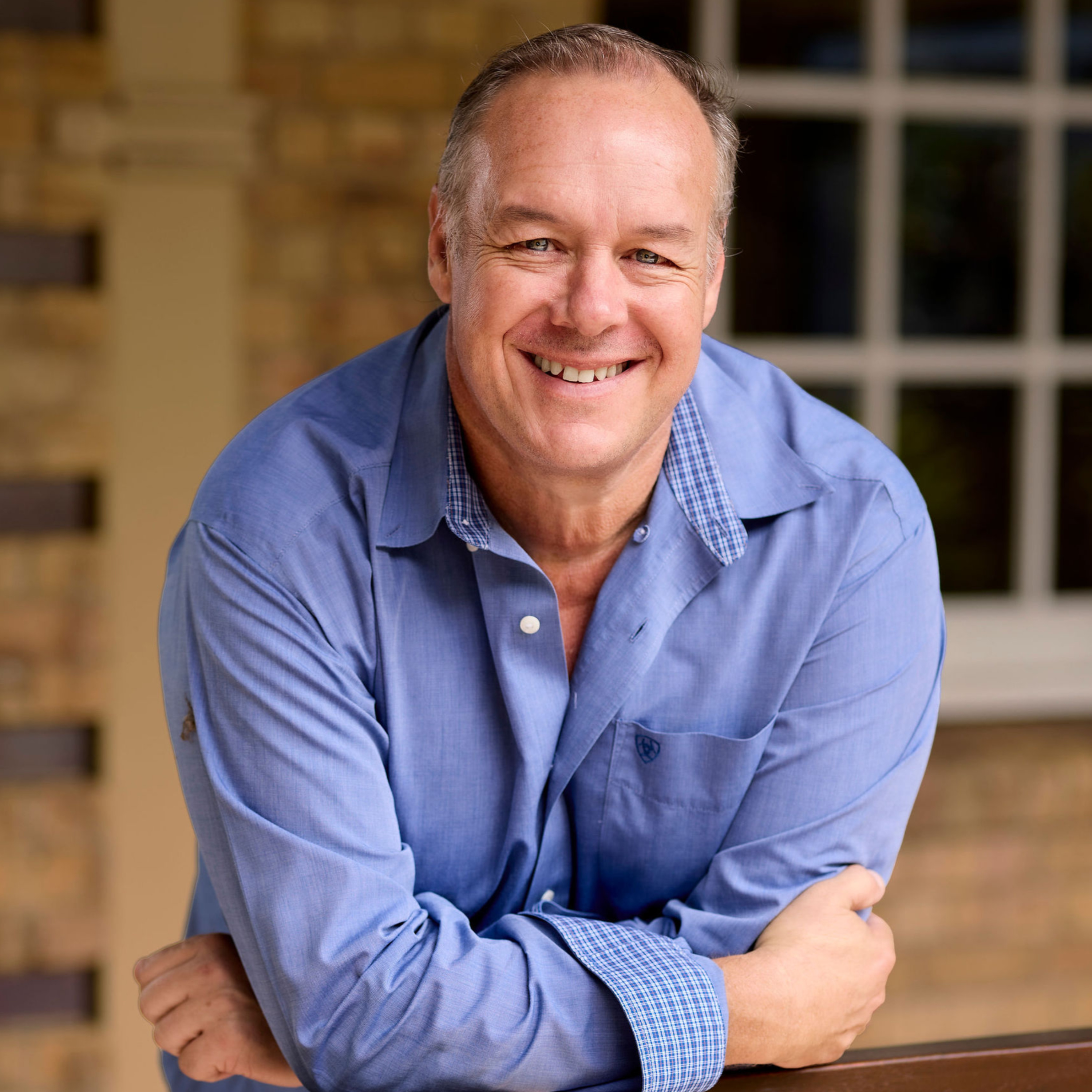
Paul McCormick, Elders Livestock Manager – Live export market (28 April)
About this episode
Elders Livestock Manager Paul McCormick talks to Ben about the state of the live export market
Get every episode summarized
Each time Rural Queensland Today with Ben Dobbin publishes, we email you a written briefing from the transcript — the topics, who appeared, and any specific claims, with the ad reads skipped.
Email me new episodesFree for 3 shows. No card needed.
Transcript ready
187 searchable segments. Every word is indexed and playable.
Full transcript
Rural Queensland Today with Ben Dobbin — Paul McCormick, Elders Livestock Manager – Live export market (28 April). Machine-transcribed; use the interactive transcript above to jump the player to any line.
Rural Queensland today, Paul McCormick from Elders, he's the livestock manager for the customer solution team for Northern Australia, joins us this morning. And every month we are throughout Rural and Regional Queensland going to try and look at the live export industry because it's such an integral part of where our listening audience is and what is going on. Paul joins us on Rural Queensland today for the first time. Good morning, mate. Thanks so much for being with us. You appreciate you giving me some time. No, you're welcome. Happy to be part of your show. Obviously, a lot going on and we can see the numbers starting to flow in every market at the present moment. And obviously it's being driven from a prime job, the sell off in New South Wales. We're seeing that in the Northern part of New South Wales and it's creeping in obviously to Southern Downs. We're seeing a lot of cattle come forward. But the season has been unbelievable in Northern Australia at the beginning of the year and the trucks are just starting to roll.
Now, it's interesting that the live export industry obviously wouldn't have been, obviously there would have been boats but it hasn't been full steam ahead. We get to these dry months now, things start to swing into it. How is firstly the demand for Australian cattle on the live trade at this present moment with what's going on around the world? The demand is good. It's solid. We've seen, you know, our number one market volume is in Indonesia, obviously. Yep. We've, it's interesting market in the way I see it is really apart from a couple of very special times of the year from cultural significance over there there. The demand is often the same. They have, you know, a couple of religious festivals that we pin our hopes to and that's Ramadan and La Barra. Sure. And the other one is, it'll, it'll, it'll, it'll fitri, a core band, it's known as over there.
But so that's, that's the pinnacle month and that's Christmas New Year, Easter all wrapped up into one month of fasting or it's an interesting study that it's, it's unusual to get your head around the fact that in a month of fasting, there's more beef eating in Indonesia than any other time of year. And particularly in the, in the break of fast in La Barra is sort of a 10 day festival period where, where beef sales do, do go through the rocket, so that's the, the pinnacle of the year. But the rest of the year, the demand is, is pretty steady, it's all, all based on the perception of supply Australia, really, how that market rises and falls. Yeah. So obviously that's why we see high prices in the wet season when we've got lower availability and, and it, and it tends to drop off in the dry, that's not an unusual concept in a supply demand type arrangement. So we're, that's where we're coming to now. So we're, we're crawling out of the wet and, and it's, you know, a lot of places we've
got a more access to, to their cattle and roads now. Yeah. So it's, it's, it's also in the head, the, the mountain is good, you know, their, their cautious about price, that's a sure, the, um, that the trucks are starting to move as well. People are in the paddocks now and, and, and, and I mean, stock camps are in full swing now. It is starting to dry out a, a little, obviously there's still, still a lot of work and repair to be done in different parts, but the, the people are getting into the paddocks now. That, that's for sure. It's on, you know, first rounds on in earnest, you know, right across the top, you know, the Kimberley Northern Territory and their North Queensland friends. So it's, um, and I think we've got to remember too that a lot of people in North West Queensland probably haven't had a check since October, you know, it started raining pretty early, um, and, and then we had, obviously those, those very significant rain events which blocked everything out. So there's a fair bit of desire to get cattle on the road from, uh, from a producer standpoint as well. Yeah. Yeah. And, and so price wise, where are we looking at and comparative to where it's been?
I know you don't want to pin it on one, but port of, port of Darwin, port of towns, or how are those prices looking? Yeah, it's, it's, look at, you know, I'm in the cheers squad for price, of course. Yeah. But, um, the, right at the moment, like last week, last two weeks are sort of the moving week, just as, as freedom of movement, I guess, came up a little bit. So it's come back from $4.30, so, uh, on a Darwin basis, two weeks ago to $4.00 pretty solidly now. Yeah. Um, with, uh, about a minus 40 cents a kilo for a heifer, so $4.00 for a fetus deer, $3.60 for a heifer, the, what's interesting is, is trying to pick the towns will rate against that. So, it's, um, an interesting dynamic, you know, for the longest time, it's been a differential of about three cents between down the towns, we'll just, just on the seafrape, uh, distance and difference. But, um, ships are no different than trucks.
So in that, uh, every producer and, and anyone that's had anything on freight any time recently would have been getting the daily emails of fuel levies and, uh, and, and loading up on those, uh, to, to deal with the current situation, well, ships are just the same. So, uh, X orders you got fuel levies and impacts, so the seafrape is the era and, and they're impacted very heavily by fuel, uh, levies as well. So that number, um, is, you know, I'm, I'm being told, it's quite sort of sort of just to show you know, over 40 cents at the moment, but is that with a very, very recent drop though of fuel? I haven't seen that calculated, so I expect that that'll change in the next week or two. Yeah. I think it'll, it'll come back and be closer to the traditional for that Brahman breeder and they underpin, obviously, you know, that live export industry. What does, is that rate enticing enough compared to, you know, other markets and, and, you
know, a southern market or a central market where people might feed lot for a longer term, rather than, you know, rather than taking them the whole way through. How is that in the market from a comparative rate? Look at solid. So it was saying the, um, you know, feed lot rates for a flatback steer, come back to sort of four 60, 70 and 80 in places, if you can get it. Yep. Um, and, uh, and, you know, with a quite a significant haircut for a Brahman steer into the feeder market at the moment, and, and, and also a lot of people, uh, entity feed lots will quote you on a Brahman steer, but they want them to be together with, uh, consignment of, uh, a flatback steer, but, but a, a straight consignment of Brahman steer is a bit harder to place than that. Sure. So it's, uh, it's live X for the wind in the Brahman world. That's for sure. Yeah. And so, and, and consider the freight difference, right? We are with a lot of the, a lot of the cattle that we're aiming at the live export market and, uh, you know, got a, you know, 30 to 40 percent taxi ride to get to, uh, to, uh,
to a feed lot destination as well. And that's so important. I mean, that you can't get any more important than that, and that, that's the way it's rolling. So how long will this, and, and is the demand now coming like, are there boats lining up the try and get, get cattle? Is it, you talk about first round master and we talk about the, the, the, they're going? Is there demand now from around the world in Indonesia, especially, uh, is that demand ready to roll and, and will there be continual boats going and loading now? Uh, absolutely. So the, it is just down to economics where, whether that activity turns to towns will or darlin, um, and availability of cattle. So it's, uh, an exporter would sit there with their calculator and say, well, if, you know, I feel confident of my supply in a town hall and I need that to be, which is the rule of thumb of 40 cents a kilo less than a darlin, then it's checking in with likes
and myself and, uh, and cohorts in the industry to see whether they think they can achieve that. Right. Sure. And, and it's just so, A is safety, B is, uh, is, is, is kind of get the vessel, uh, loaded at the, at the on budget and on time, so, but, you know, the, the, the, the, any of the anytime, you know, we just kept getting those showers and, you know, inch and half inch of rainfall that was coming through. So up until really only a week or 10 days ago, there was quite a bit of risk in sending a vessel around here to towns, because you were actually at risk of getting, uh, getting , uh, rained out. So the, um, it's, uh, but you can absolutely come here with, uh, with safety now, uh, confidence. Yeah. A few little systems, uh, uh, uh, brewing up, uh, nothing is giving us what we have at no, no, sort of, um, destiny changing rain, uh, and, uh, on the horizon at the moment. Unreal. Hey, I really appreciate your time, Paul, um, from elders, um, you based out of towns,
but, you know, northern Australia better than anybody in, you know, everybody, but appreciate what's the best people, people who are interested and would like a quote, um, just on your mobile. But the best, the best way to go that does yet, uh, or my email, Paul dot McCormick at Elders dot Trump. Are you? Yeah. Perfect. Um, we'll, we'll take a break. We appreciate your time and, and, and that is a good rate and good news because obviously, we're seeing different areas, um, you know, people pushing cattle away at the moment and not overly, the appetite isn't there, but in the live exporter, it's obviously strong and, and it's all coming down to economics. It's not being, uh, in any way, um, saying no, but it's just looking at every outcome and obviously fuel is one of the big factors. Paul, thank you so much for being with us, mate. Really appreciate your time this morning. You're welcome. Just, just as a footnote, um, just, you know, uh, I guess emphasize the strength of the industry. The LQ8 is the largest vessel loaded out of Darwin last week, there's 17,000 head on that ship. Um, so the appetite is good.
Uh, the supply is now a, a, a more available with more confidence. I, I think we should appreciate your time. And that's great news to hear. Thanks so much for being with us this morning. You're welcome. Good on you, Paul McCormack Elders, uh, this is rural Queensland today. You're with Ben Dobin. It's the 28th of April. I choose name morning across rural Queensland.
More episodes
More from Rural Queensland Today with Ben Dobbin

Sen Susan McDonald (2) – Taroom Trough, self-sufficiency
Rural Queensland Today with Ben Dobbin
Sen Susan McDonald (1) – Ongoing fuel crisis, Budget speculation
Rural Queensland Today with Ben Dobbin
Dobbo Chats - News (1 May)
Rural Queensland Today with Ben Dobbin
Matt Beard, RBV Rural – Sales reports (1 May)
Rural Queensland Today with Ben Dobbin