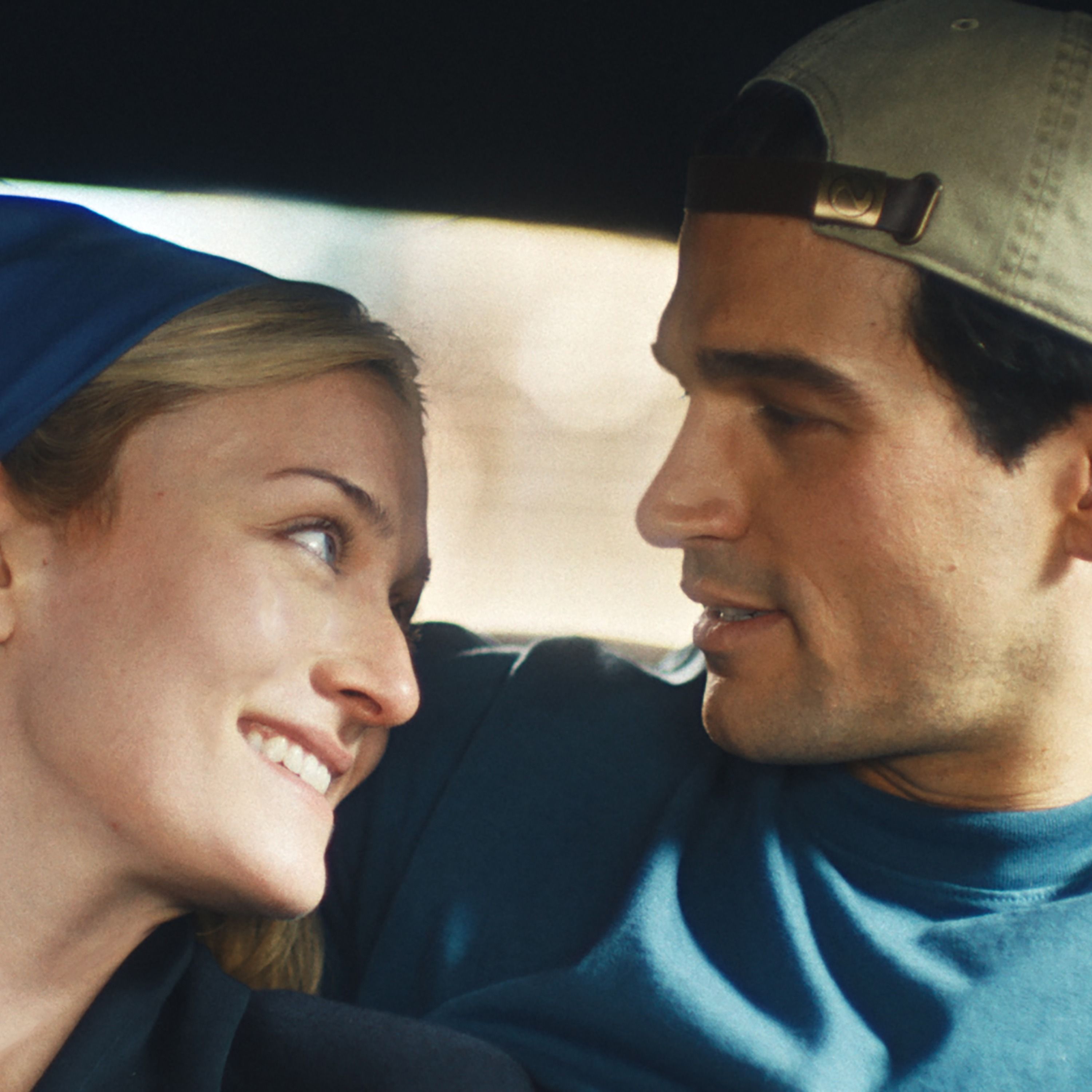
About this episode
“Love Story,” the FX limited series about John F. Kennedy Jr. and Carolyn Bessette’s relationship, has taken audiences by storm. Its unstoppable wave of ’90s nostalgia has swept through the world of fashion, revitalized iconic New York landmarks and set off a yearning for simpler days before smartphones and dating apps. The series has also drawn significant backlash, with criticism ranging from bad reviews to accusations of inaccuracy and even harm.
Today, Rachel Abrams talks to Alexandra Jacobs, a critic for The New York Times Book Review, about why America can’t seem to look away from “Love Story.”
On Today’s Episode:
Alexandra Jacobs, a critic for The New York Times Book Review and occasional features writer.
Background Reading:
The Lasting Appeal of John F. Kennedy Jr.
Daryl Hannah: How Can ‘Love Story’ Get Away With This?
Subscribe today at nytimes.com/podcasts or on Apple Podcasts and Spotify. You can also subscribe via your favorite podcast app here https://www.nytimes.com/activate-access/audio?source=podcatcher. For more podcasts and narrated articles, download The New York Times app at nytimes.com/app.
Hosted by Simplecast, an AdsWizz company. See pcm.adswizz.com for information about our collection and use of personal data for advertising.
Get every episode summarized
Each time The Daily publishes, we email you a written briefing from the transcript — the topics, who appeared, and any specific claims, with the ad reads skipped.
Email me new episodesFree for 3 shows. No card needed.
Hosts & guests

Transcript ready
403 searchable segments. Every word is indexed and playable.
Full transcript
The Daily — Our Enduring Fascination With the Kennedys. Machine-transcribed; use the interactive transcript above to jump the player to any line.
Say hello to the all-new Alexa Plus, our smartest, most proactive AI assistant yet. Chat naturally about anything, and watch her to do list disappear. Planning date night? One conversation handles everything from dinner reservations to entertainment. Alexa Plus learns your style, anticipates what's next, and puts thousands of services at your fingertips. Experience AI that's all yours. And now Alexa Plus is free with prime on your Amazon devices, like Echo and Fire TV. Amazon.com slash Alexa Plus. From the New York Times, I'm Rachel Abrams, and this is the daily on Sunday. Here in Manhattan, downtown, in the East Village, there's a tiny Indian restaurant called Panna 2. It's a bit of a hole in the wall, but like any restaurant that survives, it has its charms. For Panna 2, one of those charms is that it is filled with Christmas lights.
Absolutely covered, like imagine the most Christmas lights you could fit into a restaurant and then double or triple that. That's how many lights are in Panna 2. Panna 2 has been a novelty for New Yorkers for decades. We lived in the area for like a couple of years, but we've never been in here. But lately, it's been drawing a different kind of crowd. I was asking my mom where should we go for dinner, and she was like, you should try the place that was in love story. Love story. The fictionalized retelling of the relationship between John F. Kennedy Jr. son of a president, one of the most famous New Yorkers of the 1990s. And Carolyn Beset, the Calvin Klein publicist, whose relationship with JFK Jr. vaulted her into what the show portrays as an unwelcome spotlight. In the series, JFK Jr. takes her to the unpretentious and empty Panna 2 on their first date. This regard, too, dates back? Yeah, on the sucker for a laminated menu.
The show, which ended this week, has been ascending into a real cultural moment. Even if you haven't heard of Love Story, you might still be aware of it, or at least know about the kind of phenomenon it's become. It's like a huge thing on TikTok, like all my friends. It's where people are texting about, posting about, criticizing, loving. It's impacting fashion, it's impacting people's memories, a lot of people's parents. And suddenly, and this is according to Hulu, it is the most streamed limited series in its history. And the cravings are the most interesting to royalty we've ever had in America. So I think this is very impactful in the... It's got its own center of gravity, so much so that a single scene, in a single episode, could bring a fresh wave of business to a small Indian restaurant in Manhattan. We've motivated us to finally go. I don't even care the food, it's not that great. Like, I just want to go for the vibes. So today, we're going to explore why the show has become so popular right now. My colleague, Alexandra Jacobs, who writes about culture here at the Times,
will join me to talk about nostalgia, the Kennedys, and the eternal allure of Cinderella stories. It's Sunday, March 29th. Alexandra Jacobs, welcome to the daily. I see that you are wearing a leopard coat, and big sunglasses, and very simple minimal jewelry. Did you dress, perhaps, for our conversation today? Uh, not consciously, but I have found that the aesthetic of Carolyn Bessette Kennedy has snuck into all of our war droves. I think that is exactly right, speaking from personal experience. We're going to talk about that. We're going to talk about a lot of things today. But firstly, Alexandra, you have spent a lot of time thinking and writing about America's fascination with the Kennedys. You wrote a piece last summer, long before love story started airing, about the continued cultural fascination with JFK Jr. specifically. What prompted you to write that piece? Well, the occasion for the piece was that CNN was doing a documentary about JFK Jr.
And my reporting for the piece suggested that this documentary was going to happen anyway. It wasn't just because Ryan Murphy was coming out with a show that CNN had done this documentary. However, I felt the timing was a little bit close. Like something about this guy is in the air right now. You know, the Kennedys have never left the political conversation, but with JFK Jr. in the mix, Jack Schlossberg on social media, there was just a sort of swirl, swirl of interest around the family and around this couple. So speaking of the show, for people who are listening to this but have not yet seen it, no spoilers, but tell us what it's about. The show is a pretty simple idea. It traces the romance between John F. Kennedy Jr. who was at the time the country's most eligible bachelor. I know like five people here. Well, you wouldn't know that from the way you're in staring at you.
And Carolyn Bissett Kennedy, who was an unknown basically, you know, she worked at Calvin Klein. I don't want to get her up, though. Please, I'm not about begging for all of my closest friends. You know where I work. Chair reception. And they are living and falling in love in the 90s, which was really a prosperous, slightly frivolous time when glamour industries, such as magazine publishing and fashion, were very much centered in the office and the street. How was that? They ended up at the tunnel rolling around in the ball pit with Mickey Rook. Like, hooking up. I don't know. I don't remember, but the sun was coming up when I left, so now I'm just bracing for impact. It's based on a popular book called Once Upon a Time by Elizabeth Beller, which is a biography of Carolyn Bissett Kennedy. And, you know, that title, it just evokes the fairytale nature of the romance and sort of puts her in a category with another tragic figure, Princess Diana.
It's sort of this idea of American royalty, an American princess who died before her time. The idea, at least, is a normal woman plucked from security who ends up in this royal family, and it ultimately, at least in the show's telling, is her undoing. Is her undoing, exactly. So I promise you, our personal lives will be off limits for the problem. Yeah, you can't promise that, though. You've never been married before. You have no idea how this will escalate. Everything. I know how to handle the press. Any show that breaks through these days when our attention is so divided, there's so much competing for it feels really noteworthy. Do we know how many people are actually watching Love Story? Hulu is saying this is the most streamed limited series they've ever had. I think 40 million viewing hours. Not only is it streamed, people are interacting with it in real time. They are making their own content on Instagram and other online platforms.
You can see on retail websites that demand is up for vintage Calvin Klein, vintage Prada, CEO Bigelow, the famous apothecary in Manhattan's West Village, has been stormed by women and probably some men seeking tortoiseshell headbands, such as Carol and Bissett War. There have been JFK Jr. Lookalike contests in multiple cities. You know, it's not just a show, it's a phenomenon. You mentioned Calvin Klein. I saw that they had even done their own like 90s edit. They and others are really capitalizing on this moment to sell Carol and Bissett inspired fashion. Everybody is trying to sell me like, here are the pieces that you could wear. Yes, you can look like her. It's quite extraordinary. It's the best thing that happened to Calvin Klein since Brook Shields in the jeans. In the jeans. The famous jeans. Yes, that's right. That's right, which also makes a cameo on the show. That's right. Speaking of the show, this is a series that is executive produced by Ryan Murphy. Tell us about the kinds of shows he is known for and where this fits into those.
Ryan Murphy is one of the most successful producers in Hollywood. I go back to Nip Tuck and Glee. Glee, by the way, another big cultural phenomenon. Yes, that's right. However, in recent years, he's become known for these types of things like American crime story about the OJ Simpson case and the Clinton impeachment and monster, which spotlighted Jeffrey Dahmer. Love story, it's not true crime, but it has an element of kind of from the headlines, true story TV drama. Yeah, and the Kennedy's might say it's a crime. But right, it has that feeling of like, we're going to re-enact something you remember. I mean, that's what I think is extraordinary about it. It's not that far away. I see you got a new bike. I did, yeah. I reported the last one stolen, but I think the case has gone cold. And yet still no luck. Well, you know, baby steps. Maybe we start with the helmet and
work our way up from there. Over this set of hair? Well, thanks a lot. Obviously, the public has devoured the show. Can you just talk a little bit about how it's been received critically? Well, the reviews haven't been as positive as the audience reception. I think that the New Yorker called it a forgettable LG for Gen X. I think that that look Ryan Murphy shows are cartoonish. It's a court, it's a cartoonish portrayal of something that lives in collective memory. I think for anyone who lived through that time of the media or even just used it for research, it's going to not be entirely satisfying. And just to explain why perhaps they found it cartoonish. A lot of people have pointed to something that I personally found sort of hard to watch, which was the depiction of Jacqueline Onassis. There's a scene where she's dancing to, what is she dancing to? She's dancing to the song from the musical Camelot. Each evening from December
to December. She's dying of lymphoma and the official portrait of Jack Kennedy is hanging somehow in her living room on Fifth Avenue and she is dancing. I kept thinking of, you know, Black Swan. I don't know, or it's, you know, a dying Swan on a, yeah, it was crazy. It was cringe. There was a fleeting whist of glory called Camelot. So now that we have both established that we found that scene of her dancing, both cringey and campy, this feels like a good moment to ask you. Overall, did you like the series? I hated it and I watched it. I watched it for the same reason. I watched not only Dynasty when it first came out in the 80s, but I watched the remake of Dynasty, you know, even though I found it for inferior. I mean, there's certainly something escapist about watching
depictions of rich people, you know. I was intrigued to see how these real life characters were portrayed and some of them are portrayed very well. But I think also it's that kind of thing where I'm as, I'm as fascinated with the discourse around the show as I am with the show itself. Well, then let us discourse. We're going to take a quick break and when we come back, we are going to take a deep dive into some of the reasons that the show is as big of a hit as it is. We might be in a new era of it, it's so bad, it's bingeable. Right. Say hello to Alexa Plus and see how the experience is tailored to you. Alexa Plus learns your preferences to serve you better. Planning a vacation, ask Alexa to recommend a trip to check off your bucket list. Use Alexa Plus to find the name of that song you love, discover new favorite shows or recipes and do so much more. Ask Alexa Plus anything.
And now Alexa Plus is free with pride on your Amazon devices like Echo and Fire TV. Get started at amazon.com slash Alexa Plus. My name is Audra Diaz Birch and I am a national correspondent covering race and identity for the New York Times. Race coverage is complicated. It can be joyous and affirming. It can be uncomfortable, but I feel like it's still absolutely necessary. Race and identity are not just understanding who you are but who the person in front of you is and wanting to understand more about them. We're trying to wrestle down these really hard subjects and maybe not answering the question but asking the right questions and listening, listening. Listening a lot. The Times is dedicated to ambitious and deeply reported coverage of race and identity and they're willing to back it up with resources. If you are curious about the world in which we live, if you're interested in who you are, where you come from and how you relate to
others, I would encourage you to subscribe to the New York Times. Alexandra Jacobs, why do you think the show has been so popular? Well one thing is it's a classic Cinderella story and those always resonate. Typically our clients make appointments. I'm a 33-waste, I know that. Carolyn Bassett was not sweeping out the Garrett. She was not from a poor family but she wasn't a Kennedy or a celebrity. She's not famous. Yeah, she was not famous. How can I make it up to you? Bass wiping your credit card. Or you give up my ticket at dinner? And when he chose her, the question was, well why her? Why not? Why not me? That's why everyone in America was probably like, why not me? Yeah, yeah. I think the feeling was if he could choose her, then someone like him could choose me. What did she do to get a guy like him so entranced with her?
It's also, by the way, the Cinderella story is in some ways why I think perhaps people in the UK are really interested in the story of Prince William and Kate Middleton, right? Or perhaps go back farther to the now King Charles, the then Prince Charles and Princess Diana, which also of course ended very tragically. I think that's even more of a parallel. And like Princess Diana, people are still really interested in the Kennedy story, including people who are too young to remember any of the people that we are talking about in the show. I wonder why you think the public fascination with the Kennedys has endured? Well, I think that's partly because of the continued participation of the Kennedys in public life. They carry themselves as standard bearers for certain American values. They seem to embody a time of America rightly or wrongly that where there was sort of a sense of promise and expansion and dream, American dream. I think they,
for years, they embodied a realization of the American dream, which is that you could come from an ethnic group that was frowned upon. Marginalized? Yeah, marginalized exactly and achieved the highest office of the land and sort of like the ultimate glamour and success, business success, romantic success. Well, yes, also having tragic elements that give it that Shakespearean quality. I can't help but sometimes wonder how I'd be remember if I hadn't, if I wasn't. What? America's widow. Right, the family's tragedies have very much become part of their public story. Well, also don't forget though, they were running in parallel with the development of the media, of which this show is only the latest iteration. So you have, you know, Joe Kennedys exploits were covered in newspapers and Jacqueline Bouvier met John Kennedys when she was a photographer.
And then when he's shot, when John Kennedys is shot, there's the Zapruder film and it's covered on television. Then you get to this generation we're talking about and you have print magazines and tablaid television and tablaid newspapers and now you've got the internet. So you know, the Kennedys of today are creatures of the internet and of social media like RFK, Jr. Jack Schlossberg. When we're watching the Ryan Murphy show, we are looking at a couple that was very much a creature of, they were creatures of glossy magazines. Okay, so that's the Kennedys. I want to turn to Carolyn Bassett. There's a lot of big stuff we have to talk about before we can get married. I think how our lives really fit together. You know, something I found really interesting as I was doing some research for this episode
is just how little there is out there about Carolyn Bassett. She was photographed a lot, but she very rarely gave interviews. In fact, I think she quite famously declined a couple of major interviews. And I wonder how you think that vacuum of information about the real life Carolyn Bassett contributed to her portrayal on the show. I think it gave the show's creators a feeling of license to create a character. And this character is elusive, ambivalent, private, disambitious already. She doesn't like the spotlight either. She does like the spotlight on the show. What a novelty. It's so rare to find everyone's oversharing now. You have to conscientiously object to not give of yourself online and photograph yourself, be photographed. So what exists of her is really not very much. And in the absence of that, I guess people have
to get to project their own images onto her. I mean, she seems glamorous. And what is glamour? You know, it's mysterious. She seems glamorous and mysterious and unknowable. Why aren't you going to go get it? No, just let it ring. Her character reminds me of an embodiment of this book that came out in the 90s that was called The Rules. Oh, you are unreal. Screening him. What did you read that in The Rules or something? It's just feeling a little intense. Yeah, as it should be. It was a huge bestseller. We all made fun of it. That book was sort of a dating guide for women that was instructing them to let men chase them, which in the 90s was a very retrograde concept. It seems to be, you know, coming back again. But there was a phrase in that book, be a creature like no other. And I think that Carolyn Bassett seems to have embodied the idea of being a creature like no other weather. I have no idea if she ever read The Rules or
this was just who she was. I think it probably was just who she was. But she seems very self assured. And, you know, John Kennedy, Jr. was besieged not only, I mean, he had women throwing themselves at him all the time. Well, you know, what we know about her. And, and as depicted on the show, she did not seem particularly wowed by him. No, you had to deny the engagement because you couldn't handle the world knowing there was a woman on planet earth who might not want to marry you. There's a little bit of escape hatch now, huh? Right. So the fact that we know relatively little about her might have given the show's creators this feeling of license to kind of fill on the gaps in the way that was the most dramatic would make the most entertainment would make it the most watchable. And the character that they created is glamorous and mysterious. And most importantly, perhaps seemingly immune and maybe even put off by JFK Jr.'s fame and spotlight. She's basically
portrayed in opposition to all the other women in the universe of this show as being the only woman perhaps who's able to resist the sexiest man alive, which almost certainly flattens the real world experience of these two people. But nevertheless, makes for extremely watchable television. Right. Okay, let's talk about another major element of the show here. And this has been talked about a lot which is the style and fashion of the 90s. And specifically also, Carolyn besets style and fashion. Hey, what is that that you're wearing? It's really kind of terrific. Oh, I just threw it on this morning. It feels like, as I mentioned, every clothing retailer, everything on Instagram is trying to sell me some version of her style. How would you describe the way that she dresses in the series? Carolyn besets style. I think of it as a sort of very high-end version of, frankly, the gap, which I don't mean as an insult. I mean, Carolyn beset Kennedy was wearing really sort of basic minimalist items, which was really kind of a palette cleanser after
the Rococo fancy over the top style of the 80s that it was perhaps embodied more by the trumps. This was like a kind of room. And the labels she preferred like Prada or Yoji Yamamoto, these were very kind of stark lines and classic silhouettes. But I think part of the appeal is that, they're refreshing to the eye. But can I just say, though, that like, I feel like Carolyn besets style on this show is a Rorschach test because either you look at her and you think as you do this, this looks like the gap. It's just like simple jeans, long sleeve white shirts, suede skirts with knee-high boots and a black top. Like, what is so special about this? Or your reaction is, this is the sheikest thing I've ever seen. All I want is a bias cut slip dress that's black and like simple heels, no jewelry on she was famously never wore any jewelry. Apparently, that's a resurgence not wearing jewelry. So like, the show has created these two poles. I've seen you guys saying, what is so special about this is the gap and how can we all
dress like her? That's right. And I really do think there's for younger people, there's probably some level of exhaustion with how much you are all marketed to and how much trends change now. So to see these sort of clean, simple lines must be very appealing. The other sort of visual element of this show that I think is appealing to people is just the portrayal of the 90s. Ah, the 90s in New York City. I never expected to see this era romanticized in the way that it has been. I think that there is tremendous nostalgia for a time before iPhones, certainly a time before 9-11, a time when creative people could afford to live in Manhattan, perhaps with roommates, but still knock out a living there. A time when creative industries were unthreatened by artificial intelligence. And writing for magazines or working for a fashion designer seemed like a viable career path.
You had a phone on your desk. You might have had a cell phone, but it didn't contain, you weren't ordering your lunch, you know, you weren't like ordering your lunch from an app. You were maybe wandering down the street. You were anonymous. You were anonymous. And you were not documented. Not every single moment of your life was under the microscope. There were no location services. Not that I was aware of anyway. So you think people are looking at this and feeling either nostalgic for it or pining for it if they never got to experience it? Honestly, it's someone who lived through it. I'm not nostalgic for it, but I think there's a great curiosity about it. But you can understand why actually you're bringing up a good point, because if you didn't live through it, it's this idealized version of the 90s that maybe you're fascinated by. It's the same way I was nostalgic for the 70s and the 90s. I looked at those 70s fashions, which by the way, the 90s recycled. I mean, every 20 years, it all gets recycled. And yeah, I mean, I just think young people can't digital natives can't imagine
a time when their phones didn't dictate every aspect of their life. So I feel like the appeal of love story in terms of the the era that it portrays and how it could appeal to an entirely new generation is so similar to Sex and the City. Sex and the City, the City was a character, the fashion was a character. And even if you didn't live through that time, you look at that. And I think that brought an entire generation of women to New York City. I'm sure. And you know, and there's also analogy and you see these places like Sex and the City had magnolia bakery. And just like they're going to panic too, they're less or see a big low or whatever to get her headband. You went a little rogue with the order, but it was pleasantly surprised. Well, I went back packing through India after I graduated and I learned very quickly that ordering chicken tikka masala as a surefire way to get made fun of you bab. I mean, I think people want to revisit the rhythms of dating life before apps before the, you know, tender and hinge and all that and grinder and
bumble and all those things. Yeah, they keep going because the fact is, you know, I mean dating has always been difficult, but it's funny. Yeah, to my surprise or to my, I inevitably that this is now seems like something romantic and exotic and interesting. And well, no, I feel like this is you've kind of summed up why the show has become so popular. It's got some really key ingredients. It is a, it is a Cinderella story set in an idealized 90s New York that everybody wants to be in. And it involves America's royal family. Like, like, it has a perfect. It's a perfect. It is a perfect it is a perfect world building show that people are fascinated by and want to be in. And on top of that, I think one other thing that is driving people to this show is the controversy around it. And when we come back, we're going to talk about the backlash and the controversy to love story and whether ultimately it has been good or bad for the show. We'll be right back. Say hello to Alexa Plus and see how the experience is tailored to you. Alexa Plus learns your
preferences to serve you better. Planning a vacation, ask Alexa to recommend a trip to check off your bucket list. Use Alexa Plus to find the name of that song you love, discover new favorite shows or recipes and do so much more. Ask Alexa Plus anything. And now Alexa Plus is free with prime on your Amazon devices, like Echo and Fire TV. Get started at amazon.com slash Alexa Plus. I gave my brother a New York Times subscription. We change articles and so having read the same article, we can discuss it. Sheeps and New York's subscription so I have access to all the games. The New York Times contributes to our quality time together. It enriches our relationship. It was such a cool and thoughtful gift. We're reading the same stuff. We're making the same food. We're on the same page. Learn more about giving a New York Times subscription as a gift at nytimes.com slash gift. Alexandra, we have talked a lot so far about the appeal of the show, the reception of the show. We have not yet talked about the criticism, not the reviews,
but the actual criticism and controversy of the show, specifically that it has faced some very withering criticism from two people in particular. Jack Schlossberg, JFK Jr.'s nephew, and Daryl Hanna, the actress that JFK Jr. was in and off again on again relationship with in real life. One of the central complaints that they both had was essentially that the show took a lot of liberties that were not necessarily based on real life. Right. Well, Jack Schlossberg, who's running for Congress, is making the point that Ryan Murphy is making a tremendous amount of money off his family and this portrayal of his family without actually talking to them or getting any kind of authorization or participation. The guy knows nothing about what he's talking about, and he's making a ton of money on a grotesque display of someone else's life. I would, I would hope. Ryan Murphy actually responded to this criticism when he was on Gavin Newsom's
podcast. He was, he was asked about Schlossberg's critique and he said he was, quote, I thought it was an odd choice to be mad about your, your relative that you really don't remember. Which, you know, is that for him to say that, you know, it seems like it would have been so easy for him to say, I don't know, literally anything else. Like, I'm sorry, he feels that way or we tried to respect the legacy of the Kennedy family, but the fact that he was like, well, he didn't know him anyway. I don't know why he feels like that. Like, what, what do we make of that? Well, what else do you expect from a producer who had a whole show called Feud? I think it's quite audacious. It shows his irreverence. It's a light way of putting it. Yeah, I mean, it grotesquely disrespectful. I think Ryan Murphy is starting from out of a different gate. He's just not even engaging on the same level. He's saying something that will stir up
intentionally or not. He's saying something that will stir up the dialogue. And even though I side with Jack Schlossberg on this, I'm also team Murphy in the sense that I believe he has, you know, he should have the freedom to do this, which might bring us to Darryl Hannah's opinion. Yes, the other major public criticism of the show came from the actress Darryl Hannah, who dated JFK Jr. Before he met Carolyn Beset, they were on again, off again in real life, they were on again, off again on the show. She is portrayed on the show as clingy and desperate and whiny and above all rejected. He doesn't want her. Why did you want to get back together again if you're just going to act like this? You came back to me on the condition of a clean slate, which you agreed to. And yet every time I look at you, your mind is clearly someplace else. The real Darryl Hannah wrote an op-ed in The New York Times titled How Can Love Story Get Away With This. And she says in this piece, quote, The character Darryl Hannah portrayed in the series is not even a remotely accurate representation
of my life, my conduct, or my relationship with John. The actions and behaviors attributed to me are untrue. And she goes on to say, quote, in the weeks since the series aired, I have received many hostile and even threatening messages from viewers who seem to believe the portrayal is factual. When entertainment borrows a real person's name, it can permanently impact her reputation. Alexandra, what do you make of that critique? I mean, I think it's a valid critique. Legally, Ryan Murphy is absolutely fine. Creators, producers, directors, writers have tremendous latitude with public figures. But so she wrote an article about it. This is one of the most popular articles, I think, on The New York Times site for a couple of days. And the comments reflect readers agree. Many readers say we're refusing to watch. I can't account for the many, many, many others who are gobbling up the performance. Some people think this is the price you pay for being famous.
But also, I mean, if I was Darryl Hannah and nobody can get inside of a relationship, who knows how she actually was. But nonetheless, I mean, I can understand being really upset by having a such a negative, unflattering portrayal of me out there that some people might think was true. But that's what entertainment does. It takes real stories and warps them all the time. This is not necessarily a new complaint. And I just don't know, well, I can understand why she'd be upset about this. I can't figure out where do we think the ethical boundaries are when it comes from taking true stories and fictionalizing them? You know, I have this old boss, this editor of The New York Observer. He'd say, if you run into a celebrity on the street, just interview them, interview them. Just go right up to them. He said, yeah, he said, they chose this life. Well, I'll never forget him saying that. And, you know, he wasn't wrong. I mean, I get his point. But, you know, but okay, but in Darryl Hannah's case, if she had been interviewed, if she had been consulted, I mean, I think that's right, where
it would have been calculated. Exactly. If Ryan Murphy and his staff had been able to get the buy-in of, now, I think on the other hand, they're portraying a whole family. So, I think buy-in would have been difficult because we, as we know, their disagreements within the family. And that's part of what he's portraying. So, I think to get buy-in would have been very complicated. But what he does have going back to the idea that we're sitting here and talking about this is attention from all of this and attention. Have you ever heard of the Streisand effect? Yes, reiterate for me what it is. Okay, so the Streisand effect, so Barbara Streisand once sued a photographer for taking a photo of her house in Malibu. And what do you guess the result of this lawsuit? Everybody knows the house. Everybody knows more people probably want to go to the house to see the famous Barbara Streisand lawsuit house. And I would get, and I have no data. I'm about to say something that I have absolutely zero data for. But I'm going to guess that the number of people who have refused to watch the show because they side with Jack Schlossberg or
Darrell Hannah is less than the number of people who are watching it because they want to be in the conversation and know what all the fuss is about. I mean, listen, if you are using publicity and the press in any way in your career, in your life, that changes the equation a little bit, right? Like if you want the press when it's time to get your side of the story out there or your pictures out there or whatever, but then you don't like it if other creative entities, you know, you want to make the rules for every portrayal of yourself, that's challenging. So the same fame that makes her vulnerable to what Ryan Murphy has done is the fame that enables her to place a highly red op-ed piece in the New York Times about what's happened. You have to factor that into the math about how to feel about the situation. It's interesting because in some ways, the op-ed, like the show, asks the audience to make a choice. And the choice is how much sympathy do
you have, how much empathy do you have for somebody real or not, born into it or not, that has that kind of fame and privilege. Exactly. Alexander Jacobs always a pleasure to talk to you. Rachel, I'm always available, all too available. I'm not a rules girl when it comes to coming on the daily. Today's episode was produced by Alex Barron with help from Luke Vanderplug and Tina Antillini. It was edited by Wendy Dorr with help from Michael Benoit. Contains music by Mary and Luzano, Dan Powell, Diane Wong, and Alicia B. YouTube. It was engineered by Rowan Nemisto. Our production manager is for any cartoth. That's it for the daily. I'm Rachel Abrams. See you tomorrow.
Say hello to the all-new Alexa Plus and see how Alexa can do so much more for you. Need last minute concert tickets? Craving your favorite restaurant? Just sit back, relax, and talk naturally. Alexa's on it. Alexa remembers what you love, anticipates what you need, and makes it all happen. Alexa Plus brings thousands of possibilities to life. Ready, whenever inspiration strikes. And now Alexa Plus is free with prime on your Amazon devices, like Echo and Fire TV. Amazon.com slash Alexa Plus.
More episodes
More from The Daily

Trump’s War on Mail-In Voting
The Daily

‘Buy Now, Pay Later’: A New Wave of Consumer Debt
The Daily

Classical Music Is in Crisis. Gustavo Dudamel Is Here to Save It.
The Daily

The Intertwined Legacies of Gloria Steinem and Dolly Parton
The Daily