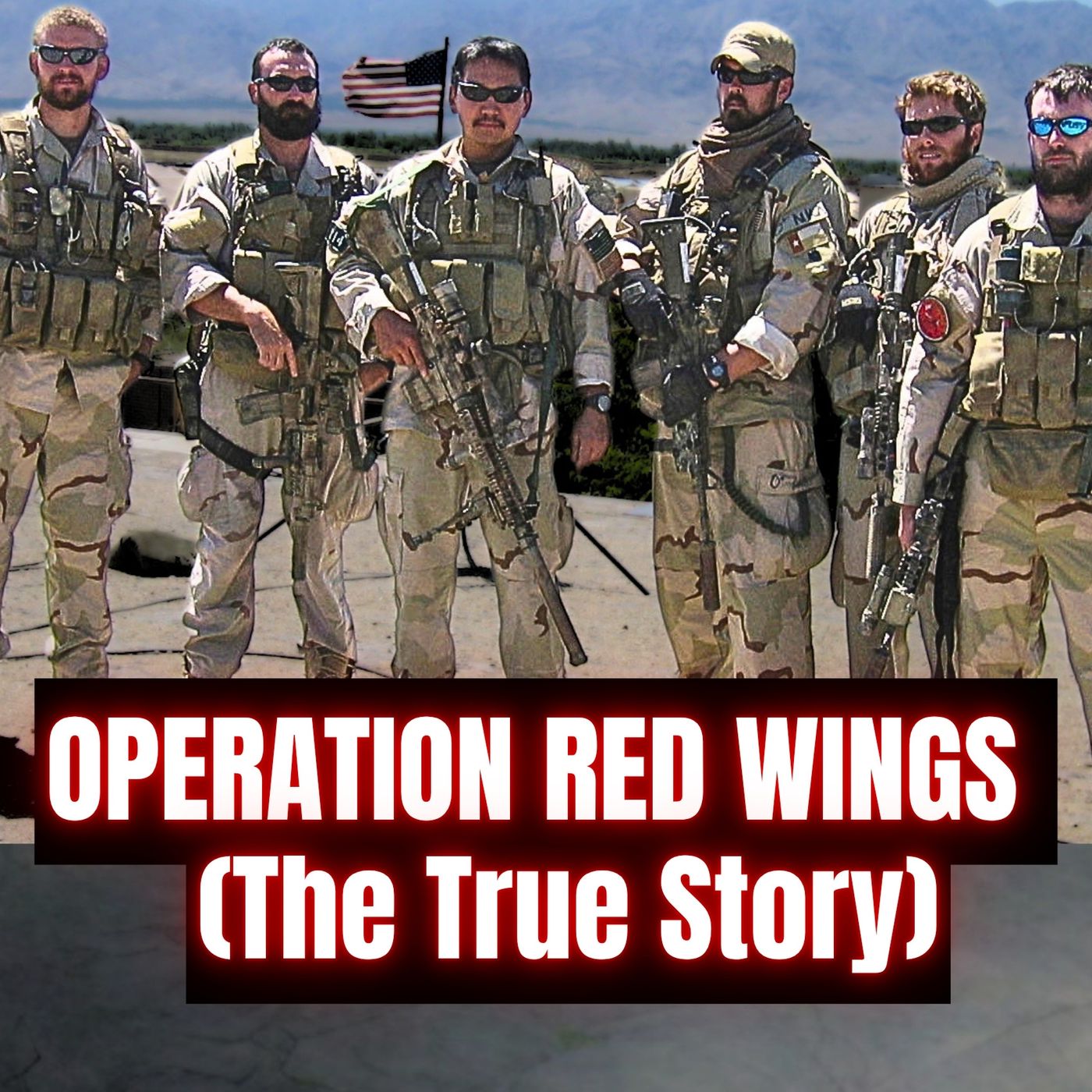
Operation Red Wings: What Actually Happened | Ed Darack & Ross Schneiderman | Ep. 404
About this episode
Ed's website
http://opredwings.com/
Politico article
https://www.politico.com/news/magazine/2026/03/20/operation-red-wings-lone-survivor-luttrell-00833548
Today's Sponsors:
GhostBed⬇️
https://www.ghostbed.com/house
FOR 10% off!
Blue Chew ⬇️
https://bluechew.com/
Get 1 month free when you buy 2 of BlueChew Gold with code "HOUSECALL"
Wild Alaskan Company⬇️
https://wildalaskan.com/HOUSE
Get $35 off your first order!
Good Ranchers ⬇️
https://www.goodranchers.com/
Get $25 off your first order with the code "HOUSE"
-------------------------------------------------------------------------------------------------------
For ad free video and audio and access to live streams and Eyes On Geopolitics...JOIN OUR PATREON!
https://www.patreon.com/c/TheTeamHouse
To help support the show and for all bonus content including:
-live shows and asking guest questions
-ad free audio and video
-early access to shows
-Access to ALL bonus segments with our guests
Subscribe to our Patreon! ⬇️
https://www.patreon.com/TheTeamHouse
Support the show here:⬇️
https://www.patreon.com/TheTeamHouse
___________________________________________________
PRE ORDER JACK'S NEW BOOK "THE MOST DANGEROUS MAN"
⬇️⬇️⬇️⬇️⬇️
https://www.penguinrandomhouse.com/books/803651/the-most-dangerous-man-by-jack-murphy/paperback/
Subscribe to the new EYES ON podcast here:⬇️
https://www.youtube.com/@EyesOnGeopoliticsPod/featured
__________________________________
Jack Murphy's new book "We Defy: The Lost Chapters of Special Forces History" ⬇️
https://www.amazon.com/We-Defy-Chapters-Special-History-ebook/dp/B0DCGC1N1N/
——————————————————————
Or make a one time donation at: ⬇️
https://ko-fi.com/theteamhouse
Social Media: ⬇️
The Team House Instagram:
https://instagram.com/the.team.house?utm_medium=copy_link
The Team House Twitter:
https://twitter.com/TheTeamHousePod
Jack’s Instagram:
https://instagram.com/jackmcmurph?utm_medium=copy_link
Jack’s Twitter:
https://twitter.com/jackmurphyrgr?s=21
Dave’s Twitter:
https://twitter.com/dave_parke?s=21
Team House Discord: ⬇️
https://discord.gg/wHFHYM6
SubReddit: ⬇️
https://www.reddit.com/r/TheTeamHouse/
Jack Murphy's memoir "Murphy's Law" can be found here:⬇️
https://www.amazon.com/Murphys-Law-Journey-Investigative-Journalist/dp/1501191241
The Team Room Reading Room (Amazon Affiliate links):⬇️
https://jackmurphywrites.com/the-team-room-reading-room/
Intro music by https://www.youtube.com/user/RemixSample
"Karl Casey @ White Bat Audio"
00:00 — Start
02:00 — How Ross & Ed teamed up and started re-reporting Red Wings
06:00 — The “Red Wings misinformation” problem and evolving narratives
08:00 — Memory vs reality: how the movie shaped what people think happened
10:00 — SEAL community silence, moral injury, and buried truth
14:30 — What was “held inside”: doubts about Lone Survivor’s accuracy
18:00 — The Lone Survivor book: White House involvement & narrative shaping
22:00 — Hollywood vs reality: how myths about the war were created
25:00 — Mission planning failures: Marines vs SEALs concept of the operation
30:00 — Why the plan changed: ISR limits, frustration, and the 4-man team decision
34:00 — Command & control problems and lack of joint integration
38:00 — No real QRF: confusion between units, aircraft, and responsibilities
42:00 — The helicopter shootdown and ad hoc rescue attempt
57:00 — The ambush: terrain disadvantage and what actually happened
01:02:00 — Enemy force size: myth vs reality (small element, not hundreds)
01:08:00 — Apache response controversy and breakdown in coordination
01:12:00 — What the battle video actually shows (and what’s false online)
01:18:00 — Timeline reconstruction: SIGINT, video, and primary sources
01:24:00 — Broader impact: misinformation, trust, and military credibility
01:31:00 — Lessons learned: Tillman, Jessica Lynch, and institutional trust
01:33:00 — Final thoughts: why the real story never needed embellishment
Become a supporter of this podcast: https://www.spreaker.com/podcast/the-team-house--5960890/support.
Get every episode summarized
Each time The Team House publishes, we email you a written briefing from the transcript — the topics, who appeared, and any specific claims, with the ad reads skipped.
Email me new episodesFree for 3 shows. No card needed.
Hosts & guests
Transcript ready
1,378 searchable segments. Every word is indexed and playable.
Full transcript
The Team House — Operation Red Wings: What Actually Happened | Ed Darack & Ross Schneiderman | Ep. 404. Machine-transcribed; use the interactive transcript above to jump the player to any line.
Tax season has arrived and doing taxes without the right help can feel overwhelming. Into it, TurboTax is here now to guide you through it with confidence. Match with a TurboTax full-service expert who handles everything for you from start to finish. Your dedicated expert checks every single deduction and credit to help you get the best possible outcome so you can feel confident you're getting every dollar you deserve. And the best part, you'll see real-time updates on your expert's progress right on your phone while you live your life. Plus, you get unlimited expert help at no extra cost, even on nights and weekends during tax season. Visit TurboTax.com. Only available with TurboTax full-service experts, real-time updates only on iOS mobile app. Hey, it's Bubba Wallace from 2311 Racing. You know what feels like forever? Sitting on a plane waiting for take-off. Good thing, I've got Jumbo Casino. With daily boost in social casino games on tap, this is a kind of fun that makes time fly. Why not TurboTax charge a downtime? Play now at jumbacacino.com. Let's Jumbo.
Sponsored by Jumbo Casino, no purchase necessary, VGW GroupFord, where prohibited by law, 21 plus terms and conditions apply. Hey folks, welcome to the teamhouse. I'm Jack Murphy. Here with our guests today, two journalists and authors Ed Derrick in Ross Schneidermann, who writes as his professional name, R. M. Schneidermann, if you're looking for his work. Both of these guys have done a lot of national security writing over the years. One of the topics that they're probably the most associated with is Operation Red Wings, is the controversial Navy SEAL reconnaissance mission in Afghanistan that went awry, resulted in a lot of Navy personnel getting killed, some helicopter pilots, and led to Marcus Latrell's escape and survival, which was eventually turned into a best-selling book and a best-selling movie. Ed and Ross have kind of covered this topic. I think a couple times,
maybe each of you have covered a couple times, Operation Red Wings. It reminds me of Sean Nailer was once describing to me about his writing about Operation Anaconda. There's of course a book and then there's some subsequent long-form journalistic pieces and he said, like each time it was like he was going a little deeper and a little deeper and a little deeper. And I feel like that's what you guys have done with Operation Red Wings and this article that just came out a few days ago. It's on Politico. The title of it is, this military tragedy became a blockbuster movie. Here's what you didn't know. And this is some incredibly in-depth reporting about that mission and about what really happened. Just some incredible sourcing. Some folks in there that you'll recognize from teamhouse episodes in the past. Ed, of course, has been on the show maybe three years ago. But this article has tons of new reporting in it that I'd never seen before. And it really made the rounds in the military community as well.
So I just want to say thank you both of you for joining us today. Thanks, Jack. Thanks for having us. Yeah, thank you very much. So I mean, just to start this off, do you want to talk about how you two linked up and how you decided to co-author this article together? Can I take that one in? Yeah, sure. Okay, so I had reported a cover story for Newsweek in 2016 about Muhammad Ghulab, who was the Afghan villager, saved Marcus the trail, protected him in the village along with the other villagers too, but he had a, you know, more senior position in the village. So as I was reporting that, I realized that there was a really complicated story here about the mission itself, and I discovered Ed's book online. I had done, I was an editor at the time, so I had done some reporting about the military intelligence agencies, but I had never been to Afghanistan. I had never embedded and I'm reading Ed's book and I'm seeing how excellent it is. And so I
call him up because I just want to interview him. And as I talk to him, I realized, oh, this is the guy who really knows about this mission. And because Ed was a journalist, I felt I was using so much reporting that he had already done for his book. I basically told him, I said, I feel really guilty about you being a source for this. You should, and you should have at least a tagline and like join the team. And I was already working with Sammy Usafzai, who's like a legendary reporter from Afghanistan, who had reported on Gulab for years. And so Ed and I linked up and we worked on that story together. We worked really well together. We became friends. We kind of kept in touch over the years here and there. And that was the beginning. And after that story came out, one of the families of the fallen from the mission got in touch with Ed with a new nugget of information. And we pursued that for a story for the New York Times magazines at war section. And we worked on that story for a little over a year. And we didn't really get
the goods to be honest. I mean, the story ultimately was, you know, got killed because at war shut down and we weren't really done with it. And I'm very glad that it didn't run because we didn't have everything that we do now. And we wouldn't have gotten it right. It was very murky. And we didn't want to be like the just asking questions guys about Red Wings. That wasn't like our goal. That only contributes more to misinformation. And so Ed and I just dropped it and took a while for us to reconnect. And then really what happened, Ed, I'll let you take it from here, as you did the teamhouse episode. And you can take it from there and say what happened next. Well, yeah. One of the people who had a very high level oversight on the CJ shows, CJ sort of alpha side gets the combined joint special operations task force Afghanistan. He was a retired colonel. At the time, he was, I believe, a major. Frank got in touch with me and and we started talking. And then, you know, we Ross and I eventually linked up together.
You know, it's been a story. You know, I covered to me Red Wings is a part, one part of a greater campaign that was going on in that particular area of operations. You know, I started, my time with the story started before it was even called Red Wings. It was back in March of 2005. And I embedded at Mountmore for a training center. And I met with the battalion that was going to head over there at the time. The shell of an operation was called stars named after the Dallas hockey teams stars. And, you know, eventually, I published, you know, I did my field work in Afghanistan to just cover the Marines as a photographer and as a writer. And then I learned about Red Wings while I was over there. And then when I got back, you know, I wrote the book. Shortly after that, I wrote an article for the Marine Corps Gazette called Operation Red Wings, the misinformation aftermath. It was about a lot of the misinformation that had
come out that came out in January of 2011. And that's what I jokingly now call the Red Wings Truth Removement 1.0. And we're now in, I don't know, 3.0 or something. But I mean, I was a lone voice at that point, it media wise. But a lot of other media types picked up on it, especially when lone survivor came out in 2014. And then Ross very graciously reached out to me. Ross is an amazing journalist. He is a real professional and he does a great job. He really is. And, you know, for a journalist to do that to reach out and say, hey, join with me and not just try to use work that I don't because a lot of people do use work that I have done in the past. It's just a testament to how objective and excellent he is as a person in addition to being an excellent journalist among the very best. Yes, we're going at any of the old podcasts about this. So we go, you know, you know, and then with Frank after doing your podcast, he really opened up a lot
of a lot of information for me. And, you know, I started working on a book. And that book will come out, but I shelved it. For Ross and I to do this project, Ross had taken the lead with Politico and, you know, it's an excellent article. So, and that's my quick take on how I would have been involved in this story. And this particular article that just came out. A long, very in-depth and excellent article that's, you know, very broad-based. Do you, I mean, there's so many threads that we can pick up on and try to pull apart. Is there any particular place that you guys would like to start? You know, the story is kind of like, and stories like this, they become part of like the mythology around the war on terror. It's like, you know, they make the movie and the movie is what really happened, not what was actually experienced in the minds of so many people.
Oh, along the way, we definitely encountered people who, you know, memory is a difficult thing. And they had distinct memories of things that they actually watched in the movie. And that's just because they're human. And we're all human. It's not because they were liars or, you know, and that was just, that was one of the difficulties of this was trying to reconstruct this history and edit it to the best extent we could. We tried to rely on his early interviews from the book because those were from 2005 to 2006, or we tried to rely on primary source documents, including, you know, Merkchat, Sitrep, Tatscam from one of the Apaches. Their WikiLeaks was a great source in terms of like matching those things up and making sure they were consistent and accurate to the extent that we could. I also had a variety of handwritten notes that people had saved over the years that also matched up names, timelines, variety of things, but still really challenging. And even our article, honestly, you know, we don't, we're not the classified historians here. So there are holes and questions,
but it was the best that we could reconstruct. Jack, to answer your question, I'd probably start with the seals themselves. And like when we were reporting in 2019, what we were reporting on is we got a tip that there were some people who thought that Danny Dietz had made the phone call or had made it in a phone call in addition to Mike Murphy. And the Dietz family had, his mom, dad had pushed for him to get the Medal of Honor. And it didn't happen. But that was kind of an avenue we were looking at. And we didn't, we didn't necessarily answer the question definitively. And we kind of collectively decided that that was maybe not the question to answer. The more we learned about the story. And we had talked to a variety of seals back then, but nobody wanted to go on the record. And the reason is they just didn't want to upset the families. They wanted to be respectful to Marcus. You know, it wasn't that they were were scared or or anything. They were just trying to be respectful decent human beings. But what we picked up on and it took a really long
time to realize the importance of it. I think it took talking to more people was a lot of these people who lived with this secret of what really happened for a long time. And it was really painful for them. Even though to like you could read his book or you could read variety reports and things for the people who experienced it, feeling like their command had lied to them. And or had just not told them the truth for whatever reason. You know, created a lot of moral injury. And a lot of pain and messed a lot of people up. And I don't think that that was necessarily the commands intention or Marcus LaTrell's intention. But it was something that was really evident. It was a human story that I wanted to tell. And I saw that that same thing firsthand. I got involved in some of the Afghan rescues. And it happened because basically some would say some Afghans at least directly or tangentially related to to Red Wings and its aftermath. Got in touch with me as Kabul was falling and they reached out to me for help. And as you can imagine, if I'm the person you
call for help in a situation where you need to evacuate a country because you're going to get murdered, you're probably really in trouble because I have zero skills that can help you whatsoever. Like nothing. But I was just kind of frantically and Ed, I don't know if you remember this because like I think I texted you at the time too. But I was just frantically calling everybody in my phone and just thinking, okay, who knows someone who might be on the ground who's in the military, works in the state department, who's in intelligence in some way. And you know, at least temporarily, at least I was part of a group that kind of helped some people. But most of the people I worked with were Green Berets. And I saw how painful it was for them. Feeling like the government and the military had responded to something so ineptly and it kind of got us talking. And I thought, well, maybe I can kind of write some sort of book about this whole process. Like not just focus on Red Wings and the disaster and the tragedy, but focus on Afghanistan at large. And then, you know, there's a happy ending in that like, I worked with this group of former Green Berets and we
helped these people and they're starting a new life in America. Well, that didn't happen because, you know, the the SIV process and the P1 process for Afghan visas is totally basically defunct. A lot of the people I helped at least get out of Afghanistan got totally screwed. And there was no story to tell and I'm giving making the story really vague because I have to. I wish I could give more details. But it would put people at risk. But along the way, I had kind of started re-reporting some Red Wings stuff. And I saw that the pain on the part of a lot of these seals and Green Berets and others and I just felt like, well, they've given me so much of their time. I want to see this through. And then, you know, the next thing that kind of happened was a seal name Eric Deming went on the anti-hero podcast and he basically aired the seal lore that had been around forever. And like, a lot of people have, you know, talked about how much of that was true, how much of it wasn't true. You know, I was recently on a podcast with Eric and we talked a little
bit about it. But basically, I knew that some of what he was saying was definitely true. I knew that some of what he was saying might have been true. And then there was other stuff that he was saying. I was just like, there's no way. That's like that's oral history. That's lore. But it doesn't comport with like actual documents that I've seen. But I was still interested because that oral history was like what these guys had and they didn't all agree about it. But that led a lot of other people to be like, all right, you know what? Fuck it. We're going to talk to somebody. We just want to talk to people are going to do their homework and we can trust because like, this has gone on long enough. It's been 20 years. Why is all this stuff still classified? Why are we still dealing with all these myths? And there were a couple of seals that were really instrumental and willing to go on the record. And that was Nick Baggett, who was Danny Dietz's father-in-law, and Brett Thomas, who was an officer and in charge of the backup team that would have been inserted. Have there been a problem with one of the MH-47s? And that's what really kicked it off for us. And the reason people suddenly decided to come forward. As America turns 250 this year,
we want to help good ranchers take a moment to remember the people who helped build it. Not the ones in the history books, but the ones who woke up before the sun, season after season, without seeking any sort of applause. And those people are America's ranchers. For over 250 years, ranchers have worked tirelessly to feed America through every kind of storm. Through the droughts, wars, recessions, pandemics, changing markets, changing politics, they never stopped. That's the kind of legacy good ranchers was built on. Unlike others, good ranchers is a meat company that's 100% committed to America, not just in words, but in practice. Every cut they offer is raised on local American farms in ranches. From the pasture to the final seal on every box, their entire packaging and fulfillment process takes place right here in America. And if you ever have any questions, their customer support team is in house too. And to top it all off with every order placed, good ranchers donate a portion of the profits
to various veterans organizations. So as we head into a year meant to celebrate American culture, heritage, and the people who shaped it, good ranchers stands right at the heart of that story. I'm actually a good rancher subscriber myself, and I love how easy it is to manage my orders. When life gets busy where I'm traveling, I can pause or move my order in just a few clicks. It's simple, flexible, and actually built around your entire schedule. To support a company that honors America's past, present, and future, visit goodranchors.com today. When you start your plan, you'll get to pick a free meat that will be included in every order for life. And you'll get $25 off your first order using our exclusive promo code house. That's house H-O-U-S-E for $25 off your first order, just to try good ranchers out. Because they're that confident, you'll love it. Goodranchers.com, American Meat Delivered.
Hey, what's up, guys? I want to thank our newest sponsor Wild Alaska Company. It's the best way to get wild, call it perfectly portioned nutrient density food delivered directly to your door. Trust me, you haven't tasted fish this good. They sent us a box like two weeks ago, I want to say. They sent us a bunch of stock eye salmon, colo-ho salmon, the Pacific halibut, Pacific cod. I destroyed the halibut and I destroyed the cod. I made actually fish and chips with the cod. And it was awesome. I gave it salmon to my dad. My dad calls me back like four days later. It was like asking for more fish and like, dude, you got to go to wildalaskin.com slash house. And he get $35 off your first box. 100% wild caught never farmed. This means there are no antibiotics, GMOs or additives, just clean fish, real fish that support healthy oceans and fishing communities. Wildalaskin fish is frozen off the boat to lock in taste, texture and nutrients like omega-3s. Wild caught from Alaska, every order supports sustainable harvesting practices and your membership delivers flexible shipments, expert tips, and truly
feel good seafood. The other kicker is you could try at risk free. There's 100% money back guarantee. If you're not completely satisfied with your first box, wildalaskin company will give you a full refund. No questions asked. No risk, just high quality seafood. Not all fish are the same. Get seafood you could trust. Go to wildalaskin.com slash house for $35 off your first box of premium wild caught seafood. That's wildalaskin.com slash house for $35 off your first order. Thanks to wildalaskin company for sponsoring this episode and thank you guys for the continued support supporting us supporting the companies that help support the show. We really love you. Thank you wildalaskin.com slash house $35 off your first order. Thanks guys. It's tax season and by now I know we're all a bit tired of numbers but here's an important one you need to hear $16 billion dollars. That's how much money and refunds the IRS flagged for possible identity fraud. Here's another one. One in four honest hardworking tax paying Americans
has been a victim of identity theft. But it's not all grim news. LifeLock monitors millions of data points per second for your personal information and alerts you to threats you could easily miss on your own. If your identity is stolen, LifeLock's US-based restoration specialist will fix it backed by another good number. The million dollar protection package. In fact, restoration is guaranteed or your money back. Don't face identity theft and financial losses alone. There's strength in numbers with LifeLock identity theft protection for tax season and beyond. Visit LifeLock.com slash iHeart and save up to 40 percent your first year. That's 40 percent off at LifeLock.com slash iHeart. Terms apply. Tyler Reddick here from 2311 Racing. Another checkered flag for the books. Time to celebrate with chamba. Jump in at chambacacino.com. Let's chamba. No purchase necessary. BTW Group. Boy, we're prohibited by law. CCNC is 21 plus sponsored by chambacacino. I've got Dan Morgan here on the pod. Say hi, Dan. Hey, how's it going today?
It's going good, man. Tell us who you are and what you do. I'm Dan Morgan. I'm an attorney and a managing partner at Morgan Morgan, which is America's largest injury law firm. That's pretty awesome. I think I saw Billboard at yours recently that said 20 billion one. 20 million is insane number. Yeah, 20 billion recovered. It's actually I think somewhere north probably closer to 22, 23 after this year. And each year we get bigger and better and our army grows. So the number will hopefully keep getting bigger and bigger as time goes on. Awesome. So how does someone get in contact with Morgan and Morgan? What would I do if I got into an accident? Probably the easiest way is dialing pound law. It's pound 529 from your cell phone. We are always open. Our call center is always waiting to take your call 24, 7365. Wow, Dan Morgan, from Morgan and Morgan, America's largest injury law firm. Thanks for coming by the show. Thanks for having me. Visit forthepeople.com for an office near you. When you talk about some of the family members and survivors that felt like they were keeping this secret like holding it inside, I mean, what was that? What was that thing that they were
holding in? What they were holding is is they felt like the story and lung survivor was not true. And it was inaccurate grossly, I would say, in their assessment. Now, some of them disagreed. Some of them felt like, you know, Marcus LaTral had made stuff up because he wanted to make a buck. I would say most of them though felt like he had somehow been directed by his command to tell heroic narrative. And that's still one of the merkeys parts of the story to be honest, because we didn't get much back from FOIA. NSW doesn't really own the back and forth about the book. It's owned by big Navy, I believe. So I'm still going to be doing some of those FOIAs and trying to find out. But from the sources that I talked to, there was a desire on the part of LaTral to write this book from the very beginning. It may not have been his original idea. Like when he got back to Bogrum, people are like, oh, man, someone should write a book about this. You know, almost instantly people were talking about that. And then the way he told it in a podcast in 2008
with Michael Smerkohnish and Ed, I think I told you this, but you may get a gift. He was in the hospital recovering apparently. And he heard that someone else was trying to write a book about the mission. And in his mind, he was like, well, I was the survivor. Like, I should be doing it. The only person I know of who in 2005 who was writing about this was Ed Derrick. Yeah. And I actually made contact with Naval Special Workwear. I had Marksville Trell's name and some of the details of what had happened. And through the Marine Corps, I contacted Naval Special Workwear Public Affairs. And as soon as I mentioned the name, Marcus LaTral, they got, they were just like shut down and they're like, we can't help you. And, you know, after I, you know, several years later, when that after the book had come out and after I published that article in the Marine Corps Gazette, several of the family members began contacting me. And it was never about Marcus LaTral. It was always about, from their perspective,
we don't feel that what we're being told by the Navy is accurate. And one of the things about the military that I think a lot of people don't really understand is that the military has a responsibility to present a certain degree of information to the surviving, to the survivors. But they're not there. They don't exist to do in-depth reporting about what had happened. It's kind of sound strange. A lot of people think that, oh, they're going to tell, whatever they say, that, you know, they're going to tell us everything. And that's just not the case. When I did the project on Extortion 17, I really, that really came to light. It's just, you know, for me. But there's just a lot. There are many people out there who are really wondering about what really happened. And each person, how much information they get, it varies on how satisfied they're going to be with the level of information that they have from various sources. And once they start getting conflicting information, they get confused and it can be really problematic.
So that went on with me for several years. And it's what led to the initial, what Ross was discussing, the initial bit of information about Danny Dietz. I thought one of the, you know, in regards to the book and the auspices under which it was published, I mean, one of the parts of your article that surprised me was that, allegedly, at least, and you guys can fill in the blanks here. But I mean, supposedly it went all the way up to the White House. Yeah. So Patrick Robinson told me that in 2016. And, you know, Patrick Robinson is, he's just like, really charming guy. And he's got a way of saying it. And, you know, he, he does George Bush's accent when he gives that quote. And like, it's, he's got a dramatic flair, you know, he, he has a talent. And I was like, really like dubious of that. And I never reported it before. Um, and then, and then I realized, oh, he, I found an article online and he's been saying that since the book came out, like that story has been consistent. And then I, I got in touch with a
Naples special warfare source. And in the source was like, no, that's 100% true. They were like, basically saying that nobody really wanted to tell, like Marcus LaTrial had a desire to tell this story, supposedly genuinely just to honor his fallen teammates. And maybe because he was worried that, you know, other people were going to fill in the blanks and it wasn't going to be true, or maybe just he wanted to make sure it was heroic. Whatever the case to me, Marcus knows that in himself and what's true. Um, and nobody really wanted to say yes, because Marcus wanted to stay on active duty. And so like, how are you going to write a class, how are you going to write a book about a classified mission while you're on active duty? But nobody really wanted to tell him no. And so eventually went to the White House. And it's not like the reporting said that George Bush told him how to tell the story. But he basically said he can do whatever he wants. Like America needs another hero. And that was the idea. And from there, apparently Naples special warfare was just like, okay, the White House is behind it. You can, you know, we'll help you however you need. And, and you know, the only thing that they wanted is they wanted to make sure
it was told heroically. But, you know, I have a lot of questions like how much like, supposedly like four people within Naples special warfare reviewed the book in some form or fashion. But like, if you know how these things work, like they're not fact checkers, they're just trying to make sure the information isn't classified. So I don't, I like, I can't believe that they've actually with with Chris Kyle's book where the co author said, well, this book was approved by DOD. So it's factual. It's like, well, no, they're just checking for classified information. They're not fact checking the book. And I think you maybe could make the argument that some of the things in loan survivor are not classified because they're not accurate. Like, I don't know how you made up. Yeah, so you can maybe make that argument. But unless it was information operations and you can say, well, it's classified I.O. if they were to claim ownership of the book and say, well, yeah, this was just a big I.O. campaign. So it's classified as secret of T.S. Yeah, so I don't really know the the answer to that. But if if it was a narrative being
shaped per se, like, like, actively, it was a pretty sloppy job. If you look at it that way, because, you know, Seal of Honor came out a few years after that. And there were totally different facts and Naval Special Warfare was involved in both books. So why would you create two books that have totally like, for instance, like in loan survivor, I think he set Marcus says he crawls like seven miles to get to the village. But in Seal of Honor, it more accurately says that it's like less than a mile. And like, if you're really shaping information, why would you do that? So my sense is they they at certain point, once the White House encouraged him to do it, Naval Special Warfare Command encouraged him to do it. And they just said, hey, make sure you honor the guys. And that's all they were really looking for. It's not like they were sitting around with fact checkers being like, I don't know if you should discuss that part about the fast rope. Now they did do that for the movie that the DOD did. Well, they hid the fast rope. And yeah, and that's like a fascinating nugget that we mentioned because in there's a FOIA of the
DOD review and the DOD reviews the script. And they say in the book, Marcus writes that they expertly dropped the fast rope. And I don't think Peter Berg, you should discuss them cutting it in the script. And so they cut it out of the script. But if you actually read Loan Survivor, he does say they cut the fast rope. So it was like the reviewer got it wrong and cut out an important part of the story. But I haven't seen any evidence and it doesn't mean it didn't happen of that sort of like line by line review of Loan Survivor in that way. It was more of a general shaping of we want this to be a heroic story. And in fact, one of the things that was discussed was look, the White House wants us to do it. We think you should do this so that the guy like Sean Naylor won't because they were not happy about not a good day to die. And what he had written about Operation Anaconda. And that that did seemingly have an effect. And on the decision to allow him
to do it, according to, you know, a former Army official with knowledge of it. So I kid with Sean after reading your article, I mean, does this mean I can partially blame him for the Loan Survivor movie? Is he indirectly responsible? I don't know. You know, you know, really, I think, and I've held this opinion since that book came out and then after the movie is that I think that it didn't, it sort of surprised them. It surprised everybody by how well it did. And it just kind of created its a monster. I just remember reading in a disbelief that some of the wild exaggerations and outright inaccuracies with it, you know, that I, you know, I think a lot of the subsequent books because that book came out in 2007. My book came out and shortly after that, some other books came out. I had published after my book published. I think it was in 2010. I created this website called
Operation Red Winds Misinformation. That's where that record is that article that had come from. And, you know, there's, you know, it's out there, all the dams and, you know, that what actually happened during the operation that I could determine at the time. And so I think some of the exaggeration got tempered after that. So, you know, it went from crawling seven miles to, I believe it was about point six miles, point seven miles or something like that. So I mean, there's, there's several different pieces of information. So if we're to talk about the de-actual operation itself and some of the misconceptions and the reporting that you guys do in your article, do you want to start with sort of like the mission planning and that this mission was given to an SDV team and sort of like how they kind of started off on the wrong foot right from the get go. Yeah, sure. I mean, and I know you can take the marine side of it because you have much more knowledge of that and I
could talk a little bit about once everything kind of came together how the seals began conceiving of their part of the mission at least. Yeah, go ahead. So, and, you know, I'd correct me if I'm wrong, but basically this was originally a marine mission and it's it there was an outline of it from the the three three marines right before the two three marines got in country anyway, rough outline that was like the shell of this operation and basically the marines wanted to use the helicopters from the 160th, the 160th are part of JSOC, joint special operations command, and you know, they wanted the ability to use those helicopters, which is why they wanted to find partner, at least on C just sort of A, which is a task force that was run by Colonel Jeffrey Waddel. The distinction is, you know, basically JSOC is for fighting the war against al-Qaeda and
Osama bin Laden. Seach soda was a special operations task force there fighting the war against talbin. Yeah, real let me let me just jump in real quick and we have a couple distinctions here. So, you have the highest command CFC alpha combined forces command, afghanistan it was run by general believe it was lieutenant general iconberry three star and then under that you have cjtf76 at the time combined joint task force 76 at the time it was run by major general adjacent command and under that you have several commands at the 06 level the full bird's kernel level or I guess you just say 06 level to be a navy and so one of those is cjsof alpha and they've got what you know we call white soft jack you know about that there's white soft and there's black soft black soft is jsoc joint special operations command and their task from sent comm you a sent comm but they can
share assets at the will of the jsoc commander in country at that time so that would have been uh and winters who at the time was a captain that's no six in the navy and he was able to allow the use of you know his his staff allowed the use of the 160th for the white soft sides for the seals under cjsof alpha it's a little complicated a little convoluted you don't really get into that in the article it's it's important to make that distinction um because there's some you know later on with the recovery efforts jsoc they take control of the area with the just so a joint special operations area but anyway that's that you know on the conventional side thermatine thermareins had conducted a series of battalion level operations throughout the
their a-o uh the whole goal was to establish security to increase security for the upcoming national parliamentarian elections in september of 2005 i say wanted to have a consistent operational tempo now they did operations seltics operations stars uh now operations seltics and then they were developing stars which is what turned into operation red wings anyway good back to you yes and and they had um the three three marines i believe in ed correct me if i'm wrong but uh i just reread victory points as we were doing this but they had worked with air christiansin uh it was the ground force commander for uh for red wings on the seal side uh he was a lieutenant as an officer and so they had a relationship with him and um when when they wanted to do red wings with the two three marines came in country and wanted to do red wings they were told by uh the you know the siege soda if that basically um they if they wanted to use the helicopters
that they um someone on what else task force basically had to own two phases of the operation and um that was not necessarily something that they that the three three marines had to do in the past but it was more doc more of like special forces doctrine at the time and um they were frustrated by that and so they were trying to find a way to keep up with this tempo and do this mission and let me just let me the one of the problems is that there there was not conventional forces special operation forces doctrine at all at the time there were concepts about it uh but they were there was not you know it's one of the issues that i did get into in victory point which was joint integration joint interoperability uh that was kicked off with the uh non with the uh gold orders nickels act of 1986 but there was a lot of subsequent to that there was a lot of growing pains within the department of defense and one of them uh that has since been remedy to a great extent is interoperability between special operations forces and conventional forces anyway Ross yeah
so to to make a long story short to to do them to do the mission the marines work with seal team 10 who uh you know again had had a good relationship in the past those seals uh you know according for ink to frank haraard had conducted some successful missions at the time um and uh but they have the mission gets changed and um at first so basically the seals are going to uh be in charge of the recon part of that mission and there's going to be um two talks uh you know um i'll let ed get into splitting the c2 in a little bit but they're but the ideas that the seals are going to be in charge of the recon mission and at first they want to use ISR they don't want to put any recon team on the ground um and we know this because i've seen every iteration of the con op or the mission outline that the seals create and so um but they ultimately um the task force what else task force doesn't want to do it this way because and and and understandably because they're like
you're not going to be able to see anything uh you're not going to really be able to identify the target and also you know ISR was really hard to get at the time from a from a predator was very difficult for even the siege soda to get those air assets let alone you know the marines or whatnot so then um they come up with two other iterations of the plan one involving 12 guys and other revolving eight guys uh or three you know three or four uh or a couple recon teams they're going to uh set up in certain very specific areas based on patterns of life of the target omit shot who was uh you know a militant commander Taliban linked um and uh they can't get the air assets so those parts of the mission that goes right and so they come up with one final plan and the seals are really frustrated because they it's not like they didn't do anything during this deployment but it wasn't a particularly busy deployment they wanted to get experience they wanted to get out there and um they wanted to do the mission and um so they come up with a plan for a four-man
recon team and the reason they came up with it was in part they wanted the right number of assultors to then assault the village after they identified the target and what one source who you know was in the room for all this basically told me was that they they came up with this plan a little bit out of petulence and they're just like well fuck it like how how do you want us to do this thing you keep projecting all our plans like now we've we've got to be in much worse terrain with you know much more difficult recon mission and just fine we'll just do it with four guys and uh you know they what they missed there is they could have still had a larger recon team uh with you know more powerful weapons and then they could have just joined the assault is what this source later told me but they just weren't thinking clearly about it and they they they made a mistake and so but the the mission was approved by Waddell and by Camea with a four-man recon team with you know no heavy weaponry in in Conor which a lot of people thought was really bad idea based on
the terrain based on um the importance of the target um though there was a lack of contingencies and a variety of other problems and i'll let you get into the the the C2 and some of those command and control issues uh that are i think are worth mentioning yeah well the initial plan that the Marines had was to have scouts and their team walking right it's from water core village which is about seven miles away an operation that i was on i walked with the Marines along the same pathway to just one valley over from where red winds occurred in fact we got ambushed right there similarly to walk in one of the issue you know one of the issues is compromise you just don't want to be compromised by anybody there uh and when you fly in in a helicopter so the original marine plan was to walk in surveil the areas of interest p-i-d the target positively identify the target and then at that point you know the assault force
to make you know that was phase zero shaping and phase one would be direct action raid in an hour quarter in an intercord and they would you know get the guy and establish presence there in that part of the corn goal valley and after a month you know do presence operations in medical capabilities operations in civil affairs operations and all that kind of stuff counter and certainty stuff uh but you know with the Marine Corps they have a you know they're they're they're an organically they're a multi-domain combined arms fighting force i mean they've got artillery aviation etc they are in that scenario they were integrated into a greater joint task force good you know uh and they're under frontal thonhu a task force devil and you know they but they didn't have their own aviation assets they have their own artillery but they still wanted to function that way they still wanted to try to maintain a very high level of command and control uh which on their respective aspects of the operation they did and you know at least
for you know planning and then subsequently during the recovery operation parts that they played in that but this uh this operation that they that how we evolved it was you know there was a supported supporting type battle handoff so the naval special warfare and Afsoff would be the supported element for phases zero through uh two and then or zero through yeah zero through as zero one and two and then um three four and five would be or three and four would they would be the Marines would be supported and so it's just was uh uh and then they had two tactical operation centers there is the communication was not very well sought out or planned and it was just what they call you know in a military operation one of the foundational constructs is you need to have unity of command and unity of effort it needs to be a very solid
command and control lines throughout the whole operation and from the get go with red wings the way it it evolved with the uh naval special warfare it was that was just thrown out the door uh and that command and control would just didn't exist and so if everything just goes exactly as planned even though there wasn't much of a plan even everything just went well for them you know like luck should never be part of a plan right um and they and say they got like it and they would just you know progress you know phase zero one two three and and four and then and get out of there and everything would be just fine but you can't plan like that you have to have all the contingencies very carefully planned uh to include quick reaction force QRF to include you know any type of emergency egress routes and they didn't have that and they didn't have so they didn't have the the you know solid c2 in place they didn't have good communications you know they didn't have
unity of effort unity of command so it's that was the fundamental problem and that's been a fundamental problem with several uh major military campaigns including operation uh eagle claw in 1980 that's where the none that the uh Goldwater's Nichols Act came from that the Holloway Commission established the you know the construct for that and then so then but at that point in time the military in general particularly the navy enabled special warfare there in a period of transition becoming more joint you know to include working uh more fluidly with conventional forces and it was that was an example of growing pains right there red wings it just wasn't it just didn't that was what i'm describing is the underlying yeah foundation of the pro institutional failure yeah it yeah i mean it's just uh it's just a greater more than institutional failure i mean it's just uh
it's just structural across the department of defense really guys if you're a lady or your fella or that person that sends you an eggplant emoji at 2 a.m. is ready for better sex than you should be too that's where blue chew comes in they have been on a mission for years to help you get you bricked up build your confidence and help you actually perform in the bedroom their new arousal boosting formula blue chew gold is helping millions of men have better sex in 2026 while most ED meds focus only on blood flow blue chew gold goes further by combining two ingredients for blood flow with two ingredients for mental arousal and connection so you're not just physically ready you're actually in the mood this type of innovation is why blue chew gold is the number one brand in erectile function don't let your mind get in the way of a good time discover your options at blue chew dot com and we've got a special deal for our listeners right now when you buy two
months of blue chew gold you get a third for free with the promo code house call that's promo code house call visit blue chew dot com for more details and important safety information and we thank blue chew for sponsoring this podcast a lot of people put off buying a new mattress because it feels like a hassle too many options too many claims and no real way to tell what's actually going to hold up ghost bed makes that decision easier ghost bed is a family run company with more than 20 years of mattress making experience backed by deep manufacturing expertise their approaches straight forward focus on quality material small construction and a consistency over time not flashy features or complicated sales tactics every ghost bed mattress is built for the long for long term comfort using durable foam improving cooling technology to help regulate temperature while you sleep it's designed to feel reliable night after night not just when it's brand new and if you're not sure which mattress is right for you ghost beds online mattress quiz helps narrow down quickly
whether you're a side sleeper who needs a little plushness or someone who prefers a firmer feel the quiz matches you with the right option based on how you actually sleep they also keep pricing ghost bed matches cost up to 50% less than comparable brands you could rest easy knowing you're not you're getting one of the best values at this quality level every mattress comes with a 101 night sleep trial and industry leading warranty and fast free shipping and as a teamhouse listener you can get an extra 10% off your order just go to ghost bed dot com slash house and use a promo code house at checkout that's ghost bed dot com slash house code house for an additional 10% off site wide okay upgrade your sleep with ghost bed makers of the coolest beds in the world some exclusions apply see sight for details thank you ghost bed for sponsoring the show thank you guys for helping support the show bye Tyler Reddick here from 2311 racing another checkered flag for the books time to celebrate with chamba jump in at chamba casino dot com let's chamba no purchase necessary btw
crook boy we're prohibited by law cc and c 21 plus sponsored by chamba casino I've got Dan Morgan here on the pod say hi Dan hey how's it going today it's going good man tell us who you are and what you do I'm Dan Morgan I'm an attorney and a managing partner at Morgan Morgan which is America's largest injury law firm that's pretty awesome um I think I saw billboard years recently it said that 20 billion one 20 billion insane number yeah 20 billion recovered it's actually I think somewhere north probably closer to 22 23 after this year and each year we get bigger and better and our army grows so the number will hopefully keep getting bigger and bigger as time goes on awesome so how does someone do in contact with Morgan and Morgan what what would I do if I got into an accident probably the easiest way is dialing pound law that's pound five two nine from your cell phone we are always open our call centers always waiting to take your call 247 365 wow Dan Morgan from Morgan and Morgan America's largest injury law firm thanks for coming by the show
thanks for having me visit for the people dot com for an office near you dinner time it's more than just a meal it's when work comes to a halt where macaroni masterpiece is are made and a little moments turn into lasting memories with a blue cash preferred card you can get 6% cashback at US supermarkets so you can bring home the flavors that bring everyone together we did say everyone make the special moments even more rewarding learn more at american express dot com slash explore dash bcp terms and cashback cap apply with blue cash preferred raw checks that something yeah I wanted to add and the so the four guys that chose if you looked at and we have this the con up where you see you know the eight man team the 12 man team they have some pretty experience guys on those teams from seal team 10 seal team 10 at the time is augmented by two sdv teams there was sdv team two out of Virginia Beach and sdv team one out of a Hawaii and those are you know the guys
that are in the mini subs you know doing a lot of water missions or missions you know not that far from the beach they both came with the billing as experts in reconnaissance but the four guys that they chose were pretty inexperienced they were new guys young guys and the more veteran guys that had been part of the larger teams became salters and when I asked why I got a variety of answers but one one part of it is just everybody wants to kick down the doors nobody wants to just stay up all nights that they're doing nothing on a recon mission and that was like one part of it I think also there's an extent to which like how do you get guy new guys to be more experienced you send them on more missions and you know but the it's not like these guys had never done any missions but they you know they had you know supposedly done like a handful of recon missions and they were not all the same team deets was from sdv two the others were from sdv one and what a lot of people didn't
realize is that team came into country at a time when the seals really need to deen it to grow their ranks so they really need to get bodies over there to get in the war get the fight but there had been some issues at sdv one with training is what we discovered they had failed their or e their overall readiness evaluation which is supposed to basically give them the stamp like you guys are ready to deploy and they had failed to do to issues with land warfare at least was one of the reasons and they were given a quick retest and they were deployed but there were a lot of questions whether or not this team was really ready and in fact as we talked about and it's not to take anything away from them to say they weren't young promising guys you know who had a lot of talent and it's just they were new and they were sent on a poorly planned really treacherous mission which is which is another mistake and to compound that one of the members the seal team
Mike Murphy as was originally reported in seal of honor he had accidentally shot another officer in a training exercise and the way seal of honor depicts it was just this terrible mistake that ended up you know ending this other seal this other seals and he half leaves career but you know they just moved on and everything was fine but the reality is it's not everybody on that team had moved on there was some people who still had some bad feelings about it we're wary of it and there was a lot of pressure on Murphy in general and also just the new guys in general and so one of you know one of the things we learned was that some of the more senior guys didn't want to be out in the field and and be led by Murphy on this mission you know maybe that was an excuse and they just didn't want to do recon but they their original plan there there was a plan to have this senior and list a senior and listed guy out there with them that got changed so you have four new guys out there the other thing that had had happened on the with the seal teams is
you've got a lot of new guys and they're they're following TTPs that had bled over from other theaters that just didn't apply to a rural area like Afghanistan and so the young seals on that team saw how other teams were compromised by goad herders on other missions previous missions and one team did the right thing which was to you know cuff the herders and the mission bring them with them call for extract cut them loose hop on the helicopter but the other two teams didn't they just let them go and continue the mission because you know it's like the idea was like oh we don't want to be like a bunch of pussies and like in the mission we're going to go hard when I read that Ross it reminded me of one of the interviews we did on this show with a SAS operator and he was telling us a story about the Gulf War and how there's tremendous amount of pressure on the SAS to conduct operations and one of the SAS commanders got his recon team out there they landed and he realized right away the terrain did not support the operations
order that he had written that there's nowhere for his recon team the hide was just flat in every direction so we aborted the mission got back and uh you know in some ways it sounds like he was ostracized like people thought is this guy a coward like what's what's the problem another recon team went in and got compromised and that was brought up to zero and we all know how that turned out so I think one of the you you touch on that well in the article that there are these like cultural and institutional pressures uh to conduct operations Michael Murphy maybe is looking for some redemption here he's getting his second chance um the other guys want to get outside the wire and all of it kind of spiraled um you know and I thought it was really important to put that into context because it's really easy to be like a commenter on the internet and be like oh these guys these guys suck or whatever the cowboys are yeah you know but it's you're only as good as your training and um you're only as good as is your mission planning and these guys were put in a
bad place that they were not prepared for and I think we we can have compassion for that and we can learn from that and that was kind of the goal of that that's why we pointed it out it wasn't to Monday morning quarterback or anything like that it was it was to learn from it and to acknowledge it and if we had held them up in a way which I think lone survivor does and again maybe with good intentions as these battle hardened seals who don't make any mistakes then there's nothing to learn and there there's nothing to apply or there's least no as Ed says there are no rules to be reinforced yeah that's that's I'm glad you brought that up because there really were no lessons to be learned it was just rules and rules of warfare reinforced I mean you shouldn't be learning lessons in any combat theater once you deploy there I mean I use the term tactical and operational adjustments once you're in theater once you're on the ground or you know if you're the navy on the in your area of
operation um because but it's just that's almost like a rhetorical trick to say oh there's all these lessons learned not really I mean what what you know you should be organized train and equipped properly prior to deployment to a combat zone period you should never be learning lessons you know and I've gone over this with people and training education command with the Marine Corps and it's not like I'm coming up with this idea on my own it's trained like you fight and be adequately organized train and equipped and they weren't and that wasn't therefore that was institutional that's institutional blame big time and that even goes much you know beyond that like as I was discussing previously with the transition at the DOD you know DOD wide was going through at the time and then you apply the pressure the shock of this type of war that we weren't even thinking about so it really there are many many factors that underlie this uh and but you know to what Ross
brought up the rules reinforced was you know there were several of them you know like they'll think you're going to get compromised me they're compromised immediately when they you know we don't want your ass to pay before they're even on the ground you know and so what rule is that well know the terrain study the battle space and understand that you know people are going to hear that and see that and probably because they're amicable to these to a match on these let's insert the forces ed let's let's go ahead and jump forward a little bit to to exactly that we talked about the infiltration a bit the fast rope incident let's let's kind of jump up to the to the compromise um because there's controversy about that and what was reported back to the talk and and so on um what did you guys uncover in your reporting so we we get a hold of Merchette from the two talks as they're talking to one another and you immediately can see from that Merchette how having the two talks it was confusing for the team in the field and confusing with each other
we also have a sit-wrap that summarizes um the mission and the rescue and parts of the mission the rescue and recovery and between those two sources it feels in a lot of holes of the communication you know the story told in loan survivors they hit the ground and they they communicate with the ac 130 overhead and uh you know that way the computer they communicate through the ac 130 with you know everybody is saying you know we're on the ground red wings ago they're moving on and then that's the last time they ever have comps that's it they lose comps for the rest of the mission but it's not true they actually and there have been a lot of theories and a lot of people talking about all sorts of things like uh you know about this but the reality is they made comps at least eight times during that mission um at least so um and you can see it and we also talked to somebody who was you know familiar with with the logs and all these things more or less matched up there are some holes there's some gaps there's some debate but what you see is
that um they are moving along on their path and they're communicating and they're checking in they did have some initial trouble uh at first with communications um but they figured they must have figured it out and we don't totally know why exactly like did did the crypto shit the bed at a certain point and they had a kick and they fixed it maybe um that's what a lot of people theorized when they heard this we're not sure but either way four o'clock zulu rolls around the next morning and they've checked in at least five times at that point they're looking at the target they realize that they can't quite see it uh from where they they thought they could and so they move about 15 minutes away to another place at about five twenty they check in with the talk everything's going fine and then like a few minutes later they're compromised by the go-herders and they call back to Jalalabad and you know in the book they just can't get through they just never get through they can you know they they they can't really uh talk to anybody i think that that's right but and in the movie
they actually they do show this of them getting through to the wrong talk and they they look for air christenson and his deputy Mike McGreevy um and they're not there so then they call Bagram and uh they wait on the phone and um the call drops before christen McGreevy can get to the phone the talks were manned there were people there all the time but here's the thing that kind of distorts what's really going on there because when i talk to seals about that they're like it's a field decision you should know what to do what you should do is call in for extract let them know that you've been soft compromised but because these guys are newer either because they were inexperienced or because they were embarrassed we really can't say which one but those are the two theories that people like we spoke to came up with they never told anybody on those two calls that they were compromised there's no record of emergency communications and the person Dennis White who was uh the communication uh communications technician in the jalalabad talk didn't know
anything about go-herders until after the mission and so in fact there's a community there's a message in the murk chat where he says the recon team says they're packing up and moving on so it indicates that they had at least told them hey we're going to in a new spot everything's fine then you see in the sit rap at 608 and apparently there's another communication at 610 according to letters written by Dennis White to the Deeds family after the mission saying that when they get to that new spot after they had let the go-herders go they checked in again basically saying everything's fine if you read Marcus LaTrell's original debrief that call never happened he never mentions it he only mentions a later call like an hour later and says they can't get through do we do we know if the go-herders really had anything to do with what subsequently unfolded because the reporting in your article is that the bad guys basically track them track you know old school track their footprints from the insertion point is it if it's unlikely yeah is it possible
they ran into them along the way maybe but you know they so they were compromised at like 520 524 Zulu or something like that and supposedly the battle begins like at almost 9 o'clock Zulu so they went back to their original OP for hours and sat there meaning they weren't trying to abort the mission by any means and by then the militants were already looking for them they they had found one of the things we we learned from the Rangers is they found a part of the fast rope in the cave in a cave on the mountain with some of the militants equipment indicating that they had found it and you know the way a member of Shah's militant group later told you know an army unit years later after this person became the source was that yeah they just followed their footprints because they could see they found the insertion point they could see the footprints led away from where they had inserted rather than they were picking up and getting on a helicopter
towards it and they tracked them and that's the same thing that Muhammad Ghulab the Afghan villager who saved Marcus told me in 2016 and so the goad herders this is the irony is everybody's made such a big deal about the goad herder decision and soft compromise had they done the right thing with the compromise it possibly could have saved their life but they had been compromised from the moment they hit the ground they were compromised before 160th pilots reported seeing people on their way in to the LZ you know or to the insert point I mean it was just it was it's a CH 47 they came in on you're not hiding it yeah I'm H 47D and and it's it's loud I mean you can depending on the atmospheric conditions you may be able to hear that upwards of 10 miles away approaching you know depending on the atmospheric conditions of course but you know certainly within three miles you can hear it and they inserted about a mile from Chichal village farther than that actually yeah farther than that and you know there are
and I think I remember you telling me at some point and I could be wrong about this but that there are only so many places up there that you could probably land a helicopter and so the militants you know they know that area they know that terrain you know and so it wouldn't be that hard for them to figure it out and you know where they were hiding and I think you told me this once too it was right off one of the main right O trails went up through that 15 meters off I mean it's right on and victory point I I call it the the super highway was my joking my kind of I you know there's a there's a satellite star the mountain the north ridge is you know it divides the Shureyak Valley from the Cornwall Valley and there's a trail system that runs right along the ridge and there's several other little trails and there's one trail that goes off what I label the northeast spur of satellite star there's no formal name but you know geography you're going to just name things based on descriptive description and then the northeast gulch is between the
northeast spur and then the north ridge but that's where they were funneled down to and they're in the ambush by Aman Shah and his men so yeah it was just and one of the one of the factors one of the lessons that they should have learned and they were told about prior to this was that you know the the place is crawling with people and you can't really know who is going to be friendly to the enemy and who isn't in general anybody in the Cornwall Valley is going to be an integral to coalition forces and American forces and that was you know they saw people and presumably the people heard the Alec operas on the way in on the infill so and and those goaters are everywhere I remember you know in October early October of 2005 and bedded with Marines across the Pesh Valley and you know I was looking at Sitalasar in fact I think I was probably you know we were moving to this little village called Tantil now and I don't know where all these goats and this
goat this young goat herders and I was looking around at the Marines because we were you know moving in just you know we were dispersed so I was here and then there was a you know Corridor Bradley was behind me maybe 10 meters and you know I was just it was a little bit shocking not shocking but it was a little nerve-wracking because I didn't have a weapon and you know we had heard over the radio that were you know their cabin and scene is going to ambush and then I was out of nowhere there is these goats like a sea of goats and this happens all the time and I said what's going on it's like oh this happens all the time you know I mean yeah that was right wasn't on where it wasn't right where they were but I was looking at where they were at and in ambush a couple miles a few miles away so let's talk to the area let's talk about the ambush and you know the the mythology versus what you guys uncovered in your reporting I recall the seals were at a pretty severe terrain disadvantage when it happened and I but I think that most
of the new reporting I think about this and your article is more about what was going on in the talk as that firefight unfolded but but you guys take it on the direction you want to go in I mean that the ambush was by a small number of my Sean and small numbers man and they were communicating with pushed PT's pushed the talks they were dispersed in about three groups and they had PK machine guns 762 by 54 which is a medium machine gun the seals were you know they had sought out in four is five five six rounds I mean it's it's just they were at a positional geometric disadvantage they were engaged in with RPG fire and pledging interlocking PK medium machine gun fire you know the the important point of that is that they were above them shooting down onto the onto the seals and they funneled them down into the northeast gulch and that's what they you know they work axles and survived enough to egress to the north and then Murphy
and Deeds were killed and then Lucho egress down towards Salabon so I think Jack the point of this and and a lot of people have talked about this online because you know Ed was one of the first it was probably the first journalist to get a hold of the video yeah video that is now on the internet there are you know Ed Ed got a it's about a nine minute long video with time stamps and those time stamps match up to the murk and sit rep which allow us to have a better sense of you know what was going on when and we also you know translated that video there are a lot of these videos on the internet and on there are some fake captions out there saying like oh you can hear Murphy calling for Marcus at one point and I had I think it probably made fun of me at one point for doing this but like I was like I want to see if this is real and I like took it to a recording studio and had them analyze it and it's it's it's it's just basically cognitive bias
it's like you think you're hearing that so you do hear it but it's it's just the militants talking there's no you don't hear American voices on the tape that that stuff is not real um but those videos on the internet otherwise are sometimes longer versions of that video just with the time stamps blocked out and you know Ed reported at the time you see basically uh seven militants and two guys with cameraman Marines later determined that it could have been eight to ten and the uh the militant who was interviewed by the army special missions unit um offered up the name uh the names of uh you know nine people plus Shaw and then said you know yeah there are a couple others so it was either three three men teams or three four men teams basically more or less but the exact number isn't really what's important like the the pre mission intelligence set twelve to fifteen guys plus Ahmed Shaw may have like a couple other bodyguards beyond that like three to five
there were some reports of him having hundreds of guys but that was kind of just dismissed as boasting and exaggeration we have that in the con up and we put it up there and um you know as the mission was going on there were also these reports of like hundreds of guys and all this stuff but it was all bogus basically I remember reading that and I was like what is the I always just shocked by that in the in lone survivor I was like I can't believe what I'm reading and what I think happened there honestly Jack is like it's not like it was pulled out of nowhere like again you can see for instance in the sit rep people talking about oh we're hearing reports they could be hundreds of the guys coming in and people really did believe they were facing this like army it just wasn't true um and but when it wrapped up this mythology developed and even among the seals that I spoke to they they had this belief like I was just you know it was a lot of guys like when Marcus was picked up in the village by the Rangers he insisted from the get go so many guys and it just it felt like a lot of guys and it's really easy to believe that when it probably felt like 600
guys shooting right like I would feel that way too right right exactly I mean a few weeks later I was one valley over and we were ambushed and it you know with PK fire right over our heads and it definitely felt I thought what is there like you know 10 20 guys and Keith the uh Scout sniper team leader he's like no it was there's two guys two guys one over here and one over here that's it and that's it's just that's how it and especially if you're getting hit with you know we weren't getting ambushed with RPG but it was PK machine gun fire ambush it you know it's it can I can see how they probably thought it was many many more but they they executed they they did a very well executed very well coordinated light infantry attack ambush and they funneled them right down I mean it's like a it's a it's a textbook you know for mountain warfare you take the high ground
and you know focus on your enemy interlock fires and it was a combined it was a it was a very well executed combined arms uh a soul so and this is where you start seeing the mythology the seals have of themselves conflict with the reality and the mistakes of the mission again and and this is where we get to later where it's so much easier to believe that four navy seals can nearly take down an army of 200 rather than say it was you know eight to 12 guys and it was a result of mistakes in mission planning and training and and execution and it was very hard I think for naval special warfare at least openly to admit that but the people there were a lot of people who knew that and and it that was and so it was very painful to see their community not being able to address that essentially and so again we're not trying to bringing this to light we're not trying
to say these guys just suck look these like you know yeah yeah eight militants took them down we're saying no they did the best they could with the training they had in the bad spot that they were in they were screwed and they don't take anything away from them uh the in the Mujahideen in the uh late in the in the 1980s they would hold up entire columns of Soviet armor in that area just a few guys with with RPGs and PK machine guns at a choke point and you know they would hit them with RPG and get a vehicle stopped in the front and one in the rear and they would just engage up and down the column so in the uh in the meantime that the scene you depict in the article as far as what's going on the talk sounds kind of chaotic that the radio operator like went to midrats there's a jag sitting on the radio for a minute he's taking he's and when the when the commo guy comes in it sounds like it's just chaos and he's on the phone and he doesn't know if he's
talking to Deets or Murphy and do you want to unpack a little bit of that so they because they didn't know they were soft compromised at all they had no idea so Dennis White he was the main communicator they were he was switching off with Mark Tacla who was the jag about who gets a bite to eat who goes the takes shower goes the bathroom or whatever and so there was no indication that there was a there was an issue um you know they like I I think they they the way white describes it in his letters and and you can see most of what he says in his letters in the um um in the sit wrap and in in the murk chat you know there were some some holes and some different things but you know they hadn't heard from them since six ten and then about eight something rolls around and they start saying oh this is like weird let's try and get in touch with them and that's when you know they start getting worried but they hadn't had no indication and then somebody calls in um seemingly on the iridium it's possible it was the radio but it appears to be the iridium at least according to white's letters talking about HLZs and they think the way is described when I
read it to people they're like oh it just sounds like the mission is continuing um it is it possible that they were saying that you know hey we're about to get ambushed maybe but when I read that to a lot of the seals and told them they're like no this just sounds like the the helicopter landing zones that's going to be for the rest of the mission which suggests they may not have seen this coming yeah HLZ check yeah and then um and then the next thing there's like a call that's on the radio that uh you know we don't see in the sit rep or in the murk but apparently happened according to the talk records in boggroom um and there's a chance by the way that the talk records in boggroom in jolabod don't entirely match up because they're not necessarily like if somebody calls the iridium in jolabod but they don't call the iridium in boggroom it's not clear that they're they're they're recording the same things because you can see that there are a few wires crossed in the murk jab between the two it's not everything is recorded on murk either yeah yeah exactly so it's like that every time someone calls in and there's you're not necessarily going to put that on the murk
right so you know so there are some there are some gaps but eventually it's apparently there's this other call that is like somewhat broken uh at around 850 or so and then they don't hear anything and again they still don't there's no reason to think that there's a compromise they have no idea and then they get the call in on the iridium asking for close air support they're running down a valley they don't even they don't even necessarily say it's chal they kind of the tick the the the jag and the and Dennis white have to kind of put that together and figure it out but to chalabod is a village that's like very spread out so saying you're running towards chal doesn't really tell you where they are nobody says thank you sir like they do in the movie or the book they're just you know they're trying to save their lives in the lives of their other guys they're desperate and and so they don't really know where they are they have their last known location from you know hours before and that's the only thing they have and so then they try and you know gear up the qrf and they realize that you know they're they've got
you know to a patchy gunships that they think are supposed to be at chalabod and then they've got four black hawks mostly filled with marines some seals on them and they're getting ready to launch this qrf and then suddenly they realize like wait where are the apaches and the way it happens in the movie is that you know the army takes them for some other mission right it's always the army is more important than the navy but in reality what what happened according to a senior army official with knowledge of this is that there weren't back mission brief orders that happened before this mission so everybody was confused about who was supposed to be where and won so the apaches did exactly what they were supposed to what they were told they were supposed to do which is set up in bogram you are you know it wasn't a dedicated qrf but you are on qrf shift we know red wings is going on there are other missions going on too you'll be in between you'll be at bogram and can respond if if need be and then the black hawks will be waiting at chalabod you'll link up with him well nobody really understood that the seals thought the apaches were going to be
at chalabod the whole time and there were other apaches apparently at chalabod but they were tasked for totally different missions this is this this is one of the really terrible parts of red wings because it's a qrf a quick reaction force is a well planned well rehearsed down to the person to the actual specific aircraft to be used and they didn't have that yeah they were taking guys off the aircraft because they couldn't take them to altitude well it was it wasn't this is even using the term quick reaction forces and really accurate because it you know it just wasn't part of their overall plan yeah so i mean it was just that that's one of the yeah that's one of the the the travesties of this is you know the overall planning was just so poor the the poor the Apache pilots to this day you know they have a lot of they're they're not happy about how they were depicted in the movie i can tell you that they felt like it was depicted
like they just abandoned these seals and the truth is is that by the when they got the call and when they when they were told go they got together they got ready and got over there really fast it just but everybody was so confused yeah it created an issue and then you know the seals almost immediately led by air christians in the ground force commander wanted to go in there and save his guys and so he put together kind of an ad hoc qrf with these mh 47s but that was never part of the plan you know that's a really haunting account too from Don Bentley who's one of the Apache pilots out there who now the the guys are thriller writer i met him last year at a book conference really nice guy yeah it's great but when when he telling his side of the story you know he we interviewed him on this show and you guys interview him in your article and i mean it's kind of heartbreaking to read really yeah absolutely mean out Alex Brown you know who was in the Apache with Don he calls it
his worst day in the military you know it was you know those guys did the best they could they also got fired on by an RPG and like were narrowly missed yeah out it's just unbelievable and they like they like lost comms at one point while in that mission they had to pass handwritten notes like show them in the mirror to each other just to communicate i was like something that didn't get in the article but my god it's a part of the of their story and so in the meantime you know the this shows like some of the command and control issues that Ed talked about earlier because part of the rescue is now being run out in jolabod where they don't have any they don't really know what's going on like two green braids JP Roberts and Tony dealer like doing the best they can to like figure out where they're at but then you've also got people in the talk in Bogrum where Colonel Waddell is and others and they're all kind of trying to communicate and talk and pass each other and it's just it turns into pure chaos because of the structure of the
command and control of the mission um the non structure the non structure didn't even exist that's the do do you want to talk about uh what was it turbine 33 eventually making it out there yeah so basically because there's there are these long delays turbine 33 eventually is is flying ahead like when when dawn and alice brown go from bogrum and land in jolabod they see that the mh 47 is like already buzzing overhead and the black hogs are following they immediately just get in the air and and try and follow but they're behind and the patchies are supposed to clear the area of militants provided air cover and they're waiting for the mh 47 to slow down and they're waiting and they're waiting and like man they're really far ahead when they're going to slow down and all you can hear it on the gun tape all the aircrafts are having trouble communicating with one another like sometimes you can tell who someone is but sometimes you can't and they don't have comms with everybody and it's a really confusing situation in the air
too and you know everyone's doing their best to figure it out and you can hear one of the black hogs say heavy metal which is like asking uh turbine 33 to uh to slow down before they insert and one important thing to note is that in this mission planning they had intelligence that Ahmed Shah's goal was to shoot down helicopter with an RPG or what he said was also some sort of special weapon and he wants to let 10 seals off then fire while they're on the fast road essentially and um jade one of the things that jp robberts told me and that didn't make it into the article because i didn't have another source confirming it although i i did i did learn that it was true after the story published was that he would have someone stand up in the planning meetings and say what does Ahmed Shah want to do and the person would stand up and say Ahmed Shah wants to shoot down a helicopter it wants to shoot down an MH 47 he wants to let 10 men off and they repeated this like a mantra and the idea was because the staff under wildell
including jp robberts including frank harar and others had a lot of reservations about how they were doing um this mission and and the way jp said it to me was he said Ahmed Shah had a plan and he executed it to a tee and so they um they did not the the the understanding from the green berets in uh both talks both jalabad and bog rum was that christian sin and uh the night stockers were going to do an air wrecking that they were not going to try and land or let anybody off unless they had voice contact with the seal team on the ground now there were some beacon hits going on at the time but they didn't know if it was somebody from the recon team or a militant who had taken their comms and nobody actually got on the phone on the on the phone or on the um radio on like say guard frequency or something and said you know hey you know give it gave a code word and then you know they switched over to a different frequency and we're able to communicate and like the type of stuff you saw in bet 21 for example where you know you know pilots were getting
rescued and everything that never happened but they they decided to land anyway they really wanted to save their guys um and uh it ended in disaster because the militants fired uh in rpg and uh shot down the helicopter and it was determined that you know part of the seal war right is that it was a surface stare missile but it looks like pretty definitively it was an rpg it was an rpg uh it was an r it was a rock and a that that lore there's several there are several technical reasons that Tyler retic here from 2311 racing another checkered flag for the books time to celebrate with chamba jump in at chamba casino dot com let's chamba no purchase necessary vtw group boy we're prohibited by mall ctnc 21 plus sponsored by chamba casino i've got dan morgan here on the pod say hi dan hey how's it going today it's going good man tell us who you are and what you do i'm dan morgan i'm an attorney and a managing partner at morgan morgan which is america's largest injury law firm that's pretty awesome um i think i saw billboard
years recently it said uh 20 billion one 20 billion insane number yeah 20 billion recovered it's actually i think somewhere north probably closer to 22 23 after this year and each year we get bigger and batter and our army grows so the number will hopefully keep getting bigger and bigger as time goes on awesome so how does someone get in contact with morgan morgan what what would i do if i got into an accident probably the easiest way is dialing pound law that's pound 529 from your cell phone we are always open our call centers always waiting to take your call 24 7 365 wow dan morgan from morgan and morgan america's largest injury law firm thanks for coming by the show thanks for having me visit for the people dot com for an office near you my shopping style is more stay at home than try and store so my amics blue cash everyday card is my go-to accessory when i shop it's easy to earn by getting 3% cash back on us online retail purchases each order brings me closer to more cash back so go ahead add the card and shop the latest styles reinvent your look
and reward yourself with amics and try on the blue cash everyday card learn more at american express dot com slash explore dash bce terms and cash back cap apply that's just it's it's just almost impossible and it was you know clearly it was it was an RPG but that's definitely that's definitely uh uh there's a lot of lore out there for whatever reason that it popped up and it's it's has it's has it's had a life of its own well and i think there i want to go into that a little bit because i think there are good reasons that a lot of guys felt that way um i talked to two seals who for years believed that it was uh uh uh uh some sort of manpads and um because they felt like they uh that's what they saw at the time and in one of my four requests i got four redacted interviews with seals talking about this saying what they witnessed saying what they saw there's something in a wiki leaks entry about it so it's not like guys were saying this at the time
and they they thought they saw something and they talked about it and they felt like they were essentially dismissed without explanation and we're just kind of told to shut the fuck up and so uh and then you know again then lone survivor comes out and it's this book filled with all these you know exaggerations and other things and it's totally understandable that they would feel like that they were lied to and i think we should have um some compassion for feeling like like one guy said this was like the moment that he stopped trusting the military and and and there was a um there there there was a report by the aircraft uh shoot down assessment team and um they did get intelligence at the time from the militants that themselves or sources there uh according to former intelligence officer that it was an RPG and then later in 2008 in the interview that we highlighted the uh army special missions unit learned from one of shah's men who had become a source that uh that it was an RPG and in the video of the battle
you see that they have RPGs and um you know they were uh there was something like uh you know the the way the way it was described by a spokesperson for the army shoot down assessment team was like an ad you're going to be much better to explain this technically but um the valley was really too narrow and the shot would it was more effective actually based on where they were to fire an RPG because they were the aircraft was hovering and so um um um it it's just the lore exists because nobody ever explains and Alan Alan Mac points out that the uh the flares on the 47 didn't fire off which it would have if it was a missile yeah yeah that's they they've got that system that's and the that looks like kind of like a multi-colored iridescent faceted cylinder on the back yeah that's they they they didn't there are no flares that were ejected and it's you know there's several
reasons that being uh would have I believe they claimed it was an SA-7 strella uh but those are notoriously difficult because they don't you you have to have a the seeker head has to remain cool and use a battery for that it's a thermal coupler and not you know the batteries are basically dead I mean it's just not I believe they had a shoot down a couple in Iraq in 2007 but that was a different totally different situation over there it's just and they shot at helicopters all the time with RPGs all the time and so they got you know they got it more or less for two of this geometry and for for them to take that shot you know proximity um and just you know where their location was where they had gone to so they you know the guy was probably pretty good with an RPG so just to baton real basically when they fired at the Apache they only narrowly missed
and even at the time the the Apache pilots basically said if we go back they might not necessarily miss that shot twice and this was probably an easier shot you know than that one it was that they were coming into a harbor so yeah they were you know stationary essentially stationary do you guys want to talk about the recovery um you know I guess we should at least touch upon you know the rescue of Marcus LaTrell um but again you guys uh what were your findings from your work yeah I mean this recovery effort was was was crazy most of the folks that I talked to particularly from the Rangers said it was their hardest day in the military and just everybody was just smoked basically and um you know we talked to some of the Rangers who were in the village I got a hold of a uh unpublished green beret history about finding Marcus I think one of the things that's interesting that I didn't go into in the story is that the green beret history and the recollections the Rangers the green berets seemed much less pissed off at Marcus LaTrell than
the Rangers did the the green berets you know I think people might have read the line like he Marcus seemed in good spirits and ran into the aircraft onto the aircraft like he was like faking it or like he wasn't actually shot or something it was it was more of like you know they were just saying that uh you know versus the Rangers were just like they were a little bitter because he had said I can't believe the Rangers had to come and save me and the green berets didn't feel like that they were really happy that he was alive and he was banged up and he was injured but wasn't incapacitated and um you know I think that that certainly conflicts with the movie were in you know obviously there's artistic license in in a movie Peter Burr is an incredibly talented writer and director Friday night lights like one of the best shows in my opinion of all times but like you know they picked like Marcus like near death in in that movie has to be like resuscitated and that's not how it happened he was shot he was wounded with shrapnel among other injuries uh I don't want to make light of them and you know and and and and say you know he made it
up but um he was not near death in that way he was pretty sick uh from some contaminated water and you know the other thing that the Rangers talked about which confirms something that Muhammad Gulab had said was that Marx had a lot of magazines in the village we you know when I talk to Nick Moore about this he was like I'm not saying it in fire a shot or that he's coward I'm just saying that the battle wasn't this prolonged three-hour fair like like it was claimed in the book or even like maybe how the trail was describing it afterwards that it was you know relatively short and one sided and um you know they just got rolled up it's not like he you know uh I know in a later interview Marcus says that he's trying to go save Mike Murphy and he puts his gun down and he calls himself a coward and he puts his hand over his ears when I would say to that is maybe that's true or maybe that survivor's guilt it's really hard to know but I think for a lot of the commenters online they're kind of looking either they're looking at this and they're like Marcus the trail
killed 500 Taliban with his bare hands and you know he's Chuck Norris or they're saying you know he's he's he's a coward and a liar and and nothing is true when he he admitted that he ran away and like he's never said that first of all uh it's a it's a little bit murky um but we tried to describe it as factually and as objectively as possible it's best that you can with yeah with the information that is available yeah and and you know it's like it's like it's like this with everything in jack you know this like you spend a lot of time reporting you try and verify every single fact and you try to get everything 100% right you know it can happen that you don't and then you correct it and and you know you correct the record and so like if if along the way in the story we got anything wrong like we're gonna correct it and you know so far the response has been really positive a lot of people saying thank you for writing it for telling the truth for telling the truth in a way that didn't they didn't feel
was gratuitous that they felt was respectful to the families to Marcus the trail the people that were lost and that is what we strove to do and Ed you have a book coming out so the this isn't actually the final word on red wings you had some additional work that you're gonna publish well yeah I mean the it's the book it comes out later next month and it's on basically it's just a very highly specific you know it gets into the specificities of the operation and it discusses the underlying foundational issues historically and technically that led up to it because I think for people to really get a in depth and wide and to get the depth and breadth of the story you really have to understand how you know joint interoperability in the history and the development of modern military operations up to that point because there were several issues and that you know and red wings
really was sort of it just it just demonstrated all that had been you know all the problems with joint interoperability up to that point so the book does address all that from a historical and technical standpoint and it gets into specifics and there's a focus on the aviation side and the 160 side so what's the what's what's the book called that and where can people find it it's it's uh go to op red wings dot com operation red wings it's a titled look skull cool yep um any other you know big findings that you guys would like to unpack in this interview I know quite a bit of it gets into sort of the the post operation myth making that took place and sort of the merciness of like how that took place we had talked a little bit about it with the book um but is there anything else you guys would like to get into tonight yeah I think the last thing that I would say two things one again people ever since um the anti hero podcast came out and
then Marcus had this conversation with Rob O'Neill where he talks about how the navy gave him his lawyers and all this stuff people have said oh Marcus just admitted that they wrote the book for him and that you know blah blah blah it's not true um I talking to Patrick Robinson he said Marcus reviewed book he read every word he was an active participant in it um naval special warfare was aware of everything they were doing they can't totally wash their hands of it um and I think that this is just look this is a lesson in how not to discuss a tragedy with the community with their families I think they're probably was a desire to spare people of the harsh truths and I think yes lone survivor inspired some people across America and that is a good thing but I think it also it hid the truth for people and that was a negative thing and I think these military organizations are government or any organization for that matter they've got to figure out a way to tell the truth but be sensitive about it and when you when you don't people are going to see
through it they're going to have questions especially in this media environment where which is very different than the one in you say 2005 2007 and so um our leaders need to learn from that and I think this is while this is a case study in military operations like Ed is writing about it's also a case study in in that sort of um public affairs kind of management really and um and I think that that's important because you know one of the best things about Ed's article misinformation article back in the day is kind of something we expand on in this piece which is citizens of a country need to trust their military and they need to trust their government when they start distrusting it and then distrusting all of our institutions it's just corrosive for society and you see it everywhere these days no matter where you stand politically I'm sure you've got a lot of viewers who have different political ideas so I'm not going to go into it but the reality is as we are seeing so much institutional distrust everywhere and that's really negative and and red wings is kind of like a window into what happens and why and um you know and that's what
I think is important and that's why I think I really commend the seals who spoke to me to meet what they did was like really heroic like they might they don't want to be heard they don't want to be called heroes they don't want to be thought of that way they certainly didn't want to talk to reporters they gave me shit all the time but it's really hard for somebody who was in naval special warfare or military special operations to go and talk to a mainstream media publication about their biggest disaster they're going to get a lot of shit a lot of people in these group chats and whatever we're saying nobody talk like don't talk to the media you can't trust them it's just gonna be bad about seals and like um they kind of saw through that and they realized no it's time to have a discussion as a community and that's why I think this article resonated with a lot of people I can't you know a ton of people have reached out to say thank you from you know Jim Gant the author of American Spartan great great what Mercury beret uh to a variety of other people in naval special warfare or or across the military and that was really heartening you know to know that um
we we gave our word about what we were trying to do and we executed it the best we could and um I hope that it helps people more than it hurt people yeah that's that's that's that's one point in that article that I wrote you know many many years ago that we re-attacked on it with this one is that no you when you when people learn that a you know a governmental institution is lying and especially again I can't emphasize that if I was so I was just blown away by the egregious level of exaggeration and fabrication in that book that I know that I found that I saw you know loan survivor and they find out that they you know were supportive of this of the of this misinformation they just it just erodes trust and um you know that was just an interesting it's been an interesting observation mine out you know 1.0 red wings truth or 1.0 back in 2011 and seeing
the response you know there are individuals we get a whole may and say thanks is a great article and you know different media organizations discussed it uh but boy I mean there are people out there who are not happy with it I remember one guy I read this online forum it said I wish I could unread this article you know and I thought okay so you just want to be ignorant you want to be blissfully ignorant and just go along with this nonsense that doesn't do you know you know the military should be in a continuous state of improvement every year every fiscal year every you know um and it is but in order to do that they need to attract you know you need two things for a military you need money and people and that's comes in this country that comes to the you know the population uh congress voted by the population approves the budget and people they want to join the military and you just when you you road trust uh through producing and supporting misinformation it's the long-term negative effects far outweigh any short-term you know recruitment goals
it uh it reminds me a little bit about something else that happened right around the same time which was the death of Pat Tillman and the government did not tell the truth to the family initially and didn't tell the truth to the public and after that the the trust had just shattered right let's say Jessica Lynch would be another example that people brought up a lot too and um you know um it is a lesson going forward we're going to have other conflicts that that that actually I would say Ed is an actual lesson learned from the like the the media environment I wouldn't call that just a rule reinforced right look the the military has has had propaganda throughout its history uh and other things but the media environment has changed was so different in 2005 than maybe it was during World War II well and my my whole position the whole time was this is such an amazing story on its own on its own merits why do you need to
embellish it yeah there's no reason they never needed any embellishment it never needed any of this hyperbole it was an incredible story and they didn't they didn't need to do anything they just all if all he did was just tell it like I told it in victory point I mean it was it it was you know that's what why do you need to cartoonishly you know this hyperbole cartoonish nonsense about falling through the I don't know I can't remember specifically it was like hundreds of feet and oh this is what phrasing this it's it's also interesting that um you know lone survivor and a few others I mean you you mentioned active valor in the article I mean it sort of spawned this like genre of seal memoirs and seal movies um which kind of mythology created a mythology around the war itself like this alternative reality about the global war on terror and then that's faced with the stark truth of it that we failed in Iraq and Afghanistan and I wonder if that makes
it more difficult for the public to really like wrap their heads around because like Hollywood told us this story but this is actually what ended up turning out happening well there there is there there's one of the things I'm getting into in this book that comes out is there is a whole other war going on that very few people know about that was operate run by joint special operations command and it was very successful you know we haven't had another 9-11 you know we got it that's you know and you can buy that very basic analysis we won you know we won that because you know it's we haven't had anything like that since so I know that there are going to be people that disagree with that assessment but there was a whole other war going on and nobody knows anything about it and you know it's interesting you look at a picture of a destroyed enemy from World War II colon Germany after the bombings completely destroyed it's there's one church that colon church it's it's a horrible photograph and then a photograph of victory of you know from joint special operations command would just be a black box because nobody knows what's going
no it's not advertised no one knows anything about it Sean Nailer did a wonderful his book Relentless Strike but it's you know the operational tempo of joint special operation command personnel was I mean it was multiple raids per night throughout the entire war in Iraq and in Afghanistan so that's I mean it definitely I mean I was a part of the task force in Iraq and it definitely feels like you're winning when you're in that environment and I think we did have you know it's a it's a kind of a classic case of a tactical success but a strategic failure right it's one of those things yeah I mean I guess I'm having trouble wrapping my head around that too sometimes I would I feel similarly to you about that Jack you know it's like there's this there's this there's this great scene in the the movie The Gatekeepers which is a documentary about the the long-standing war between Israel and the Palestinians and some of the members of
the Shunbed and the the Assad they basically talk about how well like we we won every single battle but we were losing the war along the way because we weren't they weren't thinking strategically about where does this end where does this go and and that it ultimately involves politics right it's not necessarily just on the on the battlefield but but more speaking to what happened with the seals you know the seals created this mythology of them salvation but then when that you know when that mythology doesn't match the reality and reality kicks in when people feel lied to they get angry they get jaded they get just trustful and now you can't say apparently on the internet you can't say a good word about the seals and I met some fantastic seals along the way there are tons of successful seal missions that you don't hear about but again it's an example of it it helped get them recruitment at the time that they needed it but the long-term play ultimately harmed the seal brand and they're still dealing with it today like we're in the middle of a war in Iran and like the seals
are still dealing with like what's the truth about the bin Laden raid you know and they're still and and everything is still they're still drama involving that and they're still drama involving Robert's Ridge and lone survivor and that just goes to show you that this strategy again just didn't work in in terms of long-term there's um uh you know speaking of how the mythology the Hollywood mythology can affect the force itself there's a little bit in um David Phillips book alpha if you read that and he says that Eddie Gallagher was trying to match Chris Kyle's body count his exaggerated body count as published in books in the movie um so it's like kind of weird that like a real active duty seal trying to match up to something that's totally fictional yeah yeah that is crazy um that is that is really that is really crazy but that's the thing though is that yes there were seals who knew lone survivor many of them was bogus but on some level certain
aspects of that story many of the seals also didn't want to admit either like they might admit oh yeah Hollywood in the book industry like yeah this guy like Ahmed Shah had nothing to do with Osama bin Laden he wasn't really a terrorist but I don't know we got some intel at the time there a whole lot of guys out there yeah and I don't and I don't blame them because they are they're going through buds are going through this training where they're you know they're internal stories that they're the best of the best and you know there were guys at SDB1 when I talked about the training issues and they they said look when you're going through it you don't want to admit that your training isn't as good as you were told it was we only knew what we knew and that's a difficult thing to deal with and I don't I don't I don't blame them but that that mythology existed within the seal community too it wasn't just outside of it so again folks the name of the article is this military tragedy became a blockbuster movie here's what it didn't tell you it is in Politico you guys can go and read it right now by Rochneiderman and Ed Derock guys thank you
for doing this interview I'll just kick kick it back to you one last time any any final thoughts Ed anything else you want to get out there give people your website one more time yeah just op red wings dot com op red wings dot com so if you're interested in a more technical military science focused analysis and we'll have links down the description of this podcast to the article into Ed's website um so you guys can go and check all this stuff out um yeah Ross and Ed thank you for you know being such diligent researchers and journalists and uncovering this stuff um do you think there's I guess I have one last question do you think there's more to come on red wings like it's another article of this size going to be published in five years that goes even deeper you never you never know there might be you know look if people out there listen to this podcast and they read the article and there's something else that they think is important or that even something that we we missed
or we messed up like Ed's doing his book um we we did the best we could with the information that we had we we have more access to more information than other writers out there but you know we were not the classified historian of that I mean that classified history exists I'm sure it's fascinating sure there are a variety of other things um if there's something else out there that people think are important you we want to tell that story you know even if it means saying that little part that we're missing some context here's what you need to know like we're we're not precious about that stuff yeah yeah that's awesome well thank you yeah thank you Ed thank you Ross and uh everyone else thanks for joining us and we will see you guys again next week hey everyone I want to tell you about my new novel the most dangerous man out in June it is a novel about a regimental reconnaissance company soldier who gets kidnapped while he's on admission to West Africa and when he wakes up he finds that he is now being hunted for sport by a group of tech
billionaires through the wilds of west africa this book is based on stories that I heard over the years about safari guides taking wealthy clients hunting for poachers on game reserves in africa I took that and I took a a century old short story the most dangerous game and modernized it and the product is this book which I think will feel contemporary and resonate with audiences today thank you and please check it out hello it is Ryan and we could all use an extra bright spot in our day couldn't we just to make up for things like sitting in traffic doing the dishes counting your steps you know all the mundane stuff that is why I'm such a big fan of chamba casino chamba casino has all your favorite social casino style games that you can play for free anytime anywhere with daily bonuses so sign up now at chamba casino dot com that's chamba casino dot com
I've got Dan Morgan here on the pod say hi Dan hey how's it going today it's going good man tell us who you are and what you do I'm Dan Morgan I'm an attorney and a managing partner at Morgan Morgan which is America's largest injury law firm that's pretty awesome um I think I saw billboard of yours recently it said a 20 billion one 20 billion insane number yeah 20 billion recovered it's actually I think somewhere north probably closer to 22 23 after this year and each year we get bigger and better and our army grows so the number will hopefully keep getting bigger and bigger as time goes on awesome so how does someone doing contact with Morgan Morgan what would I do if I got to an accident probably the easiest way is dialing pound law that's pound 529 from your cell phone we are always open our call centers always waiting to take your call 24 7365 wow Dan Morgan from Morgan and Morgan America's largest injury law firm thanks for coming by the show thanks for having me visit for the people dot com for an office near you every day the world gets a little weirder and a lot more awesome cool stuff daily takes a
look at everything from mining and space to the latest in the fight against cancer to how AI basically changing everything it's all the cool stuff you didn't know you need it to know join us for cool stuff daily as we take a quick look at science tech and the wait what stories that make you sound way smarter at dinner subscribe to cool stuff daily now because the future is happening fast and it's way too fun to miss it is Ryan C. Crest here there was a recent social media trend which consisted of flying on a plane with no music no movies no entertainment but a better trend would be going to chumbacacino.com it's like having a mini social casino in your pocket chumbacacino has over a hundred online casino style games all absolutely free it's the most fun you can have online and on a plane so grab your free welcome bonus now at chumbacacino.com sponsored by chumbacacino
I've got Dan Morgan here on the pod say hi Dan hey how's it going today it's going good man tell us who you are and what you do I'm Dan Morgan I'm an attorney and a managing partner at Morgan and Morgan which is America's largest injury law firm that's pretty awesome um I think I saw billboard of yours recently that said that 20 billion one 20 million is an insane number yeah 20 billion recovered it's actually I think somewhere north probably closer to 22 23 after this year and each year we get bigger and better and our army grows so the number will hopefully keep getting bigger and bigger as time goes on awesome so how does someone get in contact with Morgan and Morgan what what would I do if I got into an accident probably the easiest way is dialing pound law that's pound five two nine from your cell phone we are always open our call centers always waiting to take your call 24 seven three sixty five wow Dan Morgan from Morgan and Morgan America's largest injury law firm thanks for coming by the show thanks for having me visit for the people dot com for an office near you hi this is Alex Cantrowitz I'm the host of big
technology podcast a longtime reporter and an on air contributor to CNBC and if you're like me you're trying to figure out how artificial intelligence is changing the business world and our lives so each week on big technology I bring on key actors from companies building AI tech and outsiders trying to influence it asking where this is all going they come from places like Nvidia Microsoft Amazon and plenty more so if you want to be smart with your wallet your career choices and meetings with your colleagues and at dinner parties listen to big technology podcast wherever you get your podcasts Tyler Reddick here from 2311 Racing another checkered flag for the books time to celebrate with chamba jump in at chamba casino dot com let's chamba no purchase necessary btw group boy we're prohibited by mall ctnc 21 plus sponsored by chamba casino I've got Dan Morgan here on the pod say hi Dan hey how's it going today
it's going good man tell us who you are and what you do I'm Dan Morgan I'm an attorney and a managing partner at Morgan and Morgan which is America's largest injury law firm that's pretty awesome um I think I saw billboard years recently that said 20 billion one 20 millions insane number yeah 20 billion recovered it's actually I think somewhere north probably closer to 22 23 after this year and each year we get bigger and better and our army grows so number will hopefully keep getting bigger and bigger as time goes on awesome so how does someone get in contact with Morgan and Morgan what what would I do if I got into an accident probably the easiest way is dialing pound law that's pound five two nine from your cell phone we are always open our call centers always waiting to take your call 24 seven three sixty five wow Dan Morgan from Morgan and Morgan America's largest injury law firm thanks for coming by the show thanks for having me visit for the people dot com for an office near you hi this is Alex Cantrowitz I'm the host of big technology podcast a long time reporter and an on air contributor to CNBC and if you're
like me you're trying to figure out how artificial intelligence is changing the business world and our lives so each week on big technology I bring on key actors from companies building AI tech and outsiders trying to influence it asking where this is all going they come from places like Nvidia Microsoft Amazon and plenty more so if you want to be smart with your wallet your career choices and meetings with your colleagues and at dinner parties listen to big technology podcast wherever you get your podcasts I've got Dan Morgan here on the pod say hi Dan hey how's it going today it's going good man tell us who you are and what you do I'm Dan Morgan I'm an attorney and a managing partner at Morgan Morgan
which is America's largest injury law firm that's pretty awesome um I think I saw billboard of yours recently it said 20 billion one 20 millions insane number yeah 20 billion recovered it's actually I think somewhere north probably closer to 22 23 after this year and each year we get bigger and better and our army grows so the number will hopefully keep getting bigger and bigger as time goes on awesome so how does someone do in contact with Morgan Morgan what what would I do if I got into an accident probably the easiest way is dialing pound law it's pound 529 from your cell phone we are always open our call centers always waiting to take your call 24 7 365 wow Dan Morgan from Morgan and Morgan America's largest injury law firm thanks for coming by the show thanks for having me visit for the people dot com for an office near you hi this is Alex Cantrowitz I'm the host of big technology podcast a longtime reporter and an on air contributor to CNBC and if you're like me you're trying to figure out how artificial intelligence is changing the business world and our lives so each week on big technology I bring on key actors from companies building AI tech and
outsiders trying to influence it asking where this is all going they come from places like Nvidia Microsoft Amazon and plenty more so if you want to be smart with your wallet your career choices and meetings with your colleagues and at dinner parties listen to big technology podcast wherever you get your podcasts Tyler Reddick here from 2311 Racing victory lane yeah it's even better with chamba by my side race to chamba casino dot com let's chamba no purchase necessary BTW group void work prohibited by law ctnc's 21 plus sponsored by chamba casino I've got Dan Morgan here on the pod say hi Dan hey how's it going today it's going good man tell us who you are and what you do I'm Dan Morgan I'm an attorney and a managing partner at Morgan Morgan which is America's largest injury law firm that's pretty awesome um I think I saw billboard of yours recently that said that 20 billion
one 20 million insane number yeah 20 billion recovered it's actually I think somewhere in north probably closer to 22 23 after this year and each year we get bigger and better and our army grows so the number will hopefully keep getting bigger and bigger as time goes on awesome so how does someone do in contact with Morgan and Morgan what what would I do if I got into an accident probably the easiest way is dialing pound law that's pound 529 from your cell phone we are always open our call centers always waiting to take your call 24 7 365 wow Dan Morgan from Morgan and Morgan America's largest injury law firm thanks for coming by the show thanks for having me visit for the people dot com for an office near you hey I'm Josh Speagle host of the podcast lunatic in the newsroom if you enjoy journalism that drifts into mild panic wild overthinking and a guaranteed nervous breakdown lunatic in the newsroom is for you it's news like you've never heard before the only newsroom with a panic button you'll laugh you'll cry and gasp and horror as the show spirals completely out of control it's not just news it's emotionally unstable lunatic in the newsroom
listen today tolerate a cure from 2311 racing victory lane yeah it's even better with chamba by my side race to chamba casino dot com let's chamba don't purchase necessary vtw group boy we're prohibited by law ctnc's 21 plus sponsored by chamba casino I've got Dan Morgan here on the pod say hi Dan hey how's it going today it's going good man tell us who you are and what you do I'm Dan Morgan I'm an attorney and a managing partner at Morgan Morgan which is America's largest injury law firm that's pretty awesome um I think I saw billboard of yours recently that said that 20 billion one 20 millions insane number yeah 20 billion recovered it's actually I think somewhere north probably closer to 22 23 after this year and each year we get bigger and batter and our army grows so the number will hopefully keep getting bigger and bigger as time goes on awesome so how does someone get in contact with Morgan Morgan what what would I do if
I got into an accident probably the easiest way is dialing pound law that's pound 529 from your cell phone we are always open our call centers always waiting to take your call 24 7 365 wow Dan Morgan from Morgan and Morgan America's largest injury law firm thanks for coming by the show thanks for having me visit for the people dot com for an office near you hi this is Alex Cantrowitz I'm the host of big technology podcast a longtime reporter and an on air contributor to CNBC and if you're like me you're trying to figure out how artificial intelligence is changing the business world and our lives so each week on big technology I bring on key actors from companies building AI tech and outsiders trying to influence it asking where this is all going they come from places like Nvidia Microsoft Amazon and plenty more so if you want to be smart with your wallet your career choices and meetings with your colleagues and at dinner parties listen to big technology podcast wherever you get your podcasts
Tyler Reddick here from 2311 Racing another checkered flag for the books time to celebrate with chamba jump in at chamba casino dot com let's chamba no purchase necessary btw crook boy we're prohibited by law ctnc 21 plus sponsored by chamba casino I've got Dan Morgan here on the pod say hi Dan hey how's it going today it's going good man tell us who you are and what you do I'm Dan Morgan I'm an attorney and a managing partner at Morgan Morgan which is America's largest injury law firm that's pretty awesome um I think I saw billboarded yours recently said 20 billion one 20 billion insane number yeah 20 billion recovered it's actually I think somewhere north probably closer to 22 23 after this year and each year we get bigger and batter and our army grows so the number will hopefully keep getting bigger and bigger as time goes on awesome so how does someone get in contact with Morgan Morgan what what would I do if I got into an accident probably the easiest way is dialing pound law that's pound 529 from your
cell phone we are always open our call centers always waiting to take your call 24 7 365 wow Dan Morgan from Morgan and Morgan America's largest injury law firm thanks for coming by the show thanks for having me visit for the people dot com for an office near you hey I'm Josh Spiegel host of the podcast lunatic in the newsroom if you enjoy journalism that drifts into mild panic wild overthinking and a guaranteed nervous breakdown lunatic in the newsroom is for you it's news like you've never heard before the only newsroom with a panic button you'll laugh you'll cry and gasp and horror as the show spirals completely out of control it's not just news it's emotionally unstable lunatic in the newsroom listen today Tyler Reddick here from 2311 racing the rush of racing nothing beats it but Chumpa Casino comes close Chumpa's got fast spins fun games daily bonuses and all the action you
can handle now that's a ride ready to hit the throttle get in the driver's seat and head to Chumpa Casino dot com let's chumpa sponsored by Chumpa Casino no purchase necessary VGW group void were prohibited by law 21 plus terms and conditions apply I've got Dan Morgan here on the pod say hi Dan hey how's it going today it's going good man tell us who you are and what you do I'm Dan Morgan I'm an attorney and a managing partner at Morgan Morgan which is America's largest injury law firm that's pretty awesome um I think I saw billboard years recently that said that 20 billion one 20 billion insane number yeah 20 billion recovered it's actually I think somewhere north probably closer to 22 23 after this year and each year we get bigger and better and our army grows so the number will hopefully keep getting bigger and bigger as time goes on awesome so how does someone get in contact with Morgan and Morgan what what would I do if I got into an accident probably the easiest way is dialing pound law that's pound five two nine from
your cell phone we are always open our call centers always waiting to take your call 24 seven 365 wow Dan Morgan from Morgan and Morgan America's largest injury law firm thanks for coming by the show thanks for having me visit for the people dot com for an office near you every day the world gets a little weirder and a lot more awesome cool stuff daily takes a look at everything from mining and space to the latest in the fight against cancer to how AI is basically changing everything it's all the cool stuff you didn't know you need it to know join us for cool stuff daily as we take a quick look at science tech and the wait what stories that make you sound way smarter at dinner subscribe to cool stuff daily now because the future is happening fast and it's way too fun to miss hey it's bubble walless from 2311 racing you know what feels like forever
sitting on a plane waiting for takeoff good thing i've got jumbo casino with daily boost and social casino games on tap this is a kind of fun that makes time fly why not turbo charge a downtime play now at chamba casino dot com let's jump up sponsored by chamba casino no purchase necessary vgw group forward we're prohibited by law 21 plus terms and conditions apply i've got Dan Morgan here on the pod say hi Dan hey how's it going today it's going good man tell us who you are and what you do i'm Dan Morgan i'm an attorney and a managing partner at morgan and morgan which is america's largest injury law firm that's pretty awesome um i think i saw billboard of yours recently that said that 20 billion one 20 million is an insane number yeah 20 billion recovered it's actually i think somewhere north probably closer to 22 23 after this year and each year we get bigger and better and our army grows so the number will hopefully keep getting bigger and bigger as time goes on awesome so how does someone get in contact with
morgan and morgan what what would i do if i got into an accident probably the easiest way is dialing pound law that's pound five two nine from your cell phone we are always open our call centers always waiting to take your call 24 seven three sixty five wow Dan Morgan from morgan and morgan america's largest injury law firm thanks for coming by the show thanks for having me visit for the people dot com for an office near you this is mic follow of lexicon valley and i bob garfield are you one of those people who sometimes uses words do you communicate or acquire information with you know language hey us too so join us on lexicon valley to true over the history culture and many mysteries of english plus some ice cracks find us on one of those apps where people listen to podcasts it's tax season and by now we're all a bit tired of numbers but here's an important one you need to hear 16 billion dollars that's how much money and refunds the irs
flanked for possible identity fraud but it's not all grim news life lock monitors millions of data points per second and alerts you to threats you could easily miss on your own if your identity is stolen they'll fix it guaranteed save up to 40 percent your first year visit lifelock dot com slash i heart terms apply here's the truth you could literally be adored by everyone and then come home and still get completely ignored by your own cat it's classic cat behavior but new sheba premium pure a is a lickable treat that changes all that their protein rich made with bone broth and have the smooth creamy texture cats go crazy for especially when it's hand fed yeah it's more than a treat it's a fast pass to favorite human status so feed your cat sheba and go from totally ignored to truly adored in just 12 days guaranteed or your money back learn more at sheba dot com tolerate it here from 2311 racing victory lane yeah it's even better with chamba by my side race to chamba casino dot com let's chamba no purchase necessary
vtw group boy we're prohibited by law ctnc's 21 plus sponsored by chamba casino
More episodes
More from The Team House

Inside the Pentagon on 9/11 | Ambassador Matthew Klimow
The Team House

Army Special Mission Unit Operator | Erick Miyares (throwback ep)
The Team House

Is Washington Negotiating Russia’s Terms to Ukraine? | EYES ON GEOPOLITICS
The Team House

NYPD Detective on Murder, Mobsters & Old New York | Jason Allison
The Team House