No Kings: The Day the World Refused to Bow
About this episode
Become a supporter of this podcast: https://www.spreaker.com/podcast/conspiracy-theories-exploring-the-unseen--5194379/support.
Get every episode summarized
Each time Conspiracy Theories Exploring The Unseen publishes, we email you a written briefing from the transcript — the topics, who appeared, and any specific claims, with the ad reads skipped.
Email me new episodesFree for 3 shows. No card needed.
Hosts & guests
Transcript ready
74 searchable segments. Every word is indexed and playable.
Full transcript
Conspiracy Theories Exploring The Unseen — No Kings: The Day the World Refused to Bow. Machine-transcribed; use the interactive transcript above to jump the player to any line.
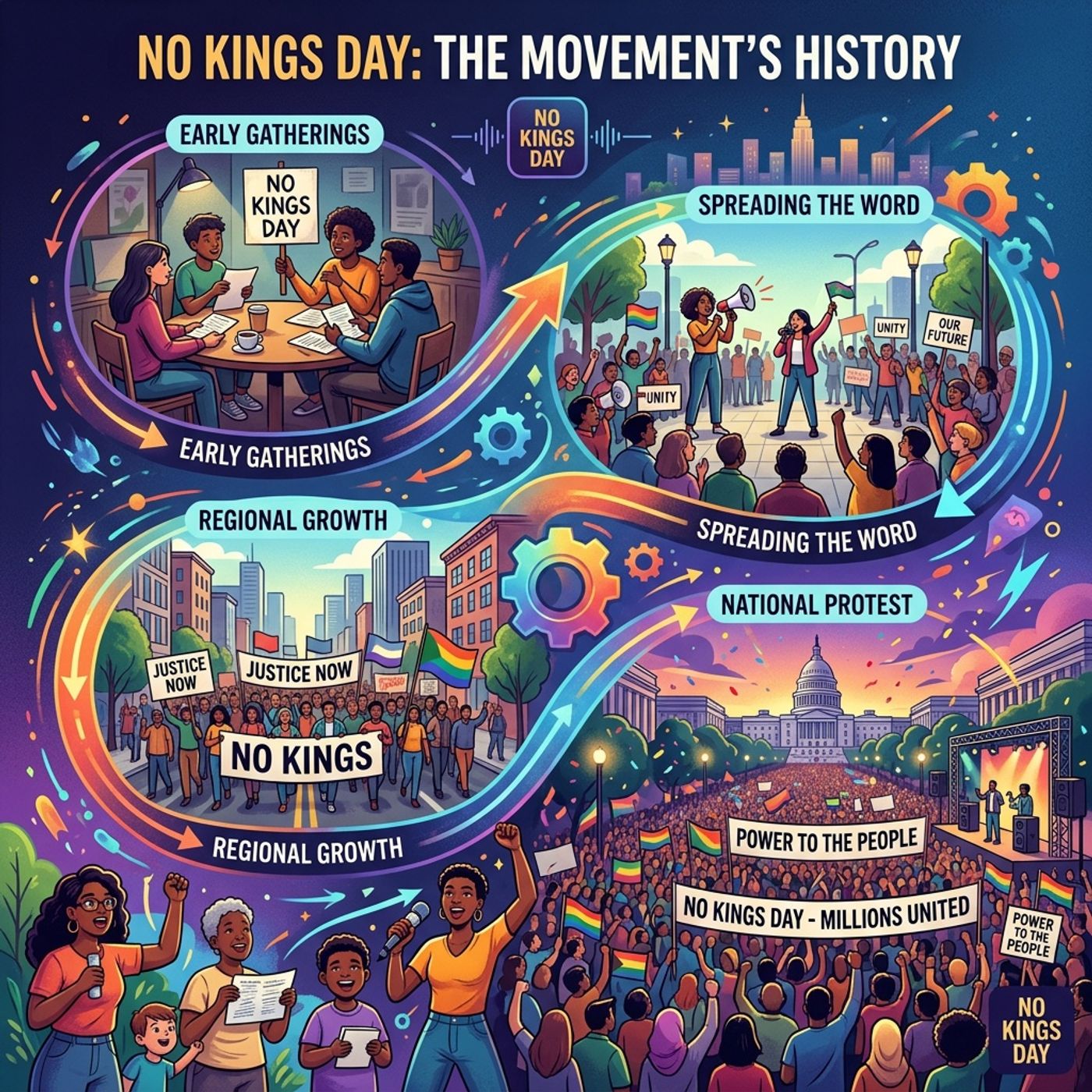
Have you ever felt like your voice wasn't being heard? Since June 2025, millions of people across the globe have been taking to the streets to make sure they are heard loud and clear, all in the spirit of a movement known as the No Kings protests. This grassroots uprising arose as a direct challenge to what many perceive as authoritarian tendencies within the government. Remarkably, on March 28th, 2026, these protests reached a staggering milestone. Over 8 million participants rallied across more than 3,300 events worldwide. Such a turnout doesn't just signify dissent. It showcases a powerful communal voice, demanding accountability from its leaders. The seeds of the No Kings movement were sown on a rather significant date, June 14th, 2025, coinciding with President Trump's 79th birthday and the 250th anniversary of the U.S. Army. It was a call to action driven by civil liberties and labor groups, hoping to unite people
against the backdrop of a government they felt was drifting towards authoritarianism. In mere months, the protests began to gain traction. The initial demonstrations attracted between four to six million participants across approximately 2,000 cities in all 50 states. The momentum only grew. By October of the same year, participation increased to an estimated 5 to 7 million people, showing a marked rise in community engagement and frustration. When March 2026 rolled around, the movement's growth became undeniable. Over 8 million demonstrators from all walks of life joined forced to claim their right to participate in democracy. This unprecedented turnout not only broke records for single-day protests, but also highlighted a collective discontent regarding various governmental policies and practices that many considered undemocratic. But what does it all mean? For supporters, the No Kings protests are a beacon of hope,
a vital expression of democratic values, reminding leaders that they hold power because of the people. They're seen as an essential way to hold elected officials accountable and emphasize the importance of public participation in a democracy. Ezra Levin, a co-executive director of Indivisible and key figure behind these mobilizations, insists that non-violent action is at the heart of the protests. On the other hand, critics have dismissed the movement, branding it as little more than a hate America rally. Some argue that such large-scale protests can lead to disruption, questioning whether these demonstrations can truly address the underlying issues at play. Nonetheless, the No Kings protests draw upon a rich historical context, echoing past movements that bravely challenged monarchical and authoritarian rule. Much like those who came before them, today's demonstrators are vocalizing a demand for rights and representation in their governance.
It's a movement reflecting the evolving landscape of political activism in the United States. As we unpack the origins and impact of these protests, it's evident that they are more than just gatherings. They symbolize a potent force of civic engagement. For better or worse, the No Kings Day is shaping the national discourse and leaving an indelible mark on our collective consciousness. This is just the beginning, and there's much more to explore in the next episode. Thanks for joining the Fortune Factor podcast.
More episodes
More from Conspiracy Theories Exploring The Unseen

The Digital Mirage_ AI and the Death of Authentic Romance
Conspiracy Theories Exploring The Unseen

The Trust Trap_ AI and the Future of Romance
Conspiracy Theories Exploring The Unseen

The Ghost in the Machine_ Navigating AI Romance
Conspiracy Theories Exploring The Unseen

The Love Recession_ Why Digital Romance is Offline for Good
Conspiracy Theories Exploring The Unseen