About this episode
Get every episode summarized
Each time Newell Normand publishes, we email you a written briefing from the transcript — the topics, who appeared, and any specific claims, with the ad reads skipped.
Email me new episodesFree for 3 shows. No card needed.
Hosts & guests
Transcript ready
87 searchable segments. Every word is indexed and playable.
Full transcript
Newell Normand — NASA's Michoud Assembly Facility celebrates its 65th anniversary. Machine-transcribed; use the interactive transcript above to jump the player to any line.
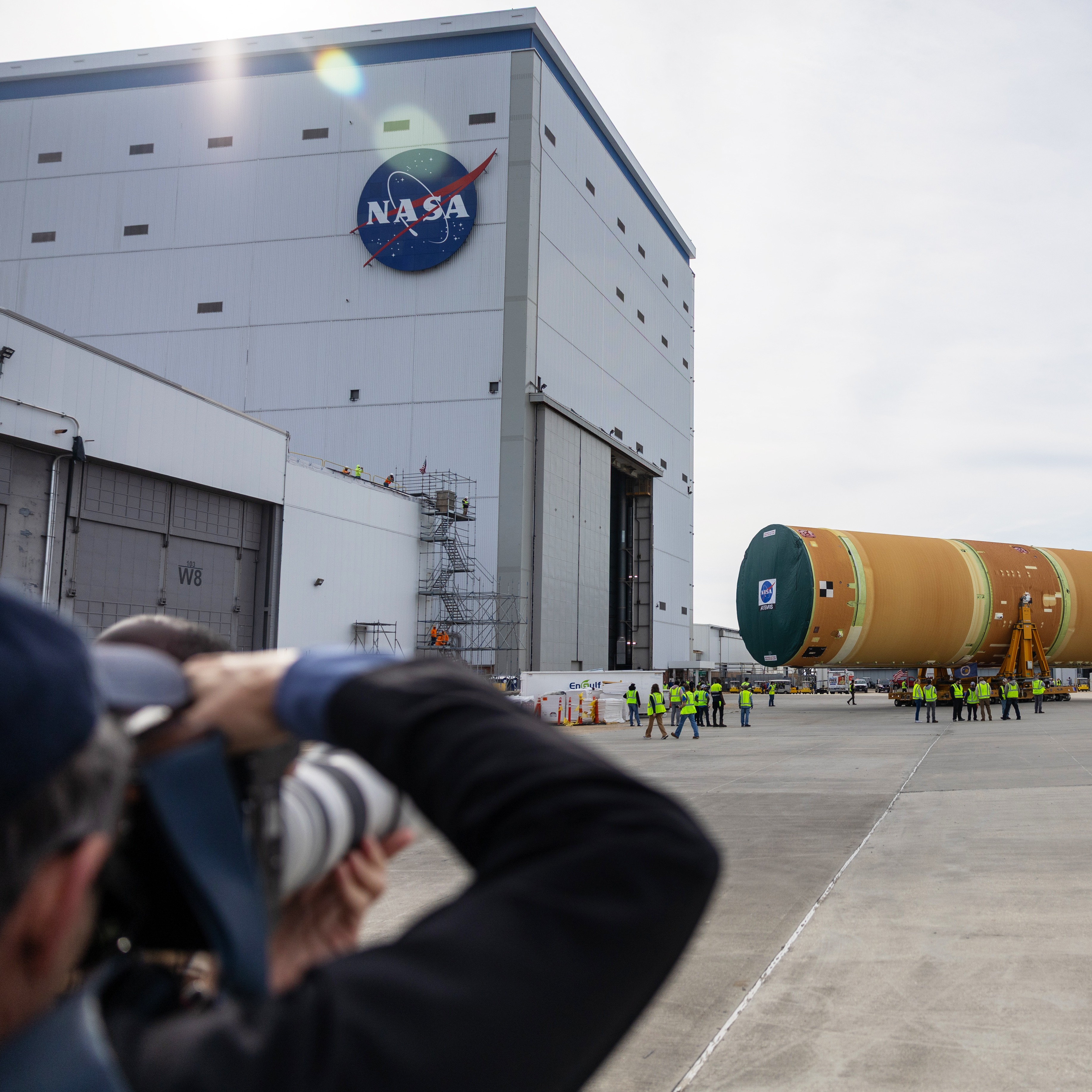
Welcome back folks, we're visiting with Michael Heck president and CEO of GNO Inc. And Michael, we have a special guest to join us. My good friend, this is Hansel Gail. He is the director of our NASA Mishu Assembly facility. And tomorrow is Mishu's 65th birthday. So we're here to talk about that. Hey, thank you so much for... Hansel, oh, I'm sorry. I jumped in a little early. Thank you for having me on your show again today. Always good to talk with Mr. Heck, so appreciate being here today. Absolutely, sir. So tell us about this celebration at the Mishu Assembly facility. So yeah, a really exciting time. I caught a little bit of the conversation and glad to join in. 65 years for NASA at Mishu right here in southern Louisiana. It's really a special time.
When we talk about the history of the work that we've done in this facility, we talk about it with pride because we really had some extremely significant contributions to the NASA mission, to the aerospace industry, from our facility in New Orleans. So we're excited about that. From the Apollo program, 136 external tanks for the shuttle program. And of course, now the work that we're doing for the Artemis program, it's really exciting to be a part of the work. And it's great to work with such a vibrant workforce to contribute to the national mission. Hansel, I'll tell you, I've been out there several times. It's an incredibly impressive facility. When you look at it from the outside, it's one thing. When you go inside and you see everything that's going on all at the same time
and the massiveness of the facility, it's just kind of overwhelming when you get there. And I would tell people if you ever have a chance to go see it, definitely go see it. But for those that are unfamiliar with what y'all have been doing for all of these years, why don't you mention a little bit of it, but let's talk specifically about what was actually manufactured and built there. Yeah, so I can talk a little bit more in depth there for the Apollo program in the 60s. 13 first stages for the Saturn V rocket. As we get to the late 80s going in late 70s, going into the 80s, we built the external tank for the shuttle program. Many are recognized NASA from those space shuttles. And the external tank is the cryogenic propulsion stage for the shuttle missions.
And I sometimes describe it as the huge orange part, right, that backbone. That's what we've been building in New Orleans for many, many years supporting the shuttle program. Of course, we transitioned out of the shuttle program, which was primarily in place to build and carry assets for the International Space Station. We needed a vehicle that could give us the ability to capability for deep space missions as we return to the surface of the moon and on to Mars. And so the Artemis program is now the program of record. And today in the facility, we have a pretty major role in the elements for the Artemis program. The space launch system has a similar cryogenic stage, the core stage.
It powers the Artemis rocket. If you had a chance to see any of the launches, launch Artemis 2 was magnificent. Well, the backbone of that propulsion system is built in our facility at Mishu, the core stage. And it powers the rocket for the first eight minutes of flight. But also we built the Orion crew capsule pressure vessel, the primary structure that the crew resides in. The launch abort system is built in our facility. We never want to use the launch abort system, but for safety of our crew, if we need to activate that system, some of the elements of that system are built in New Orleans and our facility at Mishu. Many probably wouldn't know the AFCO heat shield panels, the panels that protect our crew as they return to the Earth's Atmosphere. Those panels are fabricated in facilities at our site in New Orleans.
So really, from the time you light the engines, you light those RS25 engines on the launch pad to splash down in the Pacific Ocean, we have systems that are fabricated, hardware fabricated at MAP that are active, really for the full duration of the mission. So we're excited to do that work. I mentioned it earlier. We fall in love with the history and we have so much to be proud of. But I don't want that at all to diminish the work that we have in the factory today that we're active in today, a vibrant workforce that's executing this work. Absolutely. We're visiting with Hansel Gill director at NASA's Mishu Assembly Facility. Hansel, when we talk about the work that's being done for the Artemis program, is the complexity of that far greater than what we did before relative to the Apollo program and the external tanks that were used into follow-up program.
So there is an increased complexity, more powerful, some of the systems are larger to handle the payload capacity that we have today. But what I'll say about that is because of the experience that we gained through some of our earlier programs, we've tried to infuse as much of that technology as we can. So that we're learners, right? So we learn from the things that we've done in the past and where we can, we apply some of that technology. I don't want to get bore your utterance with some of the particular details, but some of the welding technologies that we've advanced over the years, some introduced during the external tank shuttle program. But now, we use much more fully in the Artemis and the core state program. We've taken advantage of the technologies that we've learned in the past and trying to add them to the new technologies that we use today.
You know, the backbone of any organization and when you visit that one, you recognize it right away, the number of men and women that are highly, technically trained and a lot of that goes on at our local schools is really, really impressive. And I love the way you can't really overstate the importance of what they bring to NASA each and every day. Yeah, that's such a great comment there. And one of the things that kind of came to my mind is you guys were talking about some of the new plans for Southern Southwest Louisiana is the importance of the new technology. And the importance of continuing to pour into the workforce of the future, right? It's gotten to be, which is a positive thing, extremely competitive in the aerospace industry, for engineers, for engineering technicians, for touch labor, even for business systems.
And we have been extremely competitive. We have had partnerships with local colleges and universities to continue to train that workforce that we can pull from. And we've been partnered with us through GNO Inc and activities to continue to generate that pipeline with different opportunities, different training, different programs, different development programs so that we can really build that workforce of the future. So we can continue to do the great things that we've been accustomed to doing in Southern Louisiana for years to come. Well, we certainly wish you continued success. Congratulations on the 65th anniversary. The role that you guys have played in not only our local economy, but more importantly in just our local community and having so many of your folks call the place that we all call home is incredibly important to us.
And we're very thankful for the Mishu facility and the role of NASA in New Orleans and to continue to, in continuing to believe in this area is a testament to not only you, your leadership, but everyone that works out there and we thank you for that as well. Hey, I thank you for that. We unearthed the time capsule from 50 years. Got some really cool artifacts out of that as a part of our celebration. We had our legislators from across the way and Louisiana come see us on the 28th. We had a family day on the 29th and we kind of kept it all off with the Artemis to crew visit on September the 3rd. So I appreciate the support that this community provides us. We're all in this together and we love the work that we do and we're glad we get to do it in Louisiana.
Thank you so much. Hansel, Gail, the right. Thank you. Thank you. We're going to be a lot of log to music. Wow. Thanks, Hansel. We're in here to my eye. Hansel, how do you put up with this guy and I have no idea? Great friend. I'm glad that he's a part of our art circle. I really am. So thank you guys. Thank you both for allowing me to come on and talk a little bit about the work of the dance. Right back folks, 504-260-1870 on the Oakland Heart Jewel is talking. Text line stay with us.
More episodes
More from Newell Normand

Full Show 9/11/2026: Remembering the attack on September 11, 2001, 25 years late...
Newell Normand

The New Orleans Saints are gearing up for their first preseason matchup against...
Newell Normand

LSU fans have to adjust to the fast-paced offense Lane Kiffin has cultivated
Newell Normand

Hour 2: The WWL Callers Remember 9/11 25 Years Later
Newell Normand