About this episode
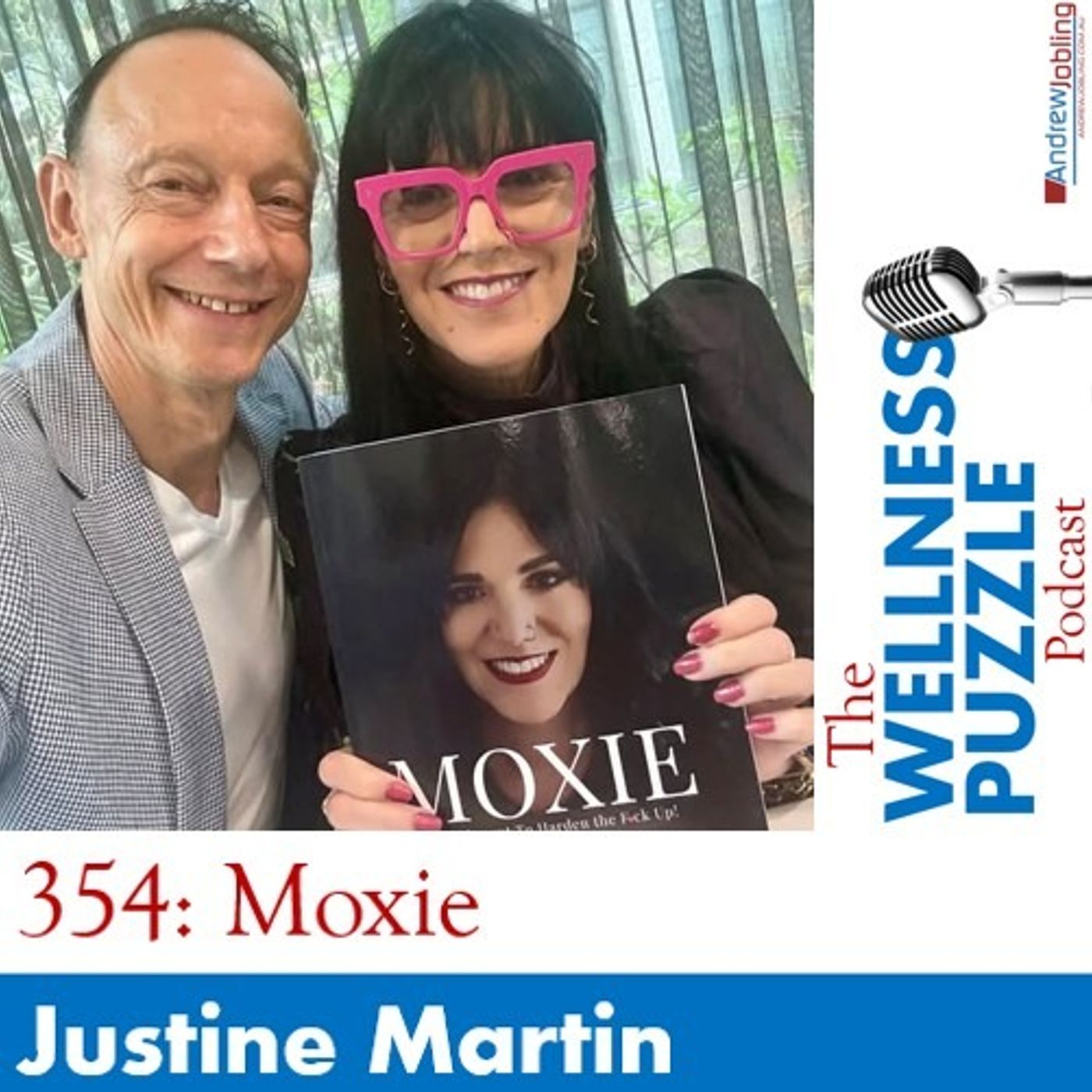
In this powerful and deeply moving episode, I sit down with author, speaker, publisher, artist, and entrepreneur Justine Martin to explore the extraordinary story behind her new book, Moxie.
Justine’s life journey reads like a series of unimaginable challenges. From early childhood trauma and complex family dynamics to surviving sexual assault and domestic violence, she has faced adversity at levels most people could hardly comprehend. Her physical health has also been tested through chronic illness and multiple life-threatening diagnoses, including multiple sclerosis, chronic lymphocytic leukaemia, and an acquired brain injury.
Yet Justine’s story is not about suffering—it is about moxie: courage, resilience, determination, and the refusal to be defined by hardship.
Rather than becoming a catalogue of pain, her life has become a blueprint for growth, strength, and service. Through her work as an author, creative, and entrepreneur, Justine now uses her experiences to inspire and empower others to face their own challenges with courage and purpose.
Her new book, Moxie, is a raw and honest reflection on adversity and resilience. It is a reminder that even in life’s darkest moments, there is the potential for transformation, healing, and powerful personal growth.
This conversation is honest, heartfelt, and incredibly inspiring.
In this episode we explore:
- What moxie really means and why it matters in life
- How Justine navigated profound trauma and adversity
- The lessons learned from facing serious illness and life-threatening diagnoses
- Turning pain into purpose and creativity
- Why resilience is built through honesty, courage, and self-belief
- The message behind her powerful new book, Moxie
Justine’s story is a testament to the strength of the human spirit and the power of choosing courage, even when life feels overwhelming.
This is a conversation that will move you, challenge you, and remind you what is possible when we refuse to give up.
Tune in to Episode 354 — this is one you won’t want to miss. 🎙️
To find out more about Larry and buy her book, Click Here
My website is www.andrewjobling.com.au
Interactive timestamps
Jump to segmentGet every episode summarized
Each time The Wellness Puzzle Podcast publishes, we email you a written briefing from the transcript — the topics, who appeared, and any specific claims, with the ad reads skipped.
Email me new episodesFree for 3 shows. No card needed.
Hosts & guests
Transcript ready
1,016 searchable segments. Every word is indexed and playable.
Full transcript
The Wellness Puzzle Podcast — Moxie. Machine-transcribed; use the interactive transcript above to jump the player to any line.
0:00This is the Wellless Puzzle Podcast with Andrew Jobling, author, speaker, educator, entrepreneur and AFL player. Join Andrew as he continues his lifelong journey as a student of human behavior. This podcast will help you live your passion, explore your potential, step into your power and embrace your possibilities. Andrew Jobling, welcome to the Wellless Puzzle Podcast for another incredible episode. And I get to spend time with an amazing, just a man who has just launched her new moxie and the subtitle of moxies, how I learn to have an F up. So it's a journey she's been on for sure. And if you listen to any of my previous podcasts with Justin, you know, a little bit about her story. Wow. What she's endured in her life is more than most, the most inspiring part about her journey is who she has become along the way and how she's used her trauma and challenges to
1:03become some globally inspiring human as an author, as a publisher, as a speaker, as an artist. She's doing so much great things in this world and she's really making a difference for sure. In this podcast, we talk a lot about her new book, Moxie. It's an awesome conversation. So please sit back. We'll actually enjoy this inspiring chat with Justin Martin. Hello, Justin. Hi, Andrew. How are you? I'm okay. I don't want to hear okay. You should be buzzing. I saw this video of you unwrapping a box of books and you looked excited like a child on Christmas morning. I was excited opening up that big, big box of books and believe it or not, that big box of books only had 16 books in it. That's how big books are. Are you kidding? Something from that and it's all a little bit surreal at the moment, actually. It is, isn't it? Well, we're obviously here to talk about you and your new book, Moxie, how I learned to get more of Z.
2:06That's not the title, isn't it? Well, I can't use those words. I'm too much of a gentleman, so tell us your title and subtitle of your book. I was recently interviewed on the ABC radio and even they were game enough to say the edited title, I should say. So it's called Moxie, how I learned to harden the F up. Okay. So F could be a lot of words. It could be how I learned to harden the fruit up, how I learned to harden the... Or a truck up. Free jump. Whatever. Congrats, Justin. It was awesome achievement and you and I talked on podcast before and a lot of people certainly have listened to you and me chat. No, you're story and obviously people that you interview and your podcast know your stories. So you put it into a book and it's not just a book, is it really? It's in Cyclotidia. Yeah, it turned out a bit bigger than I think both of us planned and if you're watching this on video, you'll see because here it is, it's 170,000 words, it's really thick,
3:08525. It's a fine book. Yeah, like a fine book or a door store. You and I caught up last year. Yeah. Because you said I've got to finish this and you said, can you come and sit with me and slap me in the car in a chair and kind of way that is? And let's get this thing done. So what's happened to you for a day and a half? And I have to... We only got up to I think chapter 18 and that day and a half. Yeah, we did, but I have to admit, Justin, I just sat out with my jaw on the floor for most of that conversation as you went through your book and what you've been through, what you've endured. And again, wow, look at you today in this graceful, amazing, human that you are, what you've been through and how you've been able to transform yourself in your life and how you've been able to negotiate all of the trauma, all of the abuse, all of the sickness, all the health challenges, all of the stuff and here you are today, with this new book, it's a testament really is just into your strength and courage.
4:09I think you are divinely led, you and I both have a face and I really believe that you've had the help of God to get this through everything you've got through. That's the reason why you're here, isn't it? Yeah. So we're going to talk about a way back in the story, obviously, you're going to talk about this new book. So let's just remind people listening to this and a lot of them know this podcast, by the way, is going to be run carefully on your podcast and my podcast. So for my audience, probably more so than your audience, just do all this, all the stuff you do right now. Apart from being an amazing author, tell us all the stuff you're doing. That's probably a shorter version than everything that I've been through. So I am an author and look, this makes, I think book number 14, but this is my first big solo book as such. So I've written children's books and I illustrate children's books for other people. I run more fierce publishing. I also run jobs and we teach art wellness classes for people with disabilities. I've got long residential cleaning and garden maintenance.
5:11I've got resilience mindset, which is resilience coaching and consulting and just a Martin speaker where I do talk my story, talk moxie, resilience, bouncing forward on stages around the world. And then over the top of that is just a Martin corporation, because it's too hard to bring up somewhere and say, it's just seen from just that more fierce publishing resilience mindset, along with the residential cleaning and garden maintenance, etc. Oh my gosh, it's what it is, it's fair time. Fair time. Well, I actually do get fair time, everyone. That's good. They're amazing. Fed it all in and fair time might be, you know, two minutes, midnight or something like that. But they're just kidding. I look, I love what I do that it doesn't feel like work. Yeah. It's not a dream to get out of bed every day and I don't say, I've got to do this today and I've got to do that because I generally... What's fair, what was saying? Oh, 100%. And I think that's a key, isn't it? I think the people that have to drag themselves out of bed are going to do something that's
6:13really not fulfilling for them. They don't enjoy it. They don't feel like they're having a positive impact. And so it's a trudging, I think, for a lot of people listening to this, this is a little good first message to you. And you really truly tap into why you feel like you're here. And I know you have, you know, have this conversation many times. You don't mind the hours. You don't mind recording podcasts late at night or writing and sourcing in the morning or going from this to that to the next thing because everything you're doing is moving you towards that purpose and having that impact on people's lives. Yeah. And look, my purpose is to give other people hope. They find hope through my story that with everything that I've been through, whatever that bad life moment that they're facing is or that adversity, you know, I don't like to use that word, adversity too often. You know, people will inbox me or tell me all the time, you know, I think about what you've been through, what I go through is nothing in comparison.
7:13But if you can do it, I can do it. And so just that underlining message on everything that I do, I know that people are watching, people are listening, what she doing now, what she got up to next. And I am actually the happiest. And I would dare say nearly the healthiest as well that I've been in my whole entire life, despite having chronic disease and cancer flare-ups. And I say they're a flare-up because, you know, they'll squash back down again. You certainly have a fair share of challenges for sure. And I know that I've said this to you before and slapped me almost. That'll probably slap me when I start talking about my little same-ween-significant challenges. And I say, but yeah, but compared to you, it feels like, and I know you've said to me, Andrew, that's not right, and that's not fair because we all have our challenges. So people will listen to this when they hear your story, when we touch on it, and we're not going to have enough time to go through everything because that's a meeting page book. How many pages is boxy?
8:14525. 525 pages. So it's a compelling story. There's a lot in it. And I know as we're sitting there going through it and you're reading it to me, I'm thinking, my gosh, all my problems and soaps maybe. And I know, tell me what you said to me. Andrew, I don't remember. Remember I'm in the quad brain injury and I remember these things. Well, you made it very clear that everyone's trauma is their trauma, and you might compare and don't minimize your own trauma whatever you're going through. It's yours, and it is traumatic, no matter where you stub your toe. You have to do at the time, and it should be validated as well. Yeah, because when someone validates what you're actually going through and you share and you have enough courage to share what you're going through, then it lightens the load that little bit. Yeah, absolutely. And I also think when you compare yourself to someone, I'd say, well, I shouldn't complain because of what Justine's going through. Well, then you start getting into the self-deprecation and the negative self-talk,
9:16like, what's wrong with me? Why can't I just tough enough? And that's not healthy. No. What is healthy is going, okay, yeah, that's the tough time. And I'm not happy and it's tough. And that's okay, because you're right, you've got to validate it, and we all go through tough times, whether it's a cancer diagnosis, or whether it's an argument with a friend or a partner or whatever, it's still traumatic. My trauma, and then I didn't even know it was a trauma, it's always when they teach you said to me, brother, and that's played me for much of my life. That's the way that I'm good enough. But I can't compare that little statement to the sum of the stuff you've been through, but at the same time, that has had just a security and impact on my life. So I think the message is, we've all got to own ourselves and our trauma, and it's okay, and don't compare, and we're all amazing, and we're all going to go through shit. So I do say in the book, my aunt's favourite saying to me, you're staying your own lane. Staying your own lane. Just worry about what you're doing, and you know, that's something I live by now.
10:16Other people will be, they might be bagging me out behind the scenes on a Facebook post, or something I've said, or done, or been in the media for. But do you know what? They're not paying my power bill, they're not paying my gas bill. They're not holding my hand in the next hospital bed. So I just stay in my own lane, and... Stay on your own line. Yeah, absolutely. And you've got to ignore all of that stuff. Because if you focus on the noise, you will run into it. You will get erailed. If you're looking side to side, if you're looking around, if you're worried about what other people are saying, you'll lose focus on where you're going. So just stay, let's hear a quick break. Come back, we're going to dive in to a bit about your story. And one moxie is such an incredible document. It's really a document, isn't it? Like it's not just a book. I tell you what it's a journey, it's an adventure. And for so much, you know, that people can walk away to help them in their lives. So in one of the break, come back, let's chat a little bit about that. So we'll be back after a break. The shedding of tears after a significant achievement,
11:18a meaningful moment or purposeful pursuit, is an indication of the powerful emotional joy we all strive for in our lives. What if there was a process for personal transformation that could lead to regular tears of joy? Moments. In tears of joy, Andrew Joblin provides the simple steps that will predictably lead to many meaningful moments of significance, achievement, and well-being. This book offers a sure and certain pathway to transformation that lasts. To purchase tears of joy or any of Andrew's other books, go to androidjoblin.com.au. Now Justin, you were talking before about the naysayers and the people that are going to have a little nip out chew or a little criticism of you and it's going to happen call us. And I just want to share this little story before we go into your gen because I was at a conference with something. And right at the end, it was just this inspiring conference of that success and achievement and business all that comes up. And the last week of the day, right at the end, told the story of the eagle and the crow.
12:18This is real life. The only bird that is not afraid of more of it is a crow. And so what the crow does is it flies while the eagle's at a relatively low height. I'll attach itself to the back of the eagle and also packing and pulling the feathers out of the back of the neck of the eagle. I don't think it's trying to kill the eagle. It all might be the least. But it's just being annoying. You know, there's a lot of crows in the world. And it packs the packs and balls and balls. And this is what the eagle does. Nothing. Doesn't get annoyed by it. Doesn't try and get rid of it. It just flies higher and higher. And as the air gets thinner, it gets to the point where the crow can no longer survive up there with the air. And it lets go and falls. So the message is when you're getting the crow, just keep ascending, getting towards where you want to go, they will fall off when we stop them, we distract them by them, when we react to them, when we engage with them, we're giving our power to them, when we fly. And that's what you do.
13:19You are the eagle just then and you're flying. And I know you've had a lot of crows in your life. For sure. You're going to be where you are today. Had you not been the eagle in your life. So this is a big story. So why don't we just go back a little bit? Why don't you just share the things you want to share about your journey? Because I think it's important for people to understand what you're going through and looking at this human that people are listening to right now. And who I see right now, I see them as polished, I see them as professional. I see them as changed, I see them as inspiration. It still baffles me in how you've got to be able to be going through and to stand so strong and to look so amazing, to be such an incredible human. Why don't you just share a little bit of that early journey with us? Well, you know, it baffles me at times as well. And writing mocks me, took me back in time, as you know. And it was bloody hard at times writing it. It was very confrontational to myself, put me back in the therapy. Well, let me ask you this before you say any more. What did you feel the need to write?
14:20Because I'm a keynote speaker. And I get up and I tell my story and everyone's like, we want to know more, we want to know more about you. How did you become the person that you are today? And I've always said that there's two parts. It's part one in my story in part two. And part two started in 2011 when I was diagnosed with multiple sclerosis. But that didn't happen until I was 40. So there were 40 years before that made me the person who I am. That had some coping mechanisms already in place to deal with the shichou of what was about to come over the last 15 years from then. Not all the coping mechanisms with it. But I had built enough resilience to eventually dig deep. Yeah. Yeah. You've been to enough that you were able to go. Well, this is not ideal, but I know I can get through this. Could have got through all this other stuff to this one in my life. Yeah. That's all the early stuff you had to get through. And I caught myself first for a change.
15:22So some of the stuff that happened prior to 2011 in the first 40 years. I went to live with my grandparents a couple of times because my mum was not a well woman. She had great primary cancer in her life. She was diagnosed with MS. My parents divorced when my brother and I were at a young age in a space of a very short period of time, which I think you'll have to read in the book. But I think it's about three, four months. We went to three different primary school. You're three months. Three months. Yeah. So what I considered was normal that other people were going through in their childhood, their teenage lives apparently wasn't normal on what I was going through. It wasn't until I was an adult and I saw counselling that my counsellor was sitting there in shock sometimes with some of the stuff that I was... I know you can't tell it all. Trust me guys, she cannot tell it all.
16:23You've got 500 pages to read it. But some of the stuff, so your parents went when you were young. Your mum had to deal with cancer and MS. Tell us some of the stuff you endured as a young person. A lot of bullying through my teenage years. A lack of self-worth all the way through. What did that stem from? Do you think? Obviously you're bullied. So at home you didn't feel loved or... I think it was like I should have felt loved. I don't ever remember my mum. I know there's a photo of us sitting on her lap. And that was just after she got us back when she had breast cancer. So I would have been about three and a half. But don't remember her ever really giving me hugs and telling me that she loved me from that. My brother could never do anything wrong. I could never do anything right. And that started the cycle going through. So not feeling worthy enough. So what was the response from you with not feeling this love and low self-worth? How did that manifest? Yeah, you'll read this in the book.
17:25For all the wrong places and had mentally and physically abused me for a decade. Yeah. Until one day I went that's enough. And that didn't happen until through physical domestic violence when I had my arm broken. And he made it work to be my fault. What age were you at that point when you're a job broken? 21. Interesting. And then this is the power of self-worth isn't it? It's incredible how what we start to develop is police. We've developed as a young child. Because we don't know any better. Like we can only assess the situation based on a very undeveloped brain. And we very quickly come to the conclusion that we're either loved and worthy or we're not. And that will play people from much of their lives unless they do the work. I was doing a talk for the Gleninus 70th birthday library. That's where you grew up. I was born in Jalong. But we grew up in Gleninus.
18:25And that's all probably the book. I don't know how many times I've said that lately. It's all in the book. So I was in Gleninus. My mom's buried there. My brother still lives on his farm. And I still know a hell of a lot of people in the town, including some of my school teachers. And there was a school teacher who was sitting in the audience. And you know, I've shared a few things on what was happening at home with mom. And how hard it was with her. Because we're going back to a time where carers never got any support. I was my mom's primary carer, even in high school. And it was difficult. It was bloody hard. And mom had all these symptoms from her MS. And she was horrible to me. And my teacher came up to me and apologized. She was one of my English teachers. And apologized to me that the school had failed. My brother and I. She had no idea what we were actually going through on a daily basis,
19:27living with a mom who was disabled. Oh, it was nice to hear her recognize that. Not that she could have done anything. Had that particular time, but it was nice to come up and recognize. And said, sorry, as well. So yeah, there's lots of snippets like that throughout the book. And lots of revelations that I've had in life. And I know when you and I were doing those first 18 chapters, there are a few times I've broken to peers, even with me reading it. And it's like, damn it. I'm not healed from that yet. I don't think you ever, and I think anyone says, yeah, I'm over that. They lie. I don't think you ever get over a signal controlling your life. I think you do what you do is you navigate you around it and you place it. But I think you ever really heal from it. You use it now using your trauma as this plotter to help people. But you ever not get triggered by it. That's an interesting comment.
20:27And I'm not really sure what we do as humans. I don't get triggered by it. I think there's layers to it as well. And you lock them away and you go on to the next stage in life. And I think, you know, with a lot of this that's what I've done is I've locked away these layers. And then reading it, like having a ride at first was really hard. And you know, I mean, you've been with me since 2020. I started it in 2019. And I really struggled in what to put in to start with. And I remember having endless conversations with you saying, I don't know what to put in. I don't know what to leave out. You know, everything wanted to go in. What do I leave out when we haven't lived that much? Have you? Well, I probably have because recently I'm like, oh, I didn't put that in. Oh, I didn't. Well, that's part two. Why do you put 55 years into one book? And even in, like, there's a timeline on everything that's gone wrong medical wise.
21:30And I'm sure I'll guarantee you that I've left stuff out of that. Yeah. Okay. The question I want to ask you is obviously that subtitle of the book. Here's how I learned it. Hard enough fluff up. Yeah. How did you learn that in that first stage in your life? How did you make such a re-package or look at things? And how did you use that to build your vision? The Bible. It was. You're an. What was happening? Yeah, it was survival. But you're getting stronger at the time. So there's more to it. It's just survival. One bit of it can survive. I don't necessarily. It's a little more stronger. Because you got mentally and emotionally stronger. So you did something different. And I'm not. If you know what it is, it'd be good to disrupt what. I do. And I do mention this in quite a bit of detail in the book. And I'm going to contribute it to M. Way. Yo, M. I knew you'd like that. Yeah. My brother and I and even mom joined M. Wayne. I think it was about 1989. I know I'm going to be in 18 first time.
22:31And you know, I've joined it five times. And the international dream association or IDA. Was a tape for the week in a book of the month. And I was listening to Zig Ziglar at the age of 18, 19, 20, 21. When my friends were off to do what they wanted to do here. I was sitting there listening to all these motivational speakers. And all this positivity and. Green building like they were big on dream building. So I had that foundation always behind me there and wanting that. So what was your dream just and in that really quite hectic, chaotic time in your life? What are you dreaming of? I wanted to be financially free. I wanted to live in my own home. No more games. No debt. Have a house cleaner. Have a gardener. Because you know, you've made it in life when you've got a house cleaner in a gardener. So be very careful what you put out to the world.
23:31Because I'm both of those now. But I had to become disabled to afford to have them for a period of time now. I couldn't pay for them myself. Yeah, I'd wanted the freedom of choice. I wanted the choice to go into the supermarket and buy the $50 a kilo steak without having to scrimp and save for, you know, the three star myths or the two star myths. So it was always a struggle for an athlete as a child? Yeah, it was. I've been homeless or next to homeless a couple of times in my life as an adult with children. And I didn't want that to continue. I didn't want my children to suffer anymore. This was way before grandkids were even twinkles in their eyes. Yeah, it's very humbling when you have to walk through the Salvation Army and ask for vouchers to keep the lights on or the heater on. It's very humbling to walk into a food bank and say, I can't read my children.
24:32Yeah, I can imagine. In fact, and just as a little side note, as you know, I worked with a charity with the homeless on a weekly basis. And it was interesting. Just last night, I was feeding this homeless and this guy was there and he was leaving before dinner. Where are you going? I said, we're just about to serve. He goes, well, I'm just being paid. So I'm going to go out and I'm going to buy myself a really nice meal. I said, well, why don't you save that money and have a beautiful free meal here. And I think it falls into that same thing. He's feeling, well, no, I can afford it now. And there's something about the strength that comes from, well, I've got the money. I can afford it now. So I don't need to rely on handouts, which a lot of people think. He's an impact on their self-worth. I have to ask for something. It diminishes me as a human and there's judgment. And there's no judgment at all. There's no judgment from other people. It's your own self-judge. Your own. Yeah, that's right. But, you know, we're all, and I've always had this in the back of my head as well. We're all only one bad decision away from being homeless or not having money,
25:35not having that financial security. And when I was diagnosed with the MS and I had to stop work, I couldn't qualify for assembly. My fiance at the time was earning too much money. And we were living within our means, but that was on two incomes. And when I lost, you know, $66,000 over night, where did that money then come from? It didn't. And I had to ask to buy anything for myself and the kids. You knew that was temporary, and you knew? Not at the time I didn't. Not at the time. When someone turns around and says to you, you can't work anymore. Yeah. When you can't work anymore, what are you going to do with the rest of your life? Because all you're going to have is time. I went down a very dark hole for about 18 months. Hold that thought just thinking you want to have another quick break and come back to your health journey.
26:35And for all the M.Y. Naysay is out there and there's plenty of them. Good to hear a story. And I've been involved with M.Y. for many years and saved me so many times because of the personal development and the community and the association. So for all the M.Y. Naysay is out there. It's an awesome organization that helps people in need and provides education and personal development. And if that's a pretty cool thing. Anyway, we had another break. Come back and we'll get into the health side of this. And you deal with health challenges every single day. And even today, if you don't know, you can share what happened to you today or not. That's up to you. But it's an ongoing theme. So we want to talk about that and how you never got that. And how you're still able to see here with a beautiful smile on your face and go, no. I've got a new book. It's about to be launched. I'm excited about the people I can help. So this is awesome. Justin, let's have a quick break and we'll be back. Have you ever kept going even when life refused to get easier? Moxie. How I learned to harden the fuck up is a raw, honest memoir about endurance, survival.
27:35And the courage to keep showing up when the world doesn't slow down. Written by award-winning entrepreneur, Speaker. And disability advocate, Justin Martin. And featuring a powerful forward by Dr. Tererey Trent. Internationally recognized humanitarian and advocate for women and girls. Moxie is not a story of toxic positivity or neat redemption. It's a truth-killing journey through trauma, illness, loss, and the hard, messy work of building resilience in real life. This memoir shows what it really takes to survive and thrive when life keeps testing you. It's for anyone who has ever felt broken, dismissed, or underestimated. Visit Morpheus Publishing at www.morpheuspublishing.com.au to get your copy today. Justin, my gosh, 40 years of your life, you've gone through this challenging time with a disabled man and lacking self-worth, abuse from men and marriages, homelessness.
28:36You would think that's enough. You would say, okay, well, that's enough trauma. I reckon I'm ready now to just move on in real life. And you probably were getting to that point. And it was 2013, you said? 2011, I was tired. 2011, just as you probably thought things were starting to look up. Things actually took a massive no-stop. And really, it's been quite a bit. From a health point of view since Dancer, it's not all of it. Because again, it'll take five hours to go through your whole health profile. But some of the key things, and while you're sharing, you mentioned the MS, how you've been able to really use it in a positive way to help you with the life and to find your purpose and make the difference. So I was on cloud 9 at the end of 2010. I thought I was in my dream relationship. We were looking at buying a house. I was living in Perth. Everything was going along really well. And then my body went, ah, a girlfriend. Then in March. So it's nearly 15 years that I was diagnosed with the MS.
29:40And then a month later, after being diagnosed. Like I said, my neurologist told me that I couldn't work anymore. And then I plummeted down this deep dark hole. The one good thing that he told me was find a hobby. And after four months of going to an art studio, sitting outside crying in the car and driving home without walking in the door one day, I decided to walk in that door. And my whole world changed. So I now live by the water. What if I hadn't ever walked in that art studio door? What if I'd let my anxiety really take control of me? Because it was. I felt like I was in Wonderland slipping down that dark tunnel out of control. How was I ever going to get back up? I was medicated. I was on antidepressants. And life was really, really tough. And make it worse. My experience, I wouldn't let me talk about having MS. He did the whole ostrich in the sand.
30:41If we didn't talk about it, it didn't exist. And he worked away nine days and was only home by. And then we moved over here. He had an affair with his boss and off he went. And turn around and said to me, me having MS would affect his goals and dreams in life. So I really hit off bottom until one of my cousins turned around and I really get off my pity party. Sometimes you know that, don't you? Sometimes, yeah. But at the time when I didn't realize was I wasn't grieving him. I was grieving the relationship that I thought I was going to have with him. Like we were going to get married. I had my wedding dress. We're under contract by that stage to buy a house that I had to try and get us out of a $550,000 house. Which back then was around about a million dollars now. And he left us in so much financial debt. That's when I had to walk to the food bank.
31:41And so I can't. So you now got MS you've been jumped. Yeah. He's having a fair. Yeah. And I told my parents. And I sold my first painting. Yeah. What was the first painting? Tell us about your first paint. It was a cat. And I put it into the local art exhibition itself, the three hundred dollars. And that felt like three million dollars to me. Yeah. It was awesome. That was the first money I'd made in 18 months. And then I put that money back into more art supplies. So I could make more art and sell more art. Because I'm like, I have a purpose now. Because when I stopped work, I lost my purpose. Now all of a sudden I had purpose. Again, people like my art. They smiled at it. And from a cultural perspective that made me happy. And it made me feel whole and complete again. That people would stand at the painting and not see a disabled person that had painted it.
32:43They'd just see an artist. And that was important to me at the time. Whereas now someone looks at me. It doesn't worry me if they see it a disabled person. Because hey, that's what I am. Because you know who you want to. I know who I am. That's right. So then in 2013 and 14 and 15, my body decided, oh no. Let's pull you back again. And I underwent three heart ablations. Two pulmonary vein ablations, my resting heart. But in layman's terms, my resting heart rate peaked at 217 beats a minute. Wow. Rest. But what even elite athletes get to that by 217 beats a minute. I've been in a lot of ambulances in my time. And that was the first time I'd ever been in an ambulance with the lights, flashing and the sirens blaring. The 20, 25 kilometres back into July. And then I had a front wall ablation. So I was missing one in every five heart beats. And then I got pericarditis after that and I nearly died.
33:46Then I was recuperating and I went back to weightlifting I think a month after. No, I must have been two months after that third ablation. Because I have to wait for the pericarditis to all settle down, which is information of the heart lining. And then I started going purple in 2016, which then led me to being diagnosed with melanoma, then mixed prior globbial minimia, the video reticularis, chronic unconscious people. That big work. Another work. That's cancer, right? Yeah, I had three primary cancers and two blood conditions. So you've got MS heart challenges, three cancers. Yeah, two blood conditions. The heart teaching a pair of three. Yeah, actually the day that I got told that I had cancer. And they were looking at the cancer with the day that I got the keys to my new house. And so that was a bit of sweet moment. And then 2018 went into remission, but also discovered that I had what's known as painful fat disease or life a demon.
34:51And that's genetic. And then I really went down a rabbit warring on, okay, what is life a demon? What is the cause? What are the comorbidities of it? Then 2020, I had my arm broken, 2022 found my last partner, not the one that broke my arm, but another lovely, lovely man, dead on the floor, which then spiked the mast cell activation syndrome. And started investigating even more. And then realized that I'm histamine intolerant. My body can't handle a lot of histamine or foods have histamine. So it's just been, you know, one. It's been relapsed. And then today, here we go today, just to top this off. This is a nice little cherry on the top. Violatial cataract. I'm waiting on surgery for those. And then today I went in because I've had a bit of a spot on my back. I get 12 monthly checkups for the melanoma
35:53and went in an October last year and she'd burn a few things off me. And then pulled the appointment on Monday, went in today. And I'm like, oh, this is the thing on the back that's bleeding. And it was a form of keratosis, which happens when you get old. You spin. Because I don't like that spot that's in the middle of your back. Let's do a biopsy on that. And he looks at his taken photos and I've got photos of it. And he goes, you've got BCC, which is basal cell carcinoma. I've got body skin cancer. So that means I've had four different types of cancer. So just saying, here we are. We're recording a podcast on a day. You've just been diagnosed with skin cancer. Yeah. And you're as upbeat and you're puzzled as ever. And I know you're a little bit flat about it. But this is a key question. Yeah. Have you kicked yourself out when you've reeled off thousands of challenges you've had with your help? Yeah. Diagnosis and challenges and stuff. How do you keep yourself up?
36:54How do you keep yourself moving forward? How do you keep yourself learning from this situation? So that just happens to time and time again? I have a choice. I have a choice. And you know, it's what we spoke about before we came on air. Because you asked me if I wanted to reschedule. And I'm like, no, I don't. Let's do it now. I have a choice whether I want to sit in the corner and rock over this and go, oh, whoa, me and pull me and be on that big party. Or I can go, okay, well, let's deal with this and dealing with it was, I do the bio to take a chunk of my skin out. I'm hooked in on the night to get those revolts. And he said, I will discuss what our next tips are going to be. And I would much rather know that we're being proactive in it. It's dealing with it than it bad cells eating away my back. And then it gets to the point where nothing can be done about it. So, you know, I exercise five days a week. I drink copious amounts of water.
37:54I watch what I eat. I look after my mind. I look after my body. I do absolutely everything I possibly could do to have the quality of life that I want to have. And I know you also get help. You have been one for again, help and support in every area of life. Mental, coaches, doctors, therapists. So you surround yourself with people that, because you can't work at all on your own, particularly when you're going through so much challenging stuff, you need that external help and support. And you're very open to that, which I think is prevalent spine. If you don't like someone in your support network, well, then you're from I, you know, I had a doctor that once told me, when I was going purple, not to worry about it, come back in four months, it was still happening. And I didn't like that answer. And it's like, you know, there's a lot of medical gas lighting in the book, and though I don't actually listen to medical gas lighting, there was. And it's like where we live in Australia, we have the choice to go to a different medical practitioner.
38:55And that's what I've done. And I've surrounded myself with this. And there's some good ones out there, isn't it? Yeah, there are. And also, you know, good friends and family around me, because you can't build resilience without asking for help. You can't do it by yourself. You need that support network around you. And you are the sum of the five people that you hang around is so, so true. So if you're hanging around with negative people all the time, well, then that you will be negative. Okay, so I've got two final questions before we wrap up, Justin. And I think you need to call the question. And this is where I'll just be able to my time right now. I'm a big proponent of the sign that you do what you do because of what you think of you. And a lot of people don't do what you've done because they don't value themselves. They don't take highly of themselves. They don't have that identity of someone who's not just a survivor, but a thrive or an over-camera. And that is clearly who you are. So how did you build that? Not just resilience, because I think this is different to resilience.
39:55Build that enough just saying that the person that you love, that moxie, how did you build that? So we should actually give the definition of what moxie means. It's a great way. It is a great way. But moxie means grit, determination, courage, resilience, passion, all rolled into one. Look, I think a lot of it came from seeing other people thrive on the things that, you know, I developed the 10 top tips of resilience. And when I put that out there and seeing people thrive and cope and better their lives, that then spurs you on to go, okay, well, what's next? What can I do? What can I put out there to help others? And it's all about helping others in every single one of the businesses that I've now got. And what I do generally in life is help others. And I get told off all the time,
40:57because I need the two cheap or given things away for free. You don't do a lot of paper. There's no doubt about it. You know what? If that's part of your moxie strategy, then keep doing it. If that's what lights you up. I think it feels good. You, that's part of your identity. You do what you do because what you think of you. Well, if your cup's over one, if you've got lots to give, you'll give. You'll give. I'm just publishing it at the moment. You know, one of our core beliefs and what we do is for every able bodied person that we take in and publish is us the capacity then to either offer a harmful full scholarship to a person with disabilities to publish their work. And you know, that's a driving force in helping people who normally wouldn't have a voice in society. I've just become, I'm volunteering on the city of Greater Jalong's disability. And inclusion council.
41:57Again, and you know, this stems back to something that my mum used to say to us is if you don't like something, stand up in the world and try and change it. Well, there's a good thing you got from your mum. Yeah, it is. And you know, mum was not an evil woman. No, she was not. She was a product of the circumstances that she was. Absolutely. She was a product. We all are. Yeah, that's right. And you're reading the book about my forgiveness to mum. And you know, when I go back to learning it, I go and visit and take chocolate bars to her and pop them on a grave. And quick stuff like that. But yeah, you know, when you have such a passion to help other people and a purpose to help other people, then it does make it easier to cope with everything that you've got. Because the focus isn't about me. I've taken the focus off myself. Even though I like today, I did a live stream about, you know, getting diagnosed with this last skin cancer. And it's like, I ended it with and said several times in that live stream,
42:57go and have your skin checked. When was the last time you had your skin checked? And I know that there will be people that will hear that message because I have fairly good social media following now that we'll go and have. We'll go and get the skin checked. And I get inbox. Thank you. You saved my life. And I'm sure someone will listen to this one. Now go and get the skin checked. Yeah. Just then, this is an awesome conversation. And we could talk and keep welcome, but we won't. One last question. What would be one thing on your heart that you want to say to people right now? Don't give up. There is always something around the corner. Yeah. Don't give up. Ask for help. Ask for help. Don't give up. You don't have to walk this alone. Yeah. And life will look pretty bloody hard at times. But there's always happiness as well. Like we don't get from birth to death all being happy. And we don't get from birth to death all being sad. But you know what?
43:57We need those challenges because that's what helps us become the person that we ask. They don't shy away from the challenge. We don't throw into the challenge. Yeah. Exactly. We never grow into happy times. We grow out of the adversities that were right. Yeah. That's why you're such a happy person. So just a book. Boxy. How I learned to harden the. How do people get it? They can go more fierce publishing dot com dot are you. They can go and just do Martin dot com dot are you and. We'll send it out or it is available on all major online bookstores as well. Good thing about writing a book and owning a publishing company. It makes a lot of energy enough to get rejected by the publisher. I. Which is quite funny. You say that because when I really rejected yourself. Well, when I picked the title of the book, my aunt, he was like, you can't call it that. And I'm like, why can't I? I can call it anything that I want.
44:57If Mark Manson can call his the subtle out of not giving an if. Then I can call my in moxie. How I learned to harden the if. And then I said to her besides. I know the publisher. It'll be fine. She's okay with it. Just a thank you so much for sharing. And you had a day and a half to that. I know that the fact you're sitting here having this conversation with ladies again, a testimony to the incredible human that you are and the impact you're having on life. So thank you so much and good luck with moxie. I know I will do wonderfully well. That the book is not all doom and gloom. I know that it is not all doom and gloom. There are some highlight in there as well. And I just want to thank you, Andrew, for holding my hand the last six years. And there were lots of tears in the middle of it all as well. When I'm like, I don't think I can do this. Then what are you doing? What do I think I am and all of that? So. Same stuff will go through. But you can't you rant you to it. You've pushed through it and here we are on the other side.
45:58You always get to the other side. And you're here now. And now the exciting time starts. And I've already started the next book. So look out. Thank you for joining me on the wellness puzzle podcast. You're welcome. So yeah. What an incredible conversation. What an amazing human she is. So much. My gosh. And we just touched on the surface. And when you get a hold of the book from moxie and you read about what she's been through, you'll have so much admiration. But normally that you've been inspired. And you can get through anything you're trying to deal with right now. She's got hints and tips and ideas to help you build that resilience. To build that moxie in your own life. So if you want to get your hands on the book moxie. There's a couple of places to go. Morpheus publishing.com.au. You'll be able to get your hand with a book. Find out more about Justin and her website. Justin Martin.com.au is another website. You can go to you can get on social media. She's an easy person to find and she's definitely worth following it.
46:58And she's definitely worth getting in contact with. If you want to live your very best life. Thanks for joining me in this wonderful podcast. Hope you got absolutely inspired. And I hope you'll share it. And I hope you'll join me for my next episode. My name's Andrew Joblin. This is the wellness public podcast.
More episodes


