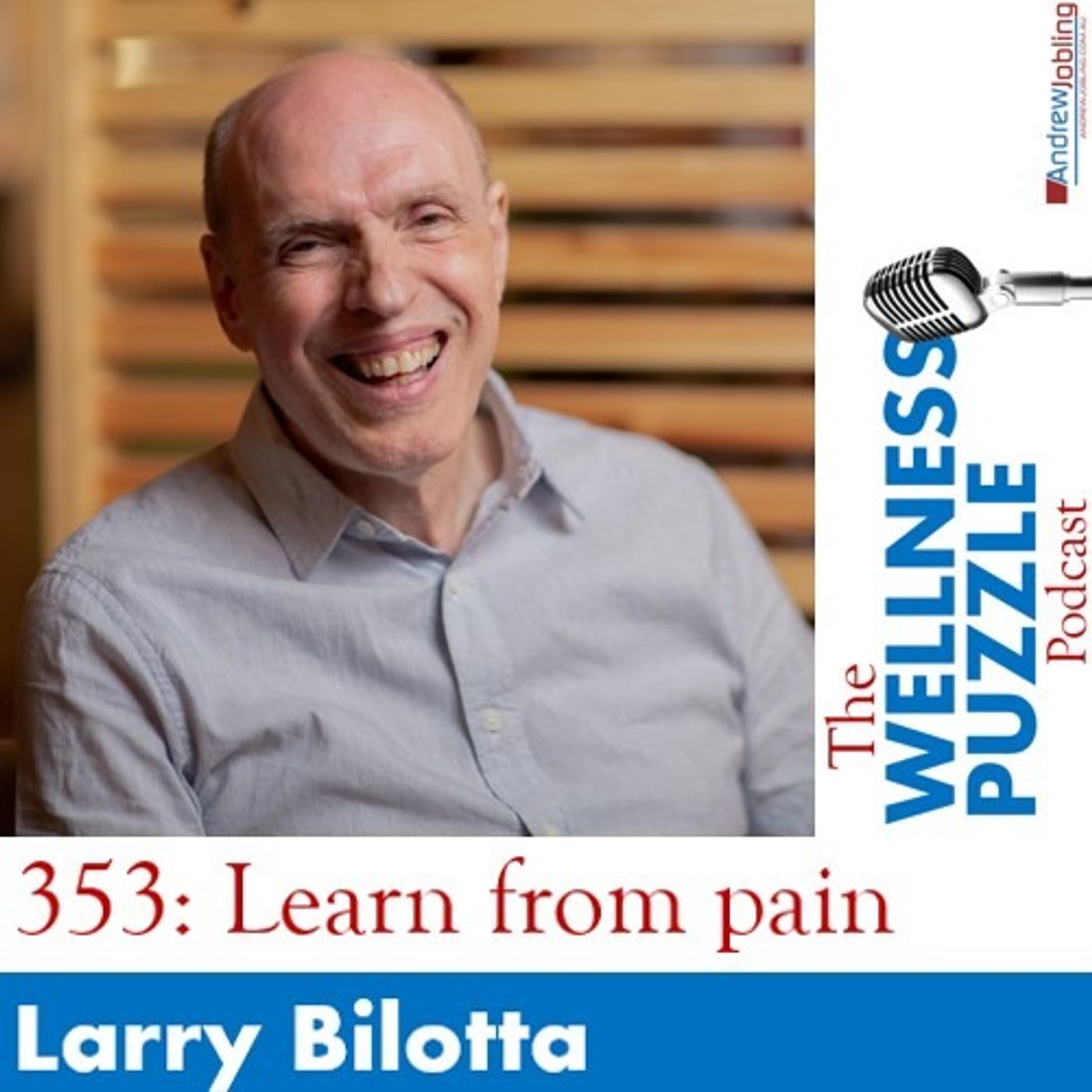
About this episode
What if the breakthrough in your relationship doesn’t begin with your partner… but with you?
In this powerful and deeply honest conversation, I sit down with Larry Bilotta, a man who spent 27 years in what he describes as a loveless marriage. Feeling disconnected, frustrated, and emotionally exhausted, Larry reached a point where something had to change.
But instead of trying to fix his wife…
Instead of demanding change…
Instead of walking away…
Larry made a life-altering decision: he chose to learn from the pain.
And everything shifted.
Larry shares how discovering self-love, emotional responsibility, and inner healing didn’t just transform his mindset — it transformed his marriage. Today, he stands as living proof that it only takes one person to change the dynamic of a relationship.
For more than 20 years, Larry has helped tens of thousands of people save their sanity, restore their marriages, and reclaim control over their own lives and emotional wellbeing. His message is simple yet revolutionary:
When you change, everything changes.
🔑 In This Episode, We Explore:
- Why pain can be your greatest teacher
- The hidden cost of emotional dependency
- How self-love can revive a struggling marriage
- Why waiting for your partner to change keeps you stuck
- The mindset shift that saved Larry’s relationship
- How one person can heal a marriage
- Why hope is never truly lost — even in the darkest seasons
This episode is for anyone who feels stuck in their relationship…
For anyone who believes they’ve tried everything…
For anyone wondering if it’s too late.
Larry’s story is raw, practical, and incredibly hopeful. If your relationship feels desperate, disconnected, or beyond repair, this conversation may be exactly what you need.
To find out more about Larry, Click Here
My website is www.andrewjobling.com.au
Interactive timestamps
Jump to segmentGet every episode summarized
Each time The Wellness Puzzle Podcast publishes, we email you a written briefing from the transcript — the topics, who appeared, and any specific claims, with the ad reads skipped.
Email me new episodesFree for 3 shows. No card needed.
Hosts & guests
Transcript ready
785 searchable segments. Every word is indexed and playable.
Full transcript
The Wellness Puzzle Podcast — Learn from pain. Machine-transcribed; use the interactive transcript above to jump the player to any line.
0:00This is the Wellness Puzzle Podcast with Andrew Jobling, author, speaker, educator, entrepreneur and AFL player. Join Andrew as he continues his lifelong journey as a student of human behavior. This podcast will help you live your passion, explore your potential, step into your power and embrace your possibilities. Andrew Jobling, welcome to the Wellness Puzzle Podcast for another fabulous episode. I speak with Larry Ballotta, the man who is helping people in marriages and on his website. He's saying that it only takes one person to heal a marriage, fixing your marriage begins with healing yourself first and his had a journey for sure for a marriage that was a painful marriage but he learned a lot from it and he changed and he grew and now he helps other people have those relationships that they can really feel joy in and used to add the
1:00beautiful element to their lives. He is a relationship of a marriage expert, he's an author and a speaker, he has created courses to help lots and lots of people, please sit back, relax and enjoy this conversation with Larry Ballotta. Larry, how are you? I feel like a bazillion bucks has got nothing to do with what's going on, bazillion bucks. That's a lot of bucks, man. I don't even know what a bazillion is but it sounds like a lot. A lot more than the temperature, you were just saying you're 10 degrees below at the moment. Well, it has nothing to do with what's going on and that's kind of what people think. They think something has to be going on in the world for them to feel something and so they're looking for some stimulation in the world for them to feel something and so it's got nothing to do with what's going on. Well, the fact is you can't control what happened in the world, we can only control how we perceive and what we focus on and what we do. Yeah, but we have a hope that neat cool things, fun things, kind things and gushing happy things. What happened to us? Well, I think it's more a hope, isn't it? I think these days, a little bit more realistic, I think they know that the world is not a perfect
2:00place. That makes me think of the tears of joy book by Andrew Joubling, the tears of joy. Exactly. Well, the joy doesn't come because things are going well, the things we get to overcome and the things we love, the things we get to focus on, I think it's all about what we control, isn't it? So Larry, thanks for being with me. It's going to be a wonderful conversation. Now you've got a story and you've got a very powerful message, certainly about marriage and relationships, which we'll get into at the moment, Larry, tell what do you do these days? It's exciting. So what happened to me is I was in a very bad marriage and was a bad marriage because we were opposite people because of the way she was raised and the way I was raised. She was raised to be mean. I was raised to shut down and that made for a very volatile marriage. But what kept us together like the glue was the message, stay married and miserable. Stay married, stay miserable is a message we had in childhood and we got that message loud and clear and both of us had it.
3:01And the reason I know we both had it is because when times were really, really tough and really hopeless looking from all angles, we never said that's it. We never said, I'm done. We never said those things. We never said, I'm fed up. Why? Because the program says you can't leave. You've got to stay married. You've got to stay miserable. And so we stayed and we stayed for 40 years until the years she died, which was 2019. Who was a measurable for all that time that wasn't? No, it was not. The reason why it was not is because in the first 27 years and 27 years of the long time, but that's how long it took me to start to learn to love myself. And that's what I couldn't do. I couldn't love myself. And so because I couldn't really love and enjoy and like who I was, I was hard to be around. I was erratic and I was impulsive and I was just impatient and I jumped into things with no apparent reason. So I was not a thinker. And so what I saw her as, Marsha was my teacher. She was the one who caused me to want to learn.
4:01And the way she did that is she put me in great pain. And with great pain comes great instruction because that's when you really learn. You pay attention because if you're really hurting and you can't get out, you've got to stay and find a way and stay and find the way, man, I need to be the learner. I need to be the one who learns. And so the reason I was making that, not because I'm especially mature at all, but because of all the options with the door closed on leaving, the door being closed on, you can get away. That was closed. I couldn't do anything but stay and learn. It's all I could do. I'm going to ask you this question, Larry. So the narrative was you stay in a marriage, even if you miss revolve. I'm sure you saw people around you getting divorced. How did you get that? Yes, I did. When I saw them doing that, I saw them running for their lives. They're leaving pain. And so I, in this 27 years, when I was starting to discover that you learn because of pain, you leave pain, you stop learning.
5:03And when you're really happy, there's not a lot of learning going on. And so I started to realize that as I started to contrast myself to those people divorcing, I started, oh, they're leaving the pain. Oh, I'm not leaving the pain. Oh, that's a good thing. Funny. And I started to say messages to myself like you only learn from pain. And then people would give me a party, you betcha, that they stay and learn from pain was a much harder choice. I was staying because I was held by that programming. So I really couldn't take any credit for it. I was being held by programming. They were not being held by programming. So they were leaving. And the program was very powerful because that's what runs the subconscious mind. And so those are the instructions from childhood. And I could not really go to my inner child, little Larry, and teach him and talk to him, and solve his struggles. I couldn't, I wasn't that much aware where I could actually do that. That didn't come too much later. And so everything I was learning was good for me. So I ended up creating a course. I ended up calling the environment changer. And the reason I called the environment changer is because it's changing the environment
6:05of your mind. And so living on the earth, we are big body people. We love the body. We love thinking. We love the feelings. We love the touching. The five senses. We love all that so much. And I've talked to people who are really very in love with the body. And they are talking to me about the mind. And they're not fans of the mind. They're fans of the body. They're fans of the way like, what can I do? Well, what can I see? Well, now what can I do? Then what will happen? If I do something with the mind, well, when I get to do something in the body, when will I get the reward? And so they're very body-oriented. So sometimes there's some people that are pretty tough cookies. They really can't let go of the whole idea that the body does not change the world. In fact, I talk about chaos kids, which is most of who I attract. And the chaos because either they grow up in a top of the scale or at the bottom of the scale in the world of chaos. And when there are chaos kids, they can't stand behavior. They hate people who do things because they think they should do them or they figured out something and now they're doing it. So they hate behavior. And that's kind of like the thing across the board with chaos kids.
7:05You can't reach them with behavior. They rebel against behavior all the time. So if you are working with your mind, you're going to have a chance where you can reach the chaos kid and actually reach yourself because the mind leads everything. So if the mind leads everything, I asked this guy, I was talking to him, I said, so what do you believe about the mind? He said, well, it's vast and you can't figure it out. Okay, that's not particularly helpful. But because it's vast, you don't know what it can do. What can the mind do? You don't know. There's no standardized test for what the mind could do. But when you're in the mind, you can go anywhere. You can be anything. You can see anything. Everything's possible when you literally leave the body and go into the mind. And that's really what the joy of imagination is. Imagination is going to take you there because that's the picture place of the mind. And so when you do that, you have a chance to start moving closer to love and farther from fear. Yeah. That's a big job. Well, you're right. The mind is the thing that controls the body. I think the capacitive, our mind is reflected in the things that we do and achieve or don't
8:10do it. You talked about self-love earlier and certainly identity and what we think of ourselves really directs what we do. So whilst the mind has got this endless capacity, it's got to be reflected in our actions. And what we do with the belief that we have and the imagination that we see, it's got to then be reflected in the things that we do, we show us the power of the mind. If that person can do that, when you look around the world, all the incredible inventions and the capacity of people and what they do and what they endure, every human body has got that capacity, but it's the mind that will drive the body. What you're talking about has been published, it's all been written about, it's all been explained. And people have done books, you know, we've got titles, what we need in the titles. And what all the teachers are coming back to over and over again is that our expectations, our judgments and our beliefs all together bring us what the mind does. Our expectations, our judgments and our beliefs. And so what I started to do is start to think about the definitions of those rewards.
9:12And what is the expectation? So an expectation wells around what I anticipate. It's what I'm looking forward to, it's an expectation. And the judgment is what my opinions are. And so I have all kinds of opinions and some I hold lightly and some I hold very fiercely. And so when I take the expectation, when I anticipate and I join it to my opinion, my judgment, I've got this judgment where I could feel very judgy about a lot of things, a lot of people. And then the third idea is my belief and my belief revolves around what I trust in. What I trust in is sitting into my subconscious mind because that's what the psychologist tells us. 90% of your life has lived out into the subconscious mind. And they don't really explain that very well. But the subconscious mind carries all of those beliefs. And when you don't really examine them, you really can't look very close. And therefore you can't really leave those beliefs and change them. And so when you take what you anticipate, your expectation, you take what your opinion is, your judgment, and you take your beliefs. And then you go into your childhood and say, Oh, well, what kind of expectations, judgment
10:15is the beliefs that I get from this place? What way did I live that grow up in? So I look at my own childhood and I see my alcoholic mother and my mother was very social. And she loved being in bars and drinking and singing. And so that was her belief system, right? Yeah. And so she thought that was a really good way to live, a great way to spend time. And so I looked at that and I didn't agree that spending long hours in the bar was really good. And then I had a father who was a gambler, where he gambled was on horse races. And so he would go to horse races and that's where he would spend his time. So my mother was at the bar and my father was at the horse races. And quietly and privately, they would pull me aside each of them. And then my father privately would say, you know, we'd have more money if your mother wouldn't drink so much. And then my mother took me aside and say, we'd have more money if your father didn't gamble it away so much. And so that was two core beliefs that bore into my childhood. And so today, I cannot drink and I cannot gamble. Let's go taste the other. They cancel each other out, right?
11:15But that's what's in my core belief, expectations, judgments and beliefs. That's awesome. Just examining the expectation and the judgment and belief as the definition, the expectation is, well, what do I anticipate? What do I anticipate going to the moon someday? Well, I don't want to go to the moon. I don't even want to be in outer space. So I don't have that dream of going to the moon, right? I don't have a dream of being deep in the ocean. I don't have that. So all my expectations are revolving around things that I could do. The next thing that's possible to me. And so now that there's a limitation as to what my dad did. What did my dad believe in? What was my dad confident about? I remember when I was about 10, 11 years old, my dad got a book. And the book was called The Power of Positive Thinking by Norman Vincent Peel. And he kind of made a big deal about that book at the time I was that age. And he made a big deal about it as in like, this is really important. You should really read this. Well, I promptly did not read it because I just thought, oh, so that's a good thing then.
12:17So what my father would do is he would read books, lots of books, lots of scholarly books, books on handwriting, books on music, and all these subjects. And I would see him reading every Saturday morning. He would be reading. He would go to the park and he would read. And so I got an interest in books because of my father because he was loving the reading of the books. And I took on the reading of the book. My mother never read a book. My mother had no interest in books, never finished grade school. So my father was educated. So how did your father change as a result of reading all these books? What did you observe? So my father was first and foremost as he was a musician. He played 13 instruments. He taught school. He taught a grade school where he taught all the grades of music and had a band concert and was doing everything music with first grade eighth grade. And so that's what he did to apply what he did in music. And then on weekends, he would have an orchestra and he would hire musicians and he would show up to weddings and he would bring his music that way. And all that robbed off on me. And so it's not like my father was self-improving.
13:17But what he did do, he became interested in many things. He became interested in being a radio talk show host. He became interested in barbershop or tech. So singing with other people. He became interested in graph analysis, studying handwriting to understand personality. That impacted me in a big way. And so all those things that he was doing to learn and grow in his own way, influence how I was learning and growing in my own way. So when I got into this marriage where I had to become an learner, what was the foundation? My father was the foundation. He was the foundation of me wanting to learn. And I had enough pain to drive myself into that learning process. And now everybody isn't going to have the same thing. But everybody's got something that drives them and that something is really infounded in childhood. Because what happens in childhood is stored in the subconscious mind. And this is there. And it's there all the time. And that's why I ask about the scale of purpose to chaos, because that tells me who am I talking to? Yeah. Because normally people like to talk about what's going on now. I don't want to know what's going on. I want to know what went on in the first 10 years.
14:18Awesome. Okay. So Larry, let's have a quick break. Come back and we'll get into the marriage and how you survive 27 years. And then what you did to make the last was at 13 years before she passed. More joyful, not quite so miserable, so it's a break and we will be back. Everyone has a book inside us waiting to be written. And Andrew Jobling can unleash their hidden author in you. Have you ever wanted to become a successful author and impact many lives? Andrew will support, guide and mentor you through the entire process and help you leave your legacy for the world. Contact Andrew for a free 30 minute chat about the influence you want and can have. Go to Andrew Jobling.com.au to find the author in you. So Larry, you've given us a great snapshot of your childhood and the influences you've had. You mentioned your father was addicted to gambling.
15:18And even whilst he was learning and doing all these things, you mentioned reading and learning and interested in new things, was he still gambling? Was that still a problem for him? So this is an interesting story. So my father followed an off track better and the guy's name was Holloway. And this is a guy in California and he followed Holloway because Holloway had a system and my father was very interested in systems to beat the odds. And what it was odd about my dad when he was start to make money, it was no fun anymore. It was no fun to make money for him. And so he would find ways to lose at the track because when he started getting money, he started to not feel the joy anymore. What he loved was the intellectual pursuit of the chase. He loved the math. He loved the statistics of the horse race game. And so as long as he was in that, he could start actually winning. But when he started winning, he didn't like it anymore. It wasn't fun. He stopped winning. Did he give up gambling? No, no. It wasn't like that. He wasn't interested in gambling.
16:18He was interested in the math of odds and chance and the predictability of the horse race. That's what he was interested in. And so when he could start to win at that, it was like good enough for him. Just a whole idea of collecting cash did nothing for him. And I'm in the same way. I didn't want to collect cash just like my father. And it was kind of an amazing thing. My father even wrote a book on horse racing because he loved the pursuit of knowledge and information. Yeah. And so he was interested in the odds and the variables of racetrack gambling. Fair enough. So tell us a bit about how you met your wife and tells us a bit about how that led you into this, what you call the bloodless, so miserable marriage. Well, before I meet her, I don't come from a strong family. I'm not a strong person. I'm soft-hearted. My parents were soft-hearted. It's just a very soft, not strong place. And so I was kind of longing for strength of some kind, just a subtle subconscious longing for strength. And so that longing for strength was a call to the universe. And the call to the universe produced this woman who showed up in my life in a situation
17:22that I was involved in in a work situation. And I met her and she was attractive. And so I started getting closer. Now the odd thing about her is that she was not a talkative person. She was like a one-line person, like a little one-line here and a one-line there, not a chatty person. And so I like conversation, but she was interested in conversation. She's just very strong. And so I could feel the strength of Martian. I could feel it. And so I told you my father was a handwriting analysis. And now a handwriting analysis, by the way, this particular handwriting analysis is called Graph Analysis. And so Graph Analysis is, what he wants to say, it's a pursuit of handwriting and personality and there's all kinds of studies that go back years. Well, my father studied that. And he became so good at Graph Analysis that he won an award from the society he was studying in. And so what he did is he became really, really good. And so what we would do when I was younger is we would go to the family dinner on Sunday. And my father would get the check and he would analyze the waitresses handwriting.
18:23And then a waitress would come over and say, because he's staring at the check. And she'd say, is there something wrong, sir? And then he would say, you've got a very strong will and you're very determined, but very competent. And he'd razzle on his subscription. And she'd go, oh my God, how did you know that? Because some intimate thing, or you wouldn't know about a waitress, right? And so she would bring over the other waitresses and they would have their handwriting analyzed by my dad. Right? So this was a Sunday or deal that we do. So what I was doing is I was seeing the need to understand people from those little moments. And I never wanted to learn about graph analysis at all. I had no interest in it. But years and years later, I took an interest just like on schedule. I took an interest in understanding personality. And so I invented a tool to do that. And so that was all driven by my dad. And so my father was a guy who pursued knowledge and information through all kinds of means. Basically, he's self taught. So that's what I did. I became self taught. And so I was just following it, because I take after my father in every way, he lived to be 96. That's what I'm thinking about. And so you might as well just have another four years on to that.
19:25Might as well get to 100. So what happens is he doesn't know I got married. He doesn't know I married Marsha. I didn't tell him. I married well, because that's the kind of secret family it was. We don't talk about our even marriage, you don't talk about it. Even marriage. Yeah. The ironic thing is her parents and my parents had no interest in talking to each other. That was another interesting thing about her family. No interest in meeting each other, asking about each other, nothing. Complete disconnection. Wow. Okay. So what happened is I bring the Marsha handwriting to the house. And my father is reading it. And you know what he tells me? He said, wow, this one's going to wear the pants and the family outs for sure. That's his phrase. This one's going to wear the pants and the family. And so what he saw was a very strong will woman who's very decisive and knows what she wants and she's going to go after it and know it's going to get away, right? And so when I was longing for strength, I didn't know I was going to longing for this kind of strength, because this is a kind of strength I attracted. I attracted this kind of strength from my father to see it in her handwriting as a
20:25grandpa analyst. So once I saw that I was in like, oh, okay, well, I don't want to let this get out that I married her, but I knew eventually it was going to come out. How did you get married? You didn't want anyone to know that you're married. What did you do? So what happened is they call it dating in the world, but we were living together and we're driving around the truck on a Tuesday. And Marsha says, so what are we doing? Like a real hard woman would say, so what are we doing? Like that's a full explanation error, right? There's no need to say anything else. So what are we doing? And I say about what? That's a sad question. Are we getting married or what? Because we're in our early 20s. Are we getting married or what? My answer was, yeah, I guess so romantic. I guess so. And so then she says, when, and I said, how about next Tuesday? So we go down to the courthouse next Tuesday and we get married.
21:27And that's how it happened. There is no romance, no love, no showers, no love. There's no feelings towards each other at all. Is that what you tell me? Little but not enough to have a full blown romance where you can say, I married in love. I didn't marry in love. I married for trouble. And so when we got married, the troll came. It came like weeks later, weeks, not years later, it came weeks later. And so now she was married to me. And now she thought she can actually control me and make me do what she wanted me to do. Because she's a strong woman, she's a hard natured woman. So as a hard natured woman, she wants to know the bottom line. She wants to know who's winning and who's losing what's right, what's wrong. That's what she's interested in. What do I want? I'm interested. Who likes who? Who's my friend? Who's my enemy? Who's with me? Who's against me? I'm interested in softhearted things. Right. So we had conflicts on those two things. Hard natured, soft natured, over and over and over again. And it wasn't until years later that I was even able to learn about soft and hard natures. But that's a very real thing.
22:28Soft and hard natures are a real thing that can get so bad for couples. They split up over it because they're convinced they're not compatible. So there were lots and lots of differences, but there was no romance. And so I saw that marriage as a, what do you want to call it, a practical assignment assigned to a teacher in a school. And that's what I saw it as. Why? I'm in a school with a teacher and this is my teacher. And the way she teaches is through pain. And so every time painful events came, I started to go, oh, here it is again. Okay. I'm going to learn from pain. So what am I supposed to learn from this? And it was hard to go through everything over and over again. And then learn the lessons of what you're supposed to learn. So that was the Larry and Marcia story of 40 years. But when I say 27 years, that's the years it took me to finally love myself. Because when I started to love myself, her demeanor started to change. Yeah. And she felt less threatened. She felt less at odds with me and more willing to accept my odd ways.
23:29And so that is what started to change. How did you go about loving yourself? Because I think this is an important question because you're telling me that everything changed when you loved yourself, which I think is a pretty powerful message. And I think we understand that when we love ourselves, things aren't as bad or we certainly out. So let's get us. So what did you do? So let's get out of the way, the idea of loving yourself as an ego thing. Yeah. Let's get out of the way. Because people in the early phases of learning this, they're just thinking he's full of himself. That's the phrase he used. He used to love himself, which means I love myself because I'm so great. And so I'm so great that I'm arrogant. Yeah. Well, this is not what we're talking about. No, we're talking about that. What we're talking about is my ability to think of myself in a good way, think of myself in a kind way, think of myself like other people. I have more in common with everyone else than I do opposite everyone else. And so now that I see myself in common with people, I'm loving myself more.
24:30When I saw myself as poor me, I'm down and I'm destitute, and I can't do things that other people can do. And everybody else is better than me, and I'm worse than them. And that's not loving yourself. And there was a time when I really thought that hero worship was a great thing. That's worshiping everybody that I think was better than me, a more accomplished than me. And so I would make them into all kinds of heroes. And so the more I started to leave that, that was by the way, a belief based on fear. I was living in fear, and the fear was, what is it possible for me to do? What is it possible for me to say? What is it possible for me to accomplish the whole idea of what is possible was something I did not do in the beginning of the marriage. And it's only in the later years of those 27 that I started to feel like, oh, I can do more. I'm worth more. I've got more value. I've made an impact on people. People listen to me when I was talking. Oh, I think that's something I didn't even realize I could do, right? So I started to love myself instead of not liking the features of who I was. And so what loving yourself is, is leaving your fears.
25:34And if we think about fear, we illustrate as a list of a thousand words, a thousand words you can't comprehend a thousand words, but a thousand words that are all negative, anxiety, fear, doubt, just a thousand words. That's fear. The world of fear, very, very complex world. Then we have the world of love and the world of love is about a thousand words. And that is all the words we love, kindness, appreciation, thankfulness, gratitude, all the words we like. So these two universes of words represent two universes of energy, the energy of fear and the energy of love. And so what I do, I teach a little assignment to make this practical. I say, well, you go to the internet one day, you enter negative words on the browser. And when you enter negative words, you will get lots of lists. And the list will be just terrible, terrible words. But because it's like a thousand, you need to condense it down to 25. And the way you do it is you literally pick 25 words you relate to. You can feel you have some connection to.
26:35And so for instance, way to personalize my list of fear, I have a word on there called crazy. Now why is crazy on there? Because crazy is a word I said over and over again and didn't know I was saying it. And so people have to tell me, why don't you say crazy so much? And when they said that, I'd say, I don't say crazy. I don't think I ever say crazy. I could not hear myself saying it, but I was saying it over and over and over again. I had a similar time in my life when I said the word impossible, the same kind of thing. That's why impossible is on my list. So you have lists of words that you relate to and that's why those lists are unique to you. It's your goal is, right? And so then when you come to the next day, you're going to enter positive words on the internet and now the internet's going to give you 1000 positive words and all the wonderful words that we love, kindness and beauty and thankfulness and appreciation, all that's there. So your job is to pick 25, 25 you like, 25 you admire, 25 to make you feel better, 25 you can personally relate to. And so I can't publish my list because it's my list.
27:37My list is my list. Your list is your list. And so because it's unique to you, you now have two worlds to look at the world of fear and the world of love. So that's really what I was struggling with in my need to love myself. I was trying to leave fear and I was trying to move to love. And I was gradually and slowly. That's why I took 27 years to really move in really good ways. Because one of the things that I've realized is I have to accept other people for being different and good, different than me and good as me. And so when I started to do that, I started with Marcia. I looked at her as different than me and as good as me. And so now I was starting to lose my criticism, which is a fear. Because I was very critical. And so I started to lose my criticism and I started to move more to love. And now I was feeling it. I was feeling the love of actually practicing those ways of looking at the world. Because she's as good as me and she can do what I can do. And so we're now alike in more ways. See, in the beginning, we were very different and I was mad at the differences. Now I'm looking at her is that we have lots in common.
28:39We have lots more things to be together on and we're alike. And so as I started thinking those thoughts, I started to change how I felt about myself. And as I changed what I felt about myself, I started to see her differently. And I started to see her more as a friend, as a coworker, as a cooperator. I started to see her in that way. And that really was a big change for me. Because I felt more at ease and more confidence and more at peace with myself. And as I started to feel more at peace with myself, I noticed that she was losing her hard edge. And not completely, but the mean part of the hard edge was gone. So she became more humorous, more funny, more likeable. And so that's actually made the later years where a whole lot better for that reason. So these two lists, you've got the list of love and the list of fear. So what do you do with these clearly you want to live off the list of love and you want to try and minimize as much as you can the list of fears? So what do you do? You don't keep both list. So what do I'm going to do is I'm going to show you my list.
29:40This is my list. It's the world of love, world of fear. So on the left is the world of fear and you see crazy is on there and don't mean fear, never pain or rotten. All those are there because I relate to all this, right? Then on my love list, I have beauty, forgiveness, friendship, acceptance, inspiration, courage, divine, there's some sampling of the list. So what I have then is I have two lists that I can scan back and forth in one place. And that's something we don't do. We don't have a one place to look at the world of fear and the world of love right there. So what I was doing when I finally got this list, I started to glance at that list. I left the list out and I would glance back and forth back and forth back and forth five seconds, ten seconds, two seconds. And I was just through my day, just bouncing back and forth. And when I would look between fear and love, I would get a real conviction that I do not want to be here. I want to be there. I was making a love choice just by glancing.
30:40That's all I was doing. I was just glancing. And so I was doing it and doing it their day after day after day. And about three weeks, four weeks later, I had a situation with people and there was like an accusation of fairness and tension between people. And I had to make a decision. And without thinking about this at all, I made a love choice to make the decision. And I did it so that everybody could win and I surprised me because I normally don't think that way. So this was like, wow, this list has influenced me. It's actually made me make a love choice. I made a choice of love. And so the more I started to talk about this, the more people started to make their own list. And then they started to feel that world of love has a real place. When you think about the world of love is a real place, every word is a first of word that it has a definition right around it. Around the definition of the word are the synonyms. The synonyms of the word are with it. And so together, that makes a ball of energy.
31:42The word, definition, and the synonyms altogether make a ball of energy. So now they're not words anymore. Now they're just an energy. And so when you think about these 25 words that I've picked, I could feel the energy. And it feels really, really good. Likewise, on the world of fear, every one of those words has a word of definition and a synonym. And they make a ball of energy. And so what I like to do is I like to look at the balls of energy on the list on the right as right, white, gold, light. Then I like to look at the list on the left, the world of fear, in a dark, red, purple, and black energy. So I have a visual now, a dark, purple, black on the left, and I have a white, golden, white on the right. And so now I'm literally gravitating to the white, gold, light of the world of love and repel by the world of fear. And so all this kinds of stuff helps me to get closer to what I'm trying to live. So Larry, we're coming towards the end of the podcast. I want to just know after you really start to move towards your love list and feel this
32:45strong white energy and your relationship got better with Marsha. Tell us about that relationship for the last 10 years. Did it find love? So it was not love because after you come through a very punishing learning process, you don't have love. You have admiration. Do you remember the old movie to serve with love? To serve with love is when I have enough respect and I have enough honor and awareness for what made me. I don't have like romantic love. I have admiration and that's really kind of what I had. I had admiration for her and do you have any regrets? I never think about regress at all. I never wish I could have would have should have. I have no regrets like that. That's good. I don't even think of the word regret. Regret is not something I would even like. So what is it the most grateful for of this journey you've had? I think the gratefulness I have is my parents held me with their message. Stay married miserable. And you think, well, that's a terrible thing, but it was a very useful thing. It kept me in the game.
33:46It kept me from running away. It kept me from leaving or getting become depressed and despondent. And so what I was doing all the time is I was holding on to this little can wrap. I had had for years and it said there is always a way. There is always a way. And so that's like what I came out of those years with there is always a way. And it's not that I wasn't despondent or sad or disconnected. I've had all those times, but they weren't long term things. They were things that I would visit. In the world of fear, I visited those things, but I didn't stay there. I found that I have a lot of thankfulness and appreciation for what I got because it's actually, if they think about it, I taught myself a course that I ended up using. I used the course of I myself and then the situation started to grow. And I started sharing that course. And that ultimately became the business I'm in, right, which is sharing the course of the world. That's awesome. So that actually made the course. The course you're teaching is because of your wife.
34:47Yeah. So how does this become part of what happens as I work with people? The person you're married to becomes the pain provider. And you have to recognize that that's who this is. The pain provider is going to keep your motivation high to learn. If you didn't have your pain provider, you would stop learning instantly. And I actually had people in my course who started to do the initial things of the course. And all of a sudden, the wife turned it around or the husband turned around. And it was fast, like convincingly fast. And you know what they did? They got so happy. They left the course behind. They left the course. They ended it right away. And I've seen it over and over and over again. All kinds of people all over the world. It doesn't matter where you are, who you are, hold it. When you lose your pain provider, you're losing your education. Which is what my life is built on. My life is built on a pain provider. Creates my education. Yeah. So Larry, how do people find? Do you find these courses and what you do? Where do they go? So the website is you can save this marriage.com.
35:47You have to real positive statement. You can save this marriage.com. So that's where the courses are. And then they can also go to Larry below on YouTube. Because I have a lot of videos there to get the backdrop of. What's this guy talking about? Awesome. Okay. Larry, thank you so much. Been a unique conversation, that's for sure. It's been a different perspective on marriage and relationships, which I think is good. So hopefully it's provoked some people, inspired some people and helps some people. So thanks so much for everything you've shared. I hope so. Well, that was unique. Wasn't it? That really was a bit of a paradigm shifting conversation, which I love having those. I think every different perspective gives us something to learn. And it's interesting that pain brings lessons. And if we run from the pain, we lose the lessons. I think that was pretty powerful, wasn't it? It doesn't mean you got to live in pain your whole life. That certainly means you learn from the pain that you're experiencing and don't run from it. I think that was a really powerful lesson. If you would like to reach out to Larry go to his website, you can save this marriage.com. Or you can find him all the social media platforms.
36:49Thanks for joining me in this wonderful episode. I hope you got a lot out of it. Hope you'll share it and I hope you'll be back. My next, my name is Andrew Jobling. This is the Wellness Puzzle podcast.
More episodes


