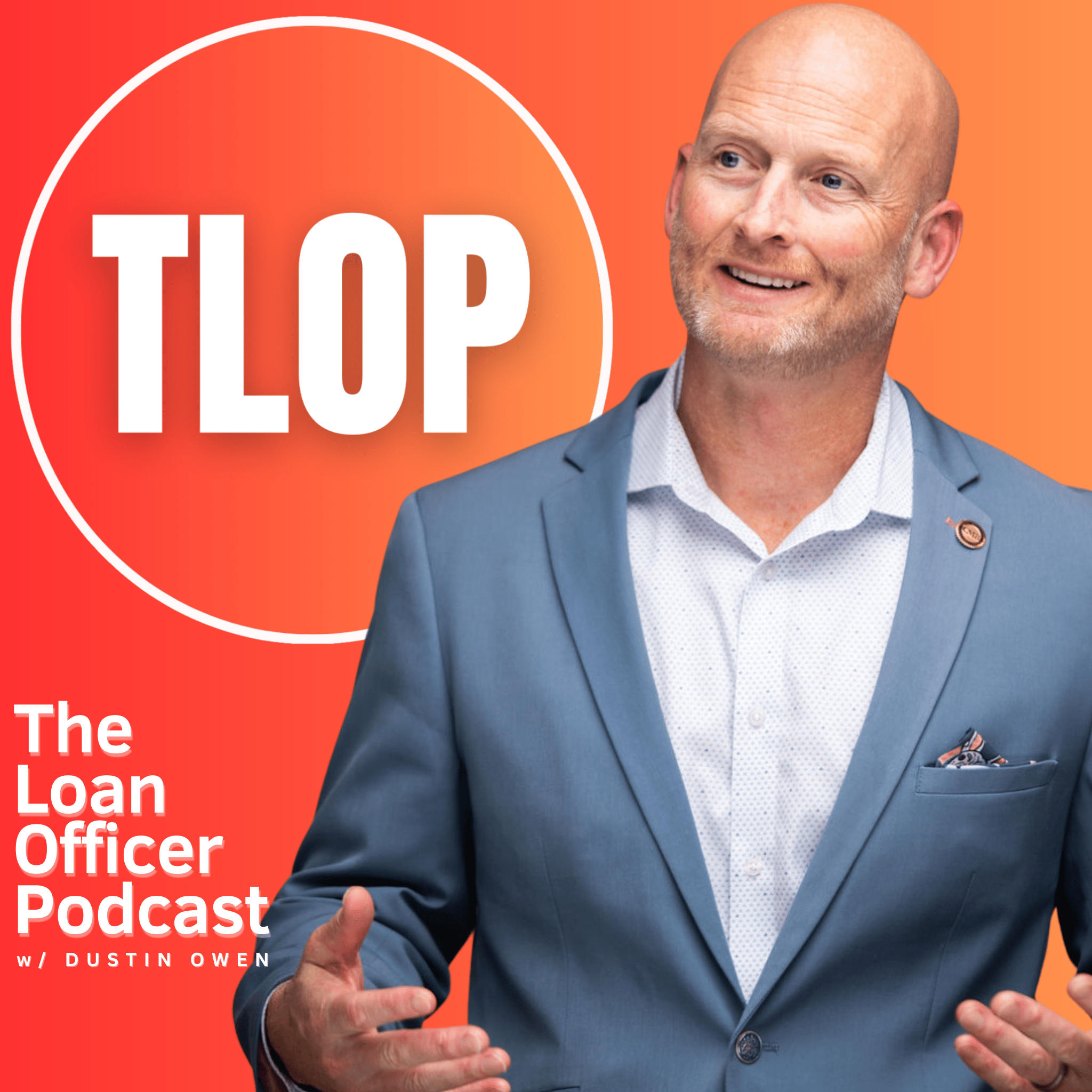
Misconceptions Surrounding Mortgage Company Ownership and Branch Management | Ep. 658
About this episode
In this episode of the Loan Officer Podcast, host Dustin Owen is joined by Marketing Mike and Special K for an in-depth discussion that tackles the widespread misconceptions surrounding mortgage company ownership and branch management. Together, they break down the common belief that owning a mortgage company or running a branch is a guaranteed path to wealth and financial freedom. Dustin candidly explains that these leadership roles rarely deliver the lucrative financial rewards many in the industry expect, emphasizing that true profitability requires not only significant loan volume but also advanced operational expertise, substantial capital investment, and a willingness to shoulder considerable risk and responsibility.
The team delves into the ongoing trend of industry consolidation, highlighting how increased competition and tighter margins have made it even more challenging for small business owners and branch managers to thrive. They provide a transparent look at the true costs of ownership, including overhead expenses, compliance requirements, and the complexities of managing a team. The conversation also covers realistic income expectations, dispelling myths about easy money and underscoring the importance of understanding the business side of the mortgage industry.
Throughout the episode, Dustin emphasizes that for most professionals, focusing on personal loan production and honing sales skills often yields better financial returns and job satisfaction than pursuing management or ownership roles. He shares personal anecdotes and hard-earned lessons, encouraging listeners to carefully evaluate their career goals and motivations before making the leap into leadership positions.
The episode concludes with practical, actionable advice for loan officers seeking career clarity and sustainable growth in the ever-evolving mortgage industry. Dustin and his co-hosts urge listeners to prioritize self-awareness, ongoing education, and strategic planning to build a rewarding and resilient career path, whether as a top-producing loan officer or an informed leader.
TLOP's Originator Coaching: 👉🏼 https://tloponline.com/mlo-coaching-programs/
Loan officer looking for a new place to call home? 👉🏼 https://specials.lower.com/tlop
Get every episode summarized
Each time The Loan Officer Podcast publishes, we email you a written briefing from the transcript — the topics, who appeared, and any specific claims, with the ad reads skipped.
Email me new episodesFree for 3 shows. No card needed.
Hosts & guests
Transcript ready
768 searchable segments. Every word is indexed and playable.
Full transcript
The Loan Officer Podcast — Misconceptions Surrounding Mortgage Company Ownership and Branch Management | Ep. 658. Machine-transcribed; use the interactive transcript above to jump the player to any line.
Before you go and open your own shop, your own mortgage company, you gotta listen to this episode. It's not all glamorous like you think, and there's no big fat cash windfall at the end. At least not typically. Don't believe me? Tune in and comment below. Want to learn more? Tune in. Check this out. They don't teach this shit in school, but they should. Welcome to Lone Officer Podcast hosted by me, Dustin Owen, one of the most influential people in the mortgage industry. Along with my friends who've lived it, built it, failed at it, fixed it, and scaled it. This is not a show just for mortgage professionals. This is everything I learned because I became a mortgage loan originally. This is the Lone Officer Podcast. Ladies and gentlemen, boys and girls, children 18 plus. You are Tune in, Lone Officer Podcast with me, Dustin Owen, and with me from the T-Lap team,
I've got my right hand man. He's marketing Mike along with our producer extraordinaire, you call her special K, we call her Karina Moe. Oh, he caught! What up, guys? What's happening? Here we go again. Here we go again, another one. The first time ever for those tuning on YouTube? We are not speaking into a Mike. Right. Yeah, Mike sent out our partner Steven on a mission to spend some money, get a good budget approval for that. And to spend some money. And you got us some super fancy, what do you call these Mike's? They're a type of Mike's. They're road Mike's. I mean, they're kind of crem-dala crop for wireless Mike's. It's so weird not having the Mike's. So we're not wireless. Yeah, the wireless Mike's. We're going to be live podcasting in the Bahamas on T-Lap Unite. Could it be a takeover? We're sold out. So we were like, sold out. So we sold out.
So we sold out. Yeah, sold out, mind you. But I just thought, hey, let's try to travel with some light equipment. But these wireless Mike's have a great range. They have a good low end high end. So we're testing them. Okay. Before we go and record four episodes from the Bahamas, we're going to test them out here in Orlando, Florida. Yes, sir. So that's what we're doing. But you know, it's interesting. I was just called by our friends at the Texas mortgage bankers. So she asked TNBA. Yeah. And TNBA does their annual event in the spring. Typically it's around April timeframe. And they're like, hey, Dio, we'd love to have you come out and be a part of the event. It'd be awesome if you brought T-Lap with you. Yeah. And these Mike's will allow it to be easier for us to travel. Travel to corporate events or to nonprofit events, industry functions. Yeah. And we can kind of do a better job of taking T-Lap on the road. As long as, you know, if it's in our schedule and you can make it worth our while. Yeah. And keeping the quality high. Right. And that's a big quality person.
Right. It's why we don't do interviews remotely. Right. You're either in person or we just don't do the interview. Yeah. Which we get this request all the time. And the answer tends to be, look, as long as the content is going to be educational, it's going to be entertaining, it's going to be something that people want to learn more about or listen to. And you're going to be in Orlando, Florida. We'll do it. Or if you're going to be in Nassau, Bahamas on September 15th, we can talk. We're going to be at the Texas NBA. We can talk. Or, you know, anywhere else that you may want to see us, mortgage con. Mortgage con. Mental builder 26. Yeah. Like once we're known with T-Lap unite, guess where we go next. Momentum builder, momentum builder in October right after that. Guess what we're going to be. Mortgage con mortgage con. Mortgage con. Now I get to go to the Oklahoma Mortgage Bankers Association, but I'm not taking you in special care. Right. It's just me. I'm doing a keynote there. That'd be cool. And I get to go up to the Ohio Mortgage Bankers Association in December. Yeah. Shout out to Rich Frobinski and that whole crew. Yeah. And I get to be a part of their December event that they're putting on, but T-Lap won't be there, but Dustin Owen will.
Nice. Yeah. And you know, you know, you never know. Who knows, let's jump into today's topic. Yes, there. It's spicy. We're spicy AF. We had a huge pre show. It's just now. Oh, the pre show was spicy. I was like, no, I'll talk about the episode we dropped out. People were so ago. Yeah. That was. We. That's still, I'm still getting comments about it. Yeah. You know what? For the most part, they're in line door I thought they'd be. Okay. Yeah. We always sit up real quick. But before we do, we have to slow down for a hot second so we can take. And listen to, not tape. We're going to take a moment to listen to to watch some words from today's show sponsor. Check this out. Y'all. Something big is happening at Lower Mortgage. And if you're paying attention to this industry, you've probably noticed, in just the last month alone, Lower has added some serious horsepower. power. We're talking top producers representing over $350 million in volume. These aren't
rookies kicking tires. These are heavy hitters who've done their homework and made the move. That should tell you something. On top of that, lower just acquired Mavoto, a top five real estate portal with over 150 visitors just last year. Before that, they brought in meat labs and now they're launching lower OS, a next-gen mortgage platform that's cutting loan delivery times down to 10 days. This isn't a company standing still. Lower doubled their volume last year and they're projecting another 40-50% growth this year. The best in the business are taking notice and they're voting with their feet. Here's the reality. The companies that are going to win in this market are the ones investing in technology, including real infrastructure and competing at scale. Lower is doing all of that. They're going head-to-head with the rockets of the world and they're built for originators, not against them. If you're a producer who wants to be a part of something that's actually
going somewhere, not just surviving, but growing, this is the moment. Lower mortgage, the momentum is real. We're back. This is going to be some newer type content for Mike, which is why we spent a solid 10 minutes going through the scenarios on prep. I'm a sponge. I'm a sponge industry. I'm trying to absorb it. You're a marketing machine. You help businesses grow, operate, become more profitable. The industry. You're still learning mortgage. In Korea, she's new to all of it. She's just the young buck, stretched out of the womb, stretching her legs. You're in the mortgage. You're in the right seat to get you one of those. Here's what's transpiring right now. The news all over the industry publications is you mortgage. Shout out to Anthony Kostin,
his team, has agreed to fold you mortgage into next. Shout out to Mike Kordis and his team. Now, Anthony and I have gotten to go each other a little bit. Mainly via social. We've met a couple times in person who nearly sat down and formally had a conversation. I can say we've definitely built a relationship with the past six, nine months on social. Mike and I met for the first time. I think at the gathering this year, a daily good chance gives me a mic that well, but I definitely invited him to come and be a guest on T-Lop. I was like, hey, look, next time you're Orlando, hit me up. I'd love to have you on the show. Next day is one of the largest mortgage brokerages in the country. You mortgage was one of the fastest independent mortgage banks for the past five years. They recently switched from being a banker back into being a broker and then that then morphed into, hey, let's just go ahead and fold into. Next. That's the hot news. We're going to lean into that trend to really bring knowledge and
information to the mortgage industry because although that's very topical, here's something else that has transpired in the past week alone. Just me doing what I get to do for a living, coaching, mentoring, consulting, lenders, loan originators, branch managers. I had an elo friend of mine. Reach out to me. We've known each other for 15 years now. Here he's out to me. He was like, hey, D-O, I think I want to become a branch manager. I was like, all right, cool man, why? Why? Like, what was it? He couldn't really get me an answer. He just thinks it's the next step for him. Yeah. I was like, all right, but what do you get at a being a branch manager? Is it because you're unhappy with your current managers? Is it because you're not feeling supported? Is it because you feel like you should get paid more money? Is it because you have to desire to build and grow people or build and grow in an organization? Like, what is it about you becoming a branch manager? And he really didn't have a solid answer. I think what he was fishing for is, I'm not feeling supportive of the managers I have or I'm not aware of how they support me.
And usually that's the case. Branch managers, I will tell you, most of your LOs, they don't feel like you earn the money that you earn on their production. And most LOs think you make way more money on their production than they do. LOs, your branch managers, I promise you, do way more than you think they do and they earn way less than you think they do. Okay, I just want to put that out there into the universe. So for this guy, I'm just making the assumption that it's like, I bet it's because he feels like he's not getting the support. He wants to have more autonomy. He wants to be able to make decisions. Because I said, would you want to recruit? Do you want to coach LOs and bring them into the industry and let them tie into your systems and processes? Do you want to answer their questions? When they have like deal structure and issues, do you want to help manage their pipeline? Like, what is it you want about the branch manager? I think it was a money play. He thought, well, if you get the title, I get more money. I'm like, no, he's like, yeah, but what if I get put on a P&L? And I said, damn straight up, you don't do enough for a P&L. Like, if you're not funding 18 plus million dollars
a year in the retail space, like, you're on an L. Like, it's a profit and loss. Now, don't get me wrong. If you're doing 18 million per year and your growth, mind if you want to get to 24, 36, maybe even one day run an operate of $60 million branch, where maybe 40 million dear production and the other 20s coming from two or three LOs. Okay, that can be very profitable for the right person, but there's an L that goes with the P. Yeah. So as I dissect this, I start thinking, I wonder how the LOs are like him? Oh, no, how many LOs think I should become a branch manager? I should get on a P&L and I'm thinking, what do you at least do 18 million? Because if you don't, that's probably the starting point. And some companies won't put you on your own P&L or give you your own branch, it's you do 30 million. I was going to say, how does that work? Can they just ask, hey, I want to be a branch manager and it happens? Or is there a right area? Yeah, I mean, look, criteria. And this industry and the banking industry, like we give away titles the way that
the homeowner of my neighborhood give away can go hollow. So a lot of times brokerages like to have a lot of branch managers because that means you're going to have a lot of teams and then volume comes in. Well, I don't want to say brokerage, but just lenders in general. Look, sometimes that is their business model. Right? Like, like, we have a client, we have a client, first community bank, at Tennessee, shout out to Dan Smith and his entire team, like, here a business model. It's a bank owned IMB. That's one of those companies that I would go work for if I was looking to re-enter the workforce as some of the national sales directors. You heard him, Dan. Call him up. Yeah, he knows this. I don't know if Dan would hire me, but that type of company, right? Dan's business model is he loves the P&L model. Yeah. So he doesn't mind if you're a one woman or a one man band. What he minds is that he wants to give you the opportunity to call the shots. He wants you to do enough volume
and the right product mix that is the odds of you losing him money or low. He wants you to help your help you make the most money that you can make on the production that you're doing. And you can decide how you set your margins. You can decide whether or not you hire an L.O.A. or whether or not you don't. Whether you have an inside process, you use corporate processing. Whether or not you spend $5,000 a month on this MSA or not. Right? He wants to empower originators, but if you're not ready to do an 18 million a year, you're probably not ready. There's not enough volume. Then there's not a meat on the bone. Then someone like Dan is going to say, Mike, but where are you trying to go from here? Because I'll give you two at 18 million, but the goal is to get you to 36. Right? If you're going to 36, that's in personal production. How do you get your branch production to 60? Yeah. And even I was hanging out and talking to a dean of our revolution's mortgage. Even a company revolution. Even in their mind, they're like, hey, which of our branch managers can get to 100
million? Not all branch managers want to. Not all branch managers can, but for those that do, there's definitely companies that are like, yes, how do we do more with the people that we have? No. But back on this L.O., it all just came down to, but why? But why? And I think at them the day, what this person was really looking for was, how do I make the most money? The answer was easy. Work more hours, generate more leads, fund more loans. The dude's on an awesome comp plan. He makes 150 basis points. That's his comp plan. That's net net. He's not paying for a mortgage. He's not paying for MBS highway. He's not paying for mortgage coach. He's not paying for rent. He's not paying for health benefits. He's not paying payroll taxes. His employer does all of that. And he gets to take home a hundred fifty basis points. That's like lead gen included. I mean, he's generous. He's a lead self-generated. He's self-generated. Yeah. Is he a student of ours? He's someone that you know. Oh, okay. Yeah. And he's been in and out of our coaching program for three years.
I say in and out, like, he'll come through, then he'll back off, then he'll come back in. Yeah, he's constantly in and out. And that's, I don't say how I've done coaching, though, my career. Yeah. Right. It's why I love our community because the place he can come and just sit and hang out. But it's good. We're kind of a low-cost lead gen, like our formula, right, when it starts to snowball. Our lead gen is very affordable. We teach loan originators how to make two, three, four, five hundred thousand dollars a year, yeah, spending little to no money on marketing without real tangible ad spend, right? Yes. I want you to spend your three thousand dollars a year on coaching. And then we will teach you how to go and generate three hundred thousand dollars a year in income by generating your own leads, by creating your own referral network. Yeah. And that's our style. That's cool. Yeah. Which is good for a P&O. Well, and what a crazy ROI. Yeah. Hey, give us three grand for the next 12 months. Do as we say, implement what you learn. And then you'll start making three hundred thousand dollars a year. You're welcome. Yes. Like what is that? Or what? So, we now for this guy, Dancer was not doing a branch manager. Yeah. Dancer was you want more autonomy.
You want more Biden. Not what I think he also wants. I think he wants more people along side of him that want to run at the pace that he wants to run. I think that's really what he was missing. Yeah. And I said, well, when you get your own branch, who's going to run alongside you? He's like, nobody. I said, so if you want to put a run alongside of you, reach out to your current managers, sit down, have a heart to heart and be like, hey, I want to run hard. You want to run hard with me. And then at the same time, get your production up because money talks and bullshit walks. Right. I like that. People, companies, you don't want to know how much revenue did you generate? You started generating two, three, four million a month at volume. And that's generating that much revenue. You have their attention. You do a million dollars a month, a million and a half a month. You're on their radar, but you're not catching their attention. Right. So that was that second conversation. We're going to lead up to the you mortgage and next I promise. But I'm starting small. Yeah, you're laying on the groundwork. I see what you're doing. That's good. So next up,
I told you you had two conversations and I had a big event, the big events, the news, it's in the media, you mortgage and next up, the one was the L.O. This one's actually coaching student of ours. Okay. He's a student, owns his own brokerage. Nice. The dude is in a machine. This guy, if I said Mike, hold my beer, he says, watch, I can hold three. I mean, if I tell him to run through a brick wall, he says how many? Like he's that type of student. And he thinks big. And I love that he thinks big. But we had a conversation because something that we do in coaching is we take all this approach. Right. It's not just about generating leads and closing loans. It's generating leads, closing loans and being happy with what you do, who you do it with. It's about being also a well-rounded human being and a centered professional. Right. It's why we stress things like reading, things like exercise, things like sleep, things like tracking your time. It's almost like life coach,
paired in with mortgage coach. Yeah. So it's the oldest approach. Well, something that we also track is income. Yeah. Right. All of us should be out there. You've heard me say this over and over. But I'll say it again for those who have never heard it. Our goal should be to make the most money per year doing what we love to do, what we're good at and what challenges us while working 40 to 50 hours a week. That's what we should do. So there's a money component. I'm not saying we do it only for the money. What I'm saying is money is the reward and it's our way of judging our success. Well, when I judge his success without divulging too much, I wasn't happy with what his net take home pay was as an owner of this company, who's also the number one originator in the top producer of the company. And we got to talk it and I was like, hey, walk me through it because everyone has their rationale and I'm not a one size fits all. I'm a let's get to know you. Let's get to like where if you started with the end in mind, where are you trying to go? My job is to help get
there to remove some of the pitfalls and the obstacles and the hurdles and to prevent you from skinning your knees based on shorting your learning curve by telling you stories about my successes and failures or the success of failures of my friends in the industry so that you can learn collect, live from all of us. That's what a good coach does. And he was like, look, Dio, I don't want to be an originator, my whole life. He's like, I want to operate the company. I want to help bring other people into this industry because he had a mentor that did something similar for him. And I said, that's very noble. Guess what? This guy right here didn't want to be an originator. Right. I made my first millions by being an originator. Right. I was able to grow a team. I was able to sell my book of business to my loan partner. He bought me out for five years like and I wouldn't be in this seat that I am today if I wasn't an originator first. But I totally get wanting to excel and be more of a leader, a developer, a business, a business operator than just
being an originator. But I did remind him and I remind all of you, you make the most money originating loans when it comes to input output. So you input, you output quick paycheck, rents, repeat. You're the most protected over the past five years, mortgage companies have not been making money. You know who has originators? Because Dodd-Frank dictates that we pay you regardless of the company's profit or not. So you know how to remind him of that. That they look, it's noble if you don't want to be a company operator. I said, well, what's your end goal? He said, well, I want to sell my company. I said, oh, do you know someone who's sold their mortgage company? He said, oh, yeah, my mentor. I said, you sold it from how much if I don't know? I was he sold it or is he selling it? So I think he's selling it. So let's stop right there. I said, do you know what mortgage company is sell for? He's like, ah, not really. Okay. Let me tell you all. Okay. Mortgage companies in general, best case, will sell for two and a half multiple on
EBITDA. Okay. Right? So your earnings before interest taxes, amentrization. Yep. Right? You're going to get two and a half times maybe three and a half in a good year. Now, if you're a larger entity and you have servicing, servicing has its own valuation. If you're a larger entity and you have your Fannie Fred and your Jenny tickets, there's value in your Fannie Fred and Jenny tickets. Okay. But in general, most companies that sell don't have that or the companies that are buying them. Like, I don't need your Fannie Fred and Jenny ticket because I already have my own. So I'm not going to pay up for something that I already have and I don't need. You're servicing, obviously, I'm going to pay you fair for a market value for your servicing. Most mortgage companies, you're going to have cash in your organization, you're going to get that back after you pay up whatever debt or pay off. At which point, you may just get cash for cash and it earn out. Some cases you'll get a two and a half multiple. So I just had to have like, if you're wanting to sell what would be a good number, his number was $9 million. I said, cool, $9 million. I said, so if you were going to get a three multiple, that means your
company's going to have to profit annually, $3 million. Yeah. I said, do you imagine the volume you need to do to make $3 million. It's got to be insane. To make $3 million ebina. Yeah. I'll walk you through it. Yeah. And I'm going to be very aggressive here. Okay. Like $1 billion. Right. I said, if you're doing a billion dollars in production on the low end, you're making no money. On the high end, you're probably making $4 million. And I'm going to give you three. I said, a billion. You do a billion dollars. You're probably not top 100. Even more of these be a top do an ability to make your top 100. But you're pretty darn close to being a top 100 lender in America. Yeah. Say, a billion is a really big number. Billion with a billion. No, he can make he can make $3 million a year as an originator. Right. Working in his business model, netting 150 basis points. And you know, that's $200 million.
And volume, that's roughly, if I could do this math, let's just say roughly three 400 loans a year. Right. I'm probably the math. What is that? His loan size is it may be closer to the six earn loans. But three 200 million at 150 basis points is $3 million in commission. Revealing commission on 200 million. And on 100 million, he would have to do roughly 250 loans. Yes, he's about 500 loans a year, 40, 50 loans a month for 200 million in volume as an originator. As a program making netting 150 basis points, which by the way is high too. There's most are netting at the end of the day, netting 90 to 110 when you're doing that type of volume. Now, doing 200 million at 100 basis points is still 2 million of personal income. Right. And that's freaking awesome. Right. That is freaking awesome. So anyhow, you're asking questions. Yeah, the question is so, but 3 million on a billion is what point 0.03 percent?
No, it's when that's going around. He's doing making his netting 30 basis points. He's netting 30 basis points. He's netting 3.3 percent. Yeah, he's netting 30 bips. Okay. He's a company under. But I can net one point, but I can net 1.5 on just being the, hold on just being an originator. Yeah. And by the way, that's aggressive. Like as a consultant coach who travels the country, who knows a lot of mega producers, you're in rare air when you're netting 150 on that type of volume. Usually the more volume you do, you're paying up for it. Right. There's something you're giving up. Your expenses are high. You have some MSAs, your pricing concessions. Whenever the case may be, but those men and women understand that their business model works for them because they're doing what they love to do, what they're good at, what challenges them, that less than make the most money per year in the four to 50 hours a week that they're willing to work. So they're like, dude, I'll make 90 to 100 basis points net because I'm going to be able to do 200 million,
which means I'm bringing home $2 million in personal income. You can own and operate a mortgage company that does a billion dollars in volume. And if you're damn good, you're making $3 million. And that's what it would have taken for him to get there. So my advice to this guy was not don't reach the stars, go for the gusto, take your shot, close your eyes, swing really hard, and hope you hit a grand slam in the World Series to win game seven. Do that, fly your free flag, do your thing. You only get one light to live. But if I was a betting man, I would tell this person, I like your ads, why don't you go focus first on becoming a $100 million originator who builds out his team who can net 100 basis points on that and you can make a million dollars a year because that's where he's at. So one of the advice that I gave him, I think you asked me, he's like, well, what was his issue? Like what did he have to do? At the other
day when you're not making enough money, it's because you're, you know, this running business, your top line revenue is too low. Your expenses are too high. That's it. And it's squeezed. That is it. Yes, he was pricing his loans at 200. I'm like, stop. 275. 275, sell service, sell value. Because he wasn't willing to terminate one of his two, well, one of his team members, which is totally acceptable. Now, he can also do more loans. Right? His issue may be, hey, I don't have an affordable resource. I'm not getting generating enough leads because he built a team to do 20 loans a month and maybe he's only doing 12 loans a month. Well, when you scale, as you know, like from 12 to 20, you're going to do eight extra loans. That's going to be an extra $3 million in volume. That's going to be an extra $60,000, $70,000 a month in revenue. Yeah. But it's not like your head cap expense. Now, your fixed cost stayed the same. Your bottom line stayed the same bottom line expense and your top line increase. So the gap got bigger. It's good.
Correct. So that's also what he needs to do. Yeah. But it was less about what my one-on-one was with him. It's more about just the big aha moment. Like I got to be the elder statesman and kind of walk into the map. No one ever walked into the map. Yeah, it's cool. Like no one walked this guy through the map. So all the people to know, like mortgage companies haven't been profitable up until recently for the past five years. And when they are profitable, they're profitable by by 15 to 25 basis points. And when you strip out the money that they're making and servicing, they might not be profitable at all. And very few companies, whether they're a small broker shop or they're a top 200 IMB or actually servicing their own loans. So this thought or this notion that I'm going to make it rich and I'm going to get this golden parachute because I'm going to build this brokerage and someone's going to buy it. Not a lot. Like and by the way, this is coming from someone's whose rear end, whose booty is still checked. Like I need some butt butter, I need some
body glide, I need some Vaseline. I've moved this over. That I was one of a dozen people who helped build a company from 400 million to 1.2 billion to 2.4 billion to 2.3 billion dollars of volume. I got to watch the parent company's net worth and profit soar in the value of the mortgage company's soar. And I had no equity. I had no profit share. Yeah. I had no long-term incentive. Yeah. And I turned around about 2019 and I was a little mad at the man of the mirror. Right? Like dude, I didn't know any better. But you know what I also can look back almost a decade later from when I first realized, holy shit, you just did this? Bro, I made a ton of money. I helped start careers for people who themselves made a ton of money. I saved a ton of money. I invested a ton of money. You're still getting thank you. And I told you. Thank you messages. And I didn't not once was my person on the line. Not once did I have a creditor or a debtor
that I was personally guaranteed to. Yeah. Right? If someone got sued, it wasn't me. It was the company. And I didn't have any ownership. Yeah. So, you know, there is some some maturing to my thought process that I'm like, look, there's nothing wrong with what worked for me because I was retired at 47. Yeah. Working for someone else, helping build someone else's company and getting handsomely paid throughout it. Yeah. Not could have made way more money working for someone else. I could have made way more money. You help me someone else build their company. Right? And I think those are just the partnerships that you find yourself in and the deals that you make. And sometimes is what you know, so what you don't know. And I'm not here to money more than quarterback because I wouldn't change anything that I did. I wouldn't change the people I did it with. I wouldn't change the organization. Yeah. If I would have changed anything, it's my partners and I she'll left in 2019. We should have made a change. The whole group picked up left 2019. I think we all would have been better because of it. But even that's a limit learned. It's way way easier to say that in 2026, after living through 24 and 25 and having that time to process it than the other. Absolutely.
But I think what's important is that the listener hears owning your own company is for a set certain individual. So let's talk about what I did. Yeah. Tie it in and then we can tie it down a week. Then we can, you know, tie it to the crew. I'm interested. I'm interested. Yeah. So I would tell anyone, everyone who is owning your own company for, shout out to my buddy Jason Ziegler. Zieg Ziegdoll. Right? He owns his own his own brokerage here in Orlando, Florida. Varysol lending. Absolutely love Jason. It's going to come on the cruise. We're going to hang out with them. We're going to be awesome. You know, big, big L.O.s. That guy right there. He's too much like you. Too much like you. He wants it done his way. He wants it. Yeah. I mean, he wants, if there's a, if he makes a mess, he's fine cleaning it up. If there's a certain way he wants it done, it's going to be his way. Him owning his own shop works great for him. But I will tell you because we're friends,
that to stress down, it's not like his life is easier because of it. Yeah. Right? And guess where he makes the most of his money? Personal production. Yeah. Personal production. Nice. You think that $995 per file fee that he charges his L.O.s as how he pays his bills? That barely covers his compliance, his licensing, his overhead. Right? As a company owner, you now have accounting duties. You have IT duties. You have investor relations duties. You have compliance duties. Like you just have all these roles, responsibilities and they all call some form of money. And they also all take you away from doing what pays you 500 bucks an hour. Doing loans pays you 500 bucks an hour. Yeah. Doing accounting does not, doing IT does not, doing investor relations does not. Doing all the back end work. No. Yeah. Never stops. Entering L.O. questions for $995 a file? No, thank you. I can go make 10 grand clothes of my own love. Yeah. The breakdowns probably not a lot. It's not. It's a, it's a, it's a passion. Now, I know because Jason and I are friends, like, like we, we talk through, hey, how do you get
200 million as a branch? How do you get 250 million? Yeah. Because here's what does play out. That $995 times 50 L.O.s averaging three loans a month. Yeah. Starts adding up, especially once you built systems and processes and you have here's the word scalability. Yeah. Building the honey pot, you know, do it for you. Yes. That is going to increase all your $995 a file. Correct. Yeah. But it's getting there. Yeah. In the beginning, that $995 is not a money maker. Right. At best, it's probably helping you like, like bridge a gap or cover some basic expenses. Yeah. But if Jason wants to make money, he better go out and close loans. And I think that's where so many people like really, whether it's running your own branch or starting your own brokerage, what you have to understand, even running your own branch, you run your own branch, all of a sudden, there's certain requirements for you to recruit certain requirements for you to do deal making.
So requirements for you to do pipeline management, certain requirements for you to do pipeline review and P&L review and like there's his responsibilities right now. What are my clients is renegotiating his rent. Yeah. That he's not a professional rent negotiate. No, and it takes time. And you know, how many leases that you had on your own? A lot. Yes. And all of a sudden, you find yourself distracted three, four, five hours a day doing that's a good word for it distracted. Doing business operations work, but what you're not doing is revenue generating. So a lot of times, it's like, no, focus on what it isn't you really want for most of you. It's I just want to make a lot of money doing things I like to do that I'm good at. And that challenge me. And your answer, there's no ozimpykshire answer is isn't, oh, if I owned my own brokerage, I'd make more money. No, if you did more loans, you'd make more money. Yeah. If I had my own branch, I was a branch manager on a P&L, I'd make more money. No, you'd have more responsibility. You'd have more say in how the revenue was spent,
but there's no guarantee you'd make more money. You want a guarantee to make more money, go do more loans. So when I'm looking at owning my own brokerage, I'm going to say, well, why? Why do I own my own brokerage versus go work for someone else? A friend of mine, he owned his own brokerage for 25 years. He recently walked away, walked away. He went and worked for a bank owned lender for the first time. I asked me straight up, hey, why'd you do it? Quick question. What would two more loans a year mean for your business? Because for most loan officers, those loans aren't hiding somewhere on the internet. They're already in your database. Aduvo helps you stay connected with past clients through automated email and text marketing that runs in the background. So you stay top of mind between transactions. No extra prospecting, no extra work, just better relationship retention. Visit aduvo.com and see how loan officers are maximizing the lifetime value of every closed loan. That's aduvo.com.
Use the promo code T-Lop and we'll wave your onboarding fee exclusively though for the listeners and fans of the loan officer podcast. Again, that promo code T-L-O-P, the website aduvo.com. That's the thing. There's a certain archetype that's able to build the systems and processes and build the do-it for you to bring a tracked and good quality LOs in, to then have a business that's thriving and doing the volume that you need to make money on each file and just to make money on over a volume. That's not for everyone to be able to build that. And I use Jason as an example. I've never seen him happier. I've never seen him more engaged. I've never seen him more energized. Right. He is working more hours. And he will tell you he probably can make more money if he just focus all of those hours on doing loans. When Ounos he also told me if all he had to do is focus
on doing loans, he wouldn't work that many hours. Right? So like it's like he has a certain intention span to do loans. So then he does it mine. In fact, he thrives in everything else that he gets to do because it's what challenges him. Other people they're like, F-that, take that. I don't want it. Yeah. And I'm focused on making money. Yeah. I'm going to go focus on loans. And I think he's he's dreaming big. I had this conversation with him. He's like, hey, what's a lot of money you have? Million dollars. He goes, no, four million. I said, awesome. I never want to discount someone's number. I say, can we back into what it means for you to make four million? Like, what does that really mean? Right. And how are you going to get there? A lot of times you're to bring in a partner to get there. Well, if you're bringing a partner, partners want part of profits. That comes with the piece, partner profit, partner profit. Right? I'm cool with that. I'm cool getting 15% of profits to you and 15th Stephen and five to John and five to Mark. Because I think the 60 that I get to keep would be way more than the hundred I'd get to keep
with all of them. Absolutely. Right? So, but when Jason, if he ever brought on a partner, I'm not saying he is really looking, but if he did and four million was still his number, that changed the dynamics. Before we get into you mortgage an exa, let's open this up. You, me, Stephen and some of our friends have talked about, what if we open our own mortgage company? What if you and Stephen have been pushing me to open a mortgage company for a year? Yeah. And for a year, I've been like, stay away from me, Dell. That's how this started. Yeah, yeah. Hello. Yeah. Yeah. Yeah. Yeah. Yeah. Come on. Now hold me. We're not doing this. Yeah. Yeah. Like, no, let's get teal up off the ground, but I'll straight up tell you, if I did it, I don't know if we can survive in the 995 per file world. Like I just don't, but I also don't want to go out there and go all in. Like my buddy Max did at Lone people and start my own I.M.V. And like you go start on your own I.M.V. 2 to 5 million entry point cash out of your pocket. If not your pocket, you better go to science
find some investors. Now you have multiple partners because investors want to get paid. I just feel like for us, it's it'd be cheating if we started our own mortgage company. That's why I want to do it. No, you think it's not. I think it'd be cheating because we would have such a sweet honey pot to attract the right talent. Well, you're assuming that I would market and advertise it on T-Lop. Not even market and advertise it on T-Lop. I'm assuming that we would, we know enough people in the industry where we can network our way into what they don't work for us. Because we have to answer that 270 day prospect flow system fully built out for them. Creme De La Crom CRM, right? We'll have all the AI automation built in the toolbox that they think we have. We have to say, we have to say optimize the end of the year of membership for you. Free of our original co-shave. Yeah, yeah. No, yes. I just, I feel like no, she, that's why I want to do it. And look, we have Stephen who's an amazing CEO, CEO, CEO type. Yep. Right? We have you'd be an amazing operator and a better yet running marketing. Yes, you have all of my experiences. We would have to go
out and find two partners to bring in a couple hundred million dollars in production, instantaneous. Absolutely. And I think we could. It might seem to be like super easy, but yeah, like right now, I'm going to go this out because they just made a big move over to CCM and their friends of ours or clients of ours, love them dearly, fill Chris Enzo and his son, PJ, Chris Enzo, right? Like you grabbed the Chris Enzo, do you? Yeah, yeah, yeah. Right. And you fold in with them. Game over. Yeah. Yeah. Although I tell Phil it's all the time, I'd be a little bit leery that his product mix wouldn't actually work with a good startup, because this product mix is a lot of builder turned down. So that's manual under rights FHAVA. But yes, could we do it? But I'll tell you, I would not run the 995 model. I know that's what next are runs. I know that's what Edge runs. I know that's what what bear runs that are super successful doing it. But they do it already at scale. Those companies are already doing five, 10, 15, but billion dollars of volume. Right? They can be the Walmart. Yeah. We could
be the Walmart. We're going to be the target or the publics. Right. Whereas I look, RLOs are going to come to us because we're going to pay you 150. Yes, we're going to have Pylon. Yes, we're going to have correspondent relationships. Yes, we're going to broker some of our business and you will make 150 basis points, but it'll be net net. Yeah. Maybe it's one of those things where it's like you are W2'd unless you wanted to choose 1099 and our attorneys in the state allow it. But when you work here, let me talk to you about our sales support, our sales systems and the done for you, Mark. The honeypot. And the right LOs will be attracted to us and the wrong LOs wouldn't. My whole business partner, David Holbrooke, said that so well. Is one of the things that I felt like he brought to the table that really resonated and brought the most values. The day he sat me down and said, Dustin, we are not a great company for everybody. We are not great leaders for everybody. He said, but we are a great company for the right people and we are also a little right people. I was like, yeah, like you and I could run a mortgage company
with Steven and probably two other minority partners that would bring production. But in order for us to make money, and this is me getting into the you mortgage in the next, we'd have to scale it up 5 billion. Quick. Yeah. Quick. Because you got to think the websites and the CRM and the credit reports and the LOS and the AI and the prospect campaigns and the coaching and all of the the sale support, the pre approval specialist that we're going to have. Yeah. The disclosure specialist that we're going to have all of these men and women that are going to be supporting our originators, even the AI that we build into it, it's going to cost us money. That's basis points. That basis point, either gets built into pricing or gets taken from the originators commission. We'll be there. We'll be 2 million on 3. 2 million on 1 billion. I mean, we'll be the point to my goal would be how do we net 30 basis points?
Well, you, Steven and I, aren't going to do anything that's going to have us making less than million dollars a year. It's too big of a risk. It's too big of a swing. So all of a sudden going into it, I'm like, well, we need 3 billion. If Mike's making 10 bits, dust is making 10 bits and students making 10 bits, that's a million a piece. But we had to bring in two partners that brought their production, one part who brought their production. There's another 10 bits. So, yeah, we have to get the 4, 5 billion dollars in volume in order to get there. Now, to your point, yes, I think if we were built this thing that we sometimes talk about after too many cocktails on a Friday afternoon, if we were built that, then I do like our probability of scaling. Right. But it's still a massive risk. My question to everyone else is, do you like your probability of scaling? Do you like your probability of scaling? Yeah, I mean, we're the perfect storm. Have them. Do you have a Steven? Do you have a dust? That's very right. And hopefully you do. Right. And if you do, that's okay. But maybe we need to temper that expectations and be like,
okay, what part of timing and what part of talent has to come together and what's more realistic and why are you doing this? So, in next and you mortgage, like, what was the play there? The play? Yeah, well, I'll go to caveat. Yeah. I'll do it 90 seconds for less. Okay. It's important to realize that everything we're talking about tends to work really well in the numbers. The math maths, when we're talking about working an environment where the originator is the outside salesperson who is generating the leads and the referrals based on the relationships that they formed in the community. Yeah, not when it's lead gen by the consumer directs is a whole different beast. Yeah. Consumer direct when you're profitable, which consumer directs is this boom bust. You're either printing money or literally you are eating out of the garbage can. And consumer direct. And when you are profitable and consumer direct, you can sell for a five multiple. And in a crazy market, a seven. But typically it's just a five to be conservative.
And your net profit is higher when done well because your loan originators do not need to be highly compensated. Your loan originators work only because you provide them leads. And they follow your systems. They're working in your funnel environment. And they either do the work or they don't. If they don't, you terminate them and you hire and train somebody else. And that consumer direct model, like I just saw Insta Mortgage sold. I wish I could move it they sold to. But it was a non mortgage entity that they sold to. Yeah. Well, they sold for eight and a half million. So Insta Mortgage does probably four hundred million a year. I'm guessing. Right. We can look at their numbers probably four hundred million. Now they're probably higher profit margin because they're consumer direct. Let's put them at 50 basis points. So at 50 basis points, profit margin because it's a consumer direct model. On four hundred million, they're probably netting about two million dollars a year even if they sold that for a four or four and a half multiple, then they got their eight and a half million. What also happened in that acquisition
is that the the acquirer needed all parts of Insta. They wanted their LOS, their POS, their CRM, they wanted all of their loan officers. And by the way, all of their loan officers are going to stay because the loan officers follow the leads. So as long as the leads keep coming in, as long as the cops structure goes to change, right. They're going to follow their ops team as long as the ops team stays together. Then they're all going to stay together. Yeah. This is different than you mortgage. And this is why we're going to talk about the you mortgages of the world. And that's the world that I come from. I come from the you mortgage world. But when I study what's happening with Insta right now, or even I talked to my buddy Jonathan had had had a nice successful exit when he and his partner sold their company to Nurgwala a couple years ago, like I'm pretty confident without talking to Jonathan and he hadn't disclosing this. My guess would be I'm sure his his multiple was higher than what I'm describing only because I knew Jonathan's business model. His business model was very consumer direct, right. So his LOs were his LOs. They worked with him because he had
the lead, he had the scripts, he had the systems of the processes. And the company who bought him Nurgwala had no exposure to mortgage. So Nurgwala needed everything. They needed everything from the sales manager down to the L.O.A. in between the tech stack the whole nine yards. A Nurgwala is willing to pay up for something that is already done for them. VanWin Company X mortgage company buys company Y mortgage company. Right. Company X company Y there's a lot of duplicity. So they're not going to pay up for things that they don't need. So Insta sold to a non mortgage entity. Insta is more consumer direct than they were self generated. They're going to hire multiple. They also probably made more bips per profit than the other models. And I'm guessing because Jonathan's never told me into this, but I'm guessing that would have been the same thing for Jonathan's company when he sold to Nurgwala. Just kind of studying the industry the way they have. Now let's look at you mortgage. Yeah. Then we'll close it out. Yeah. I'm so happy for Anthony and I'm so happy for Mike.
What's funny about Anthony and Mike? Again, I've only met them. I don't have a close relationship now yet. I'd love to. I'd love to actually do some work for Nexa. I have a lot of your people already in my coaching. We can probably do some discounts guys if we got together and did enterprise work. I'll have your boy. I'll have your boy. Exactly. Shout out to all the next LOs who tune into T-LOB. But what I've heard and how the artists have been written, it's not like Mike and Anthony were like BFFs either. Those two guys are fiery. Those two guys on social can get their rear end chapter. They need some Vaseline or some buttgood on it. They've gone at it a little bit. So it's like oh my god like like like Cordis and Cosser are getting together. But it's like well let's look at the environment. When you look at the mortgage environment, regardless if it's broker, bank or banker, there's consolidation happening at record
levels. Here's what's going to happen. I've said this now for two years. The bigger getting bigger and the smaller getting smaller. And the squeeze in the middle. And the middle is getting squeezed. If you're in the middle is purgatory. If you, Steven and I, ever open a mortgage company. And I only do it if we started with $200 million in verified volume out of the gate. It would be a race to a billion. And then a race to three billion because my biggest worry is the 24 to 36 months of us being in purgatory. This is us not getting owner pay. This is us investing any small profits back into our systems and processes until we can scale to the volume that is going to make sense. So we look at you mortgage. They scaled quickly over the past five years. They want awards for it. But at $2 billion, I don't know this. Again, Anthony and I aren't like BFFs. It's not a public company. It's not like I could go and read their financials or their their filings. I'm guessing they weren't making money. That's my guess. And my guess it's like, you know, I still want to be
in the business. My team wants to stay together. We still want to support our referral partners and our clients. Why do you think they weren't making money because they're peaking? They're in that purgatory of their peaking. The purgatory of the expenses being like, but could you not, could they not just tighten the branch manager P&L and have a closer eye on that? Like, hey, and like get better coaching. Like, hey, you're not ready for an L.O.A. Why are you, you know, why do you have an L.O.A. in your industry? Yeah. When you're relying on your employees, your loan officers, right? To go out and generate the revenue by developing the relationships and bringing in the business. The minute you take that child's ball away, they say, fuck you. I'm out. Yeah. I'm out. And there are 10 companies that would love to give them a big fat sign on bonus and come work for them. Even if coming work for them isn't better, it's just different. And even if that company who's hiring them themselves isn't making money and they might not make money on their volume
of their production, it's just the way the world that we're currently in. So you look at it very much to the lens if you and I were running any sales organization where we generated the leads and pushed the leads down. But most of us in this industry don't operate that way. Right. We get paid handsomely because we go and generate the leads. Then we do the loans. And then we get paid and our company gets paid. And our company is there to help us fulfill the orders that we bring in. If you've listened to me for any length of time, you know I'm a huge believer in getting in the right rooms with the right people. Some of the biggest breakthroughs in my career have come from conferences and events. But not always from what happened on stage. It was the conversation over coffee. The person I met in the hallway, the dinner where somebody shared an idea that completely changed how I looked at my business. Those relationships have turned into friends and collaborators, cheerleaders, and some of the people I've learned the most from
throughout my career. That's a big reason why I'm going to momentum builder live October 6 through 8 in Dallas. I want you there with us. Come hang out with me and my tea lot team. This isn't about sitting in a ballroom for two days collecting notes you'll never look at again. It's about getting into a room with ambitious loan officers like you, leaders, coaches, and industry innovators who are actively building right now. You'll hear what's working today around production, relationships, leadership, AI technology, personal growth, and creating more momentum for your business and your life. The speakers will be great, but pay just as much attention to who is sitting next to you. Invest in yourself. Get in this room. Come hang out with us. Go to momentumbuilder-event.com to grab your ticket. It's momentum builder live 2026 October 6 through 8 in Dallas, Texas. That's
momentumbuilder-event.com. And when you're at the event, be sure to slow down and think Don for hosting such an amazing event. And while you're at it, come say hi to me and my tea lot team. We look forward to seeing you there. If you start telling me, hey Dustin, company's not profitable. I need to cut your comp by 20 basis points. I need to cut your comp by 20%. I'm like the hell you are. I'm out the door. Hey Dustin, company's not being profitable. In order to do so, I need to take away this marketing that we've been doing for you. I need to increase your rates because, look, being profitable is super easy. You need to increase what you make. It decreases what you spend. That easy. And what you spend is on loan officer compensation. What you spend is on marketing. What you spend is on various technologies and resources. And obviously, what you make is what you're charging the consumer. What you're charging in fees. Well, salespeople are, I mean, naturally,
that went easy. We all want the ozepic shot. So I want the lowest fees and the lowest rates in the highest commission. Even if that buries my company, somehow it lows. Yeah, even barriers my company because it's all about me, baby. But yourself first and never be last. Definitely not the same. It's put others first and never be last. But you're not first or last. Well, that's Ricky Bob. But it's like, you know, that's the mentality. And I'm not saying of all, don't send me hate mail or hate emails or start sending these voice memos that are like cryptic, get a little bit threatening. I mean, it's, it's, I'm, I'm tongue in cheek here with this. But what transpired? And I want, I want the audience to truly know this. In the news, it's amazing. These two guys who on the surface couldn't get along are now partners. And Anthony and his team are now part of Nexon. Nexon's a behemoth. Nexon at scale can operate. Nexon's making big moves with, um, I think it was like, like, Fizzbo.com and doing some things in the servicing side.
This was an acquisition. This was a purchase. Okay. Let's talk about that. Let's talk about that. What was it? Six seven. Right. Six seven. Was there any money exchange? We don't know because it's two, two private companies. Okay. But my guess. Here's my guess. There's no money exchange. Okay. My guess is no money exchange. What I've read is Anthony and his co-owners, can earn 10 basis points for the next four, maybe five years, on the production that is originated by their team. Let's call it the, the, the, the U-morgans team. So the U-morgans division of Nexon lending, that's what they'll earn. So, almost like a recruiting like a, an earn out, an earn out. It's an earn out. Interesting. And, and by the way, that's not uncommon. Yeah. But to the, to the novice, to the person who are in their career, to some of the minimum that we coach who in their, their mind, I'm going to get rich when I sell my brokerage. I'm like,
bro, what, get rich? Like, what, what does that mean to you? Like, can you fold your brokerage into a larger brokerage? And can you stay on board working for the next three to five years and receive an override based on the volume that you brought? Yes. Are you going to get a $9 million paycheck and be like, later, I'm going to Costa Rica for rest of my life? Incredibly difficult. Highly, highly doubted. Right. When it happens, we celebrate you because you're an outlier. Yeah. More times than not, it's literally what cash you have in the bank will give you your cash back. Yep. And for some people, that's $20 million. Like, ready? I don't know, Todd Scream will well enough over at Summit. And I've never had chance to sit down with, with Ron at Cross Country. Ron, I'd love to have you on the Freakin Show, dude. So, what I hear, he doesn't like to be on the stage, it doesn't like to be interviewed. I'm willing to fly my happy ass up to Ohio to do it. Yeah. And we'll do it in your office. That said, my guess when a Todd Scream was
trying to sell his national I&B that does probably two to three billion dollars a year, Todd's looking at his P&L saying, hmm, past four or five years, have been making a whole lot of money in the mortgage industry. But I got $20 million of my own money tied up into this company because I have my Fanny and my Freddie ticket because, you know, I had these warehouse lines, you have certain net worth requirements. Yeah. Todd's like, bro, I want that $20 million. Right. How do I get it? Shut down your company. I don't want to shut down my company. Hey, let's call everybody, Ron. Hey, I'd love to bring my whole team over to you. And what would you be willing to give us? Well, obviously, Todd's like, I'm going to get my money back out. So, Ron's like, yeah, that's your money, bro, keep it. That's your $20 million. I have my own net worth requirements. I've already met him. I don't need your $20 million. Yeah. And then Todd's like, well, how do you make it worth my time and how do you work make it worth my team's time? They treat it in most cases. Again, I don't know if this was the case, right? Because I never hung out with Ron. Todd, I don't
know each other that well, at least not yet. But this is kind of how things shake out in the industry. So Todd took his $20 million. It was his own money. It's his now. Ron says, you guys do $2 billion. Let me do $2 billion times 40 basis points. Okay. I have $8 million Todd and team that we can use to onboard you, your key leaders and your key originators. How do you want to use that $8 million? Right? Well, let's give this person $100,000 on our sign on bonus. This person $50,000 on our sign on bonus. Like, whatever the case may be. And then he goes to someone like Todd, and maybe if Todd had like a right hand on the left hand and said, hey, I need you guys to stay on for at least two years. And for these two years, I'll give you this type of override on your entire division. And maybe that's 10 basis points. Maybe that's 20 basis points. Because, and by the way, our friends over at Redder did an awesome study on this. When Ron at CCM acquires, Todd, some it, and what's he really acquiring? This is my question to all of my friends in the
industry. You want to sell something. What are they acquiring? Let me tell you whether they're not acquiring. There's no real intellectual property. There's no technology, no sass. There wasn't that big of a servicing book. And if there was, you'd get your your market value for it. You're acquiring people. Well, I mean, since like the mid 1800s, you can't acquire people in the US anymore. Like, count them. That's not allowed. Right. So at that standpoint, you're like, how many of the people are going to come? And then how many of that of them that come are going to stay? And those that stay, what type of production are they going to do? And is that production going to be profitable? At which point the acquiring company, cross-country mortgage, has to make the determination, how much are they willing to invest? And what type of ROI are they looking for? But there wasn't a big like parachute and now all of a sudden, Todd's like super wealthy. Todd's super wealthy because you ran a successful mortgage company that started 20 years ago. Yes, Todd had his own money that he now has access to. But it wasn't like he got rich because he
sold his company to CCM. And it's not like his people got rich because they went to CCM. But as people did get, they did get more security. They probably got better products. Maybe they got, you know, slightly better pricing. Maybe they have access to better operational efficiencies, working for a larger institution. But no one got rich on that. So no one got rich on you mortgage selling the nexa. But the goal would be all the people at you mortgage can continue operating. And now they can leverage scale because of what Mike and his team have built. And they can be a part of that because even they realize that they want to make the most money. It's not about owning the company. It's about doing the most loans and generating the most revenue, even if you're not the owner. Yeah, I like that. Not saying that's how we put a bow on it. That was going to say, I'm putting a bow on it. That's how we put it. Because it's them coming together. I mean, like we can't necessarily call it an acquisition. We don't know. Dollars exchange hands, but call it an
acquisition, I guess, but bottom line fixed costs stay the same if we simplify this whole thing. But now you just added a whole team of LOs. So top line is going to increase, right? Yes. I mean, that's kind of this in in its simplest form. Yes. Now all of a sudden, you mortgage says, need their own compliance, their own I. Their own accounting, their own investor relations, their own warehouse. They can run off of Nexus fixed. Yes. Overhead. Yeah. That's awesome. And even if Nexus is going to get a fee for that, whether it's 495, a fire, 895, a file. It outweighs that when you look at the profit on it, and you remove all risk. Right. Now the risk is on court as in his team is not on on on on on cost in his team. Yeah. Right. So, but that's the reality. That's the world that we're living. And I'm not saying it can't change by 2030. Yeah. And I'm not saying it wasn't different than in the in the 1990s or early 2000s. Yeah. But since I have obtained my CMB, since I have graduated from the future leaders program, since I have been more of an influencer in the industry who studies it for a living.
And I'm so I'm going back to 2016, 27 a decade now at this. This is the game that we're in. Yeah. Like this is the game. And I don't care what game people play. I care that you know the rules. I feel like you should know how to score, how to win, what winning looks like. You can make the decision of what game you want to play. Then you can determine what winning looks like. But at least do so having all the facts. You're really passionate this episode. Yeah. It was Gary. Yeah. You were a catarong. That was awesome. Yeah. So, hey, do this. If any part of this has sparked an interest in you, whether you need help with your career and you want to leverage me from my experience and ask me for 10 minutes of my time, I'll give it. Whether this has sparked you to say, hey, this guy and his coach is probably no other shit. I could come learn from someone like that. And it would shorten my learning curve and increase my probability of success. Reach out to us or reach out to me. I'm Dustin Owen on LinkedIn. First name Dustin. Last name Owen.
I'm sure me a message, book a time. Let's hop on a call. If you're truly interested in coaching, just go to our website, tloponline.com. That's T-L-O-P online.com. We have three different ways people are investing in their future success by asking us to participate. We have our community, which is the number one value in the industry. We have our boot camps, which historically have launched the most top producers. And we have elite one on one coaching. And if your organization is large enough, we actually do special packages at the enterprise level for entire organizations. All the information again on our website, tloponline.com. She's Karena Bohika, aka SpecialKey. He's Mike Sissleyano, my right hand man, aka marketing. Mike, I'm Dustin Owen. You've just tuned in to the Lone Offsure podcast. That's all the time we have for you today. But we do look for to catch you on the next episode. Peace.
More episodes
More from The Loan Officer Podcast

Mistakes Loan Officers and Realtors Make with Hesitant Buyers | Ep. 39
The Loan Officer Podcast
Unlocking the $400 Billion Non-QM Market: The Future of Mortgage Origination | E...
The Loan Officer Podcast
Rebuilding Your Loan Pipeline: A Guide to Turning Cold Leads into Hot Opportunit...
The Loan Officer Podcast
Mistakes Holding Back Mortgage Loan Originators from Real Success | Ep. 656
The Loan Officer Podcast