About this episode
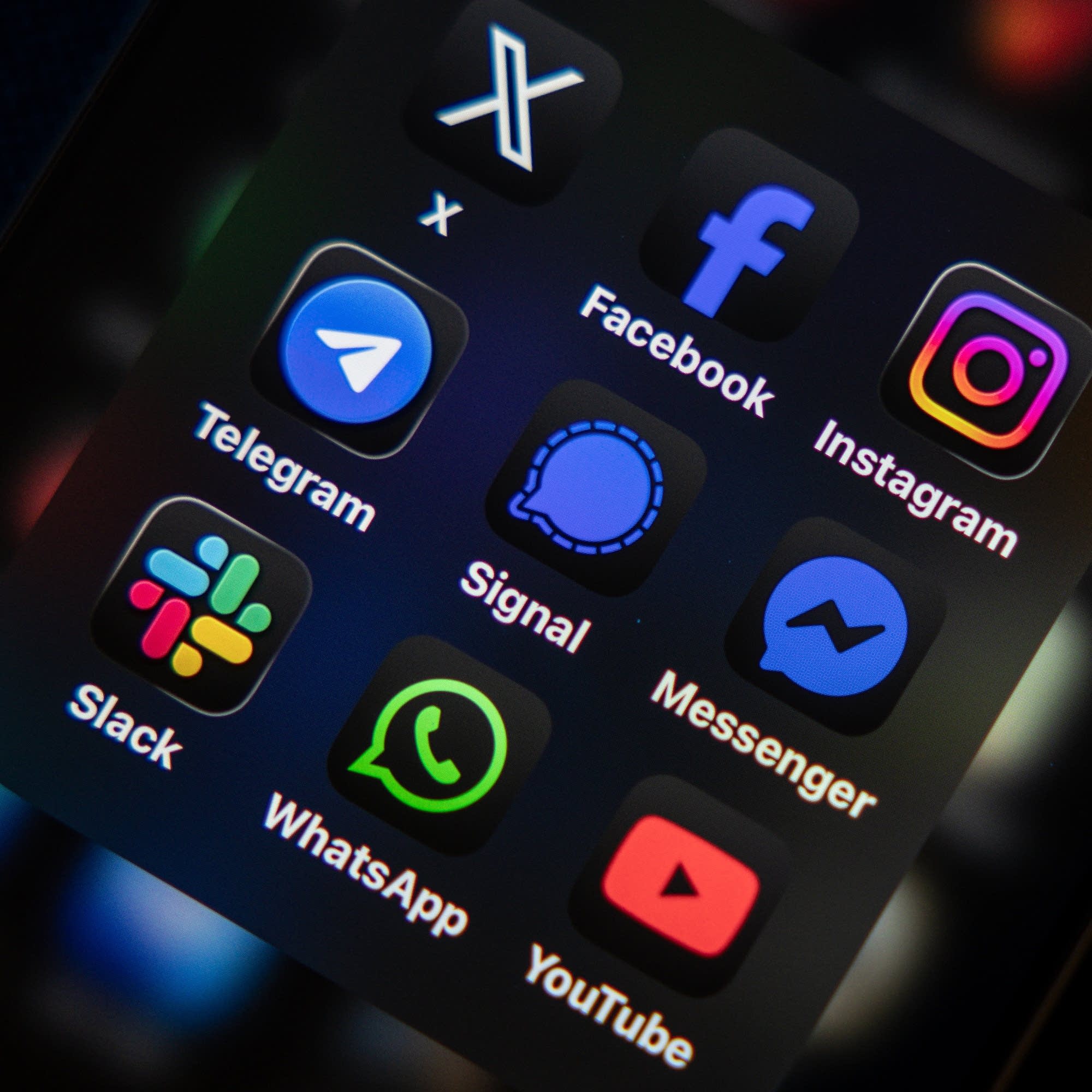
In rare verdicts, juries in New Mexico and Los Angeles sided against multiple Big Tech companies last week.
In Los Angeles, Meta and Youtube were found liable for intentionally creating addictive products, while in New Mexico, Meta was found to have violated state law and misled consumers on child safety guardrails.
The result of these two cases will ripple to the thousands of pending cases against Big Tech companies across the country and could impact future legislation. “Marketplace Tech” host Meghan McCarty Carino spoke with Eric Goldman, co-director at Santa Clara University’s High Tech Law Institute, about the verdicts.
Get every episode summarized
Each time Marketplace Tech publishes, we email you a written briefing from the transcript — the topics, who appeared, and any specific claims, with the ad reads skipped.
Email me new episodesFree for 3 shows. No card needed.
Hosts & guests

Transcript ready
92 searchable segments. Every word is indexed and playable.
Full transcript
Marketplace Tech — Meta and Youtube held liable for their addictive products. Machine-transcribed; use the interactive transcript above to jump the player to any line.
Some verdicts are in, but the jury's still out on the future of social media. From American Public Media, this is Marketplace Tech. I'm Megan McCarty-Karino. Last week in Los Angeles, a jury found meta and YouTube liable for knowingly designing addictive products that harm children. The day before, a jury in New Mexico found meta-violated state law and misled consumers about child safety features. These verdicts could herald illegal reckoning for social media platforms. But there are still some big outstanding questions, as Eric Goldman, co-director at Santa Clara University's High Tech Law Institute. The big takeaway is that the plaintiffs' lawyers successfully convinced the jury to buy into the plaintiffs' basic story. That might sound obvious, but it really wasn't.
We weren't sure if the jury was going to agree with the arguments of the victim. And they did. And so now that opens up the door for what will other juries agree to, and how does that extrapolate into changes to social media? Right. Because there are thousands of other pending cases against these social media giants. What does this mean for those cases? The point of the trial is called a bell weather trialist, designed to basically do some statistical sampling of the overall corpus of cases that have already been filed, and get a sense about how the juries are responding to a representative sample. So it's just one data point, but it gives us a sense that that jury was buying the story. If we get two more data sets, that becomes a lot more persuasive to the both sides about the odds of success or failure. So there also was this New Mexico jury case that found medalliable for misleading consumers
about its app's guardrails. Is this another one of those data points? Is there a commonality there? There is. It's again, the jury bought the plaintiffs' basic story. Now, in that case, the plaintiff was the state attorney general and not an individual victim. In other words, some statutory limitations and considerations in the case that were different than the one in the California State Court case. But in the end, both juries accepted the basic premise that social media services should be legally responsible for the harms they caused their victims. And that then gives us two different data points suggesting juries are buying that. We'll be right back. After listening to Marketplace Tech, I'm Megan McCarty-Kareno. We're back with Eric Goldman of Santa Clara University's High Tech Law Institute. When we spoke to you to preview these cases, you alluded to the role of Section 230.
This is a section of federal law that shields online platforms from liability for user-generated content. Remind us what the role of Section 230 was in this LA case. And does the verdict have any implications for Section 230 going forward? Section 230 says to summarize, websites aren't liable for their party content. And the plaintiffs got around that argument for many of their claims by arguing that they weren't suing over the content that the individual victim saw. They were suing over the way it was presented, the design choices about how the services delivered the content. I have some reservations about that distinction. To me, they are all part of the same editorial process. But the lower court accepted the Section 230 work around in the case for many of the claims. So it really highlights the stakes of Section 230. If it's not in place, the liability exposure is significant.
And I do expect that Section 230 will be an issue in an appeal. The defendants will question the trial course decision that Section 230 made that distinction between the content that was viewed and the way in which it was presented. We mentioned the thousands of other pending cases against social media companies. But these platforms are also facing increasing legislative oversight, mainly at the state level, but increasingly potentially at the federal level. Do you think we'll see the platforms try to preempt further action by changing services themselves? They're already doing that. The services are all rolling out new initiatives that are designed to enhance child safety, to give parents greater controls over their children's experience. All that is already taking place. And some of the legislation would require much stronger, much more significant changes to social media.
And it is possible that the litigation will also produce remedies that are much greater than anything that the services would voluntarily agree to. What are you going to be watching as appeals move forward presumably? The jury accepted the plaintiff's basic arguments that social media services should be legally responsible for the harms that they cause their victim. And one possibility, for example, is that though the lower court said the Section 230 apply an appellate court might say differently, if they do, the jury verdict will be thrown out. And probably that will be the end of the case. Another scenario is that the First Amendment may be in play. Ultimately, if we think about social media services as publishers of content, if they're publishing content, the First Amendment has a lot to say about their choices as publishers. So I'm going to be watching for things like the legal limits on the claims of the plaintiffs. And in a sense, the rights that social media services have to decide what they think is
best for their audience. Why does that fit into this equation? That was not an issue directly in the jury verdict, but it will be unappealed. That's Eric Goldman, co-director of Santa Clara University's High Tech Law Institute. Hey, Sue Salvarado and Nicholas Giang produce this episode. I'm Megan McCarty-Carrino, and that's Marketplace Tech. This is APM.
More episodes
More from Marketplace Tech

Raising kids in an AI-driven world
Marketplace Tech

What AI can and can't do for you (for now)
Marketplace Tech

Amid Silicon Valley scramble for AI agent productivity, "token anxiety" takes ho...
Marketplace Tech

Anthropic’s new, powerful allies: Elon Musk and SpaceX
Marketplace Tech