
Medical Error and Addressing Patient Safety with Dr. Danielle Ofri
About this episode
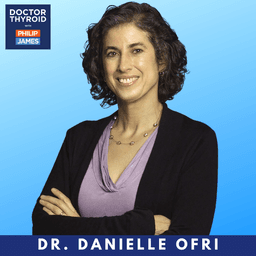
Dr. Danielle Ofri is a doctor at Bellevue Hospital in New York City. She is one of the foremost voices in the medical world today, shining an unflinching light on the realities of healthcare and speaking passionately about the doctor-patient relationship. Her newest book is "When We Do Harm: A Doctor Confronts Medical Error."
Ofri is a regular contributor to the New York Times and is also the editor-in-chief of the Bellevue Literary Review. She lives in New York City and is determined to get through the Bach cello suites before she kicks the bucket.
In this episode:
- Medical error is the third leading cause of death?
After heart disease and cancer. - Intended audience for the book? A general audience; lay-public and medical professionals.
- It is difficult to define a medial error. Starting medication at wrong dose? What errors cause death? This can be vague.
- Hospitalized patients are different than the general public
- All sorts of patient harm should be brought to light — shift the medical field to "more safe" should be our goal.
- Once you are in the patient chair, one loses their strength and power.
- System flaws: more common error is a qualified professional who is burdened by design flaws — including false alarms.
- Collaboration and intellectual humility — recognizing we don't know.
- Patients are sicker and more chronic conditions, mean collaboration helps reduce error.
- Denmark as an example to error response: acknowledge and apologize.
- The U.S. malpractice system as part of the problem.
- Qualifiers of malpractice: harm occurred, doctor was the cause, and consequence was big enough to make the case worthwhile.
- Who is making the laws about malpractice? Could be an underlining agenda.
- Recourse for patients: 1. Talk with doctor or nurse. 2. The hospital's patient advocate. 3. Insurance patient advocates. 4. Local Board of Health. 5. Keep notes, and have a paper trail.
- The system is not designed to get information easy — take advantage of CARES Act.
- When transparency backfires; if a doctor is treating high risk patients, then their error will be higher.
- Doctors penalized for spending more time with a patient.
- The need for silence or time to think.
- The problem with the "reimbursement" model.
- Medical error, adverse events, and unintended consequences.
- Over-treating and over-diagnosis in regard to prostate or thyroid.
- Statute of limitations.
- Errors that don't cause harm.
- Wash your hands and stop and think.
Dr. Ofri's Links:
"When We Do Harm: A Doctor Confronts Medical Error"
Recent events - Dr. Ofri:
tinyurl.com/BLRViral Covid Writing Goes Viral: How Literary and Social Media Writing Became a Lifeline during the Pandemic
tinyurl.com/ReadingTheBody Reading the Body: Poetry, Dance & Disability
Notes
Doctor Thyroid with Philip James
Get every episode summarized
Each time Doctor Thyroid publishes, we email you a written briefing from the transcript — the topics, who appeared, and any specific claims, with the ad reads skipped.
Email me new episodesFree for 3 shows. No card needed.
Hosts & guests

No transcript yet
This episode has not been transcribed. Request it and it moves to the front of the queue.
More episodes
More from Doctor Thyroid
My Honest Review of Dr. Michael Yeh and my Thyroid Surgery Experience at UCLA
Doctor Thyroid
A SURGEON Warns Against Thyroid Surgery: Preserving QUALITY of LIFE with Dr. Ema...
Doctor Thyroid
This patient avoided thyroid surgery thanks to Dr Emad Kandil
Doctor Thyroid
Dr. Emad Kandil EXPOSES the TRUTH About MWA v RFA for Thyroid Ablation
Doctor Thyroid