Get every episode summarized
Each time Live on KEXP publishes, we email you a written briefing from the transcript — the topics, who appeared, and any specific claims, with the ad reads skipped.
Email me new episodesFree for 3 shows. No card needed.
About this episode
“My name is Greg Vandy, host of the Road House Radio Show. Every Sunday morning, very happy to have Amrisa Anderson in studio to play and talk about her new release, called The Anthology of Un-American Folk Music. And look, Amrisa, I'm really happy to be here.”From the transcript
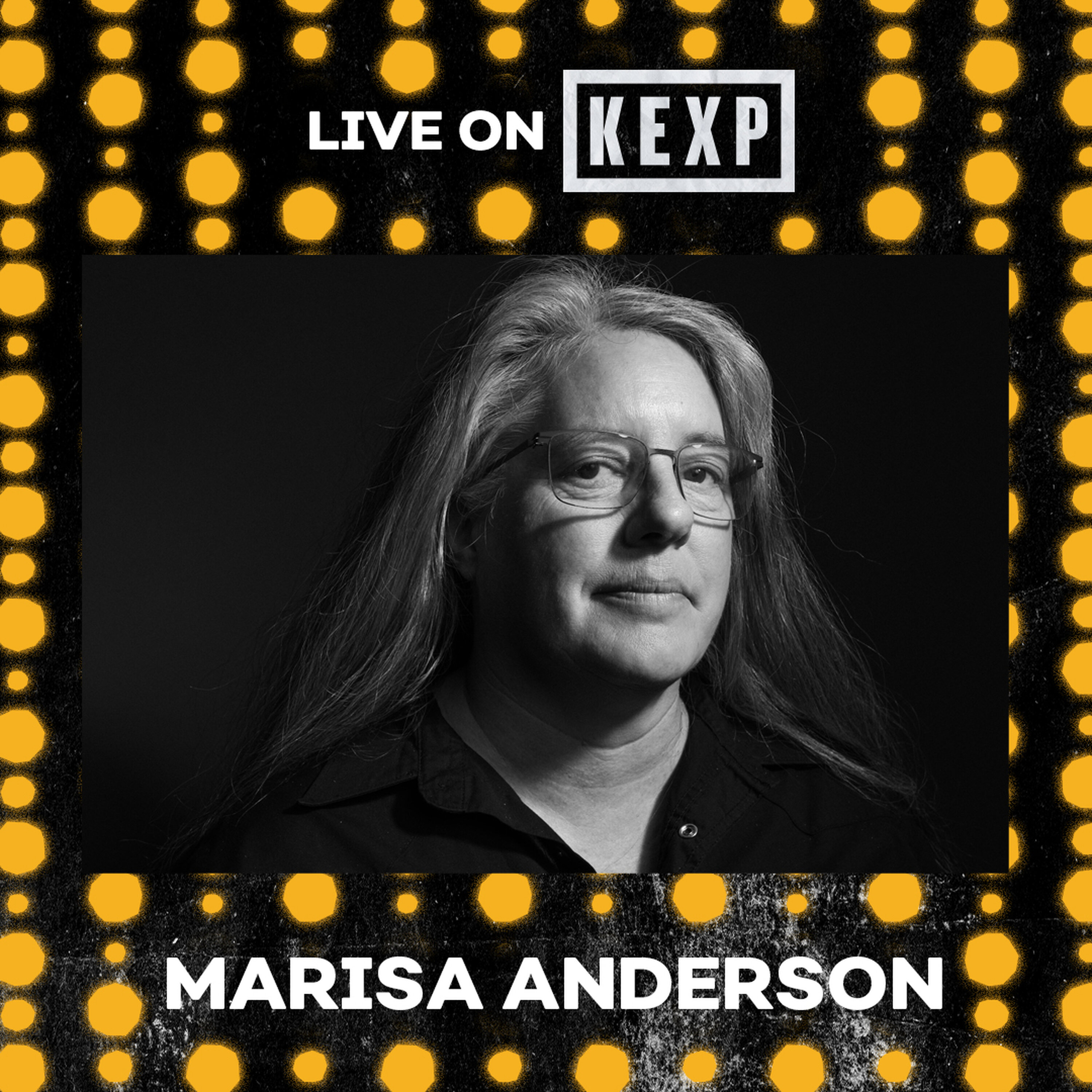
KEXP presents Marisa Anderson performing live in the KEXP studio. Recorded July 24, 2026.
Taqsim for Guitar
Quodlibet
Sarvi Simin
Hamd
Marisa Anderson - Guitar
Host: Greg Vandy
Audio Engineer: Kevin Suggs
Mastering Engineer: Matt Ogaz
https://www.marisaandersonmusic.com
http://kexp.org
Join this channel to get access to perks:
https://www.youtube.com/channel/UC3I2GFN_F8WudD_2jUZbojA/join
Photo by Carlos Cruz
Support the show: https://www.kexp.org/donate
See omnystudio.com/listener for privacy information.
Get every episode summarized
Each time Live on KEXP publishes, we email you a written briefing from the transcript — the topics, who appeared, and any specific claims, with the ad reads skipped.
Email me new episodesFree for 3 shows. No card needed.
Know when Marisa Anderson turns up
Follow Marisa Anderson and once a week we email you every new episode they appeared on — including guest spots the show notes never mention, because we read the transcript.
Follow Marisa AndersonFree. Pick your own day and time.
Hosts & guests

Transcript ready
350 searchable segments. Every word is indexed and playable.
Full transcript
Live on KEXP — Marisa Anderson (Live on KEXP). Machine-transcribed; use the interactive transcript above to jump the player to any line.
This is Live On KXP. My name is Greg Vandy, host of the Road House Radio Show. Every Sunday morning, very happy to have Amrisa Anderson in studio to play and talk about her new release, called The Anthology of Un-American Folk Music. Hello, Amrisa. Hello. Nice to have you. I'm really happy to be here. Yeah. Wanna play? Let's do it.
Hey, Amrisa. Hi. Thanks for coming in here. Absolutely. Sounds great in this room. Thanks. That sounded wonderful. And look, Amrisa, I'm really happy to be here. I'm really happy to be here. Hey, Amrisa. Hi. Thanks for coming in here. Absolutely. Sounds great in this room. Thanks. That sounded wonderful. And what was that song called? That song's called Tuxim Furgutar. And it's from your new album. It's called The Anthology of Un-American Folk Music. Just came out. And congratulations on the record. Thanks. So you're obviously referencing the Harry Smith collection, which I know you're well versed in. And you made a little twist on it. Yeah. So that song I just played, it's from a field recording from 1955, Damascus, Syria. And I've found that field recording on a record
that was in the final collection of Harry Smith. So he obviously in 1952 made The Anthology of American Folk Music, which went on to influence everybody and everything in the United States and change kind of how music is here. And when he passed away, his stuff went into storage. And eventually it showed up. And his final library and record collection ended up at the Bob Dylan Center in Tulsa, Oklahoma. It's stored in a climate controlled room. It's not part of any collection. And I was allowed access to that collection. And I was allowed to download whatever I wanted from Harry Smith's last record collection. There's no 78s. It's not rare stuff. It's just his records. And I thought, well, since he had already made The Anthology of American Music, that didn't need to be done again. And I was real curious about the records he had from all over the world in his collection. And I thought, well, if it's not The Anthology of American Music,
what is it? It's The Anthology of Un-American Folk Music. And it was very literal. And of course, there's a provocation to the name as well. And I thought, what does that mean to be un-American? How is that used? And who have I been told in my lifetime are the people that are un-American? I want to learn about that music and understand what that's about. So this record is nine songs called from about 950 songs from countries that the US has been in conflict with during my lifetime. So those are all Harry collected songs, or you just went off? No. You went from there to find other songs? No, no. He didn't collect these himself. They're just on records that were in his collection. So that's what I mean. Yeah, yeah. So I'm in his collection. Yeah, these are all songs that I downloaded from his record. Yeah, so many people don't even know that part. Like I didn't know that there was more records. So how many records are there in Harry's collection? That's in Tulsa. There's about 1,200 records. Really that many. Yeah. And there's equal amounts from other countries
as well as the ones we're all familiar with. I wouldn't say equal amounts. There's quite a few jazz blues gospel country. There's all that stuff. And then there's the other stuff from all over the world in his collection. Wow. That's amazing. How long were you there listening? I was there for nine days. Yeah. Fantastic. And so all these songs from the album are songs that you've discovered. And they're from different points of the world. The first song was Syrian? Yes. And what's his next one going to be? The next one. Oh, the next one's going to be from Afghanistan. It's an Uzbek folk melody. All right. Let's hear it. This is Marisa Anderson. She's in studio at KEXP.
Marisa Anderson in studio playing songs. So I'm her name. I'm called the anthology of UnAmerican folk music. Just came out. Marisa, what was the name of that one? Quadlibit or Quadlibit. I don't know how you say. And that's from where? It's from Afghanistan. Beautiful. Northern Afghanistan. Is there a sort of an adjustment or a learning process to get like the rhythms and timing right on songs that aren't Western? Oh, yeah. Of course, in every song in the world, Western or non-Western, there's the beat, there's the pulse, there's the accent. Those are all different. And when you play solo guitar, you're a charge-room-mall. Yeah. You spoke about the album, sort of the UnAmerican folk music in terms of breaking down boundaries. And the other part about the album that I read was you chose places in the world that have historically
had a conflict with US foreign policy. Countries we've had conflict with in the past. Yes. So the record is made up of songs from Southeast Asia, from the former USSR, and from the Islamic and Arabic worlds, because those are the people that in my lifetime, I have been told are UnAmerican. And the best way to meet people, if you can't physically, go there as food and music. Food and music. Yeah. That's true. Have you been to any of these places? No. I haven't. Yeah. When you tour, how far out do you go? The farthest I've been is China, Australia. Yeah. But a lot of it is the US, Western Europe, a little bit of Mexico. Yeah. It's a pretty phenomenal album. And you're a great player, obviously. I'm curious about, you've had so many collaborators. Who are some of your favorite collaborators? Of course, we're going to leave out so many, right? And then who are your all-time favorite guitar players? Well, guitar players are collaborators.
Those are different things. But my collaborators that I keep up with, and that I really enjoy working with, of course, Jim White, the drummer, from the 33. From the 33? Yeah. Yeah. We have two records out, and hopefully more to come. And that project is entirely free. It's improvisational. And I think we both get a lot out of that. Another person who I really love to play with is Terje Noneel. I think she's an astonishing musician. And we have a good time whenever we get together. Great. You want to play a third song? Again, this is from the anthology of American, sorry, UnAmerican Folk Meals, is that great? And it's Marisa Anderson. She's with us in studio on KXB.
Marisa Anderson in studio on KXB. What was that one? Sorry, Simon. That is from Tajikistan, which is a Central Asian Republic that was occupied by the Soviets. Very nice. Again, from her album called The Anthology of UnAmerican Folk Music just came out. So for what I understand, you attempted to college thing. You dropped out at 19 or something like that from Humboldt's day, I think, is what I read. And then you started traveling, right? And you had a bit of a nomad existence. And you traveled and played a guitar. What did you see out there during that time of your life? Yeah, I was spent most of the 90s living out of a backpack or just hitchhiking and sometimes living in the car with my dog. And what did I see? I saw the world. I met people. I got an education that I wasn't going to get in college. Yeah, that's what I expected to hear from you. So at what point in your life did you meet someone or hear something that sort of introduced you
to music beyond your native boundaries as a California? Yeah. I mean, there are some obvious things that came out, like Rikuda, someone that has helped bring a lot of musicians, non-Western musicians, into the West. So I heard Ali Farkerturay for the first time through him. And of course, a lot of Cuban music. But digging a little in some less obvious spaces, I want to say that over the last 10 or 15 years, I think my awareness about what it means to be an American in the world has grown. And along with that, has grown an interest and a curiosity and sort of a dedication to understanding things from other perspectives and not just my own central position. Yeah, it's all one music, eventually. Or is it? I don't know. I don't know.
Is there a universal language to music? I think musicians speak a universal language. I don't know that music itself is. But I think that musicians from all over the world and from across time speak something that they can drop in and get right to. When you play with other musicians from other parts of the world, is it easy to drop in with them or is it take time to figure out what they're doing and what you're doing? It can be pretty immediate. I did an improv set in China with four other musicians. We didn't talk about it beforehand. And I didn't know their work. And they didn't speak English. And I didn't speak Chinese. And we played in front of about 1,000 people for an hour at the drop of a hat. Wow. Which was an incredible experience. Sounds frightening. It was awesome. It's improv hard. I mean, it sounds like it goes so wrong but then it can go so right. I mean, we're improvising right now, you and I. Yeah, it's hard. We've never talked before but we speak the same language.
Right, exactly. It's not hard. It takes presence. Like if you're present with it. And it takes fluidity, fluency. Yeah, if you're fluent with your instrument and you're present with the situation you find yourself in, I think that's in proposition. How many guitars do you have? You brought two with you today but at home. I have many more at home. Tell me about that. What's your favorite one? Well, they're just different. You know, like this is the one I like first stage. That one's pretty new to me. I got that from Charlie Parr. Thanks, Charlie. Yeah, I love Charlie. How's Charlie doing? I think he's doing all right. He's so great. Yeah. Is that a dobro? It's not. It's called Mule, the company. I think they're made in Wisconsin, in soda. I'm not sure. Yeah, I've got these two that I like to take around. And then I've got an old Martin that I don't like to take around. Which stays at home. I've got a few. Is there a guitar that never leaves the house?
Because it's too precious. There's a couple. Yeah. And it's not that they're so precious monetarily but they're precious to me. Of course. If visitors come over and play with you at home? Not often. You live in Portland. I live in Portland, yeah. I think it's the best musical city right up there with all the rest. That's all the shine. Portland has so many musicians from so many different kinds of music. Why do you like living there? Because you aren't from there. You move there. Yeah, I've been there for over 25 years. So at this point, I've been there longer than I've ever lived anywhere. You're local there. It's kind of home. But what do you like, why do you like living there? Well, I moved there because it was cheap and my friends were there. And there was good music and art. And I stayed there because my friends are there. And I like that I can go jump in a river 20 minutes from my house. Yeah. Let's hear a fourth song from the album, The Anthology of American Folk Music. You know, I say the anthology titles so often in my radio shows. I just an adjustment to say, UnAmerican Folk Music with that.
But this records all about Marisa Anderson. She's live in studio.
Marisa Anderson, playing songs from The Anthology of UnAmerican Folk Music, just came out. Marisa, it was just a pleasure to have you come play with us. Yeah, thank you for that. Fantastic. And what was the name of that last song and where's that one from? That one's called Homs. And it is from Pakistan. It's Koali Music. It was originally recorded by the Sabri Brothers in 1968 or so. And the source recording is 18 minutes long and it's 10 minutes singing and chanting, clapping, playing percussion and harmonium. Wow. Are you a record collector? I do like to have some records. Yeah, it sounds like you're a digger. Me too. Thanks so much for coming in and congrats on the record and we'll see you down the road.
Awesome. Thank you. This is live on KXP. Thanks to you and your support for Listener Part Radio. We can keep doing these things like in studios or the Music Matters. My name's Greg Vandy.
More episodes


