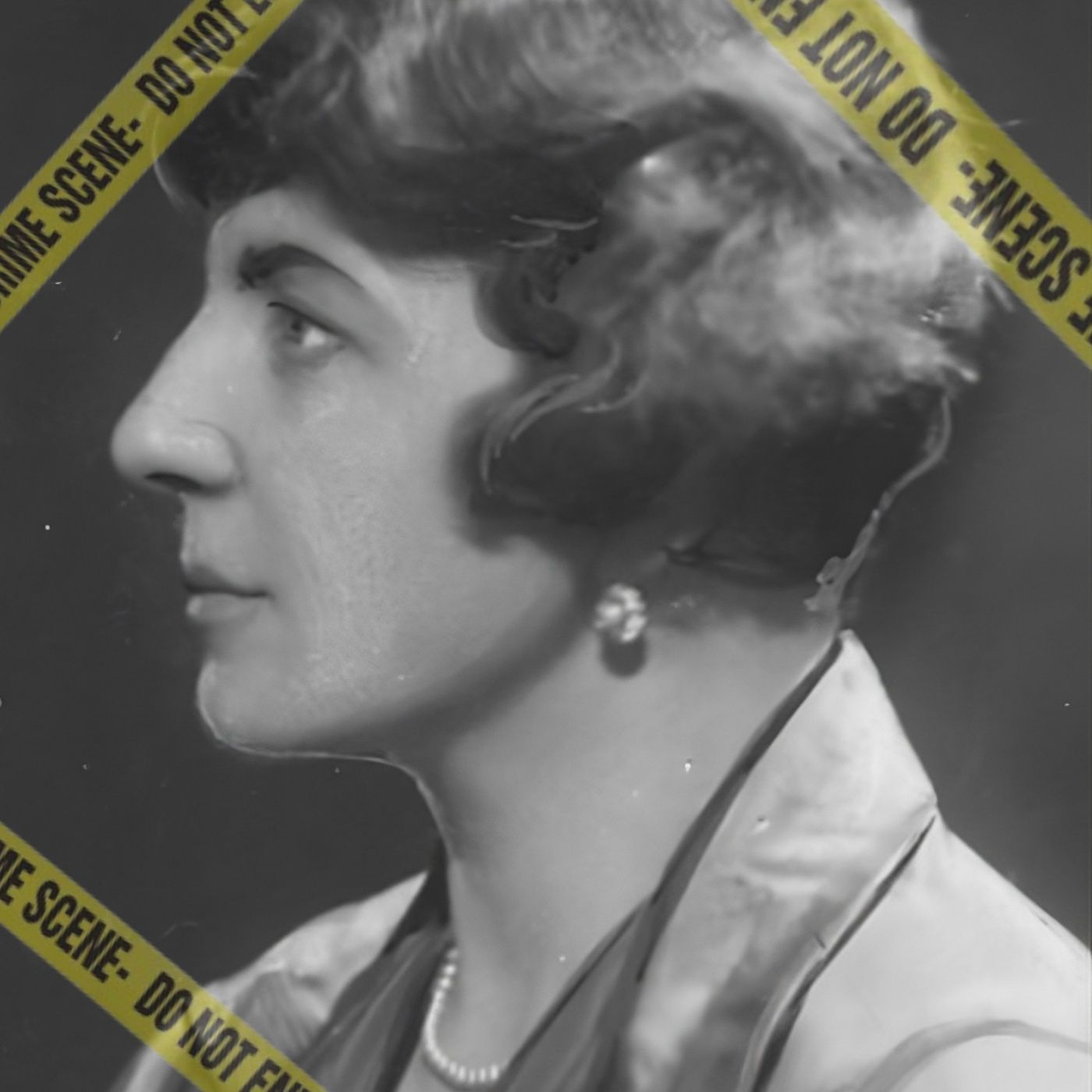
London Underground Murder: The Unsolved Gloucester Road Stabbing (1957, Piccadilly Line)
About this episode
The victim was Countess Teresa Łubieńska, a Polish war survivor who had lived through Nazi prison camps and rebuilt her life in West London. On the night of 24 May 1957, she stepped off an eastbound London Underground train and was attacked within minutes. Witnesses heard her cry out before she collapsed near the station lifts. She died shortly after being taken to hospital.
Scotland Yard interviewed more than 18,000 people, searched railway tunnels, and issued nationwide appeals. No suspect was charged and the murder was never solved.
Many believe the Gloucester Road stabbing was not random. Her wartime role in the Musketeers resistance network meant she carried sensitive knowledge about spies and collaborators living in post-war London.
This UK historical cold case remains one of the most disturbing London Underground murders in British true crime history.
Become a supporter of this podcast: https://www.spreaker.com/podcast/whispers-of-crime-unsolved-true-crime--6281125/support.
Whispers of Crime: Unsolved True Crime is your go-to true crime podcast for exploring the most chilling unsolved mysteries, cold cases, and murder investigations that continue to baffle experts in 2025. We dive deep into infamous serial killer cases, forensic evidence analysis, and criminal investigations that remain shrouded in mystery.
Our true crime episodes uncover shocking twists, DNA breakthroughs, and the latest investigative leads in cases like the Zodiac Killer, Golden State Killer, Long Island Serial Killer, and other notorious unsolved murders. From missing persons cases to underreported crimes, we shine a light on forgotten mysteries that deserve justice and closure.
Whether you're fascinated by forensic files, criminal psychology, or real-life detective work, Whispers of Crime delivers gripping storytelling with compelling evidence analysis. We explore everything from famous cold cases and police investigations to lesser-known homicides and disappeared persons cases that still haunt families and communities.
Join our community of true crime enthusiasts every Tuesday and Friday at 8 PM for new episodes featuring:
In-depth cold case investigations and breakthrough developments
Serial killer profiles and criminal behavior analysis
Unsolved murder mysteries with exclusive interviews
Missing persons cases and abduction investigations
Forensic science insights and DNA evidence updates
Many oth
Get every episode summarized
Each time Whispers of Crime: Unsolved True Crime publishes, we email you a written briefing from the transcript — the topics, who appeared, and any specific claims, with the ad reads skipped.
Email me new episodesFree for 3 shows. No card needed.
Hosts & guests
Transcript ready
684 searchable segments. Every word is indexed and playable.
Full transcript
Whispers of Crime: Unsolved True Crime — London Underground Murder: The Unsolved Gloucester Road Stabbing (1957, Piccadilly Line). Machine-transcribed; use the interactive transcript above to jump the player to any line.
Welcome to Whispers of Crime. We're going to be looking at a case today that is, well, it's one of the coldest, most chilling murders in London's history. Let's set the scene. It's London, May 24th, 1957. The time is just before 11 at night, 10.44 pm. We're on the platform of the Gloucester Road Underground Station. It's quiet, the evening rush is long over. And out of that quiet, the silence is just shattered. A woman is stumbling, staggering toward the only attendant on duty, a lift operator named Immanuel Akinyemi. What Akinyemi sees is just, it's the immediate aftermath of incredible violence. The woman who they later identify as 73-year-old Countess Teresa Ubieska is bleeding and bleeding heavily. She's in profound shock, but she manages to get out her last words, a chilling accusation. She screams bandit, bandit, or maybe banditi, which is the plural form. And then she looks right at the witness and says, I have been knifeed. And then she collapses. The initial summary is just brutal. Five stab wounds. And these weren't random.
The medical reports later confirmed that the killer had aimed with, well, with terrifying precision. Two of those five wounds were directly to her heart. She was rushed to St. Mary Abbott's hospital, but there was nothing they could do. She died shortly after she arrived. Now, this is where the official story and the reality of the investigation begin to split. The police reaction was immediate and it was immense. Emenses the right word. Scotland Yard launched one of the largest investigations in its history up to that point. They interviewed over 18,000 people. 18,000. So right away, that number tells you something. It tells you everything. Publicly, the police pushed this narrative of a botched robbery, you know, to call them public fears. Keep people from panicking about writing the tube at night. Exactly. But internally, the scale of that investigation shows that they suspected something much, much bigger from the very first hour. You just don't interview 18,000 people for random mugging. You don't. And then you have the single most damning piece of information in this entire case.
An immediate institutional failure. What was it? Just days before her murder, Countess Ubi Eska had gone to the police herself. She reported explicitly that her life had been threatened. They knew they had a warning. Her warning was logged, filed away, and completely ignored. And she was assassinated almost exactly when and how she feared she would be. Which brings us to the real question here. What secrets did this 73-year-old grandmother possess that made her a target for a professional hit in the middle of London? Because that's the thing, she wasn't just an ordinary elderly aristocrat. She was Lieutenant-33. Lieutenant-33. A high-ranking operative in the Polish Underground Army, the Army of Krodoa, or AK, this woman was a survivor in every sense of the word. A survivor of what, specifically? She was a political prisoner during the Nazi occupation. She survived the brutal Paliak prison in Warsaw. And from there, she was sent to two of the most infamous concentration camps in human history. Which one? First Auschwitz, where she was prisoner number 44747,
and then Ravensbrook. She saw the absolute worst of humanity and survived it. So she was carrying decades of secrets, sensitive, classified intelligence. And you have to connect this to another tragedy, something that was still very fresh in the minds of the Polish community in London at the time. What's that? Only five years earlier, in 1952, her very close friend, another celebrated Polish female agent named Christina Skarbek, the British new her as Christine Granville. She was also stabbed to death. And London. In London. Now, Skarbek's killer was officially caught and labeled a stalker. But the proximity, the fact that both were high-profile agents, and the method. Stabbing? Yes, stabbing. It immediately started rumors in the emigrate community. Whisperers of a systematic, clean up operation. Someone was silencing the agents who knew too much. And the final nail on the coffin for the robbery theory. Forensics. It collapses instantly. Her handbag was found right there with her on the platform. Nothing was stolen. Nothing was taken.
Nothing at all. This wasn't a crime of opportunity. This was a crime of elimination. It was an execution designed to be swift, silent, and final. Follow Whisperers of Crime on Apple podcasts, Spotify, I Heart Radio, Speaker, and other podcast platforms for daily updates on every crime. And subscribe to our YouTube channel, Whisperers of Crime. To really understand why the Countess was killed in 1957, you have to go back almost 20 years. Back to the incredibly complex, dangerous world of Polish SBNRs during World War II. Tell us more about her. Who was she before she was a prisoner before she was a target? Well, she was born Countess Teresa Skaryuska in 1884. She came from a generation that saw Poland regain its independence only to see it brutally crushed again. Clendestin resistance became an necessity for her entire world. And what was her public role in London after the war? By 1957, her public face was, well, it was respectable, safe. She was a tireless advocate for survivors of the concentration camps. So she was helping people get justice?
Exactly. She was specifically focused on seeking compensation from West Germany for the horrors inflicted during the war. A very public, very noble cause. But it's that shadow of her war service, that rank of lieutenant in the AK. That's the key, isn't it? It is. The Polish Underground, the AK, was probably the largest and most sophisticated resistance movement in all of occupied Europe. But within that huge structure, you had smaller, more, let's say, volatile cells. And she was part of one of those. She was central to one of them. And this connection is almost certainly what got her killed. The musketeers or, in Polish, musketeerily. The musketeers, what made them so different? They were profoundly different from the main AK. They were an elite semi-autonomous intelligence group, a deep cover cell. So they didn't answer to the regular chain of command? Precisely. And that immediately made them controversial. They were viewed with suspicion, even by their own allies in the resistance. But that independence must have come from somewhere. What made them so special?
Their capabilities, their intelligence reach was just unparalleled. Our sources confirmed they had direct links to British intelligence. To SAS, MI6. The very same. And even more dangerously, they achieved incredibly deep penetration into German operations. Specifically, they got inside the Abwehr German military intelligence. And UBS could roll in all this. She was at the very heart of it from the beginning. She ran the musketeers first ever headquarters directly from her apartment in Warsaw. From her own flat. So she saw everything. The operational plans, the decoded messages, the identities of collaborators, and, most critically, the sensitive deals being made between the musketeers' leader and foreign intelligence services, including the British. That level of insight is just... it's staggering to think about. But it sounds like this group was walking a very fine line. And incredibly fine line. The musketeers weren't just high-risk. They were. Well, they became toxic. Because of the political infighting and the compromises you have to make
to get that kind of intelligence. And this all leads to a single, tragic event in their history. It does. The dramatic downfall and execution of their founder and leader. A man named Stefan Woodkowski. Wait, execution. Executed by who? The Nazis? No, that's the crucial part. He was executed by the Polish underground itself by the AK's own internal security court. So the resistance killed one of its own top intelligence chiefs? Why? The official charge was in subordination. But the deep dark suspicion was about his murky dealings and alleged collaboration with Abware agents. So he was a double agent? That was the fear. The line between gathering intelligence on the enemy and actually collaborating with them became fatally blurred inside the musketeers. Let's just pause on that for a second. Because this has to be the key to her murder in London. All those years later. It is the key. If the resistance executed their leader for collaborating and she was running the headquarters. Then she would have known everything. Not just the network's successes, but the failures,
the betrayals. She would have known explicitly who was talking to the Germans, who was a double agent. Which Poles chose to save their own skin by selling out their comrades? And surviving all that, the camps, the internal purges. It meant that by 1957 she wasn't just a war hero. No, she was a living archive of secrets, a custodian of ghosts. She knew which former collaborators people who had worked for the Nazis or maybe later switched sides to the Soviets. We're now living quiet, respectable new lives. Right here in the Polish community in London. Exactly. And that changes everything about her murder. Her mere presence in London was an existential threat to someone. She represented this unwritten, dirty history of wartime compromise. Imagine it. She gets on the tube and she sees a face. A face she hasn't seen in 15 years. A face she last saw in a secret meeting in Warsaw. A Polish turncoat. Someone who might now be working for the communist Polish security services, the UB or SB. Precisely.
And in that moment, her life is forfeit. The silencing of Countess Ubieska becomes a last-ditch effort to protect a new identity or maybe even an ongoing Cold War spy operation. She survived the Nazis. This vast overt machine of death. Only to be killed by the quiet and visible machinery of the Cold War. Targeted not for what she was doing in 1957, but for what she knew from decades before. So let's go back to the attack itself, the physical reality of it. Analyzing the crime scene, the friends. It really shows you how professional this killing was. It does. Let's revisit that timeline on May 24th, 1957. It's so tight, so precise, it almost has to be the result of surveillance. She leaves a dinner party in Ealing at 10.4.15 at night. Right. Boards an Eastbound Picadilly Line train just four minutes later at 10.19. And the journey is 23 minutes. She gets off at Gloucester Road Station at 10.42 pm. And the platform was quiet. That's a critical detail. She was isolated. It gave the killer the perfect window to move in,
strike and get out with speed and certainty. The precision here just screams that this wasn't random. The killer knew where she'd be and knew she would be vulnerable there. And the forensic analysis, specifically of the weapon and the wounds, is probably the most damning evidence against that whole botched robbery theory. What do we know about the weapon? It was small, it was sharp, and it was highly specialized. The corner concluded it was likely a stiletto or a very thin dagger, probably only about two to three inches long. And why is the type of weapon so important? Because the stiletto isn't a weapon of rage or opportunity. It's a tool of assassination. It's designed for silent close quarters work. Easy to hide. Very easy to hide. It allows the killer to get close without causing alarm, deliver the fatal blow and conceal the weapon again in seconds. It is not the kitchen knife or the lead pipe a panicked mugger would use. And the wounds themselves tell the same story. They match the weapon's intent perfectly. Five precise stabs. Two delivered directly to the heart.
This isn't about injuring someone. This is about guaranteeing death. It's not rage, it's mechanical. It's an execution. The wounds were clustered in the torso, designed to shut the body down immediately. A typical robbery involves a threat. Or maybe a single blow to scare the victim. Right, you grab the bag and you run. You don't inflict five precise fatal wounds and then leave the bag. The one thing you supposedly wanted sitting there. The primary objective here was clearly the death of Teresa Ubiesca not stealing her purse. Which brings us back to that single, difficult piece of evidence. Her dying words. She screamed, band it. And the police seized on that word. It became the entire foundation for their public narrative. See? She said, bandit, it must have been a robber. But we have to look at that word through her eyes, through her history, don't we? We absolutely do. This is where you need that critical historical analysis. Yes, to you or me, bandit means a common thief. But for a woman who spent her life fighting a clandestine war.
A war against bandits. Exactly. Nazi agents, collaborators, Gestapo informants, and later communist spies. In the language of the Polish resistance, a bandit was an enemy, a traitor. Someone operating outside the rules of war. So given the Cold War paranoia, given the high probability she recognized her attacker, bandit could have been her final act of identification. It's overwhelmingly likely she wasn't describing a crime, she was identifying an enemy. Bandit was an accusation against a recognized traitor to Poland. An enemy combatant from her past, standing right in front of her on a London 2 platform. It's entirely plausible, but the police chose the simple, literal interpretation why, because it allowed them to depoliticize the case instantly. It was the easy way out. The path to closing the file, no matter what the truth was. Don't forget to follow whispers of crime on Apple podcasts, Spotify, iHeartRadio, Speaker, and other podcast platforms for daily updates on every crime. And subscribe to our YouTube channel, whispers of crime.
Like share this episode with others who might have information about this case and help? Also comment your suggestions below. Drop your positive review and rating. Remember to check out our recent released UK historical cold case like this. The police investigation is such a paradox. On one hand, you have this incredible deployment of resources. 18,000 interviews, a massive dragnet across the city. But on the other hand, it was a complete and utter failure. One of the biggest manhunts in met history and it produced absolutely nothing. Zero. It just doesn't make sense. Why launch such a massive effort if you're just going to dismiss it as a simple robbery? Because the investigation had two faces. There was the public face, the botched robbery story, meant to reassure Londoners that the streets were safe. And the private face. The internal investigation was a desperate scramble to contain a major national security incident. They weren't looking for a common thief. They were looking for a professional operative, a foreign agent whose existence could expose a massive intelligence failure on British soil.
They interviewed two abusers, residents, known criminals, anyone with a connection to the Polish community. A community that was already steeped in paranoia and mistrust, and yet the killer and the weapon, they just vanished. Let's talk about the weapon. The police searched for it, right? They did. They scoured the two tunnels between Gloucester Road and the Next Station South Kensington. They were working on the assumption that a panicked killer would have tossed it onto the tracks. But a professional wouldn't do that. A professional using a small stiletto would have simply slipped it back into a pocket or a sleeve and walked out calmly. The tunnel search was. It was probably more for show, a gesture of due diligence. They couldn't have seriously expected to find it. But the real mystery, the truly terrifying part of this investigation, isn't the missing weapon. It's the missing witnesses. The vanishing witnesses? Yes. Our sources, the police files, they're very clear on this. Two specific people were seen running from the station moments after the attack.
And they didn't take the normal exit? No. They deliberately avoided the main exit or the lift operator, the only official witness was. Instead, they fled up the emergency spiral staircase and disappeared into the night. Their actions, avoiding the main exit, that strongly suggests they were either involved or they saw something that terrified them. Absolutely. So let's describe who the police were looking for. The first was a man. He was known as the Fairhaired Man. Described as having a fair complexion, wearing a light-colored suit, possibly with a checked pattern. And he was with a woman, she was known as the woman in red. A smartly dressed young woman. The detail that made her so memorable was that she was wearing distinct, bright red high heels. They were seen together. They either saw what happened or they made it happen. And despite the massive citywide publicity, they never, ever came forward. So that's the big question. Were they co-conspirators? Was he the killer and she was the lookout? Or were they just innocent bystanders who had the terrible misfortune of witnessing a political execution up close?
And they realized in that split second that coming forward would be a death sentence. Their silence speaks volumes, doesn't it? It tells you so much about the climate of fear in London's emigrate community at that time. In 1957, that community was saturated with mistrust. They knew far better than the average Brit that the Communist Polish security services, the UB and the SB had operatives all over London. So if you witness a political hit, you don't call the police. You don't, because you fear that cooperating with Scotland Jard might just make you the next target. You know too much. You saw the killer's face. The fact that these two people kept silent for their entire lives, that they evaded that massive police manhood, it suggests their fear of the killer was far greater than their fear of the law. It points to a profound and successful conspiracy of silence. It tells you the assassination team was either incredibly professional or incredibly well protected within that community. All those 18,000 interviews were essentially for nothing. Because the people the police really needed to talk to
were already ghosts. They were in hiding, were so deeply embedded, they were simply untouchable. So when you connect all these threats, the extreme violence, the specialized weapon, the fact nothing was stolen, the police warning that was ignored, the silent witnesses, the main theory becomes almost undeniable. It does. This was a political assassination, almost certainly carried out by agents from the Communist bloc, the red hand of the Soviet sphere of influence. Let's really drill down on the motive. It wasn't just about old history. No, her knowledge was still alive. It was dangerous. She held the keys to the most controversial secrets of the musketeers, a network that made deals with British intelligence and was compromised by German intelligence. And the people who committed those wartime betrayals were still around in 1957. They were. They were either living as respectable members of the emigrate community or even more dangerously. They had been recruited by the Communist regime back in Poland to act as spies in London. And London was the perfect place for that.
The Polish community, while officially anti-communist, was known to be heavily infiltrated by spies from the UB and SB. So the motive is really about exposure. You have to imagine a high-ranking communist agent or a deeply compromised collaborator living in London under a new name. And then, one night, he sees Count Azubi Eska on the two platform, a ghost from his past. And she recognizes him. That cry of bandit, it was the moment of recognition, her ability to destroy his new life, to expose a valuable agent, became an immediate and critical threat. A threat that had to be neutralized on the spot. And the method just reinforces this theory. The stiletto is a professional's weapon, the timing, the location. It all suggests careful planning, not a moment of panic. It's consistent with known intelligence agency assassination techniques. We have to come back to the parallel with Kristina Skarbeck, her friend who was killed five years earlier. It's such a chilling parallel. And while, yes, officially Skarbeck's killer was identified as a snaker, you cannot ignore the psychological impact of this.
Two of the most high-profile female heroes of the Polish resistance. Both killed by stabbing in London within a five-year window. It's too much to be a coincidence. So what does the Skarbeck parallel really imply? It implies a systemic failure to protect these women, at best. At worst, it hints at an active cleanup operation. Cleaning up what? Losens. These women were repositories of potentially embarrassing secrets. Secrets about allied operations, wartime compromises. The identities of Soviet agents who were planted during or after the war. For security service looking to sanitize the past and protect its current assets, targeting these women becomes a grim kind of logic. It's a terrifying thought that the Cold War wasn't just fought with missiles and grand strategy, but with quiet individual executions on the streets of London, disguised as common crimes. The balance of the evidence, the professional method, the political history, the climate of fear, the lack of any other motive, it all points in one direction. This was a political liquidation,
meant to silence an influential anti-communist voice who simply knew too much about the traitor's living in the shadows. Okay, to be thorough, we have to look at the other theories. Even if they don't really hold up. Absolutely. For the sake of analytical rigor, we have to examine what the police were telling the public. So let's start with Theory B, the botched robbery. The police really tried to sell this one. They did, and their entire case was built on that one word, bandit. But as we've said, the counter-evidence is just overwhelming. A common thief takes the loot. They snatch the purse and they run. They don't stab a 73-year-old woman five times with the precision of a surgeon. Two wounds aimed directly at the heart and then leave the handbag sitting right next to her. The violence is completely disproportionate to the supposed crime. It's overkill. It's inconsistent with the motivations of a petty criminal, and it's entirely consistent with an execution. The police use that word, bandit, as a convenient way to depoliticize the entire case. Then what about Theory C, the Hooligan Theory,
the idea of a random confrontation? Right. This theory gained a bit of traction at the time. You have to remember, post-war London was dealing with a rise in youth violence, the so-called Teddy Boy subculture. And there was a witness who saw something on the train. There was. A witness reported seeing the count as scolding a rude young man on the Piccadilly line earlier that evening. So the theory goes, maybe she confronted him again on the platform at Gloucester Road. And he just lashed out in a fit of rage. Exactly. It's a theory that tries to explain the sheer number of stab wounds as rage instead of cold-blooded execution. But what are the problems with that theory? It falls apart pretty quickly, doesn't it? It fails on multiple fronts. First, the weapon. A stiletto is a specific, pre-meditated choice. It's not the kind of thing a typical youth carries around, and it's not an improvised weapon used in a moment of rage. Second, the precision. The two wounds to the heart, that's not random flailing. And third, it completely ignores the entire political context
of the victim, and it can't explain the two vanishing witnesses. Why would two people be so terrified of a random youth that they would maintain a paranoid life-long silence? They wouldn't. The Hooligan theory only works if you completely sever the crime from its history, from who Treesu Hubiasco was. And the evidence just doesn't let you do that. So it seems like both of these secondary theories were convenient. They allowed the authorities to file this away as either a common crime or a random act of violence. It kept the lid on the Cold War paranoia that was simmering just beneath the surface of London. And where does that leave the case today? Almost 70 years later. Officially, it's unsolved. It remains an open homicide case in the Metropolitan Police Records. And the files. The 18,000 interviews. The official police files are held at the UK National Archives in Q. They're in the MEPU series, which covers the Metropolitan Police. But, and this is important, the details of her wartime activities are still considered sensitive. Because of the musketeers and their length to British intelligence.
Precisely. The operational ties the musketeers had to SIS mean that any files relating to their activities, especially things involving collaboration or intelligence compromises are still highly classified. The fact that those files are still sensitive today tells you just how explosive the secrets she carried really were. And it's also notable that there is no active public investigation by the IPN in Poland. That's the Institute of National Rembrandt's. They have a mandate to investigate communist era crimes against Poles. So why aren't they looking into this? It suggests the primary records are still locked down tight within the UK system. It highlights the complex international nature of this cold war crime. And yet the case just won't go away. No, it refuses to die. There's been renewed media interest, new books and documentaries in recent years. The historical community continues to see this for what it was. A political assassination masterfully disguised as a street crime. The murder of Countess Theresa Vieska really is a perfect crime, isn't it?
But not in the way we usually think. No, it's a perfect crime because a professional assassination was successfully disguised and dismissed as a random act of violence. It allowed the real killers to walk free and the political fallout to be completely contained. What the sources really show is a profound institutional failure. It's heartbreaking when you think about it. Here is a decorated resistance hero, a woman who survived the absolute hell of Auschwitz and Robbinsbrook. She walks into a London police station and begs for help. She warns them, she tells them her life is in danger. And she is ignored. She survived the machinery of total war only to be executed by the machinery of covert war because the nation that gave her refuge failed to protect her. She was silenced because what she knew about wartime compromises, about poles who sold out to the Nazis and then maybe switched to the communists was still volatile enough in 1957 to ruin powerful people. To expose ongoing intelligence operations right in the heart of the United Kingdom. Her legacy shouldn't be that of an unsolved murder victim.
Her legacy should be her incredible resilience and the knowledge she held, the truth she refused to relinquish even at the cost of her life. She is a forgotten victim of that secret war fought in the shadows long after the big one had ended. And you have to wonder, when a state finds it so convenient to push the simplest, most mundane explanation for a crime, a botched robbery, when every piece of evidence points to something more sinister. How many other cold cases are out there like this one? How many are actually classified assassinations hidden forever behind the simple label of street crime? The chilling truth of this case is that while the killer and his deletto vanished into the London night, the motive did not. The motive remains preserved and untouchable in sensitive government files, which confirms that the real secret of the Countess's death was not who killed her, but why her murder was allowed to remain unsolved. Don't forget to follow Whispers of Crime on Apple Podcasts, Spotify, iHeartRadio, Speaker, and other podcast platforms for daily updates on every crime
and subscribe to our YouTube channel Whispers of Crime. Like share this episode with others who might have information about this case and help, also comment your suggestions below. Drop your positive review and rating. Remember to check out our recent release UK Historical Cold Case like this.
More episodes
More from Whispers of Crime: Unsolved True Crime

William Tyrrell Disappearance: The Foster Home Cover Up (2026 Update)
Whispers of Crime: Unsolved True Crime

Chicago Strangler: The Serial Killer They Refused to Name (2026 Update)
Whispers of Crime: Unsolved True Crime

Somerton Man: The Tamám Shud Code That Still Haunts 2026
Whispers of Crime: Unsolved True Crime

Kyron Horman: The School Science Fair He Never Left (Unsolved)
Whispers of Crime: Unsolved True Crime