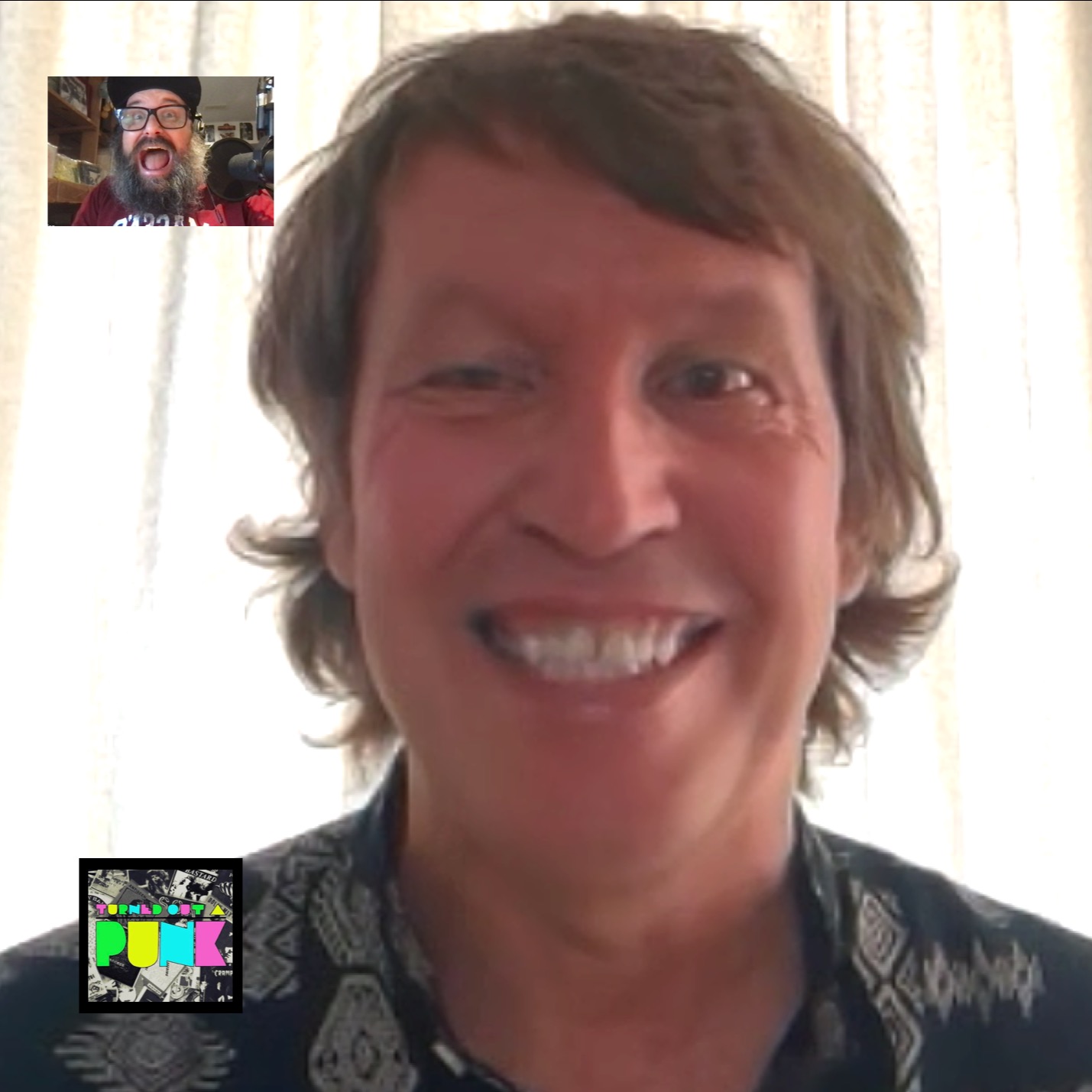
Jeffrey Joe Jensen from Earles and Jensen and The Star Spangles is here
About this episode
Do your tight bros call you Ditchweed? Well, good news: Jeffery Joe Jensen is here! Listen in as Damian sits down with half of one of his favourite comedy duos to dive deep on punk and Jeff's awesome new non-comedy music album. From 'Institutionalized' being darkly prophetic, to the night DRI's 'Crossover' went wrong, to the Star Spangles hoodoo Hoodoo Guru's story, to getting shot and nearly dying while on weed and so much more: DON'T MISS THIS ONE!
Also, don't miss Jeffery Joe Jensen's solo debut at GONERFEST 23!
Also, keep your eye glued to Goner Records for up coming Jeffery Joe Jensen news...
Support this podcast at — https://redcircle.com/turned-out-a-punk/donations
Advertising Inquiries: https://redcircle.com/brands
Privacy & Opt-Out: https://redcircle.com/privacy
Get every episode summarized
Each time Turned Out A Punk publishes, we email you a written briefing from the transcript — the topics, who appeared, and any specific claims, with the ad reads skipped.
Email me new episodesFree for 3 shows. No card needed.
Hosts & guests
Transcript ready
1,769 searchable segments. Every word is indexed and playable.
Full transcript
Turned Out A Punk — Jeffrey Joe Jensen from Earles and Jensen and The Star Spangles is here. Machine-transcribed; use the interactive transcript above to jump the player to any line.
Music Hello and welcome to another edition of Turned Out of Punk. I'm your host Damien Abraham and today on the show is one of the reasons I do this podcast. Someone who has lived in mystery to me for decades at this point from the comedy duo of Earl's and Jensen from the Star Spancles I found it recently from strange moments and now from a brand new upcoming solo record on the venerable
goner records Jeff Joe Jensen is on the podcast today. Jeff is someone I first met at Matador 21 years ago he was one of the hosts but I was already very familiar with him through just far alaff the comedy CD that he did as one half of the comedy duo Earl's and Jensen which initially came out I think it was 2003 maybe 2002 but then was reissued by Matador records around the same time as we started as we signed to Matador records or were on Matador records so it felt very much part of my life throughout that time period something that I've listened to as I tell Jeff in a second you'll hear me say it hundreds of times thousands of times in the fucked up van something we all kind of listen to I think various members of the van loved it in varying degrees some less than others but myself certainly being at the higher end of that love fest for that
comedy record but as I say here when I started or as I said two minutes ago when I started researching for this episode finding out that he was also in Star Star Spangles the the Star Spangles a band that I've loved since I guess I saw him on Conan O'Brien the time they played on Conan O'Brien which is after Jeff had left the band but they blew my mind I bought their records every time I found them and their CD but a band that was shrouded in a little bit of mystery to me and a lot of that mystery is revealed today once again with triple J as you'll hear in one second as I also said he has a new record which is awesome coming out on goner records I believe that will be announced more formally in the upcoming weeks and I believe music will be put out so you guys can all hear it any links to that I will put into the text of this thing as as it is released down below but if
you are able to make it to goner fest number 23 there are people I know they're playing their whole year around going to goner fest and it is a because they're one of the best fest going I'm never gonna chance to go myself this year would be one that would definitely tempt me some fantastic bands some bands I know some bands I'm unfamiliar with but I can guarantee you they're all fucking great and Jeffrey Joe Jensen will be debuting his new material at this event they will be as I say be putting out this record I will let Jeff tell you about it a little bit later on in the show but I have heard an advanced copy and I love it I love this thing I'm not gonna ramble on anymore I've talked a little bit for you right here when we get to the part where we're talking about the violence that went down at a DRI show I sound very excited I assure you I'm excited about the confluence of people involved not about the
violence that happened at that show because I'm definitely not excited about the violence but I'm excited about all the people that were brought together by that moment of great violence anyway you'll hear later on when it gets that point in the show and that's that sit back relax and enjoy Jeffrey Joe Jensen on turned out a punk Jeff thank you so much for coming on the show Damien it's a real pleasure to be here because I'm a fan of turned out a punk so I'm honored thank you for having me well I appreciate that very much because I spared you from this a minute ago just far alaph had has gotten me through many tours and many dark periods in my life it is a constant companion for me and I feel like like a comedy that nothing has touched in ever for me since listening to it so I
feel like there's a mutual audio connection between our fandoms right oh great yeah you know it's interesting I've heard that from so many different bands that it's been a tour tour van companion I don't know if it's something that provides a barrier between the band members actually communicating with themselves and therefore squabbling and fighting or if there's I don't know you know why that is especially beloved by touring bands from the let's see the early 2000s I guess and beyond but it is I guess these days they probably listen to your podcasts rather than relying on spoken word comedy from the turn of the millennium but like do you hear that do you do you hear a band saying like Damien you're turned out a punk podcast have really gotten our
band through so many tours I don't know if anyone's giving me quite that level of praise but I have had the yeah I've definitely a lot of people in bands I find are the people that listen to this podcast it's not we don't get huge numbers it turned out a punk I should have warned you about this before you came on oh fuck this really really excused but but I find the the people that it does reach are are a lot of friends and and like-minded souls and so yeah like that's what keeps it going I find like I'm certainly not doing it for the money that's for sure but it's it's more the chance to kind of for me like unpack a mystery and with you there is a lot of mysteries because I first got just far a laugh from Kent Stevenson a former coworker who has to this day the best taste that of anyone I've ever met but he had the burnt CDR's way pretty the Matador stuff and actually when we signed a Matador a huge
connection between us and the label like Gerard from the label was the fact they were gonna be putting out just far a laugh from reissuing it so there was a mystery to the CDR there was then a mystery to the connection of Matador and then here I am doing the research for this fucking episode and you played in one of my favorite post-millennium bands the star spangles this is gonna be a more blur of an episode I was wondering which post-millennium band you were gonna refer to but I wasn't expecting that one because I've been in a lot and they're all there they're all there's scant documentation and you know internet visibility for most of them the star spangles might be the most visible of them but anyway we can get into that but that's cool yeah that you were aware of just far a laugh prior to joining Matador I mean it doesn't
it's going back to the thing about the touring bands listening to it and everything I mean much like your podcast it's not surprising obviously that you know a lot of indie bands enjoyed that material because you know I mean a lot of the reference points are very specific and sort of the the maybe the sensibility of the humor is unintentionally you know geared for a particular demographic so yeah you know I've been living outside of the US for the last 13 years mostly and Jamaica for seven years now I mean I'm currently in Nairobi Kenya as I speak to you and unsurprisingly I don't have a lot of Kenyan fans that have come up to me and praised the discs well it's funny because they're just a mirror but I have a feeling they're just they're unfamiliar
and deeply uninterested in the material so well that's why I think it hits with people in bands so much is because it is it is humorous because of the reference points but it's also funny because it hits on a more unconscious level than reference points like it's not parody of punk and it's not parody of indie music it's it's on the same wavelength because that's we're all from the same group and I think that speaks to people in bands like when you listen to it it's not like it you know you're making jokes about the sex pistols the jokes hit because it's the reason we all like certain bands that makes us also like that I don't know I'm getting deep this is very early in the morning this is the earliest I've ever recorded an episode so oh yeah thank you for getting up so early did you do this because I'm so far ahead of you and well I as I mentioned off air I have a pretty full house of kids these days and still on summer vacation and so around eight o'clock this house gets
pretty loud and okay and I got also make my wife lunch before she goes to work so it all it all added up to me making this make the most sense at the time and now you're gonna have to see if it actually does make sense we're gonna see my break in function this early in the morning okay but I got to start off though the way they all started off with Jeff which is how'd you get a punk from the first time you came across the genre well considering you know I'm a fan of your podcast I was a braced for this question because it's the only comment denominator and all of your podcasts as far as I know unless there's cash gifts and prizes that all the guests receive afterwards I don't know say it's their second award yeah but you know for me Damien this is a convoluted answer because it's a little fuzzy but I should back up and contextualize that I was born in 1972 and I was raised in a very middle class midwestern
suburban environment and my parents were aggressively average I would say you know in terms of their connection to culture there was nothing subversive about them but yet they had Beatles records and they had some cool 45s around the house and they constantly listen to the radio and even more than the radio the television was just continuously on I know that now a lot of progressive parents try in vain to limit the screen time of their children I'm sure you can relate with that very much but back in my day the TV you know was never considered damaging so it was just continuously on so I really do think that I saw a news report about the sex pistols coming to the United States when I was probably about six years old and you know it was just something
that was a little bit confounding and I tried to make sense of it but obviously I was quite young so if I was to be like scientific about it I think I probably heard the word punk in relation to that as a young child but didn't really make much of it but then for me there's kind of like these distinct periods between say 1978 where I may have first heard of it and after that punk became now I realize in England and America it's it's extremely different because punk was omnipresent you know once the pistols went on Bill Grundy suddenly every tabloid was talking about it and even grandmothers knew about punk in England whereas a hallmark of punk in the United States is it never gained proper mainstream notoriety however it was still
some what ubiquitous in the mainstream you know because I remember Blondie and Devo being associated with the word I was like I said just a voracious consumer of television so there was even a WKRP and Cincinnati episode that you're probably aware of you know maybe some of the listeners aren't but that came out in the late 70s and it had a punk band led by Michael Debar which I think they're called scum of the earth or something have you seen this yeah yeah yeah it's come of the earth and he did wind up like checkered past right with Steve Jones at some point he sings in or he sings in some well he was in the band detective I mean that was the band that he was that was playing scum of the earth you know I don't know a lot of the details I mean I know obviously he was Pamela's husband and he's got a really storied background
I think I saw the Ramones on Shaanana with my with my parents and again this this phase of punk to me it was not necessarily menacing or dangerous it was just fascinating and it was something another thing I should add about being amid Westerner I grew up in the suburbs of Kansas City I think I had a deeply embedded inferiority complex growing up because I never thought Kansas City was cool and I figured whatever this punk music was had to be happening in California England or New York or somewhere better than Kansas City which was almost anywhere really I've come to appreciate Kansas City quite a bit subsequently after leaving but and I feel like I should make a digression when
I mention Shaanana because I really respect your knowledge of minutia but I heard a story about Sid Vicious and Shaanana do you ever heard this this is something my friend a fellow Canadian Ian Marshall whom you may have met the night of the Matador Vegas thing I did but anyway he's he's a really deep head when it comes to music but you know famously the sexist was broke up in winter in San Francisco John Johnny rotten he went back to England in Jamaica Steve Jones and Paul Cook got down to Brazil shortly after that I think with Malcolm Claren but as to what happened to Sid Vicious in the immediate days following the Winterland performance now this is a story I've heard third hand so forgive me I
mean what do you know about Sid's immediate happenings after the breakup I think he's bombs around San Francisco for a minute then he he gets to get money for a plane ticket right to and he gets no he goes to England gets back to England somehow through I think Malcolm gets from England at some point but I don't know immediately right after yes this is this is the story that I heard that he he somehow wound up in Los Angeles after San Francisco maybe in the immediate aftermath I don't know the timeline here but it was shortly after and there was some girl who's connected to the germs that ultimately I don't think it's Darby's girlfriend in the famous scene from the clan of Western civilization in the kitchen when they're talking about the dead guy she also saying it twisted roots too yeah but it's it's a it's a kind of a well-known LA chick and maybe even a sponge and ask you know notorious chick around LA that Sid linked up
with and this is a story because my friend Ian interviewed this woman and I pardon me I don't remember her name and she claimed that when Sid came down it was similar to some of the scenes that we know from Sid and Nancy like she had a very suburban family and then there's this like the drag old wasted you know leather a clad just mess sitting in the house or something but that Sid was obsessed was Sean on a and he had never seen or because they couldn't see it in England naturally in like 78 you know it didn't get aired there like he not only wanted to see it like he had the TV guy like oh Sean no no it's coming on Wednesday now we must watch Sean no no and she said like oh I know where they shoot that you know at whatever studio so he was like obsessed like white shot we can go see Sean he was apparently fixated on going to find Sean
on a in Los Angeles and she took him down to this to the studio one of the major TV studios and like the security guard said oh well you know they hang out at this bar so they then went it was all in vain Sid never got to meet Sean on a so there's no payoff to the story but I just find it really charming that even after his band has broken up and his life is like in theoretically in ruins without direction the only thing he's concerned with is finding Sean on a now again I can't totally substantiate that but I like the story I also love it because God it must be like 30 years ago this week I saw Bowser from Sean on a play so there's oh yeah there's some sort of you down down and yeah yeah so I'm playing at the Toronto exhibition which is our big
local kind of fair that happens I think it's like three weeks every year but it was I went and saw Bowser perform so I feel this a very cosmic connection with Sean on not too that's awesome but anyway so I was I was I there was a massive digression because I was talking more about my own connection with punk and you know wow like I again and not only were my parents not subversive none of their contemporaries or anyone in our suburban sphere were anything other than just also aggressively normal average suburban people so all of my information was coming through mainstream sources but there was still it was nothing like England but there was still a lot of so-called punk things happening and and like 1981 I remember the Go-Go's hitting and that being so massive and then obviously the first time I heard about the clash was Rock the Casbah this is
all very mainstream stuff but it was forming my conception of what punk was another highly influential source was Square Pegs the television show I don't know if you remember that you're a little younger than me but that had you know a punk character and also it introduced like the idea of Valley Girl into the universe and lexicon of suburban Midwestern America which that's another thing I could digress on for a second I remember life in the 70s before people spoke in the Valley Girl vernacular like oh my god like that's awesome although it has connections possibly to beat Nick Sline because the
Manorgy Krebs character and Dobie Gillis played by Bob Denver that was always saying like far out or like wild daddy so that using like in a intentional way as you know some kind of an affect on the extreme way like it came it became a thing but I find that interesting now because in 2026 let's do the math it's like 45 years after the Valley Girl phenomenon people still talk like that like regularly it's so inescapable when you're in the United States and not just mall rat girls but grown men and when I consider I've lived outside of the
US for so long and don't really hear a lot of American accents now I'm very tuned into it and I can hear that like oh my god like I think we should go get some sandwiches like do you think we should go and now let's like find something I can hear it across you know several blocks away or something and I just think like oh how strange that something that was supposed to be a fad like the Hula hoop has now become so embedded into perhaps North America not just United States speak well in fact even in Kenya which has a very high English proficiency you find that the more uptown affluence educated Kenyans they copy that it's a thing but I think I think it became a personality type almost
right like you look at like that kind of like like bubbly personality like it's almost a yeah just like an affect that people all over the place have like Mark McKinney's character teenage girl character on kids in the hall I think very much sounds kind of like a Valley girl as well and these things I guess hit this sort of fad level and just become like this all consuming fat and then eventually it just sort of becomes integrated into culture just becomes part of like the Hulu right there's my kids still use Hulu's at school for Jim well I guess but the Hulu but maybe that wasn't the best comparison but I'm trying to think of a fad that just died this does you know that's my point is that it's it's it seems to be here to stay unlike bad it's not a fad but yeah I I would have guessed it would have been even as a 10-year-old you know experiencing it but it was connected to punk to me because this was something happening in
California that again you know these fuzzy lines between punk and new wave were pretty unclear to me but then another thing happened again this is all coming through mainstream I didn't have a cool older brother or you know a cousin who lived in London that came home with a stack of records or anything so I was only getting things through the most mainstream sources but in around 1982 and I would have been 10 at that time the infamous Quincy and Chips punk episodes aired on television and that sent me in a different direction because that was the first time I think the well actually what there was a lot of LA people will tell you there was a term Quincy punks which was a derogatory there's a pejorative term to make fun of people that were dressed up in like a punk costume and there was eventually a band from Boston called
Quincy punks okay that's funny I'm not aware leave it to you Damien to clarify these important details but yeah when I saw the Chips episode I'm positive I was in the presence of my grandparents because it aired on Sunday and there was a family tradition to have Sunday dinner at my grandparents house who were like the quintessential American conservative grandparents so you know watching this in their living room like oh that's a goddamn shame like what the hell's going wrong with these kids and like I remember thinking the same thing I wasn't thinking like wow that looks cool I was thinking like oh my god I hope I never meet these punks I hope I never get trapped in a dark alley with these terrifying human beings and I was on the same page as my grandfather like why would you ever want to do that and act that way and and hurt
people and dance the slam I remember in that episode that's like the you know that's how they refer to slam dancing but yeah so that that was all that's that's like that was a moment I remember where it became kind of scary to me though as a on the other side of the world I remember I mean just like I said I just watched TV so um andcessantly which very much informs like the just far our last stuff you know a lot of really obscure references from maybe the mid 70s to the mid 80s but on solid gold which was a very popular music program hosted by Dion Warwick and eventually co hosted by Andy Gibb I remember an appearance of Rick James and when Andy Gibb asked him like how do you describe
your music and he said it was punk funk you know so it was another thing just like this this hearing the word around you know but I think as far as me becoming associated with it and connecting myself to it that started happening a little bit later and it happened somewhere organically but then there was a specific event that I can pinpoint that was like my initiation into it as someone who identified as a punk but before that happened in around 1983 one of the biggest cultural events was thriller at that time and when thriller initially hit being a you know just voracious consumer of of
mainstream media I liked thriller you know and I also don't want to give the sense that I loved everything that came in I mean there were there were things that I was hearing on the radio that I didn't particularly care for I mean I remember not liking country and Western music for example my grandparents like old people music you know they watched Lawrence well but they also listened to Pat C. Klein and Jim Reeves stuff that it now I love I probably like I'm probably like Jim Reeves more than the Van Dulles today but that would have been very different at an earlier point in my life but yeah so but I liked thriller and then there's also some personal upheaval in my in my personal life which is very intrinsic in this story because very unsurprisingly my parents
got divorced in around it was a it was a kind of a long drawn out breakup there was a separation and eventually a divorce but that was a very traumatic for me because the the 1970s and early 80s people think of things in terms of decades which I kind of push back against because to me the early 80s were very much connected to the 70s and I feel like the 80s really kind of got kicking more in Reagan's second term like 84 like there were still dudes especially in the Midwest with like long hair and mustache and in the early 80s things more associated with 70s I find that's like that don't you find that's like that with all the decades like when people think of what like like even like 80s cultures somewhat 90s culture when they're when they're referencing it
like you're right like it takes for the time these reverberations actually set in it's normally a few years into the decade well the best example is the 60s because when people think of like all of this counterculture activity and radicalism that really didn't get started arguably until like 67 68 you know I mean there's all these small things happening with the Beatles first appearance Dylan's no no not him going electric actually the free wheeling record I think is what kind of set off the folk boom and anyways there's but you know 1963 or 62 is has nothing to do with what people think of as the 60s you know and I even I don't remember looking at footage of it's a Needipalentberg and Brian Jones Brian Jones did some score for a German film
that a Needipalentberg was in I don't know if you know the name of it it's fairly obscure but they went to can film festival and like they're dressed in their crazy Moroccan swinging 60s freak show clothes and just like everyone around them is so uptight I mean naturally people can would wear tuxedos or something but everyone looks just so incredibly straight next to them so I even think that this fantasy of the swinging swinging London even Sid Barrett psychedelia it was such a minority of people that anyway but back to what I was saying is that thriller had gotten really big my parents had gotten divorced it was very difficult for me because the 70s I at least in my little microcosm were just so idyllic and utopian and I can even think of them in in
terms of colors like it felt very yellow and orange and I mean another important thing that happened I'm sorry I'm bouncing all over the place is that I got to go see kiss I should have mentioned that earlier but I I was a fanatical kiss fan there obviously I mean the definition of what is and what is not punk is is very cloudy as you know but I wouldn't call kiss punk but yeah I got to go see them I remember I begged my mother if kiss ever comes to Kansas City you have to let me go and she's like okay Jeffrey like not thinking that I would ever find out about it but then I remember it being advertised on the radio like kiss coming to Memorial Hall like you know and with Judas Priest and my I said mom kisses coming you know I you have to take me
you promised so she was on the hook but she didn't want to take me so they had to find someone to bring me because but neither my mom or dad were like oh I don't want to see that loud stuff and so there were these brothers this is another thing like 70s culture where like and I think this is well executed in that Richard link later movie days and confused that jocks which became the enemies of the punks in the 80s in some circles in the 70s jocks partied they smoked a lot of weed they had long hair they fucking love to rock and they like I think I think in 80s teen movies jocks became these uptight stiff bad villains but I think in the in the 70s at least in my world the football players which these guys there were three brothers Brad Blair and Brent Dupree
they were all football stars at the local high school two of them um player and Brent took me to go see kiss and that was an interesting moment for kiss too because it was the dynasty tour it was one of the lot are you a kiss fan Damien only actually there's a couple songs I like but it's only their connection to punk that I find really fascinating in the band like certainly the influence they've had on everyone like yourself the melvin's stuff like that but yeah like the the fact that the dogs played with them the day they got signed like the Detroit dogs or the New York dolls kind of connection to it I find that really interesting so I'm not going to pretend like I'm a deep kiss head but I I am familiar with the dynasty record yeah but yeah but the dynasty record was really there they were on their last legs in a sense they'd really blown up in 75 and and they had credibility among you know teenage and maybe early 20-year-old fans but by dynasty since they had marketed
themselves so aggressively to little kids like myself via trading cards lunchboxes I had a kiss toy guitar which I loved and I think a lot of people were thinking this is kind of lame now and then obviously they they they did the disco songs which were on dynasty I was made for loving you was the one but anyway I got to go see them and I really do mark that as one of the great musical experiences of my life you know the one of the deprise had me on their shoulders and they're like it's his first fucking concert you know and there was some there was some problem getting into the hall it was a memorial hall and there there was a a mob banging on the doors of the hall like I remember they're banging like one two three four open up the fucking door you know and
so it I guess it had there was there was some rock and roll defiance there it also looked like a 70s rock concert when you look back at footage because lots of dudes with their shirts off and men were more verile and fit in the 70s to my recollection I remember going to baseball games and just like half the guys had their shirts off and we're just like really muscular now when you go to a baseball game you know most men are not in particularly good shape and the it's not a culturally acceptable to have your shirt off unless you're really wasted but I think you get thrown a blue jace game with you had your shirt off at this point I can't imagine that would yeah I just haven't seen it in like yeah since maybe the 80s well it's funny I'm a avid tennis player and a real tennis head and when I was I went to I've been to Wimbledon for the tournament but I was
actually there just to go as a tourist and they have this museum there and on this interactive touch screen you can touch any year of the championship and they'll have a capsule like maybe 90 seconds little highlight reel of that year's final or the tournament itself and in the early mid 70s there's fucking dudes shirtless at Wimbledon like drinking tall beers you know just yobs you know like basically like kind of proto-punk looking guys with mallets that look like they just wandered in and you know obviously it has a reputation for being the most like elites you know a sporting event but that was even happening then anyway I was gonna tell you that when my mother
started dating other men and this other got I came into our life this new father figure the guy that would eventually become my stepfather I did not like him I won't get into the details but like we just were oil and water and Michael Jackson the thriller record was very unique in my lifetime because it had such legs it just would not go away that record just kept turning out new massive hits and then next thing you know Michael's advertising for Pepsi and you know there's just all these corporate connections and just the marketing of it was just so nauseating even to me as a young kid who didn't have any anti establishment anti corporate subversive tendencies yet but it was just I
was feeling it with thriller just suddenly like I am getting fucking sick of this thing that's just being shoved in my face and it's like kiss to like there was I remember having a Michael Jackson sequined glove and a Michael Jackson doll and you like it was like very much marketed to little kids post that thriller record oh yeah and that was I mean that's another thing I should touch on maybe is that like if there was a a subculture that emerged before I got into punk it was break dancing which was also tangentially connected to Michael Jackson what with the moonwalk and so on so there were actual there was break dancing and and the beginning of at least my first exposure to hip hop or rap but I didn't go fully into that because it just didn't seem natural to me I don't
know I mean it seemed like such an urban black thing and here I was the suburban Kansas white kid even though there were there were non white students my in fact my next door neighbor was was black and he was a break dancer named Roland Rose and he was really good he had a crew and they had the linoleum on the driveway and the massive boom box so that was around but I didn't really get into it but were you like was there any awareness of like bands like orange donuts or get smart or that kind of I'm getting to that okay okay I didn't rush you I'm taking my sweet ass time getting around to the juicy local punk scene but anyway so I remember this guy my mom's a pseudo boyfriend inexplicably they were going to start the first because Michael Jackson during
the whole thriller thing never performed live for for like a year and a half and then they designed they being his management conglomerate designed the Jackson's victory tour which was going to be performed in NFL super stadiums across the world and somewhat inexplicably the first shows were going to be in Kansas City at Arrowhead Stadium where our football team played so there was a lot of excitement and buzz in Kansas City because this inferiority complex isn't unique to myself I think Kansas City and or Midwesterners and perhaps even Canadians that's something we could talk about you know they can they can relate with that like wait they're gonna do it here like why are they doing this in L.A. or New York like oh my god it's gonna be in Kansas City so it was naturally the big story and the hottest ticket in town so this guy this future stepfather
decided like I'm gonna get tickets for my brother and I I do have an older brother but he's not a punk and in fact that might have also had something to do with how I got into it later I could maybe touch on that but so this this guy presented my brother and I with these tickets like these you know gold and tickets and I remember just going like I don't want to go you know like just being a little fucking brat but I didn't want to go you know I honestly was it was like the first time I I was rejecting something that was really like expected of me and really mainstream and and I can I can think back to that as a kind of a turning point and honestly I have subsequently learned that like
that same week a couple other things happened in Kansas City that that Michael Jackson performed I know that the Sun City girls played at this venue called the fool killer that week and the most notorious serial killer in our city Bob Burdella committed his first murders that week too it was a the people wouldn't know about that for four years later and obviously the Sun City girls performance relative to the Jackson's victory tour didn't get as much ink but that might give you just a little scene report as to like other shit that was happening in town but moving forward I started having a lot of problems with my stepfather and my mom and I was kind of becoming a disciplinary problem and I
think this is when like the 80s really kind of gets started in a way and what I think of as being this more or well and it's fascinating that George Orwell chose the year 1984 for the title of his book which I think was published in the 1940s 30s I don't know when that 1984 first came out but it's eerie to me because a lot of what he predicted seemed to be really becoming quite noticeable in 1984 of course I wasn't noticing that at the time but as I think back that it really feels like an eerily perfect decision to title it that but needless to say I could move forward that something very very traumatic happened to me I like I said I was having a lot of problems with my mom and and my stepfather and I was
starting to kind of feel some things that I didn't couldn't make sense of but they were affecting me just the suburban alienation and the just a lot of the cloying corporate advertising it didn't have that 70s sunny feeling it the colors changed they got very dark and I started getting a lot more probably depressed or just confused and you know our nuclear family had shattered and I don't know even a lot of the music on the radio was kind of changing it becoming less likable to me and at some point I was still in seventh grade I was 12 years old and I had been seeing a my mother taking me to a psychiatrist and I
didn't really ever say much to this guy it wasn't really working and and thanks for just getting worse at home and I remember one Sunday before I was to go back to school on Monday morning when I was in seventh grade my mom and this man who was not our husband they asked me like hey Jeffrey would you like to go for a ride I was like I'd seemed very contrived and fishy I was like what do you mean a ride like that's just such a nice day we could take a drive in the convertible they had a Mustang convertible and I agreed to go on this drive and next thing I know they're pulling up into the parking lot of a hospital and I
my spidey sense went off and I was like oh shit what the fuck is happening here and then next thing I knew large men were grabbing me and bringing me into a mental facility quite against my will I tried to run I was like tackled to the ground it was a really intense experience and it's although it's something that Mike Muir sang of in the what was I think a generational anthem for obviously the the track institutionalized but I was suddenly in this place called unit six which was a you know psychiatric facility for youth I was the youngest one there I was 12 but you know it went up to 18 so basically teenagers treble teens
and I wonder if any of your guests have ever spoken about going to a similar place like this I'm thinking about I'm trying to think now actually there's actually yes there have been a couple people that were when they were in their teenage years like parents doing that not maybe not that young though like that's very young obviously to be yeah but I I ask because I think in the mid 80s this was a thing I think a lot of parents this is like getting into like moving into the PMRC Tipper Gort conservatism of the second Reagan term that you know I just don't know what to do with my son you know he and so anyway when I was I the sense of abandonment and you know terror that I was experiencing in the first few hours and days there was really intense because I never would have
thought my mother would have resorted to something so extreme or radical and and just the method of doing it was so deceptive that this like resentment towards my mother and the stepfather just exploded and I remember the first day the next day in the morning we had breakfast I was really not having it I was trying to think of how am I going to escape from here that we went to our first like group therapy session and in that group there were some punkers okay like I'm talking you know I don't know how to really describe them but again kids with crazy hair and band t-shirts they're older than me and like I said this all this punk stuff that I've been describing before this point
I didn't really have anyone in my within arms reach to this is all stuff happening on television of course like the valley girl stuff there were like mall rat girls at my school that like the gogos but they weren't really died in the wool punks in the sense that they had been this is a tribe this is a a style of living you know a commitment so I remember the whatever the group therapist being like okay well if you recall last time Sally was talking about how she had pulled a knife on her mother and maybe you could talk a little more about that you know and then and then Ricky was talking about his second overdose you know and we have a new resident today Jeffrey like what Jeffrey you know what what brings you here Jeffrey and like um my stepdad's a dick you know
I don't know really but I remember um one of the the the punk kids was doodling on his notebook and he was making the black flag bars and um probably the dead Kennedys logo maybe an anarchy symbol um possibly the dri skank does that person have does that guy have a name? he's ganking guy well I think that's a circle jerks is the skanking guy right the the the skank man is circle jerks but dri i know I'm just he's skanking too and I'm trying to remember what his name is but is it also the dri guy or is it the skanking guy as well but yes I know exactly the logo you're referring to anyway but what these what I was I was saying them with wide eyes like what are these hieroglyphics that this teen boy is drawing and then long story short
I that was it you know I pretty much from that day forward I started asking those kids all kinds of questions they you know a girl gave me a punk haircut in the mental facility her name is Lisa Prius I still remember her name I don't remember the guy doing the hieroglyphics but they were showing me their cassette tapes they had some tapes they were telling me about this music and this was not mainstream stuff this was not things that kacy kason might mention or something you'll see on television because you know the dead canodies or black flag these bands they just had a immediately I could sense that they were in a different realm and it was something that because I felt like an outcast from my family and this growing sense of alienation
through corporate mainstream culture it all coalesced and I didn't look back and I'm still there I mean some things have changed but I really like Jim Reeves you know as you should more than the bandals yeah but I do love the bandals don't get me wrong but then so then since I didn't have a cool older brother and I I didn't really keep in contact with any of those people from that another hallmark of these mental facilities was that usually the teens only were there for 28 days because I think that's how long insurance medical insurance generally would cover a hospitalization so yeah I was bounced out of there in that summer and then I was you know trying
to find tapes of of bands and things didn't get any better in fact they got much worse at at my family life and then I got sent to military school the following year much against my will so in a lot of ways this is like very much like a 80s teen comedy movie you know or maybe not even a comedy like taps or something so but when I got to the military school there was a lot of kids which was in the middle of Kansas but there was a lot of kids from all over the place in fact my roommate was the nephew of the then president of Bolivia and he was a senior and I was an eighth grader so there was so what is that a four-year difference between us which was a big thing when you're 13 and he's 18 or 17 or whatever but he had a lot of right he had all of his records there this
guy had been going to school there for for a long time and he had I remember them I remember being made fun of in the first week of military school because people were saying he's never heard of the circle jerks you know and I was like no I and so I was just like for that same voraciousness to learn about pop culture and TV through watching all kinds of television I was now trying to absorb anything I could that was tangentially connected to punk and I didn't know the difference between DOA and OMD you know so trying to make sense out of that without some kind of mentor or cool older brother or a stack of Gerard Cosloist conflicts took a lot of effort I know a lot of older Jin X and maybe even Boomer punks have a big chip on their shoulder about how hard it was to
find out this information relative to these new posts internet punkers who can you know learn more about black flag in five minutes than it than I was able to clean in five years and there's some resentment about that but I don't have that resentment at all but I can attest that it was really hard in the middle of Kansas in that situation to kind of piece all these things together before you went to military school when you were 12 I read that you were shot accidentally with a 22 it happened um after um my ninth grade year it happened when I was 14 oh wow I can get to that okay but I just before you moved on I was like I had read that I wanted to talk to you about that so yeah no I was shot when I was 14 um but that happens a little later I'm moving chronologically here okay I won't interrupt the story for the flow too much yeah so needless to say
I my my interest in all this shit it just deepened also military schools when I got into skateboarding and thrasher magazine was a good source of information the pus zone particularly was a place I could hear about and I have all these very specific memories I remember reading about deboons death while at military school in thrasher and um that seeming very sad because by that point I'd been I'd heard heard the minute man and just just a whole cavalcade of music another band that was really important to me arguably not punk but the Smiths were massively impactful especially because meat as murder was the um current LP and the headmaster ritual which is the opening track is a lot about the brutality of Manchester schools and being in this military school environment
which was really brutal I mean it's funny because that particular school has now been shuttered and closed down because of concern parents they they created a class action lawsuit against the school because of all the abuse of the cadets but in 1985 when I was there that was the point the the parents were taking you there to get your ass kicked so you could theoretically straighten up you know um so a lot of things changed but it was also very bonding with a lot of the students we it was sort of like a lord of the flies situation because you didn't really have a lot of interaction with adults and a lot of these kids were way more advanced in their punk rock knowledge than I was so I got a really good um kind of education with that it was very strict place like you know
you had to shine your shoes every morning and get inspected and you know you dressed up like little army guys every day in a different uniform but moving forward when I got out of military school that next summer the summer of 86 I um I was really in skating and my mom said okay we kind of came to a a truce me and my mother like okay I know you're gonna be a wild child and I don't get it but I'll just kind of let you go your own way and I hope you don't get killed soon I would be shot but so she had reason to be concerned but um anyway uh I was okay with that but she I remember her specifically saying but I don't want you just riding that fucking skateboard around all summer you need to do something a little more constructive here's a pamphlet that has these uh there's like a camp um you there was a community
college across the street from our condo we lived in a very banal uh outer sprawl suburban area it's very similar to over the edge the mat dillin film just you know I think they perfectly porch or bring to screen just like you know the banality of the suburban expansion that was really happening a lot in the late 70s early 80s um but anyway um I chose tennis as a activity it was like a two-week tennis camp and I didn't have a lot of experience with tennis I'd never played much but the first day I didn't know what to wear so since I had a few of my things from military school they had this product called edge dressing most people don't know about that because we our generation didn't grow up shining their shoes but like the uh the side I'll demonstrate
here with my my shoe the side of your shoe they have a like a sponge thing with ink that you use to make the side of your shoe very shiny okay um but it has like a square sponge dispenser and so I made a homemade black flag shirt uh with my edge dressing uh uh product from military school because I had been sprung from military school right my mom said I didn't have to go back the next year so I was free and I was so liberating and um so I showed up the first day of tennis in my homemade black flag shirt and there were all these other kids wearing more proper tennis attire and um that summer also uh the movie top gun had been sprung on the public and I should add that not only was I rejecting thriller I was rejecting like mainstream media at this point already like
I didn't want to see top gun I didn't I was already not wanting to do what was expected of me and I have been told subsequently that I look like Val Kilmer I have uh uh there's a maybe a slight resemblance there but he was in the movie his name was Iceman and um you know where that name came from right no George Gervand the Iceman Dennis from Radio Birdman's uh call sign was Iceman when he was in the uh Navy and the writers from top gun were embedded with them and named Val Kilmer the asshole in the movie after Dennis Tech from Radio Birdman wow no that's that's I love that kind of trivial stuff but so so the the the the the teachers who were students at the junior college to and the tennis team they were like oh check it out we got Iceman here hey the Iceman
is here and I didn't know what they were talking about because I hadn't seen the movie and um then one of them said no that's not Iceman that's Black Flag and I I was like oh my god like one of these square tennis guys knows who Black Flag is like I was shocked and he was 10 years older than me and um he told me that Black Flag had just performed in Kansas City to which I was just that was one of the more shocking things I'd ever known because in in that interim between being in the mental hospital in that moment at the tennis camp I didn't get hip to the fact that there was a local scene really at all I didn't know and so he started telling me yeah they played at the uptown theater with painted willy and I was like who's that where's that so this guy kind of became a sort of mentor cooler older brother type figure to me his name is Paul Leonard
sadly he's he's not with us anymore but um I remember you know getting home and my mom saying like how was tennis on the first day how did it go and I was like mom I met this guy he knows what these four bars mean he understands this and Black Flag played here and and I mean my mother was very disinterested in all of that naturally but um I don't and I don't mean to portray my mother as a neglectful mother or something but I will say that by generational standards all that stuff about latchkey kids and how gen X there's didn't have a lot of supervision I was 100% in that you know I could be described that way um but uh so she didn't really she wasn't caring about she just thought of it all as a problem and nuisance but she didn't want to hear about oh wait so Henry
Rollins is the singer and before that it was Des or was it shot who came for his desert shower Jeffrey you know like you know she neither my parents were even remotely interested in any of this shit I was absorbing and becoming fixated with um but anyway I told her hey yeah I met this guy he knows what the fuck's going on he can maybe even take me to go see some stuff he was the first person that told me that there was a club in Lawrence called the outhouse um which you I'm sure you've heard of um but uh yeah um so shortly after meeting Paul I started going to see punk music um in the summer of 1986 uh in Kansas City and Lawrence and uh actually the first
show I went to he didn't bring me to this is kind of another story I won't get into but I met another guy who had a car which was obviously important and I went to go see JFA and a band called Blast um at the outhouse uh that was my first punk rock show and it's awesome it may have after seeing Kiss and Judas Priest in 79 between then and whenever that was July I have 86 or something I think the only concerts I saw I know you know there was a amusement park in Kansas City that would have free shows and if you look back at their lineup it's mind-boggling because like it would be James Brown on Tuesday and then the jump in the saddle band performing the curly shuffle the next night you know and then you know Eddie rabbit I know I saw Eddie rabbit uh uh during his heyday um I don't mean I know a lot of people come on
here and brag about shows that they've seen but uh I saw fucking Eddie rabbit in like 1981 not to come on here and show off but uh who was better Eddie rabbit or blast I barely remember blast uh the thing I mean that show did have a massive effect on me because for your listeners that might not know the outhouse was a cement box in the middle of a cornfield approximately 10 miles east of Lawrence Kansas and it became the de facto touring venue for so many punk bands and was also it it it it it it it it came to happen because a lot of the all ages shows were getting uh shut down by cops and Lawrence proper so some very um
what's the word like uh imaginative uh scenesters found out about a biker clubhouse in the middle of nowhere and said hey maybe we could rent this place and put on shows out there and then eventually they bought it and took it over um but it was literally in the middle of fucking nowhere and it was really really really scary I have to tell you um that fear from the Quincy punk episode shit I I felt that night again because like I'd never seen slam dancing and I'd never seen you know whatever a massive mob of punk rock kids you know and they were fucking into it and it was really I would say violent um you know I mean just the slam dancing was really intense and the amount of people there blew my fucking mind because as I had mentioned at
this point what I'm like 13 about to be 14 I um I was still becoming aware and also like this um a forementioned uh inferiority complex about like oh nothing ever happens in Kansas you know that was getting decimated before my eyes like how is it possible that this is happening here it was just uh so unbelievably dangerous and utray and um yeah and just really really enticing and also I'm thinking like oh fuck I better step up my game like I'm uh I'm uh I don't know what I thought but I thought well I'm not really ready for the big leagues of this but shortly after I know this whole the cobble-cade of shows I just started trying to go to everything I
could see from that point forward um I mean I could just regurgitate tons of bands I saw but I think the next band I saw was called unseen force from uh um Virginia with the fluid um that was amazing show at the outhouse that was really really good um I saw a lot of stuff that wasn't so great I I went to go see TSOL um but during the revenge tour um you know which sort of confused me I was trying to make sense of all this stuff you know um meanwhile you know I'm getting to know new new kids and trading records and comparing notes and a lot of this stuff is and Paul was really helpful I mean he introduced me to so many bands it was blowing my mind you know um the cramps was a big band of uh one of his favorites but um I mean god I just saw I
wouldn't saw who's could do uh right around that time I you know um the replacements I wouldn't saw Jesus Christ it just I saw the butthole surfers uh that was uh really pivotal um I don't know but I'll just set the scene that's like kind of around what started happening when I was like 13 and 14 and then uh yeah I'll shut up for a second I was gonna ask because there's an infamous show at the outhouse certainly for me on this podcast which is when DRI came oh yeah you were at that show in the crossover the crossover uh show yeah yes you were there too I was there I was there yeah definitely a hundred percent and they got confirmed the blood bath yes well I I don't know what your story tell me your story all I know is that the outhouse was really the province of punks and as I'm sure I have to tell you the delineation between punks and metalheads was very
intense around that time however the so-called record crossover this was happening so that was the first show I remember a bunch of long-haired metal kids having the balls or even becoming aware that the outhouse existed and they all showed up and there were so many skinheads and punks that didn't like them being there um even though the band that we were all there to see was doing this record that was supposed to be merging these scenes um and like I said before it was a very violent place and because it was so removed from any municipality you're literally in the middle of a cornfield um so there's no security there's no police there's no parents there's no authority there's nowhere to run you can run into the cornfield you know but so when brawls and fights happened they weren't controlled so I saw some like really extreme fucking fighting out there and that night
I mean because it was a you know slam dancing and fighting uh obviously that's something we could talk about in depth but um you know like obviously the squares filled on you and uh you know um uh you know talk show hosts would say it's like fighting and obviously there's always a panel of pumps like no it's not fighting at all you know it's not violent at all we're all having fun but in fact it was violent um and there was some acrimonious malevolence in that scene and that night fuck that was I remember that was like brutal and it was mostly the the long-haired kids getting the worst of it they were there a few kids got stomped to the point there was a lot of blood and probably broken bones I just remember it being a a war really but what do you know about it I don't know yeah well it came up on this podcast on the elgin james episode and elgin uh is the showrunner
was the showrunner for that tv show myins and is currently working on the prison break reboot that's coming out soon but back in the day he's from canedicate and was a skinhead and I think was playing in the band skeletal remains or skeletal ambition at the time and they open for dri at that show and he had previously with his friend jaco willinks who's a former navy seal he's like a big motivational speaker guy um but the two of them were skinheads at that time in this band and had kind of followed Henry Rollins around and through that met this woman Jill heath who was Rollins tour manager but by this point was dri's tour manager and she's a key person for me getting into punk she did all the early punk shows in Toronto that I went to and punk shows way way before that like you through today stated her house and she wrote it for black flag and wrote it for
Rollins band and obviously dri and so at this show like you're saying the punk surrounded the metalheads and stomped them and they surrounded dri's bus and were pissed off at dri apparently or at least a faction were for crossing over and jaco and certainly maybe jaco but certainly elgin were called into service by jil heath to protect the band and deal with these punks that were trying to get into the bus yeah they're um right yeah if you were a band and and the crowd turned against you again you had nowhere and I have run no security like you said right and also most of the bands would get like invariably get lost trying to find the outhouse so like even if you could like make a getaway in your tour balance and that never happened I don't think that any bands were ever like you know chased out of there running for their lives or anything but um yeah the skinhead
faction had really by that point made made inroads to controlling the outhouse sadly and I think I've heard you talk to other people on the podcast about that being a common trajectory um and uh so yeah I think that was starting to happen um at that time um but yeah just so many bands I saw out there um and and around um you know I'm in seeing the chromeangs because that was another really you know like a lot of that stuff I I know that a lot of um guests that are older than me probably talk about the heyday of um hardcore maybe being up until like 83 but I didn't really start going till 86 and stuff so a lot of those bands that were kind of more uh what's the polite
way of saying this just kind of like lung-headed masculine uh tough guys shit like slap shot the chromeags like you know I saw those bands there I wasn't a tough guy necessarily but I was still trying to make sense of this whole thing you know I like the Smiths but I also like the chromeags that's another uh home or it's probably something that happened in Kansas more is that we were also starved for music that you you couldn't afford to be that strict although I guess the skin head's kind of where um uh because I don't know I wanted to go see the psychedelic first and I also wanted to go see you know uh DOA you know so um I didn't really make a lot of strict lines uh back then and the only strict lines you're really making uh it's like you're I think the one thing that's
fascinating about punk at least through my lens and my experience is that there wasn't necessarily something that unified people that we all believed in um like you could say the counterculture in the 60s at least believed that the war in Vietnam should end um but so that was unifying um but I think the thing that unified the punks was like we were against things that were uh mainstream like we were I think it's self marginalization um you know and in my case it happened very organically and then that breaking point of being thrust into this institution uh and getting exposed to this other group of kids um that happened but in a lot of cases the the the common denominator and a lot of
punks and I especially noticed this because I've been living in developing countries for the last 13 years um uh is that like take for example I just rewatched in another state of mind with the director's commentary and he was talking about the stern brothers from uh youth brigade I was unaware that their father was this famous director who made one of my favorite movies pin yeah but um trontonians originally are they yes um but you know so on on paper these guys and the director's point that's out there like these kids were Hollywood Jews they went to Beverly Hills high school you know like they they they weren't like you know struggling uh you know um you know neglected children from the wrong side of the tracks or something and I mean that might be a perfect example and I'm not trying to like discredit the stern brothers I love
them or whatever but but there is something that to be said that most punks it was a there was a degree of conscious decision to say oh I'm going to be this thing I'm going to put myself uh in the margin of something that is very mainstream which is possibly the byproduct in the bigger picture I'm not an anthropologist but I would submit that it's it tends to happen in um affluent developed countries uh with predominantly middle class or upper middle class uh participants well yeah because these were you needed money to have access to imports you needed money for the gear like DIY is amazing but it's kind of expensive and so certainly you can see where it shows up there's originally now it's changed obviously like there's examples
of punk everywhere now but like like you're saying in the beginning it it's kind of a hard wave to catch for people so like you need to have a certain level of affluence to have access to this these things but I also think you you probably have some kind of subconscious padding where you think like like take a band like the butthole surfers for example right like um they uh they were deliberately doing something so utray so uh undigestible to mainstream audiences that it that they knew that they're although ironically in the end they end up making money off of the whole thing and having a top 40 hit but initially even in the back of their mind they couldn't have thought like there's no way this is gonna succeed this is this is a self marginalization they're doing this intentionally to make something that's so uh so difficult and
undigestible or something to the average person and I know that they struggle a lot they slept on vans and floors and they didn't make any money and life was hard and everything um but that that's kind of a self-imposed lifestyle um and a lot of people in the world like you know I lived in Kingston Jamaica for seven years and I got really exposed to Jamaican music there's not a lot of examples of Jamaican musicians that like decide like hey we're gonna do we're gonna like be as unpopular as possible I mean the the goal from 99.5 Jamaican musicians and again I'm not a absolute scholar on this but I can speak from personal experience they're they're intent is to make as much money and can as much notoriety as possible because they need to there's no other
there's no other um uh I mean if you're not gonna do the music then you go find a way to make money it's the intent is to to really do something that's going to be um help your prosperity you know I think um and then to think like no we're gonna do something deliberately difficult it might be a hard pill for a lot of punks to swallow but I think that really in the big picture that that comes from like well you're yeah you can you can like somehow recover from that and go find a way to survive if this doesn't work out which it's probably not going to because you're you're creating a a a a band or you know or an entity that's almost destined to fail have you seen the butthole server documentary that that's kind of coming out slowly
I'm dying to see it but I haven't seen it yet it's one of the best how movies one of my favorite movies now but it's certainly one of the best music documentaries I've ever seen and they're a really interesting example because they're so different each member and their motivations and why they came to this band is so different and I think you talked about this earlier I think it's it's definitely a self-imposed marginalization that comes from a level of privilege in many many cases maybe not Jeff Pink is Jeff Pink is I think was pretty much homeless at that point when you join the butthole server so he's like okay I'm just going to be along for the ride but it's almost like there's an alienation which you definitely touched on your own experience that that precedes this like you're let down by this sort of North American western dream of middle class safety and middle class like once you're in a nuclear family you're okay and the family's safe and I don't want to give away the big reveal
but there's a lot of the documentary is kind of searching for the reason why the butthole surfer's in particular Gibby is the way he is and when they reveal it it's a lot of people are trauma based and that's why they wind up in punk too and so I think it's it's not like it's self-imposed but it's also like certainly with yourself it seems like this you're like what the fuck is left for me in this thing that's let me down so fucking hard yeah I know it's it was a refuge for a lot of people and it was important like a rock and a violent sea and I'm not trying to diminish that or even take away the all the commendable aspects of the scene or something but I do I do think that even you know like it having yeah it's it's a really it's a tricky it's a tricky
one because like I said I have noted that this you know marginalizing oneself intentionally is something that really doesn't I've now traveled to set of anyone countries and I you know I've been living here in Africa for a while and it's just it's such a um probably an unthinkable thing to do for most youth here regardless of how rough the sea is here which you know not to get into a pissing contest and I'm sure Jeff Pinkis's life as a teenager was challenging and rough but it ain't as bad as living in Islam in Nairobi you know so I actually not know and I don't mean that and I think there's a level of privilege that's afforded like just Western privilege in general like like Western privilege because I certainly have friends of different backgrounds that like
you're saying when they came to their chosen profession it wasn't about well I'm going to alienate my audience it's I got to do this to survive I got to make money for my family and and that's you know certainly something that I've been found with friends in North America is too but yeah acknowledging Western privilege white Western privilege middle class privilege etc. Hey Damien can I get a cigarette yeah yeah for sure this might be a pause sorry yeah no problem strangely even though I lived in Jamaica for about seven years I I don't I don't like weed you're not the first person to come on this show and say that um this is fat Mike from NoFx it's very fond of telling me that that he hates weed um I remember I think the the person who described the horror of being high the best for me was Steve Martin in his book Born Standing Up and how it just it it really fills me with um uh severe paranoia now I'm excited to I'm
I'm an advocate of legalization of course um although we could talk about that too that's kind of interesting that that has a lot of repercussions in ways that a lot of people don't think of um and living in Jamaica I I learned more about this because Gondja had been such a massive boon to the Jamaican economy for so many decades as their number one customer was the United States and um because no one really wants to buy Jamaican weed anymore um a lot of the organized criminals in Jamaica have turned to other ways of making money and sadly one of them is importing guns at a much greater level which is intensifying the already unthinkable amount of violence in Jamaica it's weird to watch what happened here with it where the
government tried to regulate it but it's a plant so just lost complete control so there are now in Toronto there are the legal Ontario Canadian government approved weed stores there are the indigenous owned the indigenous peoples owned weed stores which are a bunch of weed stores that have popped up all over and they're used uh the owners are using treaty rights uh for indigenous people who are obviously given the fucking shaft by the Canadian government but in these treaty rights many people were given the rights to kind of make money from anything that grows from the land so that's now being used to allow these cannabis stores to open up as well and then there's also a third type of cannabis store which is or the I don't give a fuck I'm just going to open any legal weed store and what are you going to do about it so up the street right house there are half a dozen weed stores literally of every variety yeah I mean it's a it's a a day I never thought we'd see
I tried to be a pothead don't get me wrong I've smoked weed a hundred times uh and it I was always fighting against this uh terrifying feeling that I it wasn't constant sometimes I would have good experiences on weed um this led to my getting shot actually um I could segue into this um smoking weed uh doing drugs drinking heavily uh was what I just naturally thought was part of this new um subculture I was uh you know corining into um so I wanted to get weed when I was in ninth grade I had smoked some I actually remember me and some friends uh spying uh some weed plants on the balcony of a uh you know a divorcee in this suburban community I'm like we stole we stole this weed this
ditch weed which would uh make an appearance in the just far laugh uh lexicon later um and in the fucked up van for years to come afterwards yeah but yeah so I don't but um obtaining weed buying weed there was one kid at my junior high who was known to sell weed and he was an older hasher uh metalhead he was kind of a strange metalhead though because he was uh just this craten uh who was on the football team and it didn't have particularly long hair gene jacket and I somehow got his number and um said hey I want to buy some weed yeah come on over man and I went over to his house it was right at the end of the school year so technically it was the beginning of summer of 1987 I was 14 and um one of the first things I noticed is that in his well the outside of his suburban
house was pretty nice I thought like wow this guy lives in a surprisingly sort of upper tier suburban home but then when I went in it was more like the set of gummo you know it was just like total uh yeah I don't know just um just chaos and there are no furniture pizza boxes strewn around like I think I've been asking like where are your parents he's like oh I don't know man or dude call me dude I think they're in Fiji like he would come downstairs and he brought me to his um basement layer and he was uh he had he was so proud of the amount of cigarettes he'd smoked marbara reds that he had taken all of the cartons not the packs but the cartons the contained ten packs that he'd consumed and he'd staple gun them to the wall of his bedroom like
unintentionally making this warholian like pop art wallpaper of marbara cartons but of course there was also all of the metal posters do made and of course and I even though I had this initial history with kiss I never liked metal at that point um you know they were kind of the enemy and so I was like okay I got my twenty five dollars for this quarterback can I get the weed he's like relax dude relax like and so we were smoking weed he forced me he kind of entrapped me in his basement and um and this guy looked a lot like um Michael David Chapman or um John Hinckley Jr. or Jeffrey Dahmer like they all had a similar look and a similar creepy vibe like there's something unwell and menacing about this person and by the way even though we were in
the same class I think he'd been held back a year I I looked like I was eleven and he looked like the janitor at our school like he had a mustache he was driving you know um but he made he made watch um in its entirety the um live after death iron maiden videotape from the world's slavery tour I know this specifically um because one of the songs on my new record is about this experience and um I was wearing a cure t-shirt I specifically remember and um he suddenly came out oh he came into the room with a twenty two rifle and I was like whoa what the fuck is this and at this point it's like one a.m. I had called my mom remember my mom from the earlier part where I I forged this agreement with her like mom just leave me alone I'll go my own way and she's like okay
so I had I had a particularly um kind of loose set of rules relative to a lot of my other punker contemporaries skate rat friends so all I had to do was like call my mom and say hey I'm gonna spend the night a friend's like okay and um so he had this twenty two I was committed to being there for the night and he's he's like he's probably playing some uh I don't know some metal music from around that time eight eight seven um and I was like what what's that he's like it's my stepdad's twenty two I'm like yeah what what are we gonna do with that he's like let's go out and shoot some rabbits and imagine like we're in the in we're in like the outer sprawl so there are fields around but it's pitch black I'm not our experience rabbit hunter but I'm like
thinking isn't it too dark to shoot rabbits he's like no dude you can see him I'm like okay so I went to the bathroom and I'm like I guess we're gonna go out and fire this weapon and I came out and he had the gun pointed at me he's like what's up dude and then he fired the gun and um I like a couple seconds I lost a couple seconds next thing I know I'm on the ground um looking at him and he suddenly has this instead of his dead to the world expression he suddenly has a look of fear and concern like a fuck actually just shot this kid and I heard the the sound of the gun and I looked down and I started seeing the blood like just moving across my cure t-shirt and I realized like oh no I just got fucking shot and again getting back to like
mainstream tv and film like usually when a character gets shot in a movie like Rambo you know it's just like they're just dead you know and so I naturally assumed I was soon to die I remember getting this burst of adrenaline and just fucking wanted to kill him and I was like you fucking crock sucker you fucking shot me man and I jumped up and just started hitting him up those David vs Goliath you know I was like my uh my my punches weren't landing with a lot of authority and he was just like oh fuck I'm sorry dude and so then um I told him get your phone call 911 you know and he called he had a cordless phone like uh yeah I think I shot my friend and I remember saying what do you mean you thank you shot your friend you shot me and I'm not your fucking friend he's like yeah he gave the address of his suburban house and then just this
just like a awful cramp this debilitating I can only describe it as a cramp but just I just couldn't stand I came I came into like a fetal position on the ground there's blood everywhere and um the bullet had gone through my liver and kidney and was actually protruding out of my back and um he picked me up because he was very big and strong and brought me to the sidewalk in front of his house while and I told him get the fuck away from me you know fuck you and he went inside so I was by myself looking up into the Kansas summer sky beautiful um star filled sky and at that point something else about the subculture was like I assumed that Christianity was uh bullshit and organized religion was a con and so I had been I would have probably described myself as an atheist at that moment but when you know blood's pouring out
and you think you're gonna die I found I found some uh I found God I I begged for my life and I had a very psychedelic experience where it's a cliche to say that you you move towards a light when you have a near death experience but I had this really trippy thing happen Damien where I I looked up and I suddenly started floating in a cylinder much like a paper towel roll or something and my life started being projected on the inside of the cylinder in reverse chronology like I'd seen myself getting shot I'd seen the Marborough wall I'd see myself riding over to his house on my Honda scooter I saw like you know and then it started happening faster I saw like oh wow that's that's that sweater my grandmother used to wear and that's the time we went to Hannibal
Missouri to go see Mark Twain's boy head home and I totally lost myself in this this vortex and stopped being scared of dying and it was actually very beautiful and pleasant and I was getting towards this this light as I grew younger and younger towards perhaps my birth and I right near the light the paramedics arrived and you know I got snapped back into reality and I was just like oh am I going to die and I remember them saying we don't know that was not very reassuring but anyway I ended up spending several weeks in the hospital and the only other time I saw that kid was he came to visit me without my consent or knowledge and he just like came into this hospital room
and I had you know tubes coming out of every lots of I had an IV and I had a catheter that was perhaps more traumatic than the gunshot experience but anyways he came in and he had this loose leaf pieces of notebook paper in which he had written an apology letter and it contained on one and a half pieces you know one side and one half side of the other side of handwritten texts it contained the word dude like 16 times but the word dude was misspelled every time d-u-e-d that's a kind of kid we're talking about um anyway yeah that um that was a quite an intense experience um which
directly related to weed so maybe I just wasn't meant to be a pothead oh my god uh we're we're like the the micronauts one of the great cosloy core bands still kicking around in Lawrence when you were getting into punk because he put out that record on homestead in 86 I think right yeah um the micronauts were just honestly a little bit before my time I very well may have seen them play early on without um realizing it um I can't speak a lot about the micronauts honestly I never knew those guys personally and they were kind of from a scene that was just a little before my time honestly and obviously the same is true of the embarrassment um who are probably arguably the best band from Kansas that could be associated with punk and
uh quite embarrassingly uh I could say that I knew of them because they reformed at times but me and micro we somehow stupidly classified them as like older lame new wave people I which I can't believe because we weren't privy to their records um you know I just had never heard them I didn't own the sex drive single or any of their celebrity art party stuff subsequently I have become total zealot and I uh know bill a little bit and have seen uh seen them once in a uh reformed context is that the right way of saying it uh I saw them I saw them do uh uh whatever I get back together show in Wichita and it was so amazing and I was I even am a talking head in the embarrassment
documentary um but yeah I'm ashamed to admit as a teenager I just didn't get them but it was because I was too young yeah yeah I I love that band and very much from a distance obviously and through the kill by death kind of way of discovering them after the fact but there's just something about their music and stuff of the self-awareness to it too like there's something like and you see that with the micrenauts as well there's like this sort of uh sophistication and sort of this post hardcore mentality these bands you'd like dinosaur juniors well meet puppets like these bands that kind of weathered the hardcore storm were kind of aging as stuff was getting more violent as stuff was kind of getting more crossover with metal at times and you could see sort of like this is where another branch of the tree kind of goes off the punk tree yeah well the embarrassment you know they started in 79 and so they preceded hardcore and they were you know happening
concurrently with it in their heyday um yeah I just think they were especially um smart guys and they also probably possessed a little smidge of that um midwestern inferiority complex uh so they weren't trying to be um it's something they weren't uh so I think they were there was a little bit of self-deprecation um implicit in their vibe and their music and I also think that you know there they should be compared to bands like the feelies to me they um because that uh deliberately nerdy uh thing which is also uh completely contrary to a lot of the uh virility and much hismo of hardcore uh this should be uh either blamed or credited for that because that became such
identifiable style during the 90s indie rock um uh wave you know just the bespectacled like nerdy somewhat of feet like self-consciously I'm not a tough guy but I'm really smart um uh look or vibe you know I kind of think the uh embarrassment accidentally invented that because the that having moved to Williamsburg in the early 90s you know I just saw um and even myself I emulated that look uh or I I just naturally had that look at that time and and really it's like well I'm kind of doing this ten years after these guys already did it in Kansas and not even the hip part of Kansas like they're from Wichita which uh in the hierarchy of coolness it's below Lawrence and Kansas City arguably uh so um but anyway that's a digression I I really kind of
missed those bands that have a lot of um notoriety um but there were a lot of local bands that I saw at that time that made a strong impression maybe the first one that would spring to mind would be mudhead I don't know if you ever heard of them um I think I have the mudhead seven inch yeah they have a seven inch uh that was self-released um and the band uh has archer pruit was in the band from the cocktails and he's also a comic artist known for making soft boy comic he went to the Kansas City Art Institute where I eventually went to school and um so uh uh he had a hardcore band called the tunnel dogs which I never saw that was a little before my time
but right as the neo-psychedelia of the early 80s was really catching fire so to speak I mean the butthole surfers arguably were the progenitors of that and then bands like flaming lips across too I think before that as well kind of as an early kind of throwback to psychedelic kind of power I guess like more bubblegummy stuff but like yeah yeah their stuff was a different kind of psychedelia it um it wasn't as damaged and um uh confusing and just like um totally chaotic it was more of a nod to light psych of the 60s I think um whereas the absolute mad I mean also a common thread was a lot of the neo-psych bands that I'm referring to like maybe had really um just demented stage shows and mudhead the band I'm talking about that archer was in um it was
fronted by this guy named motley who um was a very beloved um legend or icon in the Kansas City scene um there's actually a documentary about him this I could plug that you could go on youtube and watch it it's really uh fascinating but for lack of a better comparison I mean they were kind of like the boughhole surfers of Kansas City and um but borrowing less from Sabbath and more from the velvet underground or something they were a little bit artier because they were coming out of the Kansas City Art Institute they had two female guitarists um Lori and Beth one would play her guitar with a um a mixer you know there's uh uh uh electric mixers that you have in the kitchen that mix cake batter she would use that um and uh but they would do like a completely
different demented stage thing with a lot of projections sometimes I because back in those days you could go buy television sets for like a dollar each in east Kansas City um you know and like basically like junk Sanford and son junk places and I remember them building like a wall of televisions and playing in front of that motley also had a um prosthetic leg so he would often take his leg off and that became part of the show he was I know I saw um I remember seeing them open for rape man at the outhouse and I was a big fan of big black and uh never got to see them I did bright sea of albinia letter that I I wrote them a really strange I tried to like out edge lord him I think the teenager um maybe I shouldn't mention what I wrote but um I did like
include like a baggy of mashed potatoes in the uh the letter and um he didn't write back but uh but I you know I remember watching Steve watch mudhead and him just being totally blown away and in that documentary about motley uh Steve um is interviewed and he just waxes about how mind blowing they were and sadly you know they didn't really tour other than regionally um and uh they didn't last long and they only released that seven inch which is great but um yeah just I've count myself as extremely lucky that I got to see them they were cooking around like 86 to 89 and then they uh splintered in the cocktails formed in the aftermath of them which you wouldn't necessarily think like oh the cocktails naturally come from this demented neuopsychedelic band but there was
there was a link because they had a really good sense of humor and good taste but I should say that in the in the mid 80s links to like the bubble surfers and flaming lips and mudhead and there was another band in in town which is far less great but they were part of it um they were called it it wasn't a very um imaginative name they were called loud sounding dream what the initials are LSD but people were doing a lot of acid including myself um at that time um in the mid late 80s um which was also part of the for me personally departure from hardcore and um what would be to use one of your words a codified punk predictable behavior you know um I became more interested in
just seeking out unusual experiences rather than being in a um a rough slam pit or something and that may include like a show that I saw that was uh really trippy I think my friend and I saw a flyer somewhere like at a um you know at a department store and it was advertising a benefit for this child who was born without limbs uh the baby Carmen and they were have an Elvis in personator who was the cousin of Elvis Jerry Presley was going to perform in conjunction with a boat show with the original backing vocalists of Elvis Presley the Jordanaires like they were all having this thing and like that was the type of event that my friend and I would be like wow we we have to do acid and go see Jerry Presley and the Jordanaires at the Carmen kids foundation yeah and there
was more than we bit off more than we could chew when we went and saw that because they actually brought the uh the limitless child out and there was a chorus of children the Carmen kids singing an anthem about the child and my friend and I you know I could pretty much guarantee we would be the only attendees on acid there um and um it was yeah it was maybe more intense than seeing the butthole surfers come to think of it um but it was really entertaining and beautiful and uh so again I know I've already bragged about seeing uh Eddie rabbit but I do have to mention that I saw Jerry Presley the Jordanaires and the Carmen kids also that is a uh yeah of a life changing experience after several other life changing experiences you've already had I can't imagine
I think that's enough for one person's childhood but you've already had like five or six by this yeah I mean another thing about Kansas City is that it is a very racially segregated city it continues to be um but it was particularly stark um in my youth and um I was always very fascinated by the black side of town the east Kansas City um sector uh and there's a dividing line truest avenue and yeah I just started going first of all you could go to bars on that side of town and not get carted um that was a perk but it was known to be dangerous um and sort of uncharted I did I actually I don't know if this
is cool to admit but I remember being so green and just you know obviously there's no internet I didn't have anyone to tell me where I could go I was a teenager I had it by this point I had a car I would have been like maybe 16 or 17 and there was a lot of prostitution on that street and I remember um uh picking up a prostitute and then quickly having explained like no no I don't want sex this isn't about sex and her being like really suspicious thinking maybe I'm a cop or something and me explaining like no I just want you to take me to go see music over here like where can I go see live music and she was a little befuddled but eventually charmed and like oh okay so I got squired around east Kansas City I'm one of the first nights I ever went over there and saw
like some really incredible places this place called blues alley there was a place called MCs we went to like three places and wound up at a party a house party you know um so that was another thing that was happening to me musically um and just in terms of my own development as a person culturally that I couldn't understate but I think the what drew me to that world was somewhat similar to what was drawing me to the outhouse and just wanting to see things that were unpredictable to this very um sterile suburban experience you know and maybe even courting danger which sounds a little obnoxious uh but I think if most punkers are real with themselves
there's a component of the the culture the genre the whatever that um it has that um there's something there that that makes people want to um be a little more daring and risky right but I don't know if if you can relate with that but yeah I think I think it's um you know that kind of pursuit of the margins of your prior experience and like once again not to harp on about trauma because I definitely do that another one of my words but like I feel like there's trauma that's normally associated with people searching out punk rock like the need to to step outside of society in their experience I mean like their society your society that you grew up in and to experience other worlds and to just the the world that you're in doesn't feel safe anymore so the idea of like
searching out new places doesn't seem scary because you know the the world you're from's not safe like you know you've you've you've been thrown institutions you've been shot you've by your you know you've had a pretty rough experience up until this point so you know it could be searching out different types of music it could be doing acid and experiencing sort of a psychedelic plane in the most fucked up way possible as your experience spoke to or most interesting ways to real-way possible I shouldn't talk down about it but like I think that's all related right like it's all kind of intertwined yeah I mean I was known to be the least risk averse among my core group of friends and there was some pretty wild mother fuckers rolling around in my sphere at that time and not to stereotype but like anyone I know that has had like a real true
not any everyone but most of people I know they've had like a real true near death experience come back from it in a way that like they will do a lot of things that other people would not want to do or be adverse to trying like the most extreme example is Darby Allen this wrestler I know who after getting in a really hairy car crash now is completely like climb Mount Everest having never climbed a mountain in his life like you know routinely throws himself off ladders through sheets of glass or runs himself over with cars in the name of pro wrestling like he's truly a person who I don't know like not to be over dramatic about it but like has seen the other side and come back from it changed yeah that that very well may have been what was inspiring some of that of daring do or whatever I later on when I got exposed to the situationist international and started learning
about guida board and just the basic concept that are are lived situations or moments and not necessarily static objects or commodities I think that really resonated with me because that's still kind of how I view my life and art that just creating or participating in interesting situations is what it's kind of all about for me so I'm continuously even if I'm standing in line at the supermarket you know I might try to strike up a very spirited and strange conversation with someone just to see what happens you know and a lot of the the stuff I did more in the 90s and beyond reflects that that's why a lot of it's
not very well documented and even the prank telephone calls to jump ahead probably are very closely related to that yeah like I find that's something where there's like sort of this need to document things in punk and then there's this art side of things of things happening in the moment or things happening with the screamers it comes up with the screamers why they never recorded is a hero from black flag who her brother was in the band you know was around the band a lot she's like I think it was the art thing like the idea that they were making these sort of experiences that they wanted people to be there and see the visual wasn't just about the recorded sound it was about yeah art happening in the moment so I can see that being a a contrary pull then to documenting stuff and sort of yeah and but now I must admit like I have an ego and I also
I'm pretty into astrology and I have a lot of Leo in my chart and I'm so I have a there's another part of me that wants recognition and wants you know evidence of some of the more interesting experiences that I've had and maybe I'll eventually compile something moving forward but I mean yeah I did things I remember in 2000 the year 2000 this is really jumping ahead but I I speaking of LA punk I've gotten to know Don Boles pretty well and yeah I also knew this this woman who was the activities director at a mental facility halfway house in Los Angeles and one thing they did was have a event monthly for the residents that had a birthday in that month and they would so they would do a birthday thing party and she would hire one of her art damaged friends
to perform and so Don and I did this puppet show at the villa Stanley East that's like you know intentionally demented and really bizarre but that did get documented and it's buried somewhere on Vimeo I could send you a link if you're interested but yeah stuff like that I was doing regularly by the late 90s into the early 2000s that I was really prolific and I did a lot of conceptual bands that were sometimes one off things a couple of them were a little more documented one was called the special moments I don't know if you've ever heard of that but we did a record called songs of whimsy we were a concept band that emerged because I moved to New Orleans for a while
in 1997 and a friend of mine from art school was really caught up in Quintran's universe and the ninth ward and he was having a battle of the bands and we had just arrived in town and no one knew us so we decided we would invent this band and pretend to be these really irritating British brothers Bazz and Reg Lomley and so we wrote a few songs and just invented these personas and like refused to fall out of character and it was sort of modeled after Chad and Jeremy or Peter and Gordon kind of it was also biting spinal tap a little bit but yeah we did we we milked that we made a we made a record which exists it's a one-sided EP then later on that became kind of locally notorious in New York and FMU loved it and we were asked to come perform at the grand
opening of the new FMU studios in Jersey City so we wrote this rock opera about the Foclin Islands War called Eric and yeah so we we did a few things but there's yeah a lot of stuff because earlier when you said oh you were a part of some band that I really liked and then you mentioned the Star Spangles I was surprised that you mentioned that because that was possibly one of the least uh fascinating I don't I'm I or at least imaginative I should say projects that I did around that time yeah yeah like I man okay well let's let's backtrack because I think I I could jump to New York right now but I still I still think that we we're in we're still in Kansas um and Kansas City because did you have any run-ins with William Burroughs because I know we had connection to fresh sounds and was Wichita like did you ever seek him out as a young person I didn't I um this is I have a
strange connection to Burroughs because his you could call him former lover handler caretaker James Growerholz who's in the pages of please kill me rightfully Jamie Growerholz was the son of one of my grandfather's business associates it's kind of convoluted but anyway my mother used to babysit Jamie um so there's a family connection there which I didn't discover until uh after Burroughs had died actually um but uh I of course knew Burroughs was around but I actually was I didn't want to I think this comes I had a very strong anti-careerist anti-star-fucker um mentality so I didn't want to be yet another um fanboy like like barging into Burroughs sphere funny archer prude I remember did
a uh I really hilarious comic about these kids like hey I think I think this is Burroughs house and then Burroughs it's just a panel on Burroughs shoots them uh like for you know intruding on his property or something uh so no I didn't have any direct uh connection to Burroughs yet a lot of my friends did I there was so much lore surrounding him uh and I really think that his presence in Lawrence uh was you know it it was reflected it just made perfect sense that he wound up there because that that town had um this uh this aura of permissiveness subversion and just kind of uh you know bizarre uh activity um so yeah I felt Burroughs there but I never interacted with him
personally but I was very proud that he was there and um you know another Lawrence band that's kind of bizarre um in a different way um or interesting in a different way as they rather than the bizarre is a cock news yes I saw cock news and I know Cliff Skirlock um who played with them but I didn't veer too deeply into their uh universe either um you know that uh you might know that in the prank phone calls one of the things that Andy and I discussed was that we we didn't we didn't want to do anything cruel or uh there could be interpreted as you know hateful uh um so I think I hate was a little put off by the uh yeah just kind of the antipathy that came out of them if
that's the right word um yeah they seemed a little scary but at the same time I was really fascinated by Gigi Allen and tried to go see him twice but on both occasions uh he didn't uh he didn't show up I think it was arrested at one point but yet another um I think an opening band um what's called chicks with dicks also to my knowledge not um not uh documented uh in record form although there were rumors that their earlier band called winking brown eye they did something which is very de-bordian they would buy thrift store LPs for like 25 cents each and they had jackets made and then they would they would take the uh you know like the gym neighbors um uh records um and then just scratch them and like right fucked up things on them and then shrink wrap them
and perform and uh and uh sell them um which is uh another like you know art experiment um but his band chicks with dicks was slated to open up for Gigi and so they they did play and I saw them and they were I think really geared up to out Gigi Gigi um and I remember the singer Mark Reynolds who's a notorious character around Kansas City he well they started out the show by like using uh like uh circular saws and uh power drills and like making this insane industrial noise scape and then at one point he like jumps up and he suddenly changed his costume and he looked more like a crazed glam rocker and like pulled a machete off of his duct tape to his uh uh thigh or his calf and started swinging that around and
like freaking out the punkers at the and he opened a bag of potting soil and threw it at the audience maybe you know this harkens even to like shock rock of um I know stiff bettors was in a band and Cleveland what they called like cheeseburger or something or like pre-fragile sign or something Frankenstein maybe it's Frankenstein yeah yeah um sorry I don't know where I got cheeseburger out of but yeah like just you know trying to do crazy fucked up shit um so I didn't no I didn't really know the cock news guys um but I saw them and I I kind of knew of them that was just another example of a of a sub scene happening there but yeah those guys they seemed like um as much as I alleged to be really into uh pushing boundaries and risky behavior they kind of freaked me out and I was like a little legitimately scared of their scene um yeah but it seemed yeah it seemed a little mean or something um in a way that it wasn't uh vibing with me uh because
as much as I may have had trauma and a difficult childhood and stuff all that stuff from the 70s like the Muppets and Sesame Street um was still very much alive in my spirit so I had a really playful side of myself that was very um kind of lighthearted um which you know but that that happens later I meant when I get when I discovered Jonathan Richmond who I still consider my my idol um you know I uh I really connected with a lot of his uh music uh I meant both the modern lovers but Jonathan Richmond and the modern lovers especially when he started doing more um whimsical things yeah yeah it's interesting how that you have this sort of um I don't know we kind of dumped around the show pry a core stuff where like these artists that are just like surrendered themselves to being hated by the audience like really trying to like not just
to listen to response but to listen to a negative response and like G.G. Owens of course being the the ultimate example of this but there's like a lot of bands at that time I think you see it a little bit with Steve Alpini um where it's like this alienation of people and audience in the name of your art I guess but I think with cock news if I'm not mistaken they're huge pro wrestling fans and so I think a lot of it also probably comes from the idea of being a heel and being the bad guy and getting off on that response from yeah yeah no and I have definitely toyed with that myself um you in fact again we're pushing more into New York in the 90s but what you know my friend Doug and I had so many one-off bands that would change our personas for each show and we we came up with a the name irritainment you know and Greg Turkington would be someone who I would mention in
that same breath because the zip code rapists were definitely trying to you know press the boundaries of what the local cincers could endure you know that was another thing I get what you mean that they wanted to be the heel just to kind of bring that form of entertainment to people in a way that might not be as you know mean spirited as it comes across on stage but that they also were just really challenging this notion of well punk is supposed to be about anything goes here so whatever these codes are we want to challenge if not break them or demolish them or destroy them you know so I think that's I don't want to speak on behalf of Greg but I think that may have been what was going on with zip code rapists yeah like when Greg was on the show he talked about how punk rock like true
punk rock the idea of this sort of like rebellion not as once again to go to the word codified version of punk rock but like that inspires everything he does like that is and you see at Neil hamburgers doing the same thing to comedy what he was doing in music with his music projects like it's subverting it and has found a way to be because he's I guess hilarious right so you found a way to make it ultimately successful but the the idea was it successful even if people fucking hate it like I don't know that's that story of him opening for is it the red actually peppers or the food fighters at Madison Square Gardens or I attended that yeah I attended that show yeah that was that was he you know I think there's a recording of it and it's even been pressed on vinyl but I must say that was one of the most beautiful examples of someone just holding the audience in the palm of their hand and just totally controlling them yeah for example
he knew everyone was there to see tenacious D I don't think he expected quite the hostile reaction that he received but when he was getting it he had these jokes prepared like okay I know now I know you want to see tenacious D so I'm gonna bring him out so here they are ten more jokes you know and then just just even these people that were there to see allegedly you know alt comedy were just getting just hostile and just so angry it was a it was wonderful far better than tenacious D for me you know but again I was already a Turk head at that time but yeah but tenacious D did feature a member of Red Cross and a member of your beloved vandals sure and I am trying to take anything away from tenacious D and I'm sure those guys were really
fucking cool and really funny but that night belong to Greg absolutely yeah I think Jack would even could see that like you I think would have to admit that that is I think that is the ultimate goal right like when you're going out there to be able to control an audience like that like that's master mc skills of whatever definition of mc you have so how did you move to New York when do that first move oh right well I mean I I've been fascinated by a New York city since I was a little kid you know I mean even watching shows like Barney Miller or welcome back Carter um and just knowing that New York was in severe decay in the 70s also I was a big sports fan um and the Kansas City
Royals and the New York Yankees were bitter rivals in the late 70s and I just remember being fascinated watching the home games at Yankees Stadium just staring at the at the crowd like thinking like wow the people there they just seem so much more dynamic and interesting and it so I had this natural um compulsion or attraction to New York very early on and by that time of course I had become really into so many things that emerged culturally from New York particularly the Velvet Underground and you know even more contemporary things that were happening at that time musically and it just seemed like the most happening place to be I first went there in 1991 and stayed with my friend and it was just one of those moments uh well there's that kink song this is
where I belong I just instantly knew that I should should be living there um when I visited then I came back and stayed there for the summer in 1992 and lived in Manhattan and um I started going you know veering more into the music scene then and um yeah I mean Matador Records was happening and I remember just thinking like Kim's Underground where I would eventually work was a really cool record store and they just seemed to have far better selection of merchandise than any other record store I'd been to and I'd been to love them and I've worked it I worked at a great one in Kansas City and there were also great stores in Kansas City but um yeah I uh I just I eventually because I had been going to art school in Kansas City and officially moved there in the summer of 1993
and moved to Williamsburg Brooklyn and it was a real toss up because you could have a really tiny studio apartment in the East Village at that time for about $600 or you could have a much larger place in Brooklyn and my girlfriend and I who relocated with me um we decided to move to Brooklyn and um yeah it was the right decision and um I got a job working at that record store Kim's Underground um and uh yeah the first band I joined I mean I kind of skipped over the fact that I had become a musician at some point um you know I uh around 86 87 I had a friend who had a guitar and know how to play really well and I bought a bass and I eventually found myself in a few bands
in Kansas City that are not uh particularly documented or things I'm especially proud of but uh when I moved to New York I I wanted to be in a band and um I answered an advertisement um for it was it was on the bulletin board flyer section out in front of our record store and it was a band that said they were on homestead records uh and they um this is post-derard homestead this is like 1993 or four homestead and um that their influences were like Kevin Errors thinking fellers union all what else did they mention Captain B for it but it turned out it was this band called Smack Dab which is one of the least famous homestead acts ever and um
the it was really the project of this woman Linda Hagard and her then boyfriend Jay-Z Barrel and uh they needed someone to play bass and I joined um and that was like uh maybe not the best band for me to join because it was really Linda's project and she has such an idiosyncratic distinct voice and uh you know world um and I tried to kind of contribute some of my songs to it and it maybe didn't work as great as uh I'd hoped but um I had a really cool um time with them they were associated with these bands like Fly Ashtray and Uncle Wiggly the Shimmie disc bands I don't know if you're familiar with them but and they were also kind of
maybe coming out of that same 80s new psychedelia they were a little older than me and um but it was it was a little different it was a little more um urban and angular but um um I yeah I learned a lot we we went on tour they got dropped from homestead after I joined so I didn't really get the glory of being a homestead artist which meant a lot to me I remember when I I started working at uh Kim's I was so uh naive one of the guys that worked there who would eventually go on to open other music this guy Josh Medell um he you know we were just getting to know each other on like day one of work and um we're at like so what's your deal what do you do and he said oh I played drums in a band and I was like oh yeah um what band he's like Antietam and I knew Antietam
through homestead and I was like oh my god you're you're an Antietam like I thought oh you must why are you working at a record store like you know there must be fame and fortune I was really naive about that because I think also coming from Kansas there's another thing that touring bands when they would come through even if they were more college rock or hardcore regardless they were very well supported like maybe it's because there was nothing to do so so if there any band was coming through there so yeah it was always kind of a big deal so um we hear that Lawrence was always a hot spot for bands on those tours too like they would talk yeah it's like the that's like such a storied venue for obviously the variety of reasons but like it's always said that like there'd be a ton of people there and even for fucked up when we were touring Lawrence it was always like such a great place for us to play like the jackpot I think it was called it maybe um but anyway blit of venue that was fantastic I found actually a copy of
your funeral um the band from Colorado there the seven inch which I've won my favorite records ever so got mad love for that place yeah I don't know your funeral but I can attest that Lawrence punches above its weight when it comes to supporting touring bands now I mean I'm sure there's a lot of maybe people listening that literally like we played Lawrence and four people showed up you know so I mean I guess they're off nights but usually yeah it was really um and that also might be born of this thing I keep speaking about that like when you're from the midwest I don't think it's uh conscious or something that's widely discussed but I think there is this sense that like oh these people are coming from the coast they must be uh more um more successful more glamorous more everything so we need to go out and see this to absorb it um however there's also the reverse of
that um which uh this is getting out of the timeline but fuck it I remember I was home visiting around 2001 and that was right when the strokes were breaking really big and the strokes played and they came to my friend's bar after the um their their concert and um one of the local seniors that was kind of handling them said like hey do you want to go to this party we're we're all gonna go to this local house party and uh I wasn't in the mood so I didn't join them but I had heard that Julian Casablanca was just doing nothing other than being the guy from the strokes and some Lawrence you know drunkard with a chip on his shoulder it was just like oh so you're Mr. Cool New York with your fucking leather jacket huh you think you're like the you know the second coming of what the fucking Ramones or something you know he's like no yeah and I apparently Julian got
beaten up by some asshole who you know probably had a different version of this inferiority complex instead of kind of uh supporting them he literally attacked them uh so that that's it's uh paradoxical you know it's a little bit of both going on and that's absolutely and I think it's interesting and largely written out of history that punk is Midwest music um rust belt as well but like that kind of like it's not necessarily coastal music like you you look at Cleveland and rock from the tombs and electric heels and the gizmos gizmos exactly like or even in Hamilton like it's not Toronto at first it's Hamilton with simply saucer and teenage head and it's it's these cities that have this sort of uh I don't know chip on the shoulder but then also people that are intellectually
kind of punching above their weight and want to make art and are frustrated but there's like there's no risk involved with worrying about oh am I gonna fuck up my career am I not gonna find success like I love all those New York bands but they were all very commercial compared to the midwest bands that came around the same time well you know at least there's a there's the notion that you could get discovered in Los Angeles or New York you're not gonna get discovered if you're playing the VFW Holland Kansas City and you're a local band playing with only other local bands um so you're right there's really no um there's nothing to lose so that uh could generate some very interesting work you know um and again there's probably not as much of a compulsion to document it because we're thinking like well who care you know no one's gonna care so um yeah I see what you mean you know um definitely um there's an underdog uh you know uh
part of the punk story um even though a lot of more famous punk bands might not really have that story to the same extent that these fledgling nobodies that got that were never documented I David Burr there's a quote I think it's attributed to David Burr and I don't know the quote he said something about like the the that it's really just luck that uh like of all the brilliant artists in New York City or something like there's not enough space for all of them to be heralded so only like 10% of the geniuses from whatever generation will ever get their due or something um and that's true you know I mean and even as someone as uh committed to to rooting out the deepest minutiae as yourself you know it's it is it's impossible to ever really know it all or
even you know who knows maybe with the future of AI those all of the stories will be publicly available but they're all gonna be slightly wrong because as of the AI well you're like wait it's really died with the actual history um but you're it's it's true it's like this like we're talking before like there's a geographic privilege in in within a North America depending on what where you are in proximity sort of these major entertainment centers like and and that reflects in the music like I think a lot of the stuff that comes out of Toronto tends to be on the commercial side because we do have commercial radio here we have national media and you don't see that with with all these bands necessarily in other places where there's not that risk of being discovered or or quote unquote making it through these well also there's people there's a you know when I moved to New York I'd never none of my friends had parents that were doing anything in the creative realms
and none of them were subversive none of them had bookshelves that were really full of interesting books or amazing record collections it wasn't until later in Kansas City that I met I remember I met this kid named Sean Hall and his father was a was a crazy artist and like we were allowed to smoke weed in his house and his dad was just this insane performance artist and I was just like in disbelief that there were parents like that which is a little strange because the you know the youngest members of the silent generation and the baby boomers the the oldest baby boomers you know they're so associated with the counterculture of the 1960s so theoretically there would have been a lot of parents like that in the cracks but I didn't run across them but my point is back to what you were saying is that when you get to the more glamorous environs you know
you meet kids that are just like oh yeah my dad's performance artist my mom is a you know a poet and yeah we used to go to the Mercer art center all the time and you know it's very blous so yeah I think that if you're coming from well I think of this whole lineage of punk as being connected to things before and after like you know you can go back to the hippies the beatnix and take it all the way back to Mozart and these these outliers these people in the margins you know it's this is probably an unpopular opinion but considering I've lived outside of the United States and in places where there are no punks really there is a punk band in Kenya I think
but anyway by and large you don't run across people who you can discuss the situation is international with around here so I've almost thought that this is perhaps an ethnicity as much as it is a subculture or a genre or a scene and that because I think the definition of ethnicity is a group of people who share common traits or cultural traits or share a common descent and so for the common descent thing means that like what I was referring to in the Midwest is that most of my peers we were like first generation punks if you want to call it that or you could even whatever name
you wanted to attach to it marginal cultural characters but other people have a have a a descent because their father was possibly you know John Liden or something and you know I mean in that case well even like what Holly Cook she's a reggae artist whose Paul Cook's daughter you know she's like a legacy she's a second generation and I'm sure I've noted from my peers that have children a lot of them were raised in this milieu maybe they had a minor threat onesy you know so rather than in my experience where was something my mother was trying to stamp out it was spoon fed to them
which creates an actual familial lineage and in that sense I think that attaching the term ethnicity to it isn't a massive leap because I'm curious like since you've contemplated punk so deeply do you think have you ever tried to think of like to do like a punk census or what like how many you know obviously the the the boundaries are very blurry and and and one of the core traits of the group seems to be denial of membership you know someone like Greg Turkington for example you know would probably not think of himself as a punk but really sorry Greg you know you are in this ethnicity that I'm speaking of and but but then again does a guy
who has a solaceilum CD you know like just one yeah I'm not picking on solaceilum or anything but like you know does he get to be a member you know like so the the the boundaries are a little fuzzy but if you if you if you were able to to delineate who's in the tribe and then do like a global census of that group you'll find that it's microscopic even though it seems when you're living in the middle of it in a place like New York or perhaps Toronto LA etc that's you know maybe Melbourne London the obvious places Tokyo the eight and a half billion people on planet earth you know you're talking about a group that might just ballparking here maybe represent like three or four million people
which is so small oh god yeah like and I would say that like even when I step outside of my bubble in Toronto it's microscopic like I've worked doing stuff in the cannabis industry and I've done stuff around pro wrestling pro wrestling is different now especially now at one point when I first started making stuff in pro wrestling it was very few punk rockers now it's been overtaken by punk rockers but in the cannabis industry it's very very few and then like I'll be in I was in conversations and be like yeah you know like Eki Pop and people would be like who and I'm like oh yeah that's right like this is like a tick on the side of a blue whale that's swimming into a giant ocean like we are a but the thing that I find fascinating about is how much it punches above its weight and how we're all weirdly connected through this thing that is so small and is so even now like where it's exploding in this sort of post turn style post black one a two post green day
post nirvana world that we live in it's still really small and I'm still fascinated by people that gravitate towards this thing that is ultimately not part of the ever shrinking monoculture like why are you drawn to something that has bands like the buttole servers or even the cramps trying to explain to someone at a party why I like the band the cramps you know months later they would be on 902 and oh but still like the woman at the house or the teenage girl at the time I was a teenager too was greatly offended that I would put on a CD by a band called the cramps and it's like wow we are so small but yet we can connect to each other we have this thing that's why I think it's more like a religion a cult but a religion because like Christians right you ask someone who's a Christian and they could be like oh yeah I celebrate Christmas I'm a Christian or then you ask someone they're like I'm at church every day I tithe like 50% of my wages to my church like they would also describe
themselves as being a Christian and it's they're all part of this thing that they choose to be a part of and I feel like that's with punk it's like a secular religion maybe but what I'm saying is that there's then there's a large segment of the religion to use your term that denies membership which is which is very distinct as an ethnic group or religion because like I don't know not not to like you know go back to a traumatic experience but like you said earlier a lot of people would be like oh I'm an atheist or I'm a agnostic and then in that moment of crises they're still going back to that god that they were raised with yeah and I feel like these people have said oh I'm not Christian anymore I choose to leave this thing and like not not to say it's going to be nearly as dramatic like if god forbid or gg Allen forbid or whatever you subscribe to well how does that was Jesus right yeah it's true if Greg's on his death bet I don't think he's
going to be like turning to punk in his moment of need but at the same time like I think like you said you can never wash that away like punk is part of Greg's experience and like he said he doesn't call himself a punk rocker and at a certain point he felt punk let him down I think he hopefully changes mind a little bit after the episode but like I think he did say it affected him and changed his whole world view and affects everything he's done since then carried it forward like you never can wash away that religion yeah but I mean it's it's it's also complex because then you have things like hipster which is so connected to punk a lot of and and that's when the my term of ethnic group I think becomes more I don't know it's it you can buy it a little more because when you have these neighborhoods in New York or various parts of the world where you
see like oh the hipsters have moved in it's similar to other ethnic groups in history where like of the Italians moved in or whatever and it's kind of a definable group yet especially with hipsters no one wants to call themselves I mean most very very few people proudly you know accept that mantle yet then again there are very distinct traits if you were to ask AI what is a hipster then you know probably 95% of the people that alleged they're not hipsters they practice those behaviors or they have those earmarks like oh record collection vintage clothes or you know art house movies artisanal food whatever you know so then again I don't know you
know it's this is all this is all very complicated but it fascinates me especially because like I live in Kenya currently you know there's 44 tribes here and I mean I know in Tanzania a neighboring country there's even more tribes I think Ethiopia there's far more so I yeah there's not anyone that knows that owns a copy of pre tacky souvenirs of pre-revolutionary America by culture side you know and I don't know other than me if there's very many people in the city of Toronto that don't copy of that record do yeah right but everyone it does you know it's like sorry you're in the same group yeah it's it I think it's unique if it is an ethnic group that that what's unique about is that is that people don't want to a alleged membership you know I also notice it I won't
mention names but I'll I'll oh fuck it I'll mention names I I I'm equated with this guy Phil Milstein who you might know of he he's notorious for a lot of things we used to also contribute to roller derby but he started the velvet underground appreciation society in the 70s and so he's one of the foremost authorities on the velvet underground there's another guy who's one of the foremost authorities on the velvet underground Johan Kugelberg former manager or employee guy who coined kill by death yes yeah yeah and like you know these two of the 8.5 billion people on earth you know these guys should be like you know perfect bedfellows but of course they I'll have like you know they nitpick the little problems with each other and stuff like that you know it's um I don't know it's it's a little different because here in Kenya for example you know if you're
say in the kakuyu tribe you meet another kakuyu there's an automatic uh like brotherhood uh you know or connection and like an accepted thing and maybe it's because a lot of punks and hipsters are are um what's the word like they're um over privileged by having so many others around that they can pick and choose who their their friends are and how they to find themselves but if people were thrust into you know living in you know uh Siberia suddenly you're like you wouldn't be a selective you know if you met one guy who even knew who van Halen was he would be like oh shit how can I know you better you know yeah I've heard that from punks that wind up in like military service where all of a sudden anyone who's remotely connected to anything subcultural
becomes your best friend because you don't have the ability to to be selective like you're saying but also I think it comes back to people's damage and why they need to be exclusionary of this thing like and why they have to be like oh your your version of this thing isn't the real thing I'm doing the real thing and and nothing can approach my perspective on this thing and and this is it's this weird need to cling to this that I think is also part of people's trauma and like you come to this thing it provides you safety and anything that threatens that in your narrow view is the adversary and it's and it becomes completely I don't know there's violent reactions right like there's historical violent reactions that well we were talking about DRI you know yeah and that's that show you know and um I think also what you're saying about neighborhoods and and gentrification and hipsters I feel like punk is weary to accept its role as the like in
in the sort of life cycle of gentrification where you have the collective venue or the collective record store move in and then a coffee shop and then an antique store and then like a shoe boutique and then a condo moves into destroy everything in the end and it's it's sort of the sad reality that you look at the history of where these cool spaces were like we're talking about Williamsburg like that vice building was literally built on the grave of of a collective punk show space and that's like the uh the reality of what Sally this punk thing winds up doing to to neighborhoods and right but if there was another reality where people did um perhaps and it could never work but let's just imagine like if people could really like um self-define that there could be some kind of unity and some uh instead of shame even if it's growing uh
and it maybe even if there was some central tenants like oh we want good schools and we want more funding for the arts or whatever it may be that maybe uh there's a world where hipster punk types marginal characters could have a unified political um if we are a tick on the side of a blue whale that at least that tick that does punch above its weight in terms of cultural influence um could have even more social political influence um and even instead of um crushing the small venue the you know quasi corporate uh uh lifestyle magazine could blend if there was some uh you know self-identification and um you know just understanding of it as there might be in other groups like
you know like the hasidim in Brooklyn like they they kind of understand what they are and they accept it and they um you know they i think know how to navigate it but since we're all thinking we're total individuals and refusing to uh identify as part of this thing even though we clearly are I think that that um sadly works against it but maybe that's that's that's the destiny of the thing too because um since we're also caught up in our own uh fantasy worlds of what this is that we could never fully accept that we're not really that different from one another and you know it's just it's possible yeah no I think the I think the the death of vice started when they didn't give death by audio they're a free show space in the basement of that building
because like you're saying like all those people came out of punk like I was telling anyone that would listen I think I told Sarush even at the time like dude just have that venue there like right yeah I mean that's that's what I'm saying is that like you know the naturally if there was anything resembling what I was and I'm not even championing what I'm talking about by the way I'm just imagining that um I'm not even saying that's a good idea or something people should strive towards when did you first meet Gerard causally um well the first time I saw Gerard as I remember I sold him a copy of jerky boys too uh and uh what was it the shellac record at action park is that what it's called yeah I still I remember the transaction I was a clerk at Kim's and one of my co-workers was like that's Gerard causally um whom I only knew is the guy who did um homestead
back in the day um when like the wailing ultimate compilation was out which was a really big record for me um and obviously he was running Matador records I I didn't I didn't possess or have never read any copies of conflict um which I I wish I had uh because that's even maybe more impressive but I didn't introduce myself but I I sold Gerard those records and I still remember that um I think I met him when um there was some chatter about Matador releasing just far a laugh and that's when I'm I don't I don't have a distinct memory I I definitely know that I met him at Chase Stadium um with Jesper I was there with another group of Metts fans uh that's
one one of the many things Gerard and I have in common probably or we are big New York Metts supporters um and yeah we all climbed into my station wagon uh in the parking lot probably above the legal limit uh and I drove us into Manhattan and we hung out at max fish um but yeah I met Chris and Patrick and um Gerard all around that same time which goodness I don't even know what year that might have been maybe 2006 um but I had seen envelope um and kind of just seen Gerard as the guy around town that looked like uh the guy from third base um I never thought about that but that's amazing he's saying what's his name MC search? Yes MC search
separated at birth oh my god I can't see it in my mind um the it's funny sorry no it's funny because you guys would have been in concentric circles right because like smack dab is a former homestead band obviously as you said a post I guess Gerard's tenure but you replaced a guy who went on to railroad jerk right smack dab too right so there yeah yeah yeah I know um so sure but New York's a big place and there's a lot of um yeah there's a lot of boundaries within some of these elite circles and I'm not trying to suggest that uh Gerard was some elitist knob or anything but I just didn't get introduced to him uh yet um but I I always knew of him and admired him uh quite a bit um and so getting to to meet him was uh was cool and I was really proud to be on Matador because
they've released so many records I really liked particularly pavement you know I guess if that's not very uh interesting uh you know band to name off their roster or something I mean uh I mean it's not like bunny brains or something but um which I also liked but um and they're part of what what was that term you had for for bands that deliberately incite uh prior core? pariah core yeah yeah there are other pariah core bands for sure I watched them get forcibly removed from a stage once um and obviously thinking fellers were really important to me but yeah no um yeah pavement uh they they really did I got to say embody the spirit of the early 90s New York Indie Rock vibe um and they were probably my favorite band um so from from that roster so
yeah just being associated with it I think both Andy and I were we're really um thrilled that we were gonna be on the label but I don't think I don't think the uh the product sold well uh you know I think CDs were we're dying hard around the time it finally came out which I think was 2008 maybe yeah so um and Greg back to turkinton hill hill he'll he'll report that comedy discs don't sell well even in the Indie uh market uh so but that said a lot of people heard it it seems like I don't know but um yeah that's what I met Gerard it's funny because like now just far the record goes for like 80 bucks does it yeah I think I've seen it on just dogs uh for that came out because um uh yesber and some other guys wanted to do some promotional stuff and they said
do you have any outtakes and I was like oh do I you know like have like a cardboard box of like 200 cassettes um so it was just like uh most of it's terrible it's not very funny and then I I sent I remember I I think I sent them every call that's on and only every call that was on that just far the record they're like these are great we want to release this as a record and of course I was completely into it so yeah that's um that's for the deep heads and he doesn't make a lot of appearances on that and of some of my friends that are not Earl's or Jensen do it might be hard for people to distinguish who's who and all that but um yeah uh that's out there but again if if matter everyone wants to come around and do like a real deep reboot of Earl's and Jensen I got you know I got a lot of work for their interns there's uh there's there's a bunch of just
I don't know unmind material let's say I can you do it? It's quality you need to do one of those best show box sets like the best show on WFMU char playing in Worcester's box set that they did years ago yeah I've heard about that one I did I've never seen it but uh it sounds weighty it is very weighty I wrote some liner notes for it so if you need some liner notes for the impending Earl's and Jensen box set I have a resume I guess we need a label but uh or we need a deranged person that might think that's uh uh a money maker who drugs still doing a label so let's get jar on the phone yeah it must have been him that brought the project to Matador I would imagine or was were you already thinking? No I think it was Matt Sweeney oh okay that makes it I should give Matt credit for that I think uh Matt's always been a great champion of he's he's like a a PR genius a great salesman and I think he sold them I mean I don't know I seem to think
that may have happened I mean they might have it wasn't a CDR necessarily by the way Andy and I had released it quasi legitimately and whatever the step is above CDR it was a you know a professionally manufactured CD that he had on his small micro label failed pilot I think we did like a thousand of them or something and um those likely fell into Gerard's hands I think I even mentioned Gerard in the liner notes the the lengthy liner notes he may have run across them I don't know if we ever discussed that but anyway yeah I don't know how he how they originally heard it but we were really yeah we were excited I think Kent who I heard it through Kent Stevenson who I mentioned at the very long time ago at the top of the episode uh he had heard about it through best show circles because Andrew rolls on best show things and did you ever call him the best show too um well
yeah I think there's even a call on the record where we call in pretending to be a riot girl band that's what I thought yeah yeah um no but I wasn't a regular caller um to Tom's show and um yeah I would tune in when Andy was on there um yeah I never knew Tom that well honestly yeah how'd you meet Andy? Andy um I met uh because uh I mentioned this band the special moments that I had the irritating British duo um we put out that record songs of whimsy and it found its way into the record store where Andy worked in Memphis called Shangri-La records um sure you've heard of them they had a label obviously and um I I was coming through Memphis quite a bit because I lived in
New Orleans for a stent in 97 and Andrea said oh there's a guy in town that you really need to meet he really likes your record it has the same spirit uh as just far left and at that point Andy was doing his brilliant zine called Simmaron Weekend I don't know if you've ever come across that but he and his best buddy Dave Dunlap had this incredible zine um that was uh it was kind of modeled after um national lampoon in some ways and it was each subsequent uh issue was getting a little more slick and impressive and they had they had already done uh uh prank telephone call seven inch called the patio tapes I don't know if you've run across that I've heard of the patio
tapes yeah yeah that's uh that's enough for for true uh urls heads you gotta get the patio tapes it was uh the the the the bit was that uh someone was calling up oh I can't I can't I can't explain it but they called uh they called an ice cream cake uh purveyor and wanted to have um a cake made attributing the band except the metal band except uh and they did make the cake and that's the cover of the 45 um so yeah Andy was doing that and um he gave me some of his cassettes of his prank phone calls and gave me a stack of his zines and the 45 and we just hit it off immediately and I remember in subsequent visits to Memphis naturally I would stay with him and we also shared a
tendency towards binge drinking and uh that's kind of how our collaboration started um just being back at his apartment drunk um with like a uh local weekly you know uh alt paper in front of us with a classified section and or the Memphis white pages and just without any discussion just picking up the phone and um and he had a he had the tape recorder already set up so I think there was a lot of um good spirited competition between him and I and it wasn't something we ever thought like hey we should collaborate and make a prank phone call record or anything like that this was really just for our own amusement and maybe it was thought like oh we could pass these tapes around to friends or something um but I didn't have any design on releasing any of that stuff
even though at the time I would have been aware of Greg's great phone call calls record and another prank uh offering that I enjoyed was uh calls to okis sometimes called the park grubs tapes I don't know if you've ever heard that no what's that one yeah that that was really influential to me but I wasn't a deep prank telephone call collector I didn't know much about it but um I really think that um what as I reflect now what was going on with Andy and I was that I think he and I both had dreams of maybe writing for film or television or creating films acting in films and just that whole universe seemed so impenetrable and intimidating that really the calls are like these scenes that are
happening automatically where the other players might not be aware that they're involved in a situation that would be documented or as part of a you know contrivance or performance because we just didn't have our shit together or the money or the connections to make a movie but these could be automatic micro short films without the visual side of it really and I've always been um I don't know just I can embody other characters pretty easily and um I like performing I like acting but I never pursued it that's another thing I think with the anti-careerism thing and I was in I was in a couple movies with Greg and I remember the first one was called the the comedy um with Rick Alvers directed by this guy Rick Alverson who went on to direct entertainment the the movie
basically about Neil hamburger I remember Greg like really having very little interest in acting claiming I'm not an actor when actually he is uh you know um I think um and he's gone on to do acting obviously more legitimately since then but for me I just I just had that natural tendency so um it seemed uh just really really appropriate and so as we started recording them and they got a little bit more um conceptually contrived you know um and some things just happened really randomly I remember we were we were actually making some calls and we went out to get something to eat and we went to this place kind of like a whole foods called wild oats and we saw
Isaac Hayes uh shopping for produce um and he was dressed as described in the telephone call you know he was um yeah wearing some world beat garb and some sunglasses and so it was just like because as soon as I got back to his house I just immediately called that market pretending to be Isaac Hayes do you describe it as an Eddie Murphy and Golden Child style word music hat? Oh Eddie the Eddie Murphy Golden Child Tom Tom Club to the right beat world yeah to the right thing world beat style hat and you know what someone sent me a video of these weed tremors in northern california and they were just in a mantra all repeating Eddie Murphy Golden Child do the right or Tom Tom Club do the right thing world beat style hat and just repeating it over
and over and over again um so yeah I think that's how I described it but yeah we were you know the the the concepts were becoming a little more so we would discuss them ahead of time occasionally you know so we would come up with and some of them we did in tandem and uh yeah as we started passing those around and people thought they were funny we realized they were funny so that's what was the basis for doing the first record yeah and then by the time the matter or thing came out we were I don't think either one of us were especially inspired to do prank telephone calls anymore I had we both had completely other things happening in our lives and I mean I was running a a taco truck at that time and yeah we did an ill-fated performance itself by Southwest
um that was the only time Earl's entrance and appeared on stage as a live entity but um yeah it's cool I mean I really um I I look back with fondness and pride at that project and just the fact that it all happened is just something I laughed to myself about one of the big thrills for me was when you guys did those powerpoint presentation youtube videos to promote the record um for a couple of the calls party doc and I'm trying to remember the other call you did for there are two of them I think I'm not sure I know what you're talking about maybe Andy did that yeah I think it maybe Andy did it then but I appear I'm one of the images that it stops on for a second is me oh okay oh right oh yeah no there were right there were these um uh montages made to be like visual
viral videos for youtube of the calls yeah yeah yeah yeah I think you're in the ditch weed one yes yeah and that's even before I start smoking weed so it was uh very uh fortuitous for me so but I got confused for a second because there was this um Andy and I I think we pitched an idea that we were gonna come into the madador offices and put on a powerpoint presentation about the history of prank telephone calls and how to properly promote them or something and we had it kind of mapped out but then they were like I don't think you need to you know we are actually working and that's not gonna be helpful so did you kind of start this project just after the start spangles you're like you leave the star spangles oh um no I think because you're on that record in 2000 right the star spangles self titled on winster yeah that came out in 2000 the
I should just explain my connection with the star spangles I guess um let's see uh first of all when when bands put up flyers uh I think the percentage of people that attend the gig that have never heard of any of the bands like if you could somehow index that and get a percentage it's like 1% right like it's it's it's quite rare that someone attends performance of a band based on a flyer if they've never heard of any of the bands and I remember I was shopping in a record store in New York in 1999 Venus records on St. Mark's and there was a flyer advertising the star spangles and they looked to me like Nikki sudden and Dave Kuzworth um or maybe some version of Johnny Thunders and you know uh something I thought they looked really cool because I was a big fan of
the jack of bites and um yeah a lot I think a lot of artists that ultimately sort of emulate Keith Richards um but they looked really fantastic and then my friend and I saw oh they're playing tonight is that the Gershwin Hotel and we've never heard of that venue either like what the fuck is the Gershwin Hotel turns out it was like a youth hostel with a little performance space and so we went and it was Tommy and Ian both plugged into a tiny gorilla amp like a 15 watt amp just a mic and a out of tune um less Paul copy and it was really shambolic but amazing and also they were being uh hmm what's the word they were being protected by this really drunk really loud very flamboyant man wearing an ankle length trench coat with the image of warhol's Marilyn Monroe printed all over
it and um he was a uh strange character but that turned out to be Lee Black Childers um who you might have I'm sure you've heard of you know um so Tommy and Ian lived with Lee um in Lee's apartment above the strand bookstore on Broadway uh I came to find that out because right around that time I I know I told you I was doing a lot of these uh maybe uh situationists inspired happenings one of the things I did was really elaborate uh I shouldn't say I did I did it with a couple co conspirators but are you familiar with the movie Midnight Madness uh yes it's uh yeah like um Michael Jay Fox is in it David Noughton uh Eddie Deeson Paul Rubens it's basically a scavenger hunt
movie from 1980 and to make a long story short I did two scavenger hunt type parties that were really elaborate were uh teams formed and tried to solve clues which led them to various locations throughout a specific part of Manhattan um and we called it Manhattan Madness and Manhattan Madness 2 uh that was yeah um maybe not the most imaginative sequel title but anyway so for the second one for the after party because there was a lot of participants in that maybe it's over 200 we planned an after party uh and I needed entertainment naturally um there was a Jacques Dutron cover band um and uh a guy you might know was in that named Ian Christie who runs bazillion points books absolutely another company very much yeah uh
he'd be a good guest for you by the way um but um anyways uh there was another sadly uh under documented band I guess you could call them called centuries uh they only did like a limited run CD but they were so good they were one of the best things I ever saw in New York around 99 2000 and then I wanted to get the star spangles so I called Lee I got Lee's phone number and um invited them and he was really quite a character and this always extremely drunk Lee was very intoxicated and it's like oh we don't want we don't want to go to Brooklyn you know he was he's very caught up in early 70s New York uh culture and mind frame and was just oblivious to the fact that things had changed a little bit in New York over the next 25 years and um
but I convinced them to come they started playing uh their set their two man set and this friend of mine because there was already a drum kit set up he just started accompanying them on drums and he's the drummer on that record you've mentioned and um then after the that experience that happening um I talked to him his name is Aaron Carroll uh he plays drums on my new record got a pitch I got to plug the new record on goner records being released on November 17th um uh but I said we should we should back those kids we called them kids they were like eight years younger than us or whatever um uh and he's like yeah so I called Lee and I pitched this concept and then yeah that incarnation of the star spangles formed Tommy E and Aaron and myself and um it was really interesting to play with them because uh they were
they were coming from a kind of a different realm um but we had enough in common that we made it happen for a while Lee ceased to be our man he got uh he got removed from his apartment by force by like marshals uh because he hadn't paid rent forever I went over to that apartment once and it was so trashed I mean there was like uh you know mid calf height just trash at all through that you had to kick kick a path through the trash and I'm not bullshitting you that at one point I had a 35 millimeter negative stuck to the bottom of my shoe as I was kicking through the trash and I put it up to the light I'm like whoa and it was fucking original photographs of Nico in a studio and I was like someone should be doing a better job archiving this you know and there's just empty
fucking vodka bottles and burger king every you know so when when Tommy and Ian were thrown on the street literally they really had to pivot and um they found a apartment and a really shitty part of uh sunset park Brooklyn and then we played a gig and some a Spanish a spaniard named Alberto who went on he was running a thing called walsville records and he now runs walsville in Berlin he saw us and he asked to be our manager it's funny I'd never been in a band with a manager and suddenly they were falling off trees for this this neo punk glam band I found myself in and um so because he was from Spain he had that connection to monster and as the band was gaining a little bit more local notoriety I remember talking to Aaron the other old guy in the band and being like if this band
actually gets signed you realize we're gonna have to be in a bus with these two rockers all the time you know and like do we what seems like the dream like you know we were thinking that might actually be bad for us so we left which worked out great for them because they found a couple more like minded punkers to back them up and they did get signed to a major label and um apparently that record didn't sell very well no it felt like timing wise they looked like they were the also ran to the strokes I think to a lot of people when the reality is like they were kind of what the strokes were marketed as I think they preceded the strokes probably because by the time you know they had but by the time I saw them at that first show at the Gershwin Hotel they'd already been playing upstate New York as the blanks a lot of these songs they'd already written
one of the songs they lied to Aaron and I and one of the guys lie and said that he had written it when in fact it's a this is before the internet so you could lie and say no that's my song and hope that someone didn't have a hudu guru's record nearby to be like oh it's not uh you know and it turned out that was the case in fact it was the night before we were going to record that record in Tommy the guitar player uh was over at my friend's house Doug Presman the record grouch and Doug kept insisting like you guys are doing a hudu guru's cover and I asked them they're like no we wrote that and Doug pulled the record out and put it on and Tommy was just totally shocked uh and like in a fit of rage went running and and the recording session was canceled because we couldn't find them the next day because they'd been like in a dust up because he couldn't believe that he and hid lied about that so when we recorded it even though the lyrics weren't quite the same and the chords weren't quite the same we did give the proper credit um but yeah no that's another
micro chapter in uh my strange past well because you also write their second single too that they wind up releasing uh off that major label record is one of your yeah one of your songs stay away for me which is yeah I think the two singles off that record which one of the two of us are going to burn the house down and stay away from me are fucking unbelievable I think those are great songs yeah I mean I co-wrote that with Tommy you know we were the day only had a smattering that's why their set was like 15 minutes when I saw them so we needed some more material and um I have uh some songwriting skills and so yeah I was trying to kind of write in their vein and uh yeah we wrote a few songs but that was the only one that I think wound up on the record and they did put my name on it but I never saw a penny or anything from that but I don't think there were many pennies to be had uh because the record stiffed pretty hard and I mean I know they're still going and I
and they're both great you know I don't see them enough but um when I'm in New York I occasionally run into Tommy and he's still making music and I haven't seen Ian in a long time and they still performance the star spangles but yeah they um yeah you're right they they just look like uh strokes wannabes or something but in all fairness I think the strokes had some june se qua that the star spangles didn't possess that uh you know launch them into the the realms that they found themselves in and you know it all kind of it was all part of God's plan ultimately you know I know that Tom and Ian were very bitter that they thought they deserve more recognition and they thought the strokes were rich kids that had you know all of these unfair connections and everything but the fact of the matter is in my opinion that first strokes record is brilliant and it it I first time I ever heard it I was like oh that's going to be massive it just
you know sounded so so good it would be interesting to see what would have happened if you guys hadn't gotten sucked into that major labels signing situation where that record doesn't come out to 2003 after that stroke strike again I wasn't I was you gone I was I was out of the band yeah I think I'd left it like 2001 or something yeah but with you guys in the band that lineup going in recording a record that's a little rare how that would have gone yeah well it sounded it's sound the I think the the seven inch that we did sounds much better than the the record they made uh yeah the LP's got some issues sound wise I think too I love that record I like it a lot and I know it's good the songs are good if you like that kind of music you know you have to you have to be in because it is frankly derivative of uh 70s punk you know or some strain of 70s punk not that it's it's it's it's fully just a what's the word like a revival act um but uh yeah and for me
at that time I was I see I was entering realms that were far more uh unhinged creatively so it felt a little um confining so what started out as a bit of a lark soon looked like oh fuck I might be in a legitimate band uh with doing material that I don't completely um embrace in my heart so uh it but no I look back again with you know some less than Earl's and Chenson but some some pride in that like I think that's good like there's no that I could pick around like that song's pretty cool well you know um so yeah um well this has been unbelievable and unfortunately I have to now run off and start my day job but anytime you want to come back on here man you gotta you're always well I mean the guys at goner records might be disappointed we didn't get to talk about
my new offering uh but I like I said I uh now years later uh 71 countries later uh I'm back and I'm doing a new record that goner is thankfully releasing and um uh I'm gonna do a couple performances one at their goner fest this September so if this thing airs before a goner fest go ahead pack up the station wagon and drive down to Memphis well as you know I do an intro to these shows and I was gonna say in the intro but I'll say it to you now because you should hear it as well um I think the records fucking phenomenal and I went in kind of being like well what is this like not really having not known about the star spangled connection having not known about smack dab having not known about your history at that time just knowing you from just far alaaf I was like I don't know what to expect when I put it on but it's a fucking awesome record and uh yeah congratulations on that thanks man yeah I'm really happy with it and I and I all I should just
sneak this in here it's so much credit for that record goes to Michael fellows of rights of spring who is the guy who produced it and really helped me uh form the whole thing you know well Jeff anytime you want to come back and talk about Mike fellow great man you're all right I went so long uh winded here but uh yeah uh thanks for having me man and uh yeah I'll look forward to so many more future episodes have turned out a punk
More episodes
More from Turned Out A Punk

Garrett Klahn from Texas Is The Reason and Support is here
Turned Out A Punk

Lisa Crystal Carver from Suckdog and Rollerderby is here
Turned Out A Punk

Luke Abbey from Gorilla Biscuits and Warzone is here
Turned Out A Punk

Kurt Ballou from Converge is here
Turned Out A Punk