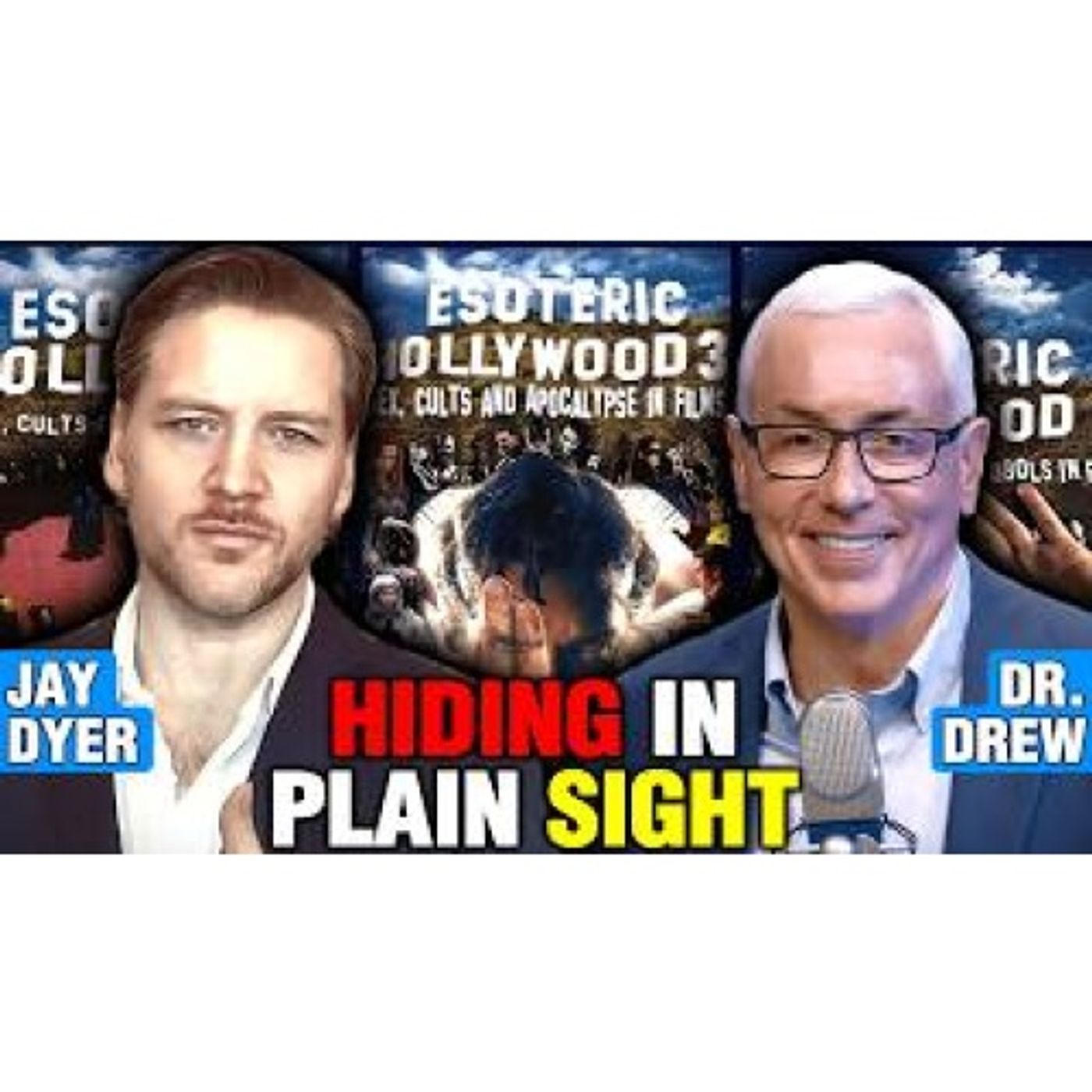
About this episode
Send Superchats at any time here: https://streamlabs.com/jaydyer/tip Join this channel to get access to perks: https://www.youtube.com/channel/UCnt7Iy8GlmdPwy_Tzyx93bA/join Order New Book Available here: https://jaysanalysis.com/product/esoteric-hollywood-3-sex-cults-apocalypse-in-films/ Get started with Bitcoin here: https://www.swanbitcoin.com/jaydyer/ The New Philosophy Course is here: https://marketplace.autonomyagora.com/philosophy101 Set up recurring Choq subscription with the discount code JAY60LIFE for 60% off now https://choq.com Subscribe to my site here: https://jaysanalysis.com/membership-account/membership-levels/ Follow me on R0kfin here: https://rokfin.com/jaydyer Music by Dr Evo the Producer, Jay Dyer and Amid the Ruins 1453 https://www.youtube.com/@amidtheruinsOVERHAUL Join this channel to get access to perks: https://www.youtube.com/channel/UCnt7Iy8GlmdPwy_Tzyx93bA/join
Become a supporter of this podcast: https://www.spreaker.com/podcast/jay-sanalysis--1423846/support.
Get every episode summarized
Each time Jay'sAnalysis publishes, we email you a written briefing from the transcript — the topics, who appeared, and any specific claims, with the ad reads skipped.
Email me new episodesFree for 3 shows. No card needed.
Hosts & guests

Transcript ready
266 searchable segments. Every word is indexed and playable.
Full transcript
Jay'sAnalysis — Jay Dyer EXPOSES Hollywoods Hidden Agenda with Dr Drew. Machine-transcribed; use the interactive transcript above to jump the player to any line.
Tax season has arrived and doing taxes without the right help can feel overwhelming. Into it, TurboTax is here now to guide you through it with confidence. Match with a TurboTax full-service expert who handles everything for you from start to finish. Your dedicated expert checks every single deduction and credit to help you get the best possible outcome so you can feel confident you're getting every dollar you deserve. And the best part? You'll see real-time updates on your expert's progress right on your phone while you live your life. Plus, you get unlimited expert help at no extra cost, even on nights and weekends during tax season. Visit TurboTax.com. Only available with TurboTax full-service experts, real-time updates only on iOS mobile app. When amazing as you're standard, you craft experiences that feel personal. Hey Lexus, turn on the seat warmers. Okay Lexus, turn up the volume. Hey Lexus, set the ambient lighting to blue. Of course, what's more personal than an invitation? It's the invitation to Lexus sales event because the greatest measure of an automobile is how it makes you feel. Get offers on select vehicles. End March 31st.
Click the banner to discover more. Experience amazing at your Lexus dealer. Service subject to change requires a cellular network connection and other factors data charges may apply. There are countless movies made in concert and consultation with the CIA for many decades. There's a lot of different levels to this. You know, you can look at, for example, in Fleming himself. The character of Bond was used as a cold war symbol and as a form of a cold war propaganda. And so when Fleming was writing his stories, he was basing a lot of the Bond novels on real operations that he had been involved in, like Operation A Golden Eye, which was an anti-Franco, anti-fascist operation. You have Operation Mince Me, which he was involved in, which they've made films based on that. So, YouTube and X, it is at Jay Dyer and Caleb, I don't know if you're going to throw all three books up there or just the most recent one. I don't know how Jay has time to do comedy. He's been writing so many damn books and doing so much work in his own educational training. Jay, welcome to the program. Thank you, Dr. Drew. Glad to be here with you.
I seriously, I don't know how you have time for comedy with all the writing and all the training you've been doing. But I'm glad you're here doing all of it. Thank you. Yeah, well, you know, that was not something that I really thought I would end up doing, but I think the way that media works now, you kind of do your own thing and then the more of your personality that comes forth, you just kind of roll with it. And so, I ended up kind of falling in line with a lot of the comedian podcasts and doing shows with them and enjoying it quite a bit. And so, I ended up writing for Sam Hyde the last year for his show. So, it's been a roller coaster ride. It's a lot of fun, but also like doing the educational stuff on the other hand as well. Sam is another bright guy and that is not light lifting, writing for Sam, I assume. But let's talk about, Sam is a really smart guy. Let's talk about Hollywood and the concerns and observations you have as somebody trained in certain kinds of psychology to how people
are manipulative. Well, let's talk about that first. Are you worried about, as I am, I'll turn over my cards, the behavior of crowds? I feel like we have been a tendency to mob action that emerges periodically in history, whether you start with 1790 France or, you know, 1932 Germany, whatever it is, we're in one again, it feels like. And there's lots of true believers flying around in, in gendering chaos. Is this what's happening? Are you concerned about that? Yes. You say chaos. Chaos. For a chaos, you know, don't you know, it's just chaos. Hands on what you mean, though. I couldn't help. I thought you were going to go into a Maxwell smart. I had to go straight, Jordan Peters, the word chaos triggers Peterson in my head, but you know, like you actually, I studied the French Revolution pretty in depth as well when I was
an undergrad at a professor who was a specialist in that. And you're right, I think, to make the parallels between mob psychology, which was really kind of, I guess a modern thought, getting collated, I guess you could say, with socialism and communism and Marxism. But I just covered a book on my channel a few months ago by a, he was an allied psychologist during the time of World War II, his name is Juist Merlew, and he wrote a book about mob psychology. Many, many decades before, you know, Dr. Malone talked about mass formation psychosis and this kind of stuff. And he said that he noticed the socialist movements had really perfected this technique and quite a few chapters in that book that were applicable to Hollywood and the way Hollywood kind of forms attitudes and creates culture, culture creationists. And then we talk about a lot of my channel, but also kind of predicting what social media would do. And then when you get this sort of melding of fame, internet fame, social media with the idea of Hollywood and influencers kind of being the new
a-listers and this kind of stuff, it's a very toxic, dangerous mix, but it's also something that social engineers have studied to perfect in order to kind of control society. And are you seeing evidence of that kind of premeditated activity from Hollywood? Yeah, you know, one of the things that I focused on in my grad work and I ended up just kind of putting that work into more of a popular readable book rather than something that was, you know, academic, that nobody's ever going to read, you know, this in master's thesis or anything like that, it's just going to sit there on a shelf. I thought why not take this information and kind of make it accessible and readable. And I think everybody's probably familiar with the way Hollywood uses product placement, you know, that's a classic style of getting people to purchase a product because James Bond was associated with it or something like that, but it gets a little more nefarious as you get deeper into subliminals. I think everybody's heard of that kind of stuff. But beyond that,
there's also war propaganda. There are countless movies made in concert in consultation with the CIA for many decades. That was something that was done a long time ago, more on the download. So in the 1940s, even back to the 1920s, Howard Hughes, you know, he would make war propaganda films. The OSS would work with Hollywood to make certain screenplays and films. And even a list actors have been famous spies all over the place. Yeah, right. It was in those films. Exactly. Absolutely. Jimmy Stewart was an FBI-produced movies. You have people like Julia Child, the famous chef, TV chef. She was actually an OSS operative, which people don't know that before she was a chef. In the third book, I actually did a whole chapter just on this because it was so fascinating to see all these people that people didn't know about Sterling Hayden. He was an operative for the OSS. John Ford made films in concert with the OSS. And then as you get up into
the 70s and 80s, same thing going on there, even to the point of, you know, Ben Affleck recently was touting the CIA and how glad he was to work with them to make films like Argo. You have films like Zero Dark Thirty all being made openly with the CIA. So what used to be kind of a secretive, you know, behind closed door things is now kind of in the open. Sterling Hayden's in the Sterling Holloway is Winnie the Pooh, who was Sterling Hayden. Well, he was one of the A-listers back in the 40s, very prominent kind of, you know, up there with like Humphrey Bogart and Kerry Grant. And Kerry Grant, by the way, was a spy too. He would spy for the OSS. I want to push back a little bit and say, you know, because I've been around all this stuff too for a long time. And whenever somebody is producing anything for media consumption, they just, they get kind of captured by what works. They kind of A, B tests a lot. And then what works they go and they launch into it and they build as well,
momentum. So it's rarely in my experience premeditated. And the same thing with the CIA involvement, they get the CIA in and the FBI in and the military in to tell us how it really happens. Give us the deal. We want this to be authentic. And then they don't understand that with that authenticity comes a bunch of subliminal messages that the CIA makes sure they put into their films. So in a way, they're just useful idiots. Yeah, I mean, I don't want to be overly simplistic as if it's all or nothing, as if everyone's part of a grand conspiracy. I certainly don't believe that. I think there's a lot of different levels to this. But, you know, there's a lot of things on record that have come out, things that were declassified in the National Archives, things like that that I covered in the third book. But, you know, you can look at, for example, Ian Fleming himself. What I focused on in my graduate was the way that the character of Bond was used as a Cold War symbol and as a form of Cold War propaganda. And so when Fleming was writing
his stories, he was basing a lot of the bond novels on real operations that he'd been involved in, like Operation a Golden Eye, which was an anti-Franco anti-fascist operation. You have Operation Mints Me, which he was involved in, which they've made films based on that. So there's different levels to this, but there's also that level propaganda, which I think most people can kind of connect with. And a lot of times that's the big blockbusters. Usually blockbusters have a decent amount of propaganda inserted into them. But like you said, you know, it's not every director or every person being, you know, in some kind of agent or something like that. It's more sparse than that. But you know, Edward Bernays said that Hollywood is the greatest engine of propaganda the world has ever seen. And he put that in his famous book, Propaganda. So they've known this for a long time. And it's just a tool that I think has been utilized often. But it's not, you know, something that always is making everybody an agent or something. No, listen, you look no further than
how COVID, you know, how the news media and the various outlets were used during COVID. And then then they marched on into the social media world and tried to manipulate that. And now there's thank God some pushback. But it all seems like business is usual to me. And they get compliance by various needs, paying people off, muscling them, you know, sort of inserting stuff, you know, without their knowledge into it. But it'd be that as it may. There's a moment right before Homer Perry goes wrong. When you say, what if I try this? That's when things start getting tricky. Next time, just leave it to the experts. Book with Crop Metcalf today and save $90 on an HVAC precision tune up. Tyler Reddick here from 2311 Racing. Victory Lane? Yeah, it's even better with Chamba by my side. Race to Chamba Casino dot com. Let's Chamba. No purchase necessary. VTW Group void. We're prohibited by law CT and C's 21 plus sponsored by Chamba Casino. I want to ask two things. One of the differences amongst the three books. Why did you need to write
three? And what am I going to learn from each? And then I want to go back to the juice Maloo and the madness of crowds. So let's talk about your books first. Yeah, thank you. So the first book was something that came about that I didn't expect it to be a book. So I've been running a lot of essays and excuse me. Treatment of film from a more of an academic perspective. Or if you take a college class, you'll do what's called a close reading where you kind of read Dosty F ski or somebody like that at different levels and try to decode it. Then think out of the symbolism and the meaning. And so I sort of started writing movie analyses in the same way. Eventually a publisher reached out said, Hey, you should do it. You should do a book with the style of analysis that you do. That's one of the first one, which mainly focused on the big director. So I focused on Kubrick. I focused on Hitchcock Spielberg. A lot of the big names and their blockbusters and what was good and what was bad. It's not all a critique. It's just sort of an analysis of the way
that symbols are used in film to program us both on a conscious and in a subconscious level. So it's a lot of different things. There's, you know, Carl Jung style, Union analysis comes into it at times. Propaganda, the history behind this with that film and relationship to CIA consultation or whatever. So it's a lot of different things. The second film focused thematically on different topics within a bunch of different films. So I talked about the relationship of Hollywood to organize crime, what's real and what's not real between various mod movies and how, you know, we kind of were sold the picture of the villain being the good guy through a lot of mafia movies and how then. So now we kind of look to the Tony soprano as the good guy and that kind of stuff. So a lot of inversion when it comes to morals and ethics. And then in the third book, because I had so many people say over the years, how you never did this movie? You never did Christopher Nolan movies. You never did Marvel movies. I'm not a huge Marvel fan, but I decided that, well, they're the biggest blockbusters in the last 20 years. So if I say that blockbusters
are a lot of propaganda, I guess I should cover them. So first 80 pages is Christopher Nolan and Jungian archetypes and Marvel analysis. I have a really extensive 60 page, 70 page critique of feminism in Hollywood and how there's a sort of a presentation that women are all now supposed to be what men typically are, which I think is kind of a intentional subversive approach to storytelling. And then I get into fun stuff. There's comedic stuff. There's B movies that we cover that I thought were kind of funny. And then I get into relationship between CIA and Hollywood and how Hollywood is presented in times in apocalypse films, which I think is fascinating because Hollywood's kind of dying. It's on its own little apocalypse. And then it's turning into this other thing of influencers and, you know, basically gaming is kind of taking over, unfortunately, but yeah. So light lifting like decoding Dostoevsky. So that's just sounds monumental.
Just trying to read Dostoevsky's and penetrate it is hard enough. So it's not that hard. I just thought of an example. It's not as bad as stuff. It's not that hard. Well, not as hard as decoding dust. Yeah, but it all sounds very fascinating and worth, I mean, a sort of historically significant. I'm glad you're putting it down for the record because when people do look back at this time, film is one of these things that is, you know, I look at it all as just these technologies that come along. And, you know, but before there was stage and then stage lights and then there, then there was amplification and then this celluloid thing comes along. And then this television thing comes along and then vinyl records. These are all technologies that get exploited in massive ways by people that produce content for these things. What I find really interesting is they always tend to go towards,
it's sort of performers that kind of use it to put their material out far and wide. And then it gets hidden or sort of protected under the sheath of art. It's art. Don't you understand it's art, but it really, to me, just looks like, yeah, there's artists involved, but it's a commercial enterprise that's taking advantage of a new technology and then the computer and then the social media. And here we are down the road. Yeah, I think the artists are kind of like products and they do, you know, sell what's on my bed. But they hide behind it. Oh, something's on your bed. Somebody say something on there. So I don't know. I don't see it. It's a dead body back there. So I guess, yeah, it's, we'll put you on the travel channel as some sort of a phantom flying around. I can't quite see it. Oh, good. All right. And, but I really think they use art as a veil to do whatever they want to do.
So you can't, you can't, you know, it's, it's, I'm creating art. It's creating art. You can't criticize it. It's art. You don't understand. No, they're creating a community of commercial enterprise. But yeah, let me go back to Ju Smerlune because I, and I think I'm sure you're aware of this. There's a elaborate sort of cartoon online that goes through all of Ju Smerlune's theories, right? You've seen that. Have you seen that? No, it's very good. It's very good. Yeah. Oh, well, there's somebody that did a whole sort of, it's not really Ju Smerlune for dummies, but it is sort of that. And it has a whole visual attached to it. If somebody's sort of sketching things out as his theories are presented, it's very good. It's very good. I recommend it. Just look up, go to YouTube, look up Ju Smerlune. But it sent me, I guess I was, I already had read extraordinary popular delusions and the madness of crowds. It sent me back to read Le Bonz, the crowd again. And then I got downstream to a book called The True Believer, which I find
as one of the most fascinating because I think, I think you'll agree with me that these mass formations or whatever you want to call them have about 10 or 20% of the crowd that is true believer. They're, they're really bought into this stuff and they're the ones that propagate some of these things. And this, I think the guy was like a second engineer or something. He was not trained in psychology. He was not trained in anything. He just wrote down his observations of the behavior of crowds. And man, I think he just nails the true believer, just nails it, nails it, nails it. I recommend it most highly. I've read it like three times now. But what are your thoughts on this, this construct and why is it coming up again? And you know, why didn't, why did the left grab onto it so hard since the Jacobins? Give me your thoughts. Yeah, I think that it's been perfected from the vantage point of social engineering and, you know, steering and controlling the crowd. And this is again what Walter Lippmann wrote about when he talked about public opinion coming out
of the Tava stock institute. He figured out that you could really steer the masses by giving them the impression that, well, if you're not in with the angry with the, you know, high percentage, well, the majority of the public supports the war. You don't want to be seen as an outsider. So they were really figuring this stuff out back in the 1920s. And then they have perfected that technique with what we have today. And of course, you know, after the, the coup, as I call it, from 20 to 20 to 2022, they were using as Harvard, Harvard admitted Harvard style psychological warfare techniques, the Canadian government admitted they were using siops to really get everybody on board with the mass formation psychosis. So I think that they've applied these techniques to the way that A-listers and celebrities had that type of power, you know, decades ago. And now it's the influencer. Now it's the, you know, the social media person that's taking that role on. And I think we've seen a lot of phony fake, you know, these social media people that push whatever the establishment wants. Sometimes these people are boosted in the algorithm. So that's where we are
now is just the new instantiation of the same tricks and tactics. What's the antidote? What do we have to do here? I feel like raising awareness of it, calling it out, mocking it, works almost better than anything. What do we do? Comedy or into comedy now, maybe, maybe more, um, imitations, more, more impersonations. Well, it's just, it's a love line. It's just Dr. Drew in the love line. It's just probably the best, probably the best love line on right now. We're going to make sex great again, Dr. Drew, you and I together, probably going to make it great. Probably, um, yeah, I mean, I think ridicule is a really powerful tool for mocking these types of things. You know, when you go back to 10 years ago, one of the reasons that they really had to institute a lot of the censorship online was that the left was becoming so sensitive when they were being made fun of that they just had to shut down memes. They had to shut down anything that was perceived as mocking them because it's quote, hurtful. Of course, again, that's very subjective in terms of
what's hurtful in regard to free speech. Um, there's already laws in place for that. So they had to really, I think, uh, clamp down. Uh, we saw that as well with, uh, the COVID mandates and, and Dr, Dr. Fauci's old, constantly getting, uh, you know, addicted, I am science, I had the science and then everybody just made fun of Fauci. There was a, remember when they said that he was the sexiest man alive. I mean, it's like, what? He's like, I'm actually a pulp. They were putting on a pool. He's the sexiest man alive. It's like, people just made fun of this. And, uh, I think that was a huge, you know, blow to the system. And so that was also why they needed the, you know, Twitter files collusion between government and big tech to shut this stuff down because they know the comedians are the tip of the spear when it comes to moving the over to the window back towards, uh, rationality. Well, they were absent during COVID. That was, that was one of the things I kept saying. If you look at my old streams, I was like, where are the comedians? What happened here? Uh, Corolla never stopped. I know we're making fun of him.
Yeah, I know. I Corolla kept saying, you're a bunch of pussy. You're a bunch of sheep. What are you doing? If we stopped, do we stop following this thing would end tomorrow? Uh, and he's been the same ever since and was the same before. Trust me. Um, but it's very interesting and we live in a time we have to, uh, you know, because persuasion works, even when you know somebody is hypnotizing you or persuading you or brainwashing you, we have to come up with techniques to kind of, you know, tire ourselves to the mast. We literally have to tire ourselves to the mast and we have to tie a bunch of people there with us. So we are not taken by the sirens song. And I agree. I think mockery is one of the antidotes, but we got to come up with a bunch of others. Absolutely. I mean, I think, uh, just presenting, you know, logical, uh, refutations and critiques, which is something that we're big on on my channel. You know, we do a lot of debate reviews, do a lot of analysis. And, uh, that has a lot of, uh, effect. I think it's very powerful with people who haven't lost their mind who are still rational, who are still sensible. And so we really push
learning basic logical fallacies to recognize when you're being propagandized, when the left is giving you bad arguments. It's great. If we can just get that 70% in the middle there up, uh, uh, to speed, it'd be amazing. Well, listen, I appreciate what you're doing. I love talking with you. I know that I'll talk to you again at some point. I am, uh, immediately subscribing to your YouTube channel because this stuff all fascinates me. That's, uh, at a, at Jay Dyer, is there somewhere else I go for that YouTube? No, that's my YouTube. And then you can find me in the same name everywhere. Is it out as a pod? Also, not that that really matters anymore. Um, it is. It's on iTunes in terms of podcasts. But, uh, if you want to get the book, it's at my website, jsonalsus.com. Great. Jay, thank you for joining me. Let's talk to you soon. Thank you. Absolutely. Here's the truth. You could literally be adored by everyone and then come home and still get completely ignored by your own cat. It's classic cat behavior. But new Shiba premium puree
is a lickable treat that changes all that. Their protein rich made with bone broth and have the smooth creamy texture cats go crazy for, especially when it's hand fed. Yeah, it's more than a treat. It's a fast pass to favorite human status. So feed your cat Shiba and go from totally ignored to truly adored in just 12 days, guaranteed, or your money back. Learn more at Shiba.com. Tyler Reddick here from 2311 Racing. Another checkered flag for the books. Time to celebrate with Chamba. Jump in at chambacasino.com. Let's Chamba. No purchase necessary. BGW Group, CCNC, 21 Plus, sponsored by Chamba Casino.
More episodes
More from Jay'sAnalysis

Pt 2 DEBATE! "Prof" Jiang & The Gnostic Attack, Esoteric Gibberish, Crypt0 Debat...
Jay'sAnalysis
Pt 1 -DEBATE! "Prof" Jiang & The Gnostic Attack, Esoteric Gibberish, Crypt0 Deba...
Jay'sAnalysis
EVOLUTION DEBOONK??? Crypto BULL MARKET? -The LOVE LINE
Jay'sAnalysis

Modern Life Dating with Jay Dyer
Jay'sAnalysis