Japan's Haunted Temple Gate to Hell: Supernatural Folklore | Thursday Thrills
About this episode
🎧 LISTEN NOW and subscribe for spine-tingling horror stories every week!
🎉 Unlock exclusive bonus episodes and support the show on Patreon!
👉 WeeklySpooky.com/Join
📬 Contact Us / Submit Your Horror Story!
- Twitter: @WeeklySpooky
- Facebook: facebook.com/WeeklySpooky
- Email: [email protected]
🎵 Music by Ray Mattis 👉 Check out Ray’s incredible work here !
👨💼 Executive Producers: Rob Fields, Bobbletopia.com
🎥 Produced by: Daniel Wilder
🌐 Explore more terrifying tales at: WeeklySpooky.com
Get every episode summarized
Each time Weekly Spooky: Horror Stories & Scary Tales publishes, we email you a written briefing from the transcript — the topics, who appeared, and any specific claims, with the ad reads skipped.
Email me new episodesFree for 3 shows. No card needed.
Hosts & guests

Transcript ready
214 searchable segments. Every word is indexed and playable.
Full transcript
Weekly Spooky: Horror Stories & Scary Tales — Japan's Haunted Temple Gate to Hell: Supernatural Folklore | Thursday Thrills. Machine-transcribed; use the interactive transcript above to jump the player to any line.
It's Paul in America, make it count. At the Ram Drive-In to Fall Sales event, make it powerful with our strongest Ram 1500 ever, make it move with the Ram Heavy Duty with an available Cummins diesel and make it go to the distance with a 10-year or 100,000-mile powertrain limited warranty. Hurry and now for great deals during the Ram Drive-In to Fall Sales event. Excludes fully electric vehicles applied to 2026 model-year vehicles non-transferable, visit MoPAR.com for complete details and a copy of the powertrain limited warranty. Cummins is a registered trademark of Cummins ain't Ram and Hammy are registered trademarks of FCA-US LLC. At a small temple in Eastern Kyoto, a rope hangs through a hole in a white wall, pull it, and a bell you cannot see answers from the other side. According to temple tradition, that sound travels much farther than just the courtyard. It reaches the realm of the dead, where listening spirits can hear that the road home is open.
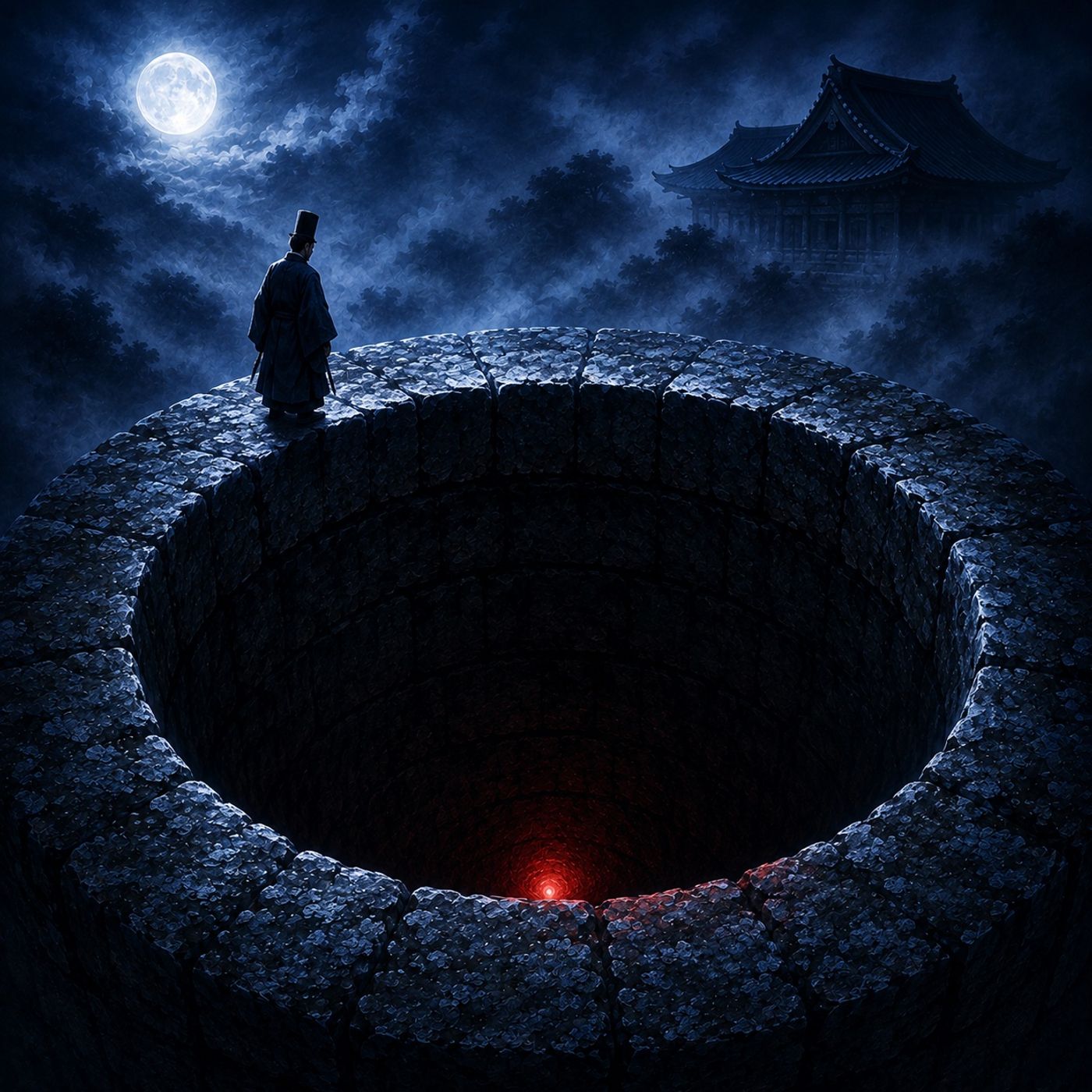
Then walk behind the main hall. There's a well. The legend says a 9th century court official entered that well after sunset, descended to the court of Enma, and worked among the judges of the dead until it was time to report for duty in Kyoto again. Government official by day, Underworld official by night, and tomorrow this legendary entrance begins a rare public viewing. This is Thursday thrills, a quick weekly ride into the creepy stories haunted places weird obsessions and eerie little corners of the world, worth talking about. I'm Enrique Kuto, and tonight we're headed to Kyoto's legendary gate to the Underworld.
How did a real courtier become the night shift employee of the afterlife, and why did one ordinary crossroads become a doorway between worlds? Roku-do-chinoji sits in Kyoto's Higashiyama district. It's an active Buddhist temple, a place of worship and ancestor remembrance, not an abandoned ruin. The legend's threshold to the next world does not need a crumbling castle because it has a street address. The temple's welcoming bell is called the Mugai-igane. The bell itself is hidden inside a walled structure. From outside a visitor takes hold of a rope extending through a small opening and pulls. You don't see the bell swing.
You pull a rope. Something concealed answers, and the sound is allowed to do the traveling. Temple tradition says its voice can carry all the way to the dead. But that is only one direction of traffic available here. The bell calls spirits toward Kyoto. The well behind the main hall supposedly carried one living man the other way. A modern video game is about to turn this part of Kyoto into a supernatural battlefield. Geography had already done the set dressing for them. The road past the temple continued toward Toribeno, a historic funerary area east of the old capital. For generations the dead were carried in this direction. The streets of the living receded behind a funeral procession while the burial ground
waited ahead. A practical road gathered a spiritual shadow. The area became known as Roku-Dano-Sushi, the crossroads of the six realms. In Buddhist cosmology those realms include Hell, Hungry Ghosts, Animals, Asuras, Human Beings and Heavenly beings as well. They're not six floors of a Christian hell, they're realms or modes of existence within the cycle of rebirth. At this crossroads though, the name becomes wonderfully literal. The question is no longer which street you're taking, but which world? Roku-Dochinoji traces its origins back more than a thousand years, although its own history acknowledges competing stories about exactly who founded it and when.
The legend needs less certainty. It needs a temple beside an old road of the dead at a place people already understood as a kind of boundary. Then it needs the one man strange enough to use the employee entrance. That is part of the spooky fun here. In the legend's logic the story doesn't need thunder splitting the sky or a flaming doorway beneath the city. A Kourier finishes his work, waits for daylight to thin, walks toward a temple and disappears behind the main hall. By morning he's back. The impossible is treated like a bus schedule. Anono Takimura was real. He lived from 802 to 852 and built the kind of resume that makes a later supernatural
legend feel inevitable. He was a scholar, poet and imperial court official. He was selected as a deputy envoy to Tang China, but in 838 he refused to sail. He decided the mission and was exiled to the Okia Islands. He was pardoned two years later, returned to the capital and eventually rose to senior office. That is the documented Takimura, brilliant, outspoken, punished, restored and apparently very difficult to keep in the place assigned to him. In the stories gave him a second job. By the 12th century collections of medieval tales were portraying Takimura as an official in the court of Enma, the judge of the dead.
Enma is not the Christian devil, think of him here as the fearsome authority presiding over an organized underworld. Even with judgments, records, officials and apparently a demanding night schedule. During daylight Takimura served the imperial court. After dark according to legend, he reported to Enma. If medieval storytellers needed a civil servant capable of holding office in two worlds, they chose pretty well. Takimura had already survived exile and returned to government. He seemed like a man who could appeal a judgment, correct the paperwork and still make it back before the morning meeting. One medieval tale sends a court official into the underworld after his death. There among Enma's officials, he recognizes Takimura.
That is such a perfect detail of a nightmare. The dead man does not merely discover that the afterlife has a bureaucracy. He discovers that a colleague from work is already on staff. Takimura intervenes for him and helps secure his return to life. Different versions change the identity of the man he saves, so this is a legend with moving parts, not a laid out transcript. But the central image stays put. Takimura belongs in both courts and he has enough influence below to send someone back above. The Kyoto tradition eventually supplied his commute. The well behind the temples main hall is identified as the root Takimura used to enter the underworld. In connections between Takimura and this temple appear by the early 13th century.
A century's old pilgrimage image even labels the well as the one through which he commuted to his second job. He did not fall in. He punched a clock. In the logic of the legend that changes everything about the opening, a well is supposed to end at water. This one ends at an appointment. Somewhere below waits a court with records of the dead, and the man descending is not a prisoner or a lost soul. He knows where he's going. Presumably somebody expects him on time. The temple also identifies a second well on former temple land as his root back. Older traditions placed his return door elsewhere in Kyoto, which gives the legend one more
unsettling wrinkle. The road home has moved as the story traveled. That second root is the detail that follows you. Going down is easy to understand gravity handles most of the sales pitch. Coming back that requires finesse. The legend gives Takimura something more valuable than courage. He knows which opening leads out. The wells are real. Their supernatural assignments belong to tradition, so please don't try to settle the question yourself personally. Still, one mysterious well could be an accident of storytelling, an entrance and exit feels more like... Infrastructure. I'll be it of the dark and underworld variety.
If you enjoy these quick trips into haunted places and strange folklore, make sure you subscribe to Weekly Spooky on your favorite podcast app, so Thursday thrills shows up every week. Plus, Halloween is almost here and you need all the spooky. You can get. We publish something scary every single day of the week. Send this podcast to the person who would absolutely investigate a well-marked underworld after being specifically told not to. The best stories travel by word of mouth. Now we have to return to the hidden bell because even that has a story about somebody failing to follow very simple instructions. According to a tale preserved by the temple, the monk associated with its founding ordered the bell buried for three years before he traveled to China.
The people left behind managed roughly a year and a half before curiosity. Just one. They dug it up and rang it. The legend says the sound carried all the way to China. Instead of being impressed, the monk was disappointed. Had they waited the full three years, he said, the bell would eventually have rung by itself at the proper hours. So in the traditional account, premature unboxing cost Kyoto and automatic, supernatural bell. This is why instructions in old legends are never suggestions. But a bell whose sound could cross that much of the living world might cross greater distances to the dead. That idea became part of the tradition.
During Raku-do Mari, in August, worshippers ring the welcoming bell as part of rights for ancestors returning home. Memorial tablets, incense, water, and koiamaki greenery all have roles in that journey. This is remembrance, not ghost hunting. The same doorway that sounds frightening when a living man travels downward can feel loving when it allows a missed family member to travel home. This legend doesn't make every presence from the other side into a monster. Sometimes the dead are travelers and the bell is a kind of... Hortelite. Tomorrow, the gate opens again in a thoroughly modern way. Capcom's Onimusha Way of the Sword is scheduled to launch on September 4th.
That is a supernatural action game set in a fictional early-eato period Kyoto. And its director says the game's world is centered on the real folklore, with mystery built into the setting. The temple has announced a special opening from September 4th through the 6th to mark the release. The private treasures and Takamura's legendary underworld commuting well are included in the announced viewing. If a demon hunting adventure needs a headquarters, a temple whose most famous Kortie already had clearance for the underworld is pretty hard to beat. The game supplies monstrous enemies and sword fights. The real location needs... A lot less. It has an old funeral road. A bell hidden behind a wall. A judge waiting down below.
And a well with a job description included. Visitors arriving for the special opening will not be stepping into a dungeon. They will be standing at an active temple while an old story quietly rearranges the space all around them. The garden stays a garden. The well stays a well, but once you know it's alleged destination, the darkness inside it has somewhere to be. And that may be why Takamura's story keeps returning. It takes death the most unknowable journey we have, and gives it a root. There is a crossroads, an entrance, a judge, an official, an appeal, an exit, and a bell to guide travelers home. The afterlife is no longer a shapeless dark. It has an office, and worse yet, it has a commute.
So how did a real Kort official become Kyoto's legendary night shift employee in the afterlife? The evidence gives us a gifted, defiant Kortier whose life invited larger stories. Medieval storytellers placed him beside Enma. Kyoto gave him a crossroads already associated with death, and local tradition gave him a well. None of that proves the well leads anywhere, supernatural. But it does show something more interesting than a simple, haunted place claim. A legend and a landscape fitting together so tightly that each made the other feel inevitable. Tomorrow, visitors can approach the famous entrance during the temple's special opening, history promises an old, sacred place, and a physical well.
The legend asks you to notice the root, continuing below the rim. One well to clock in, another root to come home and a bell that tells the dead when the road is clear. I'm Enrique Kuto, and this has been Thursday Thrill's Drive Safe. Keep your headlights on, and if you find a well at the crossroads between worlds, remember the dangerous part may not be getting in, it may be finding the right way home on time for dinner. Come back tomorrow for more fear, until then lock your doors as if that will help you.
More episodes
More from Weekly Spooky: Horror Stories & Scary Tales

8 Halloween Horror Stories: Haunted Hayrides, Corn Mazes & Scarecrows
Weekly Spooky: Horror Stories & Scary Tales

Cutting Deep into Horror | The Ritual (2017): Folk Horror, Survivor’s Guilt & th...
Weekly Spooky: Horror Stories & Scary Tales

I Do Not Know You: Tape Recorder Death Prophecy & Cursed Objects Horror
Weekly Spooky: Horror Stories & Scary Tales

This Week in Horror History | IT Chapter Two, Suspiria, Outlast & Pontypool
Weekly Spooky: Horror Stories & Scary Tales