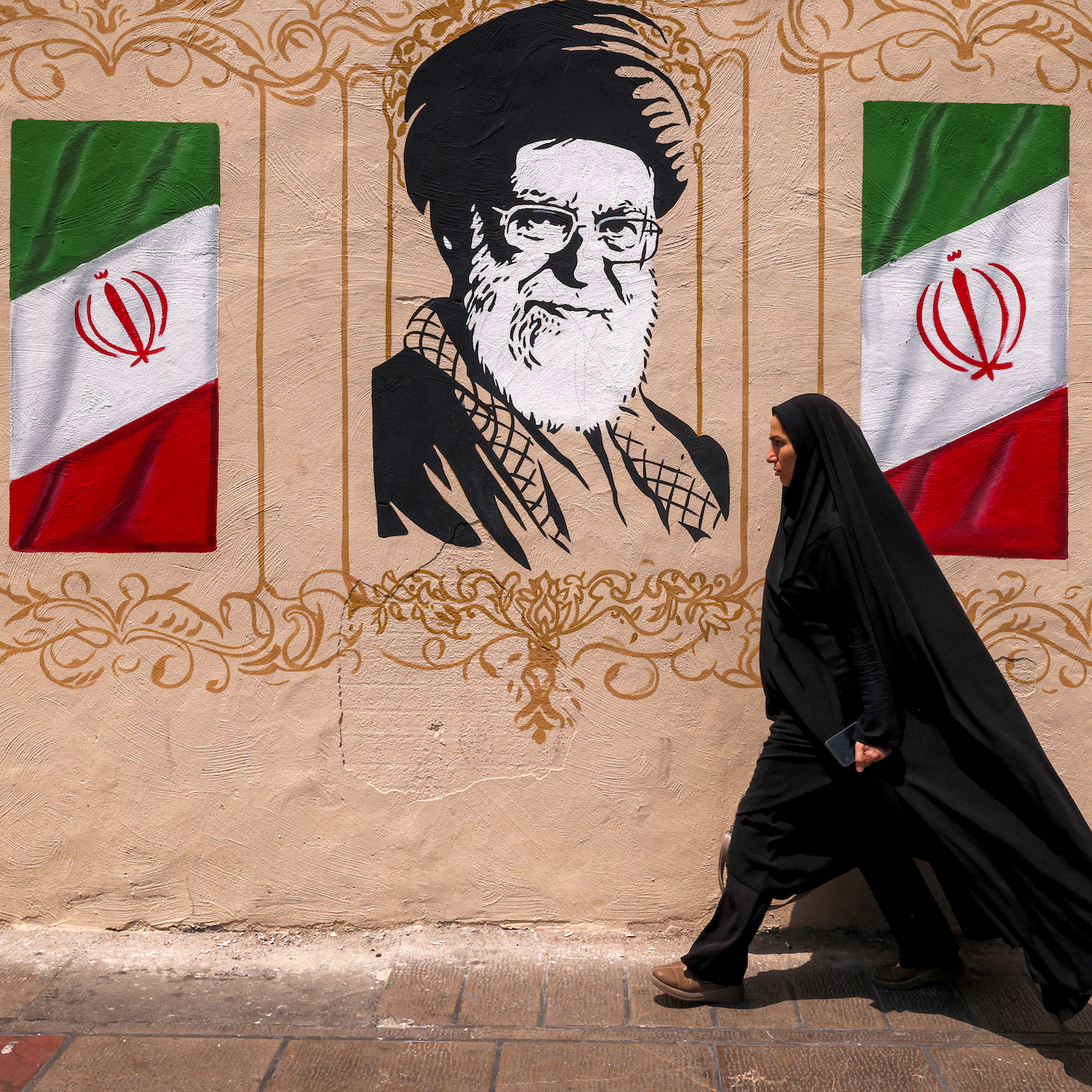
It’s been six months since the war in Iran started. Is anyone winning?
About this episode
It’s been six months since President Trump went to war with Iran. Attempts at regime change, extracting nuclear concessions, and diplomatic talks have failed. The Wall Street Journal’s Alex Ward unpacks why.
Americans are angry about AI data centers. And with the midterm elections fast approaching, Molly Hennessy-Fiske with the Washington Post looked at how the dynamic is playing out in Texas.
The U.S. Open tennis tournament used to be affordable, but that era is gone. Matthew Futterman with The Athletic explains what changed.
Plus, Americans are among the many people missing in Nepal after a deadly flash flood, new details in the LaGuardia Airport crash, and a 12-year-old pitcher who became a Little League World Series legend.
Today’s episode was hosted by Yasmeen Khan.
Get every episode summarized
Each time Apple News Today publishes, we email you a written briefing from the transcript — the topics, who appeared, and any specific claims, with the ad reads skipped.
Email me new episodesFree for 3 shows. No card needed.
Hosts & guests

Transcript ready
189 searchable segments. Every word is indexed and playable.
Full transcript
Apple News Today — It’s been six months since the war in Iran started. Is anyone winning?. Machine-transcribed; use the interactive transcript above to jump the player to any line.
Good morning. Six months into the war with Iran, both sides are damaged and talks are at a standstill. I think it's very clear that the Americans have not achieved their objective while the Iranians have become a weaker country. Lawmakers who once embraced data centers are starting to turn against them. And why ticket prices for the US open have soared. As Friday, August 28, I'm Yasmin Khan and for Shemetha Basu. This is Apple News today. When President Trump launched a war with Iran in February, killing its supreme leader and urging Iranians to overthrow their government, he claimed the conflict would last several weeks at most, but it's been six months now. The regime in place has shown no real signs of backing down. A June ceasefire to find an off ramp to the war hasn't led to a lasting agreement.
Now there's a deadlock in talks. And the Trump administration is hoping that economic pressure, instead of strikes, will move the needle toward ending the conflict. Both countries are worse off from this war. And when you listen to what the Trump administration aimed to accomplish, which was to convince Iran to dismantle its nuclear program, to quit funding its proxies, etc. It has done none of those things. That's Wall Street Journal reporter Alex Ward, who spoke with us about where things stand for the US and Iran, militarily, economically and politically, six months into the war. He says the US has suffered major damages. 18 service numbers killed about 750 or so troops wounded. There has been massive loss or shrinkage, I should say, of the US munitions stockpile. It has been an albatross over President Trump's second term. And it has cost US tons of revenue. It has made allies question American reliability.
It has weakened the American strategic position overall. And there are no signs of this war stopping right now. Meanwhile in Iran, around 3,000 people have died. The country's military capabilities have been severely diminished. Infrastructure has been destroyed. And inflation has soared, which in the past compelled mass protests that were violently crushed by Iran's revolutionary guard corps. This week, as Treasury Secretary Scott Besan announced new sanctions, the White House is hoping that the internal economic pressures in Iran will force a resolution to the war. The US blockade on Iran and just general queesiness that countries have about trading with it, under sanctions pressure and increased economic pressure has cost to billions and billions and billions of revenue. So this is a significantly weakened Iran, a much heard Iran. And it is definitely in a worse position as a nation and as a government than it has been in a long time. But it's not quite clear that Trump's wait and see plan would work.
For one, Iran has been under broad and heavy US sanctions since the late 1970s and has largely been able to withstand them, including sanctions Trump imposed in his first term. Tehran is also betting the Trump administration won't follow through on a threat to impose secondary sanctions on countries critical to Iran's economy, like China. Because doing so could risk damaging relations just before the White House is planning to host President Xi Jinping next month. Then there's the American economy. To relieve economic pressure hitting Americans, the White House has wanted to fully reopen the state of Hormuz and the two sides continue to disagree over control. The Navy has worked to help shepherd vessels through the critical passageway and a blockade on Iranian ports could continue for the foreseeable future. Part of the reason you're seeing the US make a big deal out of the fact that they are escorting ships through the state of Hormuz is to sort of show like, hey, you know, global trade can resume despite these Iranian threats.
But then one raises the question of, well, how long is the US willing to kind of continue this military mission in the strait? With record-long deployments wearing down troops, Ward says it's not clear if the US can maintain a presence that outlasts Iran's ability to withstand sanctions. The question now is, can sort of the realities of the battlefield be put on the back burner so Trump can pursue this economic strategy, sort of consequence-free, until the midterms? That is a risky proposition because as the old adage goes, the enemy gets a vote. And one has to imagine the Iranians aren't going to take further strangulation of their economy laying down. They will probably retaliate whether that's shooting at tankers in the strait of Hormuz or in other methods. So it becomes yet another sort of test of wills and a race against time. Americans are angry about AI data centers.
And with the midterm elections fast approaching, more and more lawmakers are coming out against them. The Washington Post analyzed thousands of social media posts and newsletters mentioning data centers from hundreds of politicians since the spring of 2024. Early last year, more Democrats started to make negative statements about them. And the post-analysis found GOP statements on data centers have turned negative in the last six months as the backlash from constituents has grown stronger. Like in Texas, where just last year Republican Governor Greg Abbott said the state would be the epicenter of AI development. There's some projections that say almost all of Texas' 254 counties are going to have at least one of these data centers within like a year or two. And that Texas is on pace to top Virginia as the data center hub of the country. Molly Hennessy Fisk is a national reporter for the Washington Post who lives in Texas. And it's not just data centers rapidly popping up there.
Texas has also quickly moved to approve new gas plants that can power them, often granting companies permits with little public notification or oversight. Typically, these types of approvals can take months. But in Texas, the New York Times found that they've been happening in a matter of days. Hennessy Fisk told us these data center projects are unpopular among Texans across all political affiliations. Nationally, public opinion surveys have shown about seven and ten Americans oppose a data center being built locally. A poll released by the University of Texas this week found 57% of Texans said they do not want a data center in their community. I went out to a county where 88% of voters had voted for President Trump last election. And I went to a county commission meeting where they were speaking out against data centers. And for many of them, data centers had become their number one issue. Abbott, whose upper reelection in November,
paused approvals earlier this month until the data centers passed a state audit. And he's tried to focus voters anger on tech companies telling ABC News in an interview this week that companies building in Texas have not worked with local communities to gather support for their projects. They had not been working in collaboration with the state. They've not been working in collaboration with local governments. And so they basically dug their own grave for the problem that's been caused for them. And that's why they got the backlash they deserve. His democratic opponent, Gina Inohosa, is calling for a statewide moratorium on data centers until the Texas legislature can convene to regulate them. And some lifelong Texas Republicans told Hennessy Fisk they're now considering voting for Inohosa instead of Abbott over this issue alone. Because they feel like Abbott had more potential to stop these data centers, he still could call a special legislative session to declare moratorium and have the legislature create new policies
that he would sign off on. But he hasn't done that yet. Even as Republicans like Abbott tried to distance themselves from data centers, President Trump is embracing them. He was in Texas yesterday, campaigning for Ken Paxton, the state's Attorney General, and the Republican candidate for the state's Open U.S. Senate seat. The president called Abbott's new data center guidelines a mistake. The U.S. Open tennis tournament kicks off on Sunday. And if you had any desire to catch some of the action in person, you might have been shocked at the ticket prices. I think you better plan on having four figures in your pocket that was looking for a home somewhere. Matt Futterman is a senior tennis writer for the athletic. I mean right now these grounds passes for the U.S. Open, which don't even come with a seat. It just allows you to get onto the grounds and get onto the field courts and access general admission seats in some of the larger stadiums.
Those are running like $350 piece, which the face value of those tickets is $65. Futterman told us there are several factors driving up the cost of tickets. Today's resale market has sent prices through the roof, not only for sports but for concerts and other events. Also, tennis exploded in popularity in recent years, thanks in part to the COVID lockdown when millions of people picked up a racket and began watching matches too. And this tournament is also becoming an epicenter of cool. The U.S. Open has also become sort of a major New York cultural event. It's about so much more than tennis. It's about food and fashion and celebrities and it's a real place to sort of see and be seen. To keep up with demand for higher end offerings, the events organizer, the United States Tennis Association, invested in major renovations to Arthur Ashe Stadium, the marquee venue for the tournament. They've added thousands more court-level seats at premium prices
and reduced mid-tier options. And that has squeezed out fans looking for more affordable seats. Futterman said that the U.S. TA has also been frustrated that the resale market has pushed up the price of tickets. The tournament did make 1,000 tickets available to local residents for the much lower price of $100 each. That was kind of an emergency move to deal with what was becoming a PR crisis. Mayor Mandani took credit for pushing them into that. Some debate about exactly how the dynamics worked out on that. The U.S. TA was really kind of desperate for a solution and politicians are always looking for a win. So you probably had a meeting of the minds there. The U.S. TA has pointed to other affordable opportunities for tennis watchers, like Fan Week, where patrons can get into the grounds and watch some of the action before the main draw starts. But Futterman said it's not the same thing as getting to see the matches. And if prices keep skyrocketing, it risks creating one tournament for the halves and one for the
half-nots. People in the top couple of percent of income earners have this sport and this playground to enjoy and everyone else just gets to sort of scramble around for the crumbs that are left on the grounds. Here are a few other stories we're following today. Rescuers are scouring the Himalayas for survivors of a deadly flash flood and mudslide that ripped through the border of Nepal and Tibet on Wednesday. The U.S. State Department said yesterday that three Americans had been rescued, but dozens remain unaccounted for, and their families are anxiously waiting for updates. The BBC spoke with a pair of sisters from Texas, waiting for news on their parents who were in the area for an annual trip.
Experts are now saying it would have been practically impossible for Nepal's warning system to alert people that the mudslide and floods were coming. The region was to remote and the water and mud were moving too fast. Here in the U.S., federal aviation officials say two air traffic controllers left work early in March before an air-Canada jet crashed into a fire truck at LaGuardia Airport. That's according to multiple news outlets. The FAA is now moving to fire these controllers. The crash killed the two pilots of the aircraft and injured six other people. Leaving early from a shift is not uncommon and is often referred to as a quote early shove. According to the Wall Street Journal, FAA officials consider it a form of time card fraud, but in some cases in the past, it had been seen as a perk of working a busy stretch. And finally, a competitor, so fierce, she inspired her own chant.
Those are fans saying fear the bow, and they're cheering for 12-year-old Kinley Rasmus, a breakout star in this year's Little League World Series. She became known for her strikeouts on the mound, and the white bow she wore in her hair. Rasmus' team was eliminated on Wednesday, but her name will be in the record books. She was only the ninth girl to ever pitch in the competition. She tied for the most strikeouts and set a record for most hits by a girl ever in the tournament's history. Her dad was a major league baseball pitcher, and her uncle was in the league as well. The Little League World Series final will take place this weekend, and even without Rasmus there, bands will be fearing the bow for a long time. You can find all these stories and more in the Apple News app. And if you're already listening in the news app right now, stick around for the latest episode of Apple News and Conversation. This week, Men's Health Beauty and Gruming Director, Brian Underwood,
sits down with guest host David Green to discuss his reporting on a growing online movement that claims sunscreen is harmful, and what science actually says about sun protection. We have the knowledge now, and yet we're engaging the behaviors that we engaged in 30 years ago. If you're listening in the podcast's app, you can follow Apple News and Conversation to find that episode. Enjoy the weekend, and I'll be back with the news on Monday.
More episodes
More from Apple News Today

The dark side of America’s obsession with the Lindsay Clancy trial
Apple News Today

JD Vance makes his big pitch to the GOP base
Apple News Today

This state offered universal child care. Here’s what happened.
Apple News Today

The race for the Senate has become a toss-up. Here’s why.
Apple News Today