About this episode
Get every episode summarized
Each time News at One publishes, we email you a written briefing from the transcript — the topics, who appeared, and any specific claims, with the ad reads skipped.
Email me new episodesFree for 3 shows. No card needed.
Hosts & guests
Transcript ready
43 searchable segments. Every word is indexed and playable.
Full transcript
News at One — Israel-Lebanon ceasefire appears to be holding. Machine-transcribed; use the interactive transcript above to jump the player to any line.
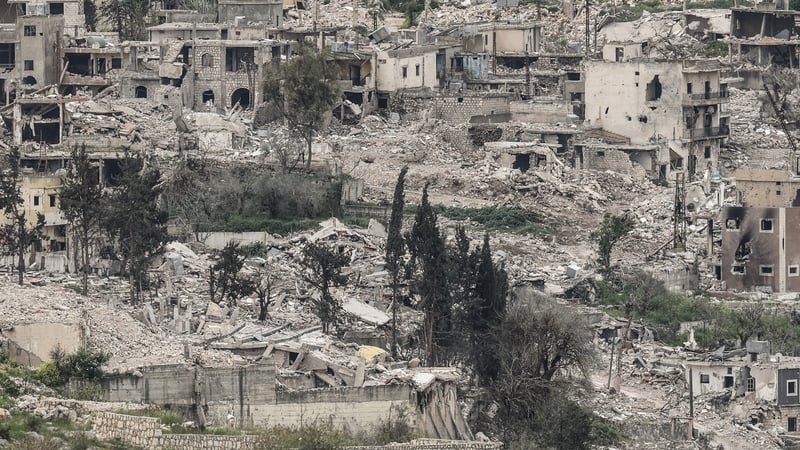
Now, people uprooted by the war in Lebanon have been returning to devastated towns and neighborhoods as a ceasefire begins to take hold. The 10-day truce between Israel and Hezbollah doesn't demand that Israel withdraw troops from the parts of southern Lebanon it is occupied. More than 2,000 people in Lebanon have been killed over the past six weeks. Israel says two of its civilians and 13 soldiers were killed. Channel 4 news correspondent Poriko Bryan is in Beirut. I asked him if the ceasefire was holding. There have been reports of a number of strikes in southern Lebanon but you know compared to what we've seen over the last number of weeks you know it would appear that there is a tentative ceasefire in place. I've just returned actually from southern Lebanon I'm in Beirut now but we spent the morning in southern Lebanon remember that the Israelis have
what they call a security zone established in southern Lebanon just south of the Latani river. The Israelis call it a security zone many in Lebanon call it an occupation. After the ceasefire was announced at midnight tonight there was a large we there was a huge traffic jam on the way down towards the south people trying to return home people who had fled that area taken by the Israelis trying to return home remember over a million people have been displaced in Lebanon alone when since this this conflict began so this huge sense of relief I think sort of cautious relief last night and then large large numbers of families moving back now whether they will stay is another question I think many of the people we were talking to were saying that they were just going back to their homes to check that they were still there for one thing and to check
on their belongings but that that that is the test I think how the how the the populace of southern Lebanon are responding to this I think it's cautious I think it's tentative it's wait and see. And is there a danger as you were saying there that in many cases those people returning to southern Lebanon that they might find their home isn't there any longer? Well we saw that first hand ritual when we went down there this morning I mean there is a unbelievable level of devastation in some of these communities one of the towns we were we were we were in a town called Natibia which is we were there yesterday we returned today and the place is devastated we actually got caught up in some of the final strikes yesterday it was it was very frightening indeed we were in the hospital in that town and we counted 10 or 12 strikes in the vicinity in the neighborhood near
the hospital over the course of the couple of hours that we were there and then today of course what have people been saying to you about their hopes that the ceasefire will be extended? Listen the Lebanese have been here before remember we had a ceasefire back in 2024 so you know that there's a certain resignation to the fragility of all of this and in practice if you look at some of the the the the the the rising around this ceasefire that was announced at midnight and practice it closely resembles that previous ceasefire but but potentially some would say with fewer constraints on Israel so it you know it means that the Israeli army can maintain its positions in the south that I was talking about while continuing operational activities in the ground it includes that that means that in theory they can continue to demolish some of the remaining structures in that area that it controls but like the regular person in the traffic
chams on their way home of course this morning were relieved. I suppose it's worth remembering too that people in Lebanon even before this latest violence I mean it was already a country under pressure it was already a country experiencing extreme economic difficulties. Well I remember Rachel back in 2020 reporting on the Beirut port explosion you know it's really devastated the center of the city but I have to say the last the last few weeks here have been on on another scale entirely
More episodes
More from News at One

Roscommon defeated Galway in the Nestor Cup becoming Connacht Champions for the...
News at One
Medical Board at UHL said it needs emergency funding to deal with patient safety...
News at One

Humanitarian assistance to be provided to all affected by the fire at the Tycor...
News at One

Director of the National Ambulance Service on the impact of industrial action on...
News at One