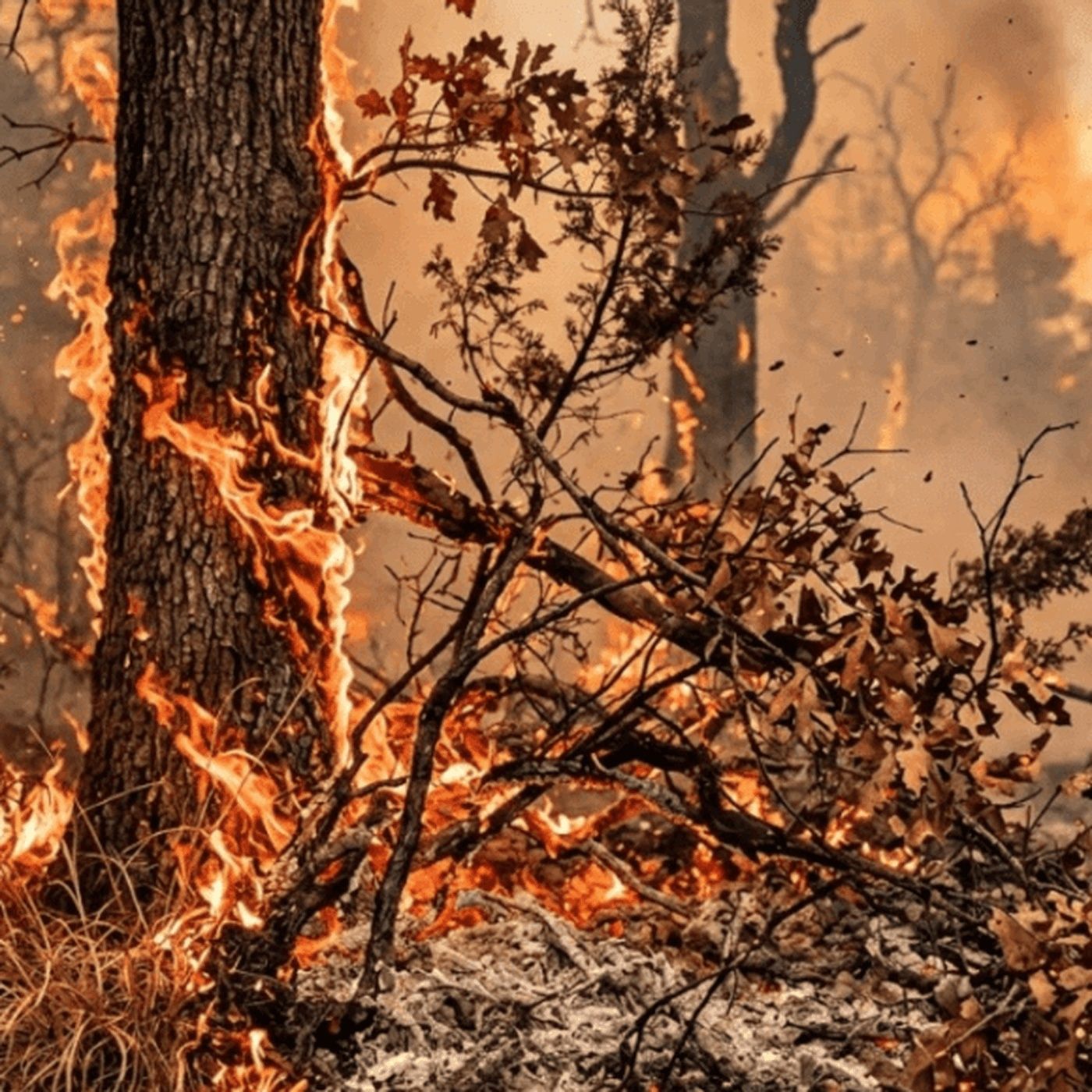
Is There a Wildfire Near Dallas TX Today? See the Live Map
About this episode
Get every episode summarized
Each time Filterbuy.com Audio Blogs Podcast publishes, we email you a written briefing from the transcript — the topics, who appeared, and any specific claims, with the ad reads skipped.
Email me new episodesFree for 3 shows. No card needed.
Hosts & guests
Transcript ready
559 searchable segments. Every word is indexed and playable.
Full transcript
Filterbuy.com Audio Blogs Podcast — Is There a Wildfire Near Dallas TX Today? See the Live Map. Machine-transcribed; use the interactive transcript above to jump the player to any line.
Tyler Reddick here from 2311 Racing. Another checkered flag for the books. Time to celebrate with Jamba. Jump in at JambaCasino.com. Let's Jamba. No purchase necessary, BTW Group. Boy, we're prohibited by law. CCNC, 21 Plus, sponsored by JambaCasino. Is there a wildfire in your Dallas, Texas today? From filterby.com. If you're searching for active wildfires in your Dallas today, you're already thinking like a protector. And this page gives you the real time wildfire and air quality data you need to act. Here's what most Dallas homeowners don't realize. You don't need to see or smell smoke for wildfire particles to be inside your home. After manufacturing, air filters for over a decade and analyzing filtration data from more than 2 million households, we've seen it repeatedly. Find smoke particles infiltrate homes long before any visible haze arrives and standard filters often aren't built to stop them. The Dallas Fort Worth regions flat terrain and shifting southerly winds make it especially vulnerable to smoke transport from West Texas and Oklahoma fires.
This page tracks current wildfire activity near Dallas, live air quality index readings, and shows you exactly which filter upgrades have made the biggest difference for Texas homeowners when smoke moves in. TLDR Quick Answers. Current live forests, wildfire, and smoke map today in Dallas, Texas. For current wildfire and smoke conditions near Dallas, Texas, use these three real time sources, number one. EPA air now fire and smoke map at fire.airnow.gov. For live smoke plumes, fire locations, and air quality index readings updated continuously. Number two, Texas A and M Forest Service Active Incident Viewer for confirmed active Texas wildfires with containment status updated in real time. Number three, IQ air Dallas air quality map. For neighborhood level PM2.5 readings across the Metroplex, key facts to know right now. Wildfire smoke reaches Dallas from fires 150 to 200 miles away,
often before any official advisory is issued. Dallas Fort Worth's flat terrain and southwesternly winds create a direct smoke corridor from West Texas and the panhandle into the Metroplex. When Dallas air quality index exceeds 100, replace your air filter if it has been in use more than 30 days and switch your HVAC fan from auto to on. Merv 13 is the minimum recommended filter rating for Dallas homes during active wildfire smoke events. After manufacturing filters for over a decade and serving more than two million households, the most important thing we tell Dallas homeowners is this. By the time smoke is visible outside, it is already inside your home. Check your air quality index and your filter before conditions worsen. Top takeaways, number one. A wildfire doesn't have to be near Dallas to damage your indoor air. Smoke from West Texas and Oklahoma fires travels hundreds of miles into Dallas Fort Worth often before any visible haze or official advisory.
Filters in Dallas area homes darkened significantly from fires burning 150 to 200 miles away. Number two, closing your windows helps. Your filter is what actually protects your family. Even with windows closed and central air running, 33 to 44% of outdoor wildfire PM2.5 still gets inside. A clogged outdated or low rated filter at those levels offers near zero meaningful protection. Number three, Merv 13 is the minimum, not a premium upgrade. During active wildfire conditions, Merv 8 allows more than twice the fine smoke particles indoors compared to Merv 13. For Dallas homeowners still running Merv 8, upgrading before a smoke event is the single highest impact step available. Number four, your filter tells you what your family has been breathing. A filter that darkens in three to four weeks during fire season isn't failing, it's working. That's your signal to replace it now.
Smoke loads filters two to three times faster than normal household dust. Number five, stop asking, is there a wildfire in your Dallas today? Start asking, is my home ready? The right preparation before smoke arrives determines your family's air quality outcome. One, check your air quality index daily during fire season. Two, inspect and replace your filter before conditions worsen. Three, switch your HVAC fan to on and seal your home's entry points. Current wildfire activity near Dallas, Texas. Wildfires near Dallas are most common between February and May when dry winters leave North Texas grasslands highly combustible. The greatest threat to Dallas Fort Worth homeowners typically isn't a fire in the city itself. It's fires burning across West Texas, the rolling plains and southwestern Oklahoma, where prevailing southwestern winds carry smoke directly into the Metroplex. Use the live map above to check current fire locations, containment status and smoke drift relative to your zip code.
What Dallas's air quality index means for your home's air? The air quality index measures outdoor pollution on a scale from zero to 500. But what most Dallas homeowners don't consider is what that number means indoors. From filtering data across more than two million households, we've found that indoor particle concentrations during active smoke events routinely exceed outdoor air quality index readings, especially in homes running standard MIRV-8 filters, which simply aren't designed to capture the fine PM2.5 particles that wildfire smoke is made of. Here's how to read what you're seeing, zero to 50. Good, no action needed. Your standard filter is doing its job. 51 to 100, moderate. Sensitive individuals should limit outdoor time. Check your filter. A clogged filter loses most of its smoke blocking effectiveness. 101 to 150 unhealthy for sensitive groups. Children, elderly residents, and anyone with asthma
or heart conditions should stay indoors. Consider upgrading to a MIRV-13 filter. 151 to 200. Unhealthy. All residents are at risk. Run your HVAC system continuously to maximize filtration. MIRV-13 is the minimum recommended. 201 and above. Very unhealthy or hazardous. Seal gaps around doors and windows. Replace your filter immediately if it's been in use for more than 30 days. Smoke loads filters fast. Why standard filters? Fall short during wildfires. Wildfire smoke is dominated by PM2.5. Particles 2.5 microns are smaller. These particles are so fine that they bypass the fibers in most MIRV-8 filters without being captured at all. On our production floor, we test filtration efficiency across particle size ranges and the gap between a MIRV-8 and a MIRV-13
at the PM2.5 level is significant. MIRV-13 filters capture roughly 50% more fine particles than a MIRV-8 at that size range. A difference you can't see, but your lungs absolutely feel. One thing we consistently see during higher quality index events. Homeowners change their filters after a smoke event and are surprised by how quickly a filter that was installed just weeks earlier is already dark gray. Smoke loads filters two to three times faster than normal dust accumulation. That's a signal your filter was doing its job and that it needs to be replaced sooner than your usual schedule. How to protect your home's air? During a Dallas wildfire event, you don't have to wait for an official air quality alert to take action. Here's what works. Number one, check your filter first. A dirty filter during a smoke event offers little protection. If it's been more than 30 to 45 days since your last change, replace it now. Number two, upgrade to MIRV-13.
It's the sweet spot for residential wildfire protection. Effective enough to capture fine smoke particles without straining most standard HVAC systems. Number three, run your HVAC fan continuously setting your thermostat fan to on rather than auto keeps air circulating through your filter even when heating or cooling is an active. Number four, seal what you can. Smoke infiltrates through gaps around doors, windows and fireplace dampers. Even temporary weather stripping makes a measurable difference. Number five, change your filter after the event. Once air quality returns to normal, swap in a fresh filter. Smoke saturated filters can re-release trapped particles back into your air stream. Quote, after manufacturing air filters for over a decade and analyzing filtration data from more than two million households, one pattern stands out during wildfire events. The homes that stay protected aren't necessarily
the ones closest to clean air. They're the ones with the right filter already installed before the smoke arrives. End quote, filter by air quality expert essential resources for tracking. Wildfires in smoke near Dallas, Texas. Number one, EPA air now fire in smoke map. See exactly where smoke is hitting your air right now. Don't wait for the haze you can see. Wildfire smoke is already inside homes long before it's visible outside. Built jointly by the EPA and US Forest Service, this real time interactive map combines regulatory monitor data, satellite detected smoke plumes and nearly 15,000 ground level sensors displayed in familiar air quality index color coding. It's the single most complete tool for understanding what's in the air around your Dallas home today. Number two, Texas A and M Forest Service, current wildfire status, confirmed fire activity.
Straight from the agency fighting it. When a fire report is circulating on social media, this is where you go to verify it. As Texas's lead wildfire response agency, Texas A and M Forest Service publishes daily incident reports, statewide preparedness levels, and confirmed acreage data for every active fire its personnel are managing. If it's burning in Texas and it's real, it's here. Number three, Texas A and M Forest Service, active incident viewer pin point, every active fire burning near Dallas right now. This live public map plots every active wildfire currently being managed by Texas A and M Forest Service, updated in real time with incident names, exact locations and containment status. In our experience, tracking smoke events across Texas households, the fires that most often impact Dallas, Fort Worth air quality, aren't visible from Dallas. They're burning 100 to 200 miles away across West Texas grasslands.
This map shows you exactly what's out there. Number four, TCEQ Daily Air Quality Forecast. The state's official smoke and PM2.5 outlook for Dallas, Fort Worth. The Texas Commission on Environmental Quality issues a daily air quality forecast for every major Texas Metro, including Dallas, Fort Worth, using real monitoring data and meteorological modeling. What most Dallas homeowners don't realize is that the outdoor air quality index forecast directly determines how hard your HVAC filter has to work indoors. When TCEQ forecasts moderate or higher PM2.5 levels for Dallas, Fort Worth, that's your signal to check your filter and run your system continuously. Number five, Texas A and M Forest Service Burn Band Map. Your early warning that wildfire risk is building up wind of Dallas. A burn band is often the first official signal that conditions are dangerous enough
for a wildfire to ignite and spread fast. This daily updated statewide map shows every Texas County currently restricting outdoor burning due to drought and wind conditions. Monitoring burn band activity across West Texas and North Texas counties gives Dallas homeowners a critical head start before smoke arrives and before your filter is overwhelmed. Number six, IQIER Live Dallas Air Quality Map. Tracks smoke concentration block by block across the Metroplex. Broad regional air quality index readings tell you what the air looks like across Dallas, Fort Worth, but they often miss what's happening in your specific neighborhood. IQIER pulls real-time PM2.5 data from both regulatory monitors and ground level sensors across Dallas, giving you the hyper-local picture that matters most when you're deciding whether to keep windows closed, run your HVAC or get your family into a filtered room. This is the tool we point Texas homeowners to when smoke events are actively developing. Number seven, EPA Wildland Fires and Smoke
Indoor Health Guidance. Turn your home into a clean air refuge when smoke moves in, knowing a fire is nearby is only half the battle. Knowing how to keep that smoke out of your home is where your family's protection actually happens. After manufacturing filters for over a decade and analyzing how smoke loads filters during wildfire events across more than two million households, we consistently point homeowners to this EPA resource first. It covers how smoke infiltrates residential buildings, how to create an effective clean room and how your HVAC filter and air purifier work together to shield the air your family breathes. Final thoughts. Most Dallas homeowners think about wildfire protection like car insurance, something to deal with after something goes wrong. After manufacturing air filters for over a decade and serving more than two million households, we've learned one consistent truth. The families who come through smoke events with the cleanest indoor air aren't the ones who reacted fastest. They're the ones who are already prepared.
Here's our honest take on what that preparation looks like for a Dallas Fort Worth homeowner. Wildfires don't announce themselves. The Smoke House Creek Fire, the largest in Texas history, burned over one million acres in 36 hours. Smoke doesn't wait for you to order a better filter. The outdoor air quality index is only half the story. Indoor air quality during a smoke event comes down to two things. How while your home is sealed and what filter is currently running in your HVAC system, your filter is a record of what your family has been breathing. A filter pulled from a Texas home after a smoke event that's dark gray after three to four weeks isn't a filter that failed. It's a filter that did its job. Merve 13 is not an upgrade. It's a baseline. During the active Texas fire season, running anything less is a measurable compromise on your family's air quality. The bottom line for Dallas Fort Worth homeowners. One, stop asking, is there a wildfire in your Dallas today? Two, start asking,
is my home ready for the smoke before it gets here? Three, check your filter now before conditions change. Wildfire season in Texas is no longer a West Texas problem. It's a statewide air quality problem and your HVAC filter is your family's first line of defense. What Dallas homeowners should do right now? Don't wait for a smoke advisory. Here's exactly what to do in order before and during a wildfire event near Dallas. Step one, check today's wildfire in smoke conditions. Start with two sources, fire.airnow.gov. Current fire locations, smoke plumes, and local air quality index. TFswildfires.com-forward-slash-public confirmed active incidents within smoke transport range of Dallas Fort Worth. Step two, know your air quality index action level, zero to 50, no action needed. Maintain your regular filter schedule, 51 to 100, inspect your filter.
Partial loading cuts, effectiveness, fast under smoke conditions, 101 to 150. Sensitive family members stay indoors. Switch the HVAC fan from auto to on, 151 to 200. All residents at risk replace the filter if it's been in use for more than 30 days, run HVAC continuously. 201 and above emergency conditions. Seal gaps around doors, windows and fireplace dampers. Replace the filter immediately. Step three, inspect your current filter. Pull your filter and check three things. Is it visibly gray or dark? Two, has it been in use for more than 30 days? Three, is it rated below MIRV13? If yes, to any of these, replace it now. A compromised filter during a smoke event provides near zero meaningful protection. Step four, upgrade to MIRV13. If you're running a MIRV8, upgrade before a conditions worsen. MIRV13 captures PM2.5 smoke particles
at more than twice the efficiency of MIRV8. It works in most standard residential HVAC systems without air flow strain. It's the minimum standard we recommend for any Texas home during active fire season. Step five, switch your HVAC fan to on, one setting change, significant impact. Auto only filters air when heating or cooling is active on keeps air continuously circulating through your filter. During a smoke event, continuous filtration is one of the simplest protections available. Step six, seal your home's smoke entry points. Smoke gets in through more than open windows. Close and lock all windows and exterior doors. Apply temporary weather stripping around door gaps. Close your fireplace damper completely, cover bathroom exhaust fans when not in use. Step seven, replace your filter after the event clears. A smoke saturated filter is not done causing problems when the fire is out.
Trapped PM2.5 particles can re-release back into your air stream as your HVAC cycles. Replace your filter once outdoor air quality index returns to good or moderate. A fresh filter after a smoke event matters as much as having the right one going in. Step eight, set up Dallas air quality alerts. Get ahead of the next event before it happens. One, sign up for air quality index notifications at airnow.gov. Two, bookmark the TCEQ daily forecast at tceq.texas.gov forward slash air quality. Forward slash monops forward slash forecasts underscored today.html. Three, check the Texas A&M Forest Service burn band map weekly during fire season at tfsweb.tammu.edu. Frequently asked questions on current live forest. Wildfire and smoke map today in Dallas, Texas. Question one, where can I find a live wildfire and smoke map for Dallas, Texas today? Answer, use these three tools together
for the most complete picture. One, EPA air now fire and smoke map. Satellite detected smoke plumes, real-time fire locations, and air quality index readings from nearly 15,000 ground level sensors. Two, Texas A&M Forest Service Active Incident viewer. Confirmed active Texas fire incidents, containment status, and acreage updated in real time. Three, IQ air live Dallas air quality map. Neighborhood level air quality index detail across the Metroplex that regional maps routinely miss. After helping more than two million households navigate air quality decisions, homeowners who consult all three sources consistently make faster, better informed decisions than those relying on a single map or local news report. Question two, how far away can a wildfire affect air quality in Dallas, Texas? Answer, much farther than most homeowners expect and sooner than any official advisory will confirm.
Key facts, Dallas homeowners need to know. Filters in Dallas area homes show measurable PM2.5 loading spikes from fires burning 150 to 200 miles away. Smoke infiltration begins before local hazes visible and before TCEQ issues a formal Dallas Fort Worth advisory. Dallas Fort Worth's flat terrain and prevailing southwesternly winds create a direct smoke corridor from West Texas and the panhandle into the Metroplex. By the time smoke is visible outside your window, it has likely already been inside your home for hours. Bottom line, distance from the fire does not equal safety from the smoke. Question three. What does the Dallas air quality index need to reach before I should take action to protect my home's air? Answer, acted moderate, not unhealthy. Families that maintain the cleanest indoor air during wildfire events don't wait for official alerts. They act earlier. Here's the action framework, air quality index zero to 50.
Good, no action needed. Maintain a regular filter schedule, air quality index, 51 to 100, moderate inspect filter, switch the HVAC fan to on. Sensitive family members limit outdoor time, air quality index 101 to 150. Unhealthy for sensitive groups, replace filter if in use for more than 30 days. Sensitive groups stay indoors. Air quality index 151 to 200. Unhealthy, replace filter immediately. Run HVAC continuously. All residents are at risk. Air quality index 201 and above. Very unhealthy or hazardous emergency conditions. Seal all gaps. Replace the filter regardless of age. Home owners who acted moderate, consistently breathe cleaner air than those who wait for the unhealthy alert. Question four. Is a standard Merv8 filter enough to protect my Dallas home from wildfire smoke? Answer, no, here's why.
Merv8 was engineered for standard household dust, pollen, and pet dander, not wildfire smoke. Wildfire smoke is dominated by PM2.5 particles. 2.5 microns are smaller, which pass through Merv8 fibers with minimal resistance. Independent research confirms Merv8 filters produce indoor to outdoor PM2.5 ratios more than twice as high as Merv13 during active wildfire events. On our production floor, we test filtration efficiency across the full PM2.5 particle size range. The performance gap between Merv8 and Merv13 is not marginal. It's the difference between meaningful protection and a filter that's essentially decorative during a smoke event. What Dallas homeowners need to know? One, Merv13 is the baseline standard for wildfire season, not a premium upgrade. Two, Merv13 works in most standard residential HVAC systems without airflow strain.
Three, running Merv8 during active wildfire conditions is a measurable compromise on your family's air quality. Question five, how often should I change my air filter during a wildfire smoke event near Dallas? Answer, based on what you see, not what the calendar says. What the data shows across more than two million households, wildfire smoke loads filter media two to three times faster than normal household dust. A standard 90 day filter lifespan compresses to as little as three to four weeks during an active smoke event. A filter darkened after three to four weeks during fire season isn't failing. It's done its job and needs to replacing. Follow this replacement protocol during wildfire events. One, inspect first. Pull your filter at the first sign of elevated air quality index, not on your regular schedule. Two, replace immediately if the filter shows visible darkening or has been in use more than 30 days.
Three, don't stop at one replacement. Install a fresh filter once outdoor air quality index returns to good or moderate after the event clears. Four, never leave a smoke saturated filter in place after a smoke event ends. Trapped PM2.5 particles are re-released back into your air stream every time your HVAC cycles. During wildfire season, condition-based inspection protects your family. Calendar-based replacement schedules do not, wildfires. Near Dallas can put smoke inside your home before you see it outside. Make sure your filter is ready. Don't wait for a smoke advisory to find out your filter isn't up to the job. Check your nerve rating and spec your filter today and upgrade to a MIRV-13 before the next wildfire smoke event reaches Dallas. Filter by ship's American-made MIRV-13 filters in over 600 sizes directly to your door. So your home is protected before the smoke arrives.
Tyler Reddick here from 2311 Racing. Another checkered flag for the books. Time to celebrate with Chamba. Jump in at chambacasino.com. Let's Chamba. No purchase necessary, BGW Group. Boy, we're prohibited by law. CCNC, 21 Plus. Sponsored by Chamba Casino.
More episodes
More from Filterbuy.com Audio Blogs Podcast

Live Air Quality Index AQI Map Tampa, FL Today | Filterbuy.com
Filterbuy.com Audio Blogs Podcast

Live Air Quality Index AQI Map Virginia Beach, VA Today | Filterbuy.com
Filterbuy.com Audio Blogs Podcast

Live Air Quality Index AQI Map Virginia Today | Filterbuy.com
Filterbuy.com Audio Blogs Podcast

Live Air Quality Index AQI Map Kansas City, MO Today | Filterbuy.com
Filterbuy.com Audio Blogs Podcast