About this episode
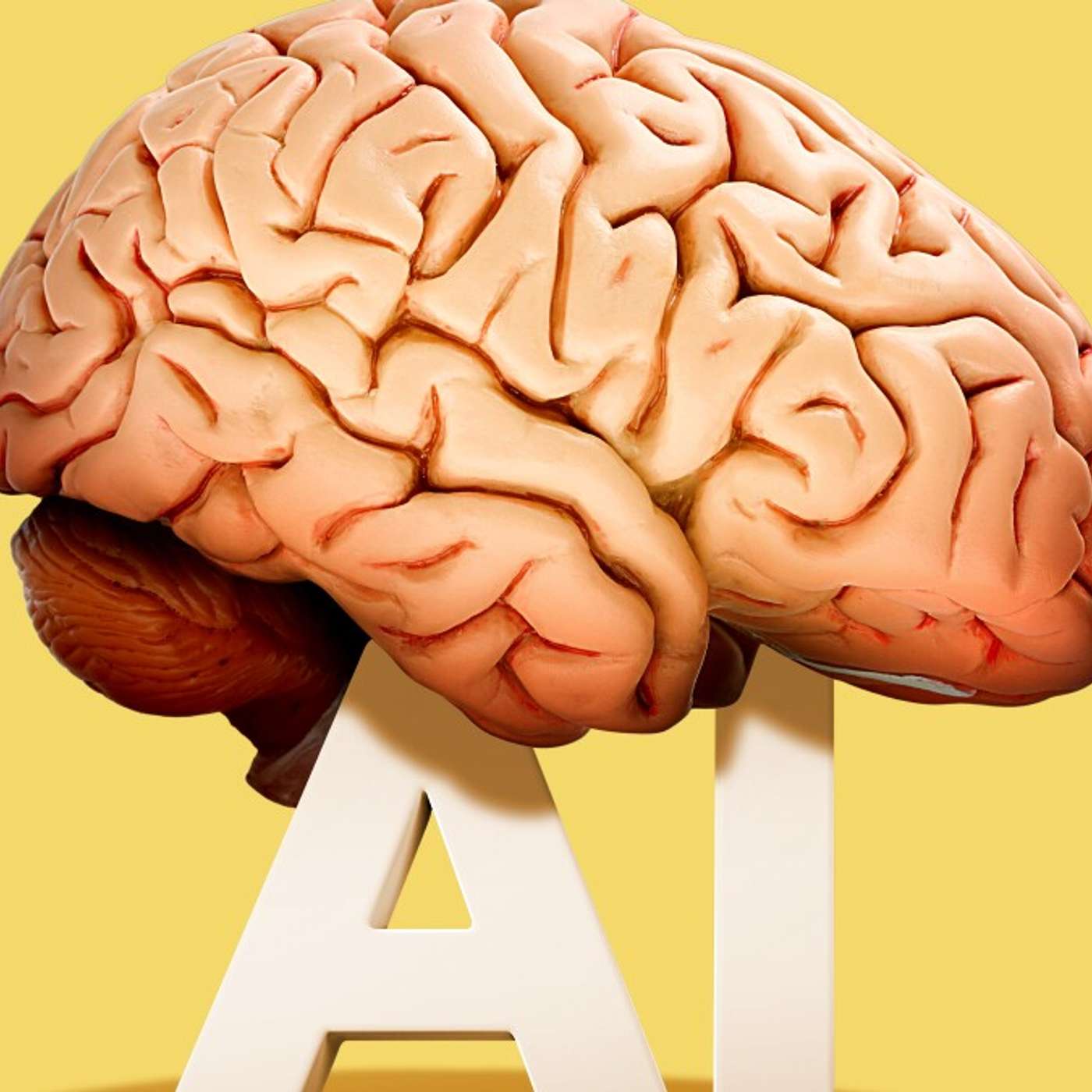
The Morning Majlis team discuss and debate whether the use of AI systems, like ChatGPT, are actually rotting and frying our brains rather than benefitting them. Join in to gain a fuller understanding of the knock-on effects seen from a generation growing up fully dependent on AI rather than being resourceful like previous generations.
Listen to #Pulse95Radio in the UAE by tuning in on your radio (95.00 FM) or online on our website: www.pulse95radio.com
************************
Follow us on Social.
www.facebook.com/pulse95radio
www.twitter.com/pulse95radio
www.instagram.com/pulse95radio
Get every episode summarized
Each time Morning Majlis publishes, we email you a written briefing from the transcript — the topics, who appeared, and any specific claims, with the ad reads skipped.
Email me new episodesFree for 3 shows. No card needed.
Hosts & guests
Transcript ready
318 searchable segments. Every word is indexed and playable.
Full transcript
Morning Majlis — Is AI rotting our brains (31/03/26). Machine-transcribed; use the interactive transcript above to jump the player to any line.
This is Pulse 95. You're listening to the Morning Medialist podcast. Join the conversation with the Morning Magilis Pulse 95. Join the conversation and the conversation is Is artificial intelligence rotting your brain? That is the conversation. That is the question for today. Is the use of AI rotting your brain? What do you think? 4215. Get in touch. Do you think it's rotting your brain? Do you think it's rotting your kids' brains? What you're seeing online? Maybe AI-generated videos that are just sometimes absolutely ridiculous? Maybe the overuse of things like ChatGbT, the overreliance? Of AI like ChatGbT? Rotting your brain? Let us know. 4215. Because it's been stated that heavy users of artificial intelligence report being overwhelmed by trying to keep up with and on top of the technology
design to make their lives easier. So too many lines of code and to analyse armies of AI assistance to wrangle and lengthy prompts to draft our amongst what's causing our brains to fry. Our brains to rot. And it was actually a big statement from consultants at Boston Consulting Group BCG. They've actually dubbed the phenomenon as AI Brain Fry, which is a state of mental exhaustion stemming from the excessive use or supervision of artificial intelligence tools pushed beyond our cognitive limit. So the rise of AI agents that tend to computer tasks on demand has actually put users in a position of managing smart, fast digital workers rather than having to grind through jobs themselves. So let's say, do you remember back in the day? I mean, people still do it. Let's say you have a bit of a disagreement with someone on a statistic or on it when a year something happened or,
you know, any fact, then you would say, oh, don't worry, let's just Google it. And I think that's somewhat dumbed us down because we didn't need to remember. And before that, it was the encyclopedia, I guess. Yes, look it up. Look it up. Or yeah. Or ask someone that probably would know the answer before internet, of course. And now we, you know, we, we don't need to know because we just say, oh, I'll chat to you. It gives you an extensive answer, written answer for what you're looking for. Now, is that a sense of brain-free? I think so. Brain rot. I think so. I think brain rot comes from the total dependence on AI. That's where it comes from. I feel, from my point of view, of course, I might be wrong. But it depends on how you use it, of course. But for people who are fully, and I mean fully dependent on AI on a daily basis to finish their daily tasks, especially cognitive tasks, you know, where you need to think on your own, where you need to make up things
from your own brain. But if you depend solely on AI to do that for you, I think that's when brain rot comes in or happens. Rather than, let's say, a daily task that you just try to employ AI in finishing for you, whatever it is, other than cognitive, that would be something that I think will be more beneficial for you. But when you rely on it to write you papers, for example, or make up your thoughts, that's when brain frying or rotting comes in to play. Yeah. I think. And I agree. A lot of teachers would agree as well. They've actually had to now build AI systems to detect other AI. Yeah. So I know a lot of it is actually happening in schools. Let's see, get an English essay on John Steinberg. Why do you go to school if you're going to depend on AI? Yeah, literally. That's my question.
I mean, we've all been kids. And we all know how kids are in those scenarios. When they're given an assignment or they're given an exam, how can I do that assignment or exam in the quickest way possible? Well, now there's this system that I put in the question, the prompt, and it does it for me. And you know what? You can even say, I want it in 10,000 words with this diagram and this and the other, and it generates it perfectly. And you can humanize it as well, apparently. So it's hard to detect. But what this is doing is you're so right, Ryania. You are so right. They're overrelines. Yeah. We are becoming so dependent on a system that is genuinely making us not be able to think for ourselves. Right. I know a lot of people who don't cook until they go on chat LGBT and find a recipe for themselves. I'm like, you know, no creativeness anymore. No, you're right. You're right. Nail on the head there. There's no creativeness anymore. I think this is a big problem. And if it's a problem today, by the way, AI is lingering around
with the generic population for about five years now. How's it going to be in 30 years? I'm against one thing about using AI. And one thing only, mainly at me. Which is things that involve emotions. Let's say that a death in the family takes place. Someone writes a condolence letter through AI, through chat LGBT. Let's say, or congratulatory for a wedding anniversary or, you know, getting married or getting engaged. And then someone writes you a congratulatory message through AI. And you can see that it's through AI. So those kinds of occasions. Let's say you're having a baby as well. Someone writes you, oh, you know, congratulations on your new baby and all of that. But then they do it through AI. It's like you could have just done that simply with your own words. Very true. You don't have to make it AI generated. It just lacks all the emotions.
And you can tell. Make it more personalized. So that's when AI feel kind of fails the person that uses it. It's like because it's going to show that you don't care about the other person. You're not taking the time out to be, you know, to use your emotions, you know, to deal with the person in front of you. You actually opted to use AI tools rather than actually your own brain or your own feelings into play. Yeah. So that's when I feel like AI should not be used. Like, please refrain from using AI when it comes to anything emotionally related. Especially if you're writing a letter, let's say to a loved one. However, that loved one is don't generate it through AI. Don't put it into an AI tool at all. Put it from, I mean, just take it out from your heart. Even if you make a lot of mistakes, even if you don't know how to express yourself. But it's raw and it reaches the heart immediately. Yeah, it's human. And it's human.
Yeah. We're losing touch with our human side. More and more every single day with AI tools being so available and being so, there's a variety of AI tools for everything. There's an AI tool for anything nowadays, for gardening, for decorating your home, for writing papers, for... You can actually take a photo of your living room and it will tell you the best way to do the layout. Exactly. Yeah, there's an AI tool for anything nowadays. But just refrain from using it for anything emotional and human. That's what I feel. I think it says a lot about you as well as a person. If you do, let's say you are right, you know, sending a congratulatory message or a message of condolences, whatever it is. A heartfelt message is what I'm trying to say. If you send that to someone and it's noticeably AI, it says a lot about you as a person. It says a really lot about you as a person. But lazy, not as caring, not a really considerate. And it's not going to reach the person the same, that you're sending a message to, for example.
You know what I mean? It's going to be like, okay, thank you for generating this message. That's it. Bye. It's not going to be like, oh my god, I felt that. That was lovely from here. That was lovely and you just like, you stop at it. You stop there and you kind of read it over and over and over again when you feel that it's human. And if they know you well enough, they know that you don't use those words. Exactly. You know, if you hang out with them and you're like, oh, that person probably doesn't even know what that word means. And then they type it into the message. But nowadays, even work messages, work emails. They're being used through, they're being generated through AI. They are. They are. They are. I want to ask you, though, Ronnie, you know, progressively, humans have gone from studying with books. And then it went to the Googling era where it was, okay, now we're going to Google everything and learn off that. Are we now in the era that we are learning off of AI when people? 100%. Yeah. And is that a bad thing? And what I mean by that is if we came to accept, and by the way, you've got to remember,
when Google first came about, everyone was like, oh, the old traditionals will be like, oh, I'm not going down that route. No, we were taught to use Google for research in schools. When I was in the States, for example, we were taught how to use that. But we would actually be taught how to use certain references and how to use the links and how to put them into your research and how to, you know, there's a whole process about that. That means I got this, this is my source with this link. The referencing, yeah. The referencing, yeah. But that took time. But that took time. When it first came about, people were like, whoa, I'm used to reading these books going to library. That's what I want to do. And then it got accepted. So are we still in that transitional phase of moving from the typical Googling and this, that the other two, the likes of artificial intelligence, being our source of research, being our source of learning? I feel like we transitioned already. Really, that quickly. I feel like we transitioned already. But the thing is, the main concern is, are we really building new generations that are going to be smarter? Then the previous generations were less smarter.
That is the question. Because nowadays, I have, for example, family members who are very, very young. And when I see how they're studying nowadays, and everything they just put through Chad Jubiti, they have the answers and the answer, especially if they're doing remote learning. It's like, what? And they're finding new ways to get through, as you said, like, you know how they want to detect if this was AI-generator? They're now finding new ways to actually not be detectable. Not be detected that it was AI-generated. So what is the effort that they're putting on themselves or through their head to answer those questions? None. So what are we raising here? What kind of generation are we raising? That kind of poses a lot of concern. I agree. I actually agree with you. Are we going to, are we going to, are we going to, are we going to trust the future doctors? Are we going to trust the future lawyers?
Are we going to trust the future engineers, let's say? Because nowadays everything is being used through everything is being answered or facilitated through AI rather than the human cognitive skills. So is that a concern or is that not a concern? Well, for me, it's a concern. It's interesting that you talk about the trust side of things. Because, you know, let's say we have an AI robot in the near future that is considered a doctor level, right? Versus a doctor, who has more data and knowledge? Who is going to be giving a more kind of considerate answer and doesn't have a motion driven? Let's say your doctor wakes up and is having a really bad day. Comes into your appointment and is just not on the best form, you know, that he typically is. Or you have an AI robot who gives you a clear car answer catered to you and personalized. Are we going to live in a world then that we actually rely on more on the AI's perspective? Because there's no motive or a motion involved in it, rather than our own doctors.
You know, that poses a little bit of a question to me. We actually got a text, Tarek's texted in saying, yes, I agree. Less smart. I chat GBT everything these days. I agree. I agree. You know, I find myself, especially when you do one rather than googling it, which might give you a one way, one word answer. And anyway, by the way, nowadays with Google's Gemini, which is an AI guys. So when you do. So the form of chat GBT. Exactly. It's just on Google. It's nothing. There's nothing different. Yeah, of course. But when I want that kind of answer that gives me a bit of backing, a bit of reason behind that fact. When you're having a conversation with someone, chat GBT and it says it gives you reasons. It's because or this or that, the other. So that catered answer. I think a lot of people are looking out for and chat GBT is that. You know, I was talking also to another family member and she's new to motherhood. And she doesn't know before when we want to have like we want to know more about how to be. Like how, you know, the mother skills, you know, how to take care of a baby and the TVing era.
And you know, why is this? Why is my baby crying? How to bring down the temperature? All of that, right? Yeah. Before we used to basically ask someone else, ask a mother, ask a sister who has had a baby before. Or learn on the job or learn on the job. Exactly. So I was talking to a family member yesterday who's new to motherhood. And she's like, yeah, I asked chat GBT. And why is my baby, why is my baby's head tilted that way all the time? So chat GBT told me this, this, this, this, this. And then another day she told me the same thing. She said, I asked my baby how, because my baby is teething right now. So the chat GBT suggested that I should be using onions for the baby to basically munch on for the pain to be reduced of the teething and all of that. Yeah, I mean, I'm just saying that nowadays the reliance is so heavy on chat GBT that we forgot to use our own human skills. Or investigative skills maybe with other people who have maybe gone through the same experience.
So long gone are the days when you ask someone else rather than now just asking chat GBT. So is that a good thing or a bad thing? That you answer that, give us your opinion. Text us at 4215. 4215 is the text line, or you can also DM us on Instagram and post 95 radio. Great conversation that I really did enjoy that. You know, that individual, I don't know them, but they might never have used chat GBT. Before, now they're letting them influence, you know, the way they mother. You know, that's crazy, isn't it? Something new is letting us control how we raise our children. You know, I mean, it's, it's a crazy world. It is a crazy world. It's the same. Do you think AI is beneficial for us? Or is it rotting on our brains and really dominating our lives and our decisions? Kind of taking away our instincts as well. I like to look at it. Let us know 4215 get in touch. This is post 95. Tune in live every weekday from 7am.
More episodes
More from Morning Majlis

uPaint Instilling Creativity Across Sharjah (10/09/26)
Morning Majlis

'Impact Rooted In Values' animation teaching children UAE's values (09/09/26)
Morning Majlis

Sustainable Sharjah Tissue Paper (08/09/26)
Morning Majlis

Fitness on the beach: Seven week program for summer activities with Shurooq (02....
Morning Majlis