About this episode
Become a supporter of this podcast: https://www.spreaker.com/podcast/conspiracy-theories-exploring-the-unseen--5194379/support.
Get every episode summarized
Each time Conspiracy Theories Exploring The Unseen publishes, we email you a written briefing from the transcript — the topics, who appeared, and any specific claims, with the ad reads skipped.
Email me new episodesFree for 3 shows. No card needed.
Hosts & guests
Transcript ready
48 searchable segments. Every word is indexed and playable.
Full transcript
Conspiracy Theories Exploring The Unseen — Iran: The New Rules of Engagement. Machine-transcribed; use the interactive transcript above to jump the player to any line.
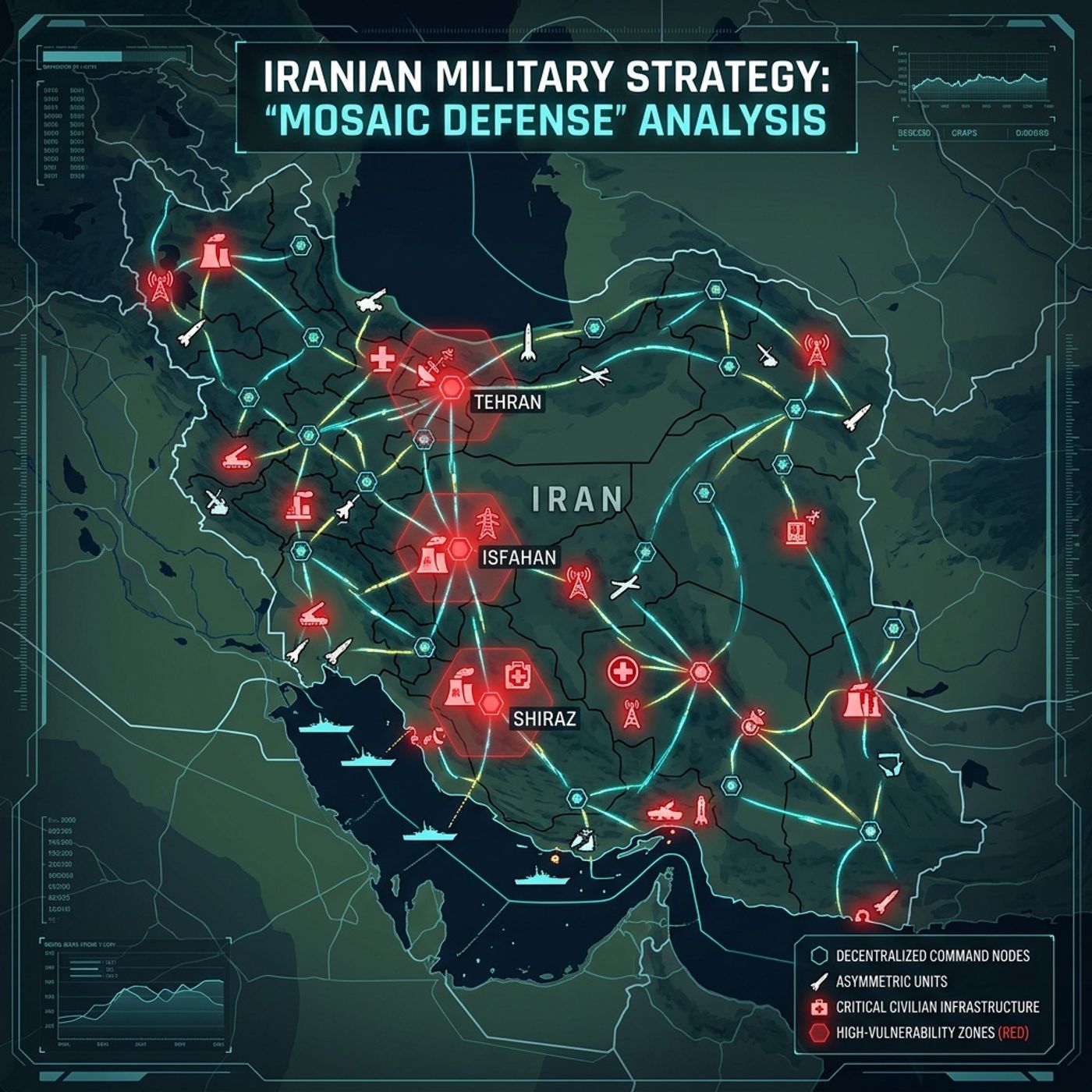
In the heart of the Middle East, a transformative shift is underway in Iran's military strategy. This marks a significant change from a historically defensive stance to an aggressive, offensive posture, employing what they call the Mosaic Defense Strategy. This strategy, developed back in 2005 by the Islamic Revolutionary Guard Corps, breaks down Iran's military command into 31 independent provincial commands. Each command operates almost like its own mini-army, equipped with its own resources. The aim? To ensure that even if there's a decapitation strike where key leadership is taken out, the military can still function and maintain continuity. Now, you may wonder what has led to such a dramatic shift. Following a conflict in June 2025 with both Israel and the United States, Iran found itself facing intense pressure and devastation. They have drastically adapted their approach, shifting from using proxies to engage in direct, high-intensity confrontations. This aggressive new strategy involves a range of tactics,
including regional missiles, drones, cyberattacks, and yes, even energy coercion. There's a palpable urgency behind their actions, marking a departure from the cautious, ambiguous confrontations we've seen in the past. One notable and alarming aspect of this strategy is Iran's recent targeting of civilian infrastructure. There have been alarming reports of attacks on critical necessities like desalination plants. Sources of water in a region where water scarcity is a significant issue. This tactic raises profound ethical questions and challenges international humanitarian norms. It's a stark reminder that the conflict isn't just a distant issue. It directly impacts the lives of ordinary civilians. In fact, recent reports indicate that U.S. and Israeli operations have decimated well over 66 percent of Iran's military capabilities, including missiles, drones, and even naval assets. But let's talk about human cost for a moment. A tragic incident during a U.S. air strike in Manab resulted in over 165 civilian casualties,
many of whom were schoolgirls. This stark reality highlights not only the horrors of war, but also how innocent lives are caught in the crossfire of these geopolitical confrontations. What do these shifts mean for the players involved? From Iran's perspective, this mosaic defense concept isn't just a military adjustment. It's a survival tactic. They claim it represents resilience in the face of external threats. Rather than retreating in the wake of lost resources, Iran is signaling that it can adapt and continue operations, reinforcing its deterrent strategy. On the other hand, the U.S. and Israel view these developments as destabilizing. Iran's aggressive posturing complicates their efforts to curtail its military capabilities and maintain regional stability. Analysts like Michael Doran from the Hudson Institute have stressed that this strategy's effective implementation could catalyze further conflict. As we reflect on these developments, it's clear that Iran's shift to offensive asymmetric tactics
is ushering in a new era of conflict in the region, one that challenges the status quo and calls for re-evaluation of international responses to their strategies. The complexities of this situation remind us that the stakes are incredibly high and the consequences are devastatingly real. In conclusion, Iran's mosaic defense signifies not just a tactical shift, but a broader strategic evolution. As Iran continues to adapt to perceived threats and pressures, the implications for regional security and international relations are profound and troubling. Keeping an eye on these developments will be crucial as we further explore what this means for the future balance of power in the Middle East. Thanks for joining the Fortune Factor podcast.
More episodes
More from Conspiracy Theories Exploring The Unseen

The Digital Mirage_ AI and the Death of Authentic Romance
Conspiracy Theories Exploring The Unseen

The Trust Trap_ AI and the Future of Romance
Conspiracy Theories Exploring The Unseen

The Ghost in the Machine_ Navigating AI Romance
Conspiracy Theories Exploring The Unseen

The Love Recession_ Why Digital Romance is Offline for Good
Conspiracy Theories Exploring The Unseen