About this episode
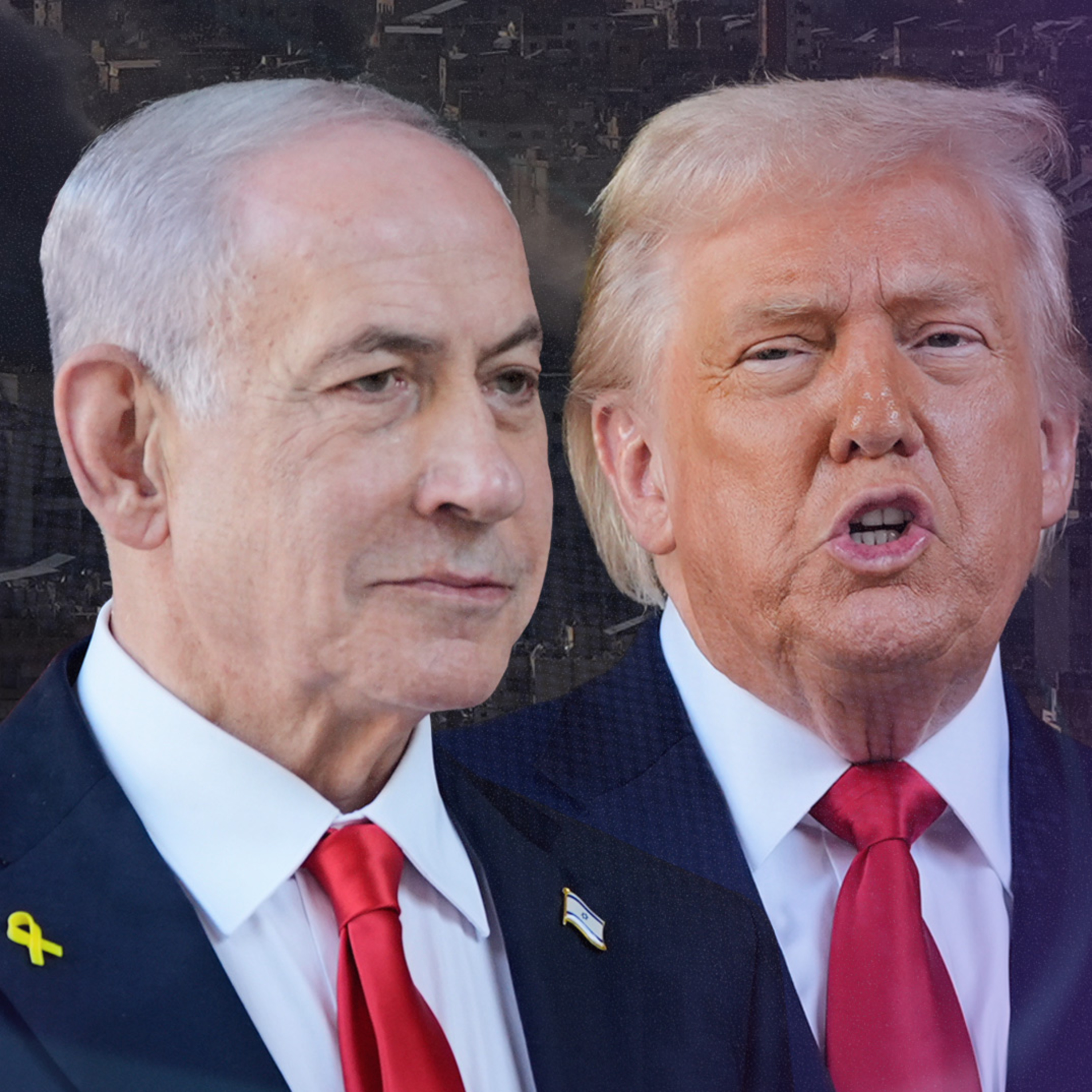
The crisis in the Middle East is deepening by the day. The killing of Iran’s Supreme Leader has triggered a regional shockwave, from missile launches to unrest in neighbouring states. But what does this moment really reveal about the Iranian state, its capacity for survival, and the calculations being made in Washington, Jerusalem, and Tehran?
In this episode of The Fourcast, Krishnan Guru-Murthy speaks to journalist Anshel Pfeffer and peace advocate Sanam Naraghi-Anderlini about the limits of decapitation strategy, why Western governments have so often misread the Islamic Republic, and the competing endgames now in play.
Get every episode summarized
Each time The Fourcast publishes, we email you a written briefing from the transcript — the topics, who appeared, and any specific claims, with the ad reads skipped.
Email me new episodesFree for 3 shows. No card needed.
Hosts & guests

Transcript ready
557 searchable segments. Every word is indexed and playable.
Full transcript
The Fourcast — Iran at war: inside the deepening Middle East crisis | The Fourcast. Machine-transcribed; use the interactive transcript above to jump the player to any line.
It's easy for Netanyahu and for Trump to say it's in the hands of the Iranian people, but they're still fighting this war. And the end game or the off ramp is far from clear. It's not your traditional Saddam Hussein-type dictatorship where you get rid of one guy and everything goes. This is not the Shah's dictatorship, where the Shah goes and the army dissipates. This is actually much more of an organism. They're not stupid. They've probably anticipated a lot of what has happened. And I can hit the sirens where you are right in the opening of the room. Yes. Do you have to change location? Hello and welcome to the forecast where in Tel Aviv, where in the last few minutes there have been more missile warnings and inscriptions going on in the skies above us as this war with Iran, Israel and America, which is now spreading across the Gulf and into Lebanon today, grows.
If anyone thought this was all going to be all over in a couple of days and Iran would be bond to the negotiating table and there would be some sort of peace, it's not turning out like that. It looks like this is going to be dragging on for some considerable time. Iran has not imploded the appeals from Trump for people to come on and rise up and take over their government, echoed by Netanyahu, are not materializing just yet and don't really look like they are possible because of the realities of the security state in Iran. So where is this going? How might it grow? And what might the consequences be? To discuss all of this, I'm joined by the economist's Israel correspondent, Anshal Fefer, and the Iranian author, Sanam Naragi Andalini, who was founder of the International Civil Society Action Network, which promotes sustainable peace. Well, Anshal, both Netanyahu and Trump in their opening statements,
basically sort of said, over to use the Iranian people, now as your opportunity, you're never going to get an opportunity like this. Do you think they really thought there would be a revolution? Well, there was at least the stirings of a revolution back in January, and this certainly has created a situation where there was, you could call it an opportunity, certainly, from Netanyahu's perspective. I think Trump felt also that he had some kind of moment here in which he could perhaps settle historic scores with Iran and perhaps show himself to be some great world leader leading the nations of the world to freedom. But it was obviously never going to be as simple as that. And it took, first of all, this long buildup of the Americans that they've assembled here, this massive armada. This, you know, the assassination of Hamine on Saturday morning was a very well planned operation, months and months of intelligence collecting
and planning until that moment. But then, I think that Salam said that there's this tendency to look at Hamine as a larger than life figure, and that kind of obscures the fact that the Iranian regime and Iran as a country is a very complex thing. And just to switch on a revolution is something you can't do in any country, certainly not where even once you've taken out the Supreme Leader and dozens of other senior figures, there still is a very strong security apparatus both geared towards internal suppression and externally wielding thousands of missiles, which hundreds of these we've already seen flying towards Israel and other countries here in the region. So what happens next, I think, is easy for Netanyahu and for Trump to say it's in the hands of the Iranian people, but they're still fighting this war. I mean, Israelis and the Americans are still carrying out hundreds of missions every day.
We're now on day three, and the endgame or the off ramp is far from clear. So they would have known, therefore, or at least, thought it was likely that this would cause some mayhem in the Gulf countries and that Lebanon would be brought into it as it has been, and that they would have to be prepared to fight on two fronts. At least. Well, I think this was something that they did take into account, but I think they also hoped that the decapitation operation that began this war would be so devastating as to totally throw perhaps the Iranian regime into disorder. Now, that's happened to some level, and we do know, we're seeing the results of the various Iranian missile teams being ordered or allowed to act almost independently, but they're still there. It's still a very impressive operation that the Iranians have.
And I don't think that simply by decapitating the head of it, they've totally vanquished it. And we're seeing, and I think that these attempts by the Iranians to launch missiles at various targets in the Gulf countries isn't necessarily an attempt to destroy the energy infrastructure there or the tourism industry we've seen strikes. I think it's an attempt to exert pressure and to say to Donald Trump, look, you think that you can win by killing our leader. Let's see how you like it. If your allies in the Gulf, their economies are suddenly at risk. The Gulf states have these multi-multibillion economies based on all those hotels and energy and airport and so on. And that's now a big question mark moving over that. I mean, son, I'm, yes, coming on that. I mean, both in terms of why decapitation hasn't worked.
And what you think the strategy might be in the effect on the Gulf? Because you might say, well, are they just turning everybody against them? We've had this regime in place for 47 years. At any point, anybody who has underestimated them has ended up facing various consequences, whether you're the Iranian public, whether you're Reza Palavi or now with the situation. These guys, back in the early 80s, when they were just getting into power, they were just settling in. The entire parliament was bombed, and people thought that's the end of them. And it wasn't. Khomeini died in 1989, and people thought it's the end of the regime. And it wasn't. And the reason for this is that the structure of this system of governance, there's the military peace, there's the administrative peace, there's the religious peace. It's an organism that actually is quite diffused in terms of its nodes of power.
It's not your traditional Saddam Hussein-type dictatorship where you get rid of one guy and everything goes. This is not the Shah's dictatorship, where the Shah goes and the army dissipates. This is actually much more of an organism with buy-in from different elements within the system. And they're not stupid. They've probably anticipated a lot of what has happened. And from what we hear, they had four levels of leadership plans of one goes that they had up to four levels planned in terms of who's going to replace the next guy. So these are all things that I'm not trying to defend the regime. What I'm trying to say is that in any contest or any conflict, you need to know your adversary. This is the thing, right? And the narrative that people have been fed in the West is that these are the crazy mullahs. Well, they're not so crazy. They have always operated on the basis of survival. They're survival instinct for themselves, number one.
But they've also weaved into their narrative, faith and nationalism. And as a nation, Iran, as Iranians, generally speaking, we have a history of imperial games being played, where there was the Russians of the Brits and so forth. And so there is an instinct to be very wary and allergic to foreign intervention and this kind of bombing. So that's also now probably playing into it. Reza Palavi has become like a pied piper for Netanyahu's message. I mean, he's been saying to people, go out into the streets. He keeps saying, we, we are coming. He's not there. He's sending other people's kids out into the streets. And at the moment, again, if you look at the 93 million people, the structures that they have, the Iranians at the moment are saying, we're going to stay at home. We're going to, you know, what the hell is going to happen? Because we've already lost many lives.
And yes, they want change. But I don't think they want change via a decimated country. None of us want that. And the more hospitals are hit, the more national heritage sites. We've just heard the Golisthan Palace in Tehran, which is a UNESCO site, was damaged today. The more that happens, the more there's going to be anger towards anyone, you know, towards somebody like Palavi who's been supporting the war, regarding the region. So the Iranians said that they would go on the offensive against any space, any places where there are US military presence, which is what they've done. The attacks on Dubai are, you know, they're definitely of concern because it's the hotels and the economic infrastructure. But it's, but I think it's basically a strategy. And it's a risky game. They know that they are outgunned. Of course they are. It's the United States and Israel that is fighting them. They know that they're outgunned militarily.
They're trying to exact as much damage as they can and pressure economically, you know, insurance, prices going up, and so forth, so that there can be a ceasefire and some sort of negotiation out of this. Now, that means they're escalating, which means that the US and Israel will escalate. And that's really dangerous in terms of where that will take us. And the answer to that, the antidote to that is for some concern, is that there needs to be an off-ramping and de-escalation plan that ties into it the idea of a referendum in Iran so that we can have some kind of an orderly transition out of the current state and into something else with the political dissidents that are there, with the release of political prisoners and so forth. And again, it's notable that Mr. Palavi has not said anything about political prisoners being released. And on the first day of the targeting, Mir Jose Mousavi's compound, he's one of the most renowned,
you know, recognized leaders, dissident leaders of, he was the leader of the Green Movement, his compound was targeted. The guy is under house arrest. Why was he targeted? So these are just interesting sort of dilemma questions that need to be addressed and comes to the question, what is the goal here? Is it transition or is it decimation and creating a country that's going to be on its knees so that you can then have a puppet fly in from Washington? Anshul, I mean, Salam was hinting there at this idea that it was crazy mothers. And I know from the briefings I've had from British government that there has been this idea that the Iranian regime was incompetent, was likely to collapse on itself, was deeply unpopular, and was just kind of useless at a lot of sort of international strategy. Is there a danger that they have all thought that Iran
is much worse than it might be? Well, there certainly is a danger when you carry out such a drastic step as assassinating a leader of a country. That's not something that happens very often. I don't think it's happened for decades that one country has done that to another. So it's a very drastic step. It's something that on the one hand, it certainly will leave the regime reeling. But to think that they're incompetent, and they're not incompetent, they're certainly not madmolers. It would be hard for Israelis or Americans to claim that Iran is such a great threat. Well, at the same time, they're not very clever or sophisticated in nation. I think that anybody in Israel who deals with the Iranians, whether in Tensions offices or academics or politicians that don't forget, until 47 years ago, Israel and Iran were close allies. And in Israel itself, there are hundreds of thousands
of Jewish Israelis who are of Iranian descent. Many of them were born there. So maybe at street level, people think that they talk about them being mad. But certainly, it's not the view amongst decision-makers and in the international community. That said, I think there is a bit of a heubristic or maybe slightly, maybe it's a lot of heubrists right now. And certainly, since October 7, 2 and 1 half years ago, there has been this rollercoaster of trauma and heubrists here in Israel, and we've seen it manifest itself in different ways. So the feeling that Israel, which is a much smaller country than Iran, both in territory and in population, can step in and somehow along with the Americans, change the historic direction of Iran. I think that's slightly over exaggerating
any country's powers. And I fear that that's what may have happened here. But on the other hand, this assassination was only 60 hours ago, so the short weight of it could still topple the regime. I think we're rushing to make assessments of things that are very much in the early stages of the event. No, of course, but what we're also trying to read is what the off-ramp has somehow caused it might be. And whether it's the same for Netanyahu as it is for Trump, they are reading from a similar script today in terms of what the war aims are. And they say that they're trying to take out missile launch sites, take out any nuclear capability, but are not trying to impose a new system or a new regime or a new ruler. Do you think they both really want the same thing? No, they're politicians and politicians, ultimately, all politics is local politics. And they're both facing elections this year,
Netanyahu, facing a parliamentary election, which could, if the current polls are to believe, could bring an end to his long, long term in office. And Trump, it's a midterm, but the midterm is an important verdict on his administration. So they're both constantly looking at the polls and thinking about how this war will be framed as part of their campaign narrative. And it's different for each one of them. Trump will be looking at oil prices, voters in America, to think about how determined how they're going to vote by the price they pay at the pump. And he'll want to show that he can do a very different war to Barack Obama, not so much Obama, but certainly Bush, the second who dragged the American into these long-protracting wars in Germany. So he wants to show this is quick and over. Where is Netanyahu wants to be able to show the Israeli public
that he's reached something decisive when it comes to, and I can hear the sirens where you are. Yes. Here in Jerusalem, we're not hearing them yet. Do you have to change location? No, it's all right. I think we'll carry on for now. So I mean, but this is just an illustration. I mean, every night that's disrupted like this for Israelis, that does harm Netanyahu. On the other hand, if Trump ends this war on his own terms, which we saw in the war in June and say, OK, I've won, and now there's a new leadership in Iran, which is happy to deal with me and accept my dictate. It may not be the same for Israel. It could end with Iran still having a significant ballistic missile capability. And also it could end with a betrayal of the Iranian people. It could end with someone else who was involved with suppressing the protests back in January.
Someone who has blood on his hands taking the role of supreme leader or whatever power there is behind the scenes and just cutting a deal with Trump at the same time. So the outcomes right now, as you said, Trump and Netanyahu are really from the same script. But the outcome is not necessarily going to be satisfactory for either of them. And Son, on what kind of offram, do you think Iran wants? So first of all, I see three different goals here that there might be sort of an overlap of a Venn diagram of some sort, but also maybe not. The Iranian public, generally speaking, if we don't really know, but if we go by whatever sentiment that we've heard, generally speaking, people want freedom, and they want some form of democratic secular states so that you can just be yourself and get rid of the theocracy. That's one side of it. The United States, I don't think they fund,
I mean, this Trump administration, I don't think they care. They just want someone that they can do business with possibly or demonstrate that they suppress because they were an American adversary for so long. So, but as we know, if, and I think Anton was right, if somebody shows up at the current sort of interim leadership that has emerged, if there's some deal that's made and the Iranian public are betrayed, I don't think that Trump particularly cares about that. And then I think that the Israeli side of the story, I'm a bit more cynical because I think that for Israel, a strong secular democracy in Iran is not necessarily an end goal that Netanyahu would want because it's quite likely that's a government like that. Would question Israel's treatment of the Palestinians and have a say and would still be a powerhouse in the region challenging some of the sort of extremities
of the Israeli regime. So, I think that for them, they want a weakened state, maybe fragmented, and as I say, something along the lines of Syria where you have a country with a zero defense infrastructure and that you can do what you want with it as you wish. So, I think there are different interests at play at the moment. And then just one last one. I don't think Israel's interest in Netanyahu is necessarily the same thing. Well, that's why I was saying the current leadership that you have and hopefully through elections that will change. But one of the things that people aren't noticing right now is that Iraq is up in arms. I have colleagues in Iraq and they were saying that young people are out and they're waiting for the fatwa of war. Hopefully that won't happen. It'll be calm down. But that's dangerous. Pakistan has been up in arms. I mean, the Pakistani US embassy, the consulates in Pakistan have been overrun. Lebanon, we're seeing difficulties. Bahrain, we're seeing issues.
These are consequences. These are things that the Iranians instigated. It's their public's reaction to the killing of Hamine. Because in some of these places, Hamine was more popular than he was in Iran. So the fact that some of this stuff wasn't calculated is really problematic. Because it's not hard to have seen. I think it's all in plain sight. Somebody who knew the region could have probably given that analysis up front. And sure what you're going to say? Well, I don't think that a secular liberal or whatever democratic Iran, which is somewhat supportive of the Palestinian cause, is bad for Israel when compared to an Iran which has provided billions of dollars and thousands of missiles to Khizbullah Hamas, the Houthis and others surrounding Israel who actually use those things. So I don't, I mean, I'd like to be cynical as well, but I really think that Sunnah is wrong about that point. There's nothing good about that. I hope you're right, Angel. I really hope you're right. Well, unless you expect a secular democratic Iran,
Iran just to continue supplying his Bala with missiles. And I doubt that's what you're saying. So yeah, perhaps when it's in the out, who's narrow political interest having Iran as this constant bogeyman has been very good politically over the years, it's something not good for the Israeli people or for Israel as a country and for its security. And we've seen that Israel has been, in the last two and a half years, the target of Iranian missiles were usually fired by others, but the supply designed and funded by Iran. So I think any, almost any other type of Iran would be better for Israel. But yes, also chaos days will be bad for the region. I don't think that necessarily Israel wants to see Iran as a weak and disjointed countries where its minorities are each carving out a place, something like Syria or Iraq right now. I think Israel very much wants to go back to those days
when they were countries which had strong relationships. And almost anybody I speak to who is a serious, either Iran exporter or an Israeli-Iranian, or they all say we hope that in our lifetime to return to Tehran, Islam, and all the cities that we knew and loved being in before 1979. That's the main consensus that I hear amongst most Israelis. And I'm not here to, in any way, to defend Israel. I'm here as a journalist, but I just, I don't think that, there's a lot of, obviously, a lot of hatred here in Israel towards Palestinians and towards, and just a lot of very negative feelings. There isn't a negative feeling here towards the Iranian people. It's Israeli's love Persian cuisine and Persian music, or Iranian music, whatever you want to call it. And it's very much part of life here and, you know, Krish, a minute or two from where you are right now.
There's a, I can think of two or three excellent Persian restaurants. Yeah. Sanem, I just want to end with you both really on this idea of sort of what, you know, what the people might feel such a dish. I mean, when you talk about the Iranian people, obviously, there are the people who are, you know, cramming the squares, demonstrating in favor of the regime. And there are the people who came out demonstrating against the regime and were killed in their thousands a few weeks ago. I mean, do they have much in common? I think they have a lot in common, but I think that the question of how you bring about, from a leadership standpoint, a belief that the Iran that we have belongs to all of us, to everyone, is the challenge. And what's happened is that the, you know, we've had 47 years of a regime that is basically said, if you don't agree with me, go, or I'm gonna throw you in jail.
And instead of having an alternative voice coming out of Mr. Palavi, who has, you know, self-proclaimed himself to be the leader of the transition, instead of having a voice that says, actually, it belongs to all of us. Let's have it. Let's envision a future where we can be there. Let's envision a future of some form of restorative justice, some form of national dialogue, you know, something along the lines of the South Africans had a people's charter. You could look at it, read it, and say, oh, I belong to this, right? But some vision of the future where people don't feel like existential threat, one way or another, to bring us back to that idea of what is it that we love? I might, you know, in my darkest moments, what I think is that all of the anger and all the trauma is in part related to the fact that Iranians deeply, deeply love their country. And I think, Anshel, you know, your point, that is, you know, the Jewish Iranians that went to Israel still have deep affinity. I remember meeting many when I was in Tel Aviv some years ago. So there is a, Iran has a, we have deep roots
to the, and a sense of, you know, a sense of connection to the country. But we need leadership that says, all of us have a right to be there, and it belongs to all of us. And actually go back to our his long, long history. Iran is the first secular empire. It was, you know, they said, pay your taxes and practice whatever faith you wanna have. We have it in our history, but it's been decimated over the years. By this regime, by the Palavi regime, before that, and the, you know, Palavi right now. And we need to reconcile, I think, I think, with each other. And, you know, they're off ramping. I think partly is to, first of all, just contain this conflict and then help with this idea of a orderly, as I say, referendum. I mean, that they themselves are speaking about how to have some change. But I don't think that that change on the back of bombs and bullets is gonna be, is gonna lead us to a democratic space. I think it just enables more authoritarianism. And so, yeah, the sooner we can de-escalate
and have some kind of national space for dialogue with all the opposition leaders and everybody involved, I think that's, you know, let's imagine that. These two three days are incredibly, incredibly dark as the news of civilian deaths and attacks and so forth come, you know, it's just relentless. And Angela, I mean, you say the Israeli people have no, you know, hatred of the Iranian civilian population. But people here seem pretty sanguine about this war and politically, everybody's falling into line. I mean, we've spoken to, you know, Natalie Bennett and Yael Lapid in the last day or so and they are all saying, you know, where all Israelis were all together, we totally support the government, we totally support the war. I asked Yael Lapid, you know, what, what if this helps Netanyahu win re-election? And he kind of shrugged and sort of said, well, we're all Israelis now, you know, our Israelis, you know, what do they, what do they want at the end of this?
Do they, do they just think this'll buy us a few more years or do they think there's something bigger than that that's possible? I don't think there is that much strategic thinking and, you know, Natalie Bennett and Yael Lapid just like Netanyahu are focused more than anything else right now on the election that's gonna take place in a few months. We don't quite know the date yet, but it's close and you don't win votes by talking out against the war, which has just begun perhaps in a few weeks if this war continues and drags into less into less satisfactory outcomes for Israel, then you'll start hearing that kind of criticism, but don't expect politicians who, party leaders who are about to start their election campaign to criticize a war strategy.
You know, I haven't seen too many politicians that brave in other countries at this time of war. In America right now, it's perhaps different because anything that Trump does, it's pretty easy for the Democrats to criticize him, but you know, casting a mind back to some of it to other wars in other countries, usually parties, you know, most opposition parties and have line up behind the government. And it's not easy in Israel right now to speak against the war with Iran when Israel feels that they have already been at war with Iran for so long and so much of what's happened in the last two and a half years is connected to Iran. So, you know, I just don't think it's realistic to start. It's only not in the, on day three of this war to expect the main opposition party leaders to start criticizing it and come back in a couple of weeks and we'll probably hear them talk a bit differently then. Thank you both very much indeed, Anshul Sanem.
Thank you for your time. That's the forecast for today. Until next time, bye-bye.
More episodes
More from The Fourcast

Iran war: will Trump’s Hormuz blockade backfire?
The Fourcast

Hungary Election: The blueprint for beating the far right?
The Fourcast
Will Trump turn on Netanyahu over Israel Lebanon attacks?
The Fourcast

Iran ceasefire: has Tehran outplayed Trump?
The Fourcast