About this episode
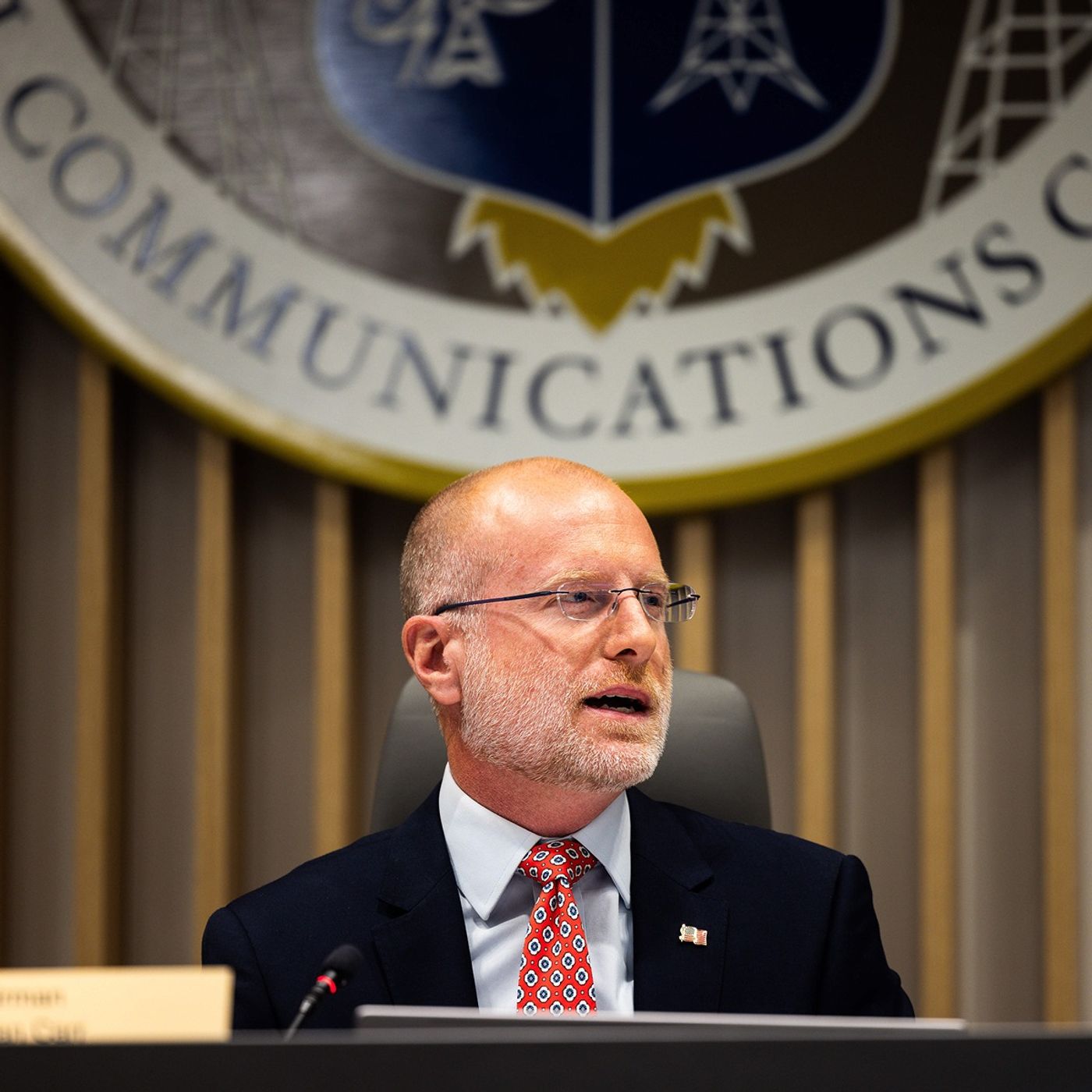
This past weekend, the chairman of the Federal Communications Commission threatened to revoke broadcasters’ licenses over their coverage of the war in Iran.
Last month, Stephen Colbert said he had to drop an interview with a Senate candidate because of F.C.C. guidance that targeted political interviews on late-night shows.
Jim Rutenberg, a writer at large for The New York Times, explains how the Trump administration is trying to shape media coverage to fit its agenda.
Guest: Jim Rutenberg, a writer at large for The New York Times and The New York Times Magazine.
Background reading:
- Under President Trump, the F.C.C. has used obscure regulatory powers to crack down on network TV.
- How a century-old rule is scrambling late-night TV.
Photo: Tierney L. Cross for The New York Times
For more information on today’s episode, visit nytimes.com/thedaily. Transcripts of each episode will be made available by the next workday.
Subscribe today at nytimes.com/podcasts or on Apple Podcasts and Spotify. You can also subscribe via your favorite podcast app here https://www.nytimes.com/activate-access/audio?source=podcatcher. For more podcasts and narrated articles, download The New York Times app at nytimes.com/app.
Hosted by Simplecast, an AdsWizz company. See pcm.adswizz.com for information about our collection and use of personal data for advertising.
Get every episode summarized
Each time The Daily publishes, we email you a written briefing from the transcript — the topics, who appeared, and any specific claims, with the ad reads skipped.
Email me new episodesFree for 3 shows. No card needed.
Hosts & guests

Transcript ready
467 searchable segments. Every word is indexed and playable.
Full transcript
The Daily — Inside the Government’s Crackdown on TV. Machine-transcribed; use the interactive transcript above to jump the player to any line.
This podcast is supported by Pharma. America leads the world in medicine development. It matters. We get new medicines first, nearly three years faster. Five million Americans go to work because we make medicines here at home. And not relying on other countries keeps us safe. But China is racing to overtake us. Will we let them? Or will we choose to stay ahead? When America leads, America cures. Let's tell Washington to keep us in the lead. Learn how at AmericaCures.com. From the New York Times, I'm Rachel Abrams. And this is the Daily. When Stephen Colbert announced that the government's increasingly aggressive stance toward late night, meant that he could not air a planned interview with the Democratic Senate candidate. It sent chills throughout the media. And then this past weekend, the chair of the Federal
Communications Commission threatened to punish news outlets over coverage of the war in Iran. Today, my colleague Jim Rootenberg explains how the White House is trying to shape media coverage of its agenda. And just how far it's willing to go, in its crackdown on network television. It's Wednesday, March 18th. Jim Rootenberg, welcome back to the show. Thanks so much for having me. Jim, we've turned to you a few times on the show now when we have questions about the media and free speech and government intervention. And just this last weekend, in fact, Brendan Carr, the chairman of the SEC, threatened media companies by basically implying in a tweet that he would revoke station licenses that ran with coverage of the Iran War that he called, quote, hoaxes and distortions. And between that and the dust ups he's had with late night, most recently with Stephen Colbert, we wanted to have you on, yet again, here today, to explain to us what we are seeing play out
on our television screens. What happened over the weekend with Chairman Carr's tweet was part of a pattern he's been making threats like this since he started as a chairman at the start of Trump's term to warn stations away from certain content the administration doesn't like. And this one was extra alarming to people because it was a governmental threat against station licenses at a time of war when information is at a premium where the public really needs to understand what's going on. But one thing I want to say here is this failed threat he was making. It's really legally dubious. The FCC can't go willy-nilly grabbing licenses because it disagrees with the content. In fact, it's totally prohibited under the law. It does have control over stations' licensees. But what he's talking about to take away licenses from television stations, it's a very own or a illegal process. So we'll see how that plays out. But we do have other test cases that are part of the same campaign
where the FCC is really saberaddling in a way that we haven't seen in decades. And we have seen how far it can go and how serious the effects can be. And most notably where we've seen the rubber really meet the road has been of all places with late-night television more specifically the Stephen Cobert show of CBS. And remind us what happened with Cullbear? Well, it really starts in January, the FCC notifies broadcasters that we are going to apply a role called the equal time rule to late-night television. And it says that when candidates for office are on non-news programming, there's to be an equal amount of time to all candidates running for a certain office. They need equal time on that station. You're all unnoticed. We're going to apply it. So a few weeks later, when Stephen Cullbear books Telluriko on his show, Telluriko is now in a primary campaign against Jasmine Crockett, CBS's lawyers notifies Stephen Cullbear and his producers,
hey, you could have a problem here with the FCC because you have an equal time issue potentially. And Stephen Cullbear and the network disagree to the extent to which CBS told him not to air an interview with Telluriko or whether they were just warning him. But you know, who is not one of my guests tonight? That's Texas State Representative James Telluriko. Stephen Cullbear goes on his show and says that he's been told he can't have Telluriko on. Now, he can't have him on YouTube, which doesn't fall under the FCC. And because my network clearly doesn't want us to talk about this, let's talk about this. And he really does call attention to this campaign from this old agency that people sitting at home hadn't heard of or hadn't heard about in years. You might have heard of this thing called the Equal Time Rule, okay? It's an old FCC rule that applies only to radio and broadcast television. He makes a big stink out of this. Let's just call this what it is.
Donald Trump's administration wants to silence anyone who says anything bad about Trump on TV because all Trump does is watch TV. And just to be clear, in this specific example with Cullbear, the FCC didn't tell CBS it couldn't have Telluriko on the show. What we saw was more of a preemptive move by CBS to avoid incurring the wrath of the FCC. That's exactly right. This is not an example of Brendan Carr, the FCC saying, hey, Stephen Cullbear can't have that person on. But what is absolutely true here is that there's no discussion inside of CBS if the FCC does not issue this new guidance on late night television in January, which is putting the whole late night world, the whole network world on notice that we're really going to be watching you here. And in so many years of covering this Rachel, it was the first time that I had seen a moment where a content decision was made
at a major network involving politics in direct reaction to a newly declared policy on the federal government level. Something I've been wondering about, though, Jim, is just why late night? Because we've been hearing for years that late nights numbers are declining. So I don't really understand why the administration would choose to focus on this segment of television in particular. Well, I'll tell you, and I've talked to some of the people involved on the conservative side in this effort. And what they will say is that broadcast television is free, and every American can get it without meeting a cable subscription, without meeting an internet subscription. So it has a reach that nothing else has to this day. And where ratings might not be what they once were, it also lives on online. Stephen Cullbear's bits, Jimmy Kimmel's bits, they bounce around online in a way other comedy bits don't. And that is in part because of this broadcast platform they have,
that it's still worth something, it's still valuable. But I think that there's a big reason that the administration's going after late night in this moment. And it's not just about reach. It's about sort of the evolution of late night television over the years. Throughout the course of TV history, late night has carved out this really unique role in the landscape. One that has over the years let it coast along beyond the reach of the regulators quite a bit. And so the SEC said, look, maybe this hasn't been applied in a really long time, but we are going to hold you to this equal time standard and you better come correct. How did late night end up getting such a privileged position and end up with that carve out that you mentioned? Well, it's kind of a long story. And it starts really with the rule we are talking about, the equal time rule. Let me bring you, if you will, back to the 1920s. Please. My favorite time. You're broadcasting over WAM, operating on a frequency of 1120kph.
People forget this, but when radio was new, in the 1920s, the government and the radio industry grappling with this new thing, radio. It's doing something that's never been done in human history. It is reaching millions of people at once electronically with sound, very evocative, but the industry was having a very hard time at the beginning of the radio days because anyone could get a transmitter and throw up a signal on any frequency. And so radio was a complete mess, competing signals, static, the industry needed government to come and sort it out. So government basically said, we're taking control of this. We're going to issue licenses for the exclusive use of certain station frequencies. But in return, because of this power, you are going to have, we are going to expect you to do certain things to make sure to use responsibly. This could really affect politics, because whoever owns the station will get to dictate everything what people think. Right. So what they came up with were rules that said you
couldn't use a radio station to give one-sided versions of the most controversial issues in town. You can't give one candidate the advantage. And so the equal time rule comes about to say, if you give one candidate advertising time at a certain rate for a certain amount of time, then you have to give the other. And if you have one on, you have to have the other on. This is now we're talking about candidates. They have to be candidates. And just to explain that a little bit, the protocol here is that the network has to figure out some way to give the other person some program, some advertisement that gets like what the same reach or. Right. It's got to have the same, you can't like give them time at four in the morning. Right. Right. It's got to have similar ratings. It's got to be free and it's got to be the same amount of time. So over the years, this transfers over to television, but society is continually evolving. Politics is continually evolving. Media is continually evolving. And by the 1950s, the way this gets applied, all these rules,
it starts to change. For instance, around debates. And sometimes you have 20 people running for the same office and 17 of whom don't have a shot in heck, I'll say. Good. This is a clean family shows. No FCC guidance for this. So they need it to be the good one. But in all seriousness, what do you do when you have 17 candidates all clamoring for equal time? The stations were able to argue quite convincingly, we need an exemption here. We can't have debates where we have to give 17 candidates equal time every time. It's just completely unworkable. We have to be left to our own devices when it comes to something like a debate. That's a news event. News judgment has to reign supreme there where the news people decide who is worthy of the debate. So news gets exempted. Documentaries. They're basically news too. They need to be exempted. So you have all these exemptions getting added. And they're getting added because the government realized that we should not be referring the minutes of air time on a news broadcast because a news broadcast should be
dictated based on what is newsworthy. Yeah, there's this presumption that news people operate in good faith. They do their best. The government has to stay out of their way. And they apply a term to this idea, bonafide news. That's legit news that news people are going to be trusted to present to the best of their ability. That will be nonpartisan journalistically valid and serving the public interest. So that becomes the new understanding of the equal time rule. But the rules still very much applies to anything that might be considered entertainment. So if you have a candidate come on a game show or something that would trigger the equal time rule. If you have a candidate on a news show, the equal time does not apply very simple, right? In the 1950s, it makes a lot of sense. These two worlds are pretty much completely separate. Got it. But over the years, the worlds
of entertainment and news, they start to come together a lot more. And applying this equal time rule starts to get a lot more complicated. How so? So you have on the one hand more and more entertainers entering the world of politics. Some day when the teams have against it, exhibit a Ronald Reagan. Most people knew him as an actor before he was running. He's now a politician and he runs for governor, California, then president. Ask him to go in there with all that kind of win, just one for the kipper. That's causing problems for stations that run his old movies, and they're all over TV. So candidates who are running against him can go to the stations and say, hey, I want two hours of free air time to make up for that. And those television stations would stand to lose a lot of money if they have to start giving away two hours of time. And then at the same time, it's coming back the other way. You have politicians trying their hand or entertainment.
They're increasingly showing up on late night talk shows. Bill Clinton, he sort of changes the game. He goes on Arsenio Hall's show late night program, and he doesn't just sit and talk about the issues or make himself relatable. He goes and he plays the saxophone. Mr. Hip. Did you ever think about playing professionally? Yeah, and I liked it tonight. I like being on the other side of the posse. Yeah. Speaking of what your drummer said, he said, if this music thing doesn't work out, you can always run for president. Is that news, entertainment? It's all mixing together now. And this pitch is the whole late night world into this regulatory legal never-reaching that no one quite knows what to do with. Finally, though, in the mid-2000s, the FCC has to weigh in. And what happened then? Well, it has to do with the tonight show when it was hosted by Jay Leno.
In 2003, when Arnold Schwarzenegger was running for governor in California, he found a very friendly platform with Jay Leno and the tonight show on NBC. Unashamedly bringing showbiz to politics. Arnold Schwarzenegger chose the Jay Leno tonight show to a night. He's running for office. When Schwarzenegger announced that he was running for governor of California, he did it on Leno. And this is why I'm going to run for governor. Leno, I have to note, also had spoken at a Schwarzenegger victory party. Leno and Schwarzenegger were like, it was like a buddy movie. And Schwarzenegger was on Leno again and again and again.
Do I talk like that? I'm going to reinstate the car tax for you. Now, fast forward to when Arnold's running again. He's now governor for re-election in 2006. And the Democrat, Phil Andalitis, starts saying, hey, this isn't fair. Leno is giving Schwarzenegger this huge platform their friends. So Andalitis says, hey, I want equal time. And the FCC is going to have to adjudicate here because NBC is not inclined to give it. And the FCC takes a look and says, you know what, this is a bona fide news interview. We do not think it's being used for partisan purposes. So we are going to say that the tonight show is exempt here. That was very specific to that situation. But all of late night took that to mean if the FCC said that's okay, then that was sort of taken as all right. Well, that's an extreme case and that's fine. So off we go.
So basically, because the FCC decided that this case still counted as bona fide news, the rest of late night interpreted that to mean we must have really broad latitude. We can do whatever we want. We can have whoever we want on for however long and we are not subject to these rules pretty much. I mean, and the FCC did not enforce it. So after this Leno rolling and after late night takes, this is a sort of blanket exemption, we have another shift in late night that we should really note here. And that's in the bush years, the late night hosts start becoming even more political. Let's start tonight with our continuing cover jump. Mass Opotemia. As you know, we went to Iraq. They're led a little bit by John Stewart. How many Iraqi citizens have died in this war? I would say 30,000 more or less. Well, it's nice to see the president estimating casualties with the same inflection you use to guess how many jelly beans are
in a jar. He's not under the FCC thumb the same way. He's on Comedy Central with his daily show. Right. He's on cable, not broadcast. Yes, but also Stewart is having amazing success. So he's influencing the broadcast guys. Good news. The White House has now released a 35-page plan entitled our national strategy for victory in Iraq. President Bush refuses to set a time table for reading it, but he thinks it and all of late night starts getting much more political. That's not even a joke. It's just... And much more sort of liberal leaning. The occasion, ladies and gentlemen, today was the one-year anniversary of Donald Trump winning the presidency. Now, the traditional one-year anniversary gift is paper. So if you want to get Trump something, you can't go wrong with a federal indictment. That's what I mean. They're often saving their sharpest barbs for Trump especially, but Republican politicians across
the board. Please welcome back to the late show Vice President Joseph R. Biden. And over the years, more and more of their guests are Democrats. Like, can you run down to the kitchen in your underpants in the middle of the night if you're hungry? I mean, I could. I don't. You don't. And that continues to harden through the Trump years. So that late night, you know, when Leno is there with Schwarzenegger, this is shocking. Years later now, late night has become much more a forum for politics and one that does favor one side of the spectrum. But the FCC, whether it's under democratic control, Republican control, even Trump's control in the first term, the FCC is letting it mostly happen. They're not really waiting into late night until last year.
We'll be right back. This podcast is supported by BP. See all the ways BP is driving American energy forward at bp.com slash investing in America. My name is Jasmine Uyua and I'm a national politics reporter for The New York Times. I grew up in Texas on the border with Mexico and I've been reporting in the region since I was in high school. Now I travel the country looking for stories and voices that really capture what immigration and the nation's demographic changes mean for people. What I keep encountering is that people don't fall into neat ideological boxes on this very volatile issue. There's a lot of gray.
And that's where I feel the most interesting stories are. I'm trying to bring that complexity and nuance to our audience and that's really what all of my colleagues on the politics team and every journalist at The New York Times is aiming to do. Our mission is to help you understand the world no matter how complicated it might be. If you want to support this mission, consider subscribing to The New York Times. You can do that at nytimes.com slash subscribe. Well, it comes to a head because of this little known lawyer from Wisconsin named Daniel Sir.
And I got to spend a lot of time talking with him including a visit in Milwaukee and it's kind of a long journey he goes on to become really one of the chief antagonists of late night TV right now. I start out as a free market conservative right and so Daniel Sir is basically a rising stark conservative lawyer. He had worked for years on you know real classic conservative causes and a couple of years ago with a colleague of his he founded a non-profit law firm called the Center for American Rights. They are not doing anything and never in his career from what I could see had he done anything relating to television broadcast roles the FCC. But as he tells it things change for him in the fall of 2024 when he watches that first and only debate between Donald J. Trump and Kamala Harris. The fact checking seems so
egregiously one side. Trump is saying things like they're eating the cats and they're eating the dogs in Springfield Ohio the moderators are cutting in the fact check him they're not fact checking Kamala Harris. Trump is furious after the debate he says they ought to take ABC's license away because one thing I want to remind people is in Trump's first term what you did hear him say a lot of the time was pull their license pull their license and Sir he's hearing Trump and he's been thinking about this well what what does that mean how do you pull a license so we do what lawyers do we research it you know read the law we get into it and he learns about the history that you and I just spoke about it looks at the law and all these laws are based on this idea and the law the public interest convenience and necessity I just I can't believe given that their public airways that you know it's essentially a unreported unregulated campaign contributions I'm great party it's like how is that legal what he said was look I didn't even realize the extent of
these public interest rules and so to him it's shocking that these networks are allowed to behave this way he's always thought that they're biased the media also holds its own kind of power needs to be held accountable and he sees that you can make challenges to certain stations if you think they're in violation he and he files a complaint against an ABC station in Philadelphia it happens to be where the debate happened he could have filed it at any station but that's where he does it and he goes on when Trump is screaming bloody murder about a CBS interview with Kamala Harris on 60 minutes that Trump is alleging was edited to make her look better Sir finds a way to file a complaint against the FCC on that is finds a term called news distortion he brings a complaint on that basis but the idea in both of these cases is that these networks are so partisan that they are not serving the public interest and that what they are presenting is not bonafide news it's partisan content meant to sway the audience so what Daniel Sir the lawyer is doing with these complaints is
he's basically going back in time and he's saying the FCC wanted to make programming not biased right but the carveouts that they subsequently made for news where they said that you know what if you're a news program we trust your journalistic judgment go forth he's basically saying that does not apply in today's world these news programs they need more of a referee and so these complaints are basically saying we need to take a much closer look at these networks to see if they're actually running a foul of the regulations yeah exactly but the reason it really caught my eyes I've studied these rules how they came about for years and years and my conservative sources when I talk to them about media have always said these rules are an abomination they violate everything we believe in as conservatives we don't want the government messing in content and so we shall not really take rules like this seriously and Daniel Sir represents this new strain of conservative in the Trump era that's saying no no no we went too far now you know let people draw their own conclusions
about the conservative movement that felt this so loudly and now is saying that it doesn't but what he is saying is that we as conservatives believe in the market but sometimes the market doesn't solve all problems and in this case it's gotten so biased and the market's not solving it and so why have we allowed this to happen I'm going to file these complaints and before the Biden administration leaves office the FCC chair Jessica Rosenwärsel asked her enforcement division at the FCC to take a look at these circumplains and they found that they carried no weight there was no legal merit to them so they rejected those and for good measure they also threw out a complaint lodged by a liberal group against the Fox station in Philadelphia relating to stolen election coverage on Fox News back from 2020 so they're all invalidated so how much of a deterrent is that to Daniel Sir to get all of his complaints thrown out well it's not a deterrent at all because Brendan Carr the incoming FCC chair was publicly kind of validating Sir's complaints and taking
them very seriously and remind us quickly who is Brendan Carr and what does he believe some different stuff in the media space now as compared to Trump 45 so Brendan Carr is a long time FCC commissioner had been a staff level lawyer before that so very rooted in communications law but very much Trump's kind of guy come at least coming in to this second turn it doesn't seem to have been a focus these public interest rules for you previously right and and in first like it seems like a newer issue for you is that partly a Daniel Sir showing up after ABC and saying hey wait a minute well thank you sir has been very helpful in pointing out not just you know the issue but and he later tell me that Daniel Sir really lights the way for him I do think that Daniel Sir has been doing tremendous work doing a lot of the research bringing you know grounding his positions in historic FCC case law impressive I think it so speaks to what Trump wants to see in a second
term in terms of a media that's going to behave differently toward him and one of the first things that Carr does when he takes a chairmanship over after the inauguration is he reinstates all of those complaints not the Fox complaint okay so everything you're talking about is news news news right so how does Daniel Sir take this from the news ecosystem and bring it into late night well interestingly now Daniel Sir has the winded his back right he's got the ear of the FCC chair he's cooking with gas on this issue and he starts to look around and he notices that there's an even bigger opportunity than broadcast news and that's when he comes to late night I would say late night is where the cultural power of celebrity is led to the democratic party power these late night hosts able to so tilt their programming toward the Democrats watch the evening news yeah it may
have a slant that makes you think about the world a certain way but that's different from seeing your favorite actors and your favorite influencers and your favorite comedians constantly showering praise on those same politicians and he writes a letter to Carr citing some study showing that late night is like they have more liberals on and in early September he actually files a complaint against Jimmy Kimmel and that's against the LA station ABC station he says you basically same idea Kimmel is tilting his show toward one side and you know this is unacceptable and Rachel literally days later an assassin shoots and kills Charlie Kirk and Jimmy Kimmel so you remember does this very controversial monologue right where he implies that the shooter could be a mega fan with the maggot gang desperately trying to characterize this kid who murdered Charlie Kirk is
anything other than one of them and what everything they can and this is a new low people especially in Trump world go crazy over that easy they're trolling or just stupid I'm not sure which maybe both oh I'm going with stupid on this one liberal comedian trying to pin this murder on our Trump person he didn't imply it he said it of one of our great heroes the most ass-known things I ever heard conspiracy land literally and you know it ends up that the person isn't not anything at all like that it's negligence at best to not already know that if you're Jimmy Kimmel but clearly he doesn't care and so Carr when you look at the conduct that has taken place by Jimmy Kimmel in this maelstrom steps up to say on a podcast you know what there's a very concerted effort to try to lie to the American people this could be relative of the public interest these companies can find ways to change conduct and take action frankly on Kimmel or you know there's
going to be additional work for the FCC ahead ABCs hereby are basically on notice I mean look we can do this the easy way or the hard way I can do this the easy way or the hard way and the implicit threat there is that ABC's station licenses can be in trouble and ABC does suspend Kimmel's programming for several days this is like the first real shock to the system that wow the FCC is now really coming for late night so that's the beginning of it but for Sir and Carr late night is on the radar which finally brings us up to January when the FCC undercar really institutionalizes their push against late night you know the Kimmel instance was a bit more ad hoc right that happened in the moment but now they put out this formal announcement that says here's the new policy we are going to apply this old standard of equal time to the late night talk shows more regularly you're on notice by
the way that Leno exemption that was for Leno in 2006 we do not see it as applying to anything else you've all been getting away with something and there's a new sheriff in town and it's over so basically this lawyer from Wisconsin Daniel sir who had no previous experience in media law he's the one who essentially put the equal time rule on Brendan Carr's radar right and that is what has gotten us to this moment this campaign that we are now seeing from the FCC against late night and ultimately this Colbert interview getting taken off the air very much so and what's also clear is that this campaign is ongoing now it's been announced in the last several weeks that in fact the FCC is investigating the view for bias and equal time violations and the view not late night not late night but it's a talk show and it's if anything the view is a very powerful television show still seen across the country delusant politics with pretty reliable voters who watch it every day
how exactly is car proposing going after these shows like not only what are the mechanics of that but can he just unilaterally undo the exemption here i mean on the exemption what he's arguing is that he's not undoing anything that that exemption was for Leno and it doesn't apply now there's something very important that we have to mention here and that is that legally i've yet to find a lawyer who has said yes the FCC has a very strong case to take away licenses and xyz case that Brendan Carr is talking about is just nobody thinks that the networks themselves don't think that but the threat itself is very powerful it's not in any major media companies interest to be on the wrong side of the federal government when the federal government's willing to dangle punishment so you know even if the network should win in court do you want to be in court for months or longer with the federal government nobody wants it i want to embody Daniel sir's argument for a moment and perhaps Brendan Carr's perspective as well that television should be less biased we should
get this partisanship out of our programming that goes back to the spirit of when these laws were first created so i can imagine why people would feel like late night television has gotten away with something for very very long and this is a correction back to the initial positive spirit with which these rules were intended well that is what chairman cars saying he told me that personally but he said it elsewhere time and time again that all i'm doing is enforcing the law and i've heard from a lot of experts here even liberal policy experts who actually think the FCC's on solid ground here in terms of the equal time rule that late night has straight too far but even they question is car evenly applying the rules could you should you be applying this then to talk radio you could make an argument that talk radio could fall under this equal time rule if they have guests on within certain election windows shan handy is on fox news at night but he's got one of the biggest
talk shows in radio millions of listeners should he get into trouble if he has a political guest on around an election right i mean radio is not only the thing that started many of these regulations but radio is huge yeah talk radio is on a weekly basis millions and millions of people millions i mean if you took the collective audience for talk radio every day across all the conservative shows i mean you dwarf a lot of what's on television in general and there's even an argument that's getting made out there that in very technical terms if you're going to really follow the letter of the law that when it comes to this very specific equal time rule that cable could even fall under its terms which of course would really open up a whole can of worms with networks like fox news so the application of the law could really go far if you're taking it that literally but i think that there's a bigger play here and daniel sir would tell you there's a bigger play here one of my hopes is that we clear the way for family friendly faith inspired
patriotic content and the hope that daniel sir has certainly the branding car has is that they were going to forever now change the network dynamic it's not just that balance means getting all this liberal stuff off the air right it's saying that red state consumers deserve content they want to from their broadcaster right and my hope is that as we you know see shifts in the media landscape we get more of that right and this is interesting because he's arguing that the FCC is not just going to oversee some kind of great balancing act here but that it actually might use its power to promote a certain kind of programming for a certain kind of audience with a certain kind of taste which sounds like an activist FCC right and i can imagine that some people might hear that and think well what happens if the other side of the aisle is in power that's the warning from those conservatives that still view the FCC and its power here as as anethamada to
their ideology so senator tag crews is warned that if this happens now under us the democrats are going to do it to our people then Shapiro has set that joe rogan has made his issue to similar warning that if this happens here the other side's going to do it so there's a presumption among some on the right that this is opening up a pendora's box that's best left to close but clearly the administration is not persuaded by that argument right because as we said at the top of this episode brennan car over the weekend is basically doubling down on this strategy of going after coverage that he does not like and trying to influence coverage specifically of the war what can we say about the various ways this could play out going forward right i want to know first of all that there was more republican blowback this weekend with cars a ram related message notably the republican senator from was constant ron johnson there was also a lot of back and forth on social media between policy experts and car himself and journalist
as to what he could really do here but that said this is an amazing amount of pressure on the networks to toe the line during war with real threats of governmental punishment and let's remember aside from a ran we also have the congressional midterms coming up this fall what happens if some of those elections are disputed over these flimsy allegations of fraud we saw in 2020 how's that going to be handled and it's the FCC going to weigh in there and then let's bring it back to the late night shows the administration has made it clear that they see those as part of the political arena are these late night shows going to stop booking politicians all together the short of it is you know we'll wait and we'll see but in our lifetimes we have never seen the federal government get involved this much in content decisions and policing content decisions on broadcast television
Jim Rootenberg thank you as always thanks so much for having me we'll be right back hi I'm Solana Pine I'm the director of video at the New York Times for years my team has made videos that bring you closer to big news moments videos by times journalists that have the expertise to help you understand what's going on now we're bringing those videos to you in the watch tab in the New York Times app it's a dedicated video feed where you know you can trust what you're seeing all the videos there are free for anyone to watch you don't have to be a subscriber download the New York Times app to start watching here's what else you need to know today israel said it had dealt double blows to the upper echelons of Iran's leadership on Tuesday killing Ali larjani the head of the country's supreme national security council and brigadier general golem resa sulemani the head of a powerful
militia aligned with the Islamic revolutionary guard corps the killings were announced hours before president trump lashed out again against nato allies who have rebuffed his attempts to draw them into the war in Iran speaking in the oval office he said the united states did not quote need or desire any help to open the strait of hormones and added that he was quote disappointed in nato and one of the united states top counterterrorism officials resigned on Tuesday citing his opposition to the war in aron and what he said was israel's influence over the trump administration's policies the official jokent is the first senior member of the administration to quit over the war quote i cannot in good conscience support the ongoing war in aron mr. kent wrote in a letter to mr trump quote aron posed no imminent threat to our nation and it is clear that we started this war due to pressure from israel and it's powerful american lobby
today's episode was produced by alex stern rickie nabetsky marie wilson and diana win it was edited by robsipko with help from michael benwha fact checked by susan lee and contains music by pat McCusker marie and lasano dan powell rooney misto and elisha but youtube our theme music is by wonderly this episode was engineered by chris wood that's it for the daily i'm reach your labrums see you tomorrow you
More episodes
More from The Daily

Trump’s War on Mail-In Voting
The Daily

‘Buy Now, Pay Later’: A New Wave of Consumer Debt
The Daily

Classical Music Is in Crisis. Gustavo Dudamel Is Here to Save It.
The Daily

The Intertwined Legacies of Gloria Steinem and Dolly Parton
The Daily