Ice and Accountability: The Story of Protocol 47
About this episode
Now, at the heart of Protocol 47 is the acknowledgment that all activities in Antarctica, whether they’re scientific research or tourism, need to consider the environment first. This is where Environmental Impact Assessments, or EIAs, come into play. Think of EIAs as a necessary check-up for any planned activity in the region. Just like a doctor evaluates a patient's health before prescribing treatment, these assessments help us evaluate the potential effects on this fragile environment. They ensure that whatever we do does not come at the cost of ecological health.
Become a supporter of this podcast: https://www.spreaker.com/podcast/conspiracy-theories-exploring-the-unseen--5194379/support.
Get every episode summarized
Each time Conspiracy Theories Exploring The Unseen publishes, we email you a written briefing from the transcript — the topics, who appeared, and any specific claims, with the ad reads skipped.
Email me new episodesFree for 3 shows. No card needed.
Hosts & guests
Transcript ready
95 searchable segments. Every word is indexed and playable.
Full transcript
Conspiracy Theories Exploring The Unseen — Ice and Accountability: The Story of Protocol 47. Machine-transcribed; use the interactive transcript above to jump the player to any line.
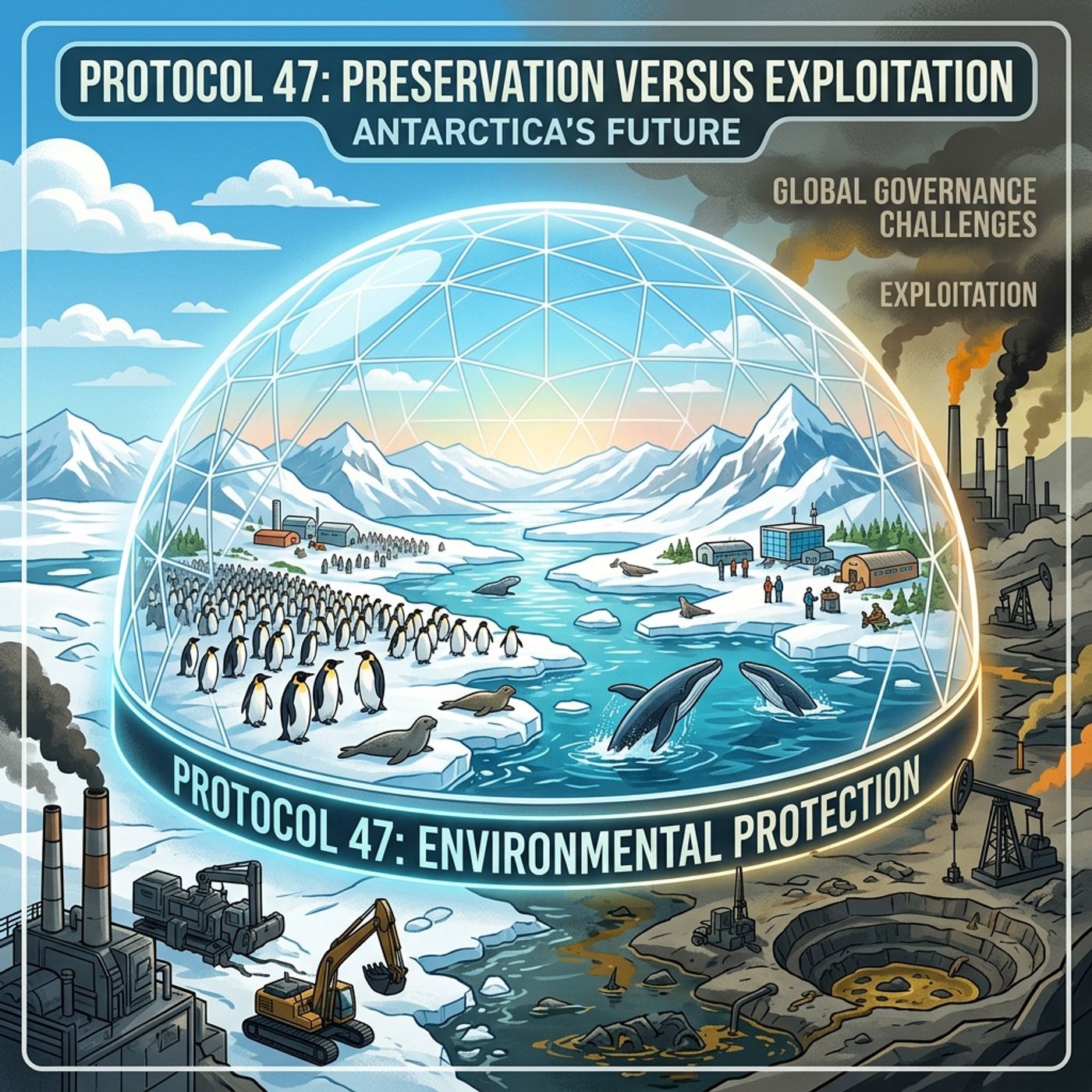
Today, we focus on a critical and sometimes overlooked aspect of global environmental governance. The protocol on environmental protection to the Antarctic Treaty, which we've come to know as Protocol 47. Adopted on October 4, 1991, this agreement marked a significant step in international efforts to preserve the unique environment of Antarctica. Rather than being just a barren wasteland, Antarctica is home to a rich tapestry of ecosystems and it's essential that we understand how Protocol 47 aims to protect them. Now, at the heart of Protocol 47 is the acknowledgement that all activities in Antarctica, whether they're scientific research or tourism, need to consider the environment first. This is where environmental impact assessments or EIAs come into play. Think of EIAs as a necessary checkup for any planned activity in the region, just like a doctor evaluates a patient's health before prescribing treatment. These assessments help us evaluate the potential effects
on this fragile environment. They ensure that whatever we do does not come at the cost of ecological health. But Protocol 47 doesn't just stop at assessing possible impacts. It goes a step further by strictly prohibiting any activities related to mineral resources, except those aimed at scientific research. That means no mining, no drilling, no exploiting this untouched land for economic gain. This ban is crucial for preserving the pristine nature of Antarctica, keeping it safe from commercial interests that could jeopardize its ecological integrity. As of early 2026, we're looking at a strong show of global commitment with 54 countries ratifying the Protocol. This widespread endorsement is not just a number. It reflects a collective understanding of the importance of environmental protection in a rapidly changing world. Since the Protocol was enacted, many specially protected areas, or SPAs, and specially managed areas, or SMAs,
have been established across the continent, safeguarding critical habitats for future generations. Yet there's an ongoing debate surrounding the implications of these protections. Environmental advocacy groups like Greenpeace and the Antarctic and Southern Ocean Coalition warmly embrace Protocol 47 for its strong environmental safeguards. They continue to push for even more protected areas and stricter enforcement to combat the impacts of climate change. On the other hand, the tourism industry, which thrives on bringing people to see the breathtaking beauty of Antarctica, often voices concerns over the restrictions the Protocol imposes. They argue for the need to find a middle ground, a way to encourage sustainable tourism that respects the environment while also supporting economic opportunities. Then there's the scientific community, which generally welcomes the environmental assessments mandated by Protocol 47. Many scientists recognize that this focus on environmental protection allows them
to gather important data without causing harm. However, some researchers argue for more flexibility to adapt their work to pressing global challenges, highlighting the delicate balance we must strike. Experts in the field, like Philippe Sands and Paolo Galizzi, have extensively studied the legal framework of Protocol 47. Their insights remind us of the urgency and importance of this protocol in the broader context of international environmental law, especially given the historical backdrop of the Antarctic treaty system and the rising tide of environmental movements in the latter part of the 20th century. In closing, Protocol 47 serves as a vital safeguard against exploitation in one of the world's last untouched wildernesses. It encourages collaboration among nations, ensures thorough evaluations of human activities, and emphasizes the need for ongoing discussions about balancing economic interests with environmental health.
As we navigate the complexities of global governance, remembering the lessons learned from Antarctica and fostering international cooperation will be key to protecting our planet's future. Thanks for joining.
More episodes
More from Conspiracy Theories Exploring The Unseen

The Digital Mirage_ AI and the Death of Authentic Romance
Conspiracy Theories Exploring The Unseen

The Trust Trap_ AI and the Future of Romance
Conspiracy Theories Exploring The Unseen

The Ghost in the Machine_ Navigating AI Romance
Conspiracy Theories Exploring The Unseen

The Love Recession_ Why Digital Romance is Offline for Good
Conspiracy Theories Exploring The Unseen