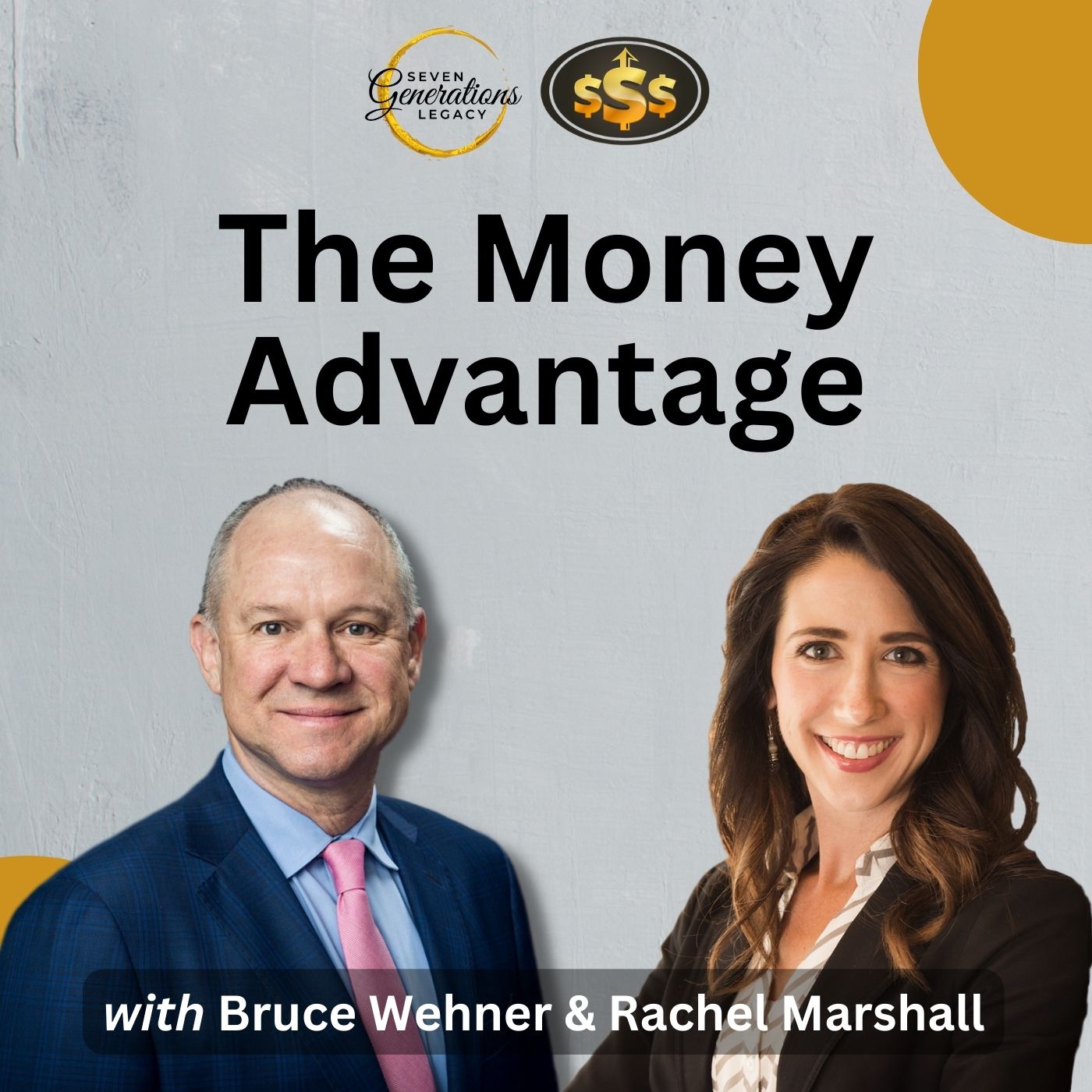
How to Turn Savings Into Wealth: The System Most People Miss
About this episode
Get every episode summarized
Each time The Money Advantage Podcast publishes, we email you a written briefing from the transcript — the topics, who appeared, and any specific claims, with the ad reads skipped.
Email me new episodesFree for 3 shows. No card needed.
Hosts & guests
Transcript ready
316 searchable segments. Every word is indexed and playable.
Full transcript
The Money Advantage Podcast — How to Turn Savings Into Wealth: The System Most People Miss. Machine-transcribed; use the interactive transcript above to jump the player to any line.
Welcome to the Money Advantage Podcast, empowering business owners with the permission to think differently about money so that you can consciously choose to live a meaningful and fulfilled life now. Our passion is making money simple, fun, and doable, helping you feel great about your money and getting your money working for you so you can thrive. All right, good afternoon. Welcome back to the Money Advantage Podcast, Bruce. I'm excited to be here with you today as we're talking about something really important and also really kind of back to the basics. So I love when we have these conversations about things that are really kind of the fundamentals of wealth creation. And I think this is in that category today. We're talking about how to transform your savings into long-term wealth. Really the idea of this is if you are saving, you're doing an amazing job. It's a huge step in the right direction towards a financial future, a financial freedom, being able to create true wealth. And yet if you are saving, you might have this feeling
that maybe that's sitting idle somewhere. Maybe it's going to be impacted by inflation. Maybe it's not growing for you the way that you'd like it to. And if you are saving, sometimes that can be if it's disconnected from a larger wealth plan or a larger vision, it can actually handicap you. And so today we're talking about how to transform those savings into long-term wealth, how to make those savings do more than just be savings, but how to give them some superpowers and allow them to really work for you. So that's what we're talking about today. Bruce, I'd love to hear your perspective at the beginning of this episode. So I'm glad you said that savings is really the first habit that you have to develop. In so many words, that's what you said. Because without the saving habit, you can't deploy your capital at other places. And I was
just having a conversation with my colleague this morning. And we try not to be of scarcity mindset. We try to be of abundance mindset. But there are some hard fast rules that in order to be, you know, delayed gratification, it's not scarcity. It's actually abundance because you're looking into the future where that you're looking at your abundant self in the future, but you have to delay the gratification. And so I actually went out to lunch yesterday and I went to a restaurant and I saw all these high school kids at this pretty nice, you know, it wasn't fast food, but it was kind of a sit-down restaurant that wasn't a fine dining place, but it was going to cost you, you know, anywhere between $15 and $20 to have a decent lunch. And I asked the server, I said, you know, you're overwhelmed. Yeah, it's like that every day. And I got to thinking every day, these high school kids are spending $15 to $20 for lunch. And then I hear my
clients and my friends talk about how their kids can't afford a home, you know, and I'm like, so I started looking back. I started looking back on my own life. And I hope I don't sound like the old guy was better in my days, but in my wife, and I got married in 1986, and we basically didn't have anything. I didn't have a whole life policy, which I've talked about before that had something like $3,750 in it. And, but we didn't have, you know, any other things, and we didn't have a home. And so we decided to stay for the home, to the point where, you know, we didn't go out, we didn't entertain, we didn't go any entertainment, we just entertained by walking in the park and we just did those things. We laughed now because one of the things we did was actually we lived in a apartment complex and I had a peach tree. We actually went out to the peach tree and picked peaches and we baked a pie as a little treat for ourselves
instead of going out and eating somewhere else. And in less than a year, and the reason I know it was less than a year, we had saved enough money plus plus the money we had in the whole life contract. Now, I know that was a big benefit, but it, you know, it less than a year, we had equal that amount of money because we had to furnish the new place and, you know, you have to turn on utilities and those things you needed, you needed the money. So if we could do it less than a year, then if somebody wanted to do it in about 18 months, a year and a half, because we did it nine months, and the reason I know it's nine months, because we were ready to buy a house, but our lease wasn't enough yet. Our one year lease, we had to, we actually bought our house and just didn't live in the apartment for one month because we just gave that up because we were so excited to move into the house. Oh, that's awesome. And I just like to tell the readers, they might say, yeah, but it was different back then. So we were actually going over this with some of our clients and we said, so we decided we were going to save and for a delay gratification.
So we bought a $74,500 home. Now, I'd like to then round that up to $75,000 for easy math. We made, I made $19,000. My wife made $10,000. Well, $29,000. And by the way, the interest rates are higher than they are now. They were six and a half percent. And so now let's go forward and say in the St. Louis area anyway, a starter house, you can get in for, you can get in for $300,000. I'm not saying that's like that across the United States, but $300,000. So that's four times $75,000. So that would mean then a couple that made four times $29,000. So let's just run it around enough to 30. If they have income $120,000 and they want it to save in about
18 months, they should be able to save and be in a home in 18 months. I'm just using math here. Now I know probably some people are screaming and they're saying, you know, well, what about the other things that have gone car payments and this? Okay, if you want to use all those excuses, go ahead and use all those excuses. But the fact of the matter is, I think the numbers pan out when I think through it, it's just a matter of whether you want to do it or not. And this is the old guy in me trying to, you know, rio people up, you have to look inside. I learned from Nelson Nash, you know, you have to look inside yourself and say, am I really doing everything I want to do to get to that delayed gratification into the future. So this is where the first thing, you know, the first thing about savings comes about. And I know you look as basically do the same thing, you teach your children the same thing. 100%. And actually, I was just going to comment a few things on your story. First of all, I just love hearing you share that so personally because I think it can
be really easy for somebody who listens to us to think, oh, yeah, you guys have an easy year in finance. Of course, it's, you know, different for you. And Bruce, I think what's really interesting is how similar Lucas and I start was to yours as well. So we started, we got married. Lucas was still in college. I figured I'm going to go ahead and go to school as well. He's at the university. What else am I going to do? I'm moving away from everything I know. Anyways, I may as well get my degree. And so he had a stipend through, it was like he was paid to be in this particular program. It was really amazing. But what we saw is all of his peers who were also in the same program would have a new TV one week, one month, and they would have, you know, go do these expensive dinners. They would do all this stuff. I specifically remember the TVs because we had one of his peers was living in the same apartment complex that we were and bragging about these new things that they had. And we did not do any of those things. You could say we lived in a scarcity mindset. We did. We saved almost every single penny that we made. And by the time then we were ready to move across the
country, we were easily able to play for a moving truck. That wasn't even a pinch. And then we had still I think 10,000 and savings beside after two years in school, basically making no income at all. And so I think the point that I took away from what you said and that I notice with every single person who has achieved wealth, they had that component built almost in their bones in the beginning that led them to not spend everything they make. And it's 100% critical to be able to delay gratification, not because you think you can't buy something, not because you think you are not good enough to purchase something, but because you're being more intentional about the future version of yourself, the future self, you're valuing tomorrow more than today. And I think that's the key. It was really important that you mentioned that Bruce. It's not a scarcity mindset to think about the future. It's not a scarcity mindset to value tomorrow over today. It's a scarcity mindset. If you say I can't do anything, I can never enjoy life. But a friend, maybe it's not
a friend of mine. Somebody that I know that I listened to their work, they they had this idea that has just stuck with me. And they said they love to have a maximum of results with a minimum of means, meaning how can I produce the greatest in my life, whether it's beauty in my home, whether it's an amazing meal with a minimum of tools, meaning I the human and the main creator of this thing. I created the home and the value not that I purchased this really expensive thing, but I created this beauty. And what's really amazing is that there's so many things that you can do that are more wonderful, more enjoyable, and more fulfilling that can cost far less. And I think we over rely in America, especially on the fulfillment of the happiness that comes from the purchase of that thing that we think is going to satisfy that. So you know, you know, Connor, my colleague, you know, we were talking about this. He just had his first child just turned one, you know, a couple months ago. And you know, he he actually sees it in his friends and he tries, he tries to do
what we're talking about right now. And he says, it's really hard with Instagram. You know, and that is one thing I didn't have back then. And you didn't have it back then when you and Lucas wrote, but if you know about it and you know, it's a it's a influence on you, then that's the first step of getting over it. And I there's there's a variety of things I think that has has come into our culture that people kind of think you're not worthy if you're delaying gratification. Oh, you got to live life now, you know, life is too precious. And there's a balance there. I think they've I think they've gone way overboard. And then at the same time then, that's fine. You want to live life now? Well, then don't say you want to retire at the age of 50. You know, I mean, you can't have it both ways. And so getting back to the savings then, the other
thing that the other thing that savings does for you, it allows you to take advantage of opportunity. So in our outline today, you know, we're talking about the difference between saving money and positioning capital. And there's this thing on Instagram now, YouTube. You know, people say you have to get your money moving. You have to get it working for you. You have to get it working for you. We just had a person reach out to us who was a referral. And somebody got told him to, you know, he had a million, he could get a million dollar right? Very, very, successful person, probably worth about 30 million dollars. You can get a, you could get a, Ryan, accredited to get your business for one million dollars. And why are you just letting that money sit in your business? You need to go out and trade options with that money. You got to get it moving. You got to get it moving. You got to get it moving. Well, I'm, I'm, I'm sad to report
in one year, he lost seven hundred and ninety five thousand dollars of the line of credit. Now, I don't care what, how much your money's going backwards just sitting in the savings account because of, of a cost of living, it's not going to go down 79% in one year. Yes. Okay. Now Warren Buffett knows this. I did a little research before the meeting. This podcast, Warren Buffett knows this. We talked about it before. Warren Buffett as of late two thousand twenty five. So maybe about six weeks ago, Berkshire Hathaway was sitting on three hundred eighty billion dollars of cash, which is 31% of all the assets in Berkshire Hathaway. And I've studied Buffett. And Buffett says he would rather be sitting on cash and losing the value of money
rather than putting it into a, a place that he didn't research well, didn't stick to his principles and lose the money because his birth rule is never to lose money. And his second rule is if you forget, if you forget, just look at rule one again. That's rule number two. Yeah. If you forget rule one, we forget rule two, look at rule number one. And so he's got intradaries, treasuries, short term treasuries, one one month, three months, maybe nine months, maybe twelve months. And what he's looking for is, yeah, I might be going backwards for a year, two years, three years, but he's looking for that opportunity that when he, when he jumps on it now, I was going backwards from the, from the cost of living, two percent, three percent, two percent,
three percent. But now when he jumps in, he could actually make thirty percent for his clients in one year because of a depressed asset. And so this is the value of positioning capital. Okay. So that's what I think people need to overcome is just getting this, what is commonly called velocity of money right now. I love that you pointed at that outburst because when I first said savings is great, we don't want to just keep only saving. You want to be in a position of building wealth. What I don't want people to hear is you got to get it moving. You got to get it moving. You got to get it moving. That savings is bad. What we do need to correct that way of thinking and say savings is powerful. Savings is the beginning. Savings is the foundation. Savings is the starting point. It's almost the ticket. It's the price that you pay. It's the admission ticket. That's what I'm looking for. It's the admission ticket
to building wealth. You have to be willing and able to delay gratification and safe. And then what you said, Bruce, instead of jumping on opportunity, any opportunity, anything looks good. Any squirrel. I've just got to jump into something because I'm feeling like I'm behind unless I'm obsessively moving forward. That is a different way of thinking. It's a different energy. It's a different intention and a different position of your heart than saying positioning capital. Positioning capital is very intentional. It's slow. It's methodical. It's strategic. It's wise. It's prudent. And notice I said slow. You're not just making that jump fast decision because something looked really good. Warren Buffett is really wise. And he's positioning capital. And this is what we're not going to go into this, but I'd like to just mention that this is why when
we run into people that say they want to build life insurance policies where they have the maximum cash value right away so they can go to FOIA because that's what they need to do. That often causes what many economists, Austrian economists call malinvestments. You're just going to do an investment just for a sake of investment because you have easy access to cash and you think you have to deploy it. This is the boom and bust cycle. It's a boom and bust cycle in the economy. And that's why the Austrians don't like setting interest rates artificially by some federal reserve term. They want the markets to set them. And so easy money, you get a boom, and then there's a bust. Buffett knows this. So he's waiting for the bust and then there's going to be a run-up, 30%, 30% run-up. It's just a few months it'll happen. And so now when we do use life insurance
strategies, when we do use life insurance strategies, one of the nice reasons you use life insurance strategy, oh by the way before I go there, there may be some people out there that are saying, well wait a minute, if you got a one-month treasury, a three-month treasury, a nine-month treasury, a 12-month treasury, maybe that's not as liquid as it needs to be because all centers are an opportunity. Maybe Buffett doesn't have enough money in like a money market accounts where he can just deploy it. Well, when you have $380 billion of cash and your Buffett, you have lines of credit. Okay, so yeah, we can't maybe scale the same way that Buffett does because Buffett will go to his banks and say, okay, I'm going to put up these treasuries against the line of credit and it'll be free in one month, three months, and of course they're going to charge him an interest rate. However, when you have that much money, you can almost dictate the interest rate to the bank because if you don't give it to me, I'm going to, well, they're going to love the fact that even for
three months, they're going to get a tenth of a percentage on that collateral that's in a UF treasury. So you can do the same thing in life insurance. You can hold your capital in life insurance and that will be the greatest capital that the life insurance company has to give you a loan against. And so you may not be able to jump on an opportunity totally, but that line of credit you can have access in two to five days and jump into a situation. Now, you wouldn't want to keep all your money in there. You know, we always talk about having 15-minute money. So you might be able to transfer directly from your checking account, savings account, money market account, writing to your investment account and taking advantage of it. But mostly investments, we're talking about our investments that are going to be negotiated, whether it's a multi-family apartment complex or maybe a private equity deal or a business, something like that. There's
going to be a negotiating period of time and you can say, I just met with one of my clients Wednesday and he's been diligently saving in his whole life and he owns this really nice Medicare health insurance business and he's acquiring other brokers as they sell. And he's sitting on almost $800,000 of cash and he said, Bruce, I just found another one. I need I'm going to buy it out. It's going to actually double our size and I told the guy I can have 25% of the money to him in one week. He needs $500,000. We're going to borrow against his policy. That allowed him to be the number one person when this guy was selling. So he told the guy, I don't know if you have better offers but I can get you 25% of the money
in one week. You're talking about is control. If you save, you have capital. Because you have capital, you have negotiating power, you mentioned Warren Buffett being able to practically set interest rates, you have control when you have capital. And what I want to distinguish as well is savings doesn't mean I'm just going to spend it tomorrow. I'm just saving up for a car. I'm just saving up to go on vacation. I'm just saving up for purchasing this next thing that is an expense savings is money that you're putting aside for the future. Now, what is interesting is if you think about your savings as net investible income, it can change the thinking around savings. If you're saying I have this income and it's 30% 40% of your income that you're making, you're sliding that over into a savings account and you're saying this is not just parked money. This is literally my net investible income. I'm increasing a portion of what I make and and slotting that, allocating that
for investments. I'm slotting that into investible income that has to be stored somewhere in a spot that is safe that I'm going to hold until I'm ready to make a decision for the best use of deploying that capital. And what I want to point out with this is that's how you get control because you have a capital that is in your power to choose what to do with it. And you don't just want to say, well, I have savings. I sporadically put money into savings, but if you have a system, you are able to turn your income into savings into an opportunity that creates cash flow, which then can increase your income. And that is a system. A system is something that continues to work. I literally think of this every single time I say the word system. We have, if you've ever built those 3D puzzles out of wood, we got one for our daughter several years ago. And it was this cool machine like you turn this crank and a marble goes through this whole process after you built
the whole thing first out of wood. It's probably like 300 different pieces you put together. And then you put the marbles in and they follow this whole track. And then it like raises the marbles up to the beginning again and they go back through. It's a system because the marbles never stop. As long as you're turning the crank, they continue traveling through this system. And if you're going to have a financial system, that means a path for everything to travel rules that are set in place. It doesn't mean you're sporadically randomly making decisions. And a system could be I preserve a portion of my income. That automatically goes over into a place that I'm going to hold. You could call it a wealth, what some people call it. Well, the accumulation account could be a saving, you can think of it that way. It could be a savings account. It could be any particular spot. And that capital then you are holding until you have the right lever to pull to say this is a good opportunity. And that capital can flow then into another opportunity. But here's the amazing thing
with that system is if you find the best tool to utilize for that savings component, you can amplify the whole system. And here's how I like to think about it. I like to think if I am just using say a savings account, I'm putting the person to income into the savings account. It's resting there until I find a reason to deploy it. I deploy the capital. I put that into an investment. So I've moved the money from here to another spot. Now I have cash flow that's going to increase my income over here. And that starts the system again. So now because I've increased my income, I can put more percentage of that income now into my wealth accumulation account because the income's higher. I don't need to spend it all. I'm going to put more here. That is a system. But if I can just optimize this savings part, I like to use, especially designed whole life insurance. I know you do. I know a lot of our clients are doing that. If we utilize, especially designed whole life insurance, now this tool allows me to put money into savings here in the cash value of a
savings of a life insurance policy. And when I deploy that capital, I don't take it out. I'm now in a position of accessing that capital, putting it to work additionally in this other opportunity. And I'm amplifying the whole system because now my money is working still in that initial place of that policy. And also in another opportunity. And there's all the additional benefits of having a death benefit as well, having the ability to continue utilizing that capital over and over from that same account. So I'd like to just kind of wrap up today with an action plan for the listeners. Awesome. So I would suggest that you try what I do. And I think I'm fairly disciplined. I think I've proven that over the years. Now I wasn't always disciplined. I had to learn from my father and my mentors and so on and so forth. But my account is not in my business operation account is not in my wife and I's personal checking accounts. It's actually at a separate
credit union. The credit union is not linked to our other bank. Our credit union does not have ATM cards. Okay. So the only way that I can actually do that is physically go to the bank and withdraw the money to put it somewhere else. So we have a certain percentage of our money goes into that account every month. And in all of our investments we've done in the previous years as it's snowballs all the returns don't go back into our checking account for what we will we often refer to as life stuff free. They go into that account. Then when I have a premium do it goes into the life insurance policy. For the life insurance policy it goes into the life insurance policy. Whatever's left over I can decide do I want to start another policy or do I
want to just go ahead and take the money there and you know do an investment with that. And of course many times I borrowed against my cash value made an investment and the distributions from that that go back to the there until I decide okay I want to pay the loan back and it comes from from that account back to the loan. And so but it's a place that like you said you're intentional. You're intentional you're putting somewhere else and I've taken the and put some strategic guard rails for me to say I don't have easy access to that money. So you might try that. You're being super honest about your own human nature and I think that often we are not honest about our own human nature because we like to think I'm better than that. I'm better than having
to put my phone away in the drawer in the other room because I just I'm better than that I'm not going to check it. I'm better than you know I'm not I don't need certain intention some guard rails around my life because well you know I'm just I'm a good person I'm not going to make a bad decision with that I'm going to just put it in the bank account inside of my own check inside of my own bank. I won't touch it I promise I won't but then we do. And what you're saying is you recognize our human nature is to air is to sin is to fail is to not miss the mark is to fall off the two sides of the the road instead of stay on the straight and narrow path that we intended and because of that you're saying I am going to make this difficult to make a bad decision. And if we if we're honest all of the good people are doing something to that effect they recognize I also am prone to wander I also am prone to air and to do the wrong thing so I'm going to make it difficult for me to do so. And and generationally then you should be teaching your children the
same thing. Yes teaching them you know they happen they when they get money whether it's even a birthday you know money and I know you do this with your children yes we do you know they put a portion here that they can spend on whatever they feel like they should put a portion away for the future and then some families you know put a stipend portion away that you know for the church or in a charitable a charitable situation or whatever we do a super simple give save spend three envelopes certain percentage and it's usually 40% savings 50% spending 10% giving they take the giving money and they put that in the offering at church the saving money then moves over to a savings account so they don't have the ability to go say oh let me just pull out of that savings envelope it's not available for them and our older daughter has enough that she's now not just in a savings account but a savings account and a higher interest bearing account that's even harder
to get to and then then the spending money is their cash and that and you know they're freely able to spend that and plan for what they would like most which also often means delaying gratification even with that spending portion because as you know if you spend the spending money today it's not available for that nice thing that you want to buy tomorrow so Bruce this has been really an awesome conversation today I hope that it was helpful for somebody who is thinking I do need systems I do need more intentionality or I am already making making great decisions I have a strong foundation I've been a great saver I'm trying to figure out now how to go from that great savings I've got a lot of money sitting in cash and capital I have the control of that but how do I take that to the next level how do I start building wealth without just throwing it away without putting it at risk without putting it in a position of potential loss like the gentleman you mentioned that lost the nearly eight hundred thousand dollars of the line of credit how do I intentionally turn this savings this foundation how do I build upon that build these layers build up this wealth plan
that is secure so if you would like help with that you can book a call with our advisors at themoneyadventage.com and we're looking forward to helping you do that in your life so that you can turn savings into a wealth system we look forward to talking with you then and please remember in closing success leaves clues so model the successful few not the crowd and build a life and business you love we'll see you next time discover the secret of how to earn a return on the same money in two places at the same time so that you can strengthen your investment returns we've created a free guide for you that explains the top three things every investor needs their privatized banking system to do go to themoneyadventage.com slash banking put in your name and primary email address click this send my free guide button right now and we'll see you on the inside
More episodes
More from The Money Advantage Podcast

Boost Investment Returns with Infinite Banking
The Money Advantage Podcast
Using IUL for Retirement: Smart Strategy or Costly Mistake?
The Money Advantage Podcast
What Is Limited Pay Life Insurance?
The Money Advantage Podcast
What Is an Indexed Universal Life (IUL) Policy?
The Money Advantage Podcast