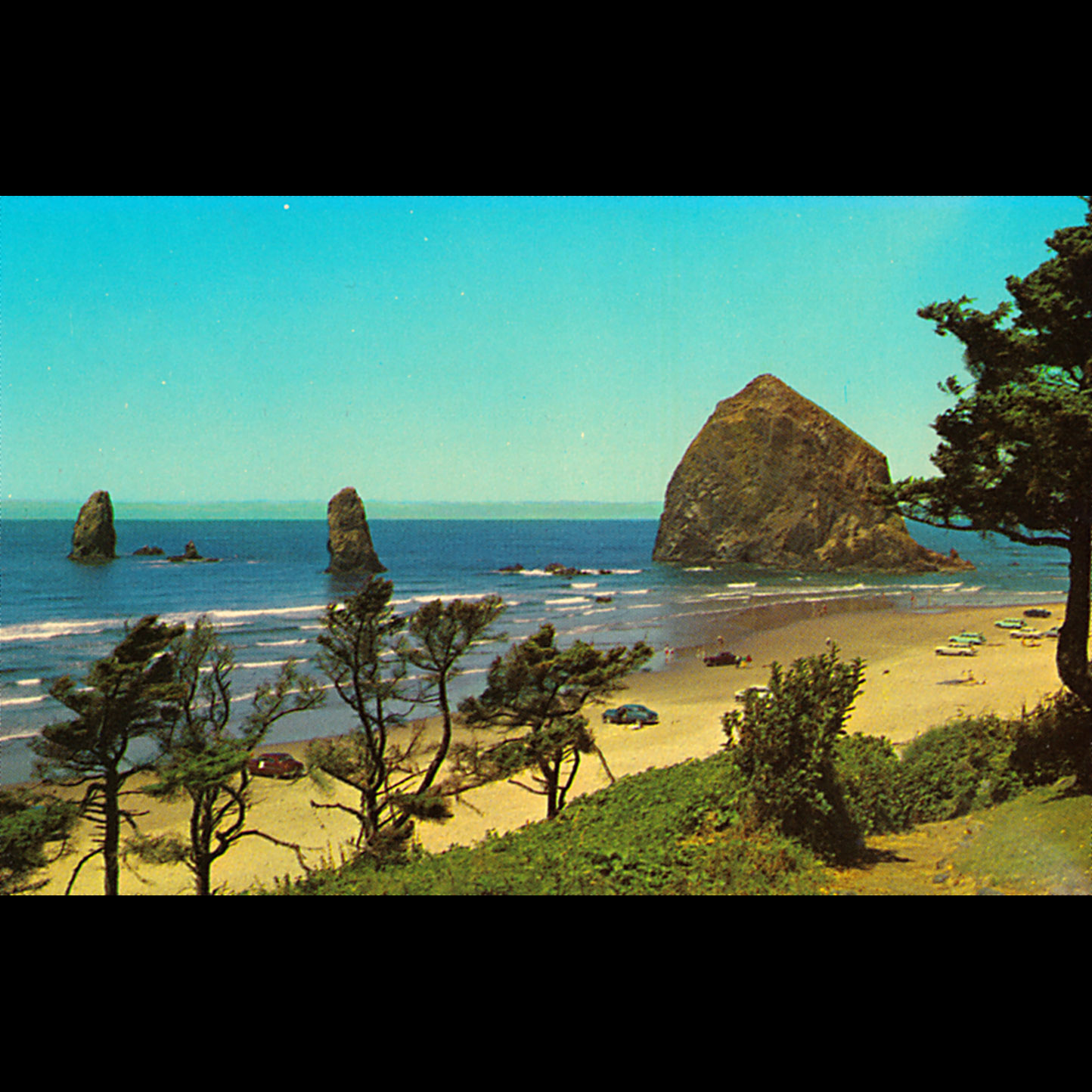
How Oregon almost lost public access to beaches
About this episode
Interactive timestamps
Jump to segmentGet every episode summarized
Each time Offbeat Oregon History podcast publishes, we email you a written briefing from the transcript — the topics, who appeared, and any specific claims, with the ad reads skipped.
Email me new episodesFree for 3 shows. No card needed.
Hosts & guests
Transcript ready
92 searchable segments. Every word is indexed and playable.
Full transcript
Offbeat Oregon History podcast — How Oregon almost lost public access to beaches. Machine-transcribed; use the interactive transcript above to jump the player to any line.
0:00Good morning, Oregon. I'm Finn J.D. John F.J. at OffbeatOrgan.com, and this is the Daily Offbeat Oregon History Podcast. Thanks for tuning in, and I hope you enjoy it. This story was first published on June 3rd of 2012 under the headline, How Oregon Almost Lost Public Access to its Beaches. Here we go. If you're over 60 years old and have lived in Oregon for most of your life, my apologies because you surely already know this story. For younger Oregonians and more recent arrivals though, this is a piece of state history that you should know, especially if you enjoy occasional trips to the beach. This is the story of Republican
1:00governor Tom McCall in the fight that saved the state's beaches for public access. After certain beachfront landowners figured out that there was a loophole in the state law stipulating public beach ownership. The beaches in Oregon, as you probably have heard, were made public property in 1912 by governor Oswald West, who did it by declaring them highways. Now this sounds today like a stretch, but at the time it was anything but, there was not a road along the coast until the 1920s, and if you wanted to get from Arch Cape to Canon Beach without detouring through like Hillsboro, you pretty much had to use the beach. Since that time nearly everyone in the state had just sort of assumed that the beaches were public property. All the beaches, from the water to the vegetation line, and they behaved accordingly until, that is, a Portland real estate man named William Hay, under the surf sand motel at Canon Beach, figured out that the law didn't actually say that. The law said the state owned the beach from the low tide line to the high tide line, that is, the wet sand part of the beach, the part that had actually been used as a highway.
2:06So, in 1966, Hay got busy fencing off the dry sands of Canon Beach in front of his motel. The fence line went all the way down to the high tide line, as per the letter of the law, which meant at high tide it blocked the entire beach. Beach strollers who timed their excursions wrong had to either get wet or trespassed to get back again. Whatever Hay's skills in real estate might have been, they did not tread much into the domain of public relations. Complaints started flying thick and fast. In response, an investigator from the highway department came to Canon Beach to look into the matter and found that Hay had stalked his beach with cabanas and picnic tables in lounge furniture. Crossing the fence to get a better look, he was accosted by a motel staffer and ordered off the private beach. Highway department attorneys looked up the statute and soon found the loophole in the law. So the House Highway Commission, under the leadership of representative Sidney Bassett, produced a bill in the 1967 legislature that would fix the oversight.
3:07But, once words started getting out to the wealthy beach front property owners that they actually owned their beaches, they started getting very excited. Immediately, they started contacting legislators, including House Majority Leader Robert Smith and urging them to oppose the bill on property rights grounds. When backers tried to send the bill to the House floor, they found they didn't have the votes to get it there, and yet the opponents didn't have the votes to kill it either. So they're at sad and purgatory waiting for someone to notice it. Soon someone did. Associated press reporter Matt Kramer. It was Kramer who dubbed it the beach bill, previously it was known only as HB1601, and slowly a few members of the public started realizing what was happening. Meanwhile, Oregon Governor Tom McCall had been watching the progress of the beach bill. With Kramer reliably focusing on it, he decided that now was the time to wait into the fracas and he dashed off a feisty and supportive letter to Bassett. Quote, we cannot afford to ignore our responsibilities to the public of this state for protecting the dry
4:11sands from the encroachment of crash commercialism. He wrote, tartly, and then leaked the letter to the press. Suddenly the beach bill was on the front page. The public sat up and stared. Then they started getting angry. It turned out that public access to the beach was something the average Oregonian felt pretty strongly about, even those who never went. When Portland TV station KGW, Channel 8, urged voters to pester their representatives about it more than 30,000 cards and letters and telegrams poured into Salem. The largest public response to any legislative issue in state history, before or since. The bill's opponents hoping to salvage the situation, resorted to what they must have fancied was a clever subterfuge. They proposed a change so that instead of owning the sands between low and high tide the state would on the beach, up to seven feet above sea level. It surely took some huts, but I proposed this in the face of the torrent of increasingly hostile attention these guys were getting from the public. Their proposal would have
5:12actually given away a healthy chunk of the wet sands, though, part of the beach that everyone agreed already belonged to the state. Perhaps hoping to rush this change through before anybody got wise, the opponents tried to force the highway committee to vote on the amended bill. Through various maneuvers, Bazet delayed. He'd been talking to the governor and he knew there was a little surprise coming up for the plotters. The trap sprang early on a Saturday morning in May, on the beach at seaside. McCall and his entourage arrived in two helicopters which sat down on the beach. Quote, the politicians and the lawyers have got this beach situation all fouled up. McCall told the waiting reporters, according to Brent Waltz's account. Now the scientists are here to straighten it out. He went on to explain that the oceanographers from Oregon State University had determined that the best way to define the beach was 16 feet above sea level. Not 7 feet as the legislature had hopefully suggested. And as he spoke, surveyors and official looking outfits were measuring and pounding steaks into the beach. Then he explained, the top stake
6:17pounded into the dry sand of the beach and a spot well below the line of vegetation was where the OSU scientists thought the beach should start. The middle stake further toward the ocean at the top edge of the wet sands was where the current law placed the boundary. Then he strode to the last stake, which was driven into the wet sand very near the surf and would a few hours hence be underwater. That, he told the reporters, was where the house leadership wanted the line to be. It was a public relations masterstroke. It clearly illustrated the fundamental reasonableness of the governor's position, which remember was more or less exactly what three generations of Oregonians had thought was their legally stipulated birthright all along, as well as the deviousness of the legislators in trying to roll it back. It made because opponents look like sneaky thieves, and most Oregonians were not slow to draw exactly that conclusion. After that, there was no stopping it. All but the most die hard opponents caved and the beach
7:17bill passed the house 57 to 3. The Senate, which had been watching the blood bath in the lower house with considerable interest, made sure the bill spent as little time as possible in their custody in a few days later McCall was signing it safely into law. Key sources in this story have included works by Brent Walth and Nadine Jelsey. Well, that's our show for today. Thanks again for listening. This podcast is part of Offbeat Oregon History, a public history resource for the state we love. Say, are you an audiobook listener? And do you enjoy old pre-war pulp stories like Tarzan of the Apes and Conan the Barbarian and the Call of Cthulhu and stuff like that? Or do you like early Victorian penny-dreadful fiction, like Sweeney Todd and Varney the Vampire and Highwayman Dick Turpin? If so, you might enjoy the audiobooks I have out there in the world. Easiest way to find them is for the search for my name on audible.com. My few music is by the Atlas String Band and was written by Carmen Ficcara.
8:21Listen and download more at AtlasStringBand.com. Episodes of Offbeat Oregon History are uploaded around 6 a.m. every weekday, so the next one will be on your device and ready to go before you know it. Until then, go out and fill up the rest of the day with good stuff. Bye now!
More episodes
More from Offbeat Oregon History podcast

P-town ‘jitney wars’ were monopoly vs. small-biz
Offbeat Oregon History podcast

Dog's 2,500-mile walk home made Silverton famous
Offbeat Oregon History podcast

Bobbie the Wonder Dog put Silverton on the map
Offbeat Oregon History podcast

SPADs, Sopwith Camels made with Oregon spruce
Offbeat Oregon History podcast