About this episode
Become a supporter of this podcast: https://www.spreaker.com/podcast/shoulder-roll-virtual-boxing--6207307/support.
Get every episode summarized
Each time Shoulder Roll Virtual Boxing publishes, we email you a written briefing from the transcript — the topics, who appeared, and any specific claims, with the ad reads skipped.
Email me new episodesFree for 3 shows. No card needed.
Hosts & guests
Transcript ready
237 searchable segments. Every word is indexed and playable.
Full transcript
Shoulder Roll Virtual Boxing — How_NBA_Superstars_Fund_Israeli_Military_Tech. Machine-transcribed; use the interactive transcript above to jump the player to any line.
With car gurus discover, you can skip the filters and describe what you're looking for in your own words. Simply type what you want, and car gurus discover instantly surfaces real listings that match your exact needs. It's no wonder car gurus is the number one most visited car shopping site according to similar webs estimated traffic data. Buy or sell your next car today with car gurus at car gurus.com. Go to car gurus.com to make sure your big deal is the best deal. That's C-A-R-G-U-R-U-S.com. Car gurus.com Welcome to The Deep Dive.
We're really thrilled you could join us today for what is going to be a highly complex, honestly incredibly nuanced exploration. Yeah, it's a dense one today. It really is. We are looking at a huge stack of materials that covers a wide spectrum of media. We're talking standard sports journalism, financial disclosures, all the way to investigative reporting like the stuff from public Torrey, and some deeply research highly passionate YouTube video essays. Right, and the core topic connecting all these completely different materials is this sudden jarring collision between NBA Super Stardom, billionaire level, venture capitalism, and, well, international geopolitics. Exactly. But before we jump into the actual details, we need to establish a really critical disclaimer for you, the listener. Yes, absolutely essential. The materials we are unpacking today navigate a highly polarizing, extremely politically charged landscape. We're talking about the Israel Hamas war, the IDF, and the complex history of the Middle East. Right. So it is incredibly important to make clear that throughout this deep dive, we are merely reporting the claims, the facts, and the opinions exactly as they are presented in the source material.
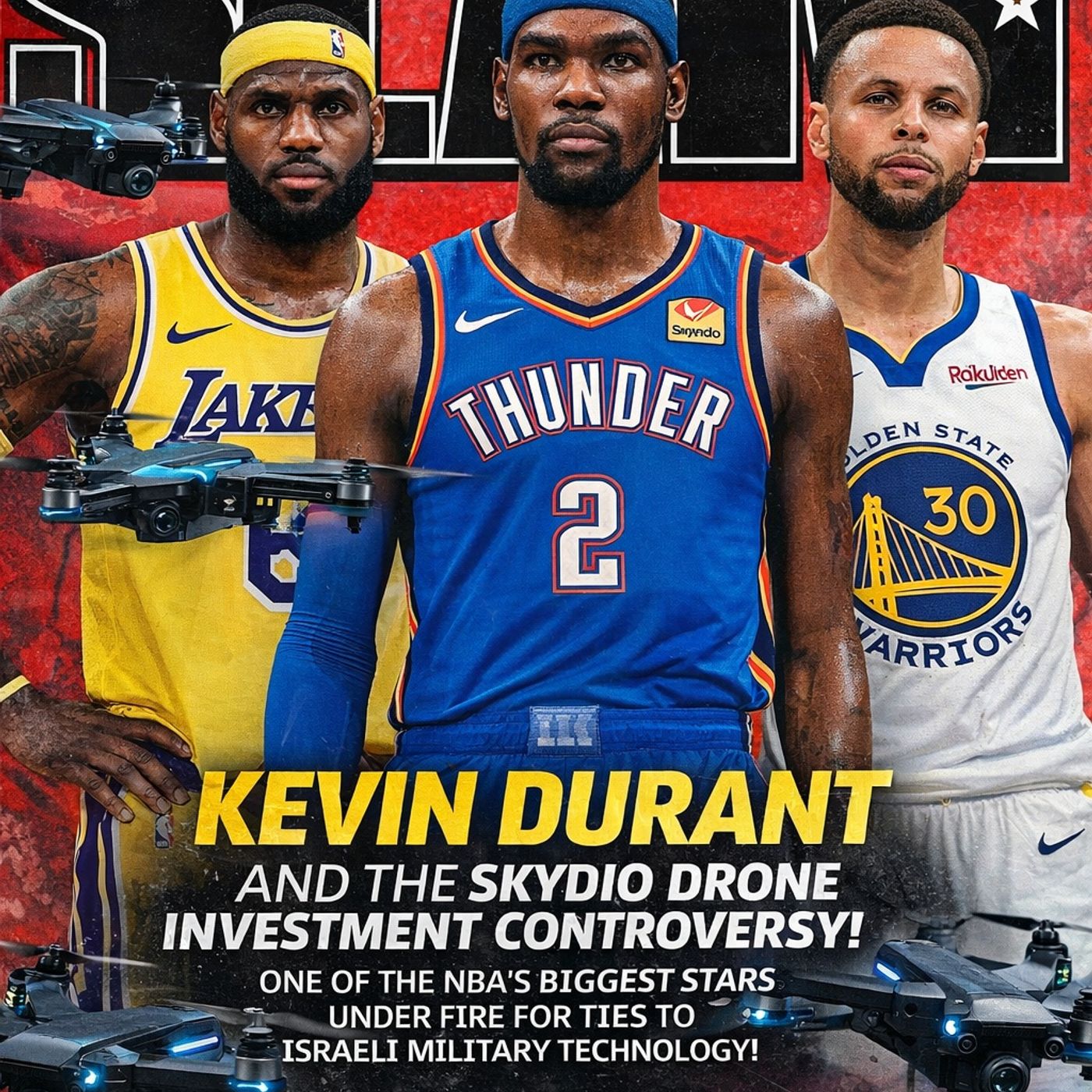
Just analyzing what's on the page. Exactly. We are analyzing the arguments being made by these journalists and commentators, but we are absolutely not endorsing either side or taking any political stance ourselves. Our goal is strictly to help you understand what this media ecosystem is currently discussing, and how these intricate financial webs actually operate. Okay, let's unpack this because the core premise really challenges how we traditionally view sports. Yeah. I mean, we usually think of athletes as entertainers, right, operating entirely within the boundaries of a basketball court. Yeah, just playing a game. Right. But modern superstars have entered this stratosphere of wealth, where their financial footprints extend far, far beyond, you know, buying luxury real estate or opening a chain of restaurants. Their massive venture capital portfolios are quietly funding advanced military and surveillance technology, which is wild to think about. And the initial focus from our reading really centers on Kevin Durant. Yeah, the financial tracking in these reports highlights Durant's substantial investment in a Silicon Valley company called Skidio.
Skidio, which is a drone manufacturer. Correct, founded by former Google and MIT software engineers. And initially, the company marketed itself mostly toward the consumer and commercial sectors. Like FunTech. Exactly. Selling these sophisticated AI-powered aerial systems equipped with advanced collision avoidance, autonomous tracking, that sort of thing. Yeah, and they got heavy financial backing. Massive backing. High profile figures including Durant, Magic Johnson, Justin Timberlake, and with all that capital, Skidio achieved a $2.2 billion evaluation. 2.2 billion. But the narrative takes a really sharp turn following the attacks of October 7, 2023. It does. According to the investigative reports, Skidio initiated a significant pivot in its operations. The sources say the Israeli military reportedly contacted the company, and within a single month, Skidio expedited the shipment of over 100 short-range reconnaissance drones directly to the Israeli defense forces. Yeah, so these aren't just consumer cameras anymore.
They are being utilized for active military intelligence gathering. And that operational pivot is what eventually spilled over into the public eye. But it happened in this bizarrely, almost perfectly modern way. Oh, it's so surreal. The catalyst wasn't a press release. It wasn't some boring financial disclosure. It was literally an online altercation during the 2026 MBA all-star game. Right, so during that specific all-star weekend, Kevin Durant had a relatively quiet performance on the court. He scored 12 points on five for 15 shooting. Not as best night. Not as best. But the focus of the internet shifted entirely to his activities on the sidelines. Various fans and digital commentators, specifically a prominent YouTuber named Flight Reacts, began calling him out. Because he was visibly scrolling on his phone. Exactly. Engaging an online arguments instead of paying attention to the marquee event he was actually participating in. And the leaked private messages that surfaced provide the context for what he was actually doing on that phone. It's unbelievable. A fan engaged what is widely believed to be Durant's secondary or burner account.
And this fan explicitly brought up the Skydo investments. They were criticizing Durant's financial ties to a company supplying drones to an active conflict zone. But the overarching argument they were having, the reason they were even talking, was originally about the aesthetic design of the MBA championship trophies. Right, what's fascinating here is the sheer cognitive dissonance on display. Let me just break down the absurdity of that exchange for you because it perfectly encapsulates the surreal nature of this entire topic. You have a fan sending a message that essentially says, I hate the new trophy designs. But not as much as I hate your investments in drone warfare. And Durant's alleged burner account completely sidesteps the ethical and geopolitical critique. Completely ignores it. The reply sent back was simply, if you want drones, we got them. Before the account immediately pivoted right back to arguing about the basketball trophies. It's a massive disconnect. You have the reality of a deadly global conflict on one side. And an NBA player casually brushing it off to win an argument with a random reply guy on the internet about the shape of a piece of metal.
Analysts pointed this as the ultimate example of the insulation that accompanies billionaire status wealth. The real world consequences of these investments are entirely abstracted away for the people actually signing the checks. It is a striking level of detachment and the reporting doesn't start with Kevin Durant. No, it doesn't. The investigated pieces transitioned their focus to a player universally recognized as, well, the ultimate good guy. The ambassador of the NBA. Kiss and curry. Steven Curry. The financial disclosures in our stack of sources dive into Curry's venture firm Pennyjar Capital, which he co-founded back in 2022. And the data shows that Pennyjar has aggressively funneled capital into Israeli cybersecurity startups. The specific numbers they cite are staggering. A $30 million funding round for a company called Zafran Security. Followed by $50 million and then a $250 million round for a cloud security company called Upwind. Now, if you are listening to this and thinking, okay, cloud security, that sounds like standard benign Silicon Valley tech.
It sounds like corporate IT. Right. But the investigative reports paint a vastly different picture of what these companies actually do. And more importantly, who builds them? To understand why a basketball player's venture fund is pouring hundreds of millions of dollars into Israeli cloud security, you have to look at where the talent pool originates. The reporting spends a lot of time breaking down a military intelligence branch called Unit 8200. Right, which is essentially the Israeli equivalent of the national security agency in the United States. Yes. But it functions almost like an Ivy League incubator for the global tech sector. The sources explain that when Israeli citizens are drafted into mandatory military service at age 18, the military actively screens for the absolute top tier mathematical encoding prodigies. And those individuals are funneled into Unit 8200. Unit 8200, as well as specialized divisions like Unit 81 and the mom room unit. They spend years developing advanced signals intelligence, cyber warfare tools and surveillance architecture.
And when those individuals complete their military service, they are immediately back by Silicon Valley venture capital. The transition from building military grade cyber tools to founding highly valued tech startups is practically seamless. The reports actually name specific founders benefiting from this pipeline. Sennaz Yashar, who served 15 years in Unit 8200. Ben Seri, Snarehavdala. And Amir and Shachar, the founder of Upwin. The sources mentioned he even utilized a promotional photo taken with Curry in 2025 to boost his company's profile. The critics cited in our materials argue that the technology these veterans build essentially acts as the digital architecture for military surveillance. Surveillance and operations in contested areas like Gaza. Which brings up a glaring public relations contradiction that commentators repeatedly emphasize in these sources. Stephen Curry is widely celebrated as a prominent social justice advocate. He won the NBA's Kareem Abdul-Jabbar Social Justice Champion Award in 2023. Furthermore, his wife, Aisha Curry, publicly supported the Palestine Children's Relief Fund during that exact same time frame.
It creates the stark contrast between a player's philanthropic public image and their private investment strategy. But the sources also clarify the mechanics of how these investments actually materialize. Right, it is highly unlikely that Stephen Curry or Kevin Durant are sitting at a desk personally vetting cybersecurity startups. Or reviewing the military backgrounds of the founders. Exactly. They are operating within a massive, highly optimized venture capital pipeline. Let's break down how this venture capital pipeline actually functions for you. An athlete at this tier doesn't just buy a stock on a retail app. No. They form investment entities like Pennyjar, which pool millions of dollars and partner with massive, established institutional giants. Firms like Sequoia Capital or Bessamer Partners. And these funds rely on specialized facilitators to find lucrative opportunities. Supporting points to figures like former NBA player, Omri Kaspi. Kaspi is Israeli and has essentially transitioned into a role-bricking Silicon Valley wealth with Tel Aviv tech startups.
So players hand their capital over to these firms. The firm's promise exponential returns. And the player rarely looks at the intricate blueprints of the companies they are actually funding. And that detachment leads perfectly into how LeBron James navigated this intersection of sports and geopolitics. Or rather, how he stumbled into it. And the massive availability at all star weekend. And Israeli reporter directly asked LeBron James if he had a message for his Israeli fans. And LeBron's response was brief, he said. I've never been over there, but I've heard nothing but great things. The YouTube essayists and cultural critics in our stack of sources heavily scrutinized that specific response. Because LeBron is a billionaire, widely praised for his meticulous public relations mastery. In contrast, this seemingly off the cuff quote, with how incredibly careful, guarded, and diplomatic his answers were during the 2019 controversy regarding the NBA's relationship with China. By stating he has heard nothing but great things, commentators argue he appeared entirely tone deaf to the staggering death toll in humanitarian crisis in Gaza.
The critics also draw a sharp contrast between LeBron's stated idols and his actual business practices. LeBron has spoken at length throughout his career about wanting to emulate Muhammad Ali. An athlete who famously went to prison and sacrificed his prime earning years for his political and anti-war beliefs. But the argument presented in the sources is that LeBron, despite utilizing the rhetoric of activism, demonstrates a complete unwillingness to take any real financial or political risk when pressed on global human rights issues. And if you look at public Tories reporting, he zooms out from the individual players to examine the entire league's infrastructure. Here's where it gets really interesting. Cory constructs a compelling thesis. He says the NBA has meticulously curated a progressive brand over the last decade. But that carefully crafted brand is currently colliding head on with its fundamental capitalist instinct. Tories maps out a broader money trail that is just incredibly expansive. The league is pulling in massive revenue from the United Arab Emirates.
They placed experienced Abu Dhabi sponsorship patches on the New York Knicks jerseys. Despite international reports tying the UAE to atrocities and civil war in Sudan. Exactly. The NBA is deeply embedded in the cryptocurrency sector, the sports betting industry. You have Miriam Adelson, a prominent political donor with staunch ultra-sionist views, purchasing a majority stake in the Dallas Mavericks. Furthermore, the league has scheduled the Lakers and the Knicks to play exhibition games in Tel Aviv next season. If we connect this to the bigger picture, the overarching concepts linking all of these financial maneuvers is known as sportswashing. Sportswashing. This is a critical term used throughout the sources. It describes how questionable industries or foreign states normalize their public image by associating themselves with the universal popularity and goodwill of sports. When put sportswashing into perspective for you, imagine a massive chemical company with a terrible environmental record. And they decide to sponsor a beloved local youth soccer team.
The company pays for the jerseys, builds a beautiful new stadium, and suddenly when people think of that brand, they think of kids scoring goals on a Saturday morning instead of toxic runoff. That is the essence of sportswashing. They fail up to a multi-billion dollar global level involving sovereign wealth funds and military contractors. And Tori argues that this entire system relies heavily on a compliant sports media apparatus. A media that simply refuses to ask the tough structural questions because they prioritize access to the players over actual journalistic scrutiny. Which is precisely the critique Dallas Mavericks star Kyrie Irving voiced publicly. During an all-star weekend press conference Irving complained that the media never asks the real questions. He heavily implied that everyone in the room knows what the geopolitical elephant in the room is, but no reporter wants to jeopardize their credentialed access by pressing athletes on their venture capital portfolios. But the materials also make sure to highlight that this silence is not entirely universal across the league.
There is internal dissent. Though the sources suggest it is often quickly managed or suppressed by league executives. Like we just mentioned Kyrie Irving. The reports note he wore a pressure courtside in explicit solidarity with Palestinian journalists. Boston Celtics star Jalen Brown has utilized his platform to urge people to speak out and not be afraid of the financial consequences. And former NBA superstar Dwight Howard tweeted the phrase, free Palestine. Only to claim later that he received an immediate phone call from the NBA commissioner's office instructing him to delete the post before it permanently impacted his career prospects. These acts of protest are placed in direct contrast with players like Denny of Deja. Of Deja plays for the wizards, he is an Israeli citizen and fulfilled his mandatory service in the IDF during the NBA's COVID shutdown. The reporting notes that Israeli Prime Minister Benjamin Netanyahu has publicly praised of Deja's representation of the country. He actually referred to him in statements as our star of David.
This dynamic creates a very clear, tangible ideological friction within the locker rooms of the league. It does. And to fully grasp the intensity of the backlash these venture capital investments are generating. We need to examine the deep historical lens utilized by the YouTube video essayists in our sources. Right. They are not merely criticizing the modern tech pipeline. They are contextualizing these investments within a century of geopolitical history. Creators of these video essays methodically lay out a historical timeline to explain why this influx of American capital is so heavily scrutinized right now. They start their analysis way back in 1917, focusing on the British government's Balfour Declaration, which first announced support for a Jewish national home in Palestine. From there, the historical deep dives transition to the aftermath of World War II, specifically looking at the 1947 United Nations partition plan known as Resolution 181. For the UN proposed dividing the land into independent Arab and Jewish states. Exactly. And the timeline presented in these analyses highlights that this partition plan was rejected by the Arab League, which precipitated the 1948 Arab-Israeli War.
A period referred to by Palestinians as the Nakba. Which translates to catastrophe. The essays are meticulous in their citation of the figures here, emphasizing that the 1948 conflict resulted in the permanent displacement of roughly 750,000 Palestinians and the depopulation of hundreds of villages. The essays then trace the ongoing conflict through the 1967 Six-Day War. Which resulted in the military occupation of the Gaza Strip, the West Bank, and other territories. And the overarching thesis these creators are driving at is that United States diplomatic and financial support for Israel is not fundamentally rooted in humanitarianism. They argue it is deeply rooted in American imperialism, the expansion of global capitalism, and the strategic control of middle eastern resources. So by tracing this history, the commentators compare the modern MBA's corporate actions. Specifically, players chasing aggressive venture capital returns to a broader historical playbook of Western imperialism. The central critique is that these athletes have completely transcended their working class or marginalized roots.
By signing Supermax contracts and entering the venture capital space, they have ascended to an uber-rich tier of society. They are now financial peers with the billionaire team owners, people like the Warriors, Joe Lakeob, and Peter Goober. And the argument is that this immense accumulation of wealth creates a shield. It entirely insulates the players from the on the ground realities and the human cost of the technologies their money helps develop. It completely shatters an old outdated paradigm. For decades, the conservative critique of athletes was to just shut up and dribble. Right. But what these financial breakdowns so clearly demonstrate is that as athletes amass billionaire level wealth, the concept of merely being a basketball player is no longer functionally or financially accurate. Through their venture capital firms, their equity stakes, their investment portfolios, they operate as multinational corporations. They are active participants in global economies, and by extension, they are active participants in global conflicts. So what does this all mean? It is an inescapable reality of navigating that level of wealth.
You simply cannot claim neutrality when your financial portfolio is actively shaping international surveillance and defense infrastructure. It leaves us with a final, really provocative thought to consider. Yeah. Without the athletes we tune in to watch, the people we rely on for entertainment, for an escape from the heavy, depressing realities of the news cycle. If they're quietly funding the very geopolitical conflicts we were trying to escape from when we read the news, does the concept of sports as an escape even exist anymore? Or has the line between global entertainment and the military industrial complex permanently vanished, just hiding in plain sight every time a player steps onto the hardwood? That is a staggering question to sit with the next time you turn on a game. Thank you so much for joining us on this deep dive. We hope this exploration gave you the tools to better understand the complex financial architecture operating behind the scenes of professional sports. As always, keep questioning the systems around you, and we will catch you on the next deep dive.
More episodes
More from Shoulder Roll Virtual Boxing

Shoulder Roll Virtual Boxing Podcast
Shoulder Roll Virtual Boxing

Garcia vs Benn, September 12
Shoulder Roll Virtual Boxing

Why Moses Itauma Collapsed Against Filip Hrgovic
Shoulder Roll Virtual Boxing

Moses Itauma Versus Filip Hrgovic Title Clash
Shoulder Roll Virtual Boxing