How Gas Prices Impact the Restaurant Sector: MCD, CMG, DPZ & More
About this episode
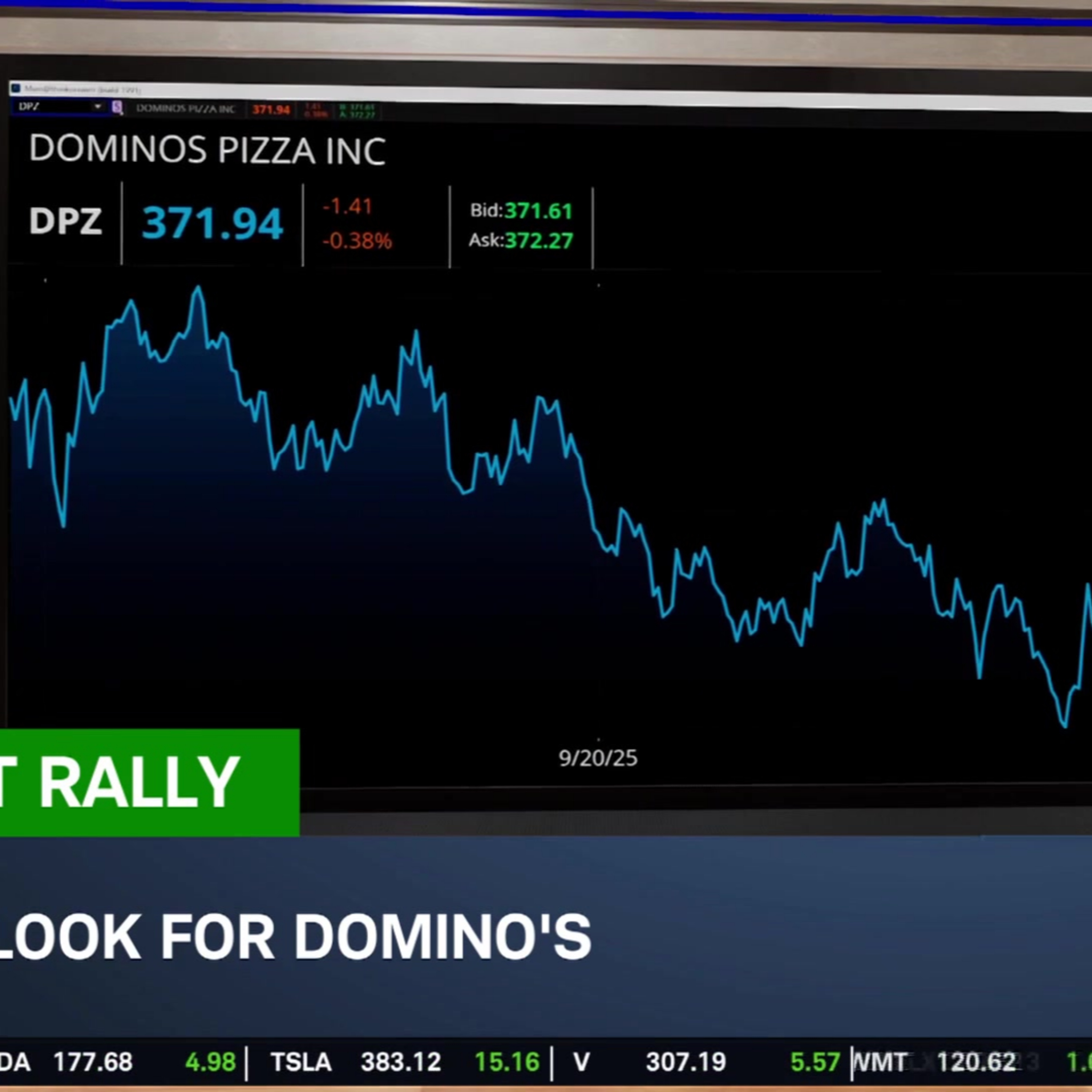
Jim Sanderson explains the downside restaurants face because of the economic impact of the energy crisis. Margin pressure issues are keeping him from being bullish on many names in the sector. He likes McDonald’s (MCD), believing they will be able to boost traffic, but notes that their international business is a huge part of revenue. Chipotle (CMG) may have a harder time driving traffic growth. Domino’s (DPZ) is a “market leader” and are becoming the “last man standing” in pizza. Tom White offers an options trade on MCD.
======== Schwab Network ========
Empowering every investor and trader, every market day.
Options involve risks and are not suitable for all investors. Before trading, read the Options Disclosure Document. http://bit.ly/2v9tH6D
Subscribe to the Market Minute newsletter - https://schwabnetwork.com/subscribe
Download the iOS app - https://apps.apple.com/us/app/schwab-network/id1460719185
Download the Amazon Fire Tv App - https://www.amazon.com/TD-Ameritrade-Network/dp/B07KRD76C7
Watch on Sling - https://watch.sling.com/1/asset/191928615bd8d47686f94682aefaa007/watch
Watch on Vizio - https://www.vizio.com/en/watchfreeplus-explore
Watch on DistroTV - https://www.distro.tv/live/schwab-network/
Follow us on X – https://twitter.com/schwabnetwork
Follow us on Facebook – https://www.facebook.com/schwabnetwork
Follow us on LinkedIn - https://www.linkedin.com/company/schwab-network/
About Schwab Network - https://schwabnetwork.com/about
Get every episode summarized
Each time Schwab Network publishes, we email you a written briefing from the transcript — the topics, who appeared, and any specific claims, with the ad reads skipped.
Email me new episodesFree for 3 shows. No card needed.
Hosts & guests
Transcript ready
118 searchable segments. Every word is indexed and playable.
Full transcript
Schwab Network — How Gas Prices Impact the Restaurant Sector: MCD, CMG, DPZ & More. Machine-transcribed; use the interactive transcript above to jump the player to any line.
Welcome back to Morning Trade Line, but let's go inside out now on Restaurant Stocks. So joining us is Jim Sanderson, who's the managing director and equity research analyst at North Coast Research. Jim, thanks so much for your time today. Let's just take it up to 30,000 feet and look at the restaurant space, broadly speaking, in light of everything that's happening right now. Obviously, we are looking out in this market for any signs of demand destruction. What are you seeing out there right now with respect to the Iran War? And some of the consumer trends that these restaurants were already dealing with, not to mention those high input prices. Well, that's exactly right. We're looking for evidence that there's been to demand destruction, even on a near-term basis. And I can't say we've necessarily found it immediately. And that's the good news. I think we just had a report out of Darden last Thursday. Darden is a leader in the casual dining sector. And we had expected or we were concerned that we would see a little bit of demand destruction in that context, but it just didn't show up quite yet. I think the way we're looking at it in restaurants is if we continue to see pressure
on energy prices that continue for, let's say, several months, and we start to see that in pair or impact negatively gross domestic product, that's when we're going to get very concerned because that's going to pressure consumer demand, but it's also going to impact store-level profitability. It's going to drive higher costs and that's going to pressure store margins as well. In a context where restaurants are already strained because of rising costs, et cetera, and their ability to pass unlimited pricing. So traffic is key in this sector, and so far, the news has been relatively good. We're watching it very closely, though. Okay, we're just looking at your coverage and your calls on some of these names here. Just walk us through why you're saying more bullish on a dominoes and a cheesecake than say a Mickey D's or a Chipotle right now. Yeah, Mickey, McDonald's specifically, we're concerned more on the margin. I think McDonald's has demonstrated their ability to drive traffic into the stores, but the channelages, can they drive the level of profitability that we need to see
to improve store-level margins? Basically, McDonald's has not been able to recover or get back to the pre-pandemic store margins they'd experienced back in, let's say, 2019. So they've got a little bit of work to do. We think that they're going to get there as they describe it, they're grinding away. We think they're going to continue to find ways to dive traffic into stores, but they still have to drive enough sales line to really offset some of the inflated costs. Clearly, the gas price pressure that we see and the energy cost that are going to impact their global restaurants, remember about 60% of their businesses outside the United States. That's mission-critical from McDonald's and I think it's going to be tough for them. Chipotle, a similar story there. They've had a wonderful ride, but let's face it, over the past year, they have not really been successful at driving traffic growth. We think going into 20 or as we enter more deeply in 2026, they're going to have a harder time driving traffic growth to get to that low-to-mid-singled seamstor sales level that gets them the sales volume they need to, again, to improve margin.
So it's really a margin pressure issue that's holding us back on some of these names that are in all reality doing a decent job of holding steady or driving some traffic sequentially. Again, for Chipotle, the expectation is that every quarter they should be able to demonstrate improvements in traffic and that should flow through. You take a company like Domino's, we like Domino's simply because they are a market leader. They're in a context where their peers both pizza Hut and Papa John's, they're closing stores. So both of those brands are generating negative same-store sales, negative organic sales declines. And on top of that, they're closing stores for a company like Domino's, what's great there is that they're going to be able to naturally capture more market share just from their last-man standing perspective. They're exposed to international markets, but predominantly they're a US brand that generates their profitability off of US business. I like the setup, but we can't get around the reality that it's a pizza delivery service
and pizza delivery means gas prices. So that's going to impact not only consumer demand, but it does impact the cost of delivery, case-and-point door dash just today announced that they're going to start offering some relief to their door dash drivers. They're going to be giving them some discounts on gas prices. They're going to be giving them some cash back. So that's something we want to watch going forward. Yeah, fantastic summary of your coverage. Obviously, looking across the board restaurant space there and a lot of names to pack in there. We've got to wait and see. Obviously, margin pressure, as you mentioned, ways to mitigate some of the challenges are something to keep an eye on. Jim, got to wrap it up there. So much, Jim Sanderson, their managing director and equity researcher, analyst over at North Coast Research. We're going to trade McDonald's now with Tom White, host of Fast Market. As you heard, Jim, say there, Tom, it looks like those golden archers might stand for margin pressure. Just walk us through an example trade for this one. Yeah, you always look at McDonald's as maybe recession proof and good times and bad times, right? People trade down to fast food.
They're going to extend their bargain menu in starting in April. That'll probably increase foot traffic, but it might be used as a safety play also. Now, you look at what the stock's done. It's pulled back pretty significantly off about 9, 10% from those all-time highs. You can see here from this chart that 200-day moving average has acted like support over the last year, and it bounced off of that level again. So I looked at a strategy that takes advantage of a rebound in the stock while giving myself some duration in this option strategy. They report earnings on the 30th of April. So I want to avoid that earnings event. I went out to the April 24th weekly option, so these expire in just about a month, and they expire before that earnings event. So if you do get that rally into earnings, you avoid the event risk on this. So buying the April 24th, the 310 strike call, it's basically at the money. And then against it, sell the 330 strike call, so a bullish $20-wide call vertical, you're going to pay roughly about, I've got a $7 debit on here, it might be trading a little
bit less than that. But the debit you pay is going to be risk. So if you pay $7, you've got $700 in risk. But you can profit $13, if it gets back to 330, and that's about what the one standard deviation move that the option market is pricing in for that option series on the April 24th. The break even if you pay $7 debit up at 317 over the next 32 days, that's only just over 2% above the current share price. So on a percentage basis, you don't need a big move to get up there, and just to even get back to 330 where you get max profitability, that's only about 6, 6 and a half percent above the current share price in there. So this is a way to look at it, if you think it's going to rebound into earnings, but avoiding that event risk. Speaking of every rebound, we are seeing a nice pop for stocks today as oil drops. Thanks so much for the example trade on Mickey D's for us at Tom Y. Really appreciated, and as I said, we are a lot more risk on this morning in this market, making up for some of that lost ground on Friday.
More episodes
More from Schwab Network

Stock Market Today: ORCL & ADBE Earnings, AEO Plunges Near 52-Week Low
Schwab Network

Thursday's Final Takeaways: Crude Taps $103 & PPI Hotter than Expected
Schwab Network

Balancing High-Conviction AI With High-Dividend Diversification
Schwab Network

EARNINGS PANEL: ORCL, ADBE
Schwab Network