About this episode
America calls it pluralism, but too often it feels like something else entirely. What looks and feels like racism or cultural hostility is frequently the machinery of assimilation doing its work: the endless sanding down of edges until difference is smoothed into something palatable for the hegemon. America doesn’t usually admit this outright, but it has always been the deal. The promise of pluralism was never truly “come here and be yourself.” It was “come here and add your spice to the stew — but don’t change the recipe.”
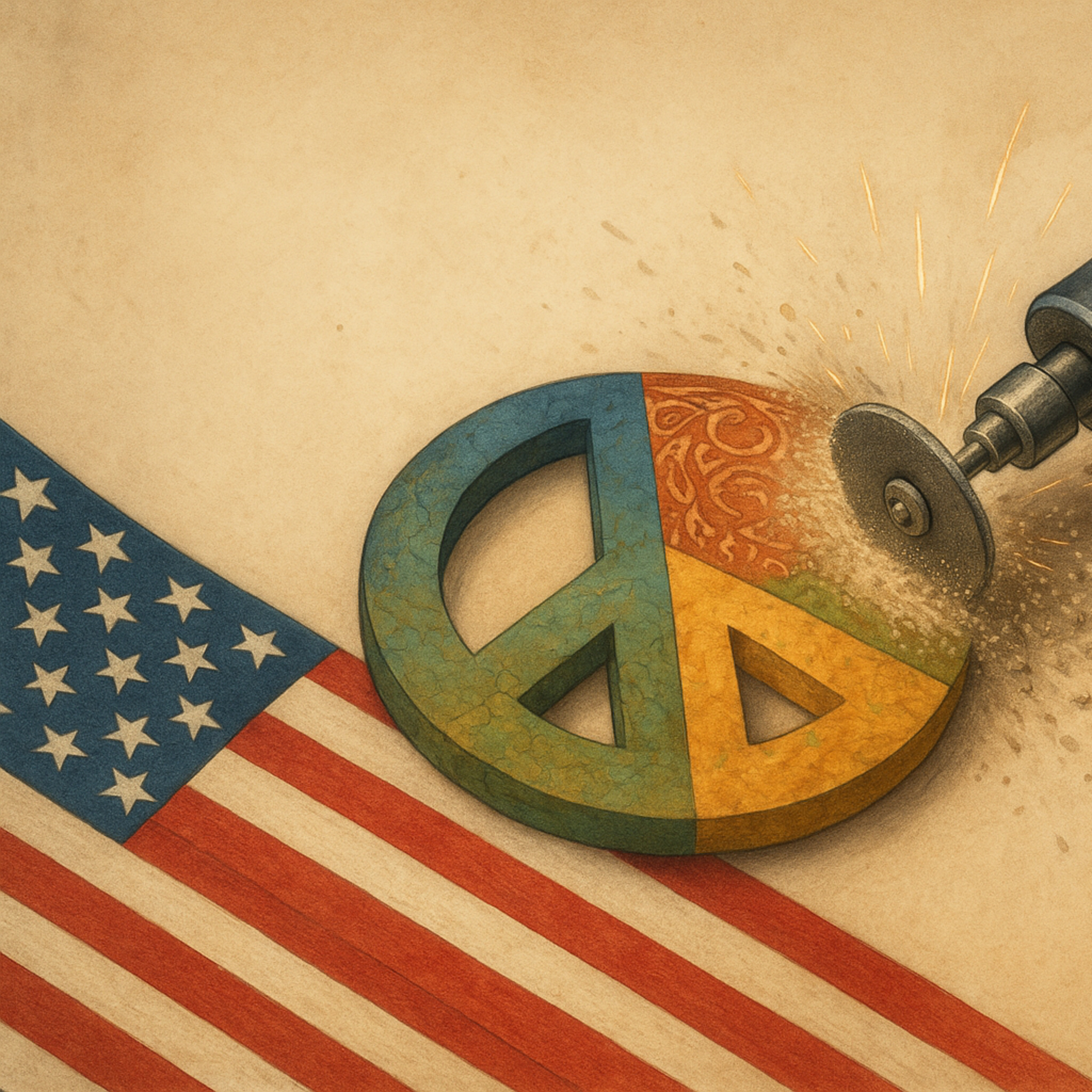
The metaphor is familiar: hamburgers and apple pie. That is the base, the civic religion, the cultural grammar that does not yield. On top of that, you can sprinkle flavor: salsa, turmeric, kimchi, soul food, whatever reminds you of where you came from. But try to cook an entirely different dish, live by an entirely different set of civic rules, and the sanding begins. This sanding is what many communities experience as racism — hostility, punishment, exclusion — though from the hegemon’s point of view, it is simply enforcement of the rules of assimilation. The sanding will continue until you comply.
I saw this more clearly when I lived in Germany under Merkel. There, the state required immigrants to attend German-language and civics classes. The demand was blunt: you can stay, but you must learn to be German in the public square. Even then, Germans would never call you “German” unless you were born to it. That is the frank honesty of an ethnostate masquerading as pluralist. America, by contrast, plays coy. Instead of explicit requirements, it wraps its assimilationist expectations in sitcoms, pop culture, advertising. Norman Lear’s TV shows in the ’70s told mainstream America that minorities and immigrants could be quirky, lovable, even rough around the edges — but only insofar as they were harmless and destined for eventual assimilation. The sweathogs weren’t building a parallel society; they were on their way to becoming “regular” Americans.
The difference today is that we’ve drifted into what might be called “settlement pluralism.” Entire enclaves function with little English, fully translated services, schools that allow students to test in their parents’ language, and communities that operate as if the hegemon doesn’t exist. This can feel tolerant, but it comes at a cost: the erosion of a shared civic baseline. The longer the hamburger-and-apple-pie core is ignored, the more likely the hegemon is to reassert itself — and when it does, it won’t be with laugh tracks but with police, courts, and policy. The Dremel always comes back.
African Americans, of course, have lived with this longer than anyone. Their presence predated pluralism itself, and their difference — skin color — could not be sanded away. The friction never ended. Instead, Black culture was alternately punished, tolerated as “flavor,” or commodified into the mainstream. Black churches, Black History Month, and Black Pride are acceptable flavors. But the moment Blackness asserts itself as a sovereign civic code, the sanding resumes.
Pluralism in America has never been true multiculturalism. It has always been assimilation plus flavor. You can keep your parades, your cuisines, your accents, so long as you play by the hegemon’s civic rules when it counts. To call the resistance to this “racism” is both right and incomplete. It is prejudice, yes — but it is also the sound of the machine grinding away, doing exactly what it was built to do.
America’s pluralism is real enough to allow difference, but only as garnish. The main dish never changes. And the sooner we name that honestly, the better we can understand the grinding sound that so often gets mistaken for something else.
Get every episode summarized
Each time The Chris Abraham Show publishes, we email you a written briefing from the transcript — the topics, who appeared, and any specific claims, with the ad reads skipped.
Email me new episodesFree for 3 shows. No card needed.
Hosts & guests
No transcript yet
This episode has not been transcribed. Request it and it moves to the front of the queue.
More episodes
More from The Chris Abraham Show

How I Stole 24 Months of Gameplay in 60 Seconds of Bad Decisions
The Chris Abraham Show

America Goes Abroad in Search of Monsters to Destroy—A 21-Year Warning About End...
The Chris Abraham Show

The Deportation Plan Broke So the Bombs Came Out
The Chris Abraham Show

Media Capture, Populism, and the NPR Trust Problem
The Chris Abraham Show