About this episode
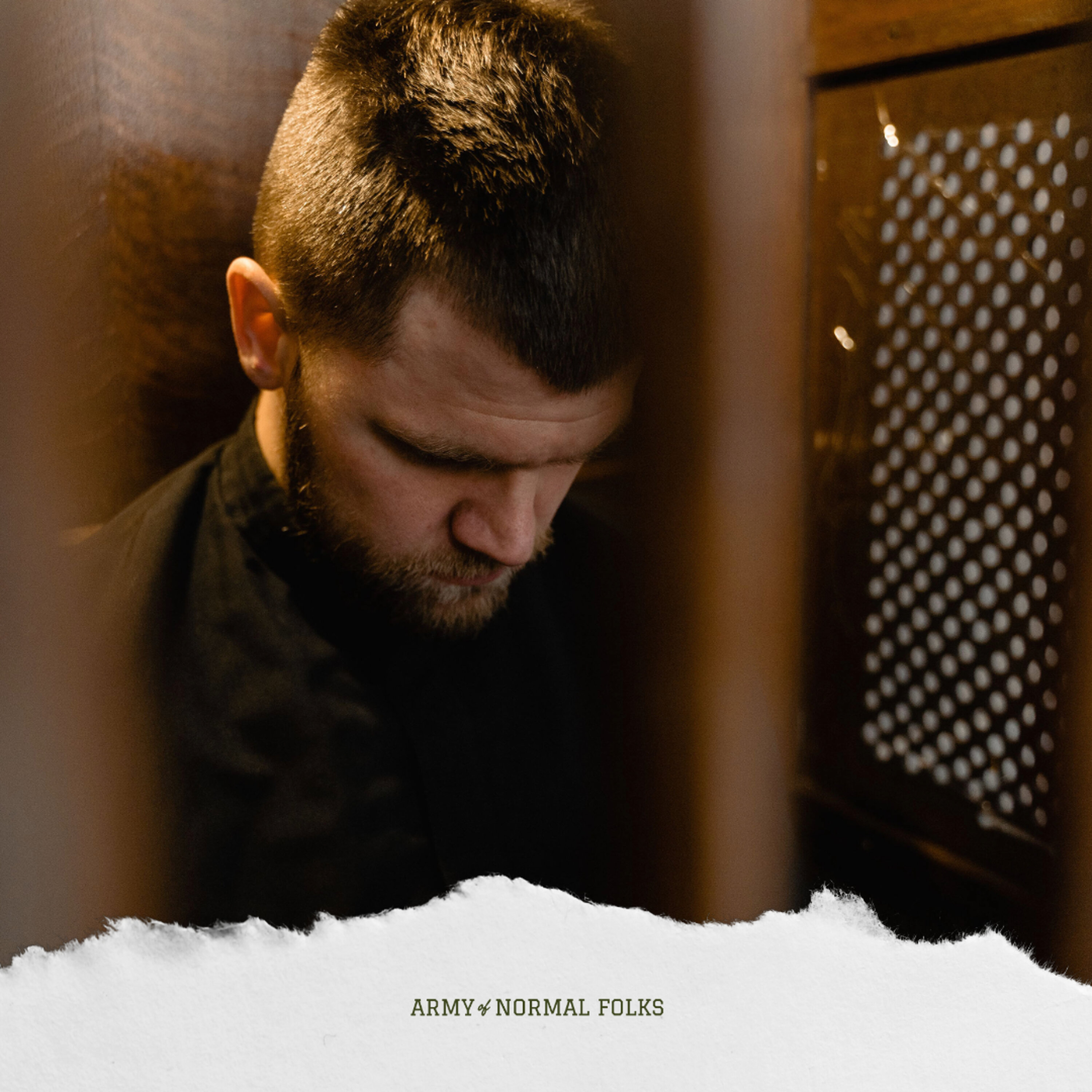
At one of the most secular campuses in America, a group of Christians set up a confessionial booth during a wild campus party. But they weren't there to hear confessions. They were there to give them.
Tony Kriz sat in that booth and apologized to skeptical strangers for the ways Christians had failed to love people. Students who came in ready to argue left having opened up about their own struggles.
This episode is a masterclass in what humility can do that arguments never will.
ARMY ACTIONS
Subscribe to the podcast and rate & review us!
Signup to join the Army, visit NormalFolks.org
Follow us on social media @ArmyofNormalFolks
Join or start an ANF local service club at https://normalfolks.org/service-clubs/
Take The 10 Level Challenge, "the hero's journey for service" at 10LevelChallenge.org
Support the show: https://www.normalfolks.us/#join
See omnystudio.com/listener for privacy information.
Get every episode summarized
Each time An Army of Normal Folks publishes, we email you a written briefing from the transcript — the topics, who appeared, and any specific claims, with the ad reads skipped.
Email me new episodesFree for 3 shows. No card needed.
Hosts & guests
Transcript ready
723 searchable segments. Every word is indexed and playable.
Full transcript
An Army of Normal Folks — He Built a Confessional—But He Did the Confessing. Machine-transcribed; use the interactive transcript above to jump the player to any line.
Hey everybody, it's Bill Courtney from an army of normal folks and welcome into the shop. You listen around like a goofball. Welcome it Alex. Thank you Bill. How are you? I'm doing well. Good. I actually got to work out with that three Memphis this morning because I stayed overnight. Did you really? Yeah. How'd that go? How many people were there? Oh, there were seven of us. It was at Overton Park. Did they give you a nickname? Oh, no. You keep your nickname wherever you go. That's the winner's your F3. The fans. Maybe that's why those four. Thanks Jack. I got some stories for you. So they show us mine because my middle name is Al Faso, which I'll get made up for for our kid. It's my grandfather's from Colombia. So it's his name. But one of the guys here today, his name was Alter Boy. Then I asked like, what do you cap like? And he's like, no, the first girl I made out with, was it a church view? Alter Boy. So I said Alter Boy. Oh, the fans.
All right. So listen to our F3 episode if you haven't already. Yeah. If you want to know what that's all about, listen to the episode because it's awesome. Today is chapter number 120. And it actually comes from an interview we were just doing. And as a side note, a story we're going to share with you that I think is one kind of hilarious. But two, there's there's really some depth to it that I think that matters. And we're going to call it. He built a confessional, but he did the confessing. So we'll get to that. But first, 120 years ago, what happened in 1906, Alex? So I might, oh, you actually got a right 1906. Yeah, I could do that. Well, it's kind of pretty easy for you. Yeah, 120. All right. Let's see what Matthew can do. The San Francisco earthquake and fire, which I don't know anything about. So on April 18th, a mass earthquake. You didn't hear anything about that. I mean, maybe I briefly heard about it.
But it leveled the city and then burned it to the ground. Destroyed much of San Francisco and roughly 3000 people died. But back then it was a ton. Yeah, I mean, it's still a ton. It's still a ton, but I mean, back then, it was like a third of the population. Yeah, I think it was a big deal. And then the Atlanta race massacre. But what? The Atlanta race massacre, which similarly, maybe I've heard of, but don't remember much or at all. So in September of 1906, white mobs attacked black at landings, following sensational and false newspaper reports about assaults, about assaults by black men and white women. At least 25 black people were killed with some estimates higher. It became an important episode in the history of American racial violence. Uh, I did not. I'm kind of ashamed. I didn't know the story. I'm further ashamed about the story. Wasn't it great what way we do the show? I mean, we're both learning a lot too, not only from our guests, but honestly, I'm learning a lot from doing this history lesson. Talk on that. Yeah. All right. That's anything else from the 20th century. That's it. All right. So when you're making things, cheese, what?
Two negative things today. Yeah, really, this is still enlightening, but it gets better. After a brief message is from our generous sponsors, we'll be back on. He built a confessional, but he did the confessional. Yeah. Hey, everyone. It's the Jonas Brothers with the Hey Jonas podcast. We've been catching up with some great friends, Paul Rod, Michael Bubley, Seth Meyers, Nile Horan, Jake Shane, and making some new friends while getting into what's really like to have sisters, like Alex and Ashton Earl. She likes to control everyone and tell everyone to do that. Okay, well, control is a harsh word. I would say that's a harsh word. I am more outspoken. Growing up a lot of the times because she was so quiet, I would speak for like the both of us. Now I'm working on like thinking a mom is really not a drinking before I speak. And Joey King. You know if your like mom is yelling at your sibling, and even if you're annoyed with your sibling,
you just like won't let that slide. It's like you only can yell at your sibling. I'm like, you can't do that here. That is not what I want talk about her like that. I just want to talk about her like that. Plus, we've been taking your calls, listening to your voice mails and giving advice. Or at least trying to. So if you've got catching up to do now's the perfect time. Listen to Hey Jonas on the iHeartRadio app, Apple Podcast, or wherever you get your podcasts. When I was 14 years old, I was kidnapped and health captive for nine months. I survived and I've spent my life exploring how other people survive what should have destroyed them. I'm Elizabeth Smart and these are the survivor files. I just remember this low taunting voice next to my ear saying, shut up, don't say anything. Every week, I'm with survivors who lived through the unthinkable. I knew if he woke up, without a doubt he was going to hurt me. I started feeling that there was someone at the end of my bed,
and I just started screaming. They are abducted, stalked, controlled, and nearly silenced. But these aren't stories about what's taken from them. Their story is about what it takes to make it out alive. Listen to the survivor files with Elizabeth Smart on the iHeartRadio app, Apple Podcast, or wherever you get your podcasts. If you're a bookshelf and you're for you page are equally important to your personality, welcome home. This is Pro's Society, the weekly podcast that's part book club, part group chat for thought daughters, pop culture obsessives, and anyone who thinks pride and prejudice and love island deserve the same level of discourse. I'm Eli Rallo, and every week we're connecting the dots between books, the internet, and the conversations everyone can't stop having. I'm going to have to look up this story. I'm obsessed. So obsessed. From bestselling authors and your favorite book talk creators to the latest pop culture moments, nothing is off the table. It's like if you can hide some real messages inside compelling characters,
and that is the Trojan horse. Whether you're looking for literary deep dives, smart pop culture conversations, or a community of readers who love to think a little too much, you're in the right place. Listen to Pro's Society on the iHeartRadio app, Apple Podcasts, or wherever you get your podcasts. See you between the pages. Dear Hunnies, this is goodbye. In February of 2024, celebrated illustrator and children's book author, Patre Mathers, and her husband Michael, nailed letters to dozens of friends and family members to let them know that they had died by suicide. By the time you get the Schleiter book, Petra and I will be dead. Next stop, Wonderland. Patre and Michael were by all accounts healthy, happy, and in love. Why did they do it? And what did it do to the people they left behind? I would have given a million reasons to not leave this world had I known. I keep coming back to a truly hope that Patre was a thousand percent on board with the plan.
Do you think of him as having killed her? Yes, I do. I hold Michael responsible for my mother's death. I'm Leon Nefak. And I'm Alice Gregory. Together we set out to interview everyone who got one of Patre and Michael's letters, as one married couple trying to understand another. Listen to death of an artist on the iHeartRadio app, Apple Podcasts, or wherever you get your podcasts. On Big Lives, we take a single cultural icon. People like Jane Fonda, George Michael, Richard Pryor, and we pull apart the story behind the image. And we do this by digging through the BBC's fast archive. We're talking iconic moments in broadcast history. I'm not just a boxer. I'm educating. I can talk all week on millions of subjects. And forgotten interviews that change how we see these giants of our culture. Well, if changing the system from the ground up is revolutionary, then I'm revolutionary. We're here for the messy, the brilliant, the human version of our heroes. And when I go on stage, I like to dress as slutty as possible,
because it makes me dance better for some reason. I'm Emmanuel Jochi. I'm Kai Wright, and this is Big Lives. Listen to Big Lives on the iHeartRadio app, Apple Podcasts, or wherever you get podcasts. All right, everybody. Welcome back to Shop Talk, number 120. So we're going to play a clip for you from an interview we did that we recorded, kind of an off-the-cuff conversation. And I think it's important to set up that this happened on a campus in Portland that was still maybe its Reed College, a very, very, very progressive campus where faith is not only ignored, it may be even more abord.
And to set this up, he set up this confessional in the middle of a... Don't just that's the whole thing. It's not a role, baby. Well, I mean, you know, there you go. So just make that as a background. Do you ever remember who the guest was who we're featuring? No. 24 hours later, we recorded this yesterday. What was his name? Tony Chris. Yeah, I'm a no. Tony Chris. T.R.A.Z.Z. It's kind of like, can't remember what you had for dinner yesterday. Like I just... I can't remember what I did before I showed up here. So this is Tony Chris when he built this... We love you Tony, even though Bill can't remember your name. Yeah, when he built this confessional, the story is awesome. And then Alex and I are going to chat a little bit after... After you hear the clip. So here you go. Pay attention to this story. It's pretty cool. I was asked to be the volunteer chaplain at Reed College. Reed is been written up in multiple college university periodicals as the most liberal, most likely to ignore God,
most likely to hate religion, campus in America. It's a little liberal arts college in the Southeast part of Portland. I loved it. I walked on campus. I walked on campus and there were three students out of 2000 who on any level were willing to like, even whisper that they might be kind of Christian or kind of Bible lovers or whatever. Jesus lovers. And I loved it. We had this little tiny community in our little community of three, quickly grew to five. And I won't tell all the machinations of it. But at the end of my second full year there, there's this celebration they do over here called the Ren Fair, the Renaissance Fair. And this hyper liberal school, it's one of the most challenging schools in America. Every senior has to write a dissertation even though it's an underclass, even though it's not a graduate school. And so they do this. Renaissance Fair, the Renaissance Fair, everybody throws their dissertation into the library
and this is so thick. But for the long weekend of the Renaissance Fair, this is back. This is 25 years ago. They do a weekend of unrestrained human experimentation. Just herds of naked people running around campus. This is back then. The school would look away. Post centuries on the outskirts of the campus and basically let loose in the genics. Anything experiential on campus and everyone bullies about crazy for three days. Renaissance Fair. The students asked me or said, we want to participate in Renaissance Fair. And we want to do it as people of faith. But also in harmony with Renaissance Fair. We don't want it to be some weird.
And so we went around around, I won't bore you with the whole story. But after a couple of weeks of conversation, we landed on, we'll Renaissance, the Renaissance era when the Catholic Church was a profound character in society. We decided to build a free standing confession booth right in the middle of the action in between the hallucinative tent. And the fire battle. We built a free standing plywood two sided, like basically two foam booths stuck together with one side you open up and the other side, there's a curtain and there's a prestanding. I was I dressed in a monk robe. You're not even Catholic either, Tony. I'm not. I can't help but. And and we painted the outside with religious symbols and the students had cowbells and they walked around the midst of people like on mad trips and everything that was going on.
Ringing cowbells is saying, confessions being heard come to the confession booth now, confessions being heard. And I remember the first time, Friday night, as I'm standing in there, I was scared out of my mind. It's like this is so bad. I mean, first of all, being in a wooden box next to a fire battle. Not a great idea. But I'm like, this is not good. Like read students are brilliant. They're like all smarter than me. And they all hate what I represent right now. And so the first the first student comes in like, what's going on in here comes in. I opened up the curtain and I said, hi, welcome to the confession booth. This is where confessions are heard. It's okay. I'd like to begin. First of all, I need to confess that I'm not a priest. I'm just a guy. But I am a Christian. And I need, and my spiritual family, Christianity, has been the purveyors of evil for centuries.
And I would like to ask your forgiveness. Would you forgive us for the crusades and the inquisition? Would you forgive us for our participation in slavery? Would you forgive us for our participation in wars and the ways that we've fostered racism in the world? Would you forgive us for colonialism? Would you forgive us? And right now in our society, we're more divided than ever. And my family, my cousins, my uncles and aunts in the faith are making it happen or making a world worse for you. Would you forgive me? Me, one Christian. Would you just forgive me for that? And finally, would you forgive me? Because I claim to follow Jesus. And yeah, I don't look like him at all. I don't love you like I should. I've never met you. I don't even know your name. I've been on this campus two years. Jesus would have known your name. And I don't. I have screwed this whole thing up. And I'd like to ask your forgiveness. Would you please forgive me just one one Christian? Would you forgive me? It looks to me and he goes, that is the most effing beautiful thing I've ever heard in my entire life.
And then you started to cry. And then he goes, my dad used to be crying when I was eight. And I don't, I don't know what to do. I'm all alone. And then we talked about it. I talked to him about some thoughts that Jesus might have on and it was going through. And at the end, we like hugged over the railing of the window. Then he left as soon as he was gone, three more girls came in and packed in in the space. They didn't know what they were there for either. And I said, hi, it's a convention with here's where confessions are heard. It's okay. I'd like to begin. First of all, I'm not a priest. Secondly, I'm a Christian. And I'd like to apologize for my religious family. I did the thing again. God done. They were like, we forgive you. Thank you. And then they started going, I've been giving my body away in ways that I'm uncomfortable with and I'm afraid for my future. And then we talked. And then we shook hands and I talked to them all about Jesus. And they left and then all week and long that's that side was never empty.
And every conversation was about Jesus. And every conversation every time I was forgiven. It was unbelievable. Every time I forgive you, I forgive you for it all. That was normal with this. I forgive you for it all. What do you think about that? I'd rather hear what you want to think about it first. Well, actually even when Tony was telling it, I was a little conflicted. And here's why. John Calvin said, we can't repent for another man since. And so as he was telling that story, I was conflicted because I'll be honest with you. I do think that church is send with colonialism. I do think that church is send with slavery. And by the way, not just the American church. The American church. The British church. The British church. I mean, the South African church.
I mean, the South American church. It's, it's, you know, when we talk slavery, everybody's mind immediately goes to American slavery. But we do need to realize this slavery was going on in the Roman Empire. It has been a surge of humanity for thousands of years. But for the churches involvement in it, it, it was sinful. Colonialism. That church's involvement in so much of what happened there. The church's involvement in the church that was on the wrong side of the civil rights movement. It goes on and on. And as a Christian, I worry that there are people in the world who don't even give our faith a chance
because of the history of the church's involvement in things that are simply not Christ-like. And so I get the stunts that that needs to be set out loud. It needs to be washed off. But in the same respect, I can't repent for what people did when I wasn't even there. So that was one. That was interesting. I didn't see that coming. You saying that it makes sense, but what you didn't? No, I didn't see that coming from you. I mean, I have heard you say that line before. Yeah. But I didn't see it coming. What did you think? I think you were going to be all about it and just agree with entirely. I do agree with all of the promise. I just don't think because the narrative is specifically confessional where you repent, I don't think we can repent for it. I think we need to understand it. I think we need to be honest about it. I think we need to reveal it. I think we need to wash of it.
I think we need to admit it. I just don't know how we repent for it. Because you can't repent for what someone else did. Right. Right. But I get it. The idea of the confessional was not really the repentance. It was the conversation. The second thing I loved from it is how inherently human grace and redemption is when you first open the door to the opportunity for grace and redemption that painful, real, transparent honesty. And I love Tony's start with, you know, this is what I confessed was wrong. We forgive me. And on a campus that is decidedly anti-Christian
and kids that were involved in debauchery during the weekend for them to just with open honesty immediately say, yeah, man, I can get over that. Thanks for your honesty. Thanks for saying that. Thanks for acknowledging what we knew but being willing to acknowledge that loud. And then their immediate lowering of their barriers and disdain. I think is a beautiful story. But how does it pertain to what we do is regardless of how deep divides are and how how difficult a person's life may have been as long as there's sun in the sky and air to breathe, there's an opportunity every day for redemption. There's an opportunity every day for improvement.
There's an opportunity every day for reconciliation. And there's an opportunity every day for our culture to figure out what else is and fix it. If an army of normal folks simply comes together to serve honestly, openly and for the right reasons, barriers fall and things get better and reconciliation happens. And I think that confessional story from Tony is a microcosmic metaphor of what an army of normal folks can be and do for this country. That's what I thought about it. Yeah. I think two things to add. It kind of reminds me to when we interviewed a Nate Larkin from the Samson Society, you know, the guy who had this sex addiction for 20 years and for five of those was a pastor. Wow. And then the sex addict. Yeah. For five of them and he then started the support groups that have 600 of them around the country have held 25,000 men.
And he says like when he tells a story, he becomes the safest person in any room. Once he starts by telling his story, it gives people the opportunity to share their and Tony did a very similar thing with this. But I him confessing first and then opened up for the opportunity for all. Remember he said the example of like, the girls I'm uncomfortable with the way I'm giving away my body right now. Other people. It made the space for her then to you know, respond in kind. That is really a good point. That is really good perspective because that's exactly what Tony was doing. It was making it safe for other people to lower their guard. It's a really good point. And obviously there's worse racism in the past. But you know, as you talked about in the podcast before too, like your friends like Aaron Hayden, I think it was Aaron. Remember Aaron's name? Yeah. But like his kids, you know, having the conversation with them about being pulled over as a black person and you know, that they were pulled over in occasions that they shouldn't have been. And actually one of the examples that now really that is blatant racism by the way.
And it's a horrific thing that a professional father and football player and right. Wasn't your former professional football player? Yeah, he's got a UFC championship ring and and forget all that. He's an executive. Yeah. An executive and three or four. He's moved on to different companies but three or four pharmaceutical companies. I mean, he is a, his three children all want to some of the best private schools in the city of Memphis and they live in the suburbs in a beautiful big house. And he still had to teach his sons to be very, very careful in the place when they're pulled over. My kids grew up the same way. We grew up in the same neighborhoods. My kids went to same school and never dawned on me to tell my children that. That is the truth about what still exists in our society today around race
and it makes me sick. That Aaron taught his sons that and I called Aaron out on a one. So I said, and that's that's that's how would you teach your sons that? And he sat my hat down and explained it to me. And yeah, it's tough. One of the cases that was really enlightening for me is Tim Scott, the Black Republican Center from South Carolina. A couple of years ago he gave a speech and he said, I've been pulled over like 15 times for nothing just because I saw a black man driving. And so he's like, I didn't do anything wrong. And it's yeah, I mean, obviously we still have the vestiges of it today. And obviously plenty of those, you know, police officers are Christians. Right. So there are still things. That's the point. There are still things in the present moment. This just isn't a past thing. There are things in the present moment that still need to be apologized for. And even, you know, as a Catholic, obviously, the, you know, sexual abuse, you know, scandals that the church, you know, is the perpetrator of. And I totally understand your point about
I didn't personally do it. But still I think of creating a conversation and a relationship with somebody. It is interesting to start it off that way. And you're basically, I'm sorry that this happened to you. And oh, I think you can apologize. I think you can identify. I think you have to be honest about it and expose the truth about it, even if it's something near, near, near, hard. I just mean specifically, I don't think you can attune for the sense of someone else. That's all or an organization. I think it's impossible. But I do get the point. And again, just like you said about the Catholic church, I mean, that's a huge one. And how devastating has that been to churches being able to grow their congregations? I mean, we're on worst enemy is what I'm saying. Yeah, I was, forget growing, how about dying like Chicago, from 50% of the population used to be Catholic,
which is wild. Now it's like 25%. So literally millions of people have left the Catholic church in Chicago. It's terrible. You know, but the question is why? And I would argue it's not Jesus. It's not the faith. It's we humans that screw it up. And that's the power of Tony's confessional. To say we are failed. We know it. Please forgive us. And it just lowers barriers and allows people to have conversations and allows for grace, then allows for redemption. I think that's very important. As we think about an army of normal folks, because an army of normal folks does not all look like one race, one faith, one creed, and one political belief. It can't work if that's it. So for us to come together as an army of normal folks to fix what else is, it has to be a big tent. And for it to be a big comfortable tent, we have to be honest about where we come from. Actually, I wasn't even thinking about the other examples until you said that,
but we could really use that in our politics. Like both sides are terrible. Add, like say you're Republican, like why aren't you admitting the false of Donald Trump and calling him out? Right? Or same thing of things on the left, right? And like we're just not intellectually honest enough and like game to go to. We have to be. Or you lose credibility in any conversation when someone doesn't agree with you. Because if you're not going to admit the obvious false, you immediately lose credibility. And when you use credibility, how can you have an open-known conversation? So that's what Tony showed us through the confessional he built. And I love it. So that's it. That's shot part number 120. I hope it's something for you to guys to think about. We're not leaving you with some prolab wisdom, just maybe some thoughts to newt along this week. So if you enjoyed this episode, rate it, review it. If you didn't enjoy it, don't, don't rate it in the video. Leave it, keep it to yourself. Byer Birch, write me anytime at billatnormalfogest.us.
If you have ideas for shop talk, let me know. If you have ideas for guests on an army of wrong folks, let me and Alex know. Glad to have to join the army and normalfogest.org. Join us at our service club. Join us at our service club. Start one. Uh, what else? That's it. What's the roll, baby? Right, everybody. The shark talk number 120. We'll see you next week. I survived nine months in captivity. And I've spent my life exploring how other people survive what should have destroyed them. I'm Elizabeth Smart, and these are the survivor files. Every week, I'm with survivors who live through the unthinkable, abducted, stalked, controlled, and nearly silenced. These are stories about what it takes to make it out alive.
Listen to the survivor files with the Elizabeth Smart on the iHeartRadio app Apple Podcasts or wherever you get your podcasts. If you're a bookshelf and you're a for-you-page or equally important to your personality, welcome home. Pro Society is a weekly podcast that's part book club, part group chat for anyone who thinks pride and prejudice and love island deserve the same level of discourse. Each week, we're connecting the dots between books, the internet, and pop culture. With your favorite writers, book talk creators, and plenty of overthought opinions. Yeah, I'm obsessed. So obsessed. Listen to Pro Society on the iHeartRadio app, Apple Podcasts, or wherever you get your podcasts. In February of 2024, celebrated illustrator and children's book author, Patreonathers and her husband, Michael, mailed letters to dozens of friends and family members to let them know they had died by suicide. Dear Hunnies, this is goodbye. By the time you get this letter, both petrified and I will be dead. Next stop, Wonderland. Why did they do it?
And what did it do to the people they left behind? Listen to death of an artist on the iHeartRadio app, Apple Podcasts, or wherever you get your podcasts. On Big Lives, we take a single cultural icon. People like Jane Fonda, George Michael, Little Richard. And we pull apart the story behind the image, discovering forgotten interviews that changed exactly how we see these giants of our culture. We're here for the messy, the brilliant, the human version of our heroes. I'm Emmanuel Jochi. I'm Kai Wright. And this is Big Lives. Listen to Big Lives on the iHeartRadio app, Apple Podcasts, or wherever you get your podcasts. Hi, I'm Michael and Perry Oli. I want to tell you about my new podcast, Underground Zero. We're looking at the opportunity of a lifetime for us and the other families. It's about the aftermath of the 9-11 attacks. What's in the tunnels? Go bars, soveringates. It'll be worth half a billion. Starring Steve Sharipa, Ray Abruzzo, and me, Michael and Perry Oli. How far you prepared to go?
Depends how far you are. Listen to Underground Zero on the iHeartRadio app, Apple Podcasts, or wherever you get your podcasts.
More episodes
More from An Army of Normal Folks

What a Former Heroin Addict Will Teach You About Relationships | Ariel Moore
An Army of Normal Folks

HIGHLIGHTS: What a Former Heroin Addict Will Teach You About Relationships | Ari...
An Army of Normal Folks

We Have A Morality Problem. And We’re The Problem
An Army of Normal Folks

43 Million Americans Can’t Read Well Enough to Work (Here’s the Fix)
An Army of Normal Folks