About this episode
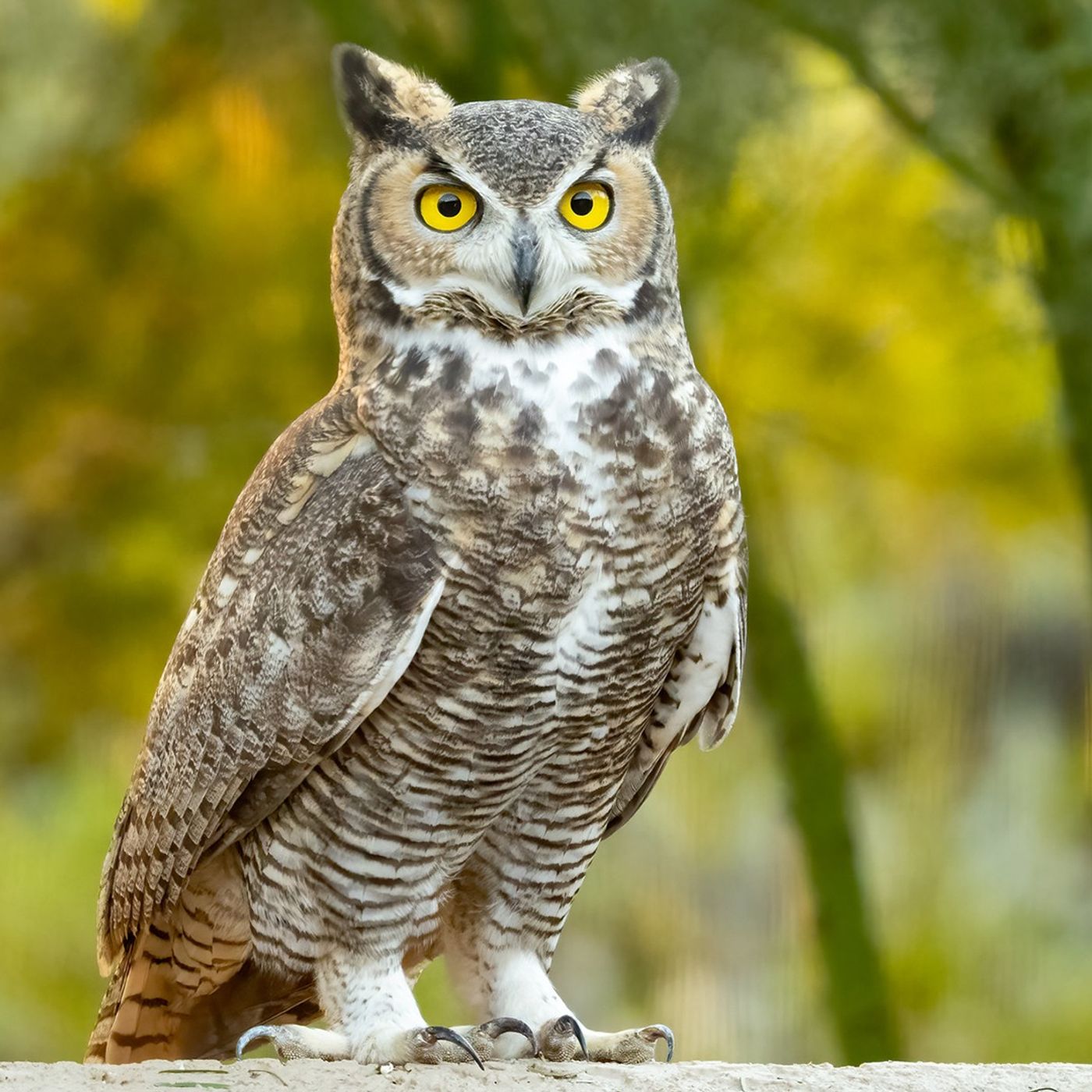
Not all owls live in the deep woods. Many Great Horned Owls make their homes in urban areas. Though mostly nocturnal, Great Horned Owls are also active early in the morning and just after sunset, offering a chance to see them hunting for rodents and other prey. Look for their distinctive horns, which are really just feather tufts. At night, you might hear their deep, syncopated hoots echoing through the neighborhood. Avoiding toxic rodenticides helps protect Great Horned Owls and other urban raptors.
More info and transcript at BirdNote.org.
Want more BirdNote? Subscribe to our weekly newsletter. Sign up for BirdNote+ to get ad-free listening and other perks.
BirdNote is a nonprofit. Your tax-deductible gift makes these shows possible.
Hosted by Simplecast, an AdsWizz company. See pcm.adswizz.com for information about our collection and use of personal data for advertising.
Get every episode summarized
Each time BirdNote Daily publishes, we email you a written briefing from the transcript — the topics, who appeared, and any specific claims, with the ad reads skipped.
Email me new episodesFree for 3 shows. No card needed.
No transcript yet
This episode has not been transcribed. Request it and it moves to the front of the queue.
More episodes
More from BirdNote Daily

Letter to an Olive-sided Flycatcher
BirdNote Daily

Arctic Dispatch: Sandpipers Sing at Teshekpuk Lake
BirdNote Daily

Wilson’s Warbler near Summer’s End
BirdNote Daily

Migration: Long, Short, and In-Between
BirdNote Daily