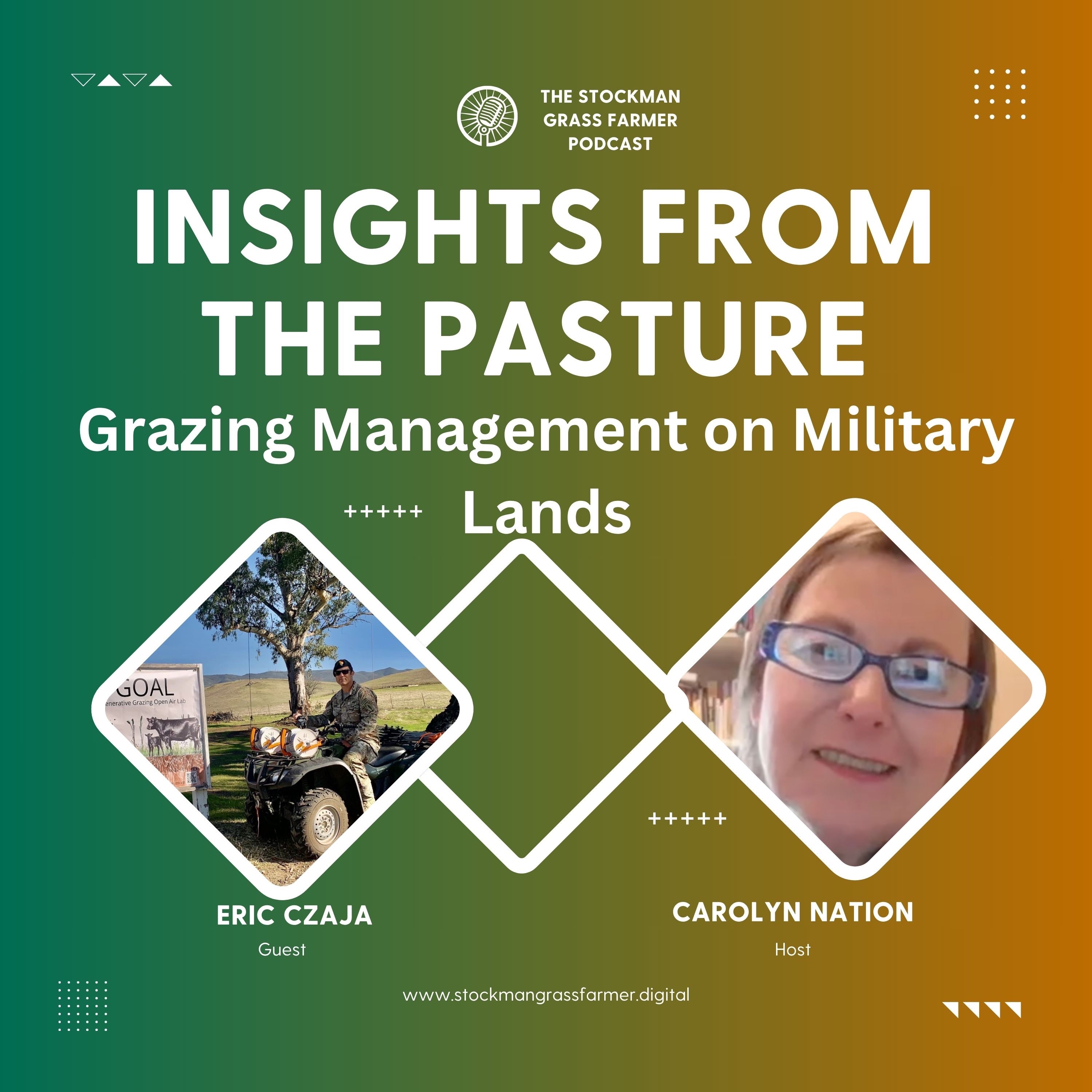
Grazing Management on Military Lands with Eric Czaja
About this episode
In this episode, Eric Czaja, active-duty Army officer and regenerative grazing advocate, shares his journey of bringing adaptive grazing practices onto Department of Defense lands. From a small homestead in North Carolina to research at the Naval Postgraduate School, Eric’s work has evolved into a groundbreaking effort to connect soil health with national security.
The discussion highlights how military bases—managing nearly 27 million acres of land—are beginning to use livestock for vegetation management, reducing fire risks, improving biodiversity, and lowering costs. Eric explains how initial skepticism gave way to visible ecological benefits, including increased wildlife, healthier pastures, and reduced reliance on burning or chemicals.
The episode also explores how veterans are finding new purpose in regenerative grazing through programs like Skillbridge and the first Department of Labor-approved grazing apprenticeship, opening pathways for service members to transition into land stewardship careers.
🔑 Key Points Covered:
-
Eric’s Path into Grazing: From reading Joel Salatin’s books to applying principles on his own land.
-
Linking Soil Health to National Security: How managed grazing can strengthen training grounds and reduce disruptions.
-
Camp San Luis Obispo Pilot Project: Adaptive multi-paddock grazing with local ranchers and its early successes.
-
Ecological Benefits: Increased wildlife, improved forage utilization, and cost savings from fewer controlled burns.
-
Veteran Opportunities: Skillbridge training, apprenticeships, and career transitions into regenerative ranching.
🌱 Actionable Insights:
-
Military lands represent a vast opportunity for regenerative practices that benefit ecosystems and operations alike.
-
Visible ecological improvements—like increased turkey populations—help win over skeptical stakeholders.
-
Managed grazing can save costs by reducing fire management needs and improving forage quality.
-
Transitioning service members can bring discipline and adaptability to regenerative agriculture careers.
-
Partnerships between military bases, ranchers, and educators create scalable models for change.
Get every episode summarized
Each time The Stockman Grassfarmer Podcast publishes, we email you a written briefing from the transcript — the topics, who appeared, and any specific claims, with the ad reads skipped.
Email me new episodesFree for 3 shows. No card needed.
Hosts & guests
No transcript yet
This episode has not been transcribed. Request it and it moves to the front of the queue.
More episodes
More from The Stockman Grassfarmer Podcast

Forage Chains Connect the Dots for Profit By Dan Glenn
The Stockman Grassfarmer Podcast

Al’s Obs: Cultural Biases
The Stockman Grassfarmer Podcast

What Is the Greatest Challenge to Being a Grass Farmer Today? | Jim Gerrish
The Stockman Grassfarmer Podcast

Think Feed Is Your Biggest Cost? Jim Gerrish Says You're Looking at the Wrong Nu...
The Stockman Grassfarmer Podcast