Loading...
businessmarketing
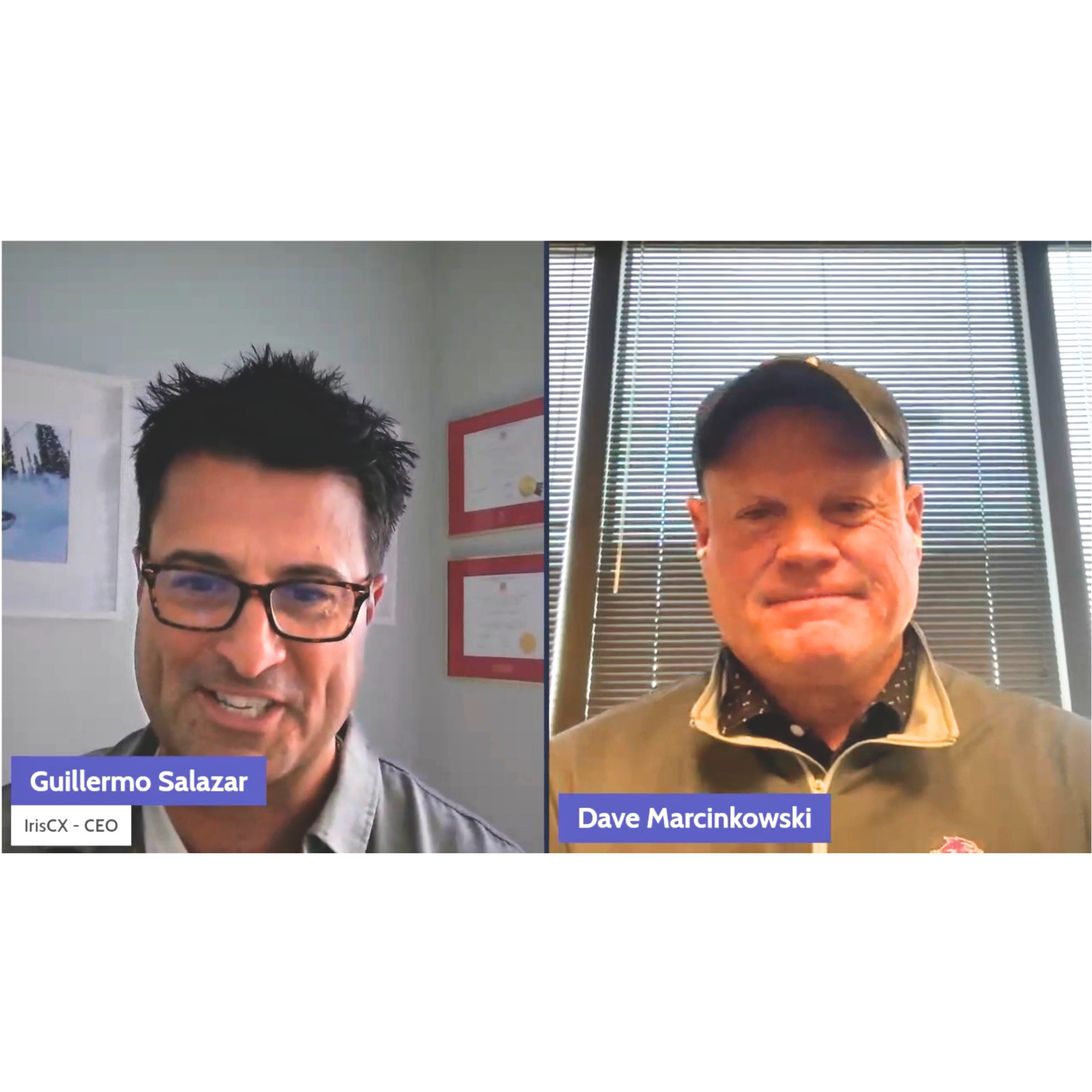
Getting to Hell Yes! Live with Dave Marcinkowski
About this Episode
What happens when a 11,000-unit operator sells to Greystar and doubles down on PropTech?
In this episode of Getting to Hell Yes, host sits down with Dave Marcinkowski, co-founder of Madeira Residential and founder of Quext Smart Apartment Solutions, for a high-energy conversation about the future of multifamily operations, technology adoption, and what it really means to let go of something you built.
Dave's journey from bookkeeper to co-founder is remarkable on its own but what's even more compelling is what happened after he sold Madeira's management company to Greystar. Freed from day-to-day operations, Dave is now all-in on the tech revolution reshaping multifamily and he's got a front-row seat, a sandbox of 11,000 units, and zero patience for legacy systems that don't play nice with each other.
This episode is a masterclass in operator-to-owner evolution, the PropTech buy cycle, and why the next wave of innovation won't come from the top down, it'll come from the maintenance tech with a better idea.
💡 If you're an operator, asset manager, or PropTech founder trying to crack the multifamily market, Dave's perspective is the inside lane you've been looking for.
🎙️ Topics covered:
- Selling to Greystar: what prompted the decision & what came next
- Why the "data moat" is dead and free data flow is the future
- Smart apartments, managed Wi-Fi, and owning a retail electric provider
- How AI is being built from the grassroots up not the boardroom down
- Why operators can't get their ideas funded (and how to fix it)
- "Growth occurs in the hard spaces" advice from 20+ years in the trenches
#IrisCX #GTHY #MultifamilyRealEstate #PropTech #SmartApartments #ApartmentOperations #AIinRealEstate #PropertyManagement #RealEstateTech #AssetManagement #MultifamilyInvesting #Quext #MadeiraResidential #PropertyManagerLife #RealEstatePodcast #FutureOfWork #OperatorMindset #TechAdoption #RealEstateInnovation #Entrepreneurship
Hosts & Guests
Transcript
And we're live, all right.
Thanks for joining us today.
Thrilled that Dave Martin-Kowski today,
both from Madera Residential and his welcome
quicks smart department solutions.
Thrilled that in conversation.
Dave and I caught up about three weeks ago,
the first time, just gonna intro and talk about things.
Talk about Madera, which you guys are doing,
how you guys buy, all that fun stuff.
And it really was kind of like interesting
with the conversation with the perspective of an owner
that was formerly an operator that had made some changes
and kind of like how they're being strategic
around their resources and allocations.
We talked at length around just the different nuances
of prop tech that are out there in the world,
how that's being bought, how it's being sold.
And as you've been listening to the show,
I'm always looking to find an answer an inside lane
on the operator owner paradigm
and how people are making decisions as far as that's concerned.
So Thrilled that, Dave on it kind of like shed some light
on that, giving that you've got both sides of the chair.
And have been on both sides of the table
for as far as that conversation concerned.
And everyone listening, why the show started.
So getting hell yes is a show we talk about,
the problems that we solve as sellers.
And the problems that we solve
and then relate to the timing of them being relevant
to people that are the buyers.
And how could we present ourselves in such a way
that we're really practical, useful and helpful for our buyers
and not just getting in the way with more noise.
And I think we all can agree we've all got
too much noise in our life.
And how could we, but we need to buy things
to be successful typically in terms of,
in terms of achieving our objectives.
So I take a look at Madeira, take a look at Quex.
We're going to hear a lot about these different elements
in the property management side of things.
And as always, this is brought to you by IRCX,
our AI remote maintenance software for property management,
helping you speed up inspections and remote maintenance.
Dave, I'll pass it back to you right away here
or some things off.
Bit about your background, how you've gotten this role
and ultimately, what's the problem
that you guys saw in Madeira?
Yeah, well, thanks, brother.
Appreciate the opportunity.
This is fun.
Let's have some fun here for a little bit.
So for those who don't know me,
my name is Dave Marston-Kowski.
I got into the apartment business in 1992 as a bookkeeper.
Took a very amazing God-willed journey
to where I was able to co-found a multi-family real estate
company in 2004.
So going from bookkeeper to founder.
All in the operations side,
some of a big apartment operator guy built the Madeira
management company.
We grew from one property.
We went from a fee manager to buying our first deal in 2008
to today having about 11,000 apartment units
across Texas.
Because I come from that operational slant,
I've really always wanted to see technology
you have an impact in real estate.
And our industry is not one to lean into technology.
We typically, until you get to a FOMO stage,
we kind of stay away.
And then once it's sort of been adopted
and people are really starting to use it,
then we get real excited and we jump on board.
Which makes it hard for entrepreneurs in our state
to be successful.
And that's not care.
And you have to do that.
100%.
But it's a tough environment to crack into.
And because of that, and I don't want to badmouth anybody,
but I think we all would agree.
We're dominated by a handful of large tech companies
in our space.
And generally speaking, they don't play
nice with each other or the industry as a whole.
Challenging to integrate, costly to integrate.
It's just it leads to very disparate products
that as an operator is frustrating.
Because I may like this solution that this group has
and this other solution, this other group has,
it to me, logically, if they would just work together.
As a customer, I'd be really, really happy,
probably willing to pay more.
And instead, I've got to do workarounds and things
to be able to utilize the products.
Or we're settled for a lesser product
because that's the only product that will work
in that ecosystem.
And so, the problem, I've had that conversation
all week last week, and it's a data integration person
who is like, you know, about free flow of data.
It's, I'm optimistic that that's going to change.
I think that the forcing function is now
in present that is almost impossible to build
the system of record without considering
a free flow of information.
The data mode is gone.
It's not worth it anymore.
Well, I mean, just the technology revolution
that's going on right now.
Well, we can say AI, but we can say a lot of other things
beyond just AI, blockchain, quantum computing.
It's whether, if you're sitting here and watching this
and you're not really sure what to do
with all this technology that's hitting us right now,
the one thing I will tell you,
you may not have to dive head first in the pool today,
but you better get interested really fast
because you will get up behind.
Yep.
I think so.
Yeah, it is for someone like me.
So back in 2016, I'd helped a couple of startups blossom
and get to exit.
And so I kind of got a taste of it as more of a board member,
advisors, investor that I thought, man,
there's so many things I'd like to go tackle.
And that's when Quack started back in late 2016.
And for the last nine years, I've been building
really a whole platform of products.
We're probably best known for smart apartment
and manage Y5, but we've built some SaaS products.
We own an energy company, a retail electric provider
in Texas, we sell electricity onto the grid.
You're like, well, how do you get into that?
How does that tie back to multi-family?
Well, electricity is a big expense
on the line item of a multi-family shop.
And when you're talking about resident electricity,
when you're talking about CSA portals,
what we've been having to deal with
for the longest time has been, you know,
minuscule compared to what's possible.
And so decided to just really start looking at use cases
that could affect Madera, make us better.
We could then go and use Madera as a sandbox
to go and create these solutions.
And when they made Madera better,
then we could turn around and we can then market them
and bring them out into the marketplace.
And that's where I am today.
So I worked two hats about six months ago.
We sold the management company that we built
in Madera at a gray star, which was a great deal
for us, great company to be able to fall under with that.
And they've really enjoyed working with those folks,
but it's freed me up from the day-to-day operations
of the real estate side to really slot more
into asset management and spend more time in the tech side.
And I think it's a great time, like you said,
to be diving into tech.
Totally.
So interesting.
A lot of companies are doing our,
I'll say at this point in the role,
whether they're either outsourcing what you guys
are, outsourcing what you guys have done,
what prompted that decision?
What was going on that you guys thought,
okay, strategically it's best that we focus
on the asset acquisition development side of things
and be the operating to gray star.
What was going on in the business that made you guys
into that point and decide,
is you chose change and change is like a uncompromising.
It isn't comfortable up.
Honestly, I would have said I never would have done that,
probably up to maybe even a year before it actually happened.
And some of it is just, it's a lack of information.
And I have this perception of what that would be.
How could I ever let go of the management company
that we spent this great time building?
I mean, amazing people that work for us and things like that.
And then I had some peers go through the process.
People that I know and I trust.
And so then I was able to get more of a behind-the-scenes
curtain look at it.
And when you do that, you start to realize not only
from a standpoint of the evolution of Madera
and what we want to do, we want to grow and scale.
We want to move outside of Texas and get into other markets.
Well, we can't do that on our own.
We can't just go buy a deal in Nashville
and start a management company.
And so you have to be able to go through the process
of understanding, well, I need a third-party manager for that.
Okay, how am I going to do that?
And so that was one driver.
And then I started to look at it through the lens of our team.
You know, at a company like Madera with 11,000 units,
you have the ability to grow.
I don't want to give you the wrong impression.
It's not something that somebody can go
from a regional manager to a vice president,
to executive vice president.
Like there just wasn't a lot of growth opportunities
within our organization.
And so, you know, the ability to open that door up to,
like that was the thing that I got stuck on.
And I had to figure out how can I get a piece
for these amazing people that I've gotten to work with
for so long and the love that I have for them
and the respect that I have from the work that they did
to not feel like I was letting them down.
And I know I did.
I know I let people down with that decision,
you know, because it's I think to be fair to yourself.
It's change and ultimately, like,
change is uncomfortable.
So they probably were let, and I'm going to give you
some permission here, like they were let down
because their expectations were forced, were changed on them,
like to them.
And that's like, that happens.
That's life.
And so, like, I think it's something that everyone should be aware
of that that can happen.
But ultimately, your work, you're doing the best thing
for the business that ultimately is the best thing for them.
Yeah, yeah.
And that's that's doesn't make it any better.
You're right.
No, that's not the truth.
But I mean, your heartstrings get pulled.
And it's emotional and the cool thing is
is that they still mostly all work for Grace to hard.
I get to still interact with them.
Not nearly as much as I can.
For me personally, you know, like, I have aspirations.
I really want to make a difference in our industry.
And, you know, I really want to see Madera grow.
I really want to see this technology platform
that we're building really take off.
I think our industry is ripe for disruption.
And I think this is now the time.
And so, it really opened the door for me to be able to go
and where I different had and grow into what I think my capacity is.
And, you know, I've had, I mean, listen, it's an emotion.
Anytime you have change, it's hard.
But I think what you're saying, which I think is really important,
growth happens in the hard places.
Yeah.
And so, like, creating that stress to the system,
creating that stress in the relationships and forcing people,
everybody to have to kind of change.
I believe most people will react in a way where they come out the other side,
even stronger, even, you know, in a position where they're even more successful
than they already are.
And let me tell you, I couldn't be more proud of the team that we built in Madera.
Just some amazingly talented people who were with us for a very long time.
And so, that's it.
I mean, that really sums it up for the why.
Do you yourself miss being an operator?
It's, you know, it's funny.
Like, like, I go back to that.
Like, it's so like, when I'm stressing out on something else,
the comfort level for me is to go back and look at property performance and operations
and really start to try to dissect that, which isn't healthy.
Which, healthy is the wrong word.
It's, you know, it's imperative for me to take advantage of this opportunity
that God's given me and that these doors that have opened to jump in and to grow myself
and to learn myself.
And I don't want to give the wrong impression.
I mean, that's probably 5% of my time that I'll or less that I'm going back
and then every month or two, it gets lower and eventually will probably not exist.
And some of it, I think, is the hangover of the change.
You know, I'm still kind of dealing with some of that stuff going through.
So my body wants, my mind wants to go back to the operations.
But again, the cool thing for me is is like, my technology company that we've built,
it's designed to make operations better for multi-family.
So my experience in the multi-family side is what's really driving the technology
on the quick side of things.
Well, part of the whole reason this whole show is my background was not in multi-family.
And so it's like to try and how can I learn as fast as possible in the open
about the different parts of the business because it is multifaceted.
There are different flavors of everything.
And, you know, I'm a technologist with an asset background,
but I don't know the new watch as a multi-family.
And so I'm trying to learn as fast as I can so I can build those products.
Because I still have a personal mission, my mission when I look back,
it hasn't really changed much in the last 20 years.
Is that I have a mission to bring technology and make the lives better,
make the lives better for people in the field and people on the site.
And I've done that in all different kinds of industries.
And by doing that, I can save money, make money, you know,
all better, faster, cheaper, safer.
And it's that the why, if I look back, has been the same for 25 years,
the how has been very dynamic, right?
It depends on how I actually do that work to deliver on that mission.
It really cares a lot about those people, similar to what you're describing.
And they do tremendous work and they're unrecognized, generally speaking,
in terms of the work they do, we wouldn't have them today.
We wouldn't have a lot of things we have today without those folks.
And so it's like to your point about the how, like,
the how is just shifting, but the core purpose of what you're doing,
hasn't, hasn't shifted, doesn't sound like it to me.
Well, I'll get to that.
I think the answer I'm going to give you.
But I really want to go back to a couple things that you just said.
You said you're not from this industry.
You know, it's funny, people don't go to school to be in our industry.
Like everybody came from something else.
And that's so cool to me.
One, two, I started as a bookkeeper.
Like I was working for it.
I had to go to work for a temp agency because I wasn't a great college student.
And I got places of bookkeeper at an apartment management company.
And now I can say I've found in multiple companies in the space.
Tell me an industry where you can do that.
And so when we talk about these incredibly talented people who work with me and things like that,
any one of them could go and do exactly, like, could go,
like, I know so many like key leaders in this industry and you talk to them.
And it's like, okay, how did you get this industry?
I was a leasing agent in college.
I was a maintenance employee.
I, you know, this is such a great entry-level job where really the sky's the limit.
Has my how?
And I think the only thing I can say is I'm a little more experienced.
I'm a little wiser.
And I think I've come to finally appreciate the journey that I've been on to get me to here.
Where I can really truly look at things and connect the wise and the house
and the purpose behind that that, you know, I think as an entrepreneur is really important.
It can't just be about the money.
If it's about the money and get out of it, you're going to fail miserably.
Even if you make money and you have a big sale, I suspect you're going to be miserable.
You've got to be a zealot around something and you've got to believe in what you're doing
because it is remarkably difficult to build.
There's a period of time where I was like, you know, I didn't really acknowledge that I was
an entrepreneur really until like this year.
And then, you know, and someone was kind of laughing at me because they're like, you know,
well, that's all you've ever been in.
I didn't really know that and there was a period of time where I didn't really feel good
acknowledging it because there was a ton of fandom around it.
And I feel it's like, I said this openly before.
It's like a condition, like, please don't appropriate my condition because it is,
I wish I wasn't this way.
I really do.
I really wish I could.
Why that?
I mean, that's interesting.
I mean, it is a condition.
There is this path by which you have to come to peace with that's who you are.
Like, I had a massive identity crisis.
Who am I to be an entrepreneur?
Who am I to do these things?
And, you know, I always lean into my faith.
And, you know, as God does, he kind of pokes and prods and opens doors and whispers in your ear.
And then next day, you know, for me, it was actually counseling.
I had to go to counseling for a period of time.
I'd recommend it to anybody, you know, I still do it today.
In fact, after this call, I have a counseling session with one of my mentors.
But I had it kind of go through the process of really accepting,
hey, this is who God made me to be.
And, you know, I want to live into those shoes.
I want to be that now where before I think I was running a hiding from it.
I don't think that's what you're saying.
I think what you're saying is the other side of me that does this too.
Because a lot of people come up to me like, dude, how did you do it?
How are you doing all this stuff?
And if they saw the duck paddling under the water and like my head spinning and the craziness
around it, I think that's what you're speaking to, like, then you're like, nobody wants this.
Nobody wants to go through this.
But at the end of the day, that's what I'm happiest is when I'm creating things,
when I'm solving things, when I'm building things, especially with other people.
We've only talked a couple of times, but that's the one thing I really enjoy about
talking with you is, you know, you're not doing this podcast, you know, you're doing this podcast
because of the relationships that you get to drive and have.
And I think that's a really cool trait that you have.
And I think for me, that's really important.
Like, if I had to go do this in a vacuum by myself, I would be absolutely miserable.
It's got to, it's as much or more about the people I do what as it is and what it is I'm doing.
Well, and I think what's really interesting with this industry is the folks that it attracts
are attracted to that, which is why maybe that's why there's so many conferences
or why they call it appeal business.
But ultimately, the ability to create, there's so much more opportunity to create connection
with this industry rather than other industries, banking, and no chance.
You know what I mean?
Everyone's protective about all their IP, even technology, you're hard to do it.
But like, I find that the folks, well, I've been able to learn like a vertical learning curve
last 24 months, 36 months, a little over 30 months since we started working this business
because of the people that have been helping me learn.
And I have a debt of gratitude to every single one of them because every single person
I've chatted with has helped me learn about how the business is different or how it's
been different for them.
And that has been constitutional in terms of my ability to create an impact and understand
where the, you know, where the white space is.
And I think it's something that's that's very unique about this business.
And I tell you something, I am, if you're chatting at Reckhorn,
I'm thrilled to have my sons move in Austin, right?
And he's excited about that too.
And I said, tell you something, you're going to work some of the best people of your life.
You've learned so much, so much, way better than working for a pipeline,
or working for a rocker, or working for whatever, I live in an energy city.
And you're going to, you're going to love it.
And the ability to learn is something that is thrust upon everybody.
And to your point earlier, the ability to have opportunity.
And so I think about what's interesting about this, this, this is a put your hand up business.
Put your hand up and get it, right?
And if you go put your hand up and you do hard work,
and you're mindful of the people that you're working with, you're going to do well.
And that kind of opportunity, it's just short list these days.
I'll tell you, you know, the people in our industry are so caring for other people.
You know, you have your outliers, but coming into the industry, especially moving from Chicago to
Texas when I did and getting involved in the Texas Apartment Association, you know, I was in
non-Texas walking, the Texan, you can't help but go, man, can I even be accepted by this group?
You know, you've heard these stories.
I mean, with open arms, people welcome me in and encourage me and supported me and did all those
things. That's just there across our industry, and it's so powerful. That's why I'm excited,
like my son, we talked about, you got to meet my son, you know, he wanted to be there,
because he's getting into real estate and I keep telling, he's met my mentors and idols in this
industry and they're just the nicest people across all walks of life.
What I think is really important for the younger generation that's listening to this is,
there's a generational change going on in their industry right now.
There are some amazingly talented people who really put the apartment industry on the map
who are all retiring, you know, which is great for them, but they've gotten to that point.
But it has opened up even more doors for us, for people to really get into some big roles.
And so, you know, like I said, nobody really goes to school, the apartment industry,
everybody adds apartments. When you get in this industry like me, you're not going to leave,
most likely. I mean, I could tell you, I could tell you, Jackie Rohn's a great example.
When Jackie was a leasing agent, she's worked her way up and became, you know, a top person at
Graystar, you know, we talk about it all the time. You know, this is the kind of industry that
can happen. And we get to celebrate those people who actually do that. And there's not one,
there's not 10, there's, there's a massive number of people in our industry that if you ask
them how they got there, they're going to tell you a story similar to mine.
Yeah, oh, on this show, I mean, I think I've heard a hundred or a few different stories, right?
Because everyone started through happenstance, they fell back into it and, you know, that's not
an end. That is more common than the, well, I actually haven't heard anybody that said I wanted
to get in a property manager, not one. No, nobody does. Yeah. Yeah. Yeah. Can't wait to get in
the apartment management and go to school to get in the apartment. Yeah. Which is shame on our
industry. We've had a very, we haven't done it. I mean, the associations are doing a better job
of really trying to reach out through some of the educational things through some of the colleges.
That you're seeing now, there are some apartment management type electives concentrations
that pop it up at certain schools. So we're making some progress. But it, you know,
you know, everybody wants the more sexier glamour jobs and this is not viewed as one of those.
Well, it's interesting, so when you get into the debt side of things and the M&A side of things
and the acquisition development side of things, it's really is like, it's high finance. There's lots
of zeros and those conversations and it is not, it's, it's, it's, it's the same caliber, right? It is
the same as finance, debt, CDOs, swaps, whatever you're going to call it, derivatives, all that stuff.
It's the same math. And, you know, I had this conversation with someone in Recon as well,
talking about the magic of debt. Like, debt is a magical amplifier on this business.
And the ability to actually take debt, lever up a asset, build a flow revenue, and then capture
revenue to pay off the PI off your debt, and then have an asset that increases along the way.
That's a magical formula for, for wealth creation. And it's, it's, it doesn't, I don't know if it's
unintentional, but it's, it, it, it feels though those that have figured it out aren't really
willing to share the secret with everybody because like, that's where opportunity becomes,
the arbitrage opportunity gets lost. Because if you find out that all the, you know, all the land
and DW has gone up, whatever is for square foot, a breaker, then there's no land and DW. So,
there's an element of that to it, right? Well, you're, what you're saying is another really
key point. What we do is really, really hard. And if you don't go to school for that, the only
way you can really learn it is on the job. And so people are like, I don't want to start off as a
leasing agent or a bookkeeper is, you know, this, I want to start off as like a, you know, a regional
manager. And what you don't understand is is like the, the information and the knowledge you gain by
being those other roles is critical for you to be successful. So I start off as a bookkeeper.
My, my next role was director of training for another company. I had to train leasing agents
maintenance management. I had to roll out a yardie back in 1995 when yardie was still just
an old beetroot version. I didn't know up from down of any of those things. I had to go learn it.
I go basically teach myself, how do you do that? You go and you spend time at properties with the
people who are really good at it and you watch them and you step into their shoes and you learn it.
And then as you kind of progress, then you get to a point where you can be a regional manager and
you can really start to like, okay, now I can oversee properties. And eventually you work your
way up where it's like, yeah, I got to know, I got to know high finance. I got to know all these
things. You mentioned that, you know, people are kind of frugal with sharing how do you do it like
their secret sauce. I don't know if I'm right on this, but my thesis today is is that there really
isn't any quote unquote secret sauce that you can really hold on to because it's really, we're very
much market driven to what's going on. And, you know, I know some really, really, really smart people
who none of them would have predicted what was it, 13 rating, 11 grade increases over 13 months or
something like that in the impact. There's no, there's no managing around that. There's no like,
I'm a Superman manager operator. I've got some, you know, like that directly affects all of us.
And we're all suffering right now from it. I mean, unless you're a long-term hold, you know,
group that has fixed debt on it, but even fixed debt runs out at some point in time. And you're
going to have to refinance it at a different level. And it's going to change your whole performance.
I mean, this was, this was unprecedented. And it was devastating. And it's been really, but last
three years have sucked when it comes to the operation and the property side of things that said,
I've been around through this enough times to know that there's, there's light at this end of this
tunnel that there'll be a dawn. And it'll flip back around. And we need to be prepared, you know,
the, the thing that happens when you have these types of situations is is the posers, the
posers are left like getting out of the business running and hiding. They don't ever want to touch
it again. Again, the zealots, the ones who've been through it, we hunker down, we get to the other
side and we come out stronger. And then we're better at what we do. And we are able to be more
successful in the next, the next wave. And that's the thing that I'm optimistic about. Like,
you know, never waste a crisis, right, is always a good adage. And I think the reality is that
things were a little too good for too long. And, you know, like it or not. And, and as a, as a person
who has an operational, like operational excellence kind of mindset, it would, it would be very hard
to sell operational excellence rule one. And number two, it would have been very hard to even like
prioritize it in a period of time where you had an increasing seize every single year of a year
or a quarter. And so like, I think we, I don't know if we ever could have gotten to where we're
going to go without this correction to tune out the, to create that flattening of the J curves.
So I can go up again, because we would have had so much waste along the way on another up swing.
I could interest drop tomorrow and everyone said, forget it. We're not worried about operational
excellence anymore. We're just going to focus on leasing. We would ultimately run out of people
run the buildings because that's going to happen. And so like, it's painful. It had to happen.
And look at all the technologies coming into operations now. It's still lagging massively
compared to leasing. But at least we've got to put the door. We're having success stories all over
the place around maintenance ops technology because there's a reality that there's a definitive
connection between operations, maintenance, and resident retention that you're interested
about smooth revenue or smooth bank payments, another way of putting it, then you're interested
in that sort of stuff. And that's kind of what everyone's attention is on now. So it's, to your
point earlier, like it's the, you're only going to get what you can handle and you got to figure
out how that works for you. Yeah, I wish you weren't right there. I mean, you're absolutely right.
I mean, the problem is is like, really, it's been miserable last few years. And it's, I know it's
not just me. I've, I've, I've peers. The funny thing is, well, it's not funny at all. It's,
we try to hide behind it. We all try to like show this, this, this face that, oh, we got this.
It's not that bad. Yeah. And we'd be all better off just coming together and, you know,
having a massive support group and working through some of these things together. And sadly,
you know, it's funny, like, like, take the bankers, you know, when things are good,
the bankers are like, let's go on a trip. We want, you know, we need more business. Like,
what are you doing? You know, then all of a sudden, the tide turns and, you know, they're like,
they're just mad. And it's like, dude, you underwrote this deal. Yeah. Like, I get it. But like,
it's in both of our, it's in all of our interests for us to figure out a happy place where we can
come out of this thing the other side. Most likely, 2028 is going to be a big year for us.
Rates will probably be back down. Supply demand is supply has been shut off. So demand's not going
going anywhere. You're going to see rates start to go back up. Cap rates will come down. And we'll
be able to sell some of these assets for, for justify for what we bought them were from, you know,
three years ago kind of thing. It's just going to take five years or six years instead of three
years. And then promotes get or LPs get covered, GPs get covered, promotes go get bigger. All of a
promotes out there's excess capital that that recycles back in the environment when we get back
in the ecosystem. People want to do it again. That's that's what has to happen. That's the the
evergreen element of investment. Yep. 100%. That's where we're at. So it's exciting. I mean, so,
I mean, again, it getting back to the kind of original how we got in this side of things,
but entrepreneurialism and seeking opportunity, capitalizing it, bringing over good at,
when you take a look at the problem that the deer is out there selling, I mean,
you're just seeking to develop more units and trying to solve certain markets. Are you
saw how are you thinking about where to allocate and where to develop where to place place your
bets? Unfortunately, in today's environment, it's hard to find anything to buy. I mean, there's
still a big discrepancy between we're not developers ourselves. And we've done development deals.
We have a great partner in JPI that we've built some deals with. They're the developer. We're
the equity behind that. We're more by existing and really value-ad guys. We're more like I
cut my teeth on workforce housing for a number of years. We've kind of moved into core assets.
I've been exposed to all of them. It's different different things I like about Bolt,
different things I don't like about Bolt. For us, I think we see what's happening in terms of
the distress. There's going to be a lot of opportunities to buy. Eventually, that gap between
what a buyer, who has sellers want to sell for, and what a buyer's want to buy is going to get compressed
down. Interest rates is the golden key for that. If rates come down, then we can all
underwrite differently, then we can start buying some of these assets and we can start to do some
different things. But for us, it's about growth. We've been a Texas-based company. You'll see us
move into the southeast. We just launched our first fund in 2025, the summer of 2025, with really,
it's a go-out and be an opportunistic buyer in markets that we know, good strong markets that are
growing, probably core to core plus assets, maybe invest in some new development. I say all
that. One other thing I've learned about being in this industry so long is while my crystal ball
today may say that's the right place to go. Tomorrow, you may ask me the same question, and I would
be like, well, I think there's a lot of room and value out right now. There's just a ton of distress,
and we can go buy some older properties at a really good discount. We can go fix them up. Do I
hope that's the case? Probably not right now, because I've done a long time in that space,
and that's really heavy lifting. But again, if that's where the opportunities lie, that's the thing
I'd probably share with your listeners is, don't get too stuck into what you think the path
is, because your path may change because of what happens in the market. Well, look what's
happening in Austin, right? With all the new properties coming online, you've got to really think
about how you're going to get that rent at that price point for that asset in that neighborhood,
relative to the 35,000 brand new buildings are being built. That's your competition, and so
there's a rent going in there. You've got so many choices ahead of you, and it's concessioning
being thrown at you, but meanwhile, there's just properties that are just struggling along,
and those things have to be considered, that the market dynamics have to be considered.
And what I find really, I mean, challenge for you guys is that the duration of your deal flow
from like origination to clothes is so long, and so many things can change in that. I mean,
if you're in BTR right now, my god, that's a tough, not only on the industry problem, but you also
have like, you've got the government getting involved, which is like complicates everything,
and those are all chips are all kind of deals.
Yeah, I think you're right. I think, you know, I'm trying to think how to answer that.
You're right. The government's getting involved today.
Ultimately, we need more housing. I mean, we don't have enough housing.
We can be, the government can be as difficult as they want to, and trust me whether it was BTR,
or the Biden bill of rights, and some of the things that were in there that were just making it
really challenging for us to be able to operate, you know, somebody somewhere is going to have to do
something to drive more, more housing, because we just, we need more. We need a different housing
plan, and especially in tight markets where, you know, everybody's moving to.
That's where we've got to have some solves too. And so my, my gut tells me, while there may be big
words right now, and in some areas, when the rubber hits the road, the government's going to say,
we need housing, and they're going to figure out ways to make it easier for us to be able to provide
that to them. Yeah, and that's, I think that's where it's, there's a macro problem that is,
that is inevitable, that's, that's, we're living through it today, and it is impossible to ignore.
So, big problem, possible to ignore, lots of people shouting about it, and those things are
first principles problems that need to be addressed before we talk about the, the, the eyes and the
tees that are complicating, feel, feel to me is complicating the overall objective, putting people
in house. Right? That's the thing that's like, that's a part that I kind of, I struggle with,
is like, this is not how capital works. Capital can vote really quickly, invest, and it's going to
move and do its own thing, and then you're stuck with a problem, especially the long lead problem,
like housing, like it's three years, it's a 36 months to get something up these days.
Yeah, yeah, yeah, 30 to 36 months. You said something that I think is really important,
first principle thinking, because of technology, I was at, I was at a deal, like a month ago,
with a big group of operators and vendors, and the, the conversation was being steered towards,
we just got to get back to the basics, leasing apartments, taking care of apartments,
and doing things like that, and, and I kind of got, like, a little frustrated and kind of
jumped in the middle of the conversation, it said, y'all, we're not looking at this thing right,
because if you think leasing is going to be the same going forward, you're wrong. You think
maintenance is going to be the same, you're wrong. We all have to get back to first principle thinking,
and rethink how we do everything that we do and how does technology fit into this. And then
people's like, well, it's going to take jobs, it's going to do this. Yeah, it's going to take
certain jobs, but it's going to create so many more if we just do it right. And the efficiencies
that we're going to create are going to get the capital there for us to go do the kind of things
we've always wanted to do. Like, I think the days of weekly, I mean, because, like,
for somebody who grew up in the report, the Monday reports, the budgeting process, it takes
six months, it seems like, like, these are things that will happen in an hour, like,
within the next three years, like, they're just, like, like, weekly reports are gone. Like,
your reports are going to be on your phone in real time, as you need them, as you want them,
how they need to look, and your AI is going to be telling you not, you're not going to, you're
me asking your AI, what the issue is, most likely, your AI is going to be telling you what the
issue is. And, you know, you're going to be sitting, you know, hopefully, you know, working less
hours, being more successful, being happier, solving more problems, and it's going to be better for
all of us. We just, we as an industry have to get behind that at some point in time, and I think
now is the time. Because there's no other alternative. Like, I don't know. People don't realize,
like, they're dinosaurs if they don't start thinking this way. Like, they will be out of business.
Yeah. Well, I also, I also think plan A is not really practically anymore. Like, it's not
really practical to budget out one to 100 in a building anymore, not because of economics,
because there isn't the one, right? It's if you can't find the people, it's just, it's, I don't know,
if it's arrogant or ignorant, it's somewhere along the middle line there to think that you can
manifest outcome that doesn't exist in longer. I mean, it's just not practical. And so, like,
I hope that the banker is start calling the, calling the hand, say, hey, look, that doesn't work
that way anymore. We know that. We know we've got this portfolio of other assets, and they've tried
it to, to put together a performer that's going to give us a number of this, and you may even outperform
a performer for a while because you can't stop it. But I know in the long run, that's going to catch
up with us. And the boiler's going to go, the roof's going to go, we're going to have big capital
expenditures insurance to go up. Maybe we're not going to be able to turn a unit fast enough. So,
you know, the, the, the sophistication of the owners, like, I had a great conversation,
Rory from Win-River Group. She's got a podcast she was talking with Shelley Robinson about how owners
are now buying the PMS software. Right? They're buying the art, they want the data faster than the
P, the third parties can give it to them. So, how about that? Well, I think the, I think the real
underlying issue is, is whose data is it? It's not like faster, because that's a, really,
that's, that's a con. Everybody can get to the data as fast as they want to, assuming they
would give it up. But like, I think if you had a operator, a management company, a resident,
the owner, and the capital behind it and ask them who the data is, they're all going to say it's
theirs. And in some ways, it can be, but ultimately, it comes down to it's the resident's data. And
I think with, like, things like GDPR and stuff, I think the future holds. And I think, again,
this is another area, first principle thinking, we need to go back and say, okay, what if it really
is the resident's data? How would we build this out? Like, how would we entice them to want us to
give them their business? Would we charge them a, would we give them a, a discount? Would we give
them access to something if they would just give us their, let's incentivize them to share their
data with us, make it really easy for them to pick and choose what data they're going to share
with us versus what they're not going to share with us? Because if you do that, like, I don't see
any scenario where the resident's not going to own their, like, I'm not, you're going to own your
data, I'm going to own my data. Like, oh, yeah, that's just part of a free society. I mean, GDPR
mandates it, right? Right? To race the ability. That's a pretty serious thing. And if you don't
hit right to race the ability, like, and that's, I mean, for everyone who doesn't know what that
means, that means that I can, you know, if I'm a resident at a race start building, and I don't
want to have existed in great start system, I can ask them to race my, right to racer, I can
right, erase my data with limited assets. They can, they have to confirm it. And the hardest part,
they got to prove that it's deleted. So I can't just tell you, so like, what was gone is now gone,
I got proof to you that it's gone. That's really hard to do. Because you made it go away. And so
like things like that, I totally agree. I mean, as we move into the space, now I don't think that
we're going to see more of that awareness around that. Now I'm curious to get your take on. Like,
when is that going to become commercially like a priority? Because like, data is interesting
until you got to pay for it. And at which point you're kind of like, oh, I don't really want to
pay for integrations. I don't pay for, but you're still paying for it. You just don't know you're
paying for it. You're lack of data, lack of decision making skills, lack of data quality, data
completeness, like all these things all layer into a, um, uh, uh, ultimately your ability to make a
decision. It takes one group to do it right. And for that group to be accepted by a renowned,
like a group that is known in our space. And I think the whole house of cards comes tumbling down.
Because I think like, there is just this sort of level of denial and greed that is going on
right now over something that they really, nobody has control over. It's going to, it could take one,
it could take GDPR being becoming a federal law. It could be some, you know, something is going to
happen that is going to tip the scales. And again, if you're not ready, you're going to be left behind.
And it doesn't mean like a month or like three years, but left behind could be as quick as like
three to six months. I mean, let's be realistic. ChatGPT came out in three, three years and four,
I think we're on, I said the other day, we're in month 40 of AI. That's, that's all I've been around.
And look what it's doing already. It's absolutely unbelievable. So what do you think? And then
this is Moore's law. Technology is doubling every, you know, they say every two years,
I'd say it's every six months right now. So it's going exponential. This isn't a linear curve
when it comes to technology. This is one that is going hockey stick at a rate we've never seen before.
And so it could be next year and the world is going to be completely different than it is right now.
Oh, yeah. It's, it's, you know, the amount of straights with singularity, right? And we are,
we are, I didn't think that that would exist in my career lifetime. And when you think about it,
just in terms of like basic sense, the fact that we're using AI to write code for AI,
and then AI is getting better, and then it's writing code to write code for AI,
like the, the multiplicative effects, the compounding effects of good code is, is, is, is
completely blowing, by the way, and I thought I was pretty good at this stuff, but it's just
changing so fast that I'm not a technologist by any stretch of imagination. I went to school.
I'm an accounting degree. I like to read. And so it's easy for me to go find us a problem and then
go try to read around it. But I mean, I'm probably in week four, five of Claude.
Like I've built bots that now manage my email. Like I have a wonderful assistant like who handles
all the hard stuff, but I'll tell you like like a lot of the day to day stuff that was taking up
hours of my day are now gone. And, and that's me just typing like what do I want to do? I type it
into co-work and with open I start to get like an idea and then I start building out of that idea.
And next thing I know, one or two days later, I've got something that is actually working within
my ecosystem and making my life better. It's so, and the funny thing, I, so I like, I don't play
video games anymore because when I play video games, I'm so OCD, I can't put them down and I'll be
playing for like 20 hours trying to finish them off. This is like a video game for me now,
but it's in a, it's a real life world, like make a difference type of a video game. I'm having
so much fun with it. That's problem-solving, right? It's, it's, it's your, your, your curiosity to
understand that drives the, the, the dopamine level, right? It keeps you going because every single
term there's a corner that you're discovering something new and it keeps you interested. I,
I, I share that. I've actually had to turn it back because I was just like, it was keeping me,
you're getting me distracted and things needed to do. And then I found like if I put it aside for
like a month or two months, I could go back to it and the thing that I was working on was now
forwarding and replaced. Like in two months times, you go to the code and it's already replaced
something else and I was like, how that happened fast? You know, you know, it almost gets that,
you know, it's like when prices are going down, people will just kind of wait until it goes down
to the next step. And I feel like we're getting the accessibility of technology is dropping at
such a rate that you might even just, you know, wait a month to see what happens, but you're the,
the gap is widening between what you can do in that month in terms of productivity improvements.
And then the change that's going to happen in technology, or the availability of technology is
going to happen. And we'll be able to do that in a new set of technology. So it's like, it's this
like conundrum of when to invest. And that's your time. That's the challenge though. That's,
that's the problem that I see right now is is like, we're all sitting here going, well, I'll get
at the next time, the next way it's going to be better. I'll wait until the next time. Yeah.
And then I'll wait until the next time. And what you're going to do is you're going to wake up
and you're going to be so far behind. Again, it's not like you have to be like, I'm afraid that
people are like afraid. They're just afraid to dive in. You don't have to commit 20 hours to this.
You can commit 15 minutes to this, but go start to read up on what's possible. If you do anything,
what's possible with AI? How can it make my life today better? I mean, my team, like, I literally
take spreadsheets or contracts that I have to go over. Like, I can synthesize those in a matter
of minutes and figure out what are the things that are really impacting me and get to those items.
And I can train it to like go and look for the things that are important to me. But I can go
through an agreement in minute seconds that would have taken me hours in the past. And man,
they add up quickly. And these are things, these are things that you have to go download some
crazy technology. If you're in Gmail, use Gemini. If you're, if chats where you love to do,
use chat. If you know, I like cloud because I do think it's a little stronger when it comes
to the analytics side of things. And I like to do a lot of report comparisons and different things
like that. I wrote a bank, I wrote a bank update for our technology company. I connected my Gmail
and my drive to my AI. And I said, these are the five topics I want to talk about. Here's who I'm
writing it to. Go read my emails and look through my entire drive folder, find relevant information
and build me out a bank update. And I kid you not in in 30 seconds or less. I had something that
was 98% done. I went through it. I added my own special touches. I was maybe done in an hour,
something that would have taken me a day, maybe two days. And I would have been miserable the whole
time because I knew I had to do it. And you know, and now it's fun. Now I'm like holy crap. I
wonder if I can do this even faster the next time. I wonder if I can make it better. I had somebody,
I wrote one, wrote an email, wrote something like that yesterday, two days ago. And I send it in
to this group. And like the head of the group wrote me back and was like, this was the most
well thought out, um, instructive information that I've read in a long time. And it, I mean,
I was kind of like, I haven't told him yet, but he's a friend of mine. I would be like, you do
realize, it's like five minutes to write that because I knew what I wanted to say. I just didn't
know how to say it. Now, A.I.s helped me do that. But can you awareness around how much
trying to just structure things properly? That's a part that I'm kind of like really enjoying,
is that I can, I can, the scatterbrain perspective, I can put in everything in context that I can,
I can understand. So then hopefully I'll understand. And I realize how much, um, waste,
in my career, cheese, like, oh my, I went, I went, I was up with a buddy who's still in consulting.
I was thinking about the hours of my life that were built back to clients. And that was just all,
basically administrative. Like the core, like the, the, the, the, the, um, the center of the
nugget of the, of the, the results. Like that is something, the kernel, the kernel is now like,
so, is exposed and obvious rather than before, it was kind of all surrounded by the meat and the
flesh and skin and all that stuff. But the kernel is now all we want. And it's so easy to give
that and then wrap it up with everything else and then iterate on it again. Like sometimes I
got to calm it down and say, Hey, like, don't go to the final product yet. I need to figure out
this first part first. So we can kind of, before we can give the next product. Yeah, I have to tell
it, like, um, you know, show it to me before you, before you put it in an email. Like, I, like,
I want to, you know, don't go put in the word doc yet. Show me here so I can iterate to it beforehand.
I'm, I'm curious. I've been asking this question a lot. Um, with your AI, do you say,
please, and thank you. I do. I do. I do. Yeah. Yeah. I really truly take it over the world.
They'll like me because I said, please, and thank you right now. So I strongly encourage
on the other side. I'm pretty blunt when it doesn't do something right.
How do I see it? Hey, like, be better. Like, this is terrible. Also, this is terrible. No one
ever do that way. Like, and I'm, I'm very blunt. Uh, so I, it goes both ways. Um, when I find,
I'm really hopeful for is that anthropologists release support two weeks ago, talking about like
the penetration of AI and the ability to complete tasks. And I'll bundle two thoughts here,
which I think is, I hope is, hopefully it's cleared. Everybody is that I think what's happening
in real time that we don't really get, we haven't really fully talked about it yet.
Is the unbundling of jobs and a job is being unbundled into the tasks that you perform to deliver
that kernel. And I'm hopeful for our function, like maintenance and operations that we're going
to be going to understand how much waste was wrapped around, um, delivering that kernel of work,
like tool time as an example, like tool time is like 17% of the maintenance text week.
The rest of it is everything else, right? So we can just get rid of everything else and double
their tool time. They're going to have better life. We're going to get more work orders completed
terms. We've done faster and there's be less documentation and for them to do, sorry, though
the documentation quality will go up, but it'll be less effort to create that documentation.
And so I'm hopeful that that will begin to unlock itself in like Q2, Q3 this year that operations
are going to start having better lives because of AI. And I think the tough part is that we're
going to need operations to buy in. And there they've been kind of like dipping their toe in
in certain spaces, but ultimately that I've made two comments that I'm convicted around,
is that the only way to raise the pay gap in maintenance and operations is with AI because
there's just no one money. There's no money to pay you more. But if you use AI and we can make
you more productive and we can take that tool time from 70% to 37%, now there's going to be available
funds to pay for people because they are moving up the efficiency curve. And it's just like
every business that's ever gone up the efficiency curve from steam engines to looms to whatever
client server to and memory to everything, we're going to see that happen. And I'm so optimistic
because we need that breath of fresh air to pay these guys more people more to keep them more,
expand their careers, lighten their careers, and fill all these buildings that we got to build.
Yep, you know, you'd say we got to get the operations involved or to buy into it.
I'm going to say you need subject experts to be successful with this. The AI needs to learn,
you need to have somebody who can really sit there as a business analyst and connect the dots
between those two. The real winner to this thing, I'd be the ones who really go to the source
of the subject matter and you get what's really how things really work and you create the efficiencies
from there. If it's a top down approach, you're going to fail. You've got to get grassroots,
you've got to get the real people who are going to be using this to be a part of that process.
And then become your champions, be the ones who are out there being like, hey, I'm using this
today. I'm using this in this capacity. These are the things I used to have to do every day. I don't
have to do them anymore. Now I have time to go and walk that property and look for preventative
maintenance. I now have time to go and knock on the door and talk to the residents not because
they only rent because I wanted to know how can I make this property better. I want to like, I can
now have events at the property where people feel a sense of community and they want to live there.
I can now have maintenance guys who are just like putting out fires. They're actually looking at
like, how do we make this property a better property? How do we how do we make it stronger,
better, faster, whatever it is? And that's what I think you're saying. Oh, I know you're saying.
And I think that's where the real magic is going to happen. You know, I had a really interesting
conversation on Friday with a maintenance soup. No, the tech, who'd figured out in their property
how to make turns better, which had reduced number of work orders in the back end of it all,
reduced increased residence satisfaction, increased removals, right? And they didn't have,
he didn't have a, I chatted with him and I was actually really started with an idea of the Adrian,
Danella, his team, and I said, hey, look, I've been pitched a business case in my whole life.
And so I hope that I'll pass this to you and hopefully you can pass it on to your folks too,
is I've realized there's a big gap in operations in being able to express their voice,
in asset manager, regional manager terms, VP terms, right? And so I'm hoping to help folks in the
field take their ideas and package them up in a way that can be absorbed approved and funded
by folks that are in the, that carry the discretionary budget. Because I find that we're stuck in
a bit of a gap now where all this is happening, people have excitement, they're kind of pent-up
excitement around with possible, those that are champions, right? But they don't have the,
the literacy to be able to explain it in terms of someone else's can buy it. And that's,
it's actually one of the things that I'm hoping is an outcome from the show, is that folks that are
in operations will realize that there is a, that to get their ideas through and to make their
lives better, there is a buyer that buys a certain way and you got to put it in their terms,
otherwise, you're not going to get the meeting. Because if we can get operations in the room,
but they're not going to get in the room unless they bring something that means something to
everybody else. And I'm really hopeful, like the people that I've been chatting with lately at
the ops level, they are so, like, gun hoe about making life better. And they, because of all the
things we described around AI, it's so accessible to them, they're building bots, they're figuring
all this stuff out. And it's the same audience that buyers are telling me they're not going to accept
that tech. And I'm like, you guys got to reconcile this because like your site team,
they're using, they're building cloud bots to build their, their, their inspection reports.
But you're telling them that they don't want to go by, you know, eight technology,
the design inspections. Like, because they won't like absorb tech, like, you guys got to
reconcile this because it's going to come up from the bottom. And that's part, it's really, right?
Like the opportunity for the bottom to tip it over. I'm telling you, if there's a maintenance
tech out there who, again, you don't have to be a rocket science here. I mean, you may be a
rocket science, it's like, that's great too. But at the end of the day, if somebody goes in there
and says, man, I can, I know how it can use technology to make my life better. And they do it,
and they prove it. And then they can scale it, because you can scale this really easily.
Yeah. Once you have it done, then like, I'm going to buy from that person before I go buy from
some technologists who sit there and think, say, no, with that maintenance tech does for
living in what they do. And I think that's, that's, that's, that's what makes me hopeful is.
It's, it's, it's to monetize the whole thing. Yeah. Anybody can do anything. You don't have to
be Bill Gates. You don't have to be Elon Musk. You can be Dave Marcentowski and you can get this
stuff done. And it's so exciting. It's thrilling. It's absolutely thrilling. I think that we're
rendering in such a period where we can, because of the accessibility of solutions and the ability
to build it and the excitement around building stuff, the coolness factor, we're going to see some
stuff that we've never seen before in the next, like, six to eight, uh, 2026, December 2026 is
not going the same as March 2026. That's the only thing I know for sure. And 100%. You know, um,
we've had an awesome conversation today. So let's, a couple of things before we close out.
Um, when you look back at your career, uh, what bit of advice would you give yourself when you
first started out, the things you know today? When it gets hard lean in, um, as hard as it is,
lean in as fast as you can and get through it. Um, you know, a lot of those things you don't have
a control over, but the last thing you can do is go and, and stick your head in the sand, um,
because you're going to learn from it. You're going to come up better the other side. Um, there were
seasons of my life where it took me a little while to finally realize the best thing I could do is,
is to, you know, roll the saves up and get to work. Because growth is where the hard part,
your hard state earlier, the growth, growth occurs in the hard spaces, growth occurs in hard spaces.
That's a wonderful way to finish. Who should we have in the show next? This is an incredible
conversation today. Um, I would, I mean, a dear friend of mine who I think is just amazing
is Garish Kahani. What he's done with Trilogy and he's, he's, uh, you know, he, he would be like,
you'd really enjoy spending some time with him and hearing a story. I'm inspired by him every time I
talk to him. There are Chicago, right? Trilogy? Yeah. Yeah. Okay. Okay. I'll reach out. Every
trouble is reaching out with him. I'll, I'll, I'll give you a ping. Awesome. All right, sir. Well,
thank you very much for coming on the show today. Uh, this has been a really good, kind of like,
spin around the world in terms of what we're talking about and the topics and everything.
It's been wonderful having you. Um, thank you, everyone for listening today to tune in.
We'll see you on the podcast. Obviously, like, subscribe. It makes it easier to find us. Um,
if you're to find the show and if you're catching this in the live later on,
any comments you want to add and Dave and I'll get pinged on that. We'll respond.
Best way to get a hold of you, but you know, anyone has any questions?
Like them probably. I checked LinkedIn. Awesome.
Wonderful. Well, thanks everyone for listening today.
Dave, thank you very much for all your input today. This has been an awesome chat.
And have a wonderful Wednesday, everybody. Take care. Bye.
Well, awesome, man. That was great. Cool, buddy.


