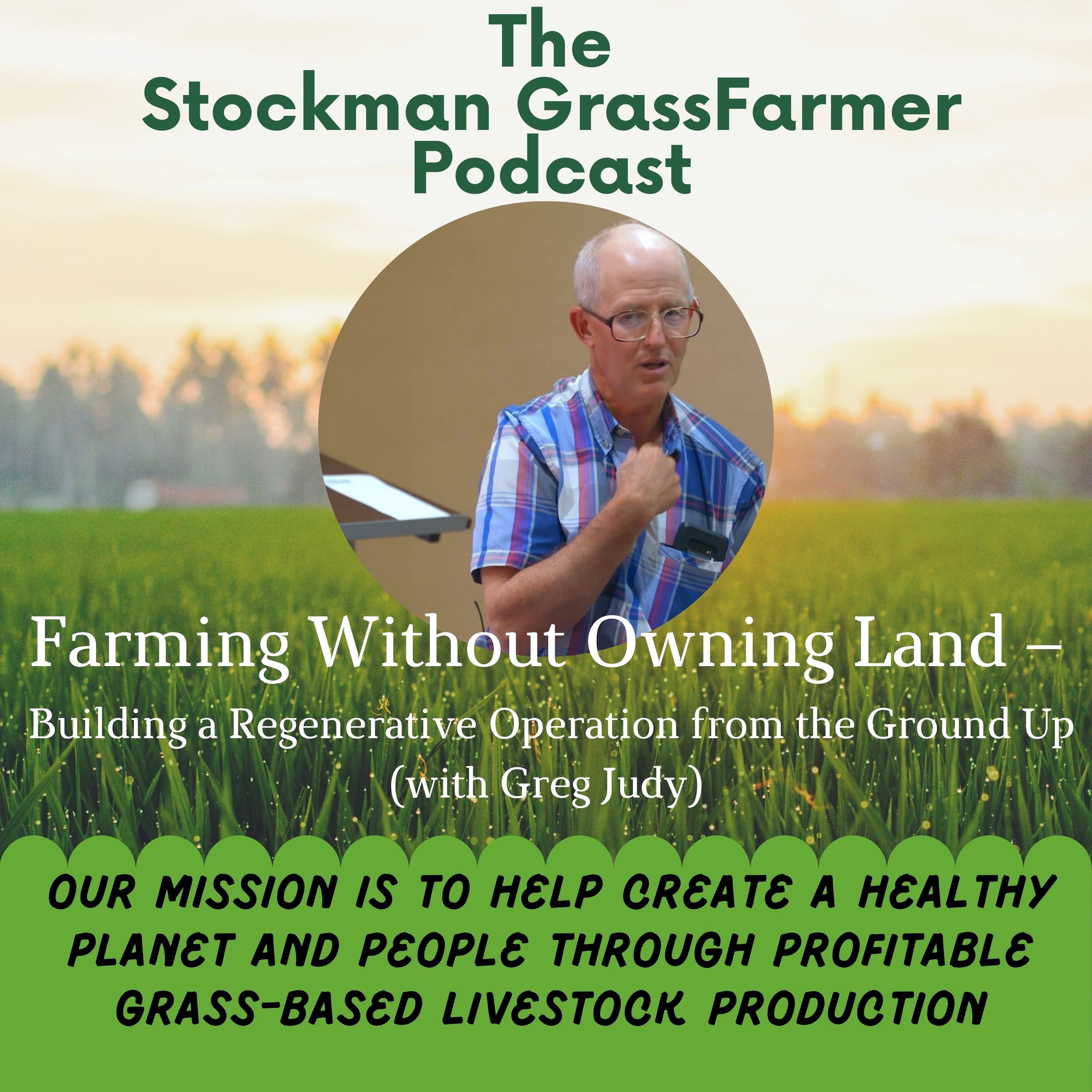
Farming Without Owning Land – Building a Regenerative Operation from the Ground Up
About this episode
In this episode,Greg Judy shares a practical and encouraging roadmap for building a profitable farm business without owning land. The conversation explores how access to land — not ownership — is often the real gateway to opportunity, and how strategic leasing, relationship building, and enterprise focus can help producers launch and grow successful operations.
Rather than waiting to purchase property, this episode emphasizes controlling expenses, protecting capital, and building cash-flowing enterprises first. The discussion challenges the assumption that land ownership defines farming success and instead focuses on operational excellence, flexibility, and long-term resilience.
The episode details practical strategies for finding leases, negotiating agreements, building trust with landowners, and designing enterprises that fit leased ground. It encourages producers to think entrepreneurially, operate professionally, and focus on profitability before asset accumulation.
🔑 Key Points Covered:
-
Access Over Ownership: Farming is about managing land, not necessarily owning it. Leasing can accelerate growth while protecting working capital.
-
Building Relationships for Land Access: Most farm leases never hit public listings — they change hands through trust and community connections.
-
Keeping Capital Liquid: Purchasing land too early can starve the business of operating capital needed for livestock, fencing, water systems, and marketing.
-
Choosing the Right Enterprises: Mobile, adaptable livestock systems often work best on leased land due to flexibility and lower infrastructure investment.
-
Professionalism in Agreements: Clear communication, defined expectations, and written agreements protect both farmer and landowner.
-
Operations Build Wealth; Land Secures Wealth: A strong operation generates cash flow. Land can later serve as a wealth-preservation tool.
🌱 Actionable Insights:
-
Start with marketing and customer relationships before expanding production.
-
Build local networks — attend meetings, connect with landowners, and maintain strong community ties.
-
Design enterprises that require minimal permanent infrastructure.
-
Keep expenses lean and focus on profitability before asset ownership.
-
View farming as a business first — measure margins, manage risk, and protect capital.
👉 Tune in with your favorite podcast app to The Stockman Grassfarmer Podcast and discover practical, real-world lessons to help you build a resilient farm business — whether you own the land or not.
Get every episode summarized
Each time The Stockman Grassfarmer Podcast publishes, we email you a written briefing from the transcript — the topics, who appeared, and any specific claims, with the ad reads skipped.
Email me new episodesFree for 3 shows. No card needed.
Hosts & guests
No transcript yet
This episode has not been transcribed. Request it and it moves to the front of the queue.
More episodes
More from The Stockman Grassfarmer Podcast

Forage Chains Connect the Dots for Profit By Dan Glenn
The Stockman Grassfarmer Podcast

Al’s Obs: Cultural Biases
The Stockman Grassfarmer Podcast

What Is the Greatest Challenge to Being a Grass Farmer Today? | Jim Gerrish
The Stockman Grassfarmer Podcast

Think Feed Is Your Biggest Cost? Jim Gerrish Says You're Looking at the Wrong Nu...
The Stockman Grassfarmer Podcast